Greek Supernatural Beings

1796 documented Greek supernatural beings from the Evil Eye grimoire, including 1106 lesser and 335 minor spirit in power tier.

page 12 of 30

Circe
Greater

Circe

Circe is a figure of Greek myth known as a practitioner of potent pharmacological and ritual arts who occupies a liminal status between goddess, nymph, and witch. She is famed for her knowledge of herbs and potions, her ability to transform humans into animals in narrative episodes, and for performing ritual purification in at least one classical source.

Cisseus
Minor Spirit

Cisseus

Cisseus is a personal name borne by several distinct human figures in ancient Greek and Roman mythic traditions. Bearers of the name appear as kings, fathers, warriors, and members of dynastic genealogies across Homeric, tragic, mythographic, and Roman epic sources rather than as a single supernatural being.

Cisus
Lesser

Cisus

Cisus is a brief figure in the Greek mythological genealogies identified in the sources as a son of Temenus and as a king of Argos. Attestations provided are minimal and consist principally of short encyclopedic entries noting his parentage and royal title.

Classical elements
Primordial

Classical elements

A conceptual classificatory system in ancient natural philosophy that reduces material diversity to a small set of basic constituents (typically earth, water, air, fire, sometimes aether). Used to explain the properties, changes, and motions of natural bodies and to ground medical and alchemical practice.

Cleisithyra
Greater

Cleisithyra

Member of a royal family with great-great-granddivine status in Greek mythology. (Note: 1. Summary: Should mention that she's not exactly royal, but rather a noble/ noblewoman. 2. Power tier: Incorrect; her divine ancestry traces back to Zeus, which should place her at Primordial or Anci)

Cleite (Clite / Κλείτη)
Lesser

Cleite (Clite / Κλείτη)

Cleite (Ancient Greek: Κλείτη) is a personal name borne by several mortal women in Greek myth rather than a single supernatural class. Figures called Cleite appear in different epic cycles—Argonautica, the Danaid traditions, the Trojan cycle, and Nonnus' Dionysiaca—typically as wives, mourners, maenads, or mothers whose narrative fates include grief, filial ties, and in one tradition metamorphosis into a spring.

Cleoboea
Minor Spirit

Cleoboea

Cleoboea (Greek Κλεόβοια) is a personal name borne by several mortal women in Greek mythic tradition. Attestations include a figure credited with bringing the orgies (mysteries) of Demeter from Paros to Thasos and a queen of Miletus (also called Philaechme in some accounts) who murdered the rejected youth Antheus.

Cleobule
Lesser

Cleobule

Cleobule (Ancient Greek: Κλεοβούλη, Kleoboúlē) is a conventional female personal name in ancient Greek mythic genealogies borne by several distinct women. The name appears in multiple, sometimes conflicting traditions as mothers or wives who establish lineage for various heroes and figures in the Homeric/Trojan War cycle and regional myths.

Cleocharia
Lesser

Cleocharia

Cleocharia (Ancient Greek: Κλεοχαρεία, Kleokhareia) is a naiad of Laconia in Greek myth who becomes queen-consort to the legendary king Lelex and is cited as an ancestress of the Spartan royal line, frequently named mother (or ancestor) of Eurotas. She functions primarily within genealogical traditions that link local freshwater divinities to dynastic origins in the region of Sparta/Lacedaemon.

Cleodora (Nymph)
Ancient

Cleodora (Nymph)

Greek nymph associated with prophecy and the Oracle of Delphi. (Note: 1. Power tier: Primordial (not Ancient), as she is a prophetic nymph associated with a powerful deity-level oracle, implying a more fundamental or cosmic connection. 2. Appearance: Add a description b)

Cleolla
Minor Spirit

Cleolla

Cleolla (Κλεόλλα, also spelled Cleola) is a mortal figure in Greek mythic genealogies, presented as a member of the house of Pelops and variously placed as wife, mother, or grandmother in competing accounts of the ancestry of Agamemnon, Menelaus, and Anaxibia.

Cleonymus
Minor Spirit

Cleonymus

Cleonymus (Kleonymos) is attested in the provided sources only as a Greek personal name borne by several historical figures (Athenian general; a Spartan youth; a Spartan Agiad general; a tyrant of Phlius) and as a modern taxonomic genus name for a group of wasps. The supplied materials contain no evidence that Cleonymus is a supernatural or mythological entity.

Cleopatra (Danaid)
Lesser

Cleopatra (Danaid)

One of the fifty daughters of King Danaus in Greek myth. The name Cleopatra here identifies at least two distinct mortal women within the Danaid genealogical tradition who married sons of Aegyptus and—like most Danaids—are recorded as having slain their husbands on their wedding night.

Cleophyle
Lesser

Cleophyle

Cleophyle (Ancient Greek: Kleophule) is an Arcadian mortal woman attested in Greek genealogical traditions as the wife of King Lycurgus of Arcadia and mother—variously named—of sons including Ancaeus, Epochus, Amphidamas, and Iasius. She functions in the sources primarily as a dynastic matron used to establish lineage rather than as an independently attested mythic actor or cult figure.

Clio
Minor Spirit

Clio

Clio is one of the nine Muses of ancient Greek myth, traditionally associated with history, the proclamation and celebration of great deeds, and sometimes with certain musical functions. Daughter of Zeus and Mnemosyne, she is portrayed in classical iconography with attributes of record‑keeping and proclamation.

Clitonymus
Lesser

Clitonymus

Clitonymus (also spelled Kleitonumos, Clysonymus, Clisonymus) is a mortal youth in Greek mythic tradition attested as the man killed by Patroclus in a quarrel — commonly given as over a game of dice — an episode that precipitates flight and refuge with Peleus. Variant and fragmentary accounts present divergent circumstances for his death.

Clonia
Lesser

Clonia

Clonia (Ancient Greek Κλονιη, Kloniê) is a Naiad — a freshwater nymph — associated with the spring or fountain of the town of Hyria in Boeotia. Mythographic sources present her primarily as the consort of the local founder-figure Hyrieus and as mother of Nycteus and Lycus, anchoring local genealogical and topographical identity.

Clonius
Lesser

Clonius

Clonius (Ancient Greek: Κλονίος, Kloníos) is a personal name used for several mortal characters in Greek and Roman epic narratives. Bearers of the name appear as a Boeotian Achaean captain in the Trojan War, as an illegitimate son of Priam, as companions of Aeneas killed in Italy, and as a defender of Thebes in the war of the Seven against Thebes.

Clotho
Ancient

Clotho

Clotho is one of the three Moirai (the Fates) of ancient Greek myth, traditionally described as the spinner who spins the thread of human life. As part of the triad with Lachesis and Atropos, she is implicated in determining birth and the commencement of an individual's life-thread and appears in myths where the Fates influence mortals and gods.

Clymene (mother of Phaethon)
Lesser

Clymene (mother of Phaethon)

Clymene (Greek Κλυμένη, Klymenê, "famous woman") is a named figure in Greek mythic genealogies. The name is borne by several distinct mythic women; the label here denotes the Clymene attested as mother of Phaethon and closely related genealogical figures rather than an autonomous supernatural class.

Clymenus
Lesser

Clymenus

Clymenus (Ancient Greek Κλύμενος, Klúmenos, lit. "famous, infamous") is a recurring personal name in Greek myth applied to multiple mortal figures — kings, princes, an Argonaut, and a suitor — and in one minor late attestation appears as a title or epithet of Hades. The name functions primarily within genealogical, foundation, and local heroic narratives rather than as a single coherent supernatural being.

Clysonymus
Minor Spirit

Clysonymus

Clysonymus (Ancient Greek: Κλυσώνυμος) is a mortal youth in Greek mythic tradition, identified as the son of Amphidamas of Opuntus and known primarily as a childhood companion of Patroclus; he is recorded as having been accidentally killed by Patroclus during an argument over a game of dice.

Clytemnestra
Lesser

Clytemnestra

Clytemnestra is a mortal queen of Mycenae in Greek epic and tragic drama, best known for her role in the murder of her husband Agamemnon and for precipitating the cycle of familial vengeance that follows. She appears across Homer and the tragedians (Aeschylus, Sophocles, Euripides) as a politically capable, scheming royal whose actions raise questions of justice, revenge, and social order.

Clytia
Lesser

Clytia

Clytia (also Clytie) is primarily an Oceanid of Greek myth famed for unrequited love for the sun-god Helios and a narrative metamorphosis; the name also appears for several other mortal or semi‑divine women in classical genealogies. Separately, Clytia is a modern scientific genus of cnidarians (e.g., Clytia hemisphaerica) used in developmental biology.

Clytie (Oceanid)
Lesser

Clytie (Oceanid)

Clytie (Ancient Greek: Κλυτίη / Κλυτία) is an Oceanid — a daughter of the Titans Oceanus and Tethys — best known in Greek myth for her unrequited love for the sun-god Helios, her role in revealing his affair with Leucothoe, and her metamorphosis into a sun-turning plant (traditionally described as a heliotropic flower in later summaries).

Clytius
Greater

Clytius

Clytius is a personal name (Ancient Greek Κλυτίος, Klytios) borne by numerous distinct figures in Greek myth — including several mortal warriors, princes, attendants, and at least one Giant counted among the earth-born opponents of the Olympian gods. As a Giant Clytius appears in Gigantomachy narratives and vase-painting iconography; as a mortal the name recurs in epic genealogies and lists. The lexical form also survives in modern taxonomic usage for insects and butterflies but this reception is separate from the ancient mythic tradition.

Clytoneus
Lesser

Clytoneus

Clytoneus is a personal name in ancient Greek mythic genealogies and epic narrative borne by at least two mortal figures: an Argive genealogical ancestor (also attested as Clytius) linked to seafaring descendants, and a Phaeacian prince, son of Alcinous and Arete, who competes in the athletic games for Odysseus in the Odyssey.

Cnossia
Minor Spirit

Cnossia

Cnossia is a minor female figure in Greek mythic genealogies, identified in surviving secondary references as either a nymph or a slave associated with King Menelaus of Sparta and named as the mother of his son Xenodamus. Her name links her to the city of Cnossus (Knossos) on Crete, but no independent narratives or cultic roles are attested in the available sources.

Coeus
Primordial

Coeus

Coeus (Greek: Κοῖος, Koîos) is one of the primordial Titans in Greek mythic genealogy, a child of Uranus and Gaia. He is mainly preserved as a genealogical figure — father of Leto and Asteria — and is otherwise an obscure member of the pre‑Olympian divine generation who was overthrown in the Titanomachy.

Comaetho
Minor Spirit

Comaetho

Comaetho (Ancient Greek: Κομαιθώ, Komaithṓ, 'bright-haired') is a personal name borne by several distinct figures in Greek myth — a Taphian princess whose plucking of a golden protective hair undid her father's invincibility, a Patraean priestess whose sexual transgression in Artemis' temple led to divine demand for sacrifice, and a spring-nymph associated with the river-god Cydnus. The name and narratives function within Greek mythic genealogy and moral/etiological storytelling rather than denoting a recurring supernatural class.

Cometes
Lesser

Cometes

Cometes (Ancient Greek: Κομήτης) is primarily a Greek personal name borne by several otherwise unrelated mythic figures in classical sources. The term also recurs in modern scientific, commercial, and artistic contexts (taxonomic genera, species names, product names, and usages referring to comets), but there is no single folkloric or spirit-class entity called Cometes in the provided sources.

Comus (Miltonic / Classical tradition)
Lesser

Comus (Miltonic / Classical tradition)

Comus is the personification of revelry and nocturnal dalliances in Greek antiquity and a later Renaissance/early modern dramatic tempter in John Milton's 1634 masque. In classical sources he appears as a minor Dionysian spirit associated with drinking-processions (komoi); Milton reimagines him as an embodied licentious figure who uses enchantment and temptation to test chastity.

Copreus
Lesser

Copreus

Copreus (Ancient Greek Κοπρεύς, Kopreus) is a mortal herald in Greek mythology who served King Eurystheus and announced the Labours imposed on Heracles. In some traditions he is a son of Pelops and, after killing Iphitus, fled to Mycenae where Eurystheus purified him and appointed him herald.

Coresus
Lesser

Coresus

Coresus is a name borne by two mortal figures in Greek mythic tradition: an autochthonous founder associated with the sanctuary of the Ephesian Artemis, and a priest of Dionysus at Calydon whose unrequited love and prayer to the god bring a lethal frenzy on the city and culminate in his self-sacrifice. Both roles are attested in summaries of Pausanias' accounts preserved in modern reference works.

Corinthus
Lesser

Corinthus

Corinthus (Greek: Κόρινθος, Korinthos) is a personal-name-bearing figure (or several eponymous figures) in Greek mythographic tradition associated with the city and region of Corinth. The name functions primarily as an eponymous founder, local ruler, or genealogical ancestor in variant local accounts rather than as a supernatural being.

Cornucopia (Roman Tradition)
Primordial

Cornucopia (Roman Tradition)

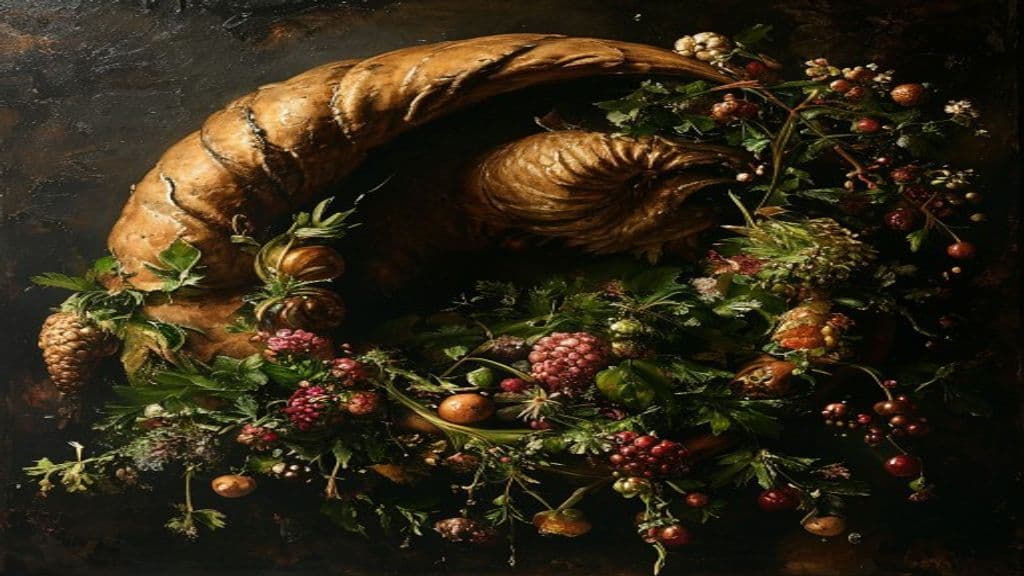
In Roman tradition, the Cornucopia is a symbol of abundance and nourishment, often depicted as a horn-shaped container overflowing with produce. (Note: 1. Power tier should be Primordial does not seem correct as Cornucopia is described as a symbol, not an entity with cosmic powers. 2. Origin story should mention Roman tradition or clarify that it ori)

Corocotta
Lesser

Corocotta

Corocotta is a name attested in two related registers: a Cantabrian legendary/historical human figure remembered as a guerrilla leader or bandit active during the late 1st century BC, and a classical natural-history term for an exotic canid/felid‑like beast (often equated with the spotted hyena) described in Greco‑Roman literature. The two usages overlap by name but represent distinct traditions—local oral memory of resistance and wider Roman wonder‑literature about exotic animals.

Corona Australis
Greater

Corona Australis

A constellation in the Southern Celestial Hemisphere associated with various cultural interpretations. (Note: 1. Power tier should be "Primordial" as Corona Australis is an astronomical object and not a deity-level entity. 2. Abilities are not mentioned in the source material; delete this section entirely. 3.)

Coronis
Lesser

Coronis

Coronis (Ancient Greek Κορωνίς, romanized Koronis) is a name borne by several women in Greek myth; most prominently a Thessalian princess who was a lover of the god Apollo and the mother of Asclepius. Her story in surviving accounts concerns her pregnancy by Apollo, reports of her unfaithfulness, and her death in narratives that also explain the survival and birth of Asclepius.

Coronus
Lesser

Coronus

Coronus (Ancient Greek: Κόρωνος, Koronos) is a personal name in Greek mythic genealogies applied to one or more mortal/heroic figures associated with the Thessalian Lapiths. He is attested as a king of the Lapiths and as an ancestor (notably father of Leonteus) in epic and mythographic lists; some sources list a Coronus among various Argonaut rosters, a variant attribution rather than a unanimous identification.

Corybas
Greater

Corybas

Corybas (Κόρυβας, Korubas) is a mythological eponymous figure tied to the Cybelene/Phrygian cult world and to the ecstatic ritual performers called the Corybantes (Korybantes). Attested as a son of Iasion and the goddess Cybele, the name also denotes the collective ritual daimones or dancing priests associated with the Korybantic dance and Samothracian mysteries.

Corycia
Lesser

Corycia

Corycia (Ancient Greek: Κωρυκία, Kōrykia; also Corycis) is a local naiad — a freshwater nymph — associated with the springs and the Corycian (Korykian) Cave on Mount Parnassus near Delphi in Phocis. She is presented in classical summaries as an eponymous resident spirit of that sacred spring-site and is connected in genealogy and cultic geography to Delphic water-nymphs and river-gods.

Corymbasus
Lesser

Corymbasus

Corymbasus (Greek Κορύμβασος / Korymbasos) is a named martial figure in the Dionysiac epic tradition—notably Nonnus’ Dionysiaca—attested as a mortal warrior and, in one passage, as “king of the Aithiopians (Ethiopians).” He is repeatedly recorded in mythographic summaries as the slayer of several minor named combatants during the mythic Indian War of Dionysus.

Coryphe
Lesser

Coryphe

Coryphe (Ancient Greek: Κορυφή) is named in classical sources as one of the 3,000 Oceanids, the water-nymph daughters of the Titans Oceanus and Tethys. In some versions she is cited as mother by Zeus of a localized Arcadian figure called Coria who was worshipped as an inventress of chariots.

Corythus
Lesser

Corythus

Corythus (Greek Κόρυθος, Korythos) is not a single supernatural being but a recurring personal name applied to several mortal men in Greek mythic tradition. The name appears for diverse characters — courtiers, kings, youths, foster‑fathers, and beloveds — across episodes connected to Perseus, the Lapiths and Centaurs, Heracles, the Argonauts/Doliones, Telephus, and the Trojan cycle.

Cottus
Ancient

Cottus

Cottus is a term with two distinct senses in the supplied sources: (1) the name of a mythological figure identified as one of the Hecatoncheires in Greek mythology; (2) Cottus as a modern biological genus name for a group of sculpin fishes. The provided material gives only these identifications and no detailed mythology or natural-history descriptions.

Coön
Lesser

Coön

Coön (Greek Κόων, gen. Κόωνος; also attested as Κύνων / Cynon) is a mortal Trojan warrior of the Homeric tradition, a son of Antenor and Theano who confronts Agamemnon during the fighting over his brother Iphidamas' body in the Iliad and is slain in single combat. The episode is also noted in later literary and visual sources (e.g., Pausanias' report of the chest of Cypselus).

Cranaus
Ancient

Cranaus

Cranaus (Greek Κραναός) is a legendary, autochthonous prehistoric king of Attica in Greek tradition, presented as the second king of Athens after Cecrops. He functions as an eponymous ancestral ruler whose name is given to the people (Kranaoi) and to the land (Kranaa/Kranaai), was said to have reigned during the flood of Deucalion, was deposed by Amphictyon, died at Lamptrae, and was venerated as a hero in Athens with priests from the family Charidae.

Cranto
Lesser

Cranto

Cranto is attested in Greek myth as one of the fifty Nereids, the sea-nymph daughters of Nereus and the Oceanid Doris. The available sources record only her membership in that collective and provide no independent myths, attributes, or cultic details.

Crantor
Lesser

Crantor

Crantor is a Greek proper name attested for (1) a minor mythic mortal, son of Amyntor, given to Peleus and said to have been killed alongside him in the Centauromachy; (2) Crantor of Soli, a 3rd‑century BC Old Academy philosopher noted for Platonic commentaries and a consolatory work On Grief; and (3) a modern minor planet (83982 Crantor) named after the mythic figure and identified as a transient Uranian co‑orbital.

Cratieus
Lesser

Cratieus

Cratieus is a mythological human figure attested in Greek genealogical traditions. He is recorded primarily as the father of Anaxibia in one lineage that links her to Nestor; no narrative deeds, divine status, or ritual role are ascribed to him in the supplied sources.

Crenaeus
Lesser

Crenaeus

Crenaeus is a minor named figure in Roman-era treatments of Greek myth, attested as a son of the rustic god Pan and recorded as a combatant killed during the Theban wars in Statius' Thebaid (Book IX). He is presented as a local, place-linked offspring figure that connects Pan to Theban riverine tradition rather than as an independently worshipped deity.

Creneis
Lesser

Creneis

Creneis (also spelled Crenis) is attested in classical sources as one of the fifty Nereids, the sea-nymph daughters of Nereus and the Oceanid Doris. Her attestation in the surviving material is genealogical: she appears as a named member of the Nereid cohort in name-lists rather than as an individuated figure with distinct myths, cult, or attributes.

Creon (King of Corinth)
Minor Spirit

Creon (King of Corinth)

A human monarch in ancient Greek narrative and tragic tradition, Creon of Corinth is a ruling figure whose political decisions—most notably the exile of Medea—set tragic events in motion. He is distinct from the Theban king also named Creon, though both function as exemplars of civic authority confronting familial and moral obligations.

Creon of Corinth
Lesser

Creon of Corinth

Creon of Corinth is a mortal dynastic king in Greek heroic tradition, portrayed in later Argonautic and Medea narratives as the ruler of Corinth who offers his daughter in marriage to Jason. His role is political and narrative—a royal father whose betrothal decision precipitates Medea's retaliatory magic—rather than supernatural.

Creon of Thebes
Lesser

Creon of Thebes

Creon (Kreon) is a mortal royal figure in Greek myth and tragedy, known as prince and later king of Thebes whose edicts—most famously forbidding the burial of Polynices—bring him into conflict with religious custom, prophetic authority, and family. He functions as a secular ruler whose insistence on civic order and law drives tragic consequences in the Oedipus cycle and related tales.

Cretan Bull
Lesser

Cretan Bull

A singular extraordinary bull from Greek myth tied to King Minos of Crete; sent by Poseidon as a divine sign and later implicated in the birth of the Minotaur and in destructive rampages that heroes such as Heracles and Theseus are said to have ended by capture and/or sacrifice. Narrative details vary between traditions about its movements and the exact sequence of events.

Cretan Lie
Primordial

Cretan Lie

A literary device used by Homer in the Odyssey, where Odysseus tells a false story to test Eumaeus' loyalty. (Note: - Power tier should be set to Ancient (deity-level), as it's a literary device used by a hero, not a cosmic entity. - Appearance: Include that it is a verbal construct, not physical. - Abilities: Clar)

Cretheus
Lesser

Cretheus

Cretheus (Ancient Greek: Κρηθεύς) is a mortal king and eponymous founder in Greek mythic genealogical tradition, recorded as the founder-king of Iolcus and an ancestor in the Aeolid family whose descendants include Aeson and Jason. He functions primarily as a dynastic and narrative node rather than as a supernatural figure.

Creusa
Lesser

Creusa

Creusa (Ancient Greek: Κρέουσα, Kréousa, lit. 'princess') is a personal name borne by multiple female figures in Greek myth and local genealogies, including a naiad, princesses of Athens and Corinth, an Amazon depicted on a Cumaean vase, and Trojan-period wives and mothers. The name functions as an individual proper name across varied narratives rather than denoting a single mythic class.