Greek Supernatural Beings

1796 documented Greek supernatural beings from the Evil Eye grimoire, including 1106 lesser and 335 minor spirit in power tier.

page 9 of 30

Aëtos
Lesser

Aëtos

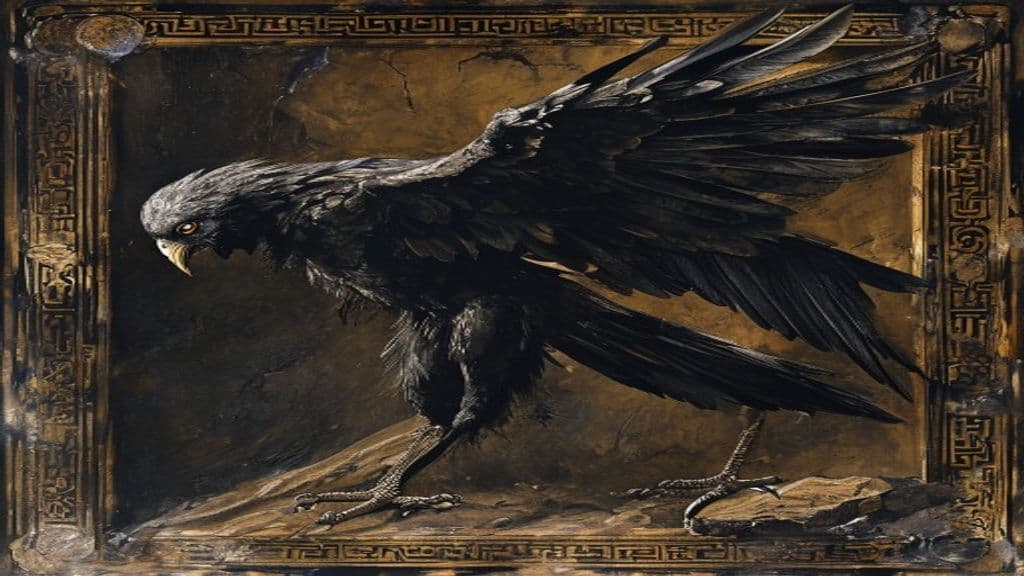
Aëtos (Greek: Ἀετός, 'eagle') is an earth-born youth in Greek myth who is transformed into the eagle that becomes the sacred bird and emblem of Zeus. In surviving accounts he functions etiologically as the origin/personification of Zeus's eagle and appears in narrations of Zeus's youth, the Gigantomachy, the torment of Prometheus, and the rescue by Heracles.

Babys
Lesser

Babys

Babys (Ancient Greek: Βάβυς, Bábus) is a sparsely attested figure in Greek mythology identified in available sources as the brother of the Phrygian satyr Marsyas; surviving references associate him only fragmentarily with a flute and place him within the Marsyas–Apollo musical contest tradition.

Bacchis
Minor Spirit

Bacchis

Bacchis is not attested in the provided sources as a supernatural being; the name appears in historical, literary, and scientific contexts (the Bacchiadae clan of ancient Corinth, a modern biological genus, and titles/characters in classical drama collections). No folkloric cosmology, powers, appearance, or rituals for a spirit called Bacchis are documented in the supplied material.

Bacchus
Ancient

Bacchus

Bacchus is the Roman identification of the Greek god Dionysus, a deity associated with wine, vegetation and fertility, ritual ecstasy and theatrical performance. In Roman religion he is conflated with the Italic Liber and known for rites that induce possession, frenzy (baccheia), and group revelry.

Baetyl
Greater

Baetyl

A Baetyl is a sacred stone believed to be the dwelling place of a god or deity in ancient Greek tradition, often housed in temples and venerated for its spiritual significance. (Note: 1. Power tier: Primordial (as it houses deities, indicating a higher power level) 2. Abilities: Remove claim that Baetyl's "potentially imbue them with supernatural powers and abilities" as this is no)

Balius and Xanthos
Greater

Balius and Xanthos

Balius and Xanthos are two named immortal horses in Greek epic associated with Achilles and his charioteer Automedon. Treated as semi-divine companions, they display autonomous behavior in battle and, in one Homeric reference, Xanthus is said to be granted the power of utterance to prophesy Achilles' death.

Balius and Xanthus
Greater

Balius and Xanthus

A paired set of exceptional, traditionally immortal horses from Greek myth, often given by gods to heroes and famed as the chariot steeds of Achilles. They are noted for divine parentage variants, great speed and endurance, emotional responsiveness, and — in one Homeric episode — a momentary prophetic speech granted by a goddess.

Banba
Ancient

Banba

Banba (modern spelling Banbha) is a matron goddess of Ireland in Irish mythology, daughter of Delbáeth and Ernmas of the Tuatha Dé Danann. She forms a triad of matronal personifications of the island with her sisters Ériu and Fódla, is associated with sovereignty and the land, and appears in origin and heroic narratives linked to specific Irish landscapes.

Batea
Minor Spirit

Batea

Batea is a polysemous term found in scientific, geographic, material-culture, mythological, and modern technical contexts. In the supplied sources it appears as a genus of amphipod crustaceans, two named figures in Greek mythology (without further detail in these sources), a municipality in Catalonia, a traditional gold-panning pan, and as the name/acronym of contemporary technical and policy documents.

Batea of Troad
Lesser

Batea of Troad

Batea (Ancient Greek: Βάτεια) is a mythic female ancestor and eponym in early Greek accounts tied to the foundation myths of the Trojans/Dardanians. Presented as a member of the Teucrian royal house and consort of Dardanus, she is credited with giving her name to a hill in the Troad and to the town Bateia and functions mainly to link genealogical descent and territorial claims.

Baton (Greek Mythology)
Unknown

Baton (Greek Mythology)

In Greek mythology, the origin, appearance, and abilities of Baton are unknown due to lack of information. (Note: 1. Add "incomplete" or "insufficient information" to the summary to reflect that there's no actual description of Baton, rather than it being unknown. 2. Power tier should be listed as "Unknown" since)

Battus
Lesser

Battus

Battus (Ancient Greek: Βάττος) is a mortal figure in Greek and Greco-Roman tradition who, in the Hermes–Apollo cattle-theft episode, witnessed Hermes stealing Apollo's cattle, accepted a heifer for silence, later betrayed the secret and was punished by being turned into stone. The name also appears separately in Greco-Roman legend as a semi-legendary king of Malta who sheltered Anna Perenna; sources do not identify the two attestations as the same individual.

Baucis and Philemon
Lesser

Baucis and Philemon

An elderly, impoverished married couple from Ovid’s Metamorphoses who exemplify ritual hospitality (xenia) by welcoming disguised gods; as a divine reward they are granted guardianship of a temple and, at death, are transformed into an intertwined oak and linden.

Baʿal Hammon
Ancient

Baʿal Hammon

Baʿal Hammon is the chief male deity of the Punic (Carthaginian) pantheon, associated principally with vegetation fertility, communal prosperity, and kingly supremacy. He is syncretized with North African/Egyptian Ammon (Amun) and, in Greco‑Roman interpretatio, with Cronus/Saturn. Classical authors accuse his cult of child sacrifice, a claim debated by modern scholars and archaeologists.

Baʿal Zephon
Ancient

Baʿal Zephon

An epithet/localized form of the Canaanite storm god Baʿal (Hadad) associated with Mount Zaphon (Jebel Aqra) and with the north; worship of Baʿal Zephon served protective and maritime functions and was widely syncretized in neighboring cultures.

Bebryces
Lesser

Bebryces

The Bebryces (Greek: Βέβρυκες) are a legendary people or tribe attested in Greek mythographic and geographic tradition, primarily located in Bithynia (northwestern Anatolia). They appear in heroic-age narratives as local rulers and warriors—not as supernatural beings—and are associated with episodes involving Heracles, the Argonauts, and named kings such as Amycus and Mygdon.

Bellerophon
Greater

Bellerophon

Bellerophon is a heroic figure of ancient Greek tradition, famed as a slayer of monsters and the tamer of Pegasus. Various accounts present him as of mixed divine and mortal lineage and as an exemplar of heroic achievement enabled by divine aid and constrained by social-ritual norms.

Belus (Tyre)
Ancient

Belus (Tyre)

Belus is the Greco‑Latin umbrella rendering of Semitic lord‑titles (bēlu/baʿal) that in classical literature appears in multiple guises; in Latin epic and genealogical tradition he functions as a legendary king of Tyre, presented as the father of Dido and Pygmalion and as an ancestral founder figure rather than a defined supernatural being.

Bendidia
Ancient

Bendidia

The festival or cult dedicated to the Thracian goddess Bendis, celebrated in ancient Athens on the 19th day of Thargelion in Piraeus. (Note: 1. Power tier should be Primordial (Bendis is described as a Thracian goddess, implying a cosmic-level deity) 2. Appearance and Abilities sections are missing; add them from source material (if availa)

Bendis
Lesser

Bendis

Bendis is a Thracian female cult deity associated with hunting, lunar aspects, and Thracian revelry. Her cult was officially introduced into Attica in the mid-5th century BC, where she retained distinct rites and a shrine (the Bendideion) while sometimes being identified with Artemis.

Benthesikyme
Lesser

Benthesikyme

Benthesikyme (Βενθεσικύμη; Latinized Benthesicyme) is a female sea-nymph in Greek myth, named etymologically from benthos (depth, deep-swells) + kyma (wave). Classical mythographers identify her as a daughter of Poseidon and Amphitrite and as the foster-mother of the hero Eumolpus; some sources place the narrative involving her in Aithiopia (Ethiopia).

Beroe
Lesser

Beroe

Beroe is a name applied to multiple unrelated referents in historical, mythological, and biological sources: an ancient Thracian city (modern Stara Zagora, Bulgaria), several minor figures in Greek mythology (e.g., a nymph named Beroe), and a genus of comb jellies (ctenophores) in the family Beroidae. The supplied sources do not present a single, coherent supernatural entity called Beroe within a living folk cosmology.

Bienor
Lesser

Bienor

Bienor is attested in two distinct registers in the supplied sources: (1) as a personal name borne by four minor characters in Greek mythology (no narratives or attributes provided), and (2) as the designation of a Solar System small body, 54598 Bienor, a centaur-class minor planet whose photometry has been studied and modeled by astronomers.

Black Arab
Ancient

Black Arab

In Slavic mythology, the Black Arab is a malevolent chthonic demon that kidnaps women and girls. (Note: 1. Power tier should be Primordial, not Ancient (Ancient implies deity-level abilities, but the Black Arab's abilities are more limited). 2. Origin story is speculative and unsupported by source mater)

Boar
Greater

Boar

The boar principally denotes the species Sus scrofa (wild boar) in natural-history contexts and a recurring mythic motif in which monstrous or divine boars ravage lands or act as avatars of deities. Appears across Greek heroic myths (Calydonian, Erymanthian), Indic theistic narrative (a divine boar-form assumed by the Lord), and modern fiction (horror film, comics).

Boeotus (son of Poseidon)
Lesser

Boeotus (son of Poseidon)

Boeotus is a mythic eponymous ancestor in Greek tradition credited with giving his name to the region and people of Boeotia. He appears in genealogical accounts as a son of Poseidon (often with Arne) or in variant traditions as son of Itonus and the nymph Melanippe, functioning chiefly as a founding ancestor rather than an active cultic or supernatural agent.

Boethoos
Minor Spirit

Boethoos

Boethoos (also Boethous/Boethos) is a minor named figure in Greek mythological genealogy, attested as a Lacedaemonian son of Argeios (son of Pelops) and Hegesandra (daughter of King Amyclas of Sparta). He appears only as a genealogical descendant within Peloponnesian heroic lineages in the supplied sources.

Bolbe
Lesser

Bolbe

In Ancient Greek mythology Bolbe (Βόλβη) is a localized lake goddess or nymph identified with the Macedonian lake of the same name (modern Lake Volvi). She is described as beautiful and is attested as mother of freshwater nymphs (Limnades) and, in one source, as mother of Olynthus by Heracles.

Boreads
Lesser

Boreads

The Boreads (Greek Βορεάδαι, Boreádai) are the two wind-born brothers Zetes and Calaïs in Greek myth, sons of Boreas; famed as swift, winged Argonauts who rescued the blind seer Phineus from the Harpies and whose fate is told in variant traditions.

Boreas
Greater

Boreas

Boreas is the ancient Greek personification and god of the cold north wind, storms, and winter; a member of the Anemoi who is both a meteorological force and an independent divine agent active in myth and civic cult (notably Athens). He is associated with Thrace as his homeland and with the mythical Hyperborea beyond the north wind.

Borus
Lesser

Borus

Borus is attested in the provided sources primarily as an onomastic item — an ancient Greek personal name attested in mythographic genealogies — and secondarily as a modern place-name, vessel name, and various contemporary or fictional name-uses. The supplied material contains no evidence that Borus is a spirit, deity, or other supernatural being.

Borvo
Lesser

Borvo

Borvo (also Bormo, Bormanus/Bormanicus) is a Celtic theonym attested in Roman‑period Gaul and adjacent regions as the god of warm, welling thermal springs; worship is attested almost entirely by votive inscriptions at spa sites and he is commonly paired with the goddess Damona and equated under interpretatio romana with Apollo (and occasionally Hercules).

Borysthenes
Lesser

Borysthenes

Borysthenes is the ancient Greek name for the Dnieper River and its personified river-god in classical accounts. In Greek literary and antiquarian sources the name denotes both the physically fertile river near Pontic Olbia and a local river-divinity invoked in genealogies and place‑names.

Borysthenis
Lesser

Borysthenis

Borysthenis (Ancient Greek Βορυσθενίς) is a theonym recorded in Greek discourse with two distinct usages: (1) as the name of one of a localized triad of Muses described as daughters of Apollo (sisters Apollonis and Cephisso), and (2) as an epithet applied to the Scythian earth-and-water goddess Api, indicating her status as 'daughter of the god of the Borysthenēs (Dnipro) river.'

Botres
Minor Spirit

Botres

Botres (Ancient Greek: Βότρης, Bótrēs) is a Theban youth in Greek myth who, having tasted the sacrificial victim's brain during his father Eumelus's offering to Apollo and then being fatally struck by his father with a brand, is transformed by Apollo into the bird called Aeropus (the bee-eater). The story is attested in Greek mythographic tradition and briefly referenced in Ovid's Metamorphoses and in Antoninus Liberalis' collection of metamorphoses.

Bounos (Bunus)
Lesser

Bounos (Bunus)

Bounos (Ancient Greek: Βοῦνος) is a legendary early king of Ephyra (an early name for Corinth), described in surviving mythographical summaries as a son of Hermes and the mortal Alcidamea/Alcidamia. He is credited with receiving the throne from Aeëtes when the latter sailed to Colchis and with founding a sanctuary to Hera Bunaea on the road to Acrocorinthus; after his death the kingdom passed into the hands of Epopeus of Sicyon.

Brahmarakshasa
Greater

Brahmarakshasa

Demon-spirit of a Brahmin who misused sacred knowledge for evil ends — described in the Ramayana and Mahabharata, the Brahmarakshasa combines the destructive force of a Rakshasa with the ritual knowledge of a priest. Among the most dangerous entities in Hindu demonology.

Branchus
Lesser

Branchus

Branchus is a figure in Greek myth known principally as a mortal beloved of Apollo who functions as a prophet and eponymous founder of a local oracle/cult (the oracle or temples associated with Branchus). Some sources also record a possibly distinct Branchus as a genealogical figure, father of Cercyon by the nymph Argiope.

Brettia
Lesser

Brettia

Brettia (Ancient Greek: Βρεττίας in the surviving lexicon entry) is an eponymous nymph credited in Greek ethnographic/place-name handbooks as the name-source of the district Abrettene in Mysia. She is attested only in lexicographical/ethnic compendia and is presented as a local, place-personifying divine figure rather than a figure with recorded myths, cult practice, or narrated deeds.

Briareus
Primordial

Briareus

Briareus is one of the Hecatoncheires (Hundred‑Handers) in Greek mythology: a primordial giant, offspring of Uranus (Sky) and Gaia (Earth), traditionally described with fifty heads and one hundred arms and credited with helping Zeus and the Olympians overthrow the Titans in the Titanomachy.

Briseis
Lesser

Briseis

Briseis is a mortal woman in the Homeric epic tradition, captured at Lyrnessus and attached to Achilles as a war prize; her transfer between leaders (Achilles and Agamemnon) functions as a key social and moral symbol in the Iliad and later literary traditions.

Briseus
Lesser

Briseus

Briseus (Ancient Greek: Βρισεύς or Βρίσης) is a mortal figure in the Trojan War tradition, known primarily as the father of Briseis, a woman taken captive by the Greeks. He appears in Homeric tradition and later commentators, who variably place him in Pedasus or identify him as a priest of Lyrnessus; a later pseudo-historical source (Dictys Cretensis) reports that he hanged himself after losing his daughter.

Britomartis
Lesser

Britomartis

Britomartis is a female divine figure associated in the supplied material with the island of Crete, functioning as a mountain and hunting deity with linked associations to nets and fishermen. She is variously described as a goddess or nymph and was later conflated in Greek tradition with deities such as Artemis, Athena, and Aphaea.

Brizo
Lesser

Brizo

Brizo (Greek: Βριζώ) is a minor, local goddess venerated on the island of Delos who functioned as a protector of mariners, sailors, and fishermen and as an oracular deity specialized in oneiromancy (dream-oracle). Her cult was chiefly associated with women of Delos who offered food in small boats and sought prophetic dreams concerning sea-voyages and the fates of seafarers.

Bromius
Ancient

Bromius

Bromius (Ancient Greek: Βρόμιος) is an epithet and identity-state of the god Dionysus/Bacchus in ancient Greek religion, signifying 'noisy', 'roaring', or 'boisterous'. In some modern readings of fragmentary Orphic material (notably summaries of the Derveni papyrus), Bromius is discussed by scholarship as a name applied to a divine figure placed early in an alternative cosmogony.

Broteas
Lesser

Broteas

Broteas (Ancient Greek: Βροτέας, lit. 'mortal' or 'man') is a mythic human figure in Greek tradition, presented as a son of Tantalus and member of that cursed house. He is credited in local tradition with carving the ancient rock relief of the Great Mother (Cybele) on Mount Sipylus near Magnesia ad Sipylum and is also variously narrated as a hunter punished by Artemis or listed among the Lapiths slain in the Lapith–centaur battle.

Bucolion
Lesser

Bucolion

Bucolion (Greek Βουκολίων, Boukolíon) is a personal name and toponym attested in multiple roles across Greek myth and local tradition — most notably as an illegitimate son of Laomedon who tended sheep and fathered twins by a naiad, as one of the fifty sons of Lycaon in Arcadian genealogies, as a minor Achaean combatant, and as an Arcadian place-name/king. The name does not denote a single persistent supernatural entity in the cited sources.

Budeia
Lesser

Budeia

Budeia is a lexical/onomastic term attested in two distinct registers: (1) an ancient Greek mytho-genealogical figure and an epithet of Athena meaning 'oxen-yoker', and (2) a modern Norwegian occupational noun (budeia) denoting the woman who tends the summer farm dairy. The term consistently occupies an agricultural/labor semantic field in both traditions rather than functioning as a singular supernatural entity.

Budini
Lesser

Budini

The Budini (Ancient Greek Βουδῖνοι) are recorded in Graeco-Roman ethnographic sources as a human tribal people of the forest‑steppe north of the Black Sea, associated with the Vorskla river valley and the multiethnic city of Gelonus in the first millennium BC. Classical accounts portray them as a hunting-dependent, linguistically distinct group noted for red hair and blue eyes; some archaeological interpretations tentatively link them to anomalous mortuary deposits.

Bull (mythology)
Greater

Bull (mythology)

A recurring sacred animal in multiple mythologies, the bull often functions as a divine sign, an emblem of kingship and fertility, and a bridge between celestial and terrestrial order. In the Cretan tradition a bull appears from the sea to Minos as a sign tied to his claim to rule and an obligation of sacrifice; in broader comparative accounts bulls are associated with major deities and celestial symbolism.

Busiris
Lesser

Busiris

Busiris (Greek: Bousiris, Βούσιρις) is a name used in Greek-language myth and geography for several Egyptian towns and for at least two mythic personages: a legendary king of Egypt portrayed in Heracles cycle stories and a mortal son of Aegyptus in genealogical lists. In Greek tradition the king-figure is remembered chiefly for instituting the sacrifice of foreigners and for his confrontation with Heracles.
Butes
Greater

Butes

Boutes (Ancient Greek: Βούτης, Boútēs, literally 'herdsman') is a personal name applied to several distinct figures in Greek mythology — mortal princes, Argonauts, warriors, and local cult-heroes — rather than a single supernatural species. Bearers of the name appear across multiple heroic cycles and locales, notably an Athenian priest-hero, an Argonaut rescued by Aphrodite, and a Thracian punished by Dionysus.
Byssa
Lesser

Byssa

Byssa (Ancient Greek: Βύσσα, Bússa) is a woman of Meropis on the island of Kos in Greek myth who, according to surviving summaries of a myth preserved in metamorphosis compilations, refused to honor Artemis, Athena, and Hermes and was punished by being transformed into a bird.

Böri Shad
Lesser

Böri Shad

Böri Shad (fl. c. 627) is a historical Turkic princely governor and military commander (shad/ishad) of the Western Turkic Khaganate who operated in the far western North Caucasus and led campaigns into the South Caucasus during the Perso-Turkic conflicts of 627–630. He combined kinship status (son of Bagha Shad; nephew of Tong Yabghu Khagan) with delegated frontier authority and military command, and fled to Central Asia after Tong Yabghu's murder in 630.

Caanthus
Lesser

Caanthus

Caanthus (Ancient Greek: Κάανθος) is a figure of Greek myth and Theban local cultic tradition, described as a son of Oceanus and Tethys who was sent to recover his sister Melia from Apollo, burned Apollo's sanctuary when he failed, and was slain by Apollo. His tomb was pointed out near the Ismenion at Thebes and he functions in sources as both a genealogical offspring of the Titan/Oceanic generation and as a local heroic/cultic tomb-figure.

Cabeiri
Ancient

Cabeiri

The Cabeiri (Ancient Greek: Κάβειροι) are a group of enigmatic chthonic divinities in ancient Greek religion, associated with subterranean/forge fire, smithing, and mystery-cult initiation. Their cults were locally rooted (notably at Lemnos, Samothrace, and Thebes), secretive, and variable in number, sex, and depiction across places and periods.

Cabeiro
Lesser

Cabeiro

Cabeiro (also spelled Kabeiro) is a figure in Greek mythology identified as a daughter of the shape‑shifting sea‑god Proteus and, by union with the forge‑god Hephaestus, the mother of the groups known as the Cabeiri and the Cabeirian nymphs. She appears in genealogical accounts linking marine and smithing divine lineages.

Cacodemon
Lesser

Cacodemon

A term originating in Ancient Greek (κακοδαίμων, kakodaimōn) denoting an "evil spirit" — the morally malign subset of daimōn — later reused in literature, psychiatry (cacodemonia), occult fragments, and popular culture where it appears as a videogame monster. Sources present the cacodemon both as a moralized spirit-type in classical-language summaries and as various modern imaginative creatures rather than a single fixed biological species.

Cadmus
Greater

Cadmus

Cadmus is a legendary Phoenician prince and culture-hero in Greek myth, credited with founding Thebes, slaying a local dragon/guardian, marrying Harmonia, and—by some ancient sources—bringing a Phoenician script to Greece.

Caeneus
Greater

Caeneus

Caeneus is a heroic Lapith of Thessaly in Greek myth, originally born Caenis (female) and transformed by Poseidon into an invulnerable man. Celebrated among the generation of pre-classical heroes, Caeneus is famed for martial prowess and for his death during the Centauromachy, when Centaurs battered him into the earth.