Literary and Fictional Supernatural Beings

717 documented Literary and Fictional supernatural beings from the Evil Eye grimoire, including 329 lesser and 185 greater in power tier.

page 11 of 12

Melion
Lesser

Melion

Melion is the named protagonist of a late twelfth–early thirteenth‑century Breton lai who is a knight in King Arthur's service and who, by means of a magical ring, is transformed into a wolf, lives among wolves and at Arthur's court in lupine form, and is ultimately restored to human shape.

Melpomene
Ancient

Melpomene

Melpomene is one of the Nine Muses of ancient Greek tradition, the personified patron of tragic song and dramatic poetry. Daughter of Zeus and Mnemosyne, she is invoked in literary contexts for tragic composition and is commonly represented with tragic mask and buskins.

Menelaus
Minor Spirit

Menelaus

Menelaus is a mytho-historical king of Sparta in the Greek epic tradition, husband of Helen and a leader in the Trojan War cycle. He appears in Homeric epic (Iliad, Odyssey) and many later literary retellings and traditions; he is portrayed as a mortal royal figure whose fortunes are affected by divine intervention.
Mezzetino
Lesser

Mezzetino

Mezzetino is a commedia dell'arte stock character from 16th‑century Italian popular theatre, a member of the Zanni servant class known as a scheming, often musically inclined servant and flirt. The role circulated into French and English stages and appears in visual arts (notably Watteau) and decorative arts.

Mileena
Greater

Mileena

Mileena is a fictional humanoid antagonist from the Mortal Kombat video-game franchise: an engineered or otherwise altered counterpart to the Edenian princess Kitana who functions as a rival, spy, and claimant to rulership within Outworld/Edenian political narratives. She is portrayed across multiple game continuities with recurring visual motifs (Kitana-like costume, pronounced Tarkatan teeth) and signature fighting mechanics (sais, teleport-kick, ground roll, graphic Fatalities).

Min Farshaw (Elmindreda Farshaw)
Lesser

Min Farshaw (Elmindreda Farshaw)

Elmindreda "Min" Farshaw is a named fictional human character in Robert Jordan's high-fantasy series The Wheel of Time. The provided sources identify her as a character appearing at least in the first novel, The Eye of the World, and an archive item title references her in connection with "visions."

Minyans
Lesser

Minyans

A named people and ancestral lineage in Greek literary tradition, associated especially with Orchomenus in Boeotia and the eponymous founder Minyas; in modern scholarship the term is also applied (controversially) to a Middle Helladic pottery horizon called 'Gray Minyan ware.'

Miraz
Lesser

Miraz

Miraz is a human monarch and the principal antagonist of C. S. Lewis's Prince Caspian. A Telmarine king and usurper, he rules Narnia through oppression and seeks to suppress the older, enchanted history and sanctity of the land.

Modthryth
Minor Spirit

Modthryth

Modthryth is a literary royal figure attested in the Old English poem Beowulf, presented as a princess who initially behaves violently toward men beneath her rank but is later depicted as a reformed and celebrated queen. The figure functions in the poem as a foil to other aristocratic women and as a commentary on ideals of queenship (freoðuwebbe) in Anglo-Saxon literary culture. The manuscript reading of her name and the precise sense of the compound are subjects of scholarly dispute.

Mordecai
Lesser

Mordecai

Mordecai is a central human figure in the Book of Esther (Hebrew Bible), portrayed as an exilic Judean courtier in Susa who acts as guardian to Esther, exposes a plot against King Ahasuerus, refuses to bow to the official Haman, and whose actions precipitate the events commemorated by the festival of Purim.

Morrheus
Lesser

Morrheus

Morrheus is an Indian chief and mortal warrior who opposes Dionysus and his thiasos in Nonnus’s epic Dionysiaca. He appears in the poem as a capable combatant who wounds members of Dionysus’s retinue, is subject to divine intervention, and is twice removed from battle by stratagems of dream and seduction.

Mr. Beaver
Minor Spirit

Mr. Beaver

Mr. Beaver is a fictional anthropomorphic beaver character who appears in the secondary world of C. S. Lewis's The Chronicles of Narnia. The provided sources identify him only as a character entry in lists/databases of Narnia characters.

Mr. Tumnus
Lesser

Mr. Tumnus

A faun of Narnia who befriends Lucy Pevensie, hesitates to obey the White Witch's orders, is arrested and petrified under her rule, and is later restored by Aslan and serves as a royal adviser to the Pevensies.

Mujina (貉)
Lesser

Mujina (貉)

A Japanese folkloric shapeshifting creature associated with badger-like and tanuki-like animals; classed among yōkai, mujina perform transformations, illusions, and pranks, and in some tales repay kindness or enact retribution when harmed.

Myrmidon (hero)
Lesser

Myrmidon (hero)

An eponymous ancestor-hero in Greek myth, described in the sources as a son of Zeus and Eurymedusa and the progenitor of the people called the Myrmidons. The personal name became an ethnonym for that mythic nation and was later reused in literature and modern media as a label for warriors or unquestioning followers.

Myrto
Lesser

Myrto

Myrto (Ancient Greek: Μυρτώ, 'myrtle') is primarily an Ancient Greek feminine personal name attested across mythic and historical registers — borne by several minor mythological figures (including a possible eponym of the Myrtoan Sea, a named Maenad, and in some genealogical variants as mother of Myrtilus) and by later biographical/historical women (notably a contested Athenian figure tied to Aristides and Socratic tradition). The sources do not present a single, unified supernatural entity named Myrto.

Neoptolemus
Lesser

Neoptolemus

Neoptolemus (Ancient Greek Νεοπτόλεμος), also called Pyrrhus, is a mortal Greek heroic figure — the son of Achilles — who appears in the late stages of the Trojan War cycle. He is portrayed as a capable and decisive warrior whose actions (notably the killing of Priam and the sacrifice of Polyxena) have ritual, moral, and genealogical significance in later Greek tradition.

Nestor (name and uses)
Minor Spirit

Nestor (name and uses)

Nestor is presented in the supplied sources primarily as a personal and place name used across literary, geographic, maritime, scientific, and cultural contexts. While one cited headword refers to a mythological figure, the provided material contains no folkloric descriptions, supernatural attributes, or ritual traditions associated with Nestor.

Night Elf (Kaldorei)
Greater

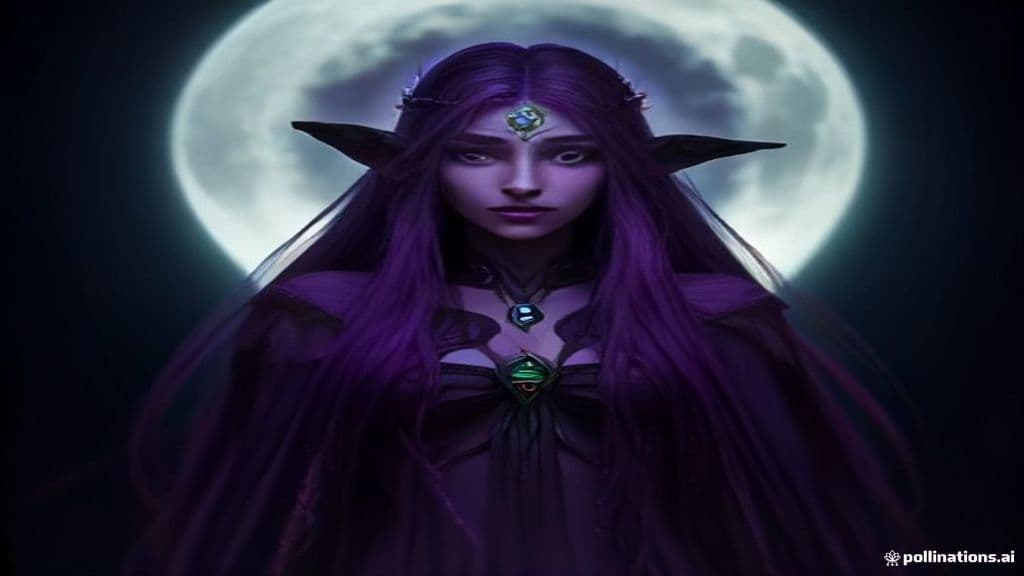
Night Elf (Kaldorei)

A fictional, long-lived, forest-dwelling humanoid people (called the Kaldorei, lit. 'Children of the stars') from Blizzard Entertainment's Warcraft setting, characterized by moon worship (Elune), druidic tradition, and a cultural emphasis on living in harmony with nature. Introduced as a playable race in Warcraft III and later World of Warcraft, they function as a full society rather than a single supernatural entity.

Nikabrik
Lesser

Nikabrik

Nikabrik is a fictional Narnian dwarf known as the 'Black Dwarf' who appears in the film adaptation of The Chronicles of Narnia: Prince Caspian. Portrayed on screen by Warwick Davis in the film's behind-the-scenes material, he is one of the non-human Narnians who allies with Prince Caspian and the returning Pevensie monarchs in the quest to find Aslan and restore Narnia.

Noldor
Ancient

Noldor

The Noldor are a kindred (clan) of Elves in J. R. R. Tolkien's legendarium, one of the three High Elf clans who migrated to Valinor and later returned to Middle-earth. Renowned for their skill in craft, lore and warfare, their history — including the Oath of Fëanor and the Flight of the Noldor — is central to the events of The Silmarillion.

Odysseus
Minor Spirit

Odysseus

Odysseus is a legendary mortal king of Ithaca from ancient Greek epic tradition, best known as the protagonist of Homer's Odyssey. Celebrated for his intellect, craft (mêtis), and long nostos (homecoming), he functions as an exemplar of heroic cunning rather than a supernatural being.

Oenone
Lesser

Oenone

A named mountain nymph of Mount Ida in Greek myth, Oenone is best known as the first wife of Paris of Troy. Associated with prophecy (taught by Rhea) and herbal healing, her narrative centers on love, betrayal, and varying accounts of revenge and suicide following Paris's abandonment.

Orc
Lesser

Orc

A literary and philological construct originating from an Old English attestation and substantially developed in J. R. R. Tolkien's mythopoeic writings as a corrupt, warlike humanoid race serving dark powers; earlier usage in Beowulf links the element to underworld/demonic associations.

Oreius
Lesser

Oreius

Oreius (also attested as Oreios, Orius, Oreus) is a named centaur figure appearing in two distinct narrative contexts: as one of the centaurs who tried to seize Pholus' wine and was killed by Heracles in Greek myth summaries, and as a centaur military leader (centaur general/commander) in C. S. Lewis's The Chronicles of Narnia and later adaptations/fan works where he fights on Aslan's side.

Oswald Bastable
Lesser

Oswald Bastable

Oswald Bastable is a fictional human character whose name appears in two distinct literary traditions: as a child narrator in Edith Nesbit's turn-of-the-century Bastable stories (1899–1905) and as a reused, reinterpreted adult military figure in Michael Moorcock's 20th-century alternate-history/speculative fiction. Moorcock explicitly reused the name to evoke a particular Fabian liberal-imperial milieu rather than to create a direct sequel to Nesbit's tales.

Pandora
Minor Spirit

Pandora

In Hesiod's Greek theogony, Pandora is the first woman fashioned by Hephaestus at Zeus's command, endowed with gifts from the gods and introduced into the human world as the agent whose opening of a sealed pithos releases evils upon humankind; she functions in the poem as an explanatory figure for the existence of human misery.

Papak (Pabag)
Minor Spirit

Papak (Pabag)

Papak (also rendered Pabag) is attested in the provided sources primarily as a historical figure — an early 3rd-century Iranian prince/high priest associated with Istakhr in Pars — and as a modern personal name and toponym. The supplied material contains no evidence of Papak as a coherent supernatural being, spirit, or folk-creature.

Patroclus
Minor Spirit

Patroclus

Patroclus is a mortal heroic figure of the Greek epic tradition associated with the Trojan War, famed as Achilles' close companion and the Myrmidons' commander in Achilles' stead; his death and subsequent ghost-appearance in Homeric narrative drive Achilles' return to battle and demand proper funerary rites.

Peliades (Daughters of Pelias)
Lesser

Peliades (Daughters of Pelias)

In Greek myth, the Peliades (Greek: Πελιάδες) are the daughters of King Pelias who, deceived by Medea's staged 'rejuvenation' demonstration, dismembered their father believing he would be restored to youth. The story survives in fragmentary literary references, summaries of Euripides' lost play Peliades, and later mythographic accounts.

Peneus
Ancient

Peneus

Peneus (Ancient Greek: Πηνειός, Pēneiós) is the Thessalian river-god in Greek myth, counted among the offspring of the Titans Oceanus and Tethys. He functions as the personification of the Peneus River, appears in genealogies as progenitor of local kings and eponyms, and is attested intervening in the Daphne myth by transforming her into a laurel tree.

Pentheus
Lesser

Pentheus

A mytho-historical mortal king of Thebes in ancient Greek literature whose refusal to recognize Dionysus and forbid the new cult leads to divine retribution: his spying on Bacchic rites results in his being torn apart (sparagmos) by the frenzied women of Thebes. His story appears most fully in Euripides' The Bacchae and in poetic retellings such as Ovid's Metamorphoses; a variant appears in Oppian in which metamorphosis is literal.

Persinette
Lesser

Persinette

Persinette is the human heroine of a 1698 French literary fairy tale by Charlotte-Rose de Caumont de La Force. In the story she is given to a fairy as recompense for stolen parsley, raised and then confined in a tower, and later reunited with a prince; elements of magic surround her fate but she herself is portrayed as mortal.

Peryton
Lesser

Peryton

A modern literary chimera combining stag and bird anatomy, originally described by Jorge Luis Borges as a fictional species with a peculiar life-history and a prophetic association; later reused in heraldry, fantasy fiction, and gaming as a winged-deer monster or heraldic charge.

Peter Pevensie
Lesser

Peter Pevensie

Peter Pevensie is a fictional human character created by C. S. Lewis who appears in The Chronicles of Narnia. An evacuated English boy who becomes High King Peter the Magnificent in Narnia, he functions as a divinely‑sanctioned monarch and head general in Aslan's cause and is one of the two Sons of Adam prophesied to rule at Cair Paravel.

Phaedra
Minor Spirit

Phaedra

Phaedra is a mythological human figure from ancient Greek tradition: a Cretan princess, daughter of Minos and Pasiphaë, and wife of Theseus. Best known from tragic treatments in antiquity and later European literature and music, her story centers on passion, familial entanglement, and tragic consequence rather than supernatural agency.

Philammon
Lesser

Philammon

Philammon (Ancient Greek: Φιλάμμων) is a legendary mortal musician in Greek myth, described as a son of Apollo and credited with composing and instituting sacred hymns and choral performance practices (notably at Delphi). He functions as a culture-hero in genealogies of singers rather than as an autonomous supernatural antagonist.

Philomela
Minor Spirit

Philomela

Philomela is a mythic mortal woman in Greek tradition who, after being raped and mutilated by Tereus, communicates her crime by weaving a cloth and is ultimately transformed by the gods into a bird; her story functions chiefly as a literary and etiological motif (speech and silence, lament, and metamorphosis). The name Philomela is also attested in some mythographic lists as a different genealogical figure (a mother of Patroclus) in a separate, limited attestation.

Phlegethon
Lesser

Phlegethon

A named river of the Greek underworld traditionally described as a flaming or fire-associated stream; later literary traditions (notably Virgil and Dante) reuse the name with varied imagery such as a river of boiling blood in Dante's Inferno.

Phocus
Lesser

Phocus

Phocus (Ancient Greek: Φῶκος, 'seal') is a personal name borne by multiple distinct heroic figures in ancient Greek myth. The various Phoci appear in genealogies and heroic catalogues as eponyms, ancestors, and occasional members of heroic companies rather than as a single supernatural class or cult figure.

Pisidice of Methymna
Minor Spirit

Pisidice of Methymna

Pisidice of Methymna is a legendary mortal princess in Greek epic tradition who, according to Hellenistic summaries, fell in love with Achilles, betrayed her city of Methymna by admitting his forces, and was executed for treason after the city's capture. Her story functions as a narrative motif warning against private passion overriding civic duty.

Pitys
Minor Spirit

Pitys

Pitys is an Oread (mountain) nymph from Greek myth who, pursued by the god Pan in classical accounts, was transformed into a mountain pine. Her story functions etiologically to explain the origin of a pine tree associated with rustic landscape and Pan.

Podarces
Minor Spirit

Podarces

Podarces (Ancient Greek: Ποδάρκης) is a mortal heroic figure in Greek epic tradition, son of Iphiclus of Phylace and brother of Protesilaus, who leads the Phylacian contingent in the Trojan War. He is recorded as a former suitor of Helen bound by the Oath of Tyndareus and, in later epic (Quintus of Smyrna's Posthomerica), is killed by the Amazon queen Penthesilea. The name Podarces also appears elsewhere in the tradition as the original name of Priam.

Polly Plummer
Lesser

Polly Plummer

Polly Plummer is a fictional human character created by C. S. Lewis who appears as a child in The Magician's Nephew (set 1900) and later as an adult in The Last Battle. She is a practical, emotionally steady companion to Digory Kirke, participates in inter-world travel via Uncle Andrew's rings and the Wood between the Worlds, and after her death in The Last Battle is transported to Aslan's country.

Polynices
Lesser

Polynices

Polynices is a mythic human prince of Thebes in the Greek Theban cycle. Son of Oedipus, he contests the throne with his brother Eteocles, leads the Argive expedition known as the Seven against Thebes, dies in single combat with Eteocles, and becomes the focal point of the funerary and legal conflict dramatized in Sophocles' Antigone.

Polypheme (Polyphemus)
Lesser

Polypheme (Polyphemus)

Polypheme (Polyphemus) is a name applied in Greek mythic and later artistic traditions primarily to a cyclops figure tied to the Acis and Galatea narrative and secondly as a variant personal name in heroic genealogies (including as a female name-form associated with Jason's mother). Sources show the name used variably across monstrous, mortal, and artistic contexts rather than as a single unified theological being.

Polyphemus
Greater

Polyphemus

Polyphemus is the Homeric Cyclops — a one‑eyed giant shepherd who lives outside Greek civic norms, notorious for refusing hospitality and for blinding and being blinded by Odysseus. Later literature reframes him variously as comic, rhetorical, or lovesick, but the core tradition presents him as a liminal, semi‑divine monstrous figure (son of Poseidon).

Prince Endymion (Tuxedo Mask / Mamoru Chiba)
Minor Spirit

Prince Endymion (Tuxedo Mask / Mamoru Chiba)

Prince Endymion is the royal persona / title associated with the character Mamoru Chiba, better known in English-language sources as Tuxedo Mask, a fictional protagonist from the Sailor Moon media franchise. In supplied sources he appears as a masked ally who disguises himself to support the Sailor Guardians, offering advice and occasional physical assistance against antagonists.

Prince Rabadash
Lesser

Prince Rabadash

Prince Rabadash is a fictional human royal antagonist from C. S. Lewis's novel The Horse and His Boy. He is a Calormene prince who plans and attempts an invasion of Archenland during the Pevensie reign of Narnia, and is later depicted unfavorably in the narrative.

Prince Rilian
Lesser

Prince Rilian

Prince Rilian is a human royal character in C. S. Lewis's secondary-world of Narnia: the son of King Caspian and grandson of Ramandu the star. In The Silver Chair he has mysteriously disappeared and is held under enchantment in an underground realm by an evil enchantress, prompting a quest by children sent by Aslan to rescue and restore him.

Procne
Lesser

Procne

Procne is an Athenian princess of Greek myth who, after discovering her sister Philomela's rape by Tereus, murders her own son Itys in revenge and is transformed into a nightingale; the tale functions as an aetiology for the bird's mournful song.

Professor Digory Kirke
Minor Spirit

Professor Digory Kirke

Professor Digory Kirke is a fictional human character created by C. S. Lewis who appears in three books of The Chronicles of Narnia. The supplied sources identify him by name and list his appearances but provide no folkloric or supernatural classification beyond his role as a literary character.

Protesilaus
Lesser

Protesilaus

A mortal Greek heroic figure and local cult hero remembered as the first Greek to leap ashore at Troy and therefore the first to die there; venerated at tomb-shrines (notably Phylace in Thessaly and Elaeus in the Thracian Chersonese) and integrated into literary memory and local civic cult. The name is also reused in modern taxonomy for an insect genus (homonymous, non-mythic).

Pylenor
Lesser

Pylenor

Pylenor is attested as a proper name in two unconnected sources: a centaur listed in classical myth indices (noted as wounded by Heracles) and a human priest character in a modern Assassin's Creed memory scene. The sources do not present Pylenor as a single folkloric being with attendant rituals or warding practices.

Rabadash
Minor Spirit

Rabadash

Rabadash is a fictional human prince from C. S. Lewis's The Horse and His Boy, heir to the Tisroc of Calormen who leads an ill-fated invasion of Archenland. After refusing mercy, he is supernaturally transformed into a donkey by Aslan and conditionally restored only by public penance at the temple of Tash.

Radagast (the Brown)
Ancient

Radagast (the Brown)

Radagast is a fictional Maiar in J. R. R. Tolkien's legendarium, one of the Istari sent to Middle-earth and chiefly associated with wild animals, plants, and the natural world. He appears only briefly in Tolkien's works and functions largely to aid other characters and to exemplify a nature-focused strand within the Istari.

Ramandu
Ancient

Ramandu

Ramandu is a fictional celestial being from C. S. Lewis's The Voyage of the Dawn Treader who 'was once a star' and lives on Ramandu's Island at the end of the world. An elderly figure who undergoes a daily ritual of rejuvenation via 'fire-berries' delivered by white birds and who, after repeated renewal, becomes a star again, he presides over a liminal place tied to dawn and cosmic renewal.

Ramandu's daughter
Ancient

Ramandu's daughter

A fictional immortal female figure in C. S. Lewis's Narnia who is the daughter of Ramandu (the 'star at rest'). She appears in The Voyage of the Dawn Treader as a luminous guide on Ramandu's Island, later becomes Queen of Narnia by marriage to Caspian X, is killed in The Silver Chair, and is listed among the faithful in The Last Battle. The novels never give her a personal name; a 2010 film adaptation names her 'Lilliandil.'

Rapunzel
Minor Spirit

Rapunzel

Rapunzel is a European folktale heroine of the Aarne–Thompson type 310 'Maiden in the Tower', best known from the Brothers Grimm version. She is a human maiden whose confinement in a tower, extraordinary long hair, and eventual rescue and reunion constitute the central motifs of the tale transmitted in early-modern and 19th-century European literary and oral traditions.

Raziel
Greater

Raziel

Raziel is an angelic revealer in Jewish mystical literature, called the 'Angel of Secrets' and credited with transmitting esoteric books (notably Sefer Raziel) to prime ancestors; the name is also reused in modern fiction for characters and artifacts that evoke revelation or hidden knowledge.