Literary and Fictional Supernatural Beings

717 documented Literary and Fictional supernatural beings from the Evil Eye grimoire, including 329 lesser and 185 greater in power tier.

page 12 of 12

Reepicheep
Lesser

Reepicheep

Reepicheep is a fictional Talking Mouse in C. S. Lewis's Chronicles of Narnia. He is the martial chief of the Talking Mice, a courageous knightly figure who appears in Prince Caspian and The Voyage of the Dawn Treader and briefly in The Last Battle, whose personal quest for "Aslan's Country" functions as a spiritual exemplar within the Narnian narrative.

Reginn
Lesser

Reginn

Reginn is a figure in Old Norse heroic-literary tradition who functions as a foster-father, master smith, counsellor, and plotting instigator in the Sigurð/Sigurd cycle. Appearing in the Poetic Edda (Reginsmál, Dvergatal) and the Völsunga saga, he is embedded in a kin-group (son of Hreiðmarr; brother to Fáfnir and Ótr) tied to a cursed hoard.

Renpetneferet
Minor Spirit

Renpetneferet

Renpetneferet (rnpt-nfrt) is a minor divine figure attested in Late Period Egyptian literary and cultic material as a member of the deified household of Imhotep. Her name ties her conceptually to the renpet (the personified year) and to nefer (youth/beauty), placing her within late Hermopolitan associations of time, renewal, and the Ogdoad imagery surrounding Thoth-related syntheses.

Rhexenor
Lesser

Rhexenor

Rhexenor (Ancient Greek Ῥηξήνωρ) is a name borne by several mortal figures in Greek myth, appearing in Homeric epic, mythographic summaries, and later poetic traditions. Attestations include a Phaeacian prince in the Odyssey, a genealogical father in Athenian royal myth (Apollodorus), and a companion of Diomedes transformed into a bird in the Metamorphoses tradition.

Rilian
Lesser

Rilian

Rilian is a fictional human prince in C. S. Lewis's Narnia cycle, heir of King Caspian and grandson of the star Ramandu. He is abducted and enchanted by the Lady of the Green Kirtle, held underground bound nightly to an enchanted silver chair under a false knightly persona, and is restored to his true self during the events of The Silver Chair before later becoming King of Narnia.

Sabnak
Lesser

Sabnak

Sabnak is a name attested in modern popular-media sources rather than a single traditional folkloric being. In the supplied material it appears as a human surname (Orga Sabnak) in Mobile Suit Gundam SEED and as the name of an enemy creature in the video game Wild Arms 3; the Wild Arms entry notes the name 'comes from a marquis in demonology' with several variant spellings.

Sailor Juno
Lesser

Sailor Juno

Sailor Juno is a fictional Asteroid Senshi character from the Sailor Moon media franchise, presented as a member of the Dead Moon Circus antagonists in the Dream arc (manga), the Sailor Moon SuperS anime season, and the Sailor Moon Eternal films. Her name references the asteroid Juno and the Roman goddess Juno.

Sailor Venus (Minako Aino / Sailor V)
Greater

Sailor Venus (Minako Aino / Sailor V)

Sailor Venus is a fictional Sailor Guardian — a human adolescent (Minako Aino) who is also an awakened warrior-avatar associated with the planet/goddess Venus. Awakened by the white cat Artemis, she serves as a protector of Earth/the Solar System in the Sailor Moon/Codename: Sailor V narratives, wielding powers thematically tied to love, beauty, light, and golden imagery.

Saruman
Greater

Saruman

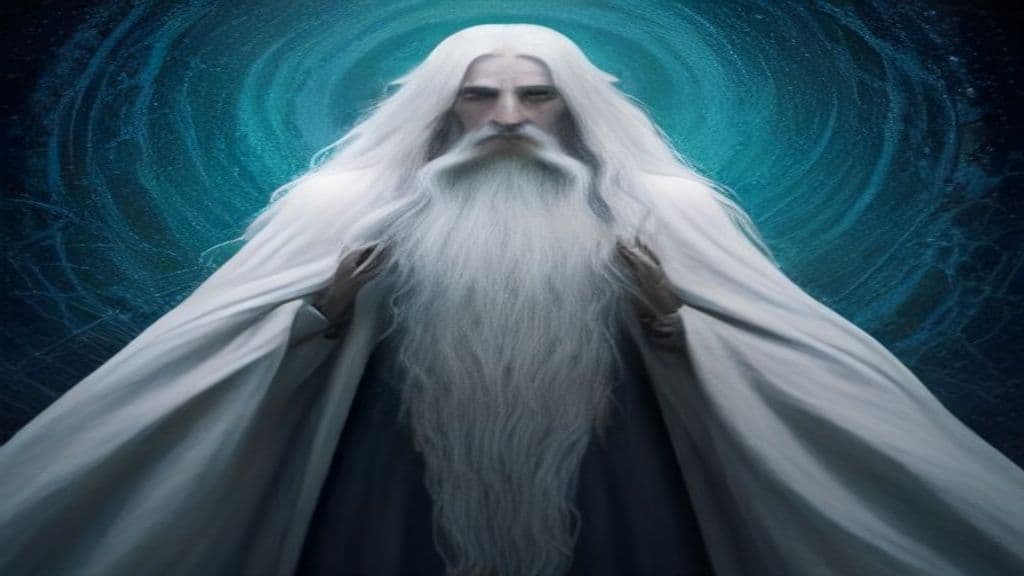
Saruman is a fictional Istari (wizard) in J. R. R. Tolkien's legendarium: originally 'Saruman the White', leader of the Istari and head of the White Council, he becomes a traitor who seeks power through knowledge, industry, persuasion and the creation of armies, and is ultimately defeated, stripped of office, and reduced before his final fall.

Sauron
Ancient

Sauron

Sauron is a principal antagonist in J. R. R. Tolkien's legendarium: an immortal Maia who became the chief lieutenant of Morgoth and later sought to dominate Middle‑earth by forging the One Ring and ruling from Mordor. He operates by craft, deception, and the orchestration of armies and subjugated agents.

Seven Great Lords of Narnia
Minor Spirit

Seven Great Lords of Narnia

A group of seven Telmarine noblemen in C. S. Lewis’s The Chronicles of Narnia who were sent beyond the Eastern Ocean during Miraz’s reign and disappeared; their fates (goldification, dragon-related death, enchanted sleep, nightmare-entrapment, and settlement) are the central quest of The Voyage of the Dawn Treader.

Shift
Lesser

Shift

Shift is a talking ape and the primary antagonist of The Last Battle (the final book of C. S. Lewis's Chronicles of Narnia). An intelligent and articulate animal, he organizes deception and political collusion that precipitate the Last Battle and is ultimately killed during the book's climactic events.

Shobijin
Lesser

Shobijin

Tiny twin fairies who serve as the priestesses and emissaries of the giant guardian Mothra (Mosura), acting as ritual singers and spokeswomen for Infant Island and its protector across multiple films and media appearances.

Sith
Ancient

Sith

The Sith are a fictional ordered movement of Force-sensitive beings in the Star Wars franchise who embrace and wield the dark side of the Force. Depicted as the primary antagonistic counterpoint to the Jedi, they organize politically and militarily to seize power, destroy the Jedi Order, and rule the galaxy.

Smaug
Greater

Smaug

Smaug is a singular, ancient dragon from J. R. R. Tolkien's legendarium (The Hobbit). He seized and occupied the Dwarf-kingdom of Erebor, guarded a vast hoard for centuries, and is portrayed as a highly intelligent, speech-capable, and vainglorious hoard-guardian whose single exposed belly-spot proves fatal.

Stesimbrotus of Thasos
Minor Spirit

Stesimbrotus of Thasos

Stesimbrotus of Thasos was a 5th-century BCE Greek sophist, rhapsode, and logographer cited by later ancient authors for his interpretations of Homer and for anecdotal, often scandalous, accounts of Athenian political figures. He is attested in sources such as Plato, Plutarch, and Tatian, and has been suggested by a modern scholar as a possible author of the Derveni papyrus.

Stheneboea
Lesser

Stheneboea

Stheneboea (Ancient Greek Σθενέβοια; Homeric Antea) is a mortal royal woman in the Bellerophon cycle of Greek myth whose rejected advances and subsequent false accusation of Bellerophon initiate the hero's trials. Her story functions as a narrative motif exploring xenia, sexual politics, and divine retribution rather than as an account of a supernatural being.

Stolas
Lesser

Stolas

Stolas is named in modern reference works as a demon associated with the Ars Goetia and is used as a character in contemporary media. In the animated series Helluva Boss Stolas is presented as a Goetial demon of Hell who possesses an ancient book that enables travel between Hell and the human world.

Suitors of Penelope
Lesser

Suitors of Penelope

A collective of mortal young men in Homer's Odyssey who occupy Odysseus' household during his long absence, pressuring Penelope to remarry, consuming the oikos' resources, and plotting against Odysseus' family until Odysseus and his allies kill them to restore order.

Susan Pevensie
Minor Spirit

Susan Pevensie

Susan Pevensie is a fictional English girl and one of the four Pevensie siblings created by C. S. Lewis in The Chronicles of Narnia. In the series she functions as a mortal child who becomes Queen Susan the Gentle (Queen Susan of the Horn) while ruling in the parallel realm of Narnia; her later estrangement from Narnia and ambiguous fate have generated extensive critical and fan commentary.

Tash
Ancient

Tash

Tash is the principal deity of Calormen in C. S. Lewis's The Chronicles of Narnia. Portrayed as an active, monstrous divine presence in The Last Battle, Tash is summoned into Narnia by conspiratorial actions and is depicted as a devouring antagonist contrasted with Aslan.

Teiresias
Lesser

Teiresias

Teiresias is a blind mortal seer of the Theban cycle in Greek myth who serves as a prophetic advisor associated with Apollo and who figures across multiple generations of Theban narrative, including roles advising Cadmus and appearing in tragedy.

Telephassa
Lesser

Telephassa

Telephassa (Greek Τηλέφασσα, also Telephe/Telephaassa) is a mythic maternal figure in Greek genealogies, commonly named as the wife of Agenor and mother of Europa, Cadmus, Cilix, and Phoenix. She accompanies her children in the search for Europa and is variously localized in Phoenicia, island stops (Rhodes, Thera) and in Thrace or Samothrace, where some accounts report she fell ill and died.

Telmarines
Lesser

Telmarines

The Telmarines are a human ethnopolitical people in C. S. Lewis’s Narnia who descend from pirates who settled in Telmar and later invaded and ruled Narnia for generations. They are ordinary humans with political and military power rather than supernatural beings; their rule suppresses Narnia's native, magical inhabitants until overturned by the rightful heir and intervention by Aslan and native Narnians.

Tethys
Ancient

Tethys

Tethys is attested in the provided materials primarily as a Titaness of Greek mythic tradition who in a modern children's retelling is presented as an elderly storyteller and mediator among gods. The name is also widely reused in scientific and cultural contexts (a Saturnian moon, a gastropod genus, the ancient Tethys Ocean, and various institutions), usages which are naming transfers rather than continuations of the mythic figure.

Teucer
Lesser

Teucer

Teucer (Greek: Τεῦκρος, Latinized Teucer/Teucrus) is a mythic human hero of the Homeric age: an accomplished archer, son of King Telamon and Hesione, half‑brother of Ajax, a participant in the Trojan War and later an eponymous founder (most commonly credited with founding Salamis on Cyprus). He appears in epic (Homer) and tragic (Sophocles, Euripides) traditions and functions as a legendary warrior‑founder in Greek mythic genealogies.

The Corruptor (Jackson Day)
Lesser

The Corruptor (Jackson Day)

A Marvel Comics supervillain, Jackson Day became the Corruptor after exposure to psychoactive chemicals in a pharmaceutical factory fire; his bodily secretions can subvert the inhibitions and will of others, enabling mass social manipulation and criminal organization.

The Gray Man
Minor Spirit

The Gray Man

A polyvalent label applied to multiple distinct figures: a local ghost of Pawleys Island, a figure in Scottish folklore called Fear liath, and numerous modern fictional or cultural uses. The sources provided do not present a single unified supernatural being but rather several separate referents sharing the same name.

The Headmen
Lesser

The Headmen

The Headmen are a team of supervillains appearing in American comic books published by Marvel Comics, created from earlier horror-story characters and first assembled as a team in The Defenders #21 (March 1975). They are human (or human-derived) antagonists who pursue schemes of scientific, political, and economic domination and are repeatedly opposed and defeated by superhero protagonists.

The Hulk
Greater

The Hulk

A modern fictional comic-book character from American popular culture created by Marvel Comics, the Hulk is the rage‑driven alter ego of scientist Dr. Robert Bruce Banner who transforms following exposure to gamma radiation; portrayals vary across media and continuities between a destructive, near‑mindless brute and more nuanced, intelligent personae.

Theognete
Minor Spirit

Theognete

Theognete (Ancient Greek: Θεογνήτης) is a mortal woman attested in Greek mythographic genealogies as a daughter of Laodicus and in at least one account as the mother of the hero Jason by Aeson of Iolcus. The name also appears in modern taxonomic records as a genus of insects; the biological usage is separate from the mythological figure.

Theseus
Greater

Theseus

Theseus is a legendary hero of Greek myth credited with clearing dangers from Attic roads, slaying the Minotaur, and performing foundational civic acts for Athens (including synoikismos and establishing cult practice). He is portrayed as of mixed mortal and divine parentage and functions as a culture-hero and exemplar in later authors' moralizing biographies.

Thingol (Elu Thingol / Elwë Singollo)
Ancient

Thingol (Elu Thingol / Elwë Singollo)

Thingol is the King of Doriath and leader of the Sindar (the Grey Elves) in J.R.R. Tolkien's First‑Age legendarium. An original chieftain who awoke at Cuiviénen, he became High‑king/Lord of Beleriand, married the Maia Melian, and whose political choices and dynastic actions figure centrally in the tragic history of Doriath.

Thranduil
Ancient

Thranduil

Thranduil is a fictional Elven king in J. R. R. Tolkien's Middle-earth legendarium. A Sindarin Elf who rules the Woodland Realm (Greenwood the Great / Mirkwood), he is depicted in the sources as a hereditary monarch, military leader, and guardian of his people across the Second and Third Ages.

Tirian
Lesser

Tirian

Tirian is a fictional human character in C. S. Lewis's Chronicles of Narnia, the last King of Narnia and the protagonist of The Last Battle. He is a mortal ruler and skilled swordsman who leads Narnia in its final conflict, witnesses the deception of a false Aslan, and ultimately enters Aslan's Country.

Tisander
Minor Spirit

Tisander

Tisander (Ancient Greek: Τίσανδρος / Τίσανδρον) is a Greek personal name attested in myth, athletic records, and civic genealogy. In surviving sources it refers to distinct mortal figures: a mythic son of Jason and Medea, an ancient boxer from Naxos credited in modern commentary with multiple Olympic victories, and a patronymic ancestor (father of Isagoras) in Athenian political genealogy.

Titania
Lesser

Titania

Titania is the proper name used most prominently for the Queen of the Fairies in William Shakespeare's A Midsummer Night's Dream; the name also appears across astronomy, chemistry/mineralogy, and modern fiction as distinct, homonymous referents rather than a single folkloric entity. In the Shakespearean context she appears onstage as a sovereign fairy figure who enters accompanied by her retinue.

Tuor and Idril
Lesser

Tuor and Idril

Tuor Eladar (also Ulmondil) and Idril Celebrindal are legendary mortal figures of Tolkien's First Age: Tuor, a Man chosen and guided by the Vala Ulmo, and Idril, a High‑Elf princess of Gondolin. Their union produces Eärendil and a lineage pivotal to later Ages; together they survive the Fall of Gondolin and sail West in a ship built by Tuor.

Turnus
Lesser

Turnus

Turnus is the legendary mortal King of the Rutuli and chief martial antagonist to Aeneas in Roman epic tradition (most prominently Virgil's Aeneid). Presented as a brave, hot‑headed warrior and suitor of Lavinia, his resistance to the Trojan settlement and eventual slaying by Aeneas form a key episode in Rome's mythic origins.

Tyro
Lesser

Tyro

Tyro (Ancient Greek: Τυρώ, Tyrō) is a mortal woman in Greek myth, an Elean princess who becomes Queen of Iolcus. Her unions with mortal and divine partners and the actions she takes (including exposure of infants and, in some accounts, killing children to avert prophecy) make her a key genealogical figure in the ancestry of heroes such as Jason.

Tōdaiki / Todaiki
Lesser

Tōdaiki / Todaiki

A Japanese yōkai listed in Toriyama Sekien's Konjaku Hyakki Shūi tradition and referenced in modern summaries and fiction as a lamp- or lighthouse-associated demon/spirit. Accounts vary: Sekien's bestiary labels it with the characters 灯台鬼 (lamp/lighthouse + demon), a fandom source depicts it as a transformed human rendered into a candlestick-like ornament, and a modern manga uses the motif as a prophetic giant lighthouse demon.

Uatu (the Watcher)
Greater

Uatu (the Watcher)

Uatu is an individual of the extraterrestrial Watcher race in Marvel fiction, assigned to observe Earth and the Sol system from the Blue Area of the Moon. Though bound by a species-wide non-interference vow, Uatu is notable for repeatedly bending or violating that oath to aid humanity and for serving as a narrative witness and occasional narrator in Marvel stories.

Undead
Lesser

Undead

A category of beings that were once dead or are corpses yet continue to behave as if alive; a broad catch-all used in myth, legend, and fiction for both reanimated bodies and incorporeal continuations of persons.

Undine (Ondine)
Lesser

Undine (Ondine)

An elemental water spirit from Paracelsian occult cosmology later developed into a literary water-nymph archetype. Undines are humanoid, almost always presented as female, inhabit watery places, lack an immortal human soul by default, and—according to Paracelsus and later literature—may acquire a human soul through marriage with a human.

Unferth
Lesser

Unferth

Unferth (Old English Hunferð/Unferth) is a human courtier and thegn in the Old English epic Beowulf, presented as Ecglaf's son and a þyle in Hrothgar's hall. In the poem he functions primarily as a rhetorical antagonist to Beowulf, later lending his sword Hrunting and receding in speech after Beowulf's victories.

Urania
Ancient

Urania

Urania is the Greek Muse presiding over astronomy and astrology, daughter of Zeus and Mnemosyne, traditionally portrayed as a heavenly inspirer who elevates human thought toward the cosmos and is depicted with a celestial globe and staff.

Valar
Ancient

Valar

In J. R. R. Tolkien's legendarium the Valar are the greatest of the Ainur who entered the created world (Arda) to shape, govern, and protect it. They are described as the 'Powers of the World'—personified, supreme spiritual beings who implement and elaborate the creator Eru Ilúvatar's themes and who stand above Maiar and the peoples of Arda.

Varda / Elbereth
Ancient

Varda / Elbereth

Varda, often called Elbereth in secondary references, is identified in the provided sources as one of the Valar — the mightiest Ainur who chose to enter the created world (Arda) in J. R. R. Tolkien’s legendarium. The Valar are described in the sources as the 'Powers of the World' who shape and govern Arda after its form is determined by the Music of the Ainur.

Vashistha
Ancient

Vashistha

Vashistha (also Vasishtha) is a principal Vedic rishi (sage) traditionally credited as the chief author of Mandala 7 of the Rigveda and counted among the Saptarishis; he is invoked in Vedic verse and later received as an authoritative founding figure for strands of Vedanta.

Velikiy Poloz (The Great Snake)
Greater

Velikiy Poloz (The Great Snake)

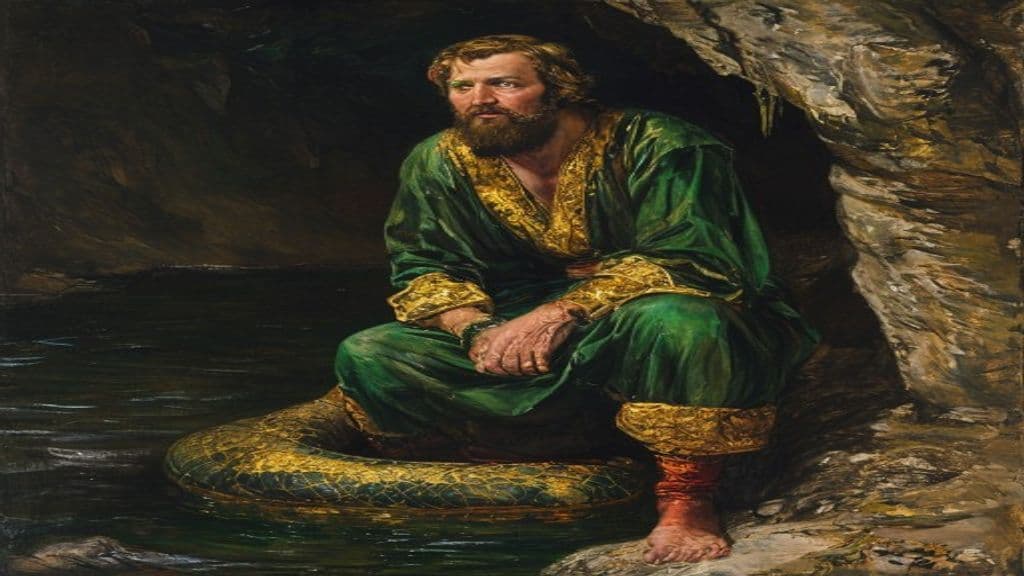
A powerful snake-ruler from Ural miners' folklore as rendered in Pavel Bazhov's skaz "The Great Snake." Poloz is depicted as the proprietor and guardian of underground gold who can reveal or withdraw veins and who reacts to human behavior around claims.

Warg
Greater

Warg

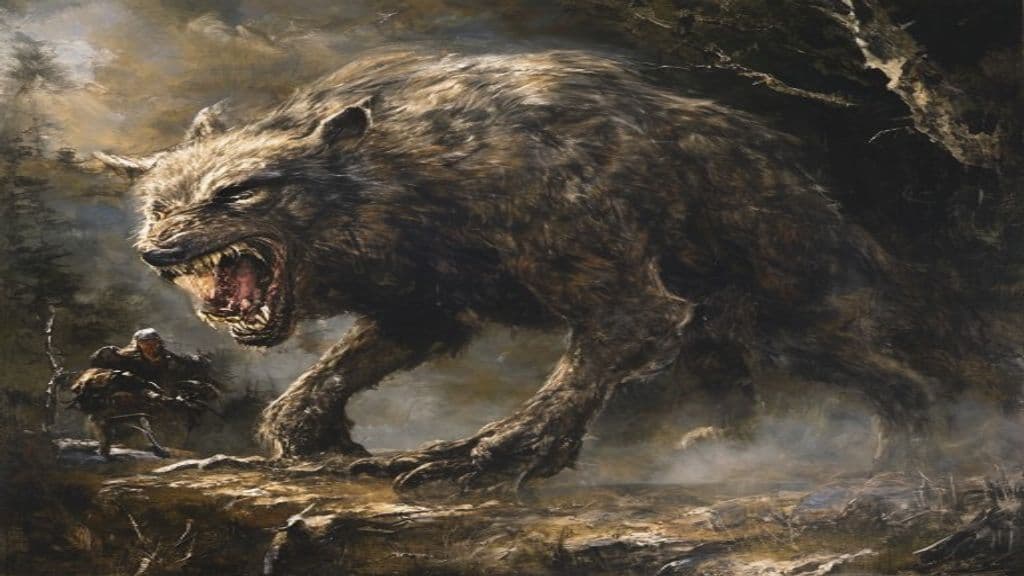
A large, malevolent wolf-like being whose modern fictional form was popularized by J. R. R. Tolkien as an intelligent, war‑capable wolf-race allied with Orcs; the term derives from Old Norse vargr and Old English wearh, words that blur natural wolf, outlawry, and destructive agency.

Wealhtheow
Lesser

Wealhtheow

Wealhtheow is a legendary/literary queen in the Old English epic Beowulf: wife of Hrothgar and a member of the Wulfing (Helming) kin who performs the courtly, diplomatic, and ceremonial duties that maintain social cohesion in the Danish hall.

Wererat
Lesser

Wererat

A gaming monster from tabletop role‑playing bestiaries presented as a humanoid shapechanger that can take human, rat‑humanoid hybrid, and giant rat forms. The wererat appears primarily in modern fantasy role‑playing game materials (Dungeons & Dragons, Pathfinder) and associated hobby media such as miniatures and adventure conversions.

Wicked fairy (Sleeping Beauty)
Minor Spirit

Wicked fairy (Sleeping Beauty)

A folkloristic antagonist figure in the Sleeping Beauty tale-cycle, commonly called the Wicked fairy and appearing in adaptations under names such as Carabosse and Maleficent. The figure functions as the malign actor who precipitates the heroine’s central misfortune in the narrative tradition.

Wight
Lesser

Wight

A Germanic-language term historically meaning 'being' or 'creature' that, across Old English and Old Norse usage, covers ordinary created beings as well as a range of supernatural local spirits (e.g., land- and household- vættir). In later medieval and modern contexts the term's range shifted and in modern fantasy it has been narrowed by authors to denote specific undead creatures.

Wonder Woman
Greater

Wonder Woman

A long-running American comic-book superheroine portrayed as an Amazon-Olympian princess and warrior from the island nation of Themyscira. She functions as a leading superhero in the DC Comics universe and a cultural archetype of a powerful, liberated woman; origins and certain attributes vary across comic-book continuities.

Xanthippe
Lesser

Xanthippe

Xanthippe (Ancient Greek: Ξανθίππη) is a historical and literary woman of 5th–4th century BCE Athens, best known as the wife of the philosopher Socrates. In ancient and later Western literature her name became a proverbial exemplar of a 'difficult' or 'shrewish' wife and was reused as a female given name and literary figure in subsequent receptions.