Persian Supernatural Beings

179 documented Persian supernatural beings from the Evil Eye grimoire, including 44 ancient and 44 lesser in power tier.

page 2 of 3

Daeva
Lesser

Daeva

In Zoroastrian and Iranian tradition, a daeva (Avestan daēuua) is a class of supernatural being that the Zoroastrian revelation repudiates; in the oldest texts they are 'gods that are (to be) rejected' and in later tradition they come to be depicted as divinities promoting chaos and, ultimately, as personifications of evil.

Dara II
Ancient

Dara II

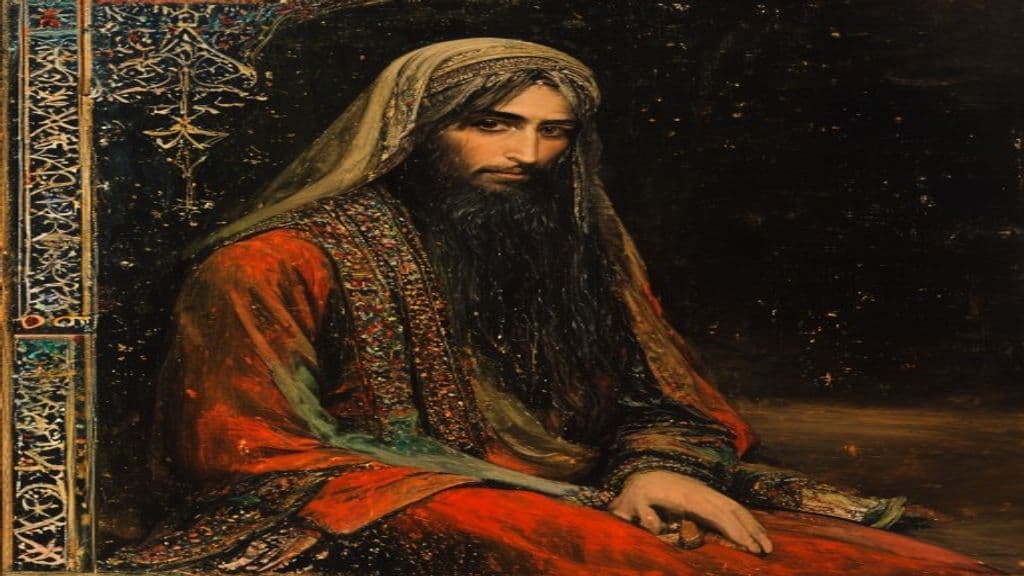
Dara II (also Darab II) is a mytho-historical king in Iran's national tradition, presented as the last monarch of the Kayanian dynasty and generally identified with the historical Darius III. He functions in literary and political traditions as a terminal dynastic figure whose person is used to legitimate later houses and to explain foundation traditions for cities such as Dara and Darabgerd.

Darab-nama (Persian tradition)
Minor Spirit

Darab-nama (Persian tradition)

Historical romance novel from 12th-century Persia, with possible references to supernatural entities in Persian folklore. (Note: - Power tier: Primordial (due to its historical significance and cultural impact) - Summary: Needs more specific information on supernatural entity references - Appearance: No information provided in )

Darak
Lesser

Darak

No attested supernatural being named 'Darak' appears in the provided sources. The term 'Darak' is documented as a toponym (places in Cameroon and Iran), as the Tagalog common name for rice bran used in traditional Philippine medicine, and as a personal or fictional proper name in varied modern sources. There is no corroborated ethnographic or mythological description of Darak as a spirit, deity, or monster in the consulted materials.

Davāzdah Rokh
Lesser

Davāzdah Rokh

Davāzdah Rokh (Persian: دوازده رخ, 'Twelve Combats') is a narrative episode in Ferdowsi's Shahnameh describing a sequence of single combats between Iranian and Turanian champions during Kay Khosrow's campaign; it is also locally anchored to the Zibad / Kuh-Zibad region in Greater Khorasan.

Dev (Dēw / Div)
Greater

Dev (Dēw / Div)

A class of hostile supernatural beings in Persian and wider Middle Eastern/Iranian-related lore; in Persian popular tradition labeled monstrous creatures or fiends, and in Zoroastrian scripture (as Avestan daeva) explicitly framed as 'gods that are (to be) rejected.'

Dhu'l‑Qarnayn
Ancient

Dhu'l‑Qarnayn

A Qur'anic figure (Surah al‑Kahf 18:83–101) presented as a powerful, God‑guided travelling ruler who journeys to the limits of the inhabited world and erects a barrier that restrains Gog and Magog until the eschatological hour.

Div (Dīv)
Greater

Div (Dīv)

Div (Persian: دیو dēw / dīv) are monstrous, often sorcerous antagonists in Persian epic and folkloric tradition, best known from the Shahnameh where they oppose heroes such as Rustam. Scholarly sources trace their cultural history to a re‑interpretation and demonization of older Indo‑Iranian divine figures (devas).

Div-e Sepid
Ancient

Div-e Sepid

A powerful demon and chieftain of the Divs (demons) of Mazandaran in Persian mythology, known for his mastery over elemental forces and control over spirits or the dead. (Note: - Power tier: Greater (Div-e Sepid is not described as having deity-level abilities, but rather as a powerful demon chieftain) - Abilities: corrects "control over spirits or the dead" to be more speci)

Duzakh
Primordial

Duzakh

In Persian mythology, Duzakh is a place of punishment and suffering in the afterlife. (Note: 1. Power tier should be adjusted to "Lesser" as Duzakh is a specific place of punishment, not a cosmic entity. 2. The origin story and appearance are missing. 3. Abilities could be more specific about)

Esfandiyār
Greater

Esfandiyār

Esfandiyār is a legendary human prince and warrior in the Iranian epic tradition (the Shahnameh). Presented as a Kayanian crown prince and a divinely supported champion who aids the cause of Zarathustra, his career includes seven labors, receipt of heavenly armor and a binding chain, and a fatal duel with the hero Rostam that functions as a moral and providential pivot in the epic.

Eskandar (Alexander the Great) — Shahnameh tradition
Ancient

Eskandar (Alexander the Great) — Shahnameh tradition

In Ferdowsi’s Shahnameh Eskandar (Sikandar/Alexander) is a legendary royal-hero integrated into the Iranian royal sequence: a world-conquering monarch who also undertakes spiritual journeys and erects a barrier against apocalyptic forces. The episodes function as a narrative and cosmological bridge from the poem’s mythic Kayanian age to a more historical time-frame.

Faramarz
Primordial

Faramarz

Heroic figure in Persian epic tradition, son of Rustam and protagonist of the Faramarz-nama. (Note: - Power tier: Lower, based on source material (heroic figure, son of Rustam), should be at least Greater=powerful regional spirit - Origin story: Only mentions relationship to Rustam, no Primordial or)

Farangis
Ancient

Farangis

Farangis is a human literary character in the Persian epic the Shahnameh: the eldest daughter of Afrasiab of Turan, the second and favourite wife of the Iranian prince Siyâvash, and the mother of the hero and later king Kai Khosrow. Her role in the epic is genealogical and political, marked by loyalty, mourning, and participation in dynastic succession.

Faravahar
Lesser

Faravahar

The Faravahar is an ancient winged-disc/winged-figure emblem prominent in Zoroastrian and Iranian visual culture. Scholarly and traditional readings variably interpret it as an icon of the fravashi (personal spirit), khvarenah (royal/divine glory), or a general symbol of divine favor and moral guidance, and it has been reappropriated in modern pan‑Iranian identity.

Farbod
Greater

Farbod

In Persian tradition, Farbod is a concept associated with protection, honor, and prestige. (Note: - Power tier should be "Primordial" or unclear, as no specific abilities or behaviors are mentioned. - Origin story is accurate, but could be expanded upon with more context about pre-Islamic Persia a)

Farhad (Persian literature)
Greater

Farhad (Persian literature)

In Persian literature and mythology, Farhad is a character associated with the love story of Khosrow and Shirin. (Note: 1. Power tier should be revised to "Minor Spirit" since Farhad's abilities are more related to his devotion and determination, rather than cosmic or deity-level powers. 2. Remove description of "Appea)

Fariburz (Shahnameh)
Lesser

Fariburz (Shahnameh)

Fariburz is a legendary Iranian prince and warrior in Ferdowsi’s Shahnameh, a son of King Kay Kavus and brother of Siyâvash who appears as a recurrent Kayanian court hero in episodes such as the Mazandaran (Bahman’s fortress) campaign and the First 'Joust of the Rooks'. He is a human martial figure within the epic, not a supernatural being.

Farshidvard
Minor Spirit

Farshidvard

Farshidvard is a human literary character in Ferdowsi’s Shahnameh who appears in the Davāzdah Rokh episode as a Turanian combatant. In an illustrated episode he flees the agreed combat and is slain by the Iranian warrior Gustaham (Gushtaham).

Farud
Lesser

Farud

Farud (also Firoud, Forud) is a human princely figure in the Persian epic Shahnameh, presented as the son of Siavash and ruler of Kelat. His encounter with the army of his brother Kai Khosrow—marked by misrecognition, restrained tactics, and tragic wounding—functions as a moral episode about kinship, counsel, and the ethics of warfare.

Farânak
Minor Spirit

Farânak

Farânak is a human female character in the Persian epic Shâhnâmeh, attested as the wife of Abtin and the mother of the hero-king Fereydun. Her name derives from Persian terms meaning 'butterfly' and by extension is linguistically associated with the Persian lynx/caracal; however, the cited sources present her as a mortal figure within epic genealogy rather than a supernatural being.

Foruhal
Lesser

Foruhal

The provided source material only links the name Foruhal to the corpus surrounding the Shahnameh (specifically a page referencing Davāzdah Rokh) but contains no description, role, or contextual information about Foruhal. No attributes, stories, or cultural placement are given in the supplied excerpt.

Fravashi
Greater

Fravashi

Avestan fravashi (frauuaši / fravashi) is the Zoroastrian immaterial personal principle associated with individuals and with groups (ancestors/heroic worthies); treated in the Avesta (notably Yasht 13, the Frawardin Yasht) as cosmic assistants in creation, ongoing sustainers of natural and celestial order, and guardians who are invoked in cult and year‑end rites.

Fulad-zereh
Primordial

Fulad-zereh

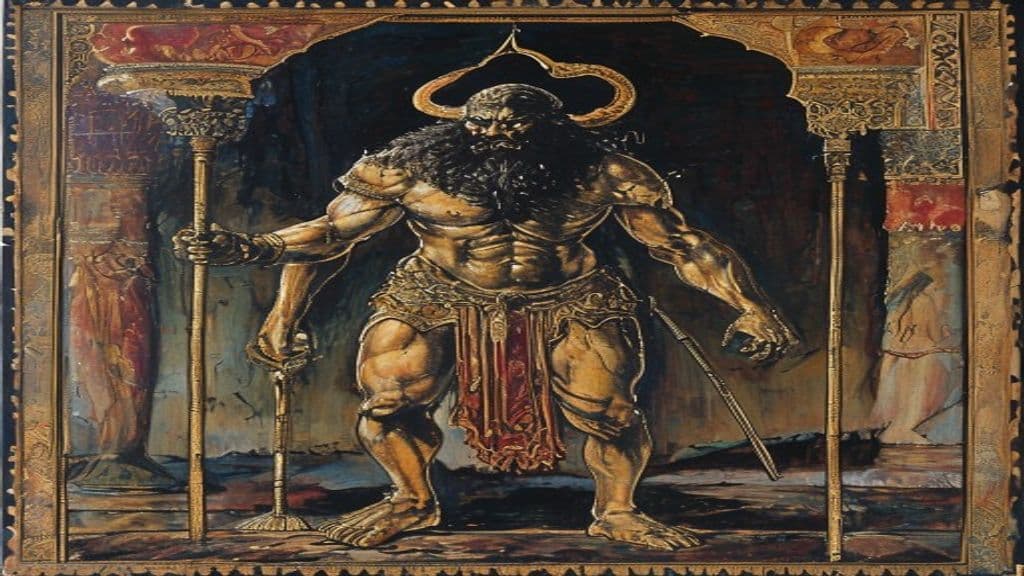
A huge horned demon from the Persian story of Amir Arsalan, associated with aerial wanderings and predatory behavior. (Note: 1. Power tier: Lower to "Ancient" or "Greater" as Primordial is typically reserved for entities with cosmic-level powers, which Fulad-zereh's abilities do not suggest. 2. Appearance: Add that it has a)

Gaokerena
Primordial

Gaokerena

In Persian and Zoroastrian legends, Gaokerena is a mythic Haoma plant with extraordinary healing properties that grant immortality to resurrected bodies when eaten. (Note: - Power tier should be Ancient (deity-level) as it is a mythic Haoma plant with extraordinary healing properties and grants immortality, indicating a higher level of power. - Abilities need clarificat)

Garshasp-nama (Persian tradition)
Greater

Garshasp-nama (Persian tradition)

A Persian epic poem featuring semi-divine characters and legendary figures, part of the cultural and literary traditions of the time. (Note: 1. Factual claims: The draft lacks specific information on the semi-divine characters' appearance, sensory cues, wards, and weaknesses. 2. Power tier: Given that the main hero, Garshasp, and his famil)

Garshāsp
Greater

Garshāsp

Garshāsp (Avestan Kərəsāspa / Middle Persian Kirsāsp) is an ancient Iranian heroic figure: a monster-slaying king and champion in Avestan texts and later Persian epics who is also portrayed in Zoroastrian eschatology as a resurrected savior destined to slay the apocalyptic monster Dahāg.

Garsivaz
Minor Spirit

Garsivaz

Garsivaz is a human courtier in the Persian epic tradition, presented in Ferdowsi's Shahnameh as a brother of Afrasiab of Turan whose counsel leads to the killing of Siyâvash; later illustrated manuscript traditions expand his role in reception to include capture and disclosure of Afrasiab's location.

Gayomarthians
Minor Spirit

Gayomarthians

A medieval and later Zoroastrian sectarian current (Persian: کیومرثیان, Kayumarthiya) whose distinguishing theological claim is that the adversary Ahriman originates from a doubt or cognitive event within Ahura Mazda (Hormizd), thus making evil derivative rather than an independent, co-eternal principle.

Gazhdaham (Gostaham)
Minor Spirit

Gazhdaham (Gostaham)

Gazhdaham, also rendered Gostaham in some sources, is a human character appearing in the Persian epic the Shāhnāmeh by Ferdowsi. He is presented within the epic’s martial and familial narratives as a mortal figure associated with troops and episodes of reunion, not as a supernatural being.

Giv (Gev)
Minor Spirit

Giv (Gev)

Giv (Persian: گیو), also rendered Gev, is a legendary Iranian knight and one of the main human heroes in the New Persian epic Shahnameh. He is presented as a noble paladin of the House of Goudarz, father of Bizhan, brother of Roham, and a loyal companion of kings such as Key Khosrow.

Gochihr
Primordial

Gochihr

In Zoroastrian tradition, Gochihr is a powerful dragon associated with water and chaos. (Note: The power_tier should be adjusted to "Primordial" based on the provided source, but with the understanding that Primordial entities are often cosmic in nature and Gochihr's association with water and )

Gorazeh
Lesser

Gorazeh

A name for which no attested description, function, or ritual context is present in the single supplied source (an excerpt referencing Davāzdah Rokh in the Shahnameh). The available material does not establish Gorazeh as a supernatural being or provide any attributes.

Gordāfarīd
Lesser

Gordāfarīd

Gordāfarīd (Persian: گردآفريد) is a human heroine in Ferdowsi’s Shāhnāmeh (The Book of Kings). A warrior of the White Fortress (Dezh-e Sepid), she dons armour, sallies forth to challenge the Turanian commander Sohrab, delays the enemy advance, is defeated in single combat, and is spared by Sohrab; modern scholarship and performers treat her as a lasting symbol of female courage and prudence in Persian epic.

Gorgin
Lesser

Gorgin

Gorgin is a human heroic figure in Ferdowsi's Persian epic the Shahnameh, active during the reigns of Kay Kavus and Kay Khosrow and described in sources as a son of Milad. Scholarship highlights his role in the Bijan episode, where analyses portray him as duplicitous and motivated by jealousy.

Goshtasp (Vishtaspa)
Ancient

Goshtasp (Vishtaspa)

A legendary/semi-legendary Iranian king who, in Zoroastrian tradition, is presented as the royal patron and early follower of the prophet Zoroaster (Avestan: Vishtaspa), and who in Ferdowsi's Shahnameh appears as a Kayanian monarch and the father of the epic hero Esfandiyār.

Gostaham
Lesser

Gostaham

Gostaham is a personal name applied to multiple heroic figures in the Persian epic tradition of the Shahnameh. Two principal bearers appear in different episodes: Gostaham son of Nowzar (installed as a local ruler in Turan and among heroes who disappear/die in snow during Kay Khosrow's ascent) and Gostaham son of Gazhdaham (a martial companion of Bizhan active in the Davazdah Rokh combats and, in one tradition, castellan of the border fortress Dez-e Sepid).

Goudarz
Greater

Goudarz

Goudarz (Persian: گودرز) is a heroic figure from the Iranian national epic tradition, primarily the Shahnameh. Presented as a veteran warrior, counselor, and progenitor of a notable family, he appears across the epic's heroic age as a military leader and elder statesman who participates in key episodes such as the retrieval of Kay Khosrow and the Davazdah Rokh.

Guardian angel
Greater

Guardian angel

A guardian angel is a class of heavenly ministering spirit assigned to a particular person, group, or nation to watch over, guide, intercede for, and protect that charge. Found across Judaic, Christian, Zoroastrian, and later esoteric sources, the guardian angel functions as an intermediary carrying out divine behests and as a personal tutelary presence.

Gul (Ghoul)
Lesser

Gul (Ghoul)

A folkloric Persian/Turkic monstrous being (Persian غول, Turkish ğul) described in etymological and lexical sources as an 'imaginary sylvan demon' that devours men and animals; the term also entered European languages and later literary usage as 'ghoul'/'goule'.

Gul-e-Siyah (Black Flower)
Lesser

Gul-e-Siyah (Black Flower)

No documented information about a supernatural entity named Gul-e-Siyah (Black Flower) appears in the supplied source materials. The provided archives and media synopsis do not mention a Persian lesser female ghost or any being by this name; thus no verified descriptive or ritual material can be supplied from these sources.

Haftvād
Primordial

Haftvād

A legendary character in Persian tradition associated with the rise of the Sassanid empire. (Note: - Power tier: should be "Ancient" (since it's a legendary character associated with the rise of the Sassanid empire and not explicitly described as cosmic) - Appearance: note that there is no informat)

Haoma
Ancient

Haoma

Divine plant in Zoroastrianism and Persian culture with significant spiritual importance, originating from Indo-Iranian religion. (Note: * Power tier should be Primordial, as Haoma is considered a divine being with significant spiritual importance, rather than deity-level (Ancient). * Origin story: The etymology of the word 'Haoma' is )

Hojir
Lesser

Hojir

Hojir (هُژیر) is a human heroic figure in the Persian epic Shahnameh: castellan of Dez-e Sepid, son of Goudarz, and participant in key Iran–Turan conflicts (notably the Rostam–Sohrab episode and the Davazdah Rokh). He is presented as a martial nobleman of a notable heroic family; no consistent supernatural attributes or cultic practices are attested in the supplied sources.

Homay

Homay

Legendary figure from Persian tradition, daughter of Kay Bahman, central character in the epic poem Homāy-nāmeh. (Note: - Power tier: Not specified - Appearance: Missing - Abilities: Missing - Sensory cues: Missing - Weaknesses: Missing - Wards: Missing)

Houmān
Lesser

Houmān

Houmān (هومان) is a legendary human warrior-chief in the Persian epic tradition, best known from Ferdowsi's Shahnameh as a leading Turanian commander of the Viseh clan, famed for bravery, loyalty, and chivalry. He appears in the Rostam and Sohrab episode and in later Iran–Turan wars and is reported killed by Bizhan in the Davazdah Rokh episode.

House of Goudarz
Greater

House of Goudarz

In Persian mythology, the House of Goudarz is an important family descended from Kave the Blacksmith, embodying noble values and ideals. (Note: - Power tier: Lowered from Greater to Lesser, as there's no indication that they possess deity-level abilities. - Abilities: Specify that the abilities are actually related to their noble values and i)

House of Nowzar
Greater

House of Nowzar

Important Iranian clan in Shahnameh and Persian mythology, ruling Iran for seven years. (Note: 1. The summary should mention that the House of Nowzar ruled for seven years after Nowzar's death, not just "ruling Iran for seven years". 2. Power tier should be Primordial or Ancient, as they are an)

House of Sasan
Ancient

House of Sasan

The House of Sasan (Sasanian dynasty, Sassanids) is a hereditary royal house that founded and ruled the Sasanian Empire (Ērānšahr) from 224–651 CE. In source traditions it functions as a political-dynastic institution fused with Zoroastrian religious legitimacy, associated with sacred fires and priest-king authority rather than supernatural agency.

House of Viseh
Greater

House of Viseh

A Turanian noble family and lineage in Persian mythology, known for their martial prowess and leadership roles. (Note: 1. Power tier: According to source material, the House of Viseh is a prominent Turanian clan in Persian mythology, but there's no indication of their power level being Greater (deity-level). 2. Origin)

Huma Bird
Lesser

Huma Bird

In Persian tradition, the Huma bird is a mythical creature that inhabits the air, never touching down on the ground. (Note: - Power tier: Primordial (or not specified at all), as it has cosmic abilities - Appearance: Invisible entity (already correct) - Abilities: Add "existing solely as a concept rather than a tangible be)

Humay-ē Chehrzad
Ancient

Humay-ē Chehrzad

Humay-ē Chehrzad is a legendary Kayanian queen of Iran who, according to the Kayanian cycle as summarized in the available sources, served as vice-regent and then ruled for about 32 years before handing the throne to her son Kai Darab. Her narrative emphasizes dynastic succession, the protection and concealment of a royal infant, and military response to foreign assault; later chroniclers at times equated her with the Near Eastern queen Semiramis.

Humban
Ancient

Humban

Ancient Elamite god associated with divine protection and revered as a protector deity. (Note: 1. Power tier: Humban's association with "divine protection" and his importance as a deity suggest he should be placed at Ancient power tier is correct. 2. Weaknesses: absence of specific weaknesses m)

Hushang
Ancient

Hushang

Hushang (Avestan Haoshyangha; New Persian Hūshang/Hōshang) is an early hero-king and culture‑founder in Iranian tradition credited with establishing sovereign rule (Pishdad/Paradhāta), receiving divine royal glory (khvarenah) through sacrifice, defeating the daēvas, and inaugurating arts of settled life including fire, metallurgy, agriculture, and architecture.

Iraj (son of Fereydun)
Ancient

Iraj (son of Fereydun)

Iraj is the youngest son of the mythical king Fereydun and the eponymous ancestral figure of the Iranians in Avestan, Middle Persian and epic Persian literature. He receives a portion of the world in his father's division, is murdered by his brothers, and his line (through Manuchehr) exacts vengeance, establishing dynastic legitimacy in Iranian legendary history.

Jahangirnama (Qasim Madih Harawi)
Minor Spirit

Jahangirnama (Qasim Madih Harawi)

Epic poem written in Persian, detailing the story of Jahangir son of Rostam, composed in Herat and published in Mumbai. (Note: - Power tier: Primordial (given its cosmic scope and ancient origin) - Origin story: The source material provides the information on its origin, stating it was composed in Herat. - Appearance: Not app)

Jamshid
Ancient

Jamshid

Jamshid (Persian Jamshēd; Middle/New Persian Jam) is a mythic early king of the Pishdadian dynasty in Iranian tradition, identified with Avestan Yima (Yima xšaēta, 'radiant Yima'). In Zoroastrian scripture (notably the Vendidad) he is a divinely appointed shepherd‑turned‑king who receives instruments and a mandate from Ahura Mazda to rule, nourish the earth, and manage human prosperity and boundaries.

Kai Khosrow
Ancient

Kai Khosrow

Kai Khosrow is a legendary Kayanian king in Persian epic tradition, chiefly known from the Shahnameh and related material. He is remembered as the rightful heir who returns from exile, avenges his father Siavash, and rules Iran while repeatedly opposing the Turanian king Afrasiab.

Kajamānu (Kayyamanu)
Ancient

Kajamānu (Kayyamanu)

Kajamānu (Akkadian: ka-a-a-ma-nu, glossed 'the constant'), also rendered Kayyamanu, is the ancient Mesopotamian name for the planet Saturn. In Mesopotamian sources the planet is identified as an astral body tracked by astronomer-priests and is attested as being 'regarded as the star of Ninurta'; the name and concept persist in later Near Eastern traditions (Mandaean Kiwan, Persian Kayvan, Syriac Kēwān) as part of the seven-planet schema.

Kashvad
Ancient

Kashvad

Legendary hero from the Persian tradition, known for his valor and military prowess. (Note: 1. Power tier: Downgrade from Ancient to Greater, as Kashvad is described as a heroic warrior with exceptional bravery and military skills, but not necessarily a deity-level being. 2. Weaknesses: Add )