Persian Supernatural Beings

179 documented Persian supernatural beings from the Evil Eye grimoire, including 44 ancient and 44 lesser in power tier.

page 1 of 3

Ab-Zohr
Lesser

Ab-Zohr

Ab-Zohr is the culminating rite of the Zoroastrian Yasna service: a formal offering to the waters (Aban/Apas) that creates the consecrated liquid parahaoma and functions to purify, strengthen, and atone for damage done to waters. It is a ritual action rather than an independent supernatural being.
Aban (Āb/Ābān)
Primordial

Aban (Āb/Ābān)

Aban (Avestan apas; Middle Persian āb/ābān) is the collective, sacred principle of the waters in Zoroastrian cosmology — both the element water and its personified hypostases (the Apas/Ahuranis). Aban functions as a primordial, life-giving creation, a calendrical and liturgical focus (day-name, month-name, Abanagan feast), and a ritual object of veneration (ape zaothra, Aban Yasht) rather than a malign force to be expelled.

Aban Yasht
Ancient

Aban Yasht

The Aban Yasht is a hymn from the Persian tradition that praises Anahita, a goddess associated with water, fertility, and wisdom. It consists of 132 stanzas and is part of the 21 Yashts collection. (Note: - Power tier should be "Primordial" or possibly "Cosmic", given that it's a hymn of great spiritual significance and associated with a goddess. - The article incorrectly states that Anahita is associa)

Abtin
Ancient

Abtin

Abtin (Persian: آبتین), attested also as Athwya, is a mythic ancestral figure in Iranian tradition described in Avestan and later epic literature as one of a small set of formative human-like figures involved in preparing the corporeal world and as the father of the epic hero-king Fereydun in the Shahnama.

Adur Burzen-Mihr
Ancient

Adur Burzen-Mihr

Adur Burzen-Mihr is a consecrated Atash Behram — one of the three Great Fires of late antique Sasanian Zoroastrianism — historically associated with the farmer social estate and with a cultic location in northeastern Iran. Medieval texts (e.g., the Bundahishn) and later summaries record it as a major pilgrimage fire with legendary associations of protection and miraculous efficacy; its documentary history after the early Islamic period is unclear.

Adur Farnbag
Greater

Adur Farnbag

Adur Farnbag is one of the three Great or Royal fires in the Zoroastrian ritual/topographical system of pre‑Islamic Iran. Presented in the sources as a continuously tended sacred fire housed in a temple, it is attested in secondary accounts as a focus of cultic activity, miracle stories, and association with elite ritual geography in the Parthian–Sasanian eras.

Adur Gushnasp
Greater

Adur Gushnasp

Adur Gushnasp (Middle Persian: Ādur ī Gušnasp; New Persian: Āzargušnasp) is a pre-Islamic Zoroastrian Great Fire — one of the three highest grade sacred temple fires (Atash Behram) of Sasanian-era Iran. Housed at the temple-site historically called Shiz (modern Takht-e Soleymān, Adurbadagan), it functioned as a continuously tended cultic fire, a pilgrimage destination, and a focal point of royal patronage and warrior-class identity.

Aeshma
Greater

Aeshma

Aeshma is the Zoroastrian hypostasis of wrath — a fiendish being who personifies rage and functions as an ontological opponent to Ahuric principles and ritual discipline. In scripture and later tradition he distracts worship, foments violence and drunkenness, can be driven off by prayer or by divine agents such as Sraosha and Mithra, and will be overthrown or flee at the final renovation.

Afrasiab
Ancient

Afrasiab

Afrasiab is the legendary king and arch-enemy of Iran in Iranian epic and Zoroastrian-influenced tradition. Attested from the Avestan Fraŋrasyan through Middle Persian and the Shahnameh, he functions as a powerful Turanian ruler associated with sorcery, subterranean dwellings, and opposition to Iranian heroes and divine agencies.

Aghrirat
Lesser

Aghrirat

Aghrirat is a named Turanian noble and peacemaker in the Shahnameh and Iranian mythic tradition, presented as a son of Pashang and brother of Afrasiab and Garsivaz. He is notable for his kind and gentle character and for attempting, largely unsuccessfully, to end the hostilities between Iran and Turan.

Ahriman (Angra Mainyu)
Ancient

Ahriman (Angra Mainyu)

Angra Mainyu (Middle Persian Ahriman) is the hypostasis or personification of destructive, deceitful, and disordering mentality in Zoroastrian tradition. In the earliest (Gathic) layer it is presented as a choiceful destructive mainyu opposed to the constructive Spenta Mainyu; in later Pahlavi exegesis it becomes a personified cosmic antagonist who nevertheless is described as ontologically deficient and non-divine.

Ahura
Ancient

Ahura

Ahura is an Avestan term that designates a class of divinities in the Indo‑Iranian and Zoroastrian tradition, marking the sacred ‘lords’ who are to be reverenced and opposed to the rejected class of daevas. In Zoroastrian scripture the label functions as both a technical category and an honorific applied to high divine figures such as Ahura Mazda, Mithra, and Apam Napat.

Ahura Mazda
Ancient

Ahura Mazda

Ahura Mazda is the principal deity of Zoroastrian tradition, invoked as the supreme source of goodness and wisdom who instructs Zoroaster and commands helper spirits (yazatas). Historically attested in Achaemenid royal inscriptions, Ahura Mazda occupies a central role in Zoroastrian liturgy (notably the Yasna) and in various Iranian religious formulations.

Ahurani
Lesser

Ahurani

Ahurani (Avestan ahurani; pl. ahuranis) is a Zoroastrian divinity or class of divinities of the waters in the Avesta. In hymnic contexts (notably Yasna Haptanghaiti and Yasna 68) the ahurani(s) are invoked as companions of the ahura(s), bearers of health, fertility and other gifts, and the ritual recipients of libations (Ab‑Zohr).

Airyanem Vaejah
Primordial

Airyanem Vaejah

Sacred homeland and territory in Zoroastrianism, considered the cradle of Iranian civilization. (Note: * Power tier: Greater (Airyanem Vaejah is a sacred territory, not a cosmic entity) * Appearance and Abilities sections are missing * Weaknesses and Wards sections are missing * Summary should be rewri)

Aka Manah
Greater

Aka Manah

Aka Manah (Akem manah; Middle Persian Akoman, New Persian Akvan) is the personification of 'evil mind' in Zoroastrian literature. Originating as a Gathic term for corrupt thought, the figure is later reified in the Younger Avesta and Pahlavi texts as a high-ranking demonic opponent of Vohu Manah and ally of Angra Mainyu, whose activity is to pervert human thought and moral discrimination.

Akvan Div
Greater

Akvan Div

Akvan Div is a named div (دیو) from the Persian epic Shahnameh who confronts the hero Rostam during the era of Kay Khosrow. In the tale Akvan appears among onager herds, can vanish or assume forms such as a brilliant onager, wind, or storm, and is ultimately snared with a lasso and beheaded by Rostam.

Al (Georgian Tradition)
Primordial

Al (Georgian Tradition)

In Georgian tradition, Al is a supernatural entity that interferes with human reproduction, acting as a demon of childbirth. (Note: - Power tier should be "Ancient" (Al is a demon of childbirth, but not cosmic-level) - Abilities need to specify that Als can cause spontaneous abortions, stillbirths, and infant mortality, as stated )

Al-Kuz
Minor Spirit

Al-Kuz

Al-Kuz is not attested in the supplied corpus as a supernatural being; the name appears as the designation of an impact crater on Saturn's moon Enceladus and as the name of a literary character (one of the barber’s six brothers) in "The Hunchback's Tale" from The Book of One Thousand and One Nights.

Alp Er Tunga
Ancient

Alp Er Tunga

Alp Er Tunga is a legendary heroic ruler of Turan in early Turkic tradition, remembered as an ideal warrior-king and ancestral figure invoked in medieval dynastic genealogies. He also appears in Iranian epic tradition under the cognate name Afrosiyab/Afrasiab, where the figure is framed differently.

Amesha Spenta
Ancient

Amesha Spenta

Amesha Spenta (Avestan Aməša Spəṇta) are a canonical heptad of divine, bounteous principles in Zoroastrian thought, described as the first emanations of Ahura Mazda and later functioning as moral ideals and protectors or guardians of portions of creation.

Amir Arsalan-e Namdar (The Exalted Prince Arsalan)
Greater

Amir Arsalan-e Namdar (The Exalted Prince Arsalan)

A powerful, potentially benevolent figure in Persian mythology with magical abilities. (Note: 1. Power tier needs to be adjusted based on abilities described (as benevolent figure with magical abilities), could be Lesser or Minor Spirit instead of Greater. 2. Summary should mention specific my)

Anahita (Arədvī Sūrā Anāhita / Ardwisur Anāhīd)
Ancient

Anahita (Arədvī Sūrā Anāhita / Ardwisur Anāhīd)

Anahita is a worship-worthy divine figure (yazata) in Iranian religious tradition, attested in the Avesta and later Middle Persian texts, who personifies the waters and the mythical heavenly river and is associated with fertility, procreation, wisdom, and (in later syncretic forms) martial success and the planet Venus.

Andariman
Lesser

Andariman

Andariman is a named antagonist in the Shahnameh cycle of Greater Iran, depicted in manuscript illustrations and genealogical lists as an enemy combatant—described in a manuscript caption as "one of the Turkman host"—who fights the Iranian hero Gorgin (Gurgin) and is shown slain in illustrated episodes.

Angra Mainyu
Ancient

Angra Mainyu

In Zoroastrian tradition Angra Mainyu (Avestan) — often rendered Ahriman in later sources — is the personified destructive spirit and the principal adversary of the beneficent divine power (Spenta Mainyu) and, in some formulations, of Ahura Mazda. The figure functions as the opposing brother‑power within a foundational Mazdean dualism.

Anzar
Minor Spirit

Anzar

Anzar is a lexical item attested in the provided sources as a personal name, Iranian toponym element, and as a single machine-readable entry labeling it an "Amazigh (Berber) deity" on Wikidata. The supplied materials do not contain corroborated folkloric, ethnographic, or mythic descriptions of Anzar as a supernatural being.

Ap (the Waters)
Ancient

Ap (the Waters)

Ap (Vedic áp-, Classical Sanskrit āpas/āpa-) denotes the sacred category of 'the waters' in Vedic/Hindu thought: a physical element (water), an animate cosmic principle addressed in Rigvedic hymns, and an elemental category later counted among the Panchamahabhuta. The term names collective waters invoked in ritual, is linked to deities such as Varuna and the epithet Apām Napāt, and survives in related Indo-Iranian vocabularies (Avestan āpō/Aban, Persian āb).

Apam Napat
Primordial

Apam Napat

Persian deity associated with water, creation, and the natural world. (Note: 1. Power tier: Apam Napat is mentioned in the Rig Veda, which is an Indo-Iranian text, but he is not described as a cosmic creator figure; rather, he is specifically credited with creating all things.)

Apaosha
Greater

Apaosha

Apaosha (Avestan apaoša; Middle Persian Aposh/Apaush) is the personified cause and adversary of rainfall and prosperity in Zoroastrian literature. Depicted as a malign Daeva embodied as a black horse, Apaosha battles the rain-bringing divinity Tishtrya and causes drought when successful; his defeat (often aided by correct worship or Ahura Mazda's intervention) brings rain and renewal.

Aphrahat (the Persian Sage)
Minor Spirit

Aphrahat (the Persian Sage)

Aphrahat was a fourth‑century Syriac Christian ascetic and author in the Sasanian Empire, venerated later as "the Persian Sage." He composed a corpus of twenty‑three homiletic expositions called the Demonstrations, which addressed doctrine, church order, Jewish‑Christian tensions, and pastoral care during persecutions.

Arash (Arash the Archer)
Lesser

Arash (Arash the Archer)

Arash (Āraš-e Kamāngīr) is a mytho-historical heroic archer in Iranian tradition whose single, divinely sanctioned shot determined the boundary between Iran and Turan. Accounts vary on details — flight distance, launch and landing points, and whether Arash dies in the act — but the core motif is a sacrificial arrow that fixes territorial order and royal glory (khwarrah).

Aredvi Sura Anahita
Ancient

Aredvi Sura Anahita

Aredvi Sura Anahita is the Avestan Yazata of waters and fertility in ancient Iranian religion and Zoroastrianism, praised in the Aban (Aban Yasht) as the mighty, undefiled river and invoked in liturgical offerings to waters.

Arimanius
Ancient

Arimanius

Arimanius is a Greco-Roman rendering of the Iranian adversary Ahriman attested in classical literature (notably Plutarch) as the dark opposing principle to Oromazes/Ahura Mazda, and as a deity-name found on several Roman Mithraic dedications. Literary and inscriptional uses differ: Plutarch presents a morally malign, cosmological figure associated with pestilence and darkness, while Mithraic inscriptions invoke the name in dedicatory contexts with ambiguous or reinterpreted valence.

Arjasp
Lesser

Arjasp

Arjasp (Arjāsp) is a legendary Iranian antagonist attested in the Avesta, Middle Persian literature, and the epic Shahnameh. In earlier Zoroastrian hymns he appears as leader of the hostile Xyaona tribe opposed to Vishtaspa/Goshtasp's adoption of Zoroastrianism; in later Pahlavi and epic tradition he is historicized as a Turanian king and military rival who besieges Iranian strongholds and is slain by the hero Esfandiyar.

Arnavāz
Lesser

Arnavāz

Arnavāz is a named royal woman in Persian epic tradition (Shahnameh and related recensions). She is presented as a consort of the usurper Zahhāk who, after his defeat, is taken into Fereydun's household and in some versions is mother of Iraj, thus functioning as a dynastic node in the epic genealogy.

Artemisia I of Caria
Lesser

Artemisia I of Caria

Artemisia I of Caria (Ancient Greek: Ἀρτεμισία) was a historical queen of Halicarnassus and nearby islands who ruled circa 480 BC as an allied subordinate of Xerxes I of Persia. Known from Herodotus and later reception, she commanded a naval contingent at Artemisium and Salamis, offered strategic counsel to Xerxes, and is notable in Greek historiography as an exceptional female military ruler.

Arzhang Div
Lesser

Arzhang Div

Arzhang Div (Aržang Dēw; ارژنگ دیو) is presented in Shahnameh manuscript tradition as the chief or commander of the divs of mythic Mazandaran and an antagonist defeated by the hero Rustam during the episode commonly called Rustam's Sixth Feat (part of the Seven Labours). His defeat is treated by commentators as emblematic of the collapse of a demonic ruling order in the epic.

Asha
Primordial

Asha

Asha (Avestan aṣ̌a / arta), later personified as Asha Vahishta, is the foundational Zoroastrian cosmic and moral principle of truth, right order, and right-working; it functions both as an abstract ontological principle (truth = existence) and as one of the Amesha Spenta, the divine hypostases serving Ahura Mazda.

Ashkbous
Lesser

Ashkbous

Legendary warrior and champion in Persian mythology, from the Shahnameh epic poem. (Note: 1. Remove the statement "No physical description of Ashkbous provided in the source material." since the article explicitly mentions an appearance is not provided, implying one does not exist. 2. Powe)

Axtya
Primordial

Axtya

Evil sorcerer in Zoroastrian mythology, posing intellectual challenges to humans with his riddle-crafting and solving abilities, rivaling or surpassing deities. (Note: - Power tier: Axtya should be classified as Greater (powerful regional), not Primordial (cosmic). - Abilities: Axtya poses intellectual challenges, but his ability is specifically riddle-crafting and )

Az (unattested as distinct demon)
Minor Spirit

Az (unattested as distinct demon)

No supplied sources attest a distinct folkloric or mythological entity named 'Az'. The available materials only provide general background on 'demons' as a category and on Zoroastrian daevas; any association of the name 'Az' with a specific supernatural being is not supported by the provided corpus.

Azadeh
Minor Spirit

Azadeh

Azadeh (Persian: آزاده) is a Persian female given name meaning broadly 'free' or 'free-minded'; some sources also gloss it as 'someone noble'. The name appears in modern Iranian usage (borne by several contemporary public figures) and as the name of a character in Ferdowsi's Shahnameh. It is a personal name rather than a supernatural being in the provided sources.

Azhdaha (Aždahā)
Greater

Azhdaha (Aždahā)

Azhdaha (also Aždahā) is a serpentine/draconic monster in Persian literary and folkloric tradition, depicted as a gigantic, often dangerous creature that may inhabit air, sea, or land and appears in epic and cosmological texts.

Azhdahak
Ancient

Azhdahak

Azhdahak (Old Armenian Աժդահակ, also spelled Ashdahak) is the Armenian form of the Avestan figure Azhi Dahaka. In Armenian reception the name refers to the same mythic adversary of Iranian tradition — an imprisoned serpent/dragon-type antagonist who, in Iranian accounts cited by Armenian sources, is bound (on Mount Damavand) and destined to break out at the end of time before being finally defeated.

Babr-e Bayān
Greater

Babr-e Bayān

Babr-e Bayān is the name of a legendary suit or armor associated with the Iranian hero Rostam in Persian epic tradition. In most accounts it is an extraordinary protective garment (sometimes said to be made from a slain creature’s hide) that confers invulnerability when worn.

Bahram (Shahnameh)
Lesser

Bahram (Shahnameh)

Bahram is an Iranian heroic figure in Ferdowsi's Shahnameh, presented as a human warrior and counselor. He is named as a son of Goudarz and brother of Rohham, Giv, and Hojir, and appears in the episode of Siavash as one of Siavash's counselors alongside Zange-ye Shavaran.

Banu Goshasp
Primordial

Banu Goshasp

Important heroine in Iranian mythology, appearing in several Persian epics including the Banu Goshasp Nama. (Note: - The power tier should be Ancient, not Primordial, as there's no indication that she has cosmic-level abilities. - There are no sensory cues, weaknesses, or wards listed, but they could potentially b)

Barbad
Minor Spirit

Barbad

Barbad (Persian: باربد) was a celebrated late 6th–early 7th-century Persian musician-poet, music theorist and composer associated with the Sasanian court of Khosrow II. Preserved mainly through later Arabic and Persian literature and oral tradition, he functions in medieval and modern memory as the archetypal court minstrel of Sasanian musical culture.

Barta (Shahnameh)
Minor Spirit

Barta (Shahnameh)

No evidence in the supplied sources identifies a supernatural entity named Barta within the Shahnameh. The name appears in disambiguation and as a family name in external records, and in unrelated Bangla/Islamic pamphlet titles, but the provided Shahnameh materials do not describe any being called Barta.

Bazrangi
Minor Spirit

Bazrangi

Bazrangi (Bāzrangī; also Bazrangids or Badhrangids) is attested in the provided sources primarily as a family name/dynasty and as a place-name in southwestern Iran. The term appears in historical genealogical narratives connected to late Arsacid / early Sasanian figures and in folkloric usage as a lexical label meaning "wild person," but the sources do not present Bazrangi as a supernatural being.

Bibi Seshanbe
Minor Spirit

Bibi Seshanbe

Persian holy angel associated with saving and curing people, particularly the poor and desperate. (Note: - The power_tier should be Greater, as Bibi Seshanbe is described as a "holy angel" which typically suggests deity-level abilities. - The summary mentions she is associated with saving and curing peop)

Biderafsh
Lesser

Biderafsh

Biderafsh is a Turanian heroic warrior and envoy attested in the Iran–Turan cycle of epic literature (notably the Shahnameh) who bears a name meaning 'with unfurled banner.' In the Goshtasp–Arjasp episode he delivers a threatening letter, fights in Arjasp's army, kills Zarir, and is in turn slain by the Iranian hero Esfandiar (attested in Shahnameh and earlier Middle Persian and Islamic-era sources).

Bijan and Manijeh (Persian tradition)
Primordial

Bijan and Manijeh (Persian tradition)

Legendary figures from the Persian epic poem Shahnameh, embodying ideals of love, loyalty, and constancy. (Note: 1. Power tier should be Lowered to Ancient (deity-level) as they are figures from a legendary love story in an epic poem, but their abilities are symbolic ideals rather than cosmic or universe-changin)

Bizhan (Shahnameh)
Lesser

Bizhan (Shahnameh)

Bizhan (also Bijan, Bejan, Bezhan; Persian: بیژن) is one of the main Iranian heroes in Ferdowsi's Shahnameh. Presented as a mortal warrior of an aristocratic heroic house, he appears in several notable episodes (including slaying Nastihan and being rescued from a pit by Rostam) and is depicted frequently in illustrated Shahnameh manuscripts.

Borzu Nama
Lesser

Borzu Nama

A legendary hero from the Shahnameh epic cycle, embodying strength and courage. (Note: * Power tier should be Primordial (as it's a legendary hero from an epic cycle with no clear supernatural abilities). * Summary is accurate. * Appearance: No information available in source material, )

Bozorgmehr
Lesser

Bozorgmehr

Bozorgmehr (Middle Persian Wuzurgmihr ī Bōkhtagān) is attested in Middle Persian, Persian epic, and Arabic/Persian historiography as a Sasanian-era sage, minister (wuzurg framadār), and military commander associated with the House of Karen during the late 5th–6th centuries CE. He is remembered as an exemplary court counselor, author of treatises, and a theme figure in literary traditions rather than a supernatural being.
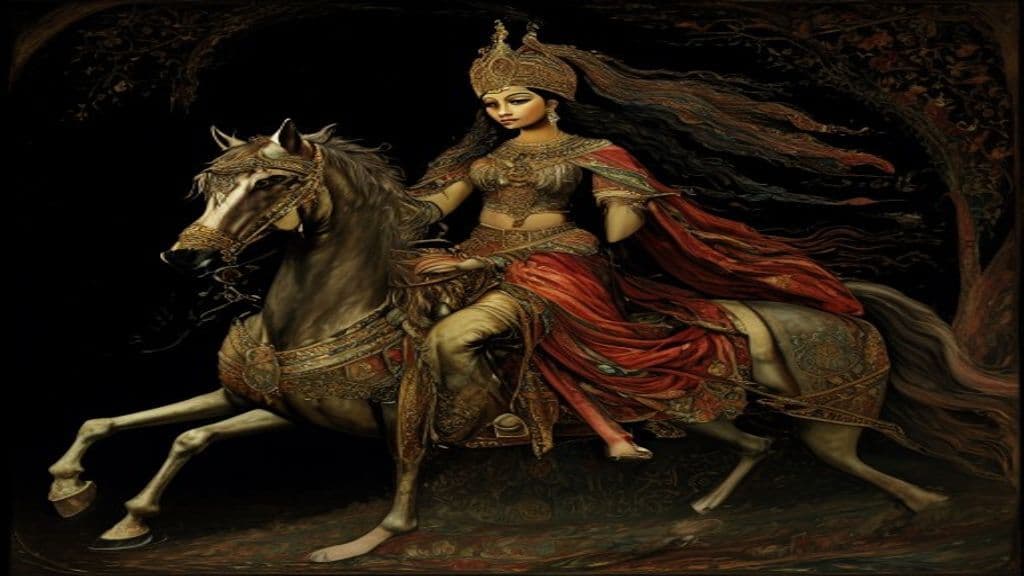
Bârmân (بارمان)
Lesser

Bârmân (بارمان)

Bârmân is a Turanian hero and commander in Ferdowsi’s Shahnameh who fights in the Great War of Iran and Turan during the reign of Nowzar. In the epic he kills the Iranian Qobád and is later slain by the Iranian warrior Qaran; he is represented in Safavid illustrated Shahnameh folios as a recognizable martial figure.

Böri Shad
Lesser

Böri Shad

Böri Shad (fl. c. 627) is a historical Turkic princely governor and military commander (shad/ishad) of the Western Turkic Khaganate who operated in the far western North Caucasus and led campaigns into the South Caucasus during the Perso-Turkic conflicts of 627–630. He combined kinship status (son of Bagha Shad; nephew of Tong Yabghu Khagan) with delegated frontier authority and military command, and fled to Central Asia after Tong Yabghu's murder in 630.

Chamrosh
Lesser

Chamrosh

Supernatural bird entity inhabiting the summit of Mount Alborz in Persian mythology. (Note: 1. Remove "Origin story" section since no origin story is provided in the source material. 2. Add a statement about the lack of specific abilities or behaviors under the "Abilities" section to clarify)

Cypress of Kashmar
Minor Spirit

Cypress of Kashmar

A sacred cypress tree in Persian tradition, symbolizing the spread of Zoroastrianism. (Note: 1. Power tier is too low; based on its significance in Zoroastrian tradition, it should be Primordial. 2. Add sensory cues such as the scent of cedar or pine associated with cypress trees, and possibl)