Isaac is an ancestor in Jewish folklore, from Levant (Beersheba, Gerar, Mount Moriah). Isaac (Hebrew: יִצְחָק, Yiṣḥāq) is the second patriarch of the Hebrew Bible/Torah, son of Abraham and Sarah, father of Esau and Jacob, and a foundational ancestral figure in Jewish and Christian genealogical traditions. Presented as a human participant in the divine covenant, Isaac's life narratives (birth in old age, circumcision, the binding on Mount Moriah, marriage to Rebekah, and the blessing of his sons) function to transmit lineage, ritual significance, and theological themes within Israel's origin stories.
In the Genesis narrative Isaac is born to Abraham and Sarah in their old age following a divine promise; his name, meaning 'he will laugh' or 'he laughs', encodes Abraham and Sarah's laughter at the promise of a late-in-life child. He is circumcised on the eighth day as part of the covenantal sign, is subjected in youth to the episode in which Abraham binds him on Mount Moriah to sacrifice him before an angel halts the act and a ram is provided, and later becomes husband to Rebekah and father of twins Esau and Jacob. Later traditions include Isaac in genealogies that link Abraham to later Israelite figures and, in Christian scripture (Matthew), to the genealogy of Jesus. Modern scholarly discussion (not canonical) has raised the hypothesis that some aspects of Isaac's figure may preserve an earlier local ancestor veneration in the Beersheba region.
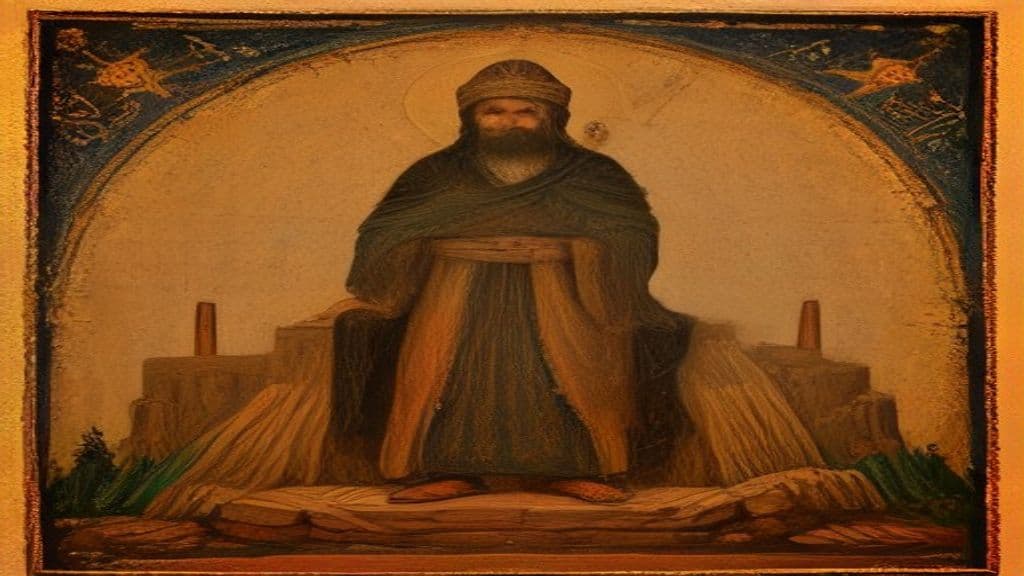
The supplied sources give no detailed physical description. Narrative notes record life-stage details: he was an infant circumcised on the eighth day, a youth at the time of the binding episode, and in old age he is described as having grown old and become blind. No specifics about stature, complexion, or clothing are provided in the cited summaries.
Isaac is portrayed as a human patriarch rather than possessing supernatural powers. His roles and abilities are those of a social and familial actor: he inherits property, reopens and digs wells, negotiates with local rulers (making a covenant with Abimelech), fathers children, confers a paternal blessing that determines inheritance, and participates in covenantal ritual (circumcision). He is also the subject of divine testing in the binding narrative, in which an angel intervenes on his behalf.
Weaknesses
- conditionhuman mortality and old age (including blindness)
Wards
None recorded.
Abraham
Abraham (originally Abram) is the foundational patriarchal ancestor in the Hebrew Bible whose life establishes a covenantal relationship between his family/people and God. He functions as an exemplar of faith, the progenitor of promised descendants, and a narrative anchor for claims of land, blessing, and communal identity in later religious traditions.

Jacob
Jacob (Hebrew: יעקב, Yaʿaqōv) is a central human figure in the Book of Genesis, portrayed as the third Hebrew patriarch and the progenitor of the Twelve Tribes of Israel. The supplied sources treat him as a legendary/historical ancestor within the Abrahamic family line rather than as a supernatural being.
Aaron
Aaron is a central human figure in Israelite sacred literature: the elder brother of Moses, the first high priest (progenitor of the Aaronide priesthood), and a spokesman/prophet who mediates between Israel and God in Exodus–Deuteronomy narratives. His role in the texts establishes hereditary priestly authority, ritual functions (sacrifices, blessing, use of Urim and Thummim), and institutional norms for Israelite cultic life.
Abaddon
In Hebrew scripture Abaddon is primarily a noun meaning 'destruction' or a section/condition of the underworld paired with Sheol; in the New Testament Book of Revelation Abaddon is personified as an angelic figure (Greek Apollyon) described as the king of an army of locusts released from the abyss during the apocalypse.
Abadir
Abadir is a polysemous name attested in distinct cultural contexts: a legendary founding saint and clan ancestor in eastern Ethiopia (Sheikh Abadir Umar Al‑Rida / Aw Abadir), a term applied to cone‑shaped cult stones in Phoenician religious description, and a personal name of a martyr (Abadir/Apater) in the Coptic Synaxarium. The attestations are independent usages of the same name rather than a single supernatural being.
Abadiu of Antinoe
Abadiu of Antinoe was a fourth‑century bishop of Antinoe (Antinoopolis, in Roman Egypt) commemorated as a martyr and saint in the Coptic Orthodox Church, with a feast day on 26 December. Sources record that he was killed during a theological dispute with Arian opponents and reference him in collections of Egyptian martyrs.
Abagtha
Abagtha (Hebrew: אבגתא, ’Ǎḇaḡṯā) is a named human court official in the Hebrew Bible’s Book of Esther, listed among seven chamberlains who ministered before King Ahasuerus and were commanded to bring Queen Vashti before the king. He is attested only in Esther 1:10 and is presented as an institutional palace attendant rather than a supernatural being.
Abanoub
Abanoub is a 4th‑century Egyptian Christian child martyr venerated in the Coptic tradition. Remembered for his public confession of Christ, miraculous healings associated with his passion, and the translation and veneration of his relics, his feast is observed on July 31 (Epip 24) and his cult centers include Nehisa and Samanoud.
Abaskhiron the Soldier
A Coptic Orthodox martyr venerated for refusing imperial idolatry during the Diocletian persecution; reputedly healed by the Archangel Michael, preserved in monastery relics, and commemorated on 14 June (7 Paoni).
Abdel Messih El-Makari
Abdel Messih El-Makari (1892–1963) was a Coptic Orthodox monk and priest venerated as a 20th‑century Coptic saint. Associated with the Monastery of Saint Samuel the Confessor and the Monastery of Saint Macarius (Scetes/Wadi El‑Natrun), he is remembered for humility, asceticism, charity, and reported spiritual gifts such as prescience, discerning of spirits, and healing.
Abdiel
Abdiel (Hebrew עֲבְדִּיאֵל) is primarily a theophoric Hebrew personal name meaning "servant of El/servant of God," attested once in the Hebrew Bible (1 Chronicles 5:15). In later literature—most notably John Milton's Paradise Lost—Abdiel is reimagined as a faithful seraph who opposes Satan's revolt. The provided sources do not treat Abdiel as an autonomous folkloric spirit type or record rituals or wards associated with the name.
Abednego
Abednego is a human figure in the Book of Daniel (chapter 3), one of three Jewish youths (with Shadrach and Meshach) who refuse to bow to King Nebuchadnezzar II's image and are cast into a fiery furnace but preserved by divine intervention.
Abel
Abel is the second son of Adam and Eve in the Genesis narrative, a shepherd whose accepted offering and subsequent murder by his brother Cain form the biblical account of the first death. Later interpretive traditions expand his role, treating him as an archetypal righteous victim, a postmortem avenging or adjudicating figure, and in some systems (notably Mandaean) identifying him with an angelic lightbeing.
Abiathar
Abiathar (Hebrew: אֶבְיָתָר, ʾEḇyāṯār) is a named human priestly figure in the Hebrew Bible. He is presented as a survivor of the Nob massacre who fled to David with priestly regalia, served as a priest and counselor in David's court, and was later deposed and sent to Anathoth by Solomon for supporting Adonijah.
Community Record
- [1]Isaac - Wikipedia. Wikipedia contributors, 'Isaac,' Wikipedia, The Free Encyclopedia.wiki
- [2]Isaac (Wikidata). Wikidata entry Q5920537, 'Isaac'.other
- [3]Christ's Family Tree | Matthew 1:1-17. Archive transcription of Matthew 1:1–17.literary