
Tacitus supplies no mythic origin tale; his surviving ethnographic report presents Nerthus as a locally venerated deity whose presence is manifested through a cult cart kept on an island and brought among peoples for ritual visitation. Later linguistic and philological scholarship reconstructs the name to Proto‑Germanic *Nerþuz and proposes a historical connection with Old Norse names such as Njörðr and Njörun, but these reconstructions and identifications are scholarly hypotheses based on comparative linguistics rather than narratives found in the ancient source.
Tacitus does not describe an anthropomorphic depiction of Nerthus. The visible focal elements of her cult in his account are material: a cart or wagon draped in white cloth, kept on an island in a sacred grove, and drawn by heifers when the priest detects the goddess's presence. After the procession the goddess, the cart, and the cloth are ritually washed in a secluded lake; Tacitus reports that the slaves who perform this washing are then drowned in the lake.
In Tacitus's account the cultic arrival signaled by the cart brings communal effects: wherever the cart travels it is met with celebration and a suspension of war, and communities lock away iron objects for the duration. Agency in the source is mediated through ritual agents (a priest who handles the cart, heifers that draw it, and slaves who perform the washing) rather than described as spontaneous apparition. Modern devotional sources emphasize fertility and Earth‑connected functions, but these are interpretive expansions beyond Tacitus's ethnographic report.
Weaknesses
- conditionrestricted access — only a priest may touch the cart
Wards
- conditionritual prohibition — iron objects are locked away during the procession

Njörðr (Njord)
Njörðr is a Vanir deity in Old Norse religion associated with the sea, navigation, fishing, wind, wealth, and crop fertility. He resides in Nóatún, is counted among the Vanir who were incorporated into the wider Norse divine order after a truce with the Æsir, and is father of Freyr and Freyja. Sources describe him as linked to maritime well-being and as having an unhappy marriage with the goddess Skaði.

Freyja
Freyja is a major Vanir goddess in Norse mythology associated with love, beauty, fertility, gold, war, and the seiðr form of magic. She rules the field Fólkvangr and the hall Sessrúmnir, where she receives half of those slain in battle, and is attested across the Poetic Edda, the Prose Edda, skaldic poetry, and later Scandinavian folklore.
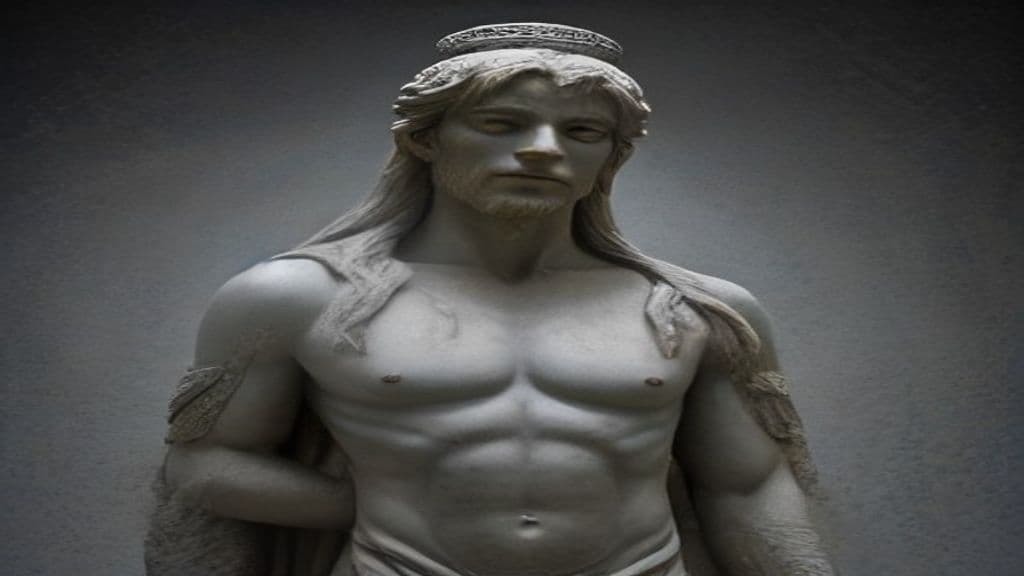
Freyr
Freyr is a major Vanir deity in Old Norse myth associated with kingship, fertility, prosperity, fair weather, peace, and good harvests; he is attested in medieval Icelandic sources (Snorri) and continental reports (Adam of Bremen) and figures in myths of courtship, possession of magical artifacts, and eschatological death at Ragnarök.
3-D Man
3-D Man is a Marvel Comics superhero identity associated with a 1950s-era origin in which the body of Chuck Chandler can materialize in three-dimensional existence when activated by his brother Hal via a pair of glasses. The mantle was later assumed by Delroy Garrett (formerly Triathlon) in modern continuity.
5 Ronin
5 Ronin is a 2011 Marvel Comics five-issue limited series that reimagines five Marvel superhero archetypes as rōnin (masterless samurai) in a fictionalized post‑Sekigahara feudal Japan. The work places Wolverine, Hulk, Punisher, Psylocke, and Deadpool analogues into period roles to explore displacement, revenge, and identity in an era of political upheaval.
58 Concordia
58 Concordia is a fairly large main-belt asteroid orbiting the Sun, discovered in 1860 and named after the Roman goddess Concordia. Astronomical sources classify it as a C-type (carbonaceous) body with a multi-year orbital period and measurable rotation and pole orientations.
9MOTHER9HORSE9EYES9
An anonymous Reddit screen name and online persona used by the author of the Interface series, a multipart speculative-horror narrative posted in short installments across Reddit in 2016. The name functions as the signature of an authorial identity and as a focal label for a fandom that created archives, a subreddit, and a wiki documenting the story and its fictional phenomena (notably entities called "flesh interfaces").
A.R.G.U.S.
A.R.G.U.S. is a fictional clandestine United States government agency in the DC Comics universe that investigates, contains, and manages superhuman, meta-human, and supernatural incidents and assets. Introduced in The New 52 continuity, it functions as an institutional actor providing intelligence, logistical support, covert task forces (notably Task Force X / the Suicide Squad), and a dedicated magic division across comics and media adaptations.
Abandinus
Abandinus is a locally attested Romano‑Celtic theonym known from a single inscribed bronze feather (votive object) dedicated at Godmanchester (the Roman fort Durovigutum) in Cambridgeshire. Scholars interpret him as a local god or male spirit tied to a specific place and possibly associated with a nearby spring or stream; this association is tentative and based on etymological readings of the name.
Abarbarea
Abarbarea is a name attested in classical Greek and Roman sources for freshwater nymphs (naiads). The name appears for at least two individual mythic figures — a naiad wife of Bucolion and a naiad counted among ancestors of the Tyrians — and Hesychius records plural forms that may indicate the name was also used as a class-name (Abarbareai / Abarbalaiai).
Abas
Abas (Ancient Greek: Ἄβας, gen.: Ἄβαντος) is not a single mythic being but a recurring personal name borne by multiple mortals and minor mythic figures in Greek epic and genealogical traditions — kings, founders, seers, warriors, attendants, a centaur, and a youth transformed by a goddess. The name is glossed in the sources as 'guileless' or 'good-hearted' and appears across Argive, Theban, Trojan, Euboean, and other local cycles.
Abellio
Abellio is a theonym attested in Roman‑period inscriptions from the Comminges area of the Pyrenees and reported as worshipped in the Garonne Valley of ancient Gallia Aquitania. Surviving evidence is limited to a small number of inscriptions; scholars have variously hypothesized solar or arboreal associations and compared the name to forms of Apollo or to Celtic Belenus, but the deity's precise role in local cosmology remains uncertain.
Abena Mansa
A name attested in a single contemporary Ghanaian blog anecdote as a 'mysterious being'; available sources do not establish Abena Mansa as a coherent, traditional supernatural figure or provide corroborating ethnographic detail.
Abin Sur
Abin Sur is a fictional extraterrestrial Green Lantern from the planet Ungara in DC Comics. A former history professor turned Green Lantern of Space Sector 2814, he discovered and investigated a prophecy tied to the "Blackest Night," died wounded on Earth and chose Hal Jordan as his ring-successor, and was later reanimated as a Black Lantern in the Blackest Night storyline.
Abishai
Abishai is a personal name attested in several distinct sources: a biblical individual described as the eldest son of Zeruiah (sister of King David); a Semitic chief named in an inscription at Beni-Hasan in Middle Egypt; and modern cultural uses including a named monster in Dungeons & Dragons and as an artist/stage name. The supplied materials do not present Abishai as a supernatural being within a living cosmology.
Community Record
- [1]Germania (Tacitus) — summary as cited. Tacitus, Germania (summarized in Wikipedia 'Nerthus' entry)wiki
- [2]Nerthus — englatheod.org summary. Englatheod.org summary of Nerthus and Tacitus's accountother
- [3]Nerthus | ADF (Ár nDraíocht Féin) — deity article. ADF article on Nerthus (modern devotional interpretation and rites)other
- [4]Solitary Norse Rite to Nerthus | ADF. ADF ritual page 'Solitary Norse Rite to Nerthus' (modern ritual reconstruction)other
- [5]Die große Göttin - German Pagan Song (archive.org). Modern German song invoking mother/seasonal figure (archival recording)folk
- [6]Nerthus — Wikipedia (etymology and scholarship summary). Wikipedia entry summarizing manuscript variants, Proto‑Germanic reconstruction *Nerþuz, and proposed links to Old Norse Njörðrwiki
- [7]Nerthus — Alchetron summary. Alchetron summary (modern compilation of the Tacitus account and later receptions)other