Yahweh is a deity in Canaanite folklore, from Ancient Israel (Samaria). Yahweh is the national god of the Iron Age kingdoms of Israel and Judah who later became identified as the one God of Judaism and the Abrahamic religions. Scholarly sources present Yahweh as an ancient Semitic deity attested in the southeastern Levant whose cult developed into the central focus of Israelite religion; religious sources present Yahweh as the transcendent, personal Creator and covenantal deity knowable through seeking and Torah observance.
Scholarly sources record no single, agreed origin story. The deity's name appears in Paleo-Hebrew inscriptions (𐤉𐤄𐤅𐤄) and is transliterated YHWH (commonly vocalized in modern scholarship as Yahweh). Historical reconstruction situates Yahweh as an ancient Semitic deity attested in the southeastern Levant whose worship rose to prominence in Iron Age Israel and Judah. Proposed hypotheses about origins include a southern Levantine emergence, possible links to Amorite yahwi- proposals, and processes by which Yahweh absorbed epithets and functions of older Canaanite figures (e.g., El); these proposals are debated and no consensus exists. Over time the divine name became sacralized and, by the Second Temple and rabbinic periods, substitutional practices (e.g., saying ăḏōnāy) and restrictions on public pronunciation developed; sources report that the original pronunciation was eventually forgotten after the first century CE.
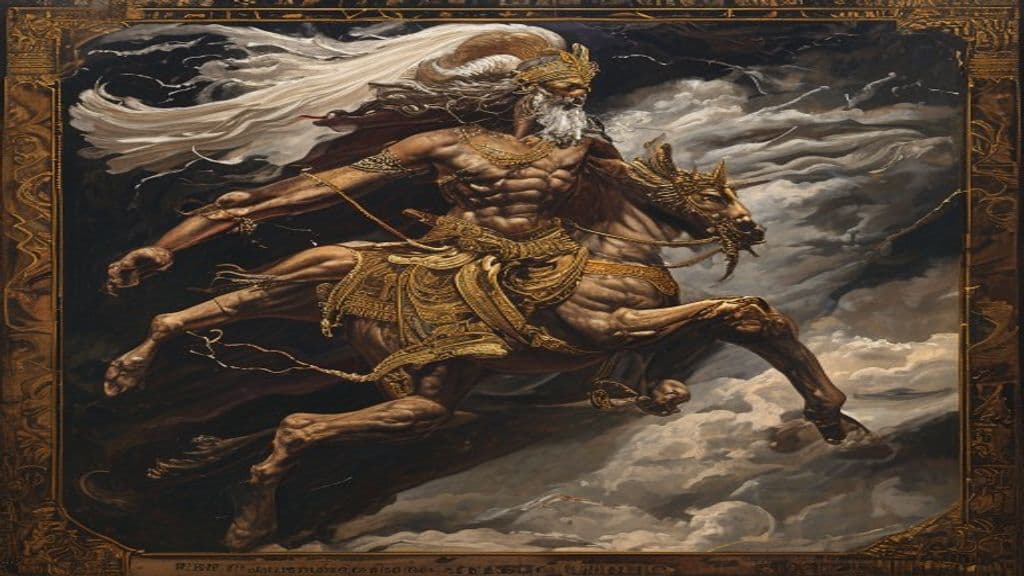
The provided sources do not give a canonical anthropomorphic description of Yahweh. Scholarly literature discusses possible associations (e.g., storm and battle imagery; one contested theory suggests early fire/metallurgy connections), but these are reconstructions and not descriptions of a fixed physical form. Religious materials present Yahweh as a transcendent, personal God rather than as a described embodied figure.
In historical and scholarly accounts Yahweh functions as the national/pantheon head of Israel and Judah and assimilated titles and roles formerly associated with other Near Eastern deities (for example, El-linked epithets such as ’Ēl Šadday). Scholarly reconstructions attribute martial and storm associations in some traditions and one controversial theory proposes a fire/metallurgical aspect; these are disputed. In later Jewish and devotional sources Yahweh is described as Creator, lawgiver, redeemer, and the living God with whom individuals can seek relationship—claims framed by those religious traditions and attested in scriptural and devotional materials cited in the sources.
Weaknesses
None recorded.
Wards
- ritualSubstitution of the divine name (e.g., ăḏōnāy)

Asherah
Asherah is a major ancient Northwest Semitic mother-and-fertility divine figure closely associated with sacred trees and wooden cult poles. Attested across Ugarit, Canaanite/Phoenician, Israelite, Akkadian and related Levantine contexts, her cultic presence is debated in later Israelite texts where references are often recast as objects (asherah poles, groves) and subject to iconoclastic reform.
Baal
Baal (bāʿal) is a Northwest Semitic title meaning 'owner' or 'lord' that served as a theonym in the ancient Levant; in Ugaritic and Canaanite texts it appears as the name/title of a prominent storm and fertility god (often rendered Baʿal Haddu) who features centrally in the Baal Cycle and in regional cults tied to rain, fertility, and kingship. In later monotheistic literatures the term becomes a polemical label for rival or foreign deities and is reinterpreted in various receptions.
Aaron
Aaron is a central human figure in Israelite sacred literature: the elder brother of Moses, the first high priest (progenitor of the Aaronide priesthood), and a spokesman/prophet who mediates between Israel and God in Exodus–Deuteronomy narratives. His role in the texts establishes hereditary priestly authority, ritual functions (sacrifices, blessing, use of Urim and Thummim), and institutional norms for Israelite cultic life.
Abaddon
In Hebrew scripture Abaddon is primarily a noun meaning 'destruction' or a section/condition of the underworld paired with Sheol; in the New Testament Book of Revelation Abaddon is personified as an angelic figure (Greek Apollyon) described as the king of an army of locusts released from the abyss during the apocalypse.
Abadir
Abadir is a polysemous name attested in distinct cultural contexts: a legendary founding saint and clan ancestor in eastern Ethiopia (Sheikh Abadir Umar Al‑Rida / Aw Abadir), a term applied to cone‑shaped cult stones in Phoenician religious description, and a personal name of a martyr (Abadir/Apater) in the Coptic Synaxarium. The attestations are independent usages of the same name rather than a single supernatural being.
Abadiu of Antinoe
Abadiu of Antinoe was a fourth‑century bishop of Antinoe (Antinoopolis, in Roman Egypt) commemorated as a martyr and saint in the Coptic Orthodox Church, with a feast day on 26 December. Sources record that he was killed during a theological dispute with Arian opponents and reference him in collections of Egyptian martyrs.
Abagtha
Abagtha (Hebrew: אבגתא, ’Ǎḇaḡṯā) is a named human court official in the Hebrew Bible’s Book of Esther, listed among seven chamberlains who ministered before King Ahasuerus and were commanded to bring Queen Vashti before the king. He is attested only in Esther 1:10 and is presented as an institutional palace attendant rather than a supernatural being.
Abanoub
Abanoub is a 4th‑century Egyptian Christian child martyr venerated in the Coptic tradition. Remembered for his public confession of Christ, miraculous healings associated with his passion, and the translation and veneration of his relics, his feast is observed on July 31 (Epip 24) and his cult centers include Nehisa and Samanoud.
Abaskhiron the Soldier
A Coptic Orthodox martyr venerated for refusing imperial idolatry during the Diocletian persecution; reputedly healed by the Archangel Michael, preserved in monastery relics, and commemorated on 14 June (7 Paoni).
Abdel Messih El-Makari
Abdel Messih El-Makari (1892–1963) was a Coptic Orthodox monk and priest venerated as a 20th‑century Coptic saint. Associated with the Monastery of Saint Samuel the Confessor and the Monastery of Saint Macarius (Scetes/Wadi El‑Natrun), he is remembered for humility, asceticism, charity, and reported spiritual gifts such as prescience, discerning of spirits, and healing.
Abdiel
Abdiel (Hebrew עֲבְדִּיאֵל) is primarily a theophoric Hebrew personal name meaning "servant of El/servant of God," attested once in the Hebrew Bible (1 Chronicles 5:15). In later literature—most notably John Milton's Paradise Lost—Abdiel is reimagined as a faithful seraph who opposes Satan's revolt. The provided sources do not treat Abdiel as an autonomous folkloric spirit type or record rituals or wards associated with the name.
Abednego
Abednego is a human figure in the Book of Daniel (chapter 3), one of three Jewish youths (with Shadrach and Meshach) who refuse to bow to King Nebuchadnezzar II's image and are cast into a fiery furnace but preserved by divine intervention.
Abel
Abel is the second son of Adam and Eve in the Genesis narrative, a shepherd whose accepted offering and subsequent murder by his brother Cain form the biblical account of the first death. Later interpretive traditions expand his role, treating him as an archetypal righteous victim, a postmortem avenging or adjudicating figure, and in some systems (notably Mandaean) identifying him with an angelic lightbeing.
Abiathar
Abiathar (Hebrew: אֶבְיָתָר, ʾEḇyāṯār) is a named human priestly figure in the Hebrew Bible. He is presented as a survivor of the Nob massacre who fled to David with priestly regalia, served as a priest and counselor in David's court, and was later deposed and sent to Anathoth by Solomon for supporting Adonijah.
Community Record
- [1]Yahweh (Wikipedia). Wikipedia, entry 'Yahweh' (summary of scholarly literature and historical claims)wiki
- [2]Wikidata: Yahweh (Q766677). Wikidata item Q766677 (structured data entry)other
- [3]The Word Of YAHWEH - Days Of The Week Months Of The Year Alephbet. Archive.org devotional/study material invoking Yahweh and Torah observancefolk
- [4]Shabat Towrah Study - Embarrassing Confessions Year 5990 Yah 08 December 2023. Archive.org devotional/study material referencing seeking Yahweh and Torah practicefolk
- [5]Mysteries in Life (YouTube archive). Archive.org copy of devotional/media content citing Jeremiah 29:13 and experiential seeking of Yahwehfolk