Entity Index

A record of the unseen, drawn from world folklore.

7631 entities · page 17 of 128

Antimachus
Minor Spirit

Antimachus

Antimachus is attested in the provided sources primarily as a classical Greek personal name borne by historical figures (notably Antimachus of Colophon, a poet and grammarian ca. 400 BC, and Antimachus I Theos, a Greco-Bactrian king). The name is also reused in modern contexts (a Wikidata taxon entry and small-press fictional/divinatory pages). The sources do not present Antimachus as a supernatural or folkloric entity.

Antimachus of Teos
Lesser

Antimachus of Teos

Antimachus of Teos (Greek: Ἀντίμαχος ὁ Τήϊος) is an early Greco-Ionian epic poet cited in later antiquity as the putative author or ascription-anchor for fragmentary Theban-cycle material (notably sometimes the Epigoni). Later authors quote or reference him for sententiae and as a chronological marker; his identity is contested and sometimes conflated with the much later Antimachus of Colophon.

Antinoe
Lesser

Antinoe

Antinoe (Ancient Greek: Ἀντινόη) is primarily attested as a proper name in classical and later sources: several mortal women in Greek myth (founding and tragic narratives) and as the place-name Antinopolis/Antinoë in Roman Egypt. The surveyed materials do not present Antinoe as a discrete supernatural being, nor record rituals or wards directed against an entity by this name.

Antinous
Lesser

Antinous

Antinous was a Greek youth from Bithynia who became the favourite of the Roman emperor Hadrian; after his premature death c.130 CE Hadrian ordered his deification and founded an organized cult (including the city Antinoöpolis and commemorative games) that spread across the Roman Empire and was syncretized in some contexts with the Egyptian god Osiris.

Antinous of Ithaca
Lesser

Antinous of Ithaca

Antinous is a mortal Ithacan noble, the son of Eupeithes, and the leading suitor of Penelope in the Homeric tradition. Portrayed as violent, over‑confident, and a violator of xenia, he organizes aggression against Odysseus's household and is the first suitor slain by Odysseus upon his return.

Antioche
Minor Spirit

Antioche

Antioche is a variant form of the Greek personal name more commonly rendered as Antiope, attested for several distinct women in Greek myth (including Amazonic and dynastic figures) and reused as a toponym and ecclesiastical/literary name in later traditions. The sources treat Antioche not as a single supernatural class but as a personal name with multiple local and literary usages.

Antiochus
Minor Spirit

Antiochus

Antiochus is primarily a Greek personal name (Ancient Greek: Ἀντίοχος) borne by multiple historical, dynastic, and mythic figures in the Hellenistic world; most notably it names Seleucid kings including Antiochus IV Epiphanes, who figures in Jewish historical memory as the antagonist linked to the Maccabean Revolt and the origin of Hanukkah. The sources do not present Antiochus as a single coherent supernatural being.

Antion
Lesser

Antion

Antion (Ancient Greek: Ἀντίων) is a mythic human figure from Greek genealogical tradition, described in the provided sources as the eldest son of Periphas and Astyaguia and the father (with Perimele) of the legendary Ixion; some traditions ascribe Ixion's paternity instead to Ares, Phlegyas, or Leonteus. He functions in the sources primarily as an ancestral link connecting mortals to the god Apollo through his grandfather Lapithus.

Antiope
Lesser

Antiope

Antiope is a name applied to several distinct mortal women in Greek mythic tradition, most commonly an Amazon daughter of Ares and a Theban princess mother of Amphion (by Zeus). The figures named Antiope appear across variant local narratives rather than as a single, consistent supernatural type.

Antiphates
Lesser

Antiphates

Antiphates is an ancient Greek personal name borne by multiple distinct characters in the epic tradition (at least five figures): a king of the Laestrygones (giant cannibals) encountered by Odysseus, a warrior concealed in the wooden horse at Troy, a Trojan warrior slain by Leonteus in Italian/late-epic tradition, and at least two genealogical bearers (son of Melampus; son of Sarpedon). The name functions as a personal name across heroic genealogies and episodic narratives rather than as a single supernatural species.

Antiphus
Lesser

Antiphus

Antiphus (Ancient Greek Ἄντιφος) is a personal name borne by several mortal men in Greek myth and epic traditions rather than a single supernatural being. Multiple figures named Antiphus appear in genealogies and narratives as princes, warriors, companions of heroes, colonists, and victims in the heroic age (generation of Heracles, the Trojan War, and the Odyssey).

Anton Arcane
Greater

Anton Arcane

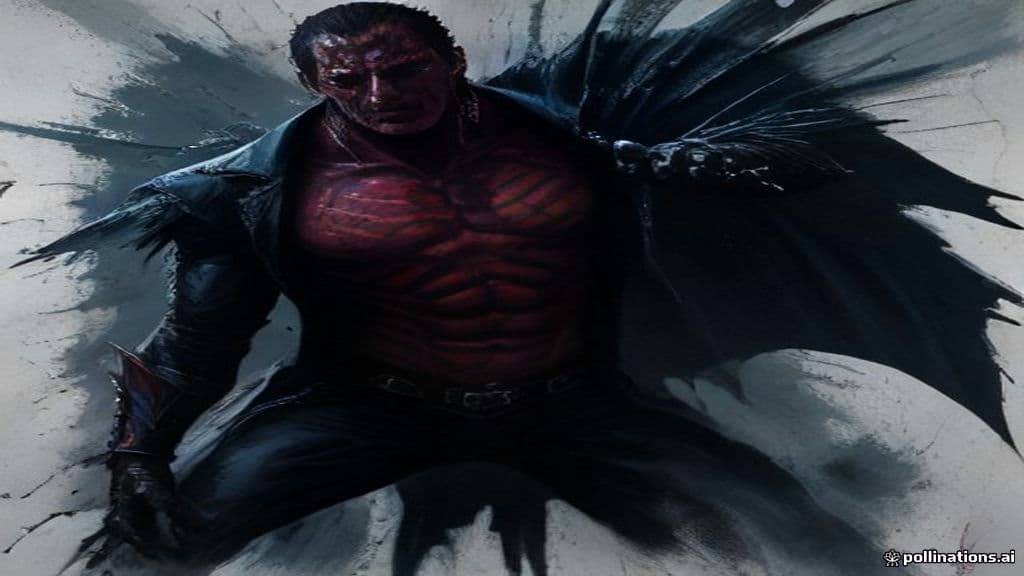
Anton Arcane is a recurring antagonist in American comic-book fiction, portrayed variously as a scientist, sorcerer, resurrected/possessing figure, demon, and (in The New 52 continuity) the avatar of the Rot, a cosmic force of decay. He creates monstrous biogenetic creatures (the Un-Men), practices forbidden occult science, possesses other bodies, and pursues immortality and power in opposition to the protagonists such as Swamp Thing.

Antu
Ancient

Antu

Antu (Antum) is a Mesopotamian goddess traditionally regarded as the feminine counterpart and spouse of the sky god Anu. Attestations range from Early Bronze Age references to a marked elevation of her cultic profile in Achaemenid and Seleucid-period Uruk, and in some late theological texts she is equated with earth or primordial and underworld figures.

Antywy
Lesser

Antywy

Antywy is an attested name appearing in modern lists of ancient Egyptian deities. Egyptological discussion indicates uncertainty about the correct vocalization of this name — older literature rendered it Anty while some recent commentary favors reading it as Nemty — but the provided sources give no secure information about the deity's functions, appearance, cult, or rituals.

Anu
Ancient

Anu

Anu (Sumerian An; Akkadian Anu/Anum) is the divine personification of the sky in ancient Mesopotamian religion, traditionally ranked at the top of god‑lists as the source of heavenly authority (anûtu/anuti) and the fount of legitimate rule for gods and kings. Though supreme in genealogies and astronomical schema, many periods portray him as a relatively passive or figurehead deity whose active cultic role is limited until a late Seleucid reinvention in Uruk.

Anu
Primordial

Anu

Anu (also Ana, Anann, Anand) is a mother-figure in early Irish tradition associated with nourishment, territorial fertility and prosperity—especially in Munster—and is variably conflated with other maternal or war-related goddesses in later sources.

Anubis
Ancient

Anubis

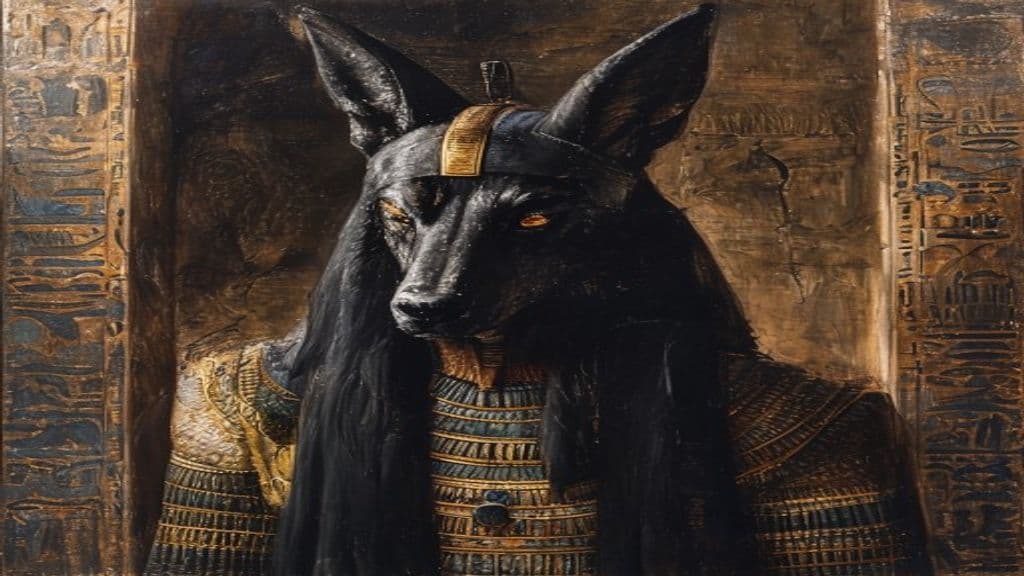
Anubis is the ancient Egyptian funerary deity associated with embalming, protection of graves, and guiding the dead into the afterlife. Depicted as a canine or a man with a canine head and shown in black, he presides over mortuary rites and attends the judgment of the deceased, though he is not the central subject of many major myths.

Anuket
Greater

Anuket

Anuket is an ancient Egyptian goddess of the Nile’s cataracts and of Lower Nubia, worshipped especially at Elephantine. She is a riverine and fertility deity associated with the annual Nile inundation, swift-moving water, and the protection of Egypt’s southern frontier, forming a local triad with Khnum and Satis.

Anund (Bröt-Anund)
Ancient

Anund (Bröt-Anund)

Anund, commonly known by the byname Bröt-Anund ('trail‑blazer' or 'land clearer'), is a semi-legendary Swedish king of the Yngling dynasty attested in early Norse genealogical poetry and saga prose. Sources credit him with avenging his father in Estonia, accumulating wealth, promoting settlement by clearing land and making roads, and dying under ambiguous circumstances (landslide or killing).

Anunnaki
Greater

Anunnaki

A variable collective of major deities in ancient Sumerian, Akkadian, Assyrian and Babylonian religious literature, described as offspring or descendants linked to the sky god An (Anu) and an earth/mother figure (Ki/Ninhursag). Texts portray them as participants in the divine assembly, decreers of human fate, and in some traditions a group of seven underworld judges; their number, membership, and functions vary across sources.

Anunītu (Annunitum / Anunitu)
Lesser

Anunītu (Annunitum / Anunitu)

Anunītu (Annunitum / Anunitu) is a Mesopotamian goddess associated with warfare who began as an epithet of Ishtar of Akkad emphasizing a warlike aspect and by the late third millennium BCE came to be treated as a distinct tutelary deity, attested as patron of cities such as Akkad and Sippar-Amnanum and worshiped elsewhere in Mesopotamia.

Anuruddha
Lesser

Anuruddha

Anuruddha is presented in the supplied sources primarily as a personal name borne by two overlapping non‑supernatural figures: (1) Anuruddha the Theravādin elder — one of the Buddha’s eminent disciples appearing in suttas and Vinaya anecdotes; and (2) Anuruddha the ruler — a chronicle figure in Pali/Thai histories associated with the Dvaravati cultural sphere and Arimadhanaburi (Nakhon Pathom). The materials do not treat Anuruddha as a spirit or other supernatural creature.

Anuruddha (Aniruddha)
Greater

Anuruddha (Aniruddha)

Anuruddha (Sanskrit: Aniruddha) is a historical disciple of the Buddha, counted among the ten principal disciples and later an arahant. He is repeatedly identified in the sources as foremost among monks possessing the meditative faculty called 'divine vision' (divyacakṣur) and figures prominently at the Buddha's parinirvāṇa and the First Buddhist Council.

Anush (Anush Uthra)
Greater

Anush (Anush Uthra)

Anush, or Anush Uthra, is an uthra — a lightworld being in Mandaean religion — portrayed in Mandaean scriptures as a soteriological figure who taught John the Baptist and is said to have performed miracles in Jerusalem analogous to those ascribed to Jesus. He is frequently invoked in the Qolasta liturgical formula alongside Hibil and Šitil and is associated with the Mshunia Kushta, described as his shkina (dwelling).

Anushawan
Primordial

Anushawan

In Armenian legendary history, Anushawan is a semi-mythological figure and grandson of the legendary king Ara the Handsome. (Note: 1. Power tier should be Lesser (local spirit) since there's no indication that Anushawan is a cosmic being or deity-level. 2. Add specific information about sensory cues, wards, and weaknesses from so)

Anvallus
Lesser

Anvallus

Anvallus is a locally attested Gaulish deity known from two Roman‑period Latin votive altars and a Gaulish limestone cartouche found at Augustodunum (modern Autun). Evidence shows public votive practice (dedications 'in requital of vows'), priestly involvement (gutuatres), and material offerings including a Greek‑style bronze helmet; linguistic scholarship reconstructs the name as an-ualos, roughly 'without a sovereign' or 'inferior to none.'

Anya Corazón
Lesser

Anya Corazón

Anya Corazón is a Marvel Comics superheroine (originally published as Araña) who was mortally wounded and saved when Spider Society mage Miguel Legar performed a ritual that gave her a spider-shaped tattoo, endowing her with spider-derived powers and marking her as a Hunter of the Spider Society. She balances teenage life in Brooklyn with duties fighting mystical and criminal threats within Marvel's shared-universe fiction.

Anytos
Ancient

Anytos

Anytos (Ancient Greek: Ἄνυτος, Ánytos) is a male divine figure attested in local Arcadian cult at Lycosura, represented in the Temple of Despoina and identified in modern summaries as one of the Titans. He appears in the cult group alongside Despoina, Demeter, and Artemis and is known from Pausanias' description and a fragmentary acrolithic bust now in the National Archaeological Museum of Athens.

Anzar
Minor Spirit

Anzar

Anzar is a lexical item attested in the provided sources as a personal name, Iranian toponym element, and as a single machine-readable entry labeling it an "Amazigh (Berber) deity" on Wikidata. The supplied materials do not contain corroborated folkloric, ethnographic, or mythic descriptions of Anzar as a supernatural being.

Anzu wyliei
Minor Spirit

Anzu wyliei

Anzu wyliei is a species of caenagnathid oviraptorosaurian dinosaur from the Late Cretaceous Hell Creek Formation of North Dakota, South Dakota, and Montana. The genus name intentionally evokes the bird-like Mesopotamian daemon Anzû, but in the supplied sources it is presented and treated as an extinct biological taxon rather than a living supernatural being.

Anzû (Imdugud)
Greater

Anzû (Imdugud)

Anzû, also called dZû or Imdugud, is a large storm-associated bird-figure in Sumerian/Akkadian/Babylonian myth. Portrayed as a hybrid (commonly a massive bird with a lion's head or as a half-human storm-bird), Anzû is credited in mythic narratives with seizing the Tablet of Destinies and thereby challenging the authority of chief gods such as Enlil.

Anárion
Lesser

Anárion

Anárion is a proper name attested as a fictional character in J. R. R. Tolkien's legendarium and as a contemporary proper-name used in music and online handles. The supplied sources identify it primarily as a literary/historical name within Tolkien's secondary world and as modern cultural usages (band name, user credits).

Ao Guang (Dragon King of the East Sea)
Ancient

Ao Guang (Dragon King of the East Sea)

Ao Guang is the Dragon King (Dragon God) who presides over the East Sea (Dōng Hǎi) in Chinese mythology, literature, and folk-religion. He is presented in sources as a regional aquatic deity associated with water and weather and appears as a named supernatural figure in classical vernacular novels such as Journey to the West and Fengshen Yanyi.

Ao Kuang
Ancient

Ao Kuang

Ao Kuang (also attested as Ao Guang) is the Dragon King of the East Sea in Chinese mythology and folk religion, one of a quartet of sea-dragon sovereigns associated in folklore with the cardinal seas. He appears in classical literature and later popular media as a ruler of maritime waters whose favor or displeasure is connected to tides, rain, floods and storms.

Aoandon
Minor Spirit

Aoandon

Aoandon (青行灯, "blue andon") is a yōkai figure represented in Edo-period yokai iconography, best known from Toriyama Sekien's Konjaku Hyakki Shūi. It personifies the eerie apparition said to appear at the conclusion of the Hyakumonogatari Kaidankai storytelling ritual and is visually depicted as a blue-skinned woman with horns and sharp teeth.

Aobōzu
Lesser

Aobōzu

Aobōzu (青坊主, "blue priest") is a Japanese yōkai whose depiction and behavior vary by locality. Appearing as a priestly humanoid with blue coloration or as a priest-faced apparition, it functions in regional legends as a frightening presence that can kidnap, threaten, or haunt people—especially children and schoolchildren—and is sometimes identified as a disguised animal or a mountain deity.

Aoede
Ancient

Aoede

Aoede (Ancient Greek: Ἀοιδή, literally 'Song') is an ancient Greek personification named among early lists of Muses. Attested in literary sources as an inspirer of song and poetry, she appears in variant local traditions (three or four Muses) later supplanted by the canonical nine.

Aoi Mac Ollamain
Greater

Aoi Mac Ollamain

Aoi Mac Ollamain (also Ai Mac Ollamain; recorded as Mac Ollamo and Mac Ollavain) is attested in early Irish material as a member of the Tuatha Dé Danann and is identified specifically as a god of poetry. Surviving references are brief and provide little detail beyond name, group affiliation, and a narrative detail about his birth and survival.

Aoi no Ue
Minor Spirit

Aoi no Ue

Aoi no Ue is a Heian-period noblewoman character in The Tale of Genji who becomes the victim of mono no ke (spirit possession). In the narrative she is portrayed as a high-ranking court wife of Hikaru Genji whose body is afflicted by the jealous spirit of Lady Rokujō and other wandering phantoms; the episode was later adapted into a Noh play titled Aoi no Ue.

Aonghus mac Úmhór
Lesser

Aonghus mac Úmhór

Aonghus mac Úmhór (older orthography Aengus mac Umor) is a legendary Irish king portrayed in early tradition as ruler of the Fir Bolg of Connacht and eponymous founder associated with settlements on the western coast and the Aran Islands, notably the fortress Dún Aonghasa on Inishmore.

Aonyōbō
Lesser

Aonyōbō

Aonyōbō (青女房) is a yōkai in Japanese folklore described in legend as a blue-skinned, ogre-like spirit who appears as an ancient court noblewoman and haunts the ruined houses of fallen nobles, embodying poverty, abandonment, and social decline.

Aora
Lesser

Aora

Aora (Ancient Greek: Ἀώρα) is attested in the classical Greek mythic record as a nymph and eponymous ancestress: the town of Aoros in Crete was said to have been named for her, and aristocrats of Eleutherna claimed descent from her and her husband Eleuther, one of the Kouretes.

Aos Sí
Ancient

Aos Sí

Aos Sí are a broad class of supernatural beings in Gaelic (Irish and Scottish) folklore associated with the mounds and liminal places of the landscape. They are variously described as descendants or later forms of the Tuatha Dé Danann, ancestral or nature spirits, or otherworldly folk who coexist with humans and can be helpful or dangerous when offended.

Aosaginohi
Minor Spirit

Aosaginohi

Aosaginohi (also Aosagibi or Goi no hi) is a Japanese hikarimono — a night luminous phenomenon traditionally associated with a kind of heron (ao sagi/goi sagi). Recorded in Edo-period yōkai compendia and folkloric accounts, it is described as a ball or patch of blue flame or lantern-like glow often explained either as a gleaming heron in flight or as an uncanny light.

Aotea (Canoe)
Lesser

Aotea (Canoe)

Ancestral waka in Māori tradition, significant in the migration of the Māori people to New Zealand. (Note: - Power tier should be at least Greater (deity-level), considering Aotea is associated with significant spiritual and cultural importance to the Māori people's migration. - Abilities should include de)

Aotearoa (Canoe)
Primordial

Aotearoa (Canoe)

An ancestral vessel in Māori tradition, associated with the migration and settlement of New Zealand. (Note: 1. Power tier should be Ancient, not Primordial. 2. Remove "Historical significance" from sensory cues as it is a general statement rather than a specific cue. 3. Add "Its presence is often associated)

Ap (the Waters)
Ancient

Ap (the Waters)

Ap (Vedic áp-, Classical Sanskrit āpas/āpa-) denotes the sacred category of 'the waters' in Vedic/Hindu thought: a physical element (water), an animate cosmic principle addressed in Rigvedic hymns, and an elemental category later counted among the Panchamahabhuta. The term names collective waters invoked in ritual, is linked to deities such as Varuna and the epithet Apām Napāt, and survives in related Indo-Iranian vocabularies (Avestan āpō/Aban, Persian āb).

Apa Qaghan
Lesser

Apa Qaghan

Apa Qaghan (阿波可汗, Ābō Kèhán) is an historical Ashina prince and mid-6th century claimant to the Göktürk khaganate. Sources portray him as a political and military actor involved in the succession disputes after Taspar Qaghan's death, ruling contested steppe territories and engaging with both western Turkic allies and Sui China.

Apakura
Lesser

Apakura

Female figure in Māori mythology, wife of Tūhuruhuru and/or Tūwhakararo, associated with multiple generations of whānau. (Note: 1. Power tier: Given her association with multiple generations of whānau and the miraculous birth story involving Whakatau, it's likely she should be classified as a Greater entity. 2. Abilities: Add )

Apaliunas
Lesser

Apaliunas

Apaliunas is a deity attested in Hittite-language material as the protective god associated with the city of Wilusa. He is named among the gods who guarantee a Late Bronze Age treaty (c. 1280 BCE) between Alaksandu of Wilusa and the Hittite king Muwatalli II. Some scholars propose Apaliunas is an Anatolian reflex of an early form of the name Apollo, but that identification is interpretive and debated.

Apalāla
Greater

Apalāla

Apalāla is a water-dwelling nāga king in Buddhist-associated legend, best known from tales that the Buddha converted him. The story is tied to the Swat River region and appears in later Buddhist literature and art as a demonstration of the Buddha's influence over non-human beings.

Apam Napat
Primordial

Apam Napat

Persian deity associated with water, creation, and the natural world. (Note: 1. Power tier: Apam Napat is mentioned in the Rig Veda, which is an Indo-Iranian text, but he is not described as a cosmic creator figure; rather, he is specifically credited with creating all things.)

Apanuugak
Lesser

Apanuugak

Apanuugak is an Inuit legendary figure presented in modern summaries as a culture-hero who is narratively ambivalent: sometimes an error-prone or long-lived warrior and elsewhere depicted as a dastardly villain or cunning trickster.

Apaosha
Greater

Apaosha

Apaosha (Avestan apaoša; Middle Persian Aposh/Apaush) is the personified cause and adversary of rainfall and prosperity in Zoroastrian literature. Depicted as a malign Daeva embodied as a black horse, Apaosha battles the rain-bringing divinity Tishtrya and causes drought when successful; his defeat (often aided by correct worship or Ahura Mazda's intervention) brings rain and renewal.

Aparajita (Wisdom King)
Greater

Aparajita (Wisdom King)

Aparajita is named in secondary sources as a member of the broad class of East Asian Buddhist 'wisdom kings'—wrathful protective emanations associated with Buddhas and bodhisattvas. The supplied materials do not provide a focused, primary textual profile for an individual Aparajita; most attestations address the wisdom-king category and the protective powers of dharani/mantra (notably the Shurangama Mantra).

Apasmara
Lesser

Apasmara

Apasmara is a diminutive mythological figure in Hindu iconography who personifies loss of memory, ignorance, and the ego-faculty (ahamkāra); simultaneously, apasmāra is a classical Ayurvedic disease category used for seizure- and memory-related neurological disorders. In temple imagery Apasmara is eternally subdued beneath the right foot of Shiva (as Natarāja or Dakṣiṇāmūrti), symbolizing the necessary suppression of ignorance for the possibility of liberation.

Apate
Primordial

Apate

Apate is the personification and divine power of deceit in ancient Greek myth: a named theonym that functions as the embodiment of guile, illusion, and perjury. She appears in mythic narrative (notably in Nonnus' Dionysiaca where she supplies a magical girdle) and in philosophical commentary (Neoplatonic readings) as an explanatory category for deception and illusion.

Apedemak
Ancient

Apedemak

Apedemak is an indigenous Meroitic/Kushite deity primarily associated with martial power, royal legitimation, and aspects of fertility and life. He is attested in temple reliefs and hymnic material at southern Meroitic cult centres such as Musawwarat es‑Sufra, Naqa and Meroe, where he appears in diverse leonine and occasionally syncretic forms.

Apemosyne
Minor Spirit

Apemosyne

A mortal Cretan princess in Greek myth, daughter of King Catreus and sister of Althaemenes, whose flight from Crete to Rhodes and subsequent encounter with the god Hermes result in her rape and death at her brother's hands. Her story appears in genealogical accounts tied to the house of Minos and is preserved in summaries of Apollodorus.

Apep
Primordial

Apep

Apep (also Apophis or Aphoph) is the ancient Egyptian serpent-like embodiment of chaos and darkness who recurrently assaults the solar barque of Ra, representing the ongoing threat to cosmic order (Maat). Ritual texts in the Egyptian corpus contain spells framed to smite or repel Apep and protect the sun's passage.