Entity Index

A record of the unseen, drawn from world folklore.

7631 entities · page 18 of 128

Apesh
Lesser

Apesh

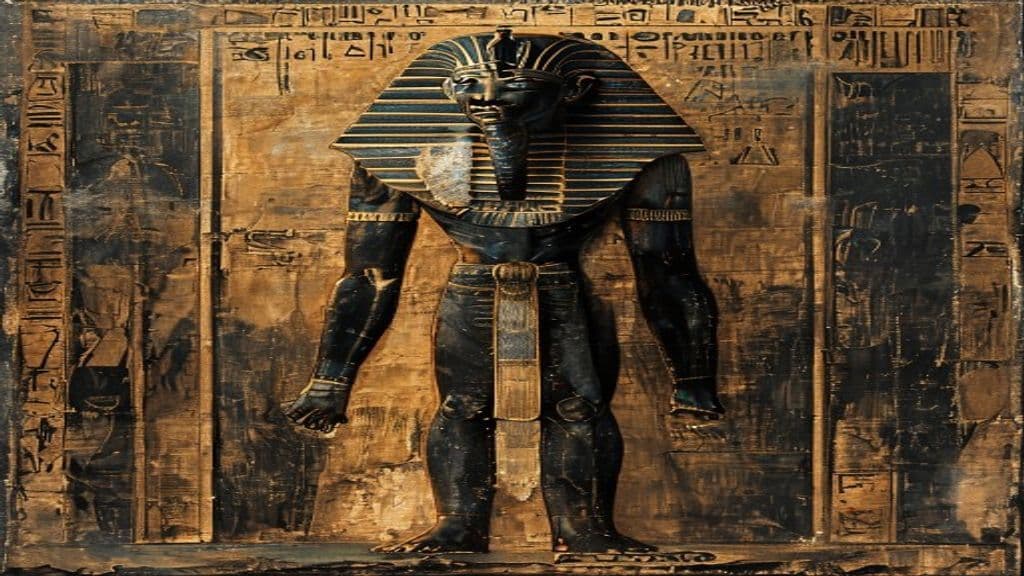
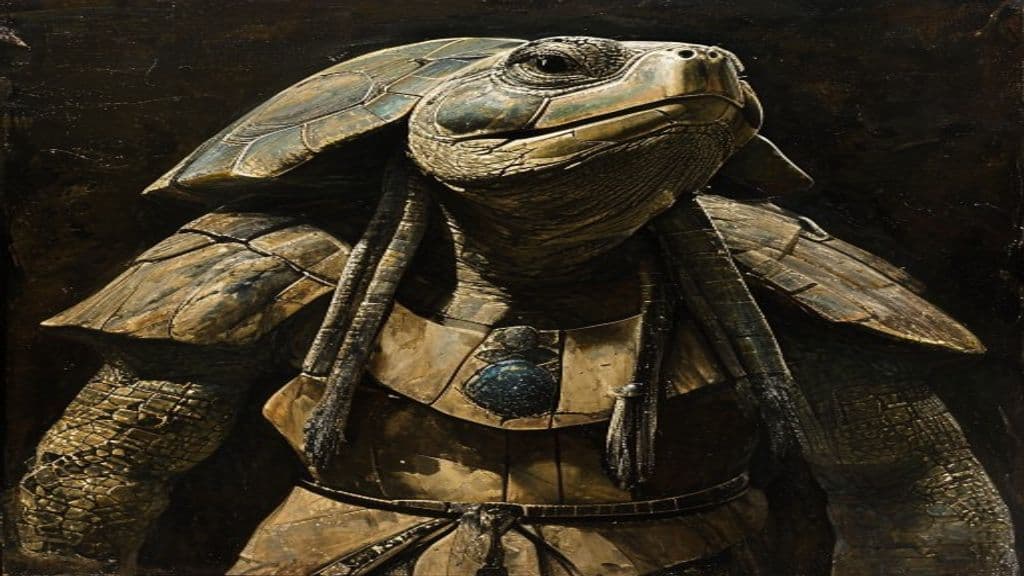
Apesh is an Ancient Egyptian god of the night associated with the head of a turtle or tortoise and attested in funerary literature as opposing the sun-god Ra. Sources describe Apesh in negative terms tied to cultural attitudes toward turtles and cite funerary formulae that rhetorically wish the turtle’s death in favor of Ra’s life.

Aphaia
Ancient

Aphaia

Aphaia is a local Greek goddess worshipped chiefly on the island of Aegina, associated in the sources with fertility, the agricultural cycle, and huntress attributes through identification with Britomartis/Diktynna and later with Artemis and Athena. Her cult was centered on a single prominent sanctuary and temple on a 160 m peak at the northeastern end of Aegina, with a monumental Late Archaic temple rebuilt ca. 500 BCE on the site of an earlier shrine destroyed by fire c. 510 BCE.

Aphareus
Lesser

Aphareus

Aphareus (Ancient Greek: Ἀφαρεύς) is an ancient Greek anthroponym attested for several distinct figures in myth and history (a Messenian king, a Centaur, a Greek warrior at Troy, and an Athenian rhetor/tragedian) and separately as a modern taxonomic genus of fish. The name does not denote a single autonomous supernatural being in the supplied sources but is used across multiple narrative registers.

Aphareus of Messenia
Lesser

Aphareus of Messenia

Aphareus (Ancient Greek: Ἀφαρεύς) is a legendary king of Messenia attested in Greek mytho-historical genealogies. He appears in literary and local traditions as a member of heroic-age lineages, a regional ruler, and an ancestral figure used to anchor Messenian dynastic claims.

Apheidas
Lesser

Apheidas

Apheidas is a personal name attested in ancient Greek mythic genealogies and narratives that refers to multiple distinct figures — including an Arcadian son of Arcas, a centaur at the wedding of Pirithous and Hippodamia, one of Odysseus’ companions slain by the Cyclops Polyphemus, a short-reigning legendary king of Athens, and an eponymous ancestor of a Molossian subgroup. The name appears across epic, genealogical, and local-regional traditions rather than as a single, consistent supernatural class.

Apheleia
Minor Spirit

Apheleia

Apheleia (Ancient Greek: Ἀφέλεια) is a personified spirit in ancient Greek religion representing ease, simplicity, and a valorized primitivity — glossed in modern English as "the good old days." A late antiquity testimony reports an altar to her on the Athenian Acropolis and that she was honored as a nurse of Athena.

Aphrahat (the Persian Sage)
Minor Spirit

Aphrahat (the Persian Sage)

Aphrahat was a fourth‑century Syriac Christian ascetic and author in the Sasanian Empire, venerated later as "the Persian Sage." He composed a corpus of twenty‑three homiletic expositions called the Demonstrations, which addressed doctrine, church order, Jewish‑Christian tensions, and pastoral care during persecutions.

Aphrodite
Ancient

Aphrodite

Aphrodite is a major ancient Greek goddess associated with love, lust, beauty, pleasure, passion, procreation, and related social and cosmic forces. She is counted among the principal Olympian deities with major cult-centers (Cythera, Cyprus, Corinth, Athens), celebrated annually at the Aphrodisia, and syncretized with the Roman Venus.

Aphrodite Pandemos
Ancient

Aphrodite Pandemos

Aphrodite Pandemos is an epithet of the Greek goddess Aphrodite denoting either her role as goddess of communal, bodily/sensual love or her civic function as ‘Aphrodite of all the people’ who unites the demos. The epithet appears in literary, epigraphic, and archaeological sources and is attested in sanctuaries and festivals in multiple Greek locales.

Aphroditus
Lesser

Aphroditus

Aphroditus (Ἀφρόδιτος) is a Cyprus-origin cultic form of Aphrodite celebrated in Amathus and adopted in Athens; depicted with female dress and form yet bearing male genitalia, the deity functions in ancient testimonia as a fertility and apotropaic figure whose rituals include sanctioned gender reversal.

Apis
Ancient

Apis

Apis (Ancient Greek: Ἄπις) is a name applied to several early mythic figures in Greek tradition—kings, a seer-healer, and local heroes—whose stories explain place-names (notably Apia/Peloponnesus) and foundational events in the Peloponnesus. Classical sources treat Apis as a mythic ancestor or culture-hero embedded in genealogies and early regal chronology rather than as a narrowly ‘otherworldly’ being.

Apis
Ancient

Apis

Apis (also Hapis, Hapi-ankh) is the sacred bull cult of ancient Memphis, Egypt: a living black calf selected by specific markings, housed and worshiped as an embodiment of Ptah in life and assimilated to Osiris after death (Osorapis), later syncretized in Hellenistic times with figures such as Serapis. The Apis bull served as an oracular and healing presence, a symbol of royal strength and a focus of elaborate funerary treatment at Saqqara.

Apis of Argos
Ancient

Apis of Argos

Apis of Argos is a mythic early king of Argos in Greek tradition, remembered as an eponymous ruler and lawgiver whose violent end and posthumous honours gave rise to local cult memory and later cross-cultural confusion with Egyptian traditions.

Apkallu (Abgal)
Ancient

Apkallu (Abgal)

Apkallu (Akkadian; Sumerian: Abgal) are polyvalent Mesopotamian wisdom figures attested as mythic/semi-divine sages (notably a group of seven), as professional human experts (ummânu), and as apotropaic images used in household and cultic ritual. They are closely associated with the god Ea (Nudimmud) as transmitters of secret knowledge and are represented in diverse iconography including fish-man and bird-headed types.

Apollo
Ancient

Apollo

Olympian deity of ancient Greek religion associated with prophecy, healing, music, archery, purification, and civic order. Principal patron of the Delphic oracle, protector of youth and flocks, and ambivalently both healer and bringer of plague.

Apollo Archetype
Ancient

Apollo Archetype

A concept in Greek tradition representing a particular aspect of human personality that values clear definitions, mastery of skills, and harmony. (Note: - Power tier seems too high given the described abilities (Ancient=deity-level); Lesser or Greater might be more plausible. - No description of wards; add relevant information from source material if )

Apollo of Veii (Aplu)
Minor Spirit

Apollo of Veii (Aplu)

A life-size late Archaic Etruscan terracotta cult statue of the deity Aplu (Etruscan Apollo) created for the acroterial program of the Portonaccio sanctuary at Veii, ca. 510–500 BCE; intended as an architectural cult image and narrative participant in a roofline group depicting Apollo and Heracles.

Apollonis
Lesser

Apollonis

Apollonis is an Ancient Greek name associated both with a local Muse (one of the Apollonides, daughters of Apollo worshipped at Delphi) and with a Hellenistic royal woman, Apollonis of Cyzicus, who received posthumous civic cult and a temple in the 2nd century BCE.

Apophis (Apep / Aphoph)
Ancient

Apophis (Apep / Aphoph)

Apep (Greek Apophis; Coptic Aphōph) is the ancient Egyptian personification of cosmic chaos, a monstrous serpent and the principal nightly adversary of the sun-god Ra. Treated as a primordial enemy of Maat, Apophis threatens Ra's nightly passage through the underworld and is ritually attacked and humiliated by priests to secure cosmic order.

Apparitional experience
Lesser

Apparitional experience

An apparitional experience is a parapsychological term for an anomalous perceptual event in which a person perceives a living being or inanimate object without any corresponding material stimulus. The label is deliberately neutral—used by researchers to describe phenomenology without presupposing survival after death—and the phenomenon has been treated as data relevant to debates about perception, dissociation, telepathy, and survival hypotheses.

Appu (Hurrian)
Minor Spirit

Appu (Hurrian)

Appu is the central figure of a fragmentary myth preserved in Hittite archives as CTH 360 and conventionally regarded by scholars as reflecting a Hurrian tale. The text survives in Hittite-language form, is incomplete, and provides few concrete details about the character beyond its role as the story's protagonist.

Apsara
Lesser

Apsara

Celestial dancers and water nymphs of Hindu cosmology — beautiful semi-divine beings who dance at the court of Indra and, by his command, descend to earth to distract sages from excessive asceticism.

Apsat
Lesser

Apsat

Male deity in Georgian mythology, associated with birds, animals, and possibly horses; connected to hunting, game provision, and thunder/lightning. (Note: - Power tier: Primordial (due to his association with cosmic forces like thunder/lightning) - Origin story: More specific information is needed, as the source material only mentions the possible etymo)

Apseudes
Minor Spirit

Apseudes

Apseudes is one of the fifty Nereids in Greek mythology, daughters of Nereus and the Oceanid Doris. She is primarily known from genealogical name-lists; her name is glossed in sources as meaning 'truthful' or 'she who never lies,' but no independent myths, rituals, or iconography for her are attested in the supplied materials.

Apshait
Lesser

Apshait

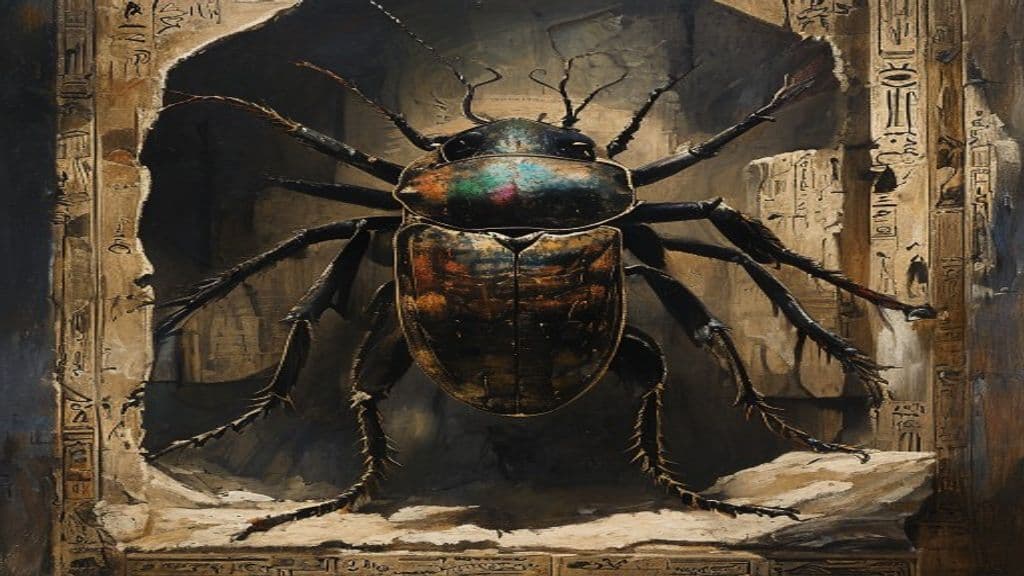
Apshait is attested in modern references as a monstrous, corpse-eating beetle mentioned in Ancient Egyptian funerary literature; specifically it is cited as occurring in the Book of the Dead (chapter 36). The available sources describe it only as a large flesh-eating beetle associated with corpses and funerary context.

Apsu (Abzu)
Primordial

Apsu (Abzu)

Apsu (Sumerian Abzû; Akkadian Apsu) is the primeval freshwater principle in Mesopotamian cosmology, conceived both as the subterranean freshwater ocean/aquifer and as a hypostatic divine presence. Paired with the saltwater Tiamat, Apsu is a progenitor of earlier divine generations and the source of lakes, springs, rivers, rain and floodwaters; in Enūma Eliš he is slain by the younger god Ea and his domain becomes Ea's dwelling.

Apsyrtus (Absyrtus)
Lesser

Apsyrtus (Absyrtus)

Apsyrtus (Absyrtus) is a Colchian prince in the Greek mythic cycle, described in the supplied sources as the brother or half-brother of Medea and a participant in the narrative surrounding Jason's theft of the Golden Fleece. He is presented as a mortal member of Aeetes' household within the Argonautica tradition rather than as a supernatural class of being.

Apu
Lesser

Apu

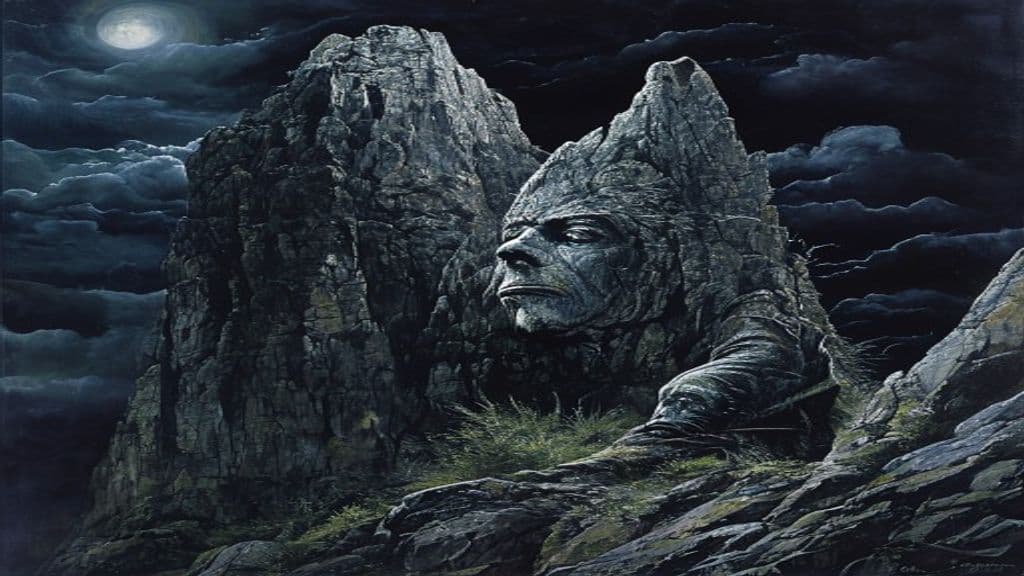
In Andean (Inca-era and continuing) belief, an apu is the spirit of a mountain or a solitary rock, conceived as a localized, often anthropomorphic guardian presence associated with a particular peak or notable stone in Peru, Ecuador, and Bolivia.

Apu Illapu
Ancient

Apu Illapu

Apu Illapu (also Illapa, Ilyapa, Ilyap'a, Iyapa) is a major Inca deity associated with thunder, lightning, rain and other atmospheric phenomena. He was invoked in agricultural contexts and during drought; temples, pilgrimages, prayers and sacrifices were offered to secure his favor or to halt destructive storms.

Apulu
Ancient

Apulu

Apulu (Etruscan: 𐌀𐌐𐌖𐌋𐌖; syncopated Aplu) is an epithet/aspect of the Etruscan fire god Śuri combining solar/sky and chthonic/volcanic functions. Attested in inscriptions, major sculpture (notably the Apollo of Veii) and small votive objects, Apulu is associated with sun and light, thunder and lightning, healing and plague, and the protection of divination.

Apwint
Minor Spirit

Apwint

Apwint (Burmese: အပွင့်) is a culturally specific social identity in Myanmar for individuals assigned male at birth who openly present as women and are attracted to men. The term combines aspects of gender presentation and sexual orientation within local classificatory practices and is distinct from the related category apone, which denotes concealment of feminine identity or same-sex attraction.

Aq Bars
Lesser

Aq Bars

Aq Bars (Tatar: Ак Барс, 'White Leopard') is an ancient Bulgar tribal totem and heraldic emblem historically used in Volga Bulgaria and the Khanate of Kazan and adopted in the modern era as the official symbol of the Republic of Tatarstan (formally since 7 February 1992). It functions as a dynastic/tribal mark of identity (derived from the Barsil tribe) and as a political-state emblem rather than a personal supernatural being.

Aqen
Lesser

Aqen

Aqen is a rarely mentioned ancient Egyptian underworld deity associated with the nocturnal solar bark of Ra and with a metaphorical role in underworld time. He appears in New Kingdom funerary texts as a custodial attendant who brings a protective shen-ring to the sun-god and is described in an inscription as the "mouth of the time".

Aquababy
Lesser

Aquababy

Aquababy is not attested as a traditional folkloric being in the supplied materials; it appears only as a brief pop-culture/comic-book anecdote mentioned in a podcast episode description and lacks mythic, descriptive, or ritual documentation in the provided sources.

Aquagirl
Greater

Aquagirl

Aquagirl is a codename used by several fictional superhero characters published by DC Comics, depicted as female counterparts and allies to Aquaman and members of the wider 'Aquaman Family'. Notable bearers include Tula (an Atlantean princess/ally), Lorena Marquez (a human metahuman from San Diego), and earlier one-off figures (Lisa Morel, Selena); the name functions as a recurring title across multiple continuities and reboots.

Aqualad
Greater

Aqualad

Aqualad is a modern American fictional superhero mantle published by DC Comics and appearing across comics, animation, live-action television, film, and games. The name denotes youthful water-associated protégés of Aquaman — chiefly Garth (an Atlantean who later becomes Tempest) and Jackson Hyde / Kaldur'ahm (a reimagined, partly human version created for Young Justice).

Aquaman
Greater

Aquaman

Aquaman is a fictional superhero appearing in American comic books published by DC Comics. An Atlantean-human hybrid who serves as king of Atlantis and a founding member of the Justice League, Aquaman has been a recurring protagonist across comic-book eras and adapted into animation and live-action media.

Ar-Pharazôn
Lesser

Ar-Pharazôn

Ar-Pharazôn is the twenty-fifth and last King of Númenor in J. R. R. Tolkien's legendarium; a mortal ruler whose political and military leadership, and whose acceptance of Sauron's counsel, precipitated the rebellion of Númenóreans against the Valar and the Downfall of Númenor.

Ara
Lesser

Ara

Ara (Sumerian: A) is a minor Mesopotamian goddess attested as a servant or attendant of the god Enki. Earlier scholarship sometimes conflated her theonym with the attendant deity Isimud, but modern treatments distinguish Ara as a separate divine household figure.

Arachne
Lesser

Arachne

Arachne is a mortal woman from classical Greco-Roman myth (best known from Ovid's Metamorphoses, Book 6) whose unrivaled weaving skill and challenge to the goddess Athena/Minerva lead to her metamorphosis into a spider; the tale functions as an etiological myth explaining why spiders spin webs and as a cautionary exemplum about hubris toward the gods.

Aradia
Lesser

Aradia

Aradia is a name and motif appearing in late-19th-century folklorist literature (notably Charles G. Leland's Aradia, or the Gospel of the Witches) and in Italian, Sardinian, and adjacent regional folklore where cognate names (Arada, Araja, Erodiade/Irodiada) are attached to a nocturnal female host associated with Diana/Herodias. Sources portray Aradia variously as a messianic teacher of witchcraft (Leland) and as part of a tradition of night-flying female spirits and regional fairy-queen figures (folklore surveys).

Arae (Arai)
Greater

Arae (Arai)

In Greek myth the Arae (Αραι, Arai) are female chthonic spirits who personify curses—especially imprecations of the dead—and act as underworld enforcers of vengeance and blood-redress. They are often treated as interchangeable with or closely related to the Erinyes (Furies) and are invoked in dramatic and ritual speech when murder, household pollution, or ancestral guilt demand retribution.

Arahura (Māori canoe)
Ancient

Arahura (Māori canoe)

Divine Māori canoe made of pounamu, associated with the Ngāi Tahu tribe and spiritual significance. (Note: * Power tier: Not specified, assume Lower or Lesser as it's associated with the tribe and not described as a deity-level being * Abilities: Remove the mention of spiritual significance and connection )

Aralez (Aralezner)
Greater

Aralez (Aralezner)

Aralez (Aralezner in plural) are ancient Armenian dog-like spirit-beings traditionally credited with resurrecting fallen warriors by licking their wounds. Described in source material as part of the older strata of Armenian sacred imagination, they occupy a liminal role between animals, spirits, and ancient gods.

Aram (Nahapet)
Greater

Aram (Nahapet)

Legendary leader and patriarch in Armenian tradition who united Armenians into one state. (Note: - Power tier: Primordial (given cosmic/unifying abilities) - Summary: Expand to include "unification of Armenians" as a key aspect of his leadership - Abilities: More specific and detailed description)

Arang (Korean folklore)
Ancient

Arang (Korean folklore)

Vengeful spirit driven by a desire for justice in Korean folklore, particularly during the Joseon Dynasty. (Note: 1. Power tier should be Primordial since it is described as having a cosmic level of influence in causing fear among magistrates. 2. The description for weaknesses is missing; add that Arang's weaknes)

Aranzaḫ
Greater

Aranzaḫ

Aranzaḫ is the Hurrian divine personification of the river Tigris, treated in Hurrian religion as a numen and river-god who appears in the Kumarbi Cycle and as an ally-protector in the tale of Gurparanzaḫ. The figure is attested in Hurrian theophoric names and is discussed in scholarship in relation to later regional cultic references to the Tigris source.

Aranātha
Ancient

Aranātha

Aranātha is the eighteenth Tīrthaṅkara (ford‑maker) in the Jain tradition of the present half‑cycle (Avasarpini). In the provided sources he is presented as a spiritual exemplar born in the Ikshvaku dynasty at Hastinapur who attains siddhahood (liberation) after completing his life.

Arariel
Lesser

Arariel

Arariel is an angel attested in rabbinic tradition as having charge over the waters of the Earth. Later popular and New Age sources expand this terse attribution into devotional uses (invocation for fishing, mental calm), but primary sources recorded here offer only the brief custodial office.

Arash (Arash the Archer)
Lesser

Arash (Arash the Archer)

Arash (Āraš-e Kamāngīr) is a mytho-historical heroic archer in Iranian tradition whose single, divinely sanctioned shot determined the boundary between Iran and Turan. Accounts vary on details — flight distance, launch and landing points, and whether Arash dies in the act — but the core motif is a sacrificial arrow that fixes territorial order and royal glory (khwarrah).

Arautauta
Ancient

Arautauta

The Arautauta is a significant waka (canoe) in Māori tradition, playing a key role in the migration of people to New Zealand. (Note: - Power tier: Should be Primordial (as it's a significant waka in Māori tradition) - Abilities: Should mention its use for transporting people and goods as a notable aspect of its significance - Appea)

Aravis
Lesser

Aravis

Aravis is a fictional human character from C. S. Lewis's The Horse and His Boy (1954). A Tarkheena (female noble of Calormen), she flees an arranged marriage, travels north with talking horses and companions, is wounded by a lion, undergoes moral transformation after encountering Aslan, and later becomes queen of Archenland and appears among the redeemed in Aslan's Country.

Arawa (canoe)
Greater

Arawa (canoe)

In Māori tradition, the Arawa is a supernatural canoe representing the ancestors' journey to New Zealand. (Note: * Power tier: Primordial (or not specified at all, as there's no indication of supernatural powers beyond its symbolic and cultural significance) * Appearance: No physical description mentioned in sou)

Arawn
Ancient

Arawn

Arawn is the ruler (king) of Annwn, the Otherworld in medieval Welsh narrative. He appears most prominently in the First Branch of the Mabinogi, where he exchanges places with the mortal Pwyll for a year and a day and is associated in folklore with the Cŵn Annwn (Hounds of Annwn) and other supernatural animals.

Araṇyānī
Ancient

Araṇyānī

Araṇyānī is the Vedic forest goddess/personified presence of the wild in early Hindu literature, best known from the Aranyani Suktam (Rigveda 10.146). She embodies the autonomous, productive character of untamed woodlands—elusive, a provider of sustenance, and perceptible by the tinkling of anklets rather than by sight.

Arcadia (Utopia)
Primordial

Arcadia (Utopia)

In Greek tradition, Arcadia is an idealized concept representing a harmonious relationship with nature. (Note: 1. The power tier should be "Primordial" is correct, but clarify that this refers specifically to its conceptual or idealized nature, not implying it has traditional magical powers. 2. No explicit des)

Arcas
Lesser

Arcas

Arcas (Ancient Greek Ἀρκάς) is a mythic Greek culture-hero and eponymous founder of Arcadia: a hunter who becomes king, credited with teaching weaving, baking, and agriculture, and whose narrative involves Zeus, Callisto, Lycaon, and apotheosis among the stars.

Arcesilaus
Minor Spirit

Arcesilaus

Arcesilaus is a Greek personal name attested for at least two distinct human figures in classical sources: a 3rd-century BC Hellenistic philosopher who led the Platonic Academy into its skeptical phase, and a mythic Boeotian leader in the Trojan War who commanded ten ships and was slain by Hector. Neither figure is represented as a supernatural being in the provided sources.

Arcesius
Lesser

Arcesius

Arcesius (Ancient Greek: Ἀρκείσιος, also Arceisius/Arkeisios/Arcisius) is a mythic ancestral king of Ithaca attested in classical genealogical traditions as the father (or ancestor) of Laertes and an ancestor of Odysseus and Telemachus. Sources record multiple, conflicting parentage variants and occasional miraculous birth motifs; later uses of the name appear in non-mythic contexts (opera role, Roman technical literature, and a modern taxonomic label).

Archander
Lesser

Archander

Archander (Ancient Greek: Ἄρχανδρος; Latinized Archander/Archandrus) is a legendary human figure from Greek genealogical and migration myths, described as a son of Achaeus who fought with his brother, married Scaea (a daughter of Danaus), settled in Argos, and is linked in some traditions to an eponymous city in Egypt.