Entity Index

A record of the unseen, drawn from world folklore.

7631 entities · page 19 of 128

Archangel
Ancient

Archangel

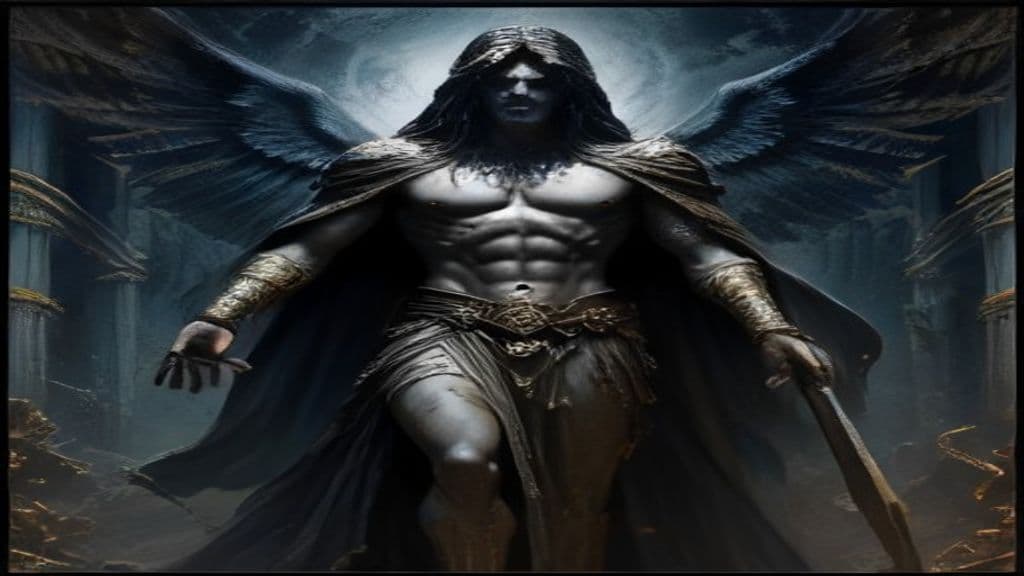
An archangel is a ranked heavenly messenger in Abrahamic and related religious literatures, understood in many traditions as a high‑level angelic agent charged with carrying out divine missions. The term and ranked office are framed by Greek etymology (archángelos, 'chief messenger') and by medieval Christian angelology (notably Pseudo‑Dionysius), while named figures such as Michael, Gabriel, and Raphael appear across Jewish, Christian, and Islamic texts and liturgies.

Archdemon (tradition)
Greater

Archdemon (tradition)

A high-ranking infernal or non‑human spiritual being that functions as a leader, king, or princely figure within hostile supernatural hierarchies. Appears across Christian/occult, Islamic/Middle Eastern, and Zoroastrian contexts as commanding subordinate demons, jinn, or evil spirits and acting in opposition to divine or benevolent spiritual authorities.
Arche
Lesser

Arche

Arche (Ancient Greek: Ἀρχή) is attested in surviving classical references as a personified muse of origins and beginnings, named among a local Boeotian set of muses recognized at Delphi and identified with the Mouse Titanides in some sources.

Archelochus
Lesser

Archelochus

Archelochus (Ancient Greek: Ἀρχέλοχος) is a mortal Homeric warrior, son of Antenor and Theano, who served as a commander of the Dardanian contingent allied with Troy during the Trojan War. He appears in the Iliad as a named noble-born combatant and is killed in battle by Ajax son of Telamon; later tradition and scholiasts note his shared command with his brother Acamas and Aeneas.

Archgallo
Lesser

Archgallo

Archgallo is a legendary mortal king in the pseudo‑historical Kings of Britain tradition (popularized by Geoffrey of Monmouth). His story, dated in the chronicle framework to around 339 BC, narrates tyranny, deposition, exile, restoration by his dutiful brother Elidurus, a decade of reformed rule, and death.

Archie Corrigan
Lesser

Archie Corrigan

Archie Corrigan is a fictional, non-superpowered human supporting character in Marvel Comics. A pilot, small-business proprietor, and smuggler based in the island-city of Madripoor, he serves as an ally to Patch and other protagonists and appears in storylines that mix criminal and occasional supernatural threats.

Archie O'Toole
Minor Spirit

Archie O'Toole

Archie O'Toole is a fictional comic-strip character created by Will Eisner (under the pseudonym 'Bud Thomas') in 1938 for Quality Comics. Portrayed as a tall, gangly, red-headed itinerant painter from the fictional mid-Atlantic island of Pyromania, he rises to prominence within the strip after tricking the island's dictator and being declared king; the feature ran in Feature Funnies and Smash Comics through 1949.

Archilycus
Minor Spirit

Archilycus

Archilycus (Ancient Greek Ἀρχίλυκος, Archílykos; Latinized Areilycus in some lists) is a mythic mortal attested only in genealogical and cataloguing traditions of ancient Greece. He is recorded as a member of a Boeotian noble lineage and as the father of leaders who took part in the Trojan expedition; he is not presented as a deity, monster, or active narrative character in surviving sources.

Archimago
Lesser

Archimago

A human sorcerer figure from Edmund Spenser's The Faerie Queene who practices deceptive magic—creating false appearances and impersonations—to tempt and undermine the faith and virtue of the poem's protagonists. The figure is read by critics as an allegorical personification of religious hypocrisy and temptation; the name also contributed to later literary vocabulary for a high-ranking wizard.

Architeles
Minor Spirit

Architeles

Architeles (Ancient Greek: Ἀρχιτέλης) is a personal name attested for multiple human figures in ancient Greek mythic and historical literature. The name appears in genealogical contexts (son of Achaeus; brother of Archander) and in a Calydonian/Oeneus cycle episode as the father who forgave Heracles for accidentally killing his cupbearer.

Archmail (Arthmael)
Ancient

Archmail (Arthmael)

Archmail (Welsh: Arthmael) is a legendary king of the Britons recorded in Geoffrey of Monmouth’s regnal tradition. He is presented in modern summaries as having come to power in 161 BC and as succeeding his brother Beldgabred and preceding Eldol in the king-list.

Archon (Gnosticism)
Ancient

Archon (Gnosticism)

In Gnostic traditions, an archon (Greek ἄρχων, árchōn) is a cosmic ruler or architect of the visible, material cosmos. Archons function as intermediate powers that construct, govern, and limit the created world and are frequently depicted as obstacles to the soul's return to higher spiritual realms.

Archura
Greater

Archura

Archura (Arçura) is a Turkic woodland chura — a shapeshifting forest spirit associated with particular woodland tracts and wild animals. Traditions portray Archura as a protector of wildlife and a trickster-like figure that can be dangerous to humans.

Arcturan
Lesser

Arcturan

A modern, polyvalent label used in science fiction, fandom, and New Age/spiritual communities to denote beings, languages, or cultural attributes said to originate from the star Arcturus. Usage is contemporary and variable: in SF it names extraterrestrial races or languages; in New Age contexts it appears as a 'starseed' or channelled lineage and source of spiritual contact.

Arctus
Minor Spirit

Arctus

Arctus is a polyvalent name rooted in the Greek word for 'bear' (Arktos) that appears across astronomical nomenclature (the Great Bear/Arctic), classical mythographic name-lists (personal names such as a centaur or a Hora), taxonomy (species and genus names), and modern/fictitious proper names. The provided sources do not support treating Arctus as a single coherent supernatural being within a specific folkloric tradition.

Ardat-lilî
Lesser

Ardat-lilî

Ardat-lilî are a class of female phantom-spirits in Ancient Mesopotamian sources: the restless ghosts of young women who died without sexual fulfillment or marriage. Presented in exorcistic and medical texts from the Old Babylonian period onward, they are blamed for seductive attacks on young men and for illnesses variously described as the 'hand of ardat-lilî.' Ritual responses include incantations, exorcism, and a prescribed 'mock marriage' to placate the spirit.

Ardescus
Ancient

Ardescus

Ardescus is presented as an instance of the class of ancient Greek river gods: personified deities tied to particular rivers, often integrated into local worship and genealogies and placed in Hesiodic theogony as offspring of Oceanus and Tethys.

Ardhanārīśvara
Ancient

Ardhanārīśvara

Ardhanārīśvara is an androgynous iconographic form in Hindu tradition combining Shiva and his consort Pārvatī into a single deity split vertically as male and female, symbolizing the inseparability and synthesis of masculine and feminine cosmic principles.

Ardina
Greater

Ardina

Ardina is a Marvel Comics fictional cosmic/magical construct described in comic-book continuities as a female being formed from the Silver Surfer's energies (Power Cosmic) and appearing in storylines involving the Defenders, the Order, and related Marvel mythic figures.

Arduinna
Ancient

Arduinna

Arduinna is a local Gallo-Roman tutelary goddess of the Ardennes (Arduenna) — a divine personification of wooded heights — attested in two inscriptions and later equated with the Roman Diana. Iconography associating her with a boar-riding huntress exists in modern literature but the identification is uncertain.

Aredvi Sura Anahita
Ancient

Aredvi Sura Anahita

Aredvi Sura Anahita is the Avestan Yazata of waters and fertility in ancient Iranian religion and Zoroastrianism, praised in the Aban (Aban Yasht) as the mighty, undefiled river and invoked in liturgical offerings to waters.

Aregonis
Minor Spirit

Aregonis

Aregonis (Ancient Greek: Ἀρηγονίς) is a mythological maternal figure in Greek genealogies, named as the wife of the seer Ampyx and mother of the Argonautic seer Mopsus in the Orphic Argonautica. In other traditions the maternal role is given to a woman called Chloris, reflecting variant naming in transmission.

Areilycus (Archilycus)
Lesser

Areilycus (Archilycus)

Areilycus (Ancient Greek Ἀρηίλυκος; also attested Archilycus/Areilykos) is a personal name in Greek epic and later mythography. It appears in two distinct Homeric-era attestations: as a genealogical father of Boeotian leaders (Arcesilaus/Archesilaus and Prothoenor) and as a mortal warrior, son of Menoetius, wounded in the thigh by Patroclus in Iliad Book XVI.

Areius
Minor Spirit

Areius

Areius (Ancient Greek: Ἀρεῖος) is primarily an epithet used in Greek and Roman cultic and literary contexts, most notably applied to Zeus to denote a warlike or propitiatory/atoning aspect; it also appears as a personal or mythic proper name in classical onomastic and historiographic sources.

Arella
Minor Spirit

Arella

Arella (born Angela Roth) is a fictional human character from DC Comics, best known as the pacifist mother of the superheroine Raven and a member of the interdimensional spiritual community of Azarath. In-universe she is a mortal woman who assumes a spiritual caregiver role and, in certain storylines, participates in sacrificial events that merge her with collective souls of Azarath (Phantasm).

Arensnuphis
Ancient

Arensnuphis

Arensnuphis (Egyptian Iryhemesnefer, 'the good companion') is a deity originating in the Kingdom of Kush who was incorporated into Egyptian temple contexts in the Ptolemaic Period. He is attested at Musawwarat el-Sufra (3rd century BC) and later worshipped at Philae and Dendur, where he is described as a companion of Isis and syncretized with the Egyptian gods Anhur and Shu.

Ares
Ancient

Ares

Ares (Ancient Greek: Ἄρης) is the ancient Greek Olympian god of war who personifies the physical violence, valor, and bloodlust of combat. Worshiped irregularly across Greece and Asia Minor, he was both honored and ritually restrained by communities that sought to direct his martial power toward protection rather than wanton destruction.

Arestor
Lesser

Arestor

Arestor (Ancient Greek: Ἀρέστωρ) is an Argive princely figure in Greek mythic genealogies, known primarily as a forefather and eponymic node connecting the foundation myths of Argos/Mycenae and several heroic-age figures (notably as father of one or more figures named Argus). He functions as a mortal genealogical ancestor in the literary tradition rather than as an independently acting supernatural being.

Arete
Lesser

Arete

Arete is the queen of the Phaeacians (Scheria) in Greek epic tradition, wife of Alcinous and a leading household and civic figure noted for intelligence, hospitality, and influential mediation in matters of sanctuary, marriage, and domestic dispute. Though the people regard her with near-sacral reverence — they 'look upon her as upon a goddess' — the sources present her as an honored human ruler whose authority operates within social and political frameworks of the community.

Arethusa
Lesser

Arethusa

Arethusa is a freshwater nymph of Greek myth who, pursued by the river-god Alpheus while serving as a chaste attendant of Artemis/Diana, transforms into a spring and emerges on the island of Ortygia (Syracuse). Her myth explains a subterranean link between distant waters and serves as a civic emblem of Syracuse.

Arethusa (Boeotia)
Lesser

Arethusa (Boeotia)

Arethusa (Ἀρέθουσα) in the Boeotian–Chalcidian tradition is a mythic woman whose liaison with a sea-deity (the damaged text is usually restored as Poseidon) and subsequent transformation by Hera form an aetiology for the Arethusa spring at Chalcis. The fragmentary evidence presents her primarily as a toponymic and genealogical figure connecting local cult, landscape, and regional identity.

Aretos
Lesser

Aretos

Aretos is an ancient Greek anthroponym borne by several distinct mortal figures in epic and mythographic traditions (princes, warriors, and a king). The name does not denote a unified supernatural being; rather, multiple individuals named Aretos appear across disparate episodes such as the Trojan War, the Argonautic/Bebrycian episode, and Dionysus’ Indian campaign.

Aretus
Lesser

Aretus

Aretus is a personal name borne by several mortal figures in Greek myth — princes, kings, and warriors appearing across the Trojan, Argonautic, and Dionysian cycles. The name does not denote a recurring supernatural class; individual Aretuses are human actors within narratives where gods and seers intervene.

Arevakhach’
Ancient

Arevakhach’

The Armenian eternity sign is an ancient national symbol representing the Armenians' spiritual and celestial connection. It appears as a geometric figure on khachkars and church walls, embodying the significance of faith and symbolism in Armenian tradition. (Note: - Power tier: Primordial (as it's described as an "ancient" national symbol, but there's no indication that it's deity-level) - Appearance: Not enough detail is provided; the source material only ment)

Argaliatherium (tradition)
Minor Spirit

Argaliatherium (tradition)

The provided sources do not document Argaliatherium as a mythic or supernatural being. They concern paleontological and taxonomic literature about Mesozoic mammals (trechnotherians, tribosphenic mammals) and list fossil specimens and related papers; no folkloric tradition, rituals, or supernatural attributes for an entity named Argaliatherium are present in the supplied material.

Arge
Lesser

Arge

Arge (Ancient Greek: Ἄργη, Árgē) is a name applied to several distinct female personages in Greek mythic traditions — a boastful huntress transformed by a god, one of the Hyperborean maidens honored at Delos, and a Cretan nymph attested in a rare variant of Dionysus’ birth. The name functions as an individuated personal name across local narratives rather than as a coherent supernatural taxon.

Argeia (Argia / Argea)
Minor Spirit

Argeia (Argia / Argea)

Argeia (Ancient Greek Ἀργεία; variants Argia, Argea) is primarily attested as a mortal name in Greek mythic genealogies — notably a daughter of Adrastus of Argos, wife of Polynices and mother of Thersander, Adrastus, and Timeas. The lexical form Argeia is also used in modern scientific taxonomy as a genus of parasitic isopods and as a species epithet (e.g., Chimarra argeia) in entomology.

Argeius
Lesser

Argeius

Argeius (Ancient Greek: Ἀργεῖος; sometimes Argeus) is not a single supernatural being but a personal name borne by multiple historical and mythological figures in ancient Greek literature and tradition — including an Elean deputy of the 4th century BCE, a youth-athlete recorded by Bacchylides, a centaur slain by Heracles, and various genealogical/royal figures tied to Argive traditions.

Argentoconodon
Minor Spirit

Argentoconodon

Argentoconodon is an extinct genus of eutriconodont-like mammaliaform known from the Cañadón Asfalto Formation of Patagonia, Argentina. Originally described from a single molariform (MPEF-PV 1877), later material expanded comparisons to other triconodont-like mammals and suggested a carnivorous diet and possible gliding/arboreal habits.

Argeus
Minor Spirit

Argeus

Argeus (Ancient Greek: Ἀργεύς, "the hunter") is a personal and place-name attested across classical, Christian, and modern contexts. The name labels several distinct referents — mythological individuals (including a king of Argos), a historical/legendary pretender, a Christian saint, and a Roman toponym for Mount Erciyes — rather than a single supernatural being.

Argia (Argea / Argeia)
Minor Spirit

Argia (Argea / Argeia)

Argia (Ancient Greek: Ἀργεία), also spelled Argea or Argeia, is a name borne by several women in Greek myth; the attested figure in the supplied sources is an Argive princess, daughter of King Adrastus of Argos, wife of Polynices, and mother of his sons. She is presented as a mortal genealogical figure linking Argive and Theban royal lines rather than as a deity or supernatural being.

Argia of Argos
Lesser

Argia of Argos

Argia (Argeia/Argea) is a mortal royal woman of Argos in the Greek epic and mythographic tradition. Daughter of King Adrastus, she is best known as the wife of Polynices of Thebes and mother of his sons, and is associated in poetic sources with the Necklace of Harmonia as an ill-omened heirloom she at times bears.

Argiope
Lesser

Argiope

Argiope is a name applied to multiple female freshwater nymphs (naiads) in Greek myth. Figures called Argiope appear in distinct local and genealogical traditions (e.g., an Eleusinian naiad, a Nile-associated wife of Agenor, and a lover of Philammon), principally as consorts and mothers of notable mythic figures.

Argius
Minor Spirit

Argius

Argius (also attested Argios/Argeus) is a Greek personal name borne by multiple distinct figures in classical, mythographic, medieval, and modern literary sources — including a historical sculptor, one of the mythic sons of Aegyptus, and various later fictional characters. The attestations do not present a single supernatural entity or a consistent set of powers or rituals.

Argonauts
Lesser

Argonauts

A band of human heroes in Greek myth who sailed aboard the ship Argo under Jason to Colchis to retrieve the Golden Fleece. Their identity is defined by membership in the celebrated voyage and by shared heroic lineages; membership lists and details vary by source.

Argos
Lesser

Argos

Argos is the loyal hunting dog of Odysseus in Homer's Odyssey, remembered for recognizing his master upon Odysseus's covert return to Ithaca after a twenty-year absence. Presented as a domesticated, neglected animal, Argos functions as a moral and emotional emblem of fidelity and the effects of prolonged absence in the epic.

Arguimus
Minor Spirit

Arguimus

Arguimus is recorded in the provided sources as a fossil genus name applied to an extinct mammal; it appears in taxonomic/paleontological contexts rather than as a figure of folklore or mythology. The sources do not supply etymology, morphology, or specific stratigraphic and geographic details for the genus.

Argus (Argonaut)
Lesser

Argus (Argonaut)

Argus (Ἄργος) is a mortal craftsman-hero in the Jason and the Argonauts cycle, credited as the builder and eponym of the ship Argo. He is named among the roster of Argonauts and is said in sources to have constructed the Argo with divine aid under Athena's guidance.

Argus Panoptes
Ancient

Argus Panoptes

Argus Panoptes is a many‑eyed giant of Greek myth famed for perpetual vigilance in the service of the goddess Hera. Described as an unwearied guardian of sacred charge (notably Io), he is famed for his all‑seeing eyes and eventual death at Hermes' hands.

Argynnus
Lesser

Argynnus

Argynnus (Ἄργυννος) is a youthful mortal from Boeotia in Greek myth whose drowning in the Cephissus river moves Agamemnon to bury and memorialize him; Agamemnon is said to have established or honored a shrine to Aphrodite under the epithet derived from Argynnus. He is presented across sources as a beloved youth (friend, lover, or unreciprocating beloved) whose death serves an etiological role for a local cult epithet.

Argyphia
Lesser

Argyphia

Argyphia is a named mortal woman in Greek mythic genealogical lists, presented as a consort of Aegyptus and the mother of several of his sons who appear in the Aegyptus–Danaus cycle. She is attested only as a genealogical matron; no independent cult, supernatural powers, or ritual traditions are recorded in the provided sources.

Argyra
Lesser

Argyra

Argyra is a named water‑nymph in Greek tradition identified both as a sea‑nymph of the Corinthian Gulf and as the naiad of a spring at the town called Argyra in ancient Achaea. She functions as a localized, place‑bound personification of a particular spring and coastal waters near Patrae.

Arhat
Lesser

Arhat

An arhat (Sanskrit: arhat; Pāli: arahant) is in Buddhist traditions a human practitioner who has gained insight into the true nature of existence, attained nirvāṇa, and been liberated from the cycle of rebirth. The status and valuation of arhatship vary by school: some traditions equate it with full liberation, while others treat it as distinct from or inferior to the bodhisattva/buddha ideal.

Ariadne
Lesser

Ariadne

Ariadne is a figure from Greek myth—described as a Cretan princess, helper of the hero Theseus, and in many accounts the consort of Dionysus—whose narratives range from abandoned mortal lover to deified cult figure associated with the labyrinth, weaving, and a wedding diadem set among the stars (Corona Borealis).

Arianrhod
Lesser

Arianrhod

Arianrhod is a mythic figure in medieval Welsh tradition, best known from the Fourth Branch of the Mabinogi. Daughter of Dôn in the Mabinogi (with an alternate genealogy in a Welsh Triad), she appears at the court of Math ap Mathonwy as the occupant of Caer Arianrhod and exercises binding pronouncements (tynged) that shape the destinies of her offspring, notably Dylan ail Don and the shapeless birth who becomes Lleu Llaw Gyffes.

Aribeth de Tylmarande
Minor Spirit

Aribeth de Tylmarande

Aribeth de Tylmarande (commonly Aribeth or Lady Aribeth) is a fictional human paladin of Tyr in the Forgotten Realms setting, portrayed as a high-ranking civic and religious officer in the city-state of Neverwinter whose grief and crisis of faith lead her from defender and ally to an antagonist in the Neverwinter Nights narrative.

Ariel
Lesser

Ariel

Ariel is named in the provided materials as an angel appearing primarily in Jewish and Christian mysticism and apocrypha. The supplied sources give the Hebrew form אֲרִיאֵל (romanized ʾÁrīʾēl) and identify Ariel as an angelic figure but do not provide further doctrinal, narrative, or ritual detail.

Arihant
Greater

Arihant

In Jain doctrine an arihant is a soul (jiva) that has conquered inner passions and destroyed the four inimical (ghātiyā) karmas, thereby attaining kevala jñāna (omniscience) while still embodied; on final shedding of remaining karma an arihant attains siddhahood (moksha).

Arikura-no-baba
Minor Spirit

Arikura-no-baba

Arikura-no-baba (蟻鞍の婆, glossed "ant-saddle hag") is a local legendary figure from Takayama in Gifu Prefecture, Japan, described in sources as an old woman with supernatural powers. She is credited in the cited accounts with stopping a mountain eruption by prayer after it had been rumbling for seven days and with cooling the water of an onsen by throwing a horse's hoof into it.

Arimanius
Ancient

Arimanius

Arimanius is a Greco-Roman rendering of the Iranian adversary Ahriman attested in classical literature (notably Plutarch) as the dark opposing principle to Oromazes/Ahura Mazda, and as a deity-name found on several Roman Mithraic dedications. Literary and inscriptional uses differ: Plutarch presents a morally malign, cosmological figure associated with pestilence and darkness, while Mithraic inscriptions invoke the name in dedicatory contexts with ambiguous or reinterpreted valence.