
Greater
Asag
A monstrous Sumerian demon king whose ugly face made fish flee and plants wither, whose army of stone warriors nearly defeated the god Ninurta before being crushed.
A record of the unseen, drawn from world folklore.
7631 entities · page 21 of 128
A monstrous Sumerian demon king whose ugly face made fish flee and plants wither, whose army of stone warriors nearly defeated the god Ninurta before being crushed.

A class of Sumerian disease-demons born from the union of heaven and earth, who lodged themselves in people's bodies and caused wasting fevers and convulsions.

Asalluhi (also Asarluhi, Asarluhe, Asaralimnuna, Asaralim, Asalim, Asarnuna) is a Mesopotamian deity primarily associated with incantations and exorcism. He is described in some sources as a son of the god Enki and is likely identical with an earlier figure called Asar attested from the third millennium BCE.

The Asanbosam (also Sasabonsam, Asasabonsam) is an Akan folkloric humanoid creature that dwells in trees and is described as vampire-like, feeding on people who enter its forest territory and enforcing localized rules of the woodland.

Asarluhi (also Asalluhi, Asarluhe, Asaralimnuna, Asaralim, Asalim, Asarnuna) is a Mesopotamian deity primarily associated with incantations and exorcism who commonly operates alongside his father Enki. He is likely identical with an earlier deity attested from the third millennium BCE called Asar (Asaruludu in some modern datasets).
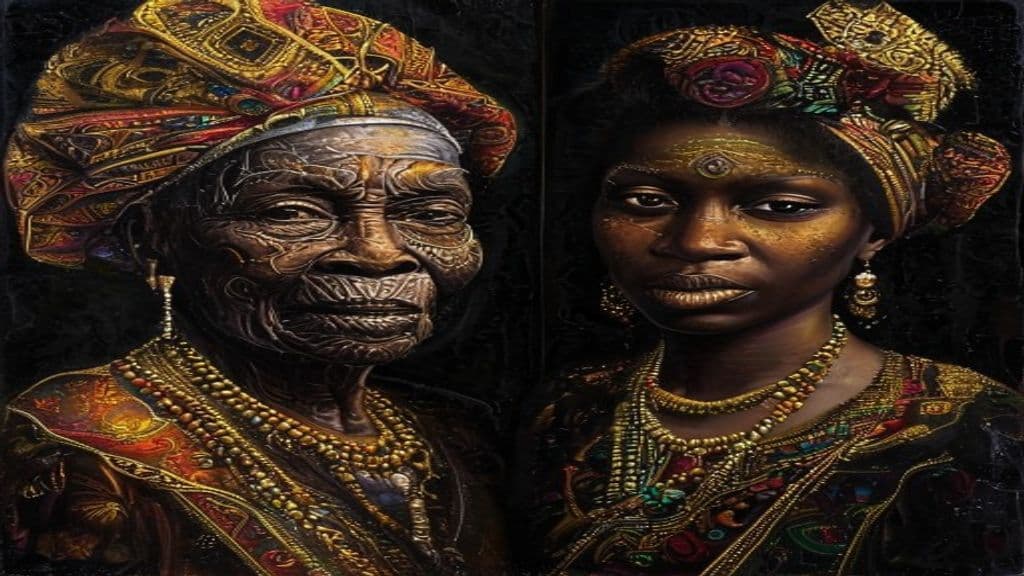
Asase Ya (Asase Yaa) or Asase Afua (Asaase Afua) is the Akan personified Earth-deity of fertility, land, truth, peace and the reception of the dead. She appears in a dual-aspect as an aged mother of the dead and as a youthful fertility-bringing woman and is central to agricultural, funerary and truth-rite practices among Akan peoples.

Asase Yaa (also Asase Afua, Asaase Yaa, Asaase Afua, Asase Efua, Asaase Aberewa) is the Akan personification of the earth in Ghana and Ivory Coast, regarded as an earth-mother figure associated with fertility, procreation, love, peace, truth, and the dry and lush earth. She is also described in sources as the 'Mother of the Dead' or Mother Earth, occupying a central moral and material place in Akan thought.

Asbolus is a named centaur in ancient Greek myth attested as an augur who read omens from birds and is said to have foresaw the Centaurs' battle at Pirithous's wedding; later traditions report his role in the episode where Pholus opens a communal wine-jug and Asbolus summons other centaurs, an action that precipitates a deadly confrontation in which several figures (Pholus, Chiron, Nessus) die and in some traditions Asbolus himself is struck by Heracles' arrows. In modern usage the name also designates the Centaur-class minor planet 8405 Asbolus, discovered in 1995 and measured by thermal observations.

Ascalabus is an etiological figure from Greek myth: a son of Misme who, after mocking the thirsty goddess Demeter as she drank a kykeon, is transformed into a gecko (Greek ἀσκάλαβος). The tale appears in accounts tied to Demeter's wanderings searching for Persephone and has a Roman variant in which he is called Stellio.

A nocturnal moth associated with death or misfortune in Hawaiian tradition, possibly tied to Central and South American folklore. (Note: - Summary should note that Ascalapha odorata's association with death/misfortune is found in Central and South American folklore, not explicitly mentioned in Hawaiian tradition. - Power tier: Primordi)

Ascalaphus is a mythic underworld attendant in Greek tradition, son of the river-god Acheron and the nymph Orphne, who served as custodian of Hades' orchard. In the Persephone abduction narrative he reports that Persephone ate underworld food, a disclosure that invokes her obligation to return to Hades; later accounts recount his punishment and metamorphosis into an owl.

Ascanius is a legendary Trojan prince in Greco‑Roman mytho-historical tradition, presented as the son of Aeneas and a dynastic founder who links the Trojan past to Italic and Roman genealogies (notably the Julian gens). He appears in literary and historiographical sources as a youthful warrior in Virgil's Aeneid and as a founder-king of Lavinium and Alba Longa in Roman tradition.

Aschanes is attested in medieval and modern sources as a legendary eponymous ancestor associated with Saxon origin tales (not presented as a clearly supernatural being). The name also appears separately in biblical-commentarial material where its status as a personal name or an office is debated.

Aschenbrödel is the German-language name and theatrical/literary manifestation of the Cinderella heroine (Aschenputtel/Cendrillon) found in European fairy‑tale tradition and adapted in ballets, films, recordings, and stage productions. The figure functions as a narrative protagonist — the mistreated but virtuous youth who is eventually recognized and rewarded — rather than a supernatural being.

Asclepigenia (Ancient Greek: Ἀσκληπιγένεια; fl. 430–485 AD) was a 5th‑century Neoplatonic philosopher and mystic active in Athens. She is attested as the daughter of Plutarch of Athens and as part of the Athenian philosophical succession; later biographical tradition reports that Proclus studied theurgy under her.
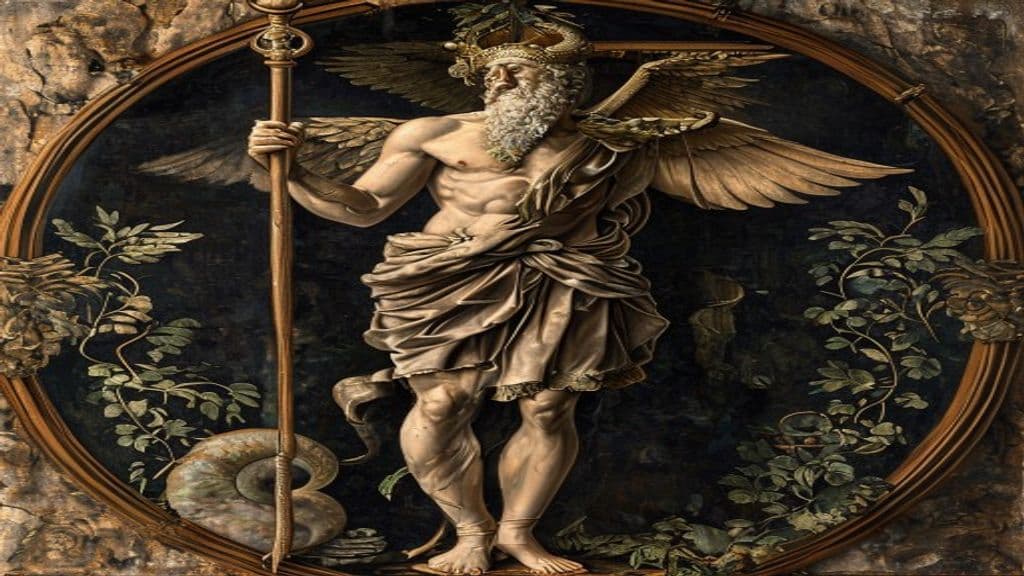
Asclepius is the ancient Greek divine figure and hero of medicine who personifies curing, medical expertise, and sanctuary-based therapeutic practice. Worshipped at major healing centers (notably Epidaurus), he functions as both mythic miracle-worker (including traditions of restoring life) and the patron-model for professional physicians and ritual healing procedures.
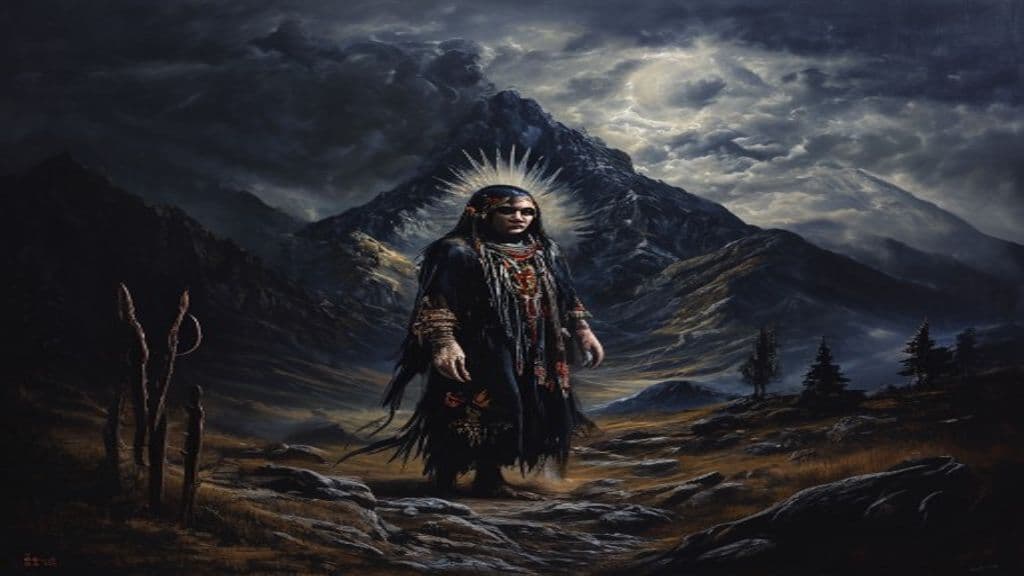
A creation spirit in Navajo tradition, involved in the formation of the world and creation of the Navajo people. (Note: - Power tier should be Primordial (no issue) - Origin story is accurate - Appearance needs to be added, stating that no physical description is available - Abilities are mostly accurate, but more deta)

Aseatas (Ancient Greek: Ἀσεάτα) is an Arcadian prince in Greek myth, listed among the fifty sons of King Lycaon and traditionally cited as the eponymous founder of the town Asea. Attestations are genealogical and onomastic rather than narrative; no deeds, cult, or descriptive details survive in the provided sources.

Asena is a mythic she-wolf who functions as the ancestress in the Göktürk foundation myth; she rescues an injured child after a battle, becomes pregnant by him according to the legend, flees across the Western Sea to a cave near the Qocho mountains, and gives birth to progenitors of the Ashina clan. The figure legitimizes the ruling lineage of early Turkic polities and has been revalorized in modern Turkish nationalist symbolism under the related label Bozkurt ('gray wolf').

Ash (Tamazight Yuc) is an Amazigh sky god recorded in Egyptian sources and worshipped by Libyan and Tehenu tribes of the Western Desert. In Egyptian texts he is presented as a named deity connected with the vineyards of the western Nile Delta, oases, and as ‘Lord of the Tehenu,’ and is sometimes associated or equated with the god Set.

Asha (Avestan aṣ̌a / arta), later personified as Asha Vahishta, is the foundational Zoroastrian cosmic and moral principle of truth, right order, and right-working; it functions both as an abstract ontological principle (truth = existence) and as one of the Amesha Spenta, the divine hypostases serving Ahura Mazda.

Ashaqlun is recorded in a single source as a Manichean demon — a hostile spiritual being situated within Manichaean dualist cosmology. The available record supplies only the name and classification without further detail on attributes, appearance, or practices.

Ashenafi is attested in the supplied sources only as an Amharic personal name (Amharic: አሸናፊ). The provided materials contain no evidence that 'Ashenafi' functions as a folk demon, evil spirit, or other supernatural entity in Ethiopian tradition.
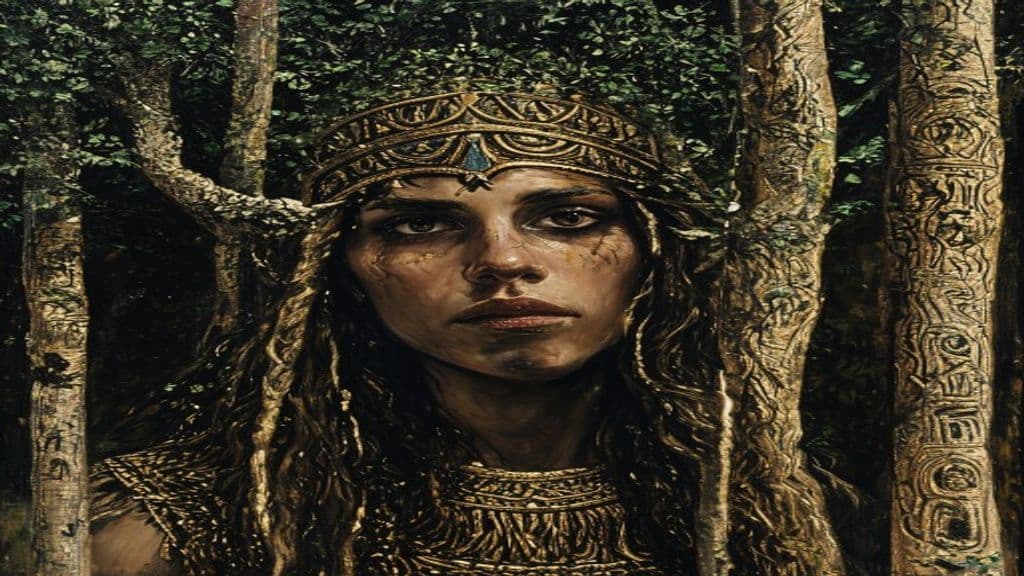
Asherah is a major ancient Northwest Semitic mother-and-fertility divine figure closely associated with sacred trees and wooden cult poles. Attested across Ugarit, Canaanite/Phoenician, Israelite, Akkadian and related Levantine contexts, her cultic presence is debated in later Israelite texts where references are often recast as objects (asherah poles, groves) and subject to iconoclastic reform.

Ashgi (Sumerian Ašgi, 𒀭𒋓𒄄) is an early Mesopotamian city-associated deity attested primarily in sources from the Early Dynastic and Sargonic periods. He functioned as the tutelary god of Adab and was linked with Kesh, appears in hymns and offering lists (once characterized as a warrior in the Kesh temple hymn), and later lost prominence when Ninhursag (Digirmah) became the principal city deity.

Ashi-magari (足まがり) is a ghostly phenomenon from Kagawa Prefecture, Shikoku, Japan, described as a soft, unseen thing that wraps around a person's legs at night and impedes walking. It is commonly presented in local accounts as a tactile obstruction rather than a visually manifest creature and is often attributed to tanuki trickery.

Ashiakle is attested as a named entry in a biographical dictionary of goddesses; the supplied sources provide only the index occurrence and no descriptive material about the figure's attributes, myths, or rituals.
Ashide denotes (a) a historical Turkic clan/noble family closely allied with the Ashina ruling house of the Göktürk Khaganate and (b) a Japanese pictorial calligraphic technique (literally "reed-hand") in which cursive characters are disguised within painted natural motifs. Neither usage in the supplied sources describes a supernatural being.

Ashima is an ancient West Semitic goddess personifying fate — the portion, name, or allotted lot — attested in West Semitic onomastic and textual contexts. She appears in Iron Age Samaritan cult lists and in the wider Near Eastern lexical field of deities and terms for 'fate' (cognate with Akkadian shimti and South Semitic Manāt).

Ashina Buzhen (Chinese: 阿史那步真) was a 7th-century member of the Ashina ruling house of the Western Turks who acted as a military and political claimant to khaganate authority on the Tang frontier. Recorded in Tang-era sources and modern summaries, he engaged in inter-elite rivalry, participated in Tang military campaigns, received an imperial-bestowed khagan title from Emperor Gaozong, and died in 667.

Ashina Helu (阿史那賀魯 / 阿史那贺鲁, āshǐnà hèlǔ) was a mid‑7th century member of the Ashina clan who claimed the title qaγan (khagan) of the Western Turkic polity. Active as a tribal shad and later self‑declared khagan, he contested Tang authority, was defeated by General Su Dingfang in 657, handed over by Chach, spared by Emperor Gaozong, and spent his remaining years in Chang'an.

Ashina Mishe (Chinese: 阿史那彌射; ?–662) was a mid-7th century member of the Ashina clan installed and recognized by the Tang court as a khagan and frontier protector-general over portions of the former Western Turkic territories. His career illustrates Tang imperial practices of using titled Turkic elites as intermediaries to administer and pacify western protectorates; his death in 662 following an intrafamilial rivalry weakened Tang influence in the region.

Ashina Nishufu was a member of the Ashina clan proclaimed qaghan in a short-lived Göktürk revolt against the Tang dynasty (679–680 CE). Declared by Turkic leaders Ashide Wenfu and Ashide Fengzhi, his uprising was defeated by Tang general Pei Xingjian; he was killed by his own men and the revolt’s leaders and many Göktürks were executed in Chang'an.

Ashina She'er (阿史那社爾) is a historical Turkic prince of the Ashina house who became a Tang dynasty general in the 7th century. Chronicle summaries record his roles as claimant to parts of the Western Turkic Khaganate, his submission to Tang in 635, marriage into the imperial family, major western campaigns (including Kucha, 648), and his burial alongside Emperor Taizong.

Ashina Shibobi (c. 603–631), regnal name Tolis (Töles) Khagan, was a member of the Ashina clan who served as a lesser khagan and military leader of the eastern wing of the Eastern Turkic Khaganate in the early 7th century CE. He held offices such as Nipu shad and Tolis khagan, participated in raids against Tang China, suffered internal punishment after military setbacks, and ultimately submitted to Emperor Taizong of Tang in 629.

Ashina Tuwu (Chinese: 阿史那吐務) is an early Göktürk/Ashina clan chieftain recorded in Chinese and later Turkic sources as the ancestor and father of the founders of the First Turkic Khaganate. He functions in the corpora as a dynastic progenitor and titled chief (rendered Da Yehu / Grand Yabgu) rather than as a supernatural being.

Ashina Xichun was a historical khagan (ruler) of the Eastern Turkic Khaganate who succeeded his brother Shibi Qaghan in 619 and ruled for about 18 months until his death c. December 620. His reign involved diplomacy and alliance-making with contemporary Chinese polities, appointment of subordinate rulers, and creation of a puppet Sui king.

Ashina Xin was an Ashina-lineage Turkic aristocrat consecrated as a khan of a multi-tribal confederation around 740 CE; he participated in Tang–steppe diplomatic and marital politics and was assassinated in factional violence in 742 CE.

Ashina Yuanqing (r. 685–692) was a historical member of the Ashina clan who served as a client Turkic khagan and commander under the authority of Wu Zetian. He was captured by the Tibetan Empire (686–689), later returned to Tang territory, and was executed in Chang'an in 692 after being falsely accused by the official Lai Junchen.

Ashinagatenaga (足長手長) are a paired type of yōkai in Japanese folklore—two complementary humanoid figures characterized by extremely long legs (Ashinaga) and extremely long arms (Tenaga). First described in the encyclopedia Wakan Sansai Zue and frequently depicted in netsuke and museum collections, they are typically portrayed working together to fish from the seashore and are associated in some accounts with sightings that presage bad weather.

A compound cultural tradition surrounding the Heian-period onmyōji Ashiya Dōman and a hugely popular kabuki drama (Ōuchi Kagami) that stages supernatural episodes—notably a kitsune (Kuzunoha) who is rescued and later marries a human, Abe no Yasuna. The term is primarily attested as the title of a kabuki play and as the theatrical depiction of a historical/mythic onmyōji figure.
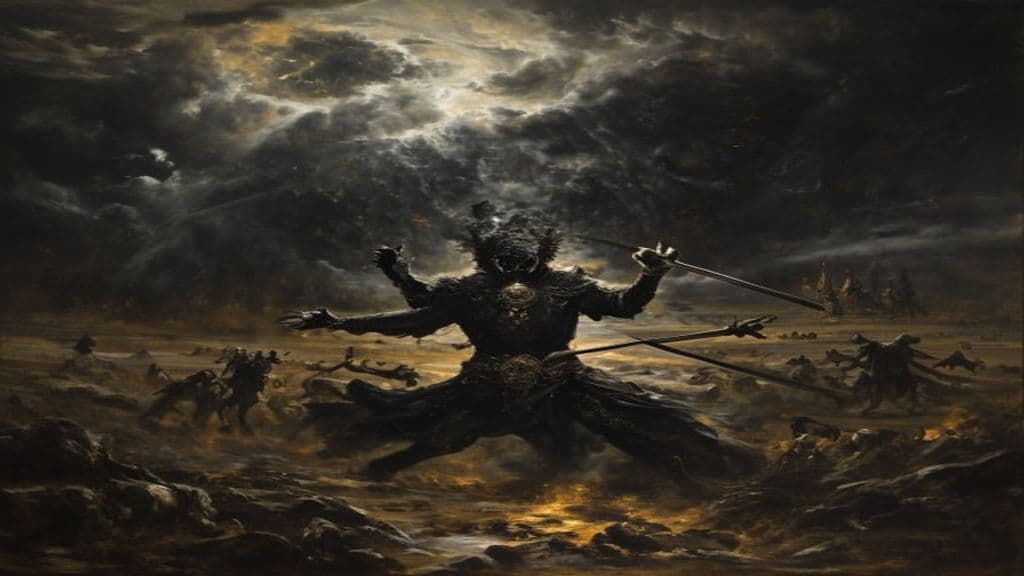
Legendary warrior and champion in Persian mythology, from the Shahnameh epic poem. (Note: 1. Remove the statement "No physical description of Ashkbous provided in the source material." since the article explicitly mentions an appearance is not provided, implying one does not exist. 2. Powe)

Ashley Kafka is a Marvel Comics character originally introduced as a human psychiatrist who founded and directed the Ravencroft Institute for the Criminally Insane and served as an occasional ally to Spider-Man. After being killed and later reanimated via cloning technology she is transformed into the supervillain Queen Goblin following infusion with Norman Osborn's extracted 'sins', gaining enhanced physical attributes and Goblin-themed powers.

Ashnan (Sumerian Ezina) is the Mesopotamian divine personification of grain: a goddess whose being is identified with the cereal harvest and the category 'grain' itself. Attested from the Uruk and Early Dynastic periods, she appears in hymns, cult lists and disputation literature and is invoked in civic and medical contexts.
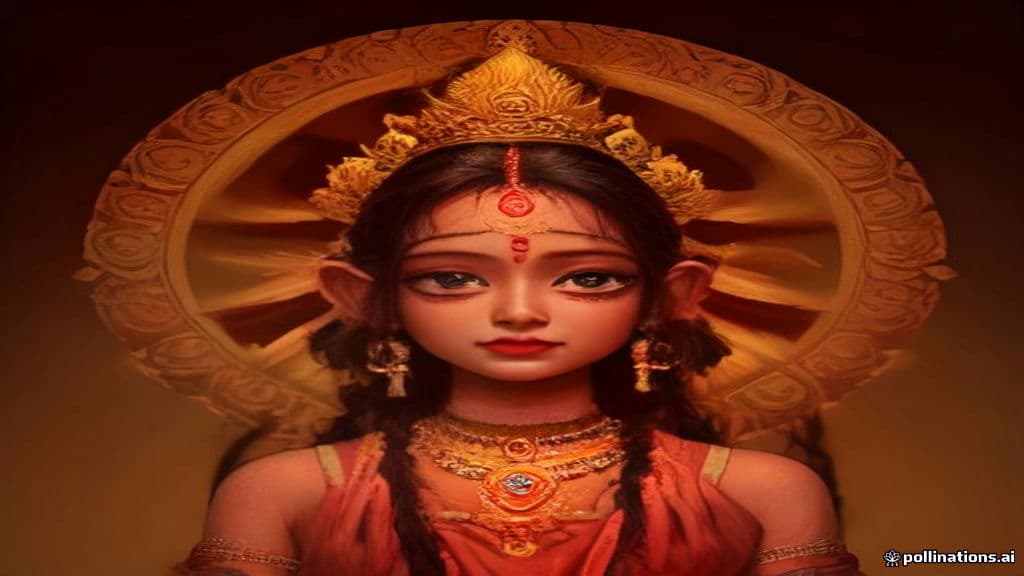
Ashta Lakshmi (Aṣṭalakṣmī) is a grouped set of eight manifestations of the Hindu goddess Lakshmi, each presiding over a distinct source or form of wealth and together worshipped as an octet, especially in South Indian and Sri Vaishnava devotional contexts. The specific formulation of these eight forms as a fixed octet has become especially prominent in modern devotional media and temple installations since the mid-20th century.

Ashtart (also Astarte, Athtart, ʿAṯtart) is a major Northwest Semitic goddess of the Ancient Near East attested from the Bronze Age through classical antiquity. She functions in regional pantheons alongside deities such as Baal, Anat, and the East Semitic parallel Ishtar, and is evidenced in Ugaritic mythic texts and Levantine temple archaeology (notably a 4th-century BCE chapel at Sidon).

Ashtavakra (Sanskrit: Aṣṭāvakraḥ, lit. 'eight deformities') is a Hindu rishi/revered sage appearing in Itihasa and Purāṇic narratives and credited in tradition with a short non-dual scripture, the Ashtavakra Gita. In legend he is a prodigious Vedic scholar from the womb, renowned for extempore verse, philosophical teaching, and interventions in royal sacrificial assemblies rather than a hostile supernatural being.

Ashteroth Karnaim is an ancient place-name in the biblical and Near Eastern record—a city or paired cities in the region of Bashan (Transjordan) associated with the goddess Astarte (Ashtoreth) and described in some sources as the ‘abode of the Rephaim.’ It is attested in Bronze‑ and Iron‑Age texts and later Hellenistic traditions, and is identified with several proposed archaeological sites (e.g., Tell Ashtara, al‑Shaykh Saad) though the exact location remains debated.

Ashur is the civic-national deity of the ancient city and polity Aššur/Assyria. He functions as the divine sovereign and patron of the city-state: kings present themselves as his governors (iššiak), his temple and cult objects (notably weapons) played central roles in oaths, ordeals, and imperial administration.
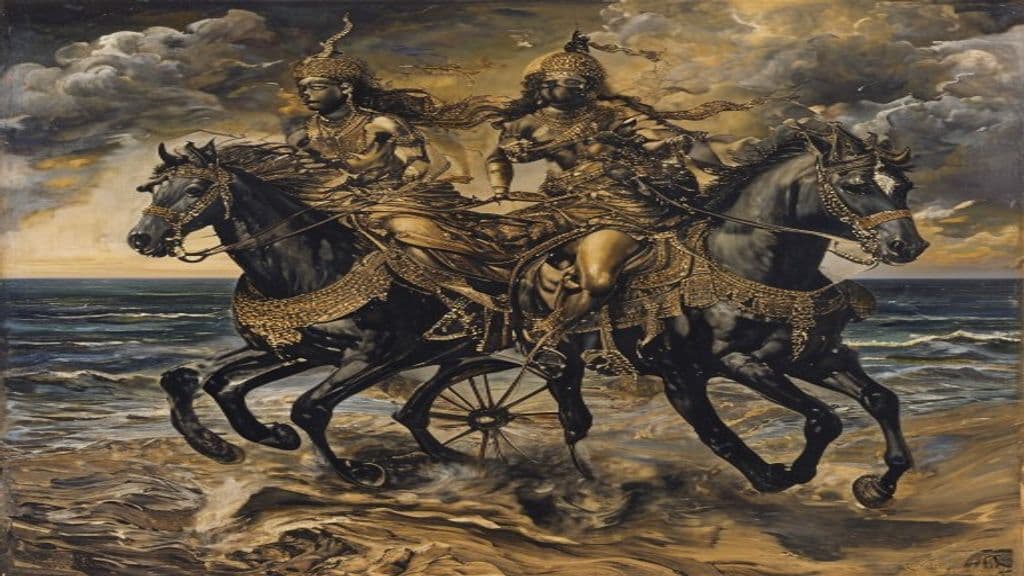
The Aśvin (Ashvins) are Vedic twin divine horsemen invoked in the Rigveda as youthful rescuers and restorers who travel in a swift chariot; they are closely associated with dawn/twilight, healing, and medicine and are repeatedly called upon to save, restore, or bring home those in peril.

The Asháninka are an Arawakan-speaking Indigenous people of the central Amazon rainforests of Peru and parts of Acre in Brazil, organized in dispersed small residential groups with deep ancestral ties to riverine and interfluvial forest territories and a subsistence economy based on swidden agriculture, hunting, fishing and gathering.

Asia (Asiê / Ἀσία) is an Oceanid — a daughter of the primordial Titans Oceanus and Tethys — attested in Greek mythic name-lists and modern summaries as an eponymous nymph associated with Lydia/Anatolia (West Asia). Sources identify her as an Oceanid and regional eponym; one modern compilation also presents a later tradition naming her as the wife of the Titan Prometheus.

The Chinese or Asian dragon (Chinese: long or loong) is a legendary creature in Chinese mythology, folklore, and culture, widely represented as an auspicious, potent being most commonly associated with control over water and weather. It appears across myth, art, and modern public performance rather than as a single folkloric apparition with standardized ritual responses.

Asiaq is a Greenlandic Inuit weather-controlling supernatural figure described in sources as a weather goddess (and more rarely as a god) who is invoked by ritual specialists (Angakoq) to influence wind, snow, rain and the timing/quantity of snow and ice melt. In Greenlandic accounts she is called the “mother of weather” and is petitioned pragmatically to secure favorable seasonal conditions.

The Asiatic black bear (Ursus thibetanus), also called the Asian black bear, moon bear, or white-chested bear, is a medium-sized, largely arboreal bear species native to much of Asia. Sources present it as a biological species of conservation concern, listed as Vulnerable on the IUCN Red List and threatened by habitat loss and poaching for body parts used in traditional medicine.

A figure in Islamic scriptural and exegetical tradition presented as Solomon's (Sulayman) scribe or court official who, by means of privileged esoteric knowledge (specifically of part of the "Greatest Name of Allah"), effects a single Qur'anic miracle — bringing the Queen of Sheba's throne before Solomon in an instant. He is portrayed as a human mediator whose efficacious action is attributed to divine knowledge rather than innate supernatural ontological status.

A nocturnal, shape‑changing predatory luminous spirit known from West African accounts; presented in sources as the Dahomey counterpart to the Ashanti obayifo, capable of inhabiting humans by day and manifesting as phosphorescent lights or a flying ball of light by night.

Asira is described in the available source material as a local god worshipped in pre-Islamic northern Arabia, specifically revered at the oasis-town of Taima (Tayma). The deity is noted as having been strongly influenced by Egyptian culture and is only minimally attested in the historical record (mentioned only by name by the Babylonian king Nabonidus).

Asita is a name applied to one or more ancient Indian sages: in Buddhist sources a forest-dwelling tāpasa and seer who perceived the birth of the Bodhisattva Siddhartha and prophesied his destiny; in Vedic and Purāṇic lists Asita appears as a rishi/pravara within gotra genealogies. Traditions sometimes distinguish or conflate these figures.

Asius (Ancient Greek: Asios) is a personal name borne by several mortal leaders allied with Troy in Greek epic and mythographic tradition. The figures called Asius appear in leader-lists, genealogies, and battle narratives of the Trojan War cycle rather than as a distinct supernatural entity.