Entity Index

A record of the unseen, drawn from world folklore.

7631 entities · page 23 of 128

Atef Crown
Greater

Atef Crown

Egyptian feathered white crown associated with Osiris, symbolizing his status and power. (Note: * Power tier should be Ancient, not Greater, since it's associated with a deity. * Abilities statement is accurate based on source material, but can be rephrased for clarity: "As an inanimate object, )
Aten
Ancient

Aten

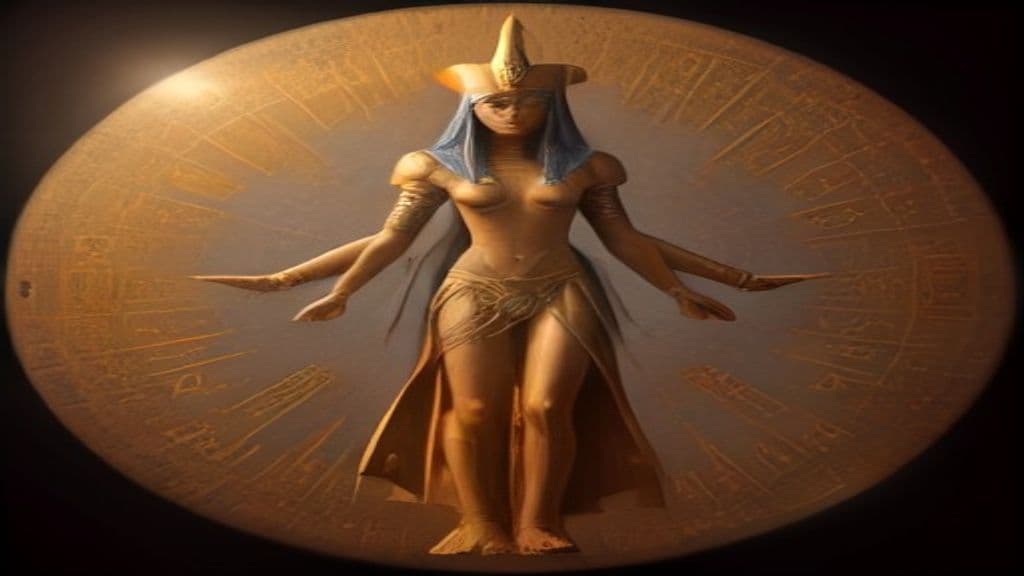
Aten (Ancient Egyptian jtn, reconstructed *[ˈjaːtin]) is the visible solar disc in ancient Egyptian religion that, during the Amarna period under Akhenaten, was elevated to the central focus of state cult (Atenism). Represented as a life-giving solar orb whose rays reach the world, Aten functions as creator and sustainer in Amarna inscriptions while lacking the extensive genealogical mythology of other Egyptian gods.

Atepomarus
Lesser

Atepomarus

Atepomarus is a named Gaulish deity attested in epigraphic and mythographic sources. He appears primarily as an epithet attached to Graeco‑Roman gods (notably Apollo and sometimes Mercurius) in healing‑sanctuary contexts and also appears as a legendary founder figure paired with Momorus in a foundation myth of Lugdunum.

Athamas
Lesser

Athamas

Athamas is a legendary Boeotian king from Greek myth whose tragic family conflicts, madness induced by a deity, and subsequent exile are used etiologically to explain place-names (e.g., Hellespont), cultic transformations (Ino → Leucothea; Melicertes → Palaemon), and the origin of the Athamanian people and region.

Atharvan
Primordial

Atharvan

A legendary Vedic sage and creator of sacred texts, associated with the institution of fire sacrifices. (Note: - Power tier: Not Primordial (Atharvan's abilities are more in line with a Greater or Ancient power tier, given his association with the creation of sacred texts and institution of fire sacrifices). -)

Athena
Ancient

Athena

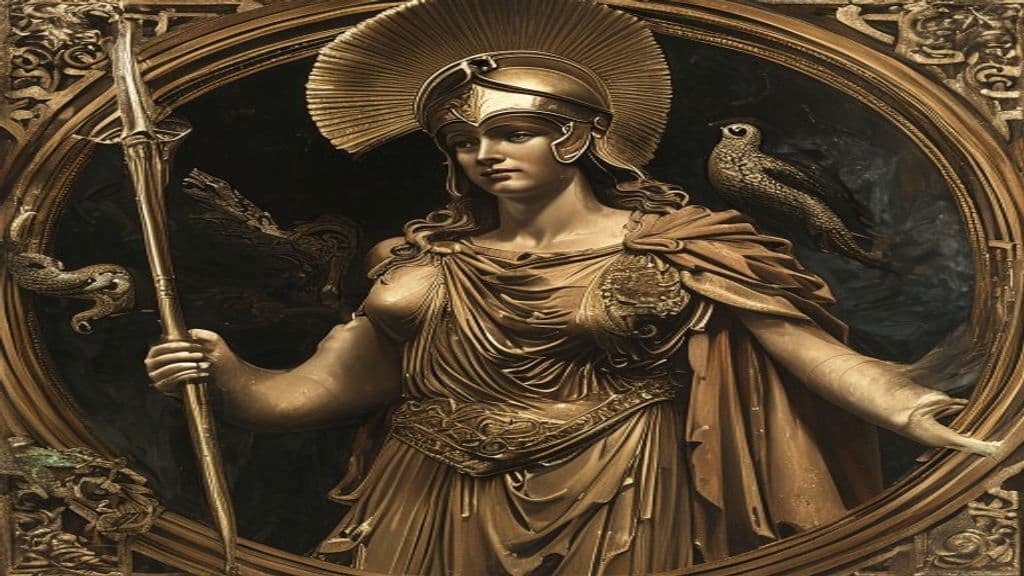
Athena is a major ancient Greek goddess associated with wisdom, handicraft (notably weaving), and warfare; she serves as a tutelary protector of cities—most prominently Athens—and is central to myth, cult, and civic identity in the Greek world.

Athena Alea
Ancient

Athena Alea

Athena Alea is the composite cult figure formed when a local eastern Arcadian goddess called Alea was synchronised with the pan-Hellenic goddess Athena. Centered on a major sanctuary at Tegea and celebrated in a local festival (the Aleaia), the cult preserves traces of a distinctive local identity alongside attributes associated with Athena.

Athirne Ailgheasach
Greater

Athirne Ailgheasach

Athirne Ailgheasach is a legendary court poet and satirist of Conchobar mac Nessa in the Ulster Cycle of early Irish saga tradition who abuses the customary privileges of poets; his satires and actions provoke social, legal, and military consequences and bring him into conflict with other lords and with the Tuatha Dé Danann.

Athis
Minor Spirit

Athis

Athis is an obscure named figure attested only in modern reference listings as part of the corpus of Greek and Roman mythology. The supplied sources provide the name but no primary narrative, attributes, ritual traditions, or consistent biographical details.

Athisl
Lesser

Athisl

Athisl is a semi-legendary Swedish king known from medieval Scandinavian saga and chronicle traditions and occasional runic/epigraphic mentions. Attested in sources such as Saxo Grammaticus and saga-name lists, he appears in martial and vengeance narratives that pit Swedish rulers against Danish opponents and in funeral-feast episodes.

Athos
Lesser

Athos

Athos is identified in the provided sources as the name of a figure listed among the Gigantes in Greek mythology. The available materials do not supply narrative, descriptive, or ritual details about this figure beyond that cataloguing entry.

Atikāya
Greater

Atikāya

Atikāya is a colossal rakṣasa prince in the Ramayana (Yuddha Kāṇḍa), son of Rāvaṇa and Dhanyamalinī, who fights in the Lanka war and is slain by Lakṣmaṇa after being struck with a Brahmāstra. Later retellings attribute to him an episode in which he catches Śiva's trident and is taught archery.

Atira asteroid
Minor Spirit

Atira asteroid

Atira asteroids are a scarce dynamical class of near‑Earth small bodies whose orbits lie entirely interior to Earth's orbit (aphelion < Earth's perihelion, 0.983 AU). Named after the archetype 163693 Atira, the class is observationally challenging because members appear close to the Sun on the sky and are typically detectable only in twilight or by space‑based surveys. Their significance is primarily taxonomic and operational within planetary science — affecting survey strategy, orbital tracking, and study of dynamical evolution among NEOs.

Atlacoya
Lesser

Atlacoya

Atlacoya is named in modern compilations as a figure from Aztec tradition associated with drought; some modern databases alternately classify the name under water-deity categories. The supplied sources do not provide primary-codex citations, iconography, etymology, or detailed ritual texts.

Atlahua
Ancient

Atlahua

Atlahua is an Aztec water-associated deity attested in colonial and modern summaries as a water god described as a fisherman and archer, identified in sources as a blue/aspectual form of Tlaloc and invoked in contexts of deaths in water.

Atlanna
Minor Spirit

Atlanna

Atlanna is a fictional character presented as the queen of Atlantis and the mother of Arthur Curry (Aquaman) within modern DC film materials. She appears in promotional and summary descriptions of the Aquaman film and is listed among the film's cast credits.

Atlanteia
Lesser

Atlanteia

Atlanteia (Ancient Greek: Ἀτλαντεία) is attested in Greek mythic genealogies as a Libyan hamadryad — a tree-nymph — named among the wives/concubines of King Danaus and jointly listed with Phoebe as mother-figures of ten of the Danaïdes. Beyond these genealogical listings, no independent narratives, descriptive accounts, or ritual instructions specific to Atlanteia are provided in the sampled sources.

Atlantia
Minor Spirit

Atlantia

Atlantia is not a single folkloric supernatural being in the provided sources but a modern proper name applied to multiple, independent referents — including a brief classical name-form (Atlanteia/Atlantia) listed as a Hamadryad in Greek mythic genealogies, a contemporary YA novel's underwater city, names of vessels in science-fiction media, a Society for Creative Anachronism regional designation, and a biological genus entry in a taxonomic database. The sources do not present a unified mythic ontology or associated rituals for an entity called 'Atlantia.'

Atlantica
Minor Spirit

Atlantica

Atlantica is a scientific reconstruction of an ancient Proterozoic continental landmass that formed about 2.0 billion years ago from cratons now in West Africa and eastern South America; the name is also attested as a biological genus label and as a modern musical track title in the provided sources. The supplied materials contain no treatment of Atlantica as a supernatural or folkloric being.

Atlantid
Minor Spirit

Atlantid

A non‑folkloric label used in multiple modern contexts: an obsolete anthropological racial subtype (North‑Atlantid/Paleo Atlantid), a speculative/alternate‑history ethnonym, and a contemporary brand/name in projects, fiction, and scientific terminology. No traditional supernatural being called 'Atlantid' is attested in the supplied sources.

Atlas
Ancient

Atlas

Atlas is a Titan of ancient Greek myth condemned after the Titanomachy to stand at the western edge of the world and hold up the sky on his shoulders. He is both a punished cosmic agent who bears the heavens and an eponymous figure linked to geographic features (the Atlas Mountains) and to traditions of celestial knowledge such as the invention of the celestial sphere.

Atlasodon
Minor Spirit

Atlasodon

No folkloric or supernatural tradition for an entity named "Atlasodon" is present in the supplied sources. The materials provided are scientific and taxonomic references relating to extinct mammals and higher-level mammalian groups; they do not describe a mythic being, its appearance, powers, rituals, or cultural role.

Atlaua
Ancient

Atlaua

Atlaua (also recorded as Atlahua, Ahtlahua, Atlahoa, Atlavâ) is an Aztec water deity described in the provided sources as a water god, fisherman and archer who was worshiped at multiple temples and was prayed to by the Aztecs when there were deaths in water.

Atmospheric ghost lights
Lesser

Atmospheric ghost lights

Luminous aerial phenomena reported in folklore and modern observation: balls, orbs, beams, or floating fires that appear in the atmosphere without an obvious physical cause. Traditions variously interpret them as spirits of the dead, yōkai/fairy activity, signs connected to graves or buried goods, weather omens, or as natural optical/electrical phenomena.

Atom (Al Pratt)
Lesser

Atom (Al Pratt)

Al Pratt is a human comic-book superhero, the original Golden Age Atom who debuted in All-American Comics #19 (October 1940). Portrayed as a diminutive but tough crime‑fighter and member of the Justice Society of America, he began as a non‑superpowered pugilist and was later subject to continuity retcons that briefly granted him radiation‑linked enhancements in some stories.

Atomic Knight
Lesser

Atomic Knight

A heroic identity from American comic-book fiction (DC Comics) embodied by one or more human characters who adopt a chivalric role in a post‑apocalyptic setting. The Atomic Knights serve as armored protectors and symbols of hope amid the aftermath of a catastrophic hydrogen/atomic war within various DC future continuities.

Atomic Mouse
Minor Spirit

Atomic Mouse

Atomic Mouse is a 1953 American talking-animal superhero created by Al Fago for Charlton Comics. In the comic backstory the mouse Cimota is shrunk by an evil wizard and given U-235 pills by Professor Invento, granting him unspecified superpowers which he uses to fight enemies such as Count Gatto.

Atomic Skull
Greater

Atomic Skull

The Atomic Skull is a fictional supervillain identity from American comic books published by DC Comics, most commonly opposing Superman. The name has been used by at least two distinct human characters whose bodies and minds were altered by radiation or genetic/alien events and who adopt a skull-themed, radiation-powered persona.

Atomic-Man
Greater

Atomic-Man

Atomic-Man is a fictional American comic-book superhero, the transformed scientist Dr. Adam Mann, who gained radiation-based abilities after experimenting with uranium-235 and dedicated himself to preventing the misuse of atomic power and fighting conventional criminals. He appeared in Headline Comics (Prize Comics) in the immediate post‑World War II period.

Atoq (Andean fox spirit) — Untested attestation
Minor Spirit

Atoq (Andean fox spirit) — Untested attestation

Atoq is presented in some modern summaries as an 'Andean fox spirit' associated with Inca-related material, but the single provided source (a general overview of Inca mythology) does not itself attest specific information about Atoq. This entry therefore limits claims to what the supplied source supports and notes absent evidence where appropriate.

Atra-Hasis
Lesser

Atra-Hasis

Atra-Hasis is the eponymous human protagonist of an 18th-century BCE Akkadian epic. Presented as a priest whose name is glossed 'exceedingly wise', he functions as the human interlocutor in narratives of the Mesopotamian creation of mankind and the divinely-sent deluge, and is also listed in the Sumerian King List as a ruler of Shuruppak.

Atrax
Minor Spirit

Atrax

Atrax is an eponymous ancestral founder in Greek mythic genealogy, described as a son of the river-god Peneus and Bura and the name-giver of the town Atrax (Atracia) in ancient Thessaly. He functions primarily as an onomastic ancestor linking a place to divine lineage rather than as an active supernatural agent.

Atreus
Lesser

Atreus

Atreus is a legendary king of Mycenae in Greek myth, progenitor of the House of Atreus and father of Agamemnon and Menelaus. Presented as a mortal dynastic figure, his story in the sources revolves around rivalry with his brother Thyestes, contested kingship, and extreme acts of revenge that form part of a multi‑generational cycle of curse and retribution.

Atri
Greater

Atri

Atri is a principal Vedic rṣi (seer) and eponymous founder of the Atreya lineage credited with composing hymns in the Rigveda (notably Mandala 5). He is portrayed in epic and puranic narratives as a mānasputra of Brahma, a practitioner of tapas whose austerities attract the Trimurti, and as the hospitable hermit-counselor in Ramayana episodes.

Atrocitus
Greater

Atrocitus

Atrocitus is a DC Comics supervillain who founded and leads the Red Lantern Corps, an institutional body that channels rage as an energy source. He is depicted as a vengeance-driven figure who performed blood rituals to forge the first Red power ring(s) and a Red Lantern power battery and who acts as a militant antagonist to the Guardians of the Universe and the Green Lantern Corps.

Atropos
Ancient

Atropos

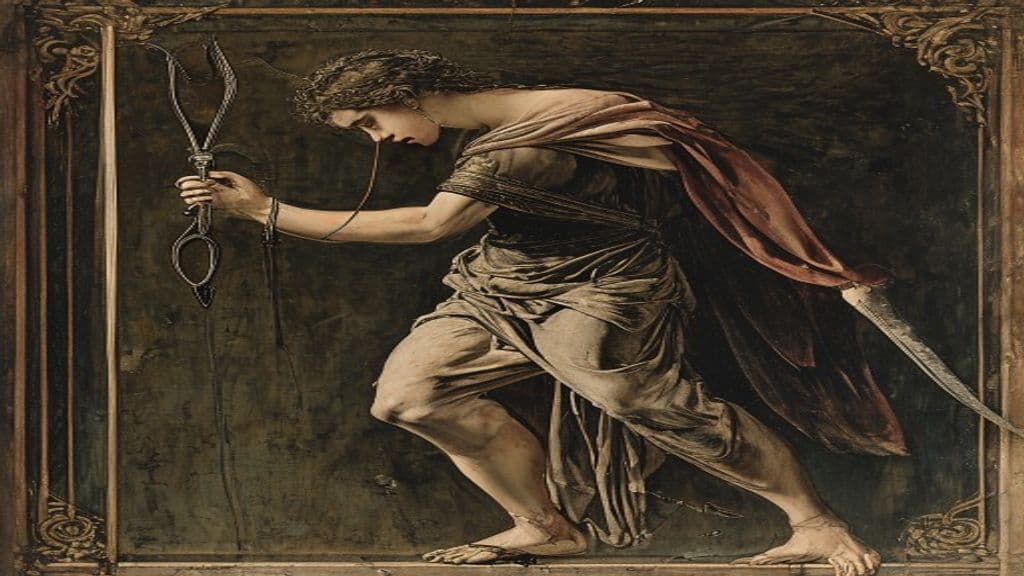
Atropos is the third of the Three Fates (Moirai) in Greek myth, the named agent who executes the termination of mortal lives by cutting their life-threads. She embodies finality and inflexibility in the ordering of life and death.

Attar (ʿAṯtar)
Lesser

Attar (ʿAṯtar)

ʿAṯtar (Attar) is an ancient Near Eastern masculine theonym attested among Aramaean contexts and discussed in comparative scholarship on West Semitic and Mesopotamian religions. Sources record a cultic formulation Attar-qamu, glossed 'Attar is the baetyl', linking the deity to a standing sacred stone as the locus of veneration.

Atter
Primordial

Atter

In Norse tradition, Atter refers to various forms of poison, corruption, or noxious influence that can manifest physically or morally. (Note: * Power tier should be Primordial only for its ability to cause cosmic-scale harm (e.g., societal consumption). However, most of its described abilities fall under Greater or Lesser powers, implying A)

Atticus O'Sullivan
Greater

Atticus O'Sullivan

A human-born, two-thousand-year-old druid protagonist of Kevin Hearne's urban-fantasy The Iron Druid Chronicles; he operates in the modern world as a powerful practitioner of druidic magic who runs an occult bookshop in Arizona and engages gods, vampires, shapeshifters, and other mythic beings.

Attis
Lesser

Attis

Attis is a mythic consort and semi-divine cult figure associated with the Anatolian Mother Goddess (Cybele / Agdistis). He functions as a vegetation-associated beloved whose self-castration, death, and ritual rebirth form the core myth enacted by his priests and festivals, especially around the vernal equinox in Phrygia, Greece and later Rome.

Attuma
Greater

Attuma

Attuma is a fictional Marvel Comics Atlantean warlord and recurring supervillain, presented as a nomadic leader of a banished Atlantean tribe and a frequent antagonist of Namor the Sub-Mariner and surface-world heroes. First appearing in Fantastic Four #33 (December 1964), he is depicted as physically superior to ordinary Atlanteans and has undergone periods of resurrection and enhancement that expanded his abilities.

Atua (Māori Deity)
Greater

Atua (Māori Deity)

In Māori mythology, Atua are supernatural beings believed to have created the world and all living things. They are considered rulers of the spiritual realm with powers over nature, fertility, and human destiny. (Note: 1. Power tier: Based on the abilities described (controlling nature, fertility, and human destiny), Atua likely belong to the Primordial power tier, not Greater. 2. Weaknesses: Add a specific weakness)

Atum
Primordial

Atum

Atum is the primordial self-created deity of ancient Egyptian religion who emerges from the primeval waters (Nu) and brings forth the first gods. Associated with the primeval mound (benben) and the evening aspect of the sun, Atum functions as an origin and as a figure tied to funerary literature and royal afterlife ideology.

Atutahi (Māori tradition)
Greater

Atutahi (Māori tradition)

In Māori mythology, Atutahi is a celestial entity and the second brightest star in the night-time sky, considered solitary or self-centered. It serves as a navigational aid for Māori sailors, appearing as a bright star on the evening or southern horizon. (Note: - Power tier: Primordial (due to its status as a celestial entity in Māori mythology) - Abilities: Add ability of guidance, specifically for navigation, based on source material - Weaknesses: List is )

Atymnius
Lesser

Atymnius

Atymnius is a name applied to several related figures in Greek myth: a Cretan beautiful youth associated with the house of Minos and said to have been adored by Sarpedon and Minos (and reputedly venerated at Gortyn alongside Europa), and one or more minor epic combatants in the Trojan War cycle (a Trojan son of Emathion and a Lycian companion of Sarpedon). The attestations appear in genealogical summaries (Apollodorus tradition as preserved in Europa passages and reference works) and in Homeric/post‑Homeric epic listings (Homer/Quintus Smyrnaeus as summarized in modern reference compilations).

Atys (King of Alba Longa)
Ancient

Atys (King of Alba Longa)

Atys is a legendary/regnal figure listed among the kings of Alba Longa in Roman foundational and genealogical tradition. He appears in regnal lists that connect the Aeneadic founders of Latium to later lines; ancient sources preserve his name but provide no narrative or supernatural attributes.

Auahitūroa
Ancient

Auahitūroa

Auahitūroa is a Māori deity described in the cited sources as the personification of comets and as the origin of fire; he is named as a son of Tama-nui-te-rā (the sun), consort of the fire goddess Mahuika, and father of the five Ngā Mānawa.

Aufhocker
Lesser

Aufhocker

The Aufhocker is a German folkloric shapeshifting 'pressure' or 'perching' spirit that leaps upon the backs or shoulders of solitary travelers, weighing them down with each step until victims become exhausted, incapacitated, or—in some variants—killed. It is associated with liminal places (bridges, crossroads, hollow paths, cemeteries) and exists in multiple narrative roles including punitive agent, nightmare embodiment, and theriomorphic attacker.

Auge
Lesser

Auge

Auge (Ancient Greek: Αὐγή, Augḗ, lit. "sunbeam, daylight, dawn") is an Arcadian princess and virgin priestess of Athena Alea in Greek myth, mother of the hero Telephus by Heracles. Her narrative (in multiple variant traditions) treats oracular fate, the sanctity and vulnerability of a priestess, exposure/abandonment motifs, and the foundation of cross-regional ties when she and Telephus come to Mysia and are received by King Teuthras.

Augeas
Lesser

Augeas

Augeas is a mythic king of Elis in the Greek Heracles cycle, famous for the Augean stables which housed an immense herd and had not been cleaned for decades; his contractual refusal to pay Heracles for cleaning the stables leads to his death and the transfer of kingship to his son Phyleus in the traditions summarized by the sources.

August curse
Minor Spirit

August curse

A modern cultural concept in Russia describing a perceived clustering of severe disasters, attacks, and adverse events during the month of August. Treated in sources as an explanatory frame combining statistical observation, seasonal and political factors, and occasional astrological or supernatural interpretation.

Aulanerk
Lesser

Aulanerk

Aulanerk is an Inuit sea spirit attested in several short ethnographic and reference summaries as a benevolent sea-being who lives in the ocean and is responsible for producing waves and surf; he is also described as helping hunters by working with other sea powers to lead them to seals.

Aulus Vibenna
Lesser

Aulus Vibenna

Aulus Vibenna (Etruscan Avile Vipina) is a remembered historical and legendary Etruscan aristocrat and military leader from Vulci, attested in mid-1st millennium BCE inscriptions and tomb painting. He appears in votive dedications (a bucchero chalice) and in the François Tomb fresco cycle alongside his brother Caelius and companions such as Mastarna (identified with Servius Tullius in later tradition).

Aulë
Ancient

Aulë

Aulë is a divine artisan in J. R. R. Tolkien’s legendarium, one of the Ainur who entered the created world (Arda) to give it material form. Counted among the Valar, he is the principal craftsman and smith whose office is the shaping and working of the world's substance.

Aun the Old
Lesser

Aun the Old

Aun (Old Norse: Aunn inn gamli; Latinized Auchun) is a legendary Swedish king of the Yngling dynasty attested in Old Norse sources (Ynglingatal, Ynglinga saga in Heimskringla, and Historia Norwegiae). He is portrayed as a mortal ruler who prolonged his life by performing human sacrifices to the god Odin until his community refused a final offering.

Aunt Em (Emily Gale)
Minor Spirit

Aunt Em (Emily Gale)

Aunt Em (Emily "Em" Gale) is a fictional human character in L. Frank Baum’s Oz series, the married partner of Uncle Henry and the guardian/aunt of Dorothy Gale. Presented as an ordinary Kansas farmwife whose life is altered by Dorothy’s voyage to Oz, she later relocates to the Emerald City and is given a ceremonial civic occupation there.

Aupamanyava
Minor Spirit

Aupamanyava

Aupamanyava is a Vedic patronymic and teacher-name cited in Vedic literature (not a supernatural being). Appearing in the Vamsa Brahmana and other Vedic and philological texts, the name marks a sage or lineage (descendant of Upamanyu) associated with teaching the Sama Veda and with lexical/grammatical work cited by later commentators such as Yaska.

Aura
Lesser

Aura

Aura (Ancient Greek Αὔρα, plural Αὔραι) is a minor Greek and Roman divine figure personifying a cool breeze. She appears both as an individual breeze-nymph in literary accounts (most fully in Nonnus) and as a class of breeze-spirits (Aurae) in other sources and lexica.

Aura (paranormal)
Lesser

Aura (paranormal)

Auras are described in modern esoteric and New Age sources as subtle, nonmaterial emanations or energy fields that surround living beings and objects, presented as part of a 'subtle body' and used diagnostically to indicate health, personality, or moral/spiritual state. The concept was popularized in late-19th/early-20th-century Western occultism (notably Theosophy) and later adapted by New Age and holistic-health practitioners; scientific investigation finds no reproducible evidence for literal aural perception and offers physical explanations for photographic effects often labeled as 'auras.'

Aurboða
Lesser

Aurboða

Aurboða is a jötunn (giantess) in Norse mythology attested as the wife of the jötunn Gymir and mother of the jötunn Gerðr; the name also appears separately as one of the nine maidens in the poem Fjölsvinnsmál. Her name is debated etymologically as either 'gravel-bidder' (aurr + boða) or, in an alternative reading, 'gold-bidder' (aur + boða).