Entity Index

A record of the unseen, drawn from world folklore.

7685 entities · page 57 of 129

Elatha
Greater

Elatha

Elatha is a figure in Irish medieval myth portrayed as a king of the Fomorians who also fathers several leading members of the Tuatha Dé Danann. He is depicted as a noble, luminous maritime prince associated with gold and light imagery and appears in narratives such as the Second Battle of Mag Tuired and genealogical accounts explaining the ancestry of figures like Bres, the Dagda, Ogma, and Lir.

Elatus
Lesser

Elatus

Elatus (Ancient Greek: Ἔλατος) is a personal name borne by multiple distinct figures in ancient Greek mythic tradition — including an Arcadian founder-eponym, a Lapith prince, a centaur slain in combat with Heracles, and several minor epic personae (charioteer, Trojan ally, suitor). The name functions as an onomastic label across genealogical, foundation, and heroic-age narratives rather than designating a single recurring supernatural class.

Elcmar
Lesser

Elcmar

Elcmar (also Ecmar, modern Ealcmhar) is a member of the Tuatha Dé Danann portrayed in Irish narrative tradition as a high-ranking household official — chief steward of the Dagda — husband of the goddess Boann, lord of Brugh na Bóinne, and participant in cycles of rivalry and retribution with figures such as the Dagda, Aengus, and Midir.

Eldad and Medad
Lesser

Eldad and Medad

Eldad and Medad are Israelite men named in Numbers 11 who prophesied within the Israelite camp while the seventy elders went to the tabernacle to receive prophetic spirit. The episode is used in biblical and later traditions to discuss the distribution of prophecy and is elaborated in rabbinic and early Christian apocryphal literature with varied prophetic attributions.

Elders of the Universe
Greater

Elders of the Universe

A class of individual immortals in Marvel Comics defined as the last surviving members of otherwise extinct races; each pursues an obsessive passion that shapes their abilities and actions, often with cosmic-scale consequences within Marvel continuity.

Eldir
Minor Spirit

Eldir

Eldir is a named servant of the sea-being Ægir in Old Norse myth, attested in the poem Lokasenna where he stands outside Ægir's hall and speaks with Loki. His name, Old Norse Eldir, is glossed as 'fire-stoker' and marks him as a household attendant and threshold interlocutor rather than a deity.

Eleazar
Ancient

Eleazar

Eleazar (Hebrew: אֶלְעָזָר, Eleazar/Elʿazar) is a biblical and historical personal name borne by several individuals in Hebrew tradition; chief among them is Eleazar son of Aaron, who succeeds his father as Israel's high priest and performs custodial and ritual functions in the Exodus, wilderness, and settlement narratives. He is treated as a human priestly office‑holder and is commemorated in some Christian liturgical calendars.

Electra
Minor Spirit

Electra

Electra (Ancient Greek: Ἠλέκτρα, Ēléktrā) is a Mycenaean princess in Greek myth and drama, daughter of Agamemnon and Clytemnestra, whose primary role across Aeschylus, Sophocles, and Euripides is as an avenger of her father's murder and a focal figure for questions of filial duty, revenge, and ritual consequence.

Electrocutioner
Lesser

Electrocutioner

Electrocutioner is a mantle used by three human characters in DC Comics who wear circuitry-lined costumes that project electricity. Presented as minor adversaries of Batman, the identity functions as a technological persona rather than a supernatural entity.

Electryon
Minor Spirit

Electryon

Electryon (Ancient Greek Ἠλεκτρύων) is a mythic king of the Perseid line in Greek tradition, ruler of Mycenae and Tiryns whose conflict over stolen cattle, the deaths of his sons, and his own death set the succession events that lead to Amphitryon, Alcmena, and the birth of Heracles. He is presented in classical sources as a mortal dynast rather than a supernatural being; versions differ on whether his death was accidental or the result of homicide.

Elegast
Greater

Elegast

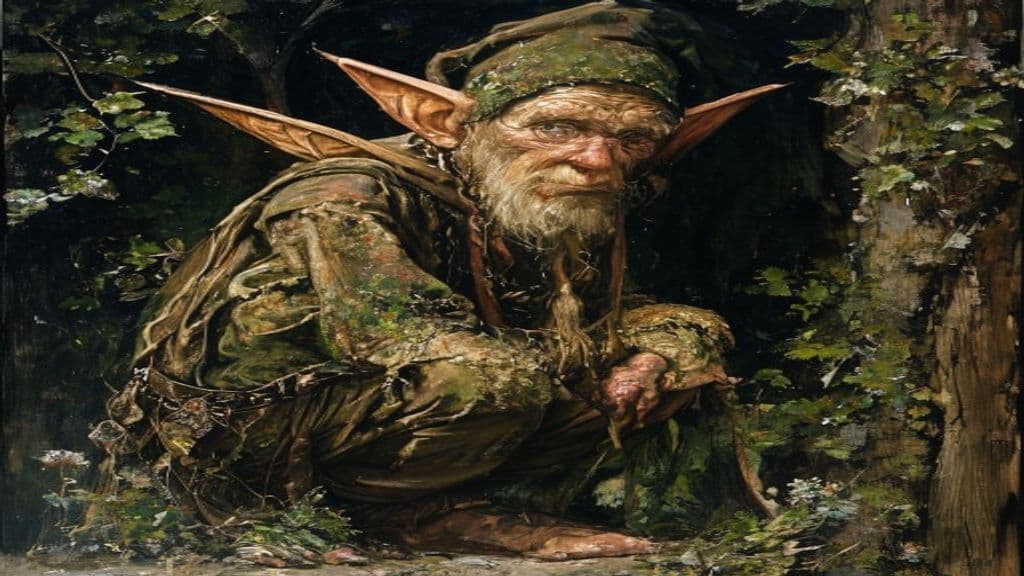
Elegast is the noble robber figure from the Middle Dutch epic Karel ende Elegast, portrayed as a forest-dwelling outsider whose name and attributes align him with Germanic 'elf' (and in some northern parallels 'dwarf') traditions. In the poem he possesses magical faculties (sleep‑casting, lock‑opening, a herb enabling speech with animals), lives as an outlaw yet shows loyalty to Charlemagne and moral concern for the poor.

Elegua
Ancient

Elegua

Elegua (Ẹlẹ́gbára / Eleguá / Exu / Legba variants) is an Orisha and liminal mediator in Yoruba and Yoruba-derived religions. He is guardian of roads, doorways, and crossroads, the messenger who must be acknowledged before other rituals, and a trickster-enforcer who manages balance between opposites.

Eleius
Lesser

Eleius

Eleius (Ancient Greek Ἠλεῖος, Ēleîos) is a legendary eponymous king in Greek myth who functions as the ancestral founder of the Eleans and the region of Elis. Attested in mythographic traditions summarized in Pausanias and later compilations, Eleius appears in genealogical sequences linking local dynastic identity to divine and heroic lineages.

Elemental (tradition)
Lesser

Elemental (tradition)

A Renaissance occult and alchemical category, especially associated with Paracelsus, for intermediate, element‑bound beings tied to the four classical elements (gnomes/earth, undines/water, sylphs/air, salamanders/fire). Paracelsus described them as beings 'between creatures and spirits' with physical, commonly humanoid bodies that live in and are sustained by their native 'chaos.'

Elendil
Lesser

Elendil

Elendil is a human Númenórean leader in J. R. R. Tolkien’s legendarium: a refugee of Númenor who founded the northern realm of Arnor, led the Faithful, and fought in the Last Alliance against Sauron. He is remembered as a dynastic founder whose proclamation and heirlooms shaped later kingship in Middle-earth.

Elephantis
Lesser

Elephantis

Elephantis (Ancient Greek: Ἐλεφαντίς) is a name attested in two distinct registers of the ancient Greek world: (1) a late 1st century BCE Greek poet/physician credited in Roman and Greek authors with erotic manuals, cosmetics and abortive recipes, midwifery, and medical remedies; and (2) a mythographic/mortal figure listed among the wives or consorts of Danaus and named as mother of some Danaïdes in variant genealogical traditions.

Elephenor
Lesser

Elephenor

Elephenor (Ancient Greek: Ἐλεφήνωρ) is a mortal king of the Abantes of Euboea in Greek mythic-historical tradition, known as a captain of a contingent to the Trojan War, a purifying figure in one homicide episode, and as the subject of variant local foundation or exile traditions after the war.

Eleuther
Lesser

Eleuther

Eleuther (Ancient Greek: Ἐλευθήρ) is a personal name borne by several distinct figures in Greek myth — including a Curete, an Arcadian son of Lycaon, a possible variant of the divine epithet Eleutherios (linked to Dionysus), and a son of Apollo credited with musical distinction and with founding a local Dionysian cult. The attestations present Eleuther as eponym, cult-founder, performer, and minor mythic personage rather than as a single ontological class of being.

Elf
Greater

Elf

An elf is a humanoid supernatural being from Germanic folklore, especially prominent in North Germanic (Norse/Icelandic) myth and in later early-modern Scottish and Scandinavian belief. Elves are typically depicted as magically powerful and unusually beautiful, ambivalent toward humans and capable of helping or harming them.

Elffin ap Gwyddno
Lesser

Elffin ap Gwyddno

Elffin ap Gwyddno is a human figure in medieval Welsh tradition, presented as the son of Gwyddno Garanhir and the foster-father who finds and raises the poet-seer Taliesin. He functions as a noble household member whose misfortunes and courtly trials provide the narrative context for Taliesin's prophetic and poetic demonstrations.

Eli
Minor Spirit

Eli

Eli is a named priest and judge in the Hebrew Bible associated with Shiloh who officiates in the period of the judges and figures in the narrative surrounding Samuel; later traditions (notably Samaritan) attribute institutional consequences to his actions.

Eliashib (High Priest)
Minor Spirit

Eliashib (High Priest)

Eliashib is a historical/high‑priestly figure attested in post‑exilic Hebrew sources as the kohen ha‑gadol (High Priest) in Jerusalem during the Persian period; he is named in Nehemiah and priestly lists and is associated with the rebuilding of Jerusalem's walls in the mid‑5th century BCE.

Eliezer
Lesser

Eliezer

Eliezer (Hebrew: אֱלִיעֶזֶר, ʾĔliʿezer) is a Hebrew personal name borne by multiple human figures in the Hebrew Bible and later Jewish tradition — most prominently a steward associated with Abraham, a son of Moses, and a prophet who rebuked King Jehoshaphat. The name means roughly "Help of my God" and functions as a theological personal name and as a marker within rabbinic interpretive traditions.

Eligos
Greater

Eligos

Eligos (also Eligor/Abigor) is a named spirit from early modern European goetic demonological catalogues, later repurposed in contemporary fiction and popular culture. Traditionally cited as a grimoire-ranked spirit concerned with martial divination and patronage of nobles, modern media sometimes reinterprets the name as a minor demonic antagonist with psychic and possession-related abilities.

Elijah
Ancient

Elijah

Elijah (Hebrew: ʾĒlīyyāhu / ʾĒlīyyā) is a prophetic figure in the Hebrew Bible portrayed as a divinely commissioned messenger active in the northern kingdom of Israel during the reign of Ahab. Scriptural narratives depict him performing miracles (drought proclamation, provision, resurrection, calling down fire, and being taken to heaven) and later traditions assign him an eschatological role as a herald who will return before the day of the LORD.

Elijah the Prophet
Greater

Elijah the Prophet

Elijah is a canonical prophetic figure of the Hebrew Bible, described in the Books of Kings as a prophet and miracle-worker active in the northern kingdom of Israel during the reign of King Ahab. In modern media and religious discourse his name is invoked as a model of prophetic authority and eschatological voice.

Elioud
Primordial

Elioud

In Jewish tradition, the Elioud are a part-angel hybrid race with a complex lineage blending human and divine elements. They possess remarkable powers or skills but exhibit morally reprehensible behavior. (Note: 1. The power_tier should be Ancient (deity-level) instead of Primordial (cosmic), as they have abilities that rival those of deities but not on a cosmic scale. 2. The summary should be revised to remo)

Eliphaz
Minor Spirit

Eliphaz

Eliphaz is a personal name in Hebrew scripture borne by at least two distinct human figures: Eliphaz son of Esau, a genealogical progenitor whose descendants include Amalek; and Eliphaz the Temanite, one of Job's three friends and a principal speaker in the Book of Job. Both figures function in narrative, genealogical, and wisdom-theological roles rather than as supernatural beings.

Elisha
Greater

Elisha

Elisha is a Hebrew Bible prophet, successor and disciple of Elijah, portrayed as a divinely appointed intermediary who performs miracles, advises rulers in narrative episodes, and acts within a prophetic guild known as the "sons of the prophets." His story appears in 1 Kings 19 and 2 Kings 2–14 and he is venerated in Jewish, Christian, and Islamic traditions.

Eliwlod
Lesser

Eliwlod

Eliwlod is a figure of early Welsh literary tradition, described as a nephew of King Arthur renowned for eloquence and commemorated in triads and praise-poetry; in a surviving poem he appears postmortem speaking to Arthur in the form of an eagle.

Elkanah
Minor Spirit

Elkanah

Elkanah is a human figure from the Hebrew Bible, presented as the husband of Hannah and father of the prophet Samuel. He appears as a patriarchal household head who practices annual pilgrimage to Shiloh and is variably identified in the biblical texts as an Ephraimite or, in Chronicles, as a Levite; later rabbinic tradition lists him among prophets.

Elli
Greater

Elli

Elli is the Old Norse personification of old age attested in the Prose Edda (Gylfaginning). In the single surviving episode she is summoned from Útgarða-Loki’s hall and bests Thor in a wrestling-match, illustrating the inevitable weakening effect of advancing age even upon gods.

Elloe Kaifi
Lesser

Elloe Kaifi

Elloe Kaifi is a Sakaarian noble-turned-gladiator in Marvel Comics who becomes a pledged member of the Warbound alongside the Hulk. Her arc spans Planet Hulk and World War Hulk storylines in which she pursues revenge against the Red King and later accompanies the Warbound to Earth.

Elpenor
Minor Spirit

Elpenor

Elpenor is a named human figure in the Homeric epic tradition (Odyssey) who dies accidentally on Circe’s island and later appears as a shade in Hades during Odysseus’ katabasis to plead for a proper cremation and burial. He functions in the poem as an example of neglecting funerary obligation and the moral duty of the living to care for the dead.

Elphaba Thropp
Lesser

Elphaba Thropp

Elphaba Thropp is a fictional human character created by Gregory Maguire as a revisionist reinterpretation of Baum's Wicked Witch of the West. In Maguire's Oz she functions both as a political actor—opposing the Wizard's regime—and as a legendary figure whose life and reputed witchcraft enter the internal folklore of that secondary world.

Elric of Melniboné
Greater

Elric of Melniboné

Elric of Melniboné is a fictional literary protagonist created by Michael Moorcock: the albino, sorcerer‑emperor of the decaying island realm Melniboné (Imrryr), wielder of the soul‑feeding sword Stormbringer and a manifestion/facet of Moorcock's Eternal Champion theme in later treatments.

Elrond
Ancient

Elrond

Elrond is a named fictional individual in J. R. R. Tolkien's Middle-earth legendarium: a Peredhil ('Half-elven') who served as master of Rivendell (Imladris), bearer of the Elven ring Vilya, counselor and refuge-giver across the Second and Third Ages, and a figure bridging the great ages of Tolkien's world.

Elua and His Companions
Ancient

Elua and His Companions

Elua and His Companions are divine and semi-divine figures within the fictional religion of Jacqueline Carey’s Kushiel’s Legacy, functioning as central mythic personages in the series’ alternate-medieval Western European setting.

Elves (Middle-earth)
Primordial

Elves (Middle-earth)

In J. R. R. Tolkien's legendarium, the Elves are the Firstborn of Ilúvatar, a prime pre‑human race whose lives are long and whose spiritual destiny differs from Men. They dwell in Middle‑earth and in the Undying Lands of Valinor; slain Elves' spirits go to the Halls of Mandos in Aman, and many eventually yearn to sail from the Grey Havens to Valinor.

Elwetritsch
Lesser

Elwetritsch

A regional legendary chimera reported in southwestern Germany (especially the Palatinate): a bird‑like, chicken‑sized imaginary creature assembled from parts of different animals and embedded in local mock‑hunts and folk identity. One scholarly interpretation traces the modern motif to a linguistic and cultural miniaturization of older night‑pressure spirits (Albdrude/Albdruck), though this continuity is presented in sources as an interpretation rather than uncontested fact.

Elyan the White
Lesser

Elyan the White

Elyan the White is a human knight of Arthurian legend attested in the medieval prose romances of the Lancelot‑Grail (Vulgate) and Post‑Vulgate cycles (and in the Prose Tristan). He is presented as the son of Bors the Younger, a member of the Round Table, a loyal kinsman of Lancelot, and a martial participant in episodes such as the rescue of Guinevere and Lancelot's exile; one Vulgate strand prophesies he will become Emperor of Constantinople.

Elymus
Minor Spirit

Elymus

Elymus is primarily a botanical genus of perennial grasses (family Poaceae) whose species include wild ryes and quackgrasses; the name also appears in classical mythic reference as a personal name (the purported ancestor of the Elymians and as a man slain by Gorge). The available sources treat Elymus as a taxonomic label and a mythic personal name, not as a defined supernatural being within a living folk cosmology.

Elyon
Ancient

Elyon

Elyon (ʻElyōn, עֶלְיוֹן) is an ancient Northwest Semitic divine title/name meaning “the Upper/Most High.” In Israelite and neighboring Levantine texts it functions variably as an epithet of the God of Israel, as a high deity in regional treaty and mythic lists, and as a theological/poetic term emphasizing divine supremacy and cosmic height.

Emain Ablach
Ancient

Emain Ablach

A mythical island paradise in Irish mythology, associated with Manannán Mac Lir and said to be an idyllic landscape filled with swans and yews. (Note: * Power tier: Reduce to Greater (Primordial implies a cosmic entity, Ancient implies deity-level, which may be excessive for an island paradise) * Origin story: Clarify that it's associated with Manan)

Emathion
Minor Spirit

Emathion

Emathion is an onomastic figure in Greek and Roman literature: a name applied to several mortal personages of the heroic age (kings, courtiers, princes, and companions) rather than to a single supernatural being. Occurrences include a king of Aethiopia/Arabia killed by Heracles, a king of Samothrace who sent troops to Dionysus, an aged Ethiopian courtier slain in the Perseus–Phineus brawl, and a companion of Aeneas recorded in the Aeneid.

Emela-ntouka
Lesser

Emela-ntouka

A cryptozoological animal from Central African tradition, feared for its deadly capabilities. (Note: 1. Power tier: Based on its name and association with elephants, it's likely a Greater entity, not Lesser. 2. Abilities: The source doesn't describe its powers beyond being an "elephant killer", imply)

Emere (Yoruba tradition)
Primordial

Emere (Yoruba tradition)

A being that can traverse between the spiritual and physical worlds at will, misrepresenting death as life. (Note: 1. Power tier should be Primordial -> Greater (since Emere is "more powerful than witches" but not explicitly described as cosmic or deity-level). 2. Appearance description should be more specific tha)

Emeth / אמת
Lesser

Emeth / אמת

Two distinct but lexically related referents: (1) Emeth is a human Calormene officer in C. S. Lewis's novel The Last Battle whose sincere devotion leads Aslan to accept him; (2) אמת (Emeth, Hebrew for "truth") appears in a version of the golem legend as the written animating word placed on a clay figure's forehead, removal of whose initial letter deactivates the creature.

Emma Frost
Greater

Emma Frost

Emma Frost is a fictional human mutant character from American comic books published by Marvel Comics, depicted as a high-level telepath who can transform into an organic diamond form. Introduced in 1980, she has appeared as both antagonist (notably the Hellfire Club's "White Queen") and later as a central member and leader of the X-Men.

Emperor Ku
Ancient

Emperor Ku

A legendary mytho-historical sage-sovereign in early Chinese tradition, presented as a descendant of the Yellow Emperor and counted in many lists among the culture-hero rulers (commonly one of the Five Emperors). He is credited with ordering ritual musical technologies, instituting court ceremonial practice, and founding lineages that later legitimated dynasties.

Emperor Shun
Ancient

Emperor Shun

Emperor Shun (舜), also called Di Shun or Yu Shun, is a legendary sage-king in early Chinese tradition, counted among the Five Emperors. Sources portray him as a moral exemplar whose filial piety, modesty, ritual offerings, and administrative reforms model ideal rulership and the ordering of society.

Emperor Yao (堯)
Ancient

Emperor Yao (堯)

Emperor Yao is a legendary sage-king of early Chinese tradition, counted among the Five Emperors. He is famed as a moral exemplar who confronted the Great Flood, instituted calendrical/astronomical officials, and—by traditional accounts—selected Shun as his successor after testing his virtue.

Emperor Zhi (帝挚 / 帝摯, Dì Zhì)
Ancient

Emperor Zhi (帝挚 / 帝摯, Dì Zhì)

A quasi‑historical prehistoric sovereign in classical Chinese chronicle tradition, recorded as a son of Emperor Ku who reigned poorly for nine years before being deposed and succeeded by his younger half‑brother Yao. Treated by later historiographers as a negative exemplar in dynastic moral narratives rather than a supernatural being.

Emphytus
Lesser

Emphytus

Emphytus is attested in two distinct registers in the provided sources: (1) as a named Giant (one of the Gigantes) listed among the offspring of Earth (Gaia) and Tartarus in a classical genealogical catalogue (Hyginus), and (2) as a modern biological genus name (Emphytus Klug, 1816) applied to a group of sawflies (family Tenthredinidae) recorded in European faunas and in the fossil record.

Empusa
Greater

Empusa

A shape-shifting seductress-demon of ancient Greek folklore — sent by the goddess Hecate to ambush travellers at night, taking the form of beautiful women to feed on the blood and flesh of young men.

Emuu
Lesser

Emuu

Emuu is attested in a brief modern catalogue entry as a "mythical creature from Finnish and Karelian folklores." Beyond this short label, the supplied sources contain no descriptive narratives, attributes, or rituals connected to Emuu.

Enaree
Lesser

Enaree

A class of Scythian male‑assigned ritual specialists who underwent a recognized religious transformation, adopted feminine dress and roles, and served as seers and shamanic priests attached to cults of Artimpasa and the Snake‑Legged Goddess. They performed distinctive divination, participated in funerary and cult rites, and held recognized ritual authority in matters affecting the king and community.

Enarephoros
Lesser

Enarephoros

Enarephoros (Ancient Greek Ἐναρσφόρος / Ἐναρήφορος) is a figure from Greek myth recorded as a son of Hippocoon of Sparta and described in the tradition as a passionate suitor of the young Helen. He is attested as a mortal legendary person who was remembered locally at Sparta, where a heroon (hero-shrine) was reported in his name.

Enarete
Minor Spirit

Enarete

Enarete is a mortal queen in Greek mythic genealogies, wife of Aeolus (son of Hellen) and ancestress of numerous Thessalian/Aeolian lineages and heroes. She functions chiefly as a dynastic and etiological figure rather than a supernatural being or cultic deity.

Enbarr (Aonbharr of Manannán)
Greater

Enbarr (Aonbharr of Manannán)

Enbarr (Énbarr, Aonbharr of Manannán) is a named supernatural horse in the Irish Mythological Cycle, owned by the sea‑god Manannán mac Lir and shown riding with the hero Lugh Lámhfhada in the tale Oidheadh Chloinne Tuireann. In the narrative tradition it is an otherworldly steed that can traverse land and sea and is said to confer extraordinary protection on its rider.