Entity Index

A record of the unseen, drawn from world folklore.

7685 entities · page 56 of 129

Ectoplasm (paranormal)
Lesser

Ectoplasm (paranormal)

A modern-paranormal term for a physically sensible substance or manifestation reported in séance and spirit-medium contexts and used metaphorically in contemporary media. Sources present it as a claimed material-like residue or emanation associated with spirit activity rather than as an individuated traditional spirit.

Ector
Minor Spirit

Ector

Ector (also Hector, Ectorius) is a named human noble and knight in the Arthurian tradition, best known as the foster (adoptive) father of King Arthur and the father of Sir Kay. Portrayed across medieval and later retellings as the head of a knightly household responsible for raising Arthur in concealment at Merlin's arrangement, he functions as a social guardian and narrative caretaker rather than a supernatural being.

Edain (Men)
Minor Spirit

Edain (Men)

The Edain, rendered in sources as Man or Men, are the human peoples of J. R. R. Tolkien's Middle-earth. They are the 'second' or younger people, created after the Elves and distinguished chiefly by their mortality; they are counted among the 'free peoples' of Middle-earth alongside other autonomous races.

Edda (Norse Tradition)
Primordial

Edda (Norse Tradition)

The Edda is a collection of literary works containing Norse mythology and traditional sources, preserving the cultural heritage and mythological traditions of the Norse people. (Note: 1. Power tier: Downgrade to Ancient (Edda is a collection of literary works, not a mythological figure with Primordial power). 2. Summary: Expand to include the fact that it's a medieval Icelandic tex)

Edern ap Nudd
Lesser

Edern ap Nudd

Edern ap Nudd is a Welsh medieval literary figure presented as a noble warrior and member of King Arthur's retinue. Presented in native Welsh romances and in continental Arthurian adaptations under variant names, he is described as a son of Nudd and brother of figures such as Gwyn ap Nudd; later medieval/local tradition also attests a Saint Edern with church dedications in Wales.

Edimmu
Lesser

Edimmu

In Mesopotamian religious tradition the edimmu are a type of utukku — restless, wind-like spirits of the improperly buried who can be vengeful, possessive, and life-draining; later popular media reinterprets them as vampire- or undead-styled monsters in games and fiction.

Edmund Pevensie
Minor Spirit

Edmund Pevensie

Edmund Pevensie is a fictional English schoolboy created by C. S. Lewis who appears as a principal human character in The Chronicles of Narnia. He begins as a spiteful, selfish child, betrays his siblings under the influence of the White Witch, is redeemed through Aslan's sacrificial intervention, and later reigns as King Edmund the Just in Narnia before returning to England.

Edward Mordake
Lesser

Edward Mordake

A late-19th-century apocryphal case popularized in sensational journalism and medical miscellany describing a supposedly well-born Englishman born with a second, allegedly malign face on the back of his head. Modern researchers treat the account as a likely hoax or urban legend rather than a documented historical or folkloric supernatural being.

Edward Tregear

Edward Tregear

Historical figure, not considered a supernatural entity in Māori tradition. (Note: * The Power tier should be "Primordial" as Edward Tregear is a historical figure, implying no supernatural abilities or powers. * The Appearance section should indicate that there is no physical descr)

Eeyeekalduk
Lesser

Eeyeekalduk

Eeyeekalduk is identified in multiple compiled references as an Inuit supernatural figure associated with medicine, healing, and good health. The available sources list the name among Inuit deities or pantheons but provide no primary ethnographic detail about myths, rituals, or iconography.

Efnisien
Lesser

Efnisien

Efnisien (also spelled Efnysien or Efnissien) is a human royal figure in the medieval Welsh Second Branch of the Mabinogi (Branwen ferch Llŷr). Presented as an explosively violent and disruptive kin whose cruelty precipitates international war, he ends the tale by sacrificing himself to destroy a magical cauldron used by the Irish to revive the dead.

Egbere
Primordial

Egbere

Malevolent humanoid supernatural beings in Yoruba mythology, residing in woods and active only at night. (Note: 1. Power tier should be Greater (powerful regional) based on the description as malevolent beings residing in woods. 2. Abilities need more specific information, such as their connection to darkness o)

Egeria
Lesser

Egeria

Egeria is a Roman nymph of springs and sacred groves, cast in legend as the divine consort and counselor of Numa Pompilius who imparted laws and ritual forms to Rome's foundational king. She functions as a local tutelary female deity associated with the origin of Roman rites rather than as a cosmic power or a hostile spirit.

Egg Ghost (Korean Tradition)
Greater

Egg Ghost (Korean Tradition)

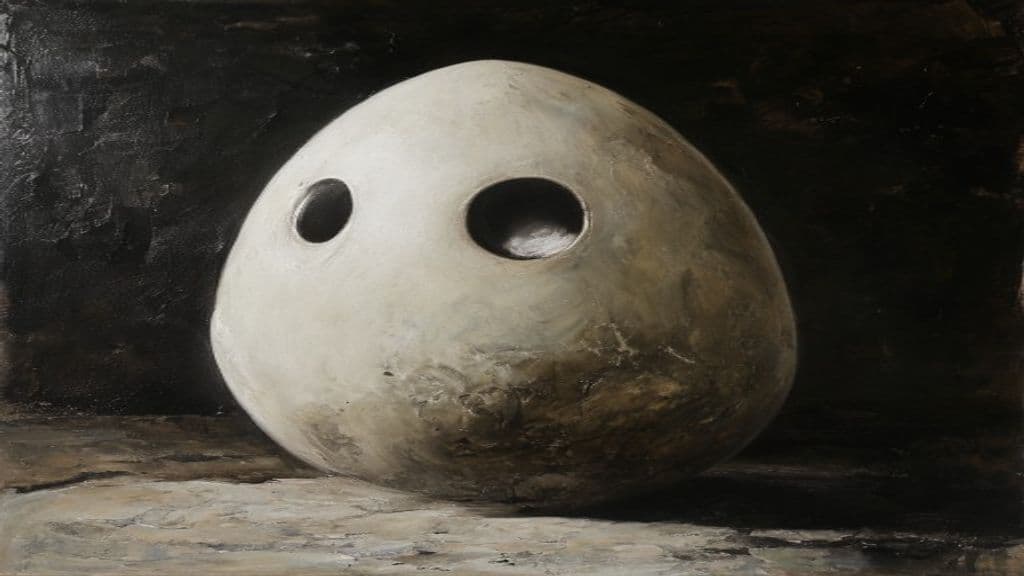
In Korean folklore, the Egg ghost is a malevolent entity that resembles an egg in appearance and serves as a harbinger of death. (Note: - The draft states "malevolent entity", but Source 1 doesn't explicitly state this. - Power tier: Based on the ability to determine a person's death upon sighting, it seems more likely that the Egg gh)

Eggþér
Lesser

Eggþér

A jötunn figure in the Old Norse poem Völuspá who sits upon a mound striking a harp and is portrayed as joyful at the onset of Ragnarök; presented as the herder associated with a female jötunn of Járnviðr who raises wolves descended from Fenrir.

Eglė the Queen of Serpents (Žilvinas)
Lesser

Eglė the Queen of Serpents (Žilvinas)

A central figure of a Lithuanian folktale in which a speaking serpentine ruler—called the grass-snake/serpent prince Žilvinas—marries the human maiden Eglė, keeps an underwater palace and household, can be summoned by a secret chant, and whose story culminates in human→tree metamorphoses after betrayal.

Ego the Living Planet
Ancient

Ego the Living Planet

Ego the Living Planet is a fictional sentient planet created for American comic-book mythology (Marvel Comics) by Stan Lee and Jack Kirby. Presented as an individual, planetary-scale organism, Ego appears across Marvel cosmic stories as a thinking, willful celestial body that can interact with gods, heroes, and galactic civilizations.

Egregore
Lesser

Egregore

A polyvalent Western‑esoteric concept naming an emergent, non‑physical collective form produced by sustained coordinated thought, will, ritual, or activity of a group. Usage ranges from a descriptive term for a 'collective mind' to a belief in a semi‑autonomous spiritual entity nourished by group devotion, and in contemporary discourse is often used metaphorically for organized online or political phenomena.

Egremus
Lesser

Egremus

Egremus is a named mortal figure in Greek myth attested only as a combatant who fell in the war between Eumolpus and Eleusis. He is identified by the patronymic 'son of Eurynomus' and appears only in genealogical/war-list context in the cited source.

Egungun (ancestral masquerade spirits)
Greater

Egungun (ancestral masquerade spirits)

Egungun refers both to Yoruba masked, costumed masquerades and to the collective force of departed ancestors who manifest through those masquerades. In performance the layered costumes are treated as a dwelling for ancestor presence; egungun appear periodically—especially at annual festivals—to remember the dead, bless the community, and mediate between the living and the otherworld.

Eguzki Amandrea (Sun Mother)
Greater

Eguzki Amandrea (Sun Mother)

Eguzki Amandrea is the Basque personification of the sun, presented in the cited corpus as a female, familial cosmic figure associated with warmth, growth, and the visible life of the world. Sources frame the sun as an animate, gendered celestial body embedded in a kinship-like cosmology with Earth and the Moon.

Egyptian Pool
Greater

Egyptian Pool

A symbolic representation of water in Egyptian mythology, depicted as a rectangular shape with seven equally spaced vertical zigzag lines. (Note: 1. Power tier should be "Minor Spirit" since the Egyptian Pool appears to be more of a symbolic representation without explicit abilities or behaviors. 2. Origin story should mention that it is not pr)

Egyptian Supernatural Beings
Primordial

Egyptian Supernatural Beings

In Egyptian mythology, various supernatural entities inhabit different realms, including gods, goddesses, demons (uncertain), and spirits. They are considered Primordial beings, with cosmic-level powers. (Note: 1. Remove the claim that demons are considered Primordial beings (Source 1 does not mention this). 2. Update the power tier to Ancient, as Egyptian gods have cosmic-level powers but the text describes)

Egyptian goddesses
Ancient

Egyptian goddesses

A category of divine female figures in ancient Egyptian religion who embody, sustain, or control particular natural forces, social roles, cosmic functions, or ritual powers. They are objects of cultic worship with temples, priesthoods, hymns, prayers, and magical spells that maintain their functions within maat.

Ehecatl
Ancient

Ehecatl

Ehecatl (Classical Nahuatl: Ehēcatl) is the central Mexican wind deity often understood as the wind aspect of the Feathered Serpent (Quetzalcoatl). He appears in creation narratives and is treated among creator gods and culture‑hero figures in the mythic corpus of central Mexico.

Ehecatotontli
Minor Spirit

Ehecatotontli

The Ehecatotontli are a group of Aztec gods presented in sources as forms or manifestations of the wind deity Ehecatl. They function as gods of breezes and are named for directional winds (for example north, west, east) and described as acting to blow clouds and make them move.

Eheieh (Ehyeh Asher Ehyeh)
Primordial

Eheieh (Ehyeh Asher Ehyeh)

Eheieh (Hebrew: אֶהְיֶה אֲשֶׁר אֶהְיֶה, Ehyeh Asher Ehyeh) is a biblical divine self-designation rendered in English as variants of "I Am that I Am" or "I will be what I will be." In later Jewish esoteric (Kabbalistic) discourse the name is associated with the highest Sephirah, Keter, and denotes the primal self-manifestation or mode of being from which emanation and sustenance proceed.

Eidolon
Minor Spirit

Eidolon

In classical Greek literature an eidolon (Ancient Greek: εἴδωλον) is a spirit-image or phantom double of a living or dead person — an appearance or image that may stand in for the person without being their full bodily or ontological self. The concept functions as a poetic and narrative device in Homeric and later poetry to handle problems of presence, absence, and reputation.

Eidyia (Idyia)
Lesser

Eidyia (Idyia)

Eidyia (also Idyia) is an Oceanid—daughter of the Titans Oceanus and Tethys—named in Greek genealogies as the wife of Aeëtes of Colchis and mother of Medea, Chalciope, and Absyrtus. She is a local nymphly figure associated with Colchis/Aia on the eastern Black Sea and is primarily attested in sources as a genealogical link rather than as an active mythic agent.

Eight Immortals (八仙; Bā Xiān)
Greater

Eight Immortals (八仙; Bā Xiān)

The Eight Immortals are a group of legendary xian (immortals) in Chinese mythology and popular Taoist-related religion, portrayed as once-human figures who attained transcendence. They function as exemplars of Taoist immortality, patrons of varied social roles, and popular auspicious figures in art, ritual cults, qigong, and martial arts.

Eight Legions (Aṣṭasenā / Hachi Bushū)
Greater

Eight Legions (Aṣṭasenā / Hachi Bushū)

The Eight Legions (Sanskrit aṣṭasenā; Japanese Hachi Bushū 八部衆) are a grouped category of Buddhist divine and semi-divine beings assembled from multiple non-human classes whose described function in Mahāyāna sources is to protect the Dharma. They appear as part of the Buddha's audience in sutras such as the Lotus Sutra and the Golden Light Sutra and are represented in temple iconography with locally variable memberships.

Eight Pillars (八柱, bāzhù)
Ancient

Eight Pillars (八柱, bāzhù)

The Eight Pillars (Chinese: 八柱, bāzhù) are a cosmological feature in Chinese mythology consisting of eight mountain-pillars located in the eight cardinal directions that function as supports/axes of the world, conduits between Earth and Heaven, and loci for paradises and supernatural inhabitants.

Eileithyia
Greater

Eileithyia

Eileithyia is a Greek divine figure principally associated with childbirth and midwifery. Invoked to ease labour pains and ensure successful delivery, she appears in classical poetry, mythic episodes, and in long-lived local cults (notably cave-sanctuaries in Crete and sanctuaries in Aigion and other locales).

Ein Sof
Primordial

Ein Sof

Ein Sof (אֵין סוֹף, ʾēn sōf) is the Kabbalistic designation for the pre‑manifest, nameless divine principle—literally “no end” or “infinite”—from which the Ohr Ein Sof (Infinite Light) and the ten sefirot are said to emanate. It is described apophatically: beyond names, attributes, form, space and time.

Ein Sof Aur
Primordial

Ein Sof Aur

A Kabbalistic metaphysical formulation linking Ein Sof (the Infinite) with ʾOr (divine 'light'), used to discuss divine emanation and the manifestation of revealed divine names (e.g., YHWH Elohim) rather than a personified folkloric being.

Einar (Norse)
Greater

Einar (Norse)

A concept representing or embodying the idea of einherjar, elite warriors who ascend to Valhalla in Norse mythology. (Note: 1. The power tier should be Primordial, as Einar represents a concept connected to cosmic/mystical aspects of Valhalla. 2. The appearance description is vague; rephrase it to "No physical description )

Einherjar
Ancient

Einherjar

Warriors who died in battle and were brought to Valhalla by valkyries, playing a crucial role in the events leading up to Ragnarök. (Note: - Power tier should be Primordial since they are associated with a cosmic event (Ragnarök) and are not described as deities or regional powers. - Abilities: The einherjar don't actually engage in dail)

Einherjer
Minor Spirit

Einherjer

Einherjer is primarily attested in the provided corpus as a Norwegian Viking metal band whose name is taken from the Old Norse term Einherjar — the slain warriors said to dwell in Valhalla. The sources document the band's formation, recordings, festival appearances, and thematic use of Norse legend; the modern usage functions as a cultural reference to the mythic category rather than as an account of living supernatural beings.

Einherji (Einherjar)
Greater

Einherji (Einherjar)

Einherji (plural Einherjar) is a term from Norse mythic vocabulary attested in the supplied sources mainly as a cultural name and as a statted warrior-type in modern roleplaying/bestiary contexts. The provided materials do not include primary Old Norse myth-text descriptions, so the entries here collate only what those modern and secondary sources assert: a connection to Norse warrior-figures and modern reuse in gaming and Icelandic civic naming.

Eioneus
Lesser

Eioneus

Eioneus (Ancient Greek Ἠιονεύς, Eioneús) is not a single supernatural being but a personal name borne by several distinct figures in Greek myth. Attestations present Eioneus as mortal or semi-divine personages: genealogical ancestors (fathers or grandfathers), an eponymous founder-figure linked to a coastal city, a suitor slain in a heroic contest, and named warriors killed in the Trojan War cycle.

Eir
Lesser

Eir

Eir is an Old Norse female supernatural figure associated with healing and medical skill in medieval Icelandic sources. She appears in the Poetic Edda and Prose Edda (as an ásynja and as a valkyrie-name) and among the maidens of Menglöð on Lyfjaberg ('hill of healing'); attestations are sparse and scholars debate whether these refer to one coherent deity or multiple figures sharing a name.

Eisheth Zenunim
Greater

Eisheth Zenunim

A feminine personification from Zoharic Kabbalah identified with sexual immorality and named among a quartet of female partners of Samael. Later Western esoteric and popular sources reinterpret her as a Qliphothic princess or succubus-like 'queen' of demons.

Eitri
Lesser

Eitri

Eitri (also attested as Sindri) is an Old Norse dwarf smith celebrated in the Skáldskaparmál episode for forging three famous artifacts — Gullinbursti, Draupnir, and Mjöllnir — while working with his brother Brokkr. He is presented as a master craftsman whose work directly affects the gods, not as a deity.

Ekek
Greater

Ekek

A nocturnal birdlike human predator from Philippine folklore, the Ekek (or Ek Ek) is a winged creature said to hunt at night for flesh and blood, particularly targeting sleeping pregnant women and draining fetuses with a long proboscis.

Ekke Nekkepenn
Minor Spirit

Ekke Nekkepenn

Ekke Nekkepenn is a North Frisian folkloric figure, presented in 19th-century sources as a composite character: Christian Peter Hansen depicted him as a sea-dwelling 'merman' with a wife Rahn, while Theodor Storm later used a similar name for a small fiery, maleficent being. The figure combines a local water-man legend with a Rumpelstiltskin-type name-motif in Hansen's retelling.

El
Ancient

El

El (ʼEl, ʾil, ʾilu) is a Northwest Semitic term meaning 'god' that also functions as the proper name and title of a senior, patriarchal deity in Canaanite/Ugaritic and related West Semitic traditions. He is portrayed in surviving texts as the father of the gods, presiding over a divine council, a progenitor of major deities and humankind, and a figure whose attributes were later conflated with those of Yahweh in Israelite religion according to scholarly reconstructions.

El Bilga Khatun
Minor Spirit

El Bilga Khatun

El Bilga Khatun was the wife of Ilterish (Ilterish Qaghan), founder of the Second Turkic Khaganate, and mother of Bilge Qaghan and Kul Tigin. She appears in the Orkhon inscriptions and later historiography as a political partner and honored elite figure of the 8th-century Göktürk polity.

El Borak (Francis Xavier Gordon)
Lesser

El Borak (Francis Xavier Gordon)

El Borak is a fictional American adventurer created by Robert E. Howard, known by the Arabic epithet meaning "The Swift" for his exceptional speed, martial skill, and guile. Set in early 20th‑century pulp adventure contexts across Afghanistan and adjacent regions, he is portrayed as a legendary human operative whose reputation mediates tribal and political conflict rather than a supernatural being.

El Caganer
Minor Spirit

El Caganer

El Caganer is a small, conventional figurine placed within Catalan and neighbouring nativity scenes (pessebres), typically depicted squatting and defecating. It functions as a recurring, recognisable character in the constructed visual landscape of the Christmas nativity, carrying symbolic roles including fertility symbolism, social satire, and a playful family custom of hiding and seeking.

El Cucuy
Lesser

El Cucuy

El Cucuy (also rendered Coco or Cucuy) is a Spanish‑language/Latinx folkloric figure functioning as the regional equivalent of the Boogeyman, invoked in lullabies and parental warnings to frighten or discipline children; modern media and paranormal accounts reinterpret it variably as a vigilante creature or an intrusive spirit. Sources show a diffuse folk role rather than a fixed theological identity.

El Naddaha
Lesser

El Naddaha

El Naddaha (Arabic النداهة, "the caller") is an Egyptian popular-legend female water spirit associated with the Nile and its canals. She is portrayed as an alluring, voice-centered figure who calls men—often by name—with a hypnotic voice, drawing them toward the riverbank where they are believed by locals to disappear or drown.

El Shaddai
Ancient

El Shaddai

El Shaddai (Hebrew: אֵל שַׁדַּי, ʾĒl Šadday) is a theonym used in the Hebrew Bible for the God worshipped by the patriarchs and Israel. The compound name is attested across Genesis, Exodus, Job and prophetic texts and has a contested etymology variously read as mountain‑, wilderness‑, destructive, or fertility‑related imagery rather than a single fixed English equivalent.

El Silbón
Lesser

El Silbón

El Silbón (Spanish: "The Whistler") is a legendary lost-soul figure from the Llanos of Venezuela and the eastern Colombian plains, known in popular accounts for announcing itself by a distinctive whistle and for haunting open plains landscapes in regional storytelling and media.

El Sombrerón
Lesser

El Sombrerón

El Sombrerón is a legendary folk character best known from Guatemala and also attested in Mexican and Colombian/Venezuelan collections; portrayed as a nocturnal suitor-like figure who courts or troubles young women, braids animal manes and tails, and travels neighborhoods at dusk with a string of mules carrying coal.

El Tío
Lesser

El Tío

El Tío ('The Uncle') is the subterranean lord and local spiritual power of mines in the Bolivian Altiplano (especially Cerro Rico, Potosí). Miners propitiate him with statues and offerings because he is believed to both protect and punish; his identity overlaps with the indigenous Supay and is shaped by colonial and mining contexts.

Elagabal/El‑Gabal (Elagabalus, Heliogabalus)
Ancient

Elagabal/El‑Gabal (Elagabalus, Heliogabalus)

Elagabal (El‑Gabal), Latinized as Elagabalus and syncretized as Heliogabalus, is the Emesene mountain and sun god represented by a sacred cult‑stone (baetyl). A local Baal‑type deity of Emesa (modern Homs), the cult was historically notable for its transplantation and promotion to Rome during the reign of the emperor commonly called Elagabalus (218–222 CE).

Elaine
Lesser

Elaine

Elaine is a personal name applied to several female characters in the Arthurian literary cycle (for example Elaine of Astolat, Elaine of Corbenic, and a Queen Elaine of Garlot). In the cited materials these Elaines are legendary human figures — queens, lovers, or nuns — whose roles vary by tale rather than a single supernatural being.

Elaine of Astolat
Lesser

Elaine of Astolat

Elaine of Astolat is a mortal noblewoman from Arthurian romance who dies of unrequited love for Sir Lancelot; her body is set adrift in a small boat clutching a lily and a final letter and is discovered at Camelot. Her episode appears in multiple medieval variants and was later reworked in Victorian poetry and visual art.

Elaine of Corbenic
Lesser

Elaine of Corbenic

A noblewoman in the Arthurian Grail-cycle who functions as the Grail Maiden/Grail Bearer; daughter (in many accounts) of King Pelles of Corbenic, she shows the Holy Grail to Lancelot, engineers (with aid) the conception of Galahad, and later brings a mad Lancelot to the Grail to be healed.

Elamite religion
Ancient

Elamite religion

The indigenous religious system of ancient Elam (Susiana), encompassing a pantheon (including deities such as Humban and Pinikir), cultic and funerary practices, and state ritual life from the third millennium BCE through the Achaemenid period. It was regionally centered on Susa and the lowlands of what are now Ilam and Khuzestan and interacted with neighboring Mesopotamian and Hurrian traditions.