Entity Index

A record of the unseen, drawn from world folklore.

7724 entities · page 81 of 129

John Zegrus
Lesser

John Zegrus

John Zegrus was a mid-20th-century detained traveler and alleged document forger whose counterfeit passport and unverifiable biography in Japan (1959–1960) inspired later urban legends about a visitor from a nonexistent country ('Man from Taured') and other speculative retellings.

John the Evangelist
Lesser

John the Evangelist

A central figure in Christian tradition identified as the authorial persona behind the Gospel of John and as an authoritative apostolic witness to Jesus. Traditions variously equate him with John the Apostle, John of Patmos, or John the Presbyter; modern scholarship disputes a single authorship for all Johannine writings. He is venerated as a saint, commemorated liturgically, and appears widely in Christian art and hagiography.

Johnny Cage
Minor Spirit

Johnny Cage

Johnny Cage (Jonathan "John" Carlton) is a fictional character from the Mortal Kombat video game franchise: a Hollywood action-film star and skilled martial artist who serves as one of Earthrealm's champions in inter-realm tournaments and wars. Though a mortal human in the fiction, his narrative repeatedly intersects with supernatural forces that kill, resurrect, or manipulate him.

Jokhini
Lesser

Jokhini

A female supernatural predator of Assamese folklore — the Jokhini appears as a beautiful woman to lure men, but also as a hideous crone to devour them. She is associated with the dense forests of the Brahmaputra valley and is one of the most feared night entities in Assamese village belief.

Jonakr's sons (Hamdir, Sörli, Erpr)
Lesser

Jonakr's sons (Hamdir, Sörli, Erpr)

Three brothers—Hamdir (Hamðr), Sörli (Sǫrli), and Erpr—of the Völsung lineage in Germanic heroic legend who, at their mother Guðrún's urging, attempt to avenge their half‑sister Svanhildr by attacking King Jörmunrekr/Ermanaric. Their deed and tragic deaths are attested across Norse poetic and saga sources and continental chronicles.

Jophiel
Ancient

Jophiel

An archangel in Jewish and Christian angelology, Jophiel is depicted in mystical, liturgical, and occult sources as a high-ranking celestial guardian associated with wisdom, Torah-reading, beauty, and certain Kabbalistic/ceremonial correspondences. Sources place Jophiel among the highest heavens and in roles supervising scripture, teaching languages, and serving in angelic command.

Jorōgumo
Lesser

Jorōgumo

A yōkai of Japanese folklore depicted as a spider-associated shapeshifter that can take the form of a woman to lure, entangle, and sometimes devour humans. Tales place it in liminal natural sites (waterfalls, abysses) and domestic edges (eaves, attics), and local practices sometimes worship or ritually counter it.

Joulupukki
Greater

Joulupukki

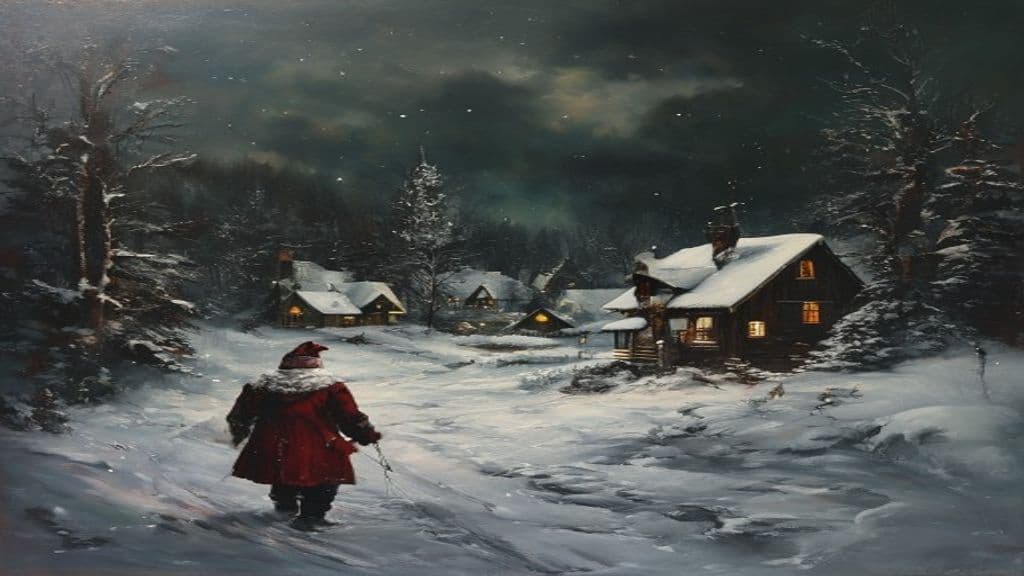
A Finnish Christmas figure representing the spirit of Yule and winter solstice, often conflated with Santa Claus. (Note: * Power tier should be Lesser or Minor Spirit, as there is no indication in the source material that Joulupukki is a powerful regional or deity-level entity. * Abilities are not described, but it's st)

Jove (Jupiter)
Ancient

Jove (Jupiter)

Jove, more commonly known in scholarship as Jupiter, is the chief sky-and-thunder god and king of the gods in ancient Roman religion and mythology. He functioned as the leading divine authority of Roman state religion throughout the Republican and Imperial eras and is portrayed in legend as establishing principles of Roman cult practice through negotiation with the early king Numa Pompilius.

Juan Tamad
Minor Spirit

Juan Tamad

Juan Tamad (Tagalog for "Lazy Juan") is a stock character in Philippine folklore known for extreme laziness. Portrayed usually as a child (sometimes a young man), he appears in short comic or moralized tales that exemplify sloth through absurd behavior and its social consequences.

Judah (Yehuda)
Lesser

Judah (Yehuda)

Judah (Hebrew: Yehuda) is a biblical patriarch—the son of Jacob—whose name became the eponym of the Tribe of Judah and of multiple historical and geographic entities (Kingdom of Judah, Judea/Yehud, later provincial and modern toponyms). The supplied sources treat Judah as a human ancestor and an ethnic/political designation rather than a supernatural being.

Judocus de Turfsteker
Lesser

Judocus de Turfsteker

Judocus de Turfsteker is attested in a single cataloguing source as a "processional giant": a large anthropomorphic effigy used in communal processions. The available record is limited to this classification and the name with no further contextual, historical, or ritual detail.

Julia Carpenter
Lesser

Julia Carpenter

Julia Carpenter is a fictional Marvel Comics superhero introduced in Secret Wars #6 (1984). A human altered by covert government experiments, she has used the codenames Spider-Woman, Arachne, and later assumed the Madame Web mantle in some storylines; her narrative roles include government operative, team member, mother, and occasional double agent.

Jumala
Lesser

Jumala

Jumala is a divine name and concept in Finnic and some Volga‑Finnic language communities, referring both to pre‑Christian sky‑deity figures (often associated with sky, thunder, storms and fertility) and, after Christianization, to the Christian God as the ordinary word for 'God'. It functions variably as a proper name, a generic term for deity, or the designation of local sky gods in regional traditions.

Jumis
Lesser

Jumis

Jumis is a Latvian/Baltic agrarian figure and decorative motif associated with prosperity, the fertility of crops, and the household well‑being tied to the harvest cycle. Attested in folk context as a prosperity emblem in material culture and situated within the seasonal rites of spring and midsummer, Jumis functions as a positive agricultural agency rather than a hostile spirit in the supplied sources.

Juno
Ancient

Juno

Juno is identified in the supplied sources as an ancient Roman goddess associated with marriage and described in one source as 'queen of the gods.' The provided materials are limited to encyclopedic identifications and modern uses of the name and do not supply detailed mythological narratives, rituals, iconography, or etymology.

Juoksáhkká
Lesser

Juoksáhkká

Juoksáhkká (also Juksakka, Joeksaahka; lit. 'bow woman' — Stäukedne lit. 'bow mother') is a female household deity in Sámi shamanistic belief associated with childbirth, the development and protection of children, and immediate postnatal rites. She is one of the daughters of Máttaráhkká, located in the ground under the goahti (often at the back), and was reported among Sámi in the Scandinavian parts of Sápmi but not universally across all Sámi regions.

Jupiter
Ancient

Jupiter

Jupiter (Latin: Jove) is the chief sky-and-thunder deity of ancient Roman religion and mythology, serving as king of the gods and as the primary divine authority of the Roman state cult. He is presented in sources as controller of the heavens, a guarantor of civic religious norms, and a mythic progenitor of heroes and ruling lines.

Juracán
Greater

Juracán

Juracán is the Taíno term for the violent storm-wind force — the destructive hurricane-force weather produced when the storm zemi Guabancex is displeased. In ethnohistorical accounts juracán names the meteorological violence itself; in some modern retellings it is personified as a storm spirit. The English word "hurricane" derives from this Taíno term.

Juraira
Lesser

Juraira

No reliable folkloric or mythological information for an entity named 'Juraira' appears in the provided sources. The materials only show (a) a Wikipedia page redirect/mention linking to the Persian epic character Farangis/Frigis, and (b) a Wikidata item for a modern researcher named Jurairat Rattanalertnavee; neither source supplies evidence that 'Juraira' is a supernatural being.

Jure Grando (štrigon of Kringa)
Lesser

Jure Grando (štrigon of Kringa)

A historical-legendary figure from 17th-century Istria who, according to local accounts recorded by Johann Weikhard von Valvasor and summarized in modern sources, rose from his grave and tormented his village for sixteen years after his death; he is labeled locally as a štrigon and is often discussed as an early vampiric case in European print culture.

Jurōjin
Lesser

Jurōjin

Jurōjin (寿老人) is one of the Seven Gods of Fortune (Shichifukujin) in Japanese popular religion and art, functioning as the personification and auspicious deity of longevity and wisdom. A syncretic figure derived from the Chinese Taoist 'Old Man of the South Pole,' he appears in painting, sculpture, and small devotional objects from the Muromachi–Edo periods onward.

Justitia
Minor Spirit

Justitia

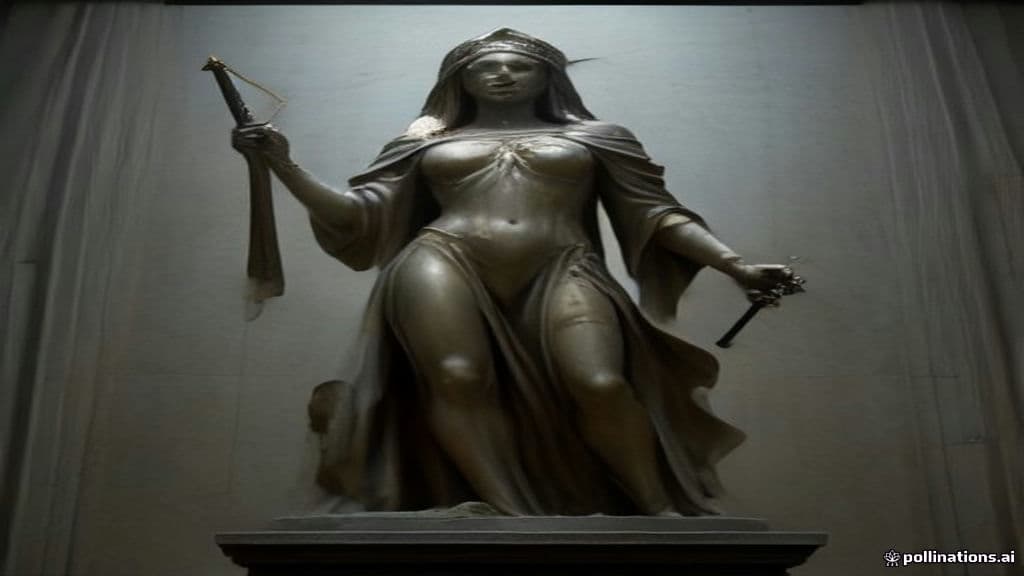
Justitia (Lady Justice) is the classical allegorical personification of the moral force in judicial systems, commonly depicted in Western visual culture and used as an emblem in legal, institutional, and commercial contexts rather than as a supernatural being.

Juturna
Lesser

Juturna

Juturna (also Diuturna) is an ancient Roman divinity of fountains, wells, and springs. She appears in civic cult in Latium (temples at Lavinium and Rome, a festival on January 11) and in literary myth (notably in Virgil and Ovid) as a water-nymph who aids mortals and presides over specific sacred waters such as the Lacus Juturnae in the Roman Forum.

Jábmiidáhkká
Ancient

Jábmiidáhkká

Jábmiidáhkká (also Jabme-akka) is the female ruler of the Sámi underworld Jábmiidaibmu. She functions as gatekeeper and mediator for the dead, sometimes permitting them to affect the living and allowing captured souls to return in exchange for offerings; sacrificial burials of black animals are recorded as offerings to her.

Járnsaxa
Lesser

Járnsaxa

Járnsaxa is a named jötunn (giantess) in Old Norse sources attested chiefly as a lover of the god Thor and the mother of his son Magni; she also appears in lists of giantesses such as a set called the 'Nine Mothers of Heimdallr' and functions as an onomastic reference in skaldic diction.

Jörmungandr
Ancient

Jörmungandr

In Norse mythology, Jörmungandr is an unfathomably large sea-serpent, the Midgard Serpent or World Serpent, that dwells in the world sea and encircles Midgard, biting its own tail; Jörmungandr releasing his tail is described as one of the signs of the beginning of Ragnarök. The name has been reused in modern astronomy for near-Earth asteroid 471926 Jormungandr (provisional 2013 KN6), discovered 28 May 2013.

Jörð
Lesser

Jörð

Jörð (Old Norse: Jǫrð, anglicized Jörð) is the personification and theonymic incarnation of the Earth in Norse mythic-cosmology. Attested in the Poetic Edda, the Prose Edda, and Saxo's Gesta Danorum, she functions genealogically (notably as mother of Thor) and linguistically as the common noun for 'earth/land' used interchangeably with a named goddess-figure in skaldic poetry.

Jötunn (Jotun / Giant)
Ancient

Jötunn (Jotun / Giant)

A jötunn (Old Norse jǫtunn; plural jötnar) is a class of powerful non-human beings in Norse/Germanic myth that exist alongside gods, dwarfs, elves, and humans. They commonly dwell across boundaries (e.g., Jötunheimr) and appear ambivalently as adversaries, kin, spouses, and participants in cosmological narratives.

Jātaka stories (Buddhist mythology)
Primordial

Jātaka stories (Buddhist mythology)

The Jātaka stories are a collection of Buddhist tales that recount the past lives of the Buddha Gautama, highlighting his virtues and spiritual development. (Note: 1. Power tier should be changed to "Greater" since it's a deity-level being but not cosmic. 2. Origin story needs clarification that these stories are meant to convey moral teachings, not supernatural)

Jūratė (Jūratė and Kastytis)
Ancient

Jūratė (Jūratė and Kastytis)

Jūratė is a Lithuanian legendary sea‑woman variously described in sources as a sea‑goddess, mermaid, or undine who dwells beneath the Baltic in an amber palace. In the best‑known tale she falls in love with a mortal fisherman, Kastytis; a thunder god (Perkūnas) destroys her amber castle in anger, and the shattered amber or 'tears' are said to wash up on Baltic shores.

KAI Zilant
Greater

KAI Zilant

The Zilant is a legendary winged serpentine creature in Tatar mythology, described as something between a dragon and a wyvern. It appears in foundation legends of the city of Kazan and has served as the city's official emblem since 1730.

Kaal Bhairav
Ancient

Kaal Bhairav

Kaal Bhairav (Kāla Bhairava, Kalabhairava) is a fierce Shaivite manifestation of Shiva associated with Time (kāla), death, guardianship, and punitive justice. Worshipped in Hindu and some Vajrayāna Buddhist tantric contexts, he functions as a guardian, enforcer and protector who is propitiated by devotees through mantras, puja and yantra practice.

Kabandha
Greater

Kabandha

Kabandha is a cursed, headless-torso supernatural being from classical Hindu epic literature (notably Valmiki's Ramayana and the Mahabharata). Once a gandharva (named Vishvavasu or Danu in some tellings), he was transformed into a monstrous, forest‑dwelling figure whose death—by severing of his arms and subsequent cremation—releases him to resume his celestial form and provide guidance to Rama.

Kabumpo, the Elegant Elephant of Pumperdink
Minor Spirit

Kabumpo, the Elegant Elephant of Pumperdink

Kabumpo is a fictional anthropomorphic elephant from the Oz book series (first appearing in Kabumpo in Oz, 1922) who functions as a courtly dignitary and occasional adventuring companion in the kingdom of Pumperdink and the wider Oz cosmology. Portrayed as wise, vain, and sarcastic but fundamentally good-hearted, he appears in multiple works by Ruth Plumly Thompson and later Oz continuations.

Kabunian
Lesser

Kabunian

Kabunian is a named spiritual figure referenced in the highland cultural vocabulary of northern Luzon (Igorot/Bontoc area). The supplied sources show Kabunian appears in contemporary theological discussions about indigenous contextualization of Christianity and in modern cultural/arts contexts, but the provided materials do not record traditional myths, rituals, iconography, or specific powers.

Kachcha Kalwa
Minor Spirit

Kachcha Kalwa

North Indian spirit of those who died 'raw' — violently, accidentally, or before their destined time. Unable to rest, the Kachcha Kalwa attaches to survivors and causes a trail of accidents, illness, and misfortune until properly appeased through rites at the site of death.

Kadam Rao (literary attestation)
Lesser

Kadam Rao (literary attestation)

The name 'Kadam Rao' appears as part of the title of a 15th-century Deccani Urdu masnavi, Kadam Rao Padam Rao, composed by Fakhruddin Nizami of Bidar. The supplied sources do not document Kadam Rao as a supernatural being in Bengali folk tradition; instead the attestation is literary and historical (Source 1).

Kadlu
Lesser

Kadlu

Kadlu is one of three sister-figures in an Inuit account who together produce storm phenomena; Kadlu specifically makes thunder by actions such as jumping on hollow ice, singing, or rubbing dried seal skins. The sisters are described as living in a large house supported by whalebone ribs.

Kadru
Lesser

Kadru

Kadru is a mythic woman in Hindu sacred narrative, daughter (or descendant) of Daksha and one of the wives of the sage Kaśyapa, best known as the ancestress of the nāgas (a thousand serpent-sons such as Śeṣa, Vaśuki, and Takṣaka). Her stories focus on genealogical role, a famous wager and trick against her co-wife Vinata, and interactions with sages that produce curses and restorations by ascetic penance.

Kaekae
Minor Spirit

Kaekae

No supplied sources describe Kaekae as a supernatural or folkloric entity. The string 'Kaekae' appears in the provided material only as a contemporary personal name, username, product/model name, or surname; there is no documented mythic description, powers, rituals, or cultural cosmology for a spirit named Kaekae in the source set.

Kahaʻi

Kahaʻi

A handsome Polynesian demigod in Hawaiian tradition. (Note: 1. Add specific power tier based on the fact that it's a "demigod", likely placing it at Ancient (deity-level). 2. Provide more detail about its origin story, as the draft article is empty. 3. Fill in)

Kahuitara
Lesser

Kahuitara

Kahuitara is a name attested in the provided sources with multiple referents in Māori/Polynesian contexts: principally a voyaging waka (canoe) associated with migrations to New Zealand and a place-name (Kahuitara Point) on Pitt Island noted for the first populated sunrise of the new year; a single tertiary source also lists Kahuitara as a tutelary goddess of certain seabirds. The sources do not provide a unified supernatural profile for Kahuitara.

Kahukuranui
Ancient

Kahukuranui

Kahukuranui is presented in the sources as a Māori ariki (chieftain) and ancestral progenitor associated with Ngāti Kahungunu and the hapū Ngāti Kahukuranui of Te Aitanga-a-Hauiti. He appears in whakapapa, place-names and marae memorials (including a wharenui named Kahukuranui and carved figures bearing his name) and is remembered for leadership, marriage alliances and participation in warfare.

Kahumatamomoe
Ancient

Kahumatamomoe

A revered Māori rangatira and ancestral figure associated with the upper North Island of New Zealand. (Note: 1. Power tier should be Primordial, as there is no indication of supernatural powers beyond those of a human leader. 2. Appearance should state "No physical description available" instead of making an)

Kahungunu
Minor Spirit

Kahungunu

Kahungunu is a historical Māori ariki (chief) and eponymous ancestor of the Ngāti Kahungunu (and linked groups such as Te Aitanga‑a‑Māhaki) whose life‑narratives anchor whakapapa, land rights, and tribal identity. Traditionally placed in the waka Tākitimu lineage, he is portrayed as an industrious, physically large and capable chiefly founder active in settlement, warfare, courtship, and resource management, probably living around the late fifteenth century according to the sources.

Kahutara (Māori canoe)
Ancient

Kahutara (Māori canoe)

A historical Māori waka (canoe) used for oceanic voyaging and migrations in New Zealand. (Note: 1. Power tier: Primordial (Kahutara is a specific canoe, not a cosmic entity) 2. Origin story: Add source to support the origin story 3. Abilities: Clarify or rephrase "facilitated migrations" to be m)

Kai Khosrow
Ancient

Kai Khosrow

Kai Khosrow is a legendary Kayanian king in Persian epic tradition, chiefly known from the Shahnameh and related material. He is remembered as the rightful heir who returns from exile, avenges his father Siavash, and rules Iran while repeatedly opposing the Turanian king Afrasiab.

Kaikeyī
Lesser

Kaikeyī

Kaikeyī is a human royal figure in the Sanskrit epic Rāmāyaṇa: a princess of Kekeya who becomes queen consort of Kosala by marrying King Daśaratha. She is politically powerful among Daśaratha's wives; her invocation of two boons precipitates Rama's fourteen-year exile, Daśaratha's death, and the ensuing dynastic crisis, after which she repents and is forgiven.

Kaitangata (Māori mythology)
Greater

Kaitangata (Māori mythology)

In Māori mythology, Kaitangata is a liminal figure occupying a space between mortality and divinity as either a mortal son of the demigod Māui or a son of Rehua, a star-god. His role reflects the cultural importance of genealogical relationships between humans and gods in Māori culture. (Note: * Power tier: Given the ambiguity in source material about whether he's considered a god or not, it should be revised to Primordial (as it's not clear if he's deity-level or not). * Origin story: Add )

Kajamānu (Kayyamanu)
Ancient

Kajamānu (Kayyamanu)

Kajamānu (Akkadian: ka-a-a-ma-nu, glossed 'the constant'), also rendered Kayyamanu, is the ancient Mesopotamian name for the planet Saturn. In Mesopotamian sources the planet is identified as an astral body tracked by astronomer-priests and is attested as being 'regarded as the star of Ninurta'; the name and concept persist in later Near Eastern traditions (Mandaean Kiwan, Persian Kayvan, Syriac Kēwān) as part of the seven-planet schema.

Kala Rau (unattested in supplied sources)
Minor Spirit

Kala Rau (unattested in supplied sources)

The name 'Kala Rau' does not appear in the supplied source set. Materials provided instead document the Javanese/Balinese lunar goddess Dewi Ratih and general features of Balinese mythology; any association of the name Kala Rau with these traditions is not supported by the supplied texts and therefore remains unverified.

Kalakeyas
Greater

Kalakeyas

A sect of danavas in Hindu mythology, fighting under the asura banner. (Note: 1. Power tier: "Greater" is incorrect; given their number (60,000) and ability to fight under various banners, a more plausible power tier would be "Primordial". 2. Origin story: The draft claims the )

Kalanemi
Primordial

Kalanemi

In Hindu mythology, Kalanemi is an asura who participates in the Tarakamaya War and exhibits tyrannical behavior as a reborn entity. (Note: 1. Power tier should be revised to "Ancient" since Kalanemi is described as a commander in the Tarakamaya War and exhibits significant strength, but not on a cosmic or primordial level. 2. Appearance )

Kalantiaw (tradition)
Lesser

Kalantiaw (tradition)

Kalantiaw is a named pre‑Hispanic ruler presented in early 20th‑century Philippine publications as the author of a penal code dated 1433 and associated with Panay (Aklan). Modern scholarship, beginning with William Henry Scott's research in the 1960s and later formal recognition by Philippine historical institutions, classifies Kalantiaw and the Code of Kalantiaw as twentieth‑century forgeries originating in materials promoted by José E. Marco and others.

Kalaratri
Ancient

Kalaratri

Kālarātri is a fearsome form of the Great Goddess (Mahādevī) counted among the Navadurga; a personification of night and the devouring power of time who destroys demons and negative forces while granting protection and auspicious results to devotees.

Kalaviṅka
Lesser

Kalaviṅka

A Buddhist fantastical creature described as a human-headed, bird-bodied being famed for its exquisite, Dharma-preaching voice; represented across South, East, and Southeast Asian Buddhist art and liturgical contexts with regional iconographic variation.

Kalev
Lesser

Kalev

Kalev is attested in the supplied sources primarily as a proper name: a character entry in Estonian mythology (as listed on Wikipedia) and as a common Estonian masculine given name used in modern organizations and personal names. The provided materials do not include narrative, descriptive, or functional mythic details about Kalev as a supernatural being.

Kalevanpojat (Kaleva's sons)
Lesser

Kalevanpojat (Kaleva's sons)

Kalevanpojat, literally "Kaleva's sons," is a name attested within Baltic Finnic mythic/epic tradition. Available sources associate the name with the Finnic epic milieu (for example through the related figure Kalevipoeg) but do not provide detailed native cosmological classification, descriptions, or ritual roles for Kalevanpojat.

Kalevi
Primordial

Kalevi

Finnish giant and heroic figure, often associated with pre-human or archaic layer of existence. (Note: * Power tier is likely Greater (powerful regional) rather than Primordial due to Kalevi being a heroic figure that appears in runic songs. * Sensory cues are missing and should be included based on th)