Entity Index

A record of the unseen, drawn from world folklore.

7724 entities · page 82 of 129

Kalevipoeg
Ancient

Kalevipoeg

Kalevipoeg ('Kalev's Son') is the central culture-hero of Estonian runic-song tradition and the 19th-century epic assembled by Friedrich Reinhold Kreutzwald. Presented as a giant-son of the ancestral Kalev, he shapes landscape, builds towns, fights enemies, suffers a tragic fate involving a cursed sword, and after death is set to guard the gates of hell.

Kali
Ancient

Kali

Kali is a major Hindu goddess associated with time (kāla), death, destruction, and also with liberating knowledge; she appears in Puranic and Tantric texts as a fierce battlefield power and as a protective Divine Mother (Kali Mātā).

Kali Amman
Ancient

Kali Amman

Kali Amman is a major South Indian (Tamil) goddess figure who combines terrifying aspects of time, death, and destruction with maternal and salvific functions. She appears both in pan‑Hindu tantric registers as Kalika/Kali (one of the Mahavidyas) and in Dravidian village‑goddess (Amman/grama devata) contexts where she functions as protector, punisher, and recipient of local ritual cult.

Kalki
Ancient

Kalki

Kalki (Sanskrit: कल्कि), also Kalkin, is the prophesied tenth and final avatāra of the Hindu god Viṣṇu who is foretold to appear at the end of the Kali Yuga to destroy unrighteousness (adharma) and inaugurate a renewed Satya Yuga. Described across Purāṇic texts and in an adapted form in Buddhist Kalacakra literature, Kalki is a future-oriented martial divine figure who ends a degenerate cosmic age and restores dharma.

Kalku
Greater

Kalku

Kalku (also Calcu) is a Mapuche human practitioner who works with negative powers and harmful spirit-agents (wekufe). Presented in contrast to the benevolent machi, kalku command spirit-servants such as Anchimayen and can manifest powerful spirit-forms like the Chonchon; the role is often described as inherited and transgressive of admapu.

Kalladi
Minor Spirit

Kalladi

Kalladi is primarily attested in the provided documentary record as a social and geographic name (a sub‑caste in Kerala and place‑names in Sri Lanka), not as a clearly documented supernatural entity in Tamil folk belief. A single blog source mentions a related place‑linked spirit name 'Kalladikode Neeli', but the supplied official and archival sources do not describe a distinct folkloric being called 'Kalladi'.

Kallana
Lesser

Kallana

In Kaani (Kani) tribal accounts from the Western Ghats of southern India, kallana is reported as a distinct, small or 'dwarf' variety of elephant associated with rocky, higher‑altitude terrain. The lexical form 'Kallana' also appears in unrelated contexts (a planet name in fiction, a plant common name, and as a personal name in scholarly literature), but those uses are separate from the Kaani folk‑biological referent.

Kallikantzaros
Lesser

Kallikantzaros

A malevolent goblin-like creature in Greek and related Balkan and Anatolian traditions that dwells underground sawing at the world‑supporting tree for most of the year and emerges during the Twelve Days of Christmas (25 December–6 January) to harass households and people.

Kalma
Lesser

Kalma

Kalma is a female death‑figure in Finnish myth associated with Tuonela (the underworld) and with decay; she is attested in secondary summaries as one of the named offspring of the death‑mother Tuonetar and is described in some sources with language linking her to putrefaction.

Kalmāṣapāda
Greater

Kalmāṣapāda

Kalmāṣapāda (also called Saudāsa, Mitrasaha, Amitrasaha) is a kṣatriya king of the Ikshvāku (Solar) line who, in various epic and Purāṇic accounts, is either directly cursed by a sage or possessed by a rakshasa and for a period becomes a flesh‑eating, forest‑wandering rakshasa; he is also treated in genealogies as an ancestor of Rāma. His story functions as a narrative about the power of sage‑curses, breaches of ritual hospitality, and the vulnerability of kingship to supernatural transformation.

Kalqa'il
Greater

Kalqa'il

Kalqa'il (Arabic: كلقائيل) is an angel in Islamic angelology described as guardian of the entrance to the fifth heaven, governor of the houris, and an angel invoked in exorcist rites.

Kalu Kumara
Minor Spirit

Kalu Kumara

Kalu Kumara (literally given in the prompt as “Black Young Man” spirit) is an entity named by the user as part of Sri Lankan tradition. The supplied source excerpts in the research packet do not contain descriptions, origin stories, rituals, or other substantive information about this named spirit.

Kalûnga
Ancient

Kalûnga

Kalûnga (Kalûnga Line) is a foundational concept in West-Central African Bantu cosmologies—most prominently Ambundu, Kongo, and Chokwe—referring both to Kalûnga as the Supreme God and to a watery, energetic boundary separating the land of the living from the spiritual realm of deceased ancestors.

Kamadeva
Ancient

Kamadeva

Kamadeva is the anthropomorphic divine personification of the principle called kāma in Vedic and Purāṇic Hindu literature, representing desire, attraction, and the creative force of longing. He appears both as an impersonal cosmological principle in early Vedic hymns and as a named, youthful deity in later Purāṇic narratives and iconography.

Kamaitachi
Lesser

Kamaitachi

A class of Japanese yōkai associated with sudden cutting winds and whirlwinds that cause sharp, initially painless wounds. Narratives vary by region: kamaitachi may be imagined as weasel-like creatures riding dust devils, trios of mischievous gods, animated sickles (tsukumogami), or other local spirit causes.

Kamalā / Kamalātmikā
Ancient

Kamalā / Kamalātmikā

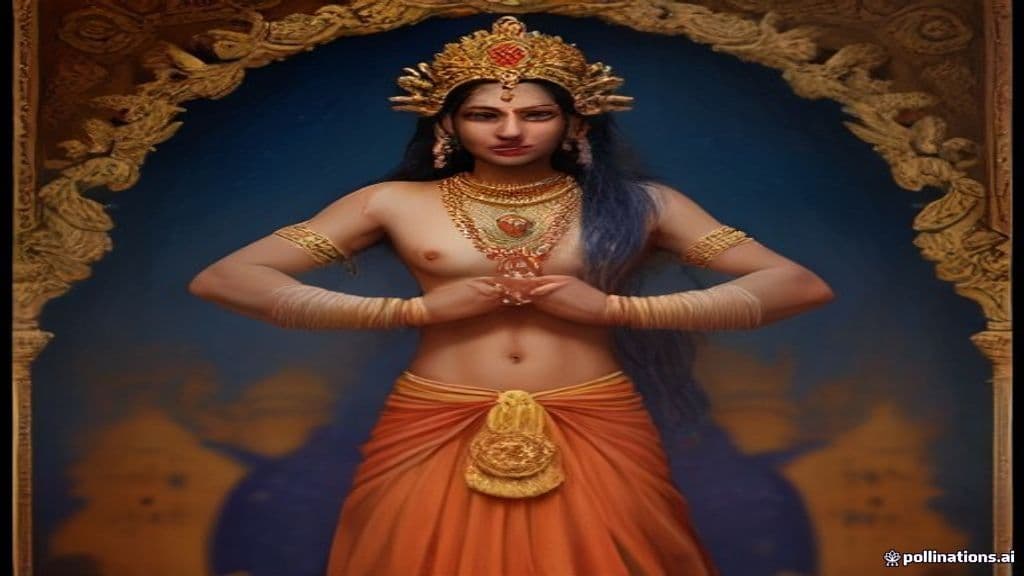
Kamalā (Kamalātmikā, Kamalālayā) is the lotus-form Mahāvidyā — the Tantric/Shakta characterization of Lakṣmī — depicted as a golden-complexioned, four-armed goddess seated on a lotus who bestows prosperity, delight, fertility and spiritual abundance and is engaged by Tantric sadhana, stotra and Upaniṣadic genres.

Kamapuaʻa
Greater

Kamapuaʻa

Kamapuaʻa is a Hawaiian kupua — a powerful shape‑changing fertility superhuman associated with Lono and especially linked to the island of Maui. Portrayed as a bold, untamed trickster and lover, he shifts between human, hog, tree and fish forms and figures in contests and negotiations with the fire goddess Pele.

Kambagiri Swamy
Ancient

Kambagiri Swamy

A powerful Hindu god associated with the Kambagiri Swamy temple in Andhra Pradesh, without known origin or appearance stories. (Note: 1. Remove power tier: Ancient - The source does not provide enough information to accurately determine the power tier. 2. Add a note on origin story: No origin story or known history is mentioned in t)

Kameosa
Minor Spirit

Kameosa

Kameosa is a modern and media-attested label associated with the idea of a jar or vessel animated in the conceptual family of tsukumogami (objects that acquire spirits). The provided sources do not establish a clear classical folkloric entity named Kameosa; the term appears primarily in contemporary art discussion and popular-media adaptations that draw on the tsukumogami motif.

Kami
Ancient

Kami

Kami (神; kami) are the central sacred beings and forces venerated in Shinto, encompassing deities, spirits, natural phenomena, qualities, and the spirits of the venerable dead. They are understood as immanent in nature, morally ambivalent, and inhabit a hidden or complementary existence sometimes referred to as the world of the kami (神界).

Kamoebas
Lesser

Kamoebas

Kamoebas is a giant, turtle-like kaiju introduced in Toho's 1970 film Space Amoeba; depicted as a spiked, reptilian menace that is one of several island animals transformed or controlled by an alien organism known as the Space Amoeba. It functions in media as a physical, cinematic threat rather than a folkloric spirit.

Kamutef
Ancient

Kamutef

Kamutef is attested in Egyptian temple inscriptions and iconography as an epithet/aspect attached to the major god Amun/Amun‑Ra, invoked in contexts of divine maternity, royal status, and creative power rather than as an independently described deity in the supplied sources.

Kamuy
Greater

Kamuy

Kamuy are spiritual or divine beings in Ainu mythology; the term denotes supernatural entities composed of or possessing spiritual energy and is applied widely to personified deities, animal and natural spirits, and powerful qualities. They interact with humans through prayers, songs (yukar), offerings, and formal reciprocal rituals such as the iomante (bear-sending).

Kamuy-huci
Greater

Kamuy-huci

Kamuy-huci is the Ainu kamuy (spirit) of the household hearth, serving as guardian of the home, keeper of the gateway between humans and other kamuy, judge of domestic affairs, and instructor of household ritual knowledge. She is a central, resident spirit who never leaves the hearth and whose welfare depends on the continual care and purity of the domestic fire.

Kan-Laon
Ancient

Kan-Laon

Kan-Laon (variously Laon, Lahon, Lalaon, Lauon, Malaon, Raom, Laonsina) is a supreme female creator anito in Visayan pre-colonial belief whose domain is identified with Mount Kanlaon on Negros Island; she is associated with creation, agriculture, the sky, and divine justice and is attested across multiple Visayan ethnolinguistic groups.

Kanaloa
Primordial

Kanaloa

Hawaiian god associated with marine life and possibly tied to fertility or creation. (Note: * Power tier should be Greater (powerful regional), not Primordial (cosmic). * No information on appearance or abilities/behaviors is available, so these sections should be removed. * The association )

Kanedama
Lesser

Kanedama

A yōkai associated with money in Japanese folklore and modern media; traditionally attested in a brief Adachi ward note as a moving, flying "ball of money" whose departure from a home is an ill omen for the household, and later reimagined in manga and tokusatsu as personified golden/robotic money yokai.

Kangiten (Shōten / Vinayaka)
Greater

Kangiten (Shōten / Vinayaka)

Kangiten (歓喜天; also Shōten/聖天) is the Japanese esoteric Buddhist reception of the Indian Vinayaka/Ganapati figure. Historically described as an obstructive vinayaka, Kangiten was reinterpreted in Shingon and Tendai tantric contexts as a powerful, ambivalent protector who both removes impediments when propitiated and may punish if mishandled.

Kanjirottu Yakshi
Lesser

Kanjirottu Yakshi

A South Indian yakshi figure from Travancore/Kerala folklore: a formerly human courtesan who, after a violent death, became a blood-drinking seductive spirit and who in some tellings was later constrained by oath and incorporated into temple ritual life associated with Sree Padmanabhaswamy Temple.

Kansa
Lesser

Kansa

Kansa (also spelled Kamsa) is a figure in Hindu narrative tradition depicted as the tyrannical king of Mathura whose cruelty and dynastic actions set the stage for the birth and intervention of Krishna (an avatar of Vishnu). Sources in the provided corpus present him as a royal antagonist, son of Ugrasena and kinsman of Devaki, with some disagreement over whether he is called Krishna's uncle or cousin.

Kanteletar
Minor Spirit

Kanteletar

The Kanteletar is a collection of Finnish folk poetry compiled by Elias Lönnrot in the 19th century. (Note: - Remove Power tier: Minor Spirit (the source material does not describe any supernatural or spiritual aspects) - Summary: needs slight revision for accuracy - Appearance, Abilities, Sensory cues, Wea)

Kao (bull)
Lesser

Kao (bull)

Kao is attested in the provided sources as a 'divine bull' from Meitei (Manipur) mythology. The only direct mention in the supplied corpus is a single-line listing on a Wikipedia disambiguation page; no further descriptive, narrative, or ritual information is present in the provided materials.

Kapitan Boom
Lesser

Kapitan Boom

Kapitan Boom (originally Captain Boom in comics) is a Filipino comic‑book superhero created by Mars Ravelo and illustrated by Ric Ravelo, first appearing in United Komiks (PSG Publishing House) in 1966. The character functions as a mass‑media crime‑fighting hero with a secret civilian identity (Lance Mercado) and was later adapted for Philippine television under the localized name Kapitan Boom.

Kapo
Greater

Kapo

Kapo is a figure in Hawaiian mythology identified as a goddess associated with fertility, birth, and sorcery/witchcraft. She is attested with the epithet Kapo-ʻula-kīnaʻu (noting red clothing with black spots) and in some folklore summaries is described in narratives featuring a detachable or 'flying' sexual organ.

Kappa
Lesser

Kappa

A water-dwelling imp of Japanese folklore with a bowl of water on its head. Mischievous but bound by strict codes of politeness; dangerous near rivers.

Kapre
Greater

Kapre

A Philippine tree-dwelling humanoid spirit commonly described as a very tall, dark-skinned, tobacco-smoking being that inhabits large trees and wooded edges; kapres interact with humans as tricksters, companions, or retaliatory guardians of their trees. The modern folkloric figure is often linked in etymological accounts to Spanish/Arabic terms used in colonial discourse and so carries layered cultural meanings.

Kapu (Hawaiian culture)
Primordial

Kapu (Hawaiian culture)

In ancient Hawaiian society, Kapus were a system of laws and regulations governing lifestyle, gender roles, politics, and religion, with breaking one equivalent to a capital offense. (Note: - Power tier should be Ancient (deity-level) rather than Primordial, as breaking a Kapu resulted in capital offense and was closely tied to spiritual power and mana. - Summary is partially accurate bu)

Kapu Māte
Lesser

Kapu Māte

Kapu Māte (Latvian: 'Grave Mother') is a named instance of the Baltic/Lavtian category māte — an epithet applied to numerous discrete mother-figures each presiding over a specific domain. In the sources she is identified only by name and classificatory placement as the mother associated with graves/cemeteries; no independent myths, iconography, or rituals for Kapu Māte are recorded in the supplied materials.

Kapuku (Hawaiian Reincarnation)
Lesser

Kapuku (Hawaiian Reincarnation)

In Hawaiian mythology, Kapuku is a supernatural force associated with the magic of reincarnation, allowing for the restoration or recovery of life. (Note: 1. Power tier needs to be reassessed based on the ability to restore or revive life, which typically falls under Greater. 2. Add sensory cues: e.g., whispers of the dying, faint scent of blooming flow)

Kara Su ("Black Water" spirit)
Lesser

Kara Su ("Black Water" spirit)

No attested information for an entity called Kara Su or “Black Water” spirit appears in the supplied sources. The corpus contains only general material on Siberian shamanic practice that provides contextual background about spirit-relationships but does not mention Kara Su, its attributes, or associated rites.

Karaka (tree)
Minor Spirit

Karaka (tree)

Karaka is the common name for Corynocarpus laevigatus, a tree species endemic to New Zealand. In the provided sources it is treated as a botanical and toponymic term tied to place-names, gardens, artworks, and memorial plantings rather than a supernatural being.

Karakaf / Karakaflân / Karakulak (reported names)
Lesser

Karakaf / Karakaflân / Karakulak (reported names)

The supplied source material does not contain folkloric information about any spirits named Karakaf, Karakaflân, or Karakulak. The only attested item in the provided source is a Turkish toponym, Karakâfur Dağı, identified as a mountain in Turkey; no descriptions, roles, rituals, or attributes of spirits are present.

Karakoncolos (Kara Kongolos)
Lesser

Karakoncolos (Kara Kongolos)

A name attested in modern descriptions of Southeastern European and Anatolian folk belief referring to a malevolent household/forest goblin figure associated in comparative accounts with the Greek kallikantzaros tradition. The available sources describe the being only in general terms as a 'malevolent creature' or 'malevolent goblin' and do not provide detailed indigenous origin myths, appearance, powers, or ritual responses.

Karakurt
Minor Spirit

Karakurt

Karakurt is attested in the provided sources as a modern Turkish toponym (a village in Sarıkamış, Kars) and as a common-language reference to the black widow spider species Latrodectus tredecimguttatus; the supplied materials do not document a folkloric or supernatural 'spider spirit' named Karakurt.

Karash Han
Minor Spirit

Karash Han

A name attested in modern popular compilations as “Karash Han, the god of darkness.” The provided research corpus contains no independent traditional ethnographic description of a deity called Karash Han; the only well-attested traditional underworld figure in the set is the Turkic Erlik (Erlik Khan).

Karkadann
Greater

Karkadann

A mythical creature with the body of a deer and a beautiful voice, said to inhabit the grassy plains of India and Iran. (Note: * Power tier: Primordial (no indication of its power level in relation to other regional or local entities) * Abilities: Add that it's able to heal and cure all wounds, but lack any mention of how it )

Karla Sofen
Lesser

Karla Sofen

Karla Sofen is a fictional human character from Marvel Comics, introduced in Captain America #192 (December 1975). A former psychologist from Van Nuys who acquires an alien 'moonstone' (a fragment of a Kree Lifestone), she alternates between roles as a manipulative supervillain and an anti-heroic team member in groups such as the Masters of Evil, the Thunderbolts, and the Dark Avengers.

Karna
Greater

Karna

Karna (Sanskrit: Karṇa) is a principal human hero of the Indian epic Mahābhārata: a warrior of extraordinary skill, born to the solar deity Surya and the princess Kunti, raised by a sūta (charioteer) family, famed for his generosity, loyalty to Duryodhana, and tragic fate in the Kurukṣetra War.

Karsikko (Finnish)
Lesser

Karsikko (Finnish)

In the Finnic tradition, a karsikko is a ritualistic marking made on a tree to prevent a deceased person's spirit from returning to its former location. (Note: - Power tier should be Minor Spirit instead of Lesser - Appearance description should be added (set of markings on a tree) - Origin story is missing entirely; add source material for it if applicable )

Kartikeya
Ancient

Kartikeya

Kartikeya (IAST: Kārttikeya), also known as Skanda, Subrahmanya, Shanmukha and Muruga among other names, is a major Hindu war‑deity—the son of Shiva and Parvati—who functions as commander of the devas' armies, a tutelary protector in regional cults (notably Kaumaram/Muruga traditions), and a teacher in some Shaiva contexts. Sources document his cult from early historic eras through medieval traditions and strong regional devotional developments, especially in Tamil Nadu and Sri Lanka.

Kartlos
Ancient

Kartlos

In Georgian mythology, Kartlos is the 'father of all Georgians' and a patriarchal figure, part of a war against giant Titan king Nebrot. (Note: - Power tier: Greater (controlled a large territory, but not described as a deity-level figure) - Appearance: Add that there is no physical description provided in the source material - Abilities: Spe)

Karumariamman
Ancient

Karumariamman

Karumariamman (Tamil: கருமாரியம்மன், Karumāriamman), also called Karumari, is a South Indian village mother-goddess associated with rain, smallpox, skin diseases, health and cure. Treated as a local manifestation of the Great Goddess (Parvati/Kali/Adishakti/Mariamman), she is principal at Thiruverkadu and is venerated in village cults and diasporic South Indian communities.

Karuppannaswamy
Lesser

Karuppannaswamy

Karuppannaswamy is a Tamil folk guardian deity (kāval deivam) revered as a fierce protector, local enforcer of justice and communal guardian in rural and diasporic Tamil communities. He is typically venerated at village-boundary shrines and through oral, festival and shrine practices rather than Sanskritic temple liturgy.

Karuppu Sami
Greater

Karuppu Sami

Karuppu Sami (also Karuppannaswamy, Karuppasamy, Karupparayan) is a principal Tamil village guardian deity (grama devata) venerated chiefly in rural Tamil Nadu and Kerala and among Tamil diasporas. He functions as a fierce protector, Kaaval Deivam (guardian deity), and upholder of justice and dharma, and is the focus of temple and shrine cults represented in statues and images.

Karura
Greater

Karura

A Japanese Buddhist divine creature with a human torso and avian head, derived from the Sanskrit garuḍa. Portrayed as an enormous, fire-breathing predator of serpents and incorporated into Buddhist guardian retinues and ritual-iconographic contexts in Japan.

Kasa-obake
Minor Spirit

Kasa-obake

A Japanese yōkai usually depicted as an animate umbrella (kasa) that acts as a playful trickster. Best known from visual and literary culture from the Edo period onward, it is commonly shown with one eye, one leg, and a long tongue and is not generally presented as malicious.

Kasanaan
Lesser

Kasanaan

Kasanaan (Tagalog: kasanaan) is a term in Tagalog/Philippine cosmology denoting a lower-world place of grief, affliction, and punishment where sinful or wicked souls suffer. It is presented in sources primarily as a locale or realm—sometimes described as a 'village in the lower world'—rather than an individual supernatural agent.

Kashvad
Ancient

Kashvad

Legendary hero from the Persian tradition, known for his valor and military prowess. (Note: 1. Power tier: Downgrade from Ancient to Greater, as Kashvad is described as a heroic warrior with exceptional bravery and military skills, but not necessarily a deity-level being. 2. Weaknesses: Add )

Kashyapa
Primordial

Kashyapa

Kashyapa (Sanskrit: Kaśyapa; Pali: Kassapa) is a revered ancient rishi in Vedic–Hindu literature and is also recognized in Buddhist canonical lists. Portrayed as a composer of some Rigvedic hymns, head of a Soma hymn school, and a progenitor in Puranic genealogies, he functions as an archetypal ancestral seer and culture‑founder associated especially with Kashmir.

Kassapa (name-group: Buddha, ascetics, and rulers)
Lesser

Kassapa (name-group: Buddha, ascetics, and rulers)

Kassapa appears in South and Southeast Asian sources as a personal name borne by distinct figures: a canonical Buddha (Kassapa / Kassapa Dasabala), a set of ascetic brothers (Uruvelā‑Kassapa, Nadi Kassapa, Gaya Kassapa) who led monastic followings, and historical rulers (e.g., Kassapa II of Anuradhapura, Kumara Kassapa of Pagan). The supplied material treats Kassapa as reused personal/name‑title across religious and secular contexts rather than a single supernatural spirit.