Entity Index

A record of the unseen, drawn from world folklore.

7724 entities · page 84 of 129

Khor-akhti (Ra‑Horakhty / Re‑Horakhte)
Ancient

Khor-akhti (Ra‑Horakhty / Re‑Horakhte)

Khor-akhti is an aspectual, syncretic solar deity of ancient Egyptian religion, formed by the fusion of the sun‑god Re/Ra and the horizon aspect of Horus (Horakhty). Representing the sun at the horizon (dawn and/or the west horizon in some contexts), this composite bears solar iconography and royal sky symbolism and appears in temple, funerary, and amuletic contexts across multiple pharaonic periods.

Khosrow and Shirin
Human

Khosrow and Shirin

Human protagonists of a romantic epic poem in the Persian tradition, reflecting cultural values of ancient Persia. (Note: 1. Power tier: Should be adjusted to Primordial (as they are historical figures in a cultural context that predates modern power tiers). 2. Summary: Should include more information about their cultura)

Khun Borom
Primordial

Khun Borom

Legendary ancestor and cultural founder of the Southwestern Tai-speaking peoples, revered for establishing the foundations of Thai culture. (Note: * Power tier: Should be "Ancient" as there's no mention of cosmic or deity-level powers. * Abilities and sensory cues: Since they're not described in the source, it would be best to rephrase these sec)

Khyah
Lesser

Khyah

Khyah is attested in a single data point as a 'newari mythical creature' in an online linked-data entry. The available source corpus for this dossier contains no descriptive ethnographic, ritual, or narrative material about the entity; other provided materials with the same lexical form refer to a contemporary person (Khyah Harper) and are unrelated to Newar folklore.

Khyati
Minor Spirit

Khyati

In Hindu tradition, Khyati is a divine figure and one of Daksha's 86 daughters, married to the sage Bhrigu and mother to three children. Her significance lies in her mythological role within the narrative of Daksha's family. (Note: - Power tier: Ancient (she's a divine figure with deity-level family connections) - Abilities: Remove "supernatural powers or behaviors" claim; instead note that abilities are not described in the sou)

Ki
Primordial

Ki

Ki is the Sumerian personification of the Earth, the terrestrial consort of the sky god An (Anu) and mother in theogonic genealogies whose relationship with An and the birth of Enlil underpins the separation of heaven and earth.

Kibenga
Minor Spirit

Kibenga

Kibenga is attested in the provided sources as a modern proper name and toponym occurring in Central African and contemporary records. The supplied materials do not document Kibenga as a defined supernatural being, spirit, or entity within an indigenous cosmology.

Kichwa-Lamista tradition
Minor Spirit

Kichwa-Lamista tradition

The Kichwa-Lamista tradition refers to the cultural, linguistic, ritual, and spiritual lifeways of the Kichwa-speaking people of Lamas (San Martín Region, Peru). Their worldview combines Catholic practice with indigenous shamanic practices, is deeply embedded in forest-based subsistence (healing, farming, fishing, hunting), and preserves specialist esoteric registers and ritual knowledge within community life.

Kidōmaru
Lesser

Kidōmaru

Kidōmaru (鬼童丸 / 鬼同丸) is an oni-class antagonist appearing in Kamakura-period and later Japanese setsuwa and warrior-cycle narratives. He functions as a cunning ambusher and bandit opposite Minamoto no Yorimitsu and his retainers in tales that place him in mountain caves, fields, and occasional domestic intrusions.

Kigatilik
Lesser

Kigatilik

Kigatilik is an entity in Inuit religion commonly described in sources as a "demon" and reported as a fanged being that kills angakkuit (shamans). The available attestations are very brief and do not provide detailed mythology or rituals.

Kihovauhkonen
Primordial

Kihovauhkonen

A seer or prophet in Finnish mythology, tasked with foreseeing and warning of impending cataclysmic events. (Note: 1. Power tier: should be Lesser (local spirit) based on typical depiction in folklore. 2. Ability description: while it makes prophecies, there's no indication of a Primordial power level for such abi)

Kijo
Lesser

Kijo

Kijo appears as a name listed among Japanese yōkai in a modern field guide, but the supplied sources contain no descriptive lore, etymology, or ritual material for the name beyond that single listing. Other supplied materials using the same romanization refer to a Japanese town (Kijō) and are distinct from the field-guide entry.

Kikerpärä soo
Lesser

Kikerpärä soo

Kikerpärä soo is recorded in the cited source solely as a named mythical location appearing in the Estonian national epic Kalevipoeg. The available entry (Wikidata) gives no narrative context, description, or associated practices from the epic text itself.

Kikimora
Lesser

Kikimora

A female house spirit in Slavic folklore that functions as a domestic agent: helpful in well-kept homes and disruptive or dangerous where household morals or order fail. Variants include a domestic (house) kikimora paired with the domovoy and a swamp (bolotnaya) kikimora associated with marshland spirits.

Kikituk
Greater

Kikituk

A kikituk is an Inuit shamanic animal effigy or carving that is invested with spirit-force by a shaman and used as a spiritual weapon; the shaman brings the effigy to life, casts it toward a target where it is said to destroy the opponent's heart, and then retrieves it. Sources present the kikituk as a spirit-infused object functioning as the material focal point of a shaman's animalistic power in Inuit practice.

Kikokiko (Kikokikoog)
Lesser

Kikokiko (Kikokikoog)

The provided source materials do not contain information about an entity called Kikokiko or Kikokikoog. The name string "kikokiko" appears incidentally in a Māori translation in one supplied source, but there is no evidence in the supplied materials linking this string to an Algonquin supernatural being, nor are there descriptions, origin stories, abilities, or rituals for such an entity in the provided texts.

Kilili
Lesser

Kilili

Kilili is a Sumerian-origin liminal female spirit or minor goddess attested in Mesopotamian textual and material sources. She functions as an attendant or messenger of the major goddess Ishtar and is associated with windows, haunted/liminal places, and avian (owl) imagery; she also received localized cult offerings in Neo-Assyrian and Neo-Babylonian contexts.

Killer Shrike
Greater

Killer Shrike

Killer Shrike is a comic-book supervillain identity in Marvel Comics, primarily embodied by Simon Maddicks. A soldier-turned-corporate special agent and mercenary, he dons powered armored equipment (including an implanted anti-gravity generator and wrist-mounted power blasters) and serves as a recurring mid-tier antagonist in stories involving Spider-Man and other Marvel heroes; he first appeared in The Rampaging Hulk #1 (Jan 1977).

Killer in the Backseat
Lesser

Killer in the Backseat

A modern urban-legend narrative in which a concealed human attacker hides in the rear passenger area of an automobile, discovered or exposed when another driver or attendant warns the lone driver (often by flashing high beams) or when she stops and is checked. The tale functions as a late-20th/21st-century cautionary story about solitary travel rather than a supernatural entity.

Kim Gyo-gak
Greater

Kim Gyo-gak

A historical Silla prince who became a Buddhist monk and is believed by Mount Jiuhua monks to have been the terrestrial manifestation (reincarnation) of the bodhisattva Ksitigarbha (Chinese: Jijang). His life at Mount Jiuhua is credited with transforming the mountain into a major Ksitigarbha sacred site.

Kim Quy
Greater

Kim Quy

Kim Quy (Chữ Hán: 金龜, "Golden Turtle") is a mythical golden turtle figure in Vietnamese legend who appears in narratives tied to royal foundation and sacred weapons. In the best-known tales Kim Quy provides magical aid to rulers or appears as the envoy of an aquatic deity (the Dragon King) to reclaim a divine sword.

Kimaris
Greater

Kimaris

Kimaris (also Cimeries, Cimeies, Cimejes and related forms) is a named spirit appearing in Renaissance and early modern grimoire catalogs (notably the Ars Goetia and Johann Weyer's Pseudomonarchia Daemonum) described as a martial, serviceable spirit who can be invoked by ritual magicians to teach, form warriors, and locate hidden treasures. Variant manuscript traditions (e.g., a Coptic attestation) sometimes present the name in a non-hostile, godlike helper role.

Kimpurushas
Lesser

Kimpurushas

Kimpurushas (Sanskrit: किंपुरुष, Kimpuruṣa) are a class of non-human beings in Hindu epic and Purāṇic literature, described in the supplied sources as hybrids with human bodies and lion heads. They appear as attendants of Kubera and as singers who praise avatāras and virtuous deeds; some traditions treat them as identical or closely related to kinnaras while other Purāṇas distinguish them.

King Arthur
Greater

King Arthur

King Arthur is a central figure of the medieval Matter of Britain: a legendary king and folk‑hero presented variously as a post‑Roman military leader of the Britons, a chivalric monarch of great courtly fame, and a figure entwined with later otherworldly motifs (Avalon, Excalibur, Merlin). Sources range from early Welsh annals and poetry to Geoffrey of Monmouth, continental romances, and later English retellings.

King Caspian X (tradition)
Minor Spirit

King Caspian X (tradition)

The provided sources do not document King Caspian X as a supernatural or folkloric entity. References to 'Caspian' in the materials pertain to the fictional literary character Prince Caspian from C. S. Lewis's The Chronicles of Narnia, to historical/administrative uses of the toponym 'Caspian Oblast,' and to modern cultural uses of the name.

King Gesar
Lesser

King Gesar

Central figure in the Tibetan epic, embodying bravery, wisdom, and spiritual power. (Note: * Power tier should be Primordial (cosmic level) given King Gesar's embodiment of bravery, wisdom, and spiritual power, which suggests a higher plane of existence. * The origin story is missing entire)

King Goldemar
Lesser

King Goldemar

A named subterranean/household supernatural figure in Germanic tradition described in folktale and literary sources as a dwarf or kobold who lived with a human household, bringing prosperity in exchange for hospitality but capable of lethal vengeance if violated.

King Hroðgar
Lesser

King Hroðgar

Hroðgar is a semi‑legendary early medieval Danish king of the Scylding dynasty known from Old English and Norse saga material. In the Beowulf tradition he is the generous lord of the mead‑hall Heorot whose court becomes the scene of Grendel's assaults and the hero Beowulf's intervention.

King Laurin
Ancient

King Laurin

Supernatural being from South Tyrolean saga associated with explaining natural phenomena through mythological stories in the Dolomites. (Note: - Power tier: Primordial (since it involves natural phenomena and shaping mountain landscapes) - Abilities: Add detail that he possibly influences optical phenomena such as alpenglow - Weaknesses: Non)

King Lune
Minor Spirit

King Lune

King Lune is attested in the supplied sources only as the name of a fictional king recorded in character lists/databases. The available materials do not provide a narrative role, descriptive details, or any folkloric or ritual information about him.

King Miraz
Lesser

King Miraz

A human usurper-king in C. S. Lewis's Narnia cycle who seizes the Telmarine throne by killing his brother and rules Narnia oppressively; he functions as the principal antagonist of Prince Caspian and is opposed by the rightful heir, the Pevensie monarchs, and the suppressed "Old Narnians."

King Tirian
Greater

King Tirian

King Tirian is the last reigning monarch of Narnia and the protagonist of C. S. Lewis's The Last Battle. He leads Narnia's military and political resistance against the subversion and invasion portrayed in the book and is closely allied with Jewel the Unicorn.

King Triton
Lesser

King Triton

King Triton is a fictional character from Disney's The Little Mermaid franchise, portrayed as the monarch of the underwater kingdom Atlantica and the father of Ariel and her sisters. He functions in the Disney narrative as a powerful, authoritarian yet caring patriarchal ruler and a commercial/media property appearing across film, television, stage, theme-park attractions, and merchandise.

King asleep in the mountain
Greater

King asleep in the mountain

A widespread folkloric motif in which an ideal ruler or heroic figure is alive but sleeping within or beneath a mountain, preserved in a liminal state and expected to awaken and return in the future. This trope appears in diverse traditions (for example King Arthur and the Kyffhäuser emperor type) and is catalogued in motif-index scholarship.

King in the Mountain
Ancient

King in the Mountain

A widespread folklore motif of a ruler or hero who lies hidden or sleeping inside a mountain and is expected to return in a future time of need. Treated by folklorists as a comparative motif or tale type (e.g., the 'Kyffhäuser type') rather than a single named supernatural being.

Kings of Alba Longa
Primordial

Kings of Alba Longa

A series of legendary kings in Roman tradition, filling a 400-year gap between the settlement of Aeneas and the founding of Rome by Romulus. (Note: 1. The power tier should be Ancient (deity-level) instead of Primordial, as they are described in a mythic tradition but not as cosmic entities. 2. There is no mention of their appearance or sensory c)

Kingu
Ancient

Kingu

Kingu (also spelled Qingu) is a named Mesopotamian divine figure best known from the Babylonian creation epic Enūma Eliš. In that narrative he is presented as a subordinate and spouse of the primeval sea-power Tiamat, made commander of her host, defeated by the younger god Marduk, and—after his death—used as the material source for humanity when his blood is mixed into the created order.

Kinilau
Greater

Kinilau

In Hawaiian mythology, Kinilau is a figure described as the son of Menehune and Luanu'u, with significance related to ancestry. (Note: * Power tier: Primordial (Kinilau being a significant figure in Hawaiian genealogy and having multiple sons suggests he is at a higher power tier) * Sensory cues, wards, weaknesses: Not mentioned in s)

Kinnara
Minor Spirit

Kinnara

A benevolent, part-human and part-bird entity from Tibetan tradition associated with music and protection. (Note: - Power tier: Primordial (due to its association with Hindu and Buddhist mythology) - Appearance: The exact description isn't provided, but it's mentioned that they are part human and part bird; more )

Kinnaree
Minor Spirit

Kinnaree

A benevolent hybrid figure from Hindu-Buddhist myth, presented in Thai tradition as a part-human, part-bird being closely associated with music, love, beauty, and the protection of humans. The motif persists in modern Thai cultural life as decorative and symbolic imagery.

Kiraman Katibin
Lesser

Kiraman Katibin

In Islamic tradition the Kiraman Katibin (Arabic: كراماً كاتبين, 'noble writers') are a pair of angels appointed to record every person's deeds. They function as constant divine scribes whose registers inform God's knowledge and later reckoning, a role attested in the Quran and expanded in hadith and tafsir literature.

Kirby O'Donnell
Lesser

Kirby O'Donnell

Kirby O'Donnell is a fictional American treasure-hunter created by Robert E. Howard, operating in early-twentieth-century Afghanistan under the Kurdish-merchant disguise 'Ali el Ghazi'. He appears in three pulp-era adventure stories that center on searches for lost treasures and forbidden cities.

Kiririsha
Ancient

Kiririsha

Kiririsha is a major Elamite goddess, frequently glossed as the "great goddess" and called "mother of gods" in Elamite texts. She was a principal divine figure in Elamite state cults, associated with major cult centers such as Liyan and Anshan, and appears in royal temple-building, restoration, and inscriptional practice from the early 2nd millennium BCE through the neo-Elamite period.

Kishar
Primordial

Kishar

Kishar (Akkadian Kišar) is a primordial female principle in Babylonian cosmology attested in the opening lines of the Enuma Elish. She functions as the paired earth-counterpart to the sky-principle Anshar and is genealogically the mother of Anu; surviving sources present her as an abstract, cosmological origin-aspect rather than an actively worshiped cult figure.

Kishi (Central African tradition)
Greater

Kishi (Central African tradition)

A man-eating creature from Central African folklore with multiple heads and regenerative abilities. (Note: 1. Power tier should be Primordial due to its cosmic-level abilities (regenerating heads) and its role in destroying a village. 2. Source 1 only mentions the kishi chief's ability, not a group of kish)

Kisshōten
Greater

Kisshōten

Kisshōten is the Japanese veneration of the female devi Śrīmahādevī—identified with the Indic goddess Lakṣmī—appearing in Mahāyāna Buddhist contexts. In East Asian Buddhist reception she is treated as a protective deity whose mantra and vows in the Golden Light Sūtra promise safeguarding to ordained practitioners who uphold and teach that sutra.

Kitana
Minor Spirit

Kitana

Kitana is a fictional royal warrior character from the Mortal Kombat multimedia franchise. Presented in-universe as an Edenian princess/royal who becomes a recurring combatant in inter-realm conflicts and tournaments, she is best known for fighting with a pair of steel fans and for signature finishing moves introduced in Mortal Kombat II (1993).

Kitchen God (Zao Jun / Zao Shen)
Lesser

Kitchen God (Zao Jun / Zao Shen)

The Kitchen God is a Chinese domestic deity associated with the household stove/hearth who monitors family conduct and annually reports that conduct to the Jade Emperor, influencing the household's fortunes. He is typically represented by a paper effigy or plaque kept above the stove and is the focal figure of year-end household rites around the Little New Year.

Kitsune
Ancient

Kitsune

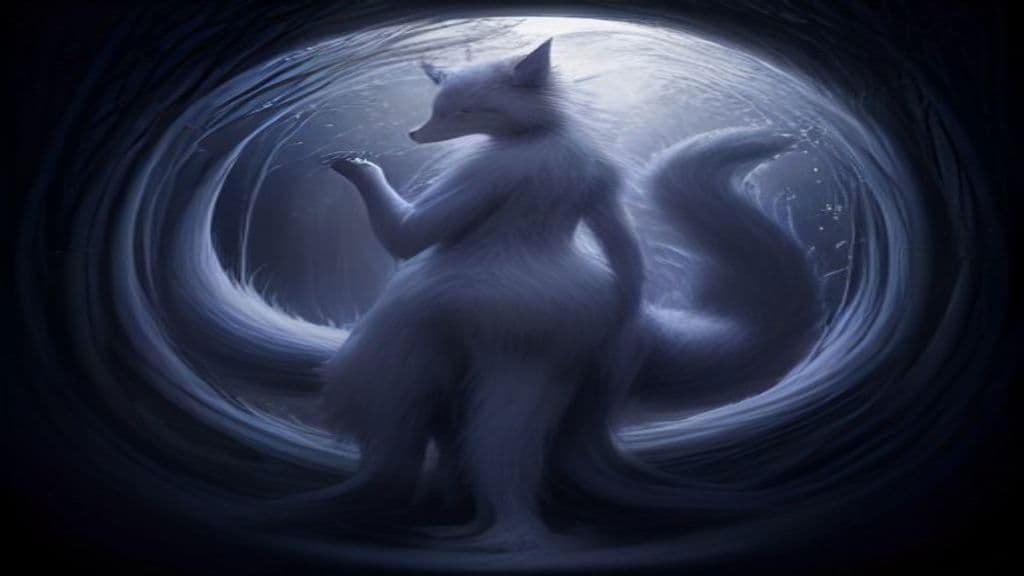
Fox spirits of Japanese mythology — intelligent, long-lived beings who gain additional tails (up to nine) as they age and grow in power. They serve as messengers of the god Inari and as powerful tricksters.

Kiviuq
Greater

Kiviuq

Kiviuq is a pan‑Inuit culture‑hero and eternal wanderer of oral literature whose epic cycle of voyages and encounters with witches, spirits, giants, sea monsters, and cannibals is told across Greenland, Alaska, and the Canadian Arctic. Tales present him as an Inuk hunter‑traveler who survives by skill, tools (kayak, harpoon, dog sled), occasional supernatural events, and cunning; in some regional variants his prolonged life is cosmically significant.

Kivutar
Lesser

Kivutar

Kivutar (also Kiputyttö, Vammatar) is a Finnish underworld-associated female spirit or goddess petitioned in runic songs to take human pains and injuries onto herself and remove illnesses by relocating them into stones, containers, the sea, or by boiling them away.

Kiwa
Primordial

Kiwa

Male divine guardian of the ocean in Māori traditions. (Note: * Power tier should be Ancient, as the sources do not indicate a "primordial" level of power, but rather a deity-level guardian. * Abilities: Add specific abilities mentioned in the source material, s)

Kiyanush
Minor Spirit

Kiyanush

Kiyanush (also spelled Kayanoush, Kayānūš) is a mythological human character in the Persian epic tradition, recorded in Ferdowsi's Shahnameh as a son of Abtin and Faranak and one of the two brothers who assisted Fereydun in the defeat of the tyrant Zahhak.

Klabautermann
Lesser

Klabautermann

A ship-bound household/ship spirit from North Sea and Baltic coastal folklore (Frisian, German, Dutch) that aids sailors and fishermen in work and warns of a ship's doom; normally unseen and helpful, its visible appearance is traditionally an ill omen.

Klagmuhme
Lesser

Klagmuhme

A female supernatural figure in German-speaking folklore who heralds imminent death by wailing and whining; she functions as an omen-figure closely compared to the Irish banshee and appears in varied regional guises across Germanic areas.

Kleobule
Lesser

Kleobule

Kleobule (Ancient Greek: Κλεόβουλη), also rendered Cleobule, is a historical Athenian woman known from classical Athenian legal speeches and later biographical anecdotes about her son, the orator Demosthenes. The surviving references situate her within Athenian family, dowry, and inheritance practices rather than within any supernatural framework.

Kludde
Lesser

Kludde

Kludde is a Flemish legendary tormenting spirit (kwelgeest) presented in modern sources as a shapeshifting, malign presence associated in contemporary accounts with woodlands around the Dender. Source material is fragmentary: descriptions emphasize its role in local storytelling and its capacity to frighten people who seek it out rather than a full traditional taxonomy.

Kneph
Primordial

Kneph

Egyptian god and motif of divinity, representing creation, fertility, and spiritual growth. (Note: - Power tier: Reduce to Greater, as there's no indication of cosmic or deity-level power. - Abilities: Remove mention of specific abilities and behaviors, as source does not support this claim. - Weak)

Knocker
Lesser

Knocker

A small mine-associated spirit from British and American mining folklore, known for producing knocking sounds in underground workings that miners interpreted as warnings or communications. Variants and cognates appear across Cornwall, Devon, Wales, Staffordshire and in American mining communities (Tommyknockers).

Knucker
Greater

Knucker

A type of water dragon in Germanic tradition, said to inhabit knuckerholes in Sussex, England. (Note: 1. Power tier should be changed to Lesser, as the Knucker is described as a local water spirit. 2. Add sensory cues from knuckerholes in Sussex, England (e.g., strange noises, eerie feelings). 3. Note)