Entity Index

A record of the unseen, drawn from world folklore.

7724 entities · page 85 of 129

Knull
Primordial

Knull

Knull is a primordial godlike being from Marvel Comics who predates the current (seventh) iteration of the universe, creator and would-be sovereign of the symbiote race known as the Klyntar, and wielder of the ancient weapon All-Black the Necrosword. He functions as a cosmic antagonist whose aims center on darkness and the destruction or domination of created light.
Kobold
Minor Spirit

Kobold

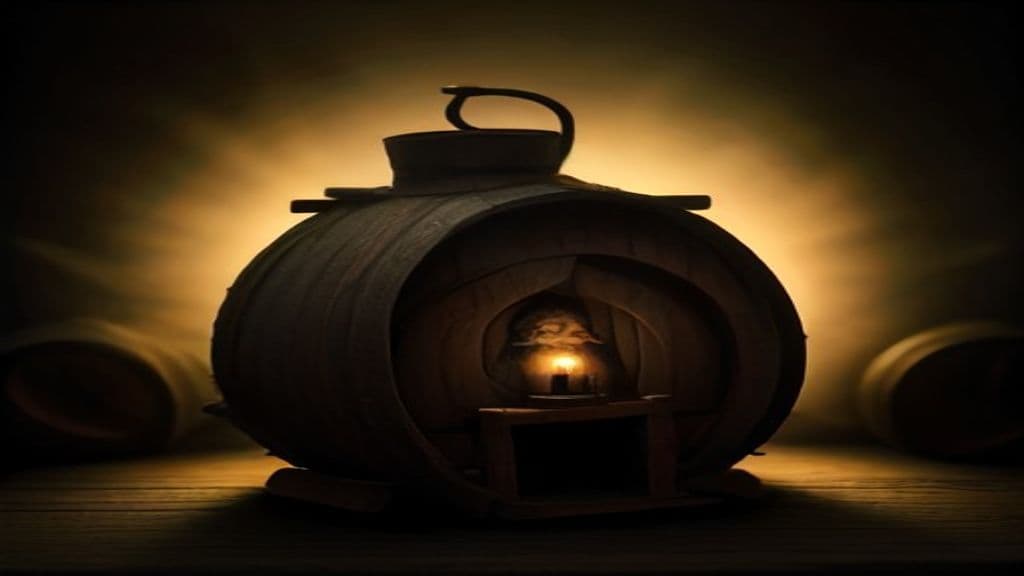
The German household and mine spirit — a mischievous but potentially helpful small being who attaches to a household, bringing luck or disaster depending on how it is treated.

Koka and Vikoka (Hindu tradition)
Lesser

Koka and Vikoka (Hindu tradition)

Asura brothers, twin generals serving their brother Kali in battle against the 10th avatar of Vishnu, Kalki. (Note: - Power tier should be Greater (deity-level strength as twin generals supporting their brother, a powerful deity) - No information about sensory cues or wards and weaknesses; these should be removed -)

Kokabiel
Lesser

Kokabiel

Kokabiel is a named Watcher in the Enochic tradition, whose name means roughly "star of God" and who is associated with astral knowledge. In the Book of Enoch he is listed among the two hundred angels who descended on Mount Hermon and bound themselves by oath, an act that led to the transmission of forbidden knowledge and human corruption.

Kokko
Minor Spirit

Kokko

Kokko is an item name that appears in discussions of Finnish mythology but is not described in the single provided source. The available material situates Kokko within the broader corpus of Finnish pagan folklore without providing specific details about its nature, appearance, or associated practices.

Kokum (Grandmother spirit)
Lesser

Kokum (Grandmother spirit)

No information about Kokum (a grandmother spirit in Algonquin tradition) is present in the single provided source. The supplied source (a Wikipedia entry for Joshua Whitehead's novel Jonny Appleseed) does not mention Kokum, Algonquin beliefs, or any grandmother spirit, so no factual claims about Kokum can be drawn from it.

Kola Sanni Yaka (Sanni yakuma / Daha ata sanniyas)
Lesser

Kola Sanni Yaka (Sanni yakuma / Daha ata sanniyas)

A set of ritual spirits invoked in the Sinhalese Sanni yakuma (Daha ata sanniyas) exorcism; understood as spirit-beings responsible for specific illnesses and addressed through a sequence of 18 masked dances that identify, confront, and banish the afflicting spirits.

Kola kanda
Lesser

Kola kanda

Kola kanda is a traditional Sri Lankan herbal congee (porridge) used as a breakfast food and in folk medicinal practice. Sources provided do not support treating 'Kalu Kandha' as a supernatural being; instead the documented term in the sources is the culinary/medicinal preparation 'Kola kanda'.

Kolanthes (Kolanthes the Child)
Lesser

Kolanthes (Kolanthes the Child)

Kolanthes is a late‑period Egyptian local child deity documented in the Akhmim/Athribis circle (ninth Upper Egyptian nome). Attested in Greek, Demotic and hieroglyphic inscriptions and a hymn, he appears as a member of a local patron triad and is identified with the divine child motif (Horus) and called 'the child of Osiris and Isis'.

Komainu
Lesser

Komainu

Komainu (狛犬) are paired lion- or dog-like guardian statues placed at thresholds of Shinto shrines (and sometimes temples, noble residences, or private homes) in Japan. As apotropaic architectural figures they ward off evil and mark liminal boundaries; their paired 'a-un' mouths symbolize beginning and end.

Komodo dragon (tradition)
Minor Spirit

Komodo dragon (tradition)

The Komodo dragon (Varanus komodoensis) is a real, living species of large monitor lizard endemic to several Indonesian islands. In ethnolinguistic material recorded from the Komodo language the animal is called sebae ('twins'), a name that encodes a local belief tying island people and dragons through a shared spiritual motherhood; beyond this naming note the supplied sources treat the animal primarily in biological, conservation, and museum terms rather than as a spirit or supernatural agent.

Kompira (Konpira / Konpira Gongen)
Lesser

Kompira (Konpira / Konpira Gongen)

Kompira (Konpira, Konpira Gongen) is a locally venerated Japanese protective deity associated primarily with the sea, sailors, and seafaring safety. Centered on the mountain Kotohira in Kagawa Prefecture, the cult is syncretic—embedded in Shinto shrine practice, Shugendō asceticism, and historically described in some texts with Buddhist identifications or foreign-origin narratives.

Komur Han
Lesser

Komur Han

Komur Han is a named underworld functionary in Turkic myth, listed among the nine sons or subordinate 'hans' of Erlik. He is associated symbolically with coal/charcoal and darkness and is described in popular summaries as commanding evil entities and mediating between Erlik and 'dark shamans.'

Konaki-jiji
Lesser

Konaki-jiji

Konaki-jiji (子泣き爺) is a yōkai from Japanese folklore, originating in the mountain regions of Tokushima Prefecture on Shikoku and later recorded in national yōkai collections. It is known for luring compassionate travelers by imitating the cry of an infant and then suddenly becoming a crushing heavy weight that kills the carrier.

Kongamato
Primordial

Kongamato

A pterosaur-like creature said to be a fearsome entity capable of causing large wounds, reportedly seen in the Jiwundu Swamps in western Zambia, Angola, and Democratic Republic of the Congo. (Note: 1. Power tier: Primordial seems too high given the limited abilities described (causing large wounds, aggressive behavior). Lesser would be more plausible. 2. Sensory cues: Add that witnesses report s)

Konohanasakuya-hime
Ancient

Konohanasakuya-hime

A Shinto kami chiefly associated with Mount Fuji and volcanoes, Konohanasakuya-hime is the 'blossom princess' who symbolizes the ephemeral beauty of earthly life and appears in myths that explain human mortality and local miracles. She is venerated at Sengen (Asama) shrines on and around Mount Fuji and figures in narratives of miraculous childbirth, landscape alteration, and healing guidance.

Kopala
Primordial

Kopala

In Georgian tradition, Kopala is a hero or demigod with exceptional strength and strategic thinking, revered in the highlands of Pshavi. (Note: - Power tier: Lesser (Kopala is a demigod/hero, not Primordial) - Abilities: While Kopala's strength and strategic thinking are evident, there's no mention of Kviria's aid surpassing the ogres' throw;)

Korean Creation Narratives
Primordial

Korean Creation Narratives

A category of shamanic stories that recount the mythological beginnings of the universe, including tales from mainland Korea and Jeju Island. (Note: - Power tier should be Ancient (deity-level), as the creation narratives describe mythological beginnings of the universe. - Origin story is not entirely unclear; specific stories from various regions)

Korean Mythological Pantheon
Primordial/Cosmic

Korean Mythological Pantheon

A diverse pantheon of deities and spirits in Korean mythology, worshipped through shamanic rituals. (Note: - Power tier is too high; a Primordial/Cosmic power tier typically implies entities that create or govern the universe, but Korean mythology doesn't describe such roles for its deities. - Abilities an)

Kormos
Lesser

Kormos

Kormos (also Kormoz; Tuvan: кормос; Turkish: Körmöz/Körmös) is a Turkic category of spirit-entities encompassing a range of post-mortem conditions — ancestral or beneficent sky-spirits, wandering suffering souls on earth, and demonic underworld spirits — variously described as helpful, harmful, or ambivalent depending on subtype and allegiance.

Koromodako
Lesser

Koromodako

A coastal yōkai from northern Kyoto Prefecture folklore described as a small octopus-like creature that can expand like a piece of clothing or blanket to enwrap and sink boats and people. The lore is localized to promontory areas of the Tango (Yosa) Peninsula and Wakasa Bay.

Korvac (Michael Korvac)
Greater

Korvac (Michael Korvac)

Michael Korvac is a fictional human technician from the alternate-future Earth-691 in Marvel Comics who is transformed from a cyborg into a near-godlike figure after analyzing Elders' power and absorbing the Power Cosmic. His story centers on attempts to reshape worlds, conflicts with cosmic beings and Earth’s heroes, and a climactic act that restores life as he dies.

Korybantes
Greater

Korybantes

A confraternity of armed, crested ritual dancers attached to the Cybele/Rhea mystery traditions in Phrygia and related Anatolian–Greek cults. They perform drumming, stamping and an armored (pyrrhic) dance used in guardianship myths, male initiation and ecstatic cult practice; ancient authors and modern scholars often confuse or conflate them with nearby ritual groups (Kouretes, Idaean Dactyls, Kabeiroi).

Koschei the Deathless
Greater

Koschei the Deathless

Koschei (also Koshchei, Kashchei), commonly called "the Deathless" or "the Immortal," is an archetypal male antagonist in Russian and wider Slavic folklore. He functions in folk narratives as a legendary villain whose name and legend persist into modern cultural works and references.

Kothar-wa-Khasis
Ancient

Kothar-wa-Khasis

Kothar‑wa‑Khasis is the principal divine craftsman of the Ugaritic pantheon, attested in Late Bronze Age Ugaritic myths and ritual texts. Rendered as “skilled and wise” (or a hendiadys “wise craftsman”), he functions as architect, smith, musician and maker of ritual implements whose works serve other gods in mythic narratives.

Kotharat
Ancient

Kotharat

A collective of Northwest Semitic goddesses attested in Bronze Age texts (chiefly at Ugarit, Mari and Emar) associated with conception, pregnancy, birth and the blessing of marriages; conventionally treated as a heptad and etymologically linked to a Semitic root meaning 'skill' or 'to achieve.'

Koto-furunushi
Minor Spirit

Koto-furunushi

A Japanese tsukumogami: an aged koto that becomes animate and plays enchanting music. Described as a harmless yōkai that rewards long care with benevolent musical animation and may mourn neglect.

Kotoamatsukami
Primordial

Kotoamatsukami

Kotoamatsukami (別天津神; "distinguishing/heavenly kami") is the collective name used in classical Shinto summaries for the first gods who came into existence at the creation of the universe. Described in sources such as the Kojiki and summarized in modern reference works, they are primordial, self-arising heavenly deities who appear in Takamagahara and then largely withdraw from later mythic action.

Koyash
Ancient

Koyash

Koyash is the personified Sun and a solar deity in Turkic and related Turco‑Mongolian cosmologies. Regarded as one of the visible Tenger (heavenly beings), Koyash functions as a life‑giving intermediary whose rays connect Tengri to living spirits and who participates in cosmic creation.

Kraken
Greater

Kraken

A legendary enormous sea monster from northern European (particularly Norwegian) maritime tradition, conceived as a deep‑water, tentacled hazard blamed for pulling down ships; later writers and naturalists often equated it with very large cephalopods (giant squid) or with other medieval sea‑monster names such as the hafgufa.

Krampus
Lesser

Krampus

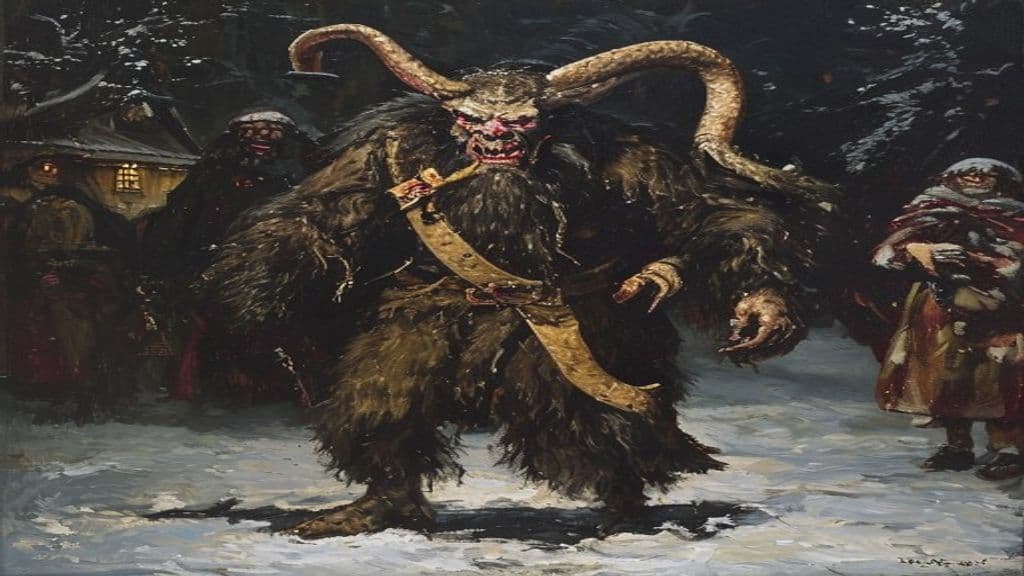
Krampus is a horned, hairy, anthropomorphic figure from Central and Eastern Alpine folk practice who serves as the punitive companion to Saint Nicholas during the winter festival cycle; he appears on Krampusnacht (5 December) and in public Krampuslauf/Perchtenlauf processions to threaten or punish badly behaved children.

Krasue
Lesser

Krasue

A nocturnal Southeast Asian female spirit typically depicted as a floating, disembodied woman's head with internal organs trailing beneath the neck. The figure forms part of a regional cluster of related body-detaching female spirits and is presented in local traditions as a transformed or cursed human who leaves the living body by night to seek food.

Kreios
Ancient

Kreios

Kreios (also attested Crius or Krios) is a figure in classical Greek mythology identified in the supplied sources as one of the Titans, offspring of Uranus (Sky) and Gaia (Earth). The available material provides only genealogical identification and an etymological gloss that the name means "ram."

Krishna
Ancient

Krishna

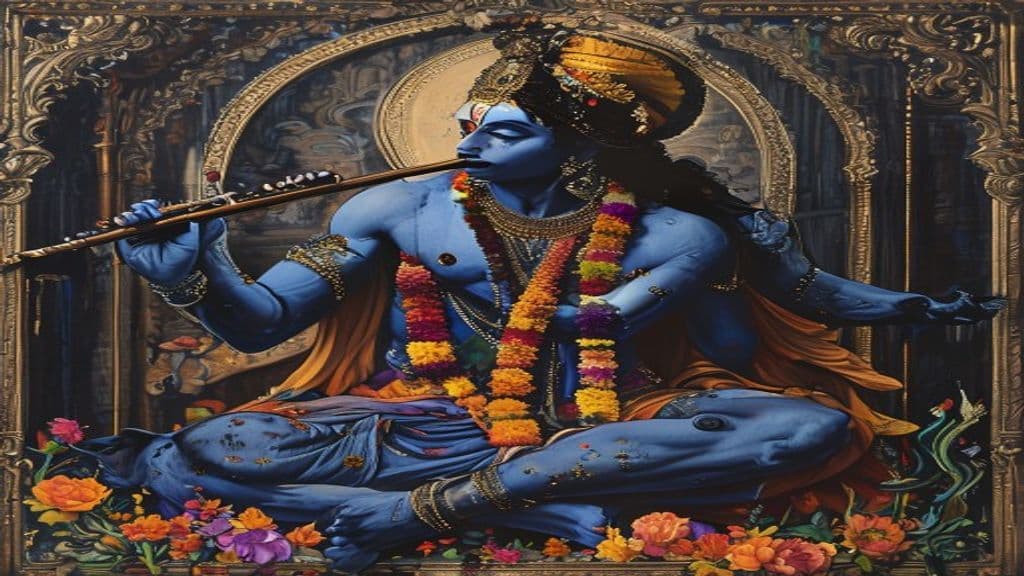
Krishna (Sanskrit: Kṛṣṇa) is a major Hindu deity presented in the supplied sources both as the eighth avatāra of Vishnu and, in many traditions, as the Supreme Being (Svayam Bhagavān). He appears in a range of roles—child, cowherd, lover, charioteer, teacher and divine hero—and his life episodes (Krishna-līlā) are central to bhakti devotion, performance arts, and pilgrimage traditions.

Kriwe
Greater

Kriwe

A chief priest in the old Baltic religion, associated with the neo-pagan movement Romuva. (Note: 1. Power tier should be Primordial since it's a chief priest and the article implies a strong connection to the old Baltic religion. 2. The abilities and behaviors of Kriwe are not explicitly stated, )

Krodhavasa
Lesser

Krodhavasa

Krodhavasa (Sanskrit: Krodhavaśā) is a mythological ancestress in the Puranic/Daksha–Kashyapa genealogies, wife of the sage Kasyapa and mother of a class of ferocious creatures called the Krodhavashas. Her name, derived from krodha (anger, wrath), is used etiologically to explain the ferocious temperament and sharp-toothed nature of certain animals, birds, and fish in epic–Puranic literature.

Kroni
Primordial

Kroni

In Ayyavazhi scripture Kroni (Tamil: குறோணி) is the primordial manifestation of evil: a first-born, cosmic antagonist who is fragmented into six pieces that reappear across successive yukams (ages) as principal evils opposed by the god Mayon (Vishnu) and his avatars.

Kshetrapala
Greater

Kshetrapala

Fierce guardian deity of fields, village boundaries, and agricultural territory — an aspect of Shiva or Bhairava who punishes trespass with epidemic illness and crop failure. Every North Indian village once had a Kshetrapala shrine at its boundary stone; his is the first rite performed before plowing season.

Kuafu (夸父)
Greater

Kuafu (夸父)

Kuafu is a mythic giant in Chinese tradition known for attempting to chase and capture the Sun; his pursuit is used etiologically to explain landscape features (drained rivers, a peach forest, and in some versions a mountain range) and proverbially as an emblem of audacious but ultimately futile striving.

Kubai (Kübey)
Greater

Kubai (Kübey)

Kubai (Turkish: Kübey) is a maternal birth and child-protecting figure in Turkic mythology. Traditionally described as a daughter of Kayra who lives in the Ulukayın (world tree) and draws life-water (Bengisu), she bestows souls, gives healing milk to newborns, eases birth pains, and guards infants until key developmental milestones.

Kubera
Ancient

Kubera

Kubera is the Hindu deity associated with wealth and the lord-king of the semi-divine yakshas, serving as the regent (dikpala) of the north and a protector of the world. His character evolves in textual history from a chief of evil spirits in Vedic sources to a respected lokapala and patron of wealth in later Puranic and epic literature.

Kubikajiri
Lesser

Kubikajiri

Kubikajiri (首かじり) is a head-eating ghost from Japanese folklore described as a headless spirit that haunts graveyards at night seeking and consuming heads of the living or the dead. Its presence is often associated with the smell of fresh blood and with searching graves for its own missing head.

Kubjikā
Ancient

Kubjikā

Kubjikā is the primary goddess of the Kaula Paścimāmnāya (Western transmission) within Kaula/Kaulism tantra, regarded as an aspect of the supreme feminine principle (Devi/Adi Paraśakti/Durga) and the lineage-tutelary śakti of a specific tantric current historically centered in medieval Kashmir and later preserved in secret Newar transmissions in the Kathmandu Valley.

Kuchisake-onna
Greater

Kuchisake-onna

Kuchisake-onna (口裂け女, "mouth-slit woman") is a Japanese urban-legend figure and modern folkloric yōkai/onryō: a mutilated woman who asks victims whether she is beautiful and whose revealed slit mouth leads to killing or mutilation in variant accounts. The legend emerged in the late 1970s and circulates with multiple survival tactics reported in popular sources.

Kui (Māori mythology)
Ancient

Kui (Māori mythology)

Chthonic demigoddess in Māori mythology associated with the underworld and natural world. (Note: * Origin story: none provided in source material * Appearance: no physical description mentioned * Abilities: fertility/protection not explicitly stated; connection to underworld implies association w)

Kuino
Lesser

Kuino

In Guinean (West African) folklore, a kuino is described as an evil spirit whose life or heart is placed in a material object called a sambio; destruction of that sambio by a wizard is said to cause the death of the spirit.

Kuippana (Tapio)
Lesser

Kuippana (Tapio)

Kuippana, also attested as Tapio or Hippa, is a Finnish forest spirit attested in Finnish tradition as the named sovereign or 'King of the Forest.' Hunters in the tradition addressed him ritually before hunts; he is represented as bodily merged with forest vegetation.

Kujata (Arabian Tradition)
Primordial

Kujata (Arabian Tradition)

Cosmic bull supporting the weight of the world and its angelic counterpart, standing on the back of Bahamut in a medieval Muslim cosmography. (Note: 1. Power tier should be Primordial. 2. Additional information about Bahamut's relation to Kujata is needed for the description. 3. The entity's ability to carry additional celestial structures on its )

Kukudh
Greater

Kukudh

Kukudh (definite Kukudhi) is an Albanian undead revenant variably depicted as the restless soul of a miser haunting his house, a disease-carrying female demon, or a chain-borne January corpse in some regional accounts. The term also functions as a moral label for an evil person and as a name for a severe sickness in southern traditions.

Kukulkan
Ancient

Kukulkan

Kukulkan is the Maya Feathered Serpent deity — a plumed serpent figure functioning as a divine animal, a mediator in Classic royal ritual (the Vision Serpent), and a territorial/political divinity in Postclassic Yucatán (notably Chichén Itzá and Mayapán). The cult circulated across the Maya area and appears in archaeological, iconographic, and folkloric sources.

Kuladevata
Lesser

Kuladevata

A kuladevata (Sanskrit: कुलदेवता) is an ancestral tutelary deity in Hinduism and Jainism bound to a specific clan (kula), gotra, family line, or household. Kuladevatas function as lineage guardians invoked for family well‑being, protection, vow‑fulfilment, and communal identity; they are distinct from ishta‑devata (personal chosen deity) and grāmadevatā (village deity).

Kullervo
Greater

Kullervo

Kullervo is a tragic heroic figure from Finnish and Estonian runic-song tradition and the Kalevala epic: a surviving scion of a destroyed clan whose life is marked by enslavement, mistreatment, latent magical powers, vengeance, and self-destruction.

Kuluk / Brahmana Bhoot (unverified occurrence)
Lesser

Kuluk / Brahmana Bhoot (unverified occurrence)

The supplied source materials do not document a Maharashtrian supernatural entity called "Kuluk" or "Brahmana Bhoot." References to the string "Kuluk" in the provided corpus occur only as a geographic place-name (Kuluk Bay), as a brief label in a Wikidata entry, and within an archival item title; none of the supplied sources describe an ancestral village ghost, its attributes, or associated practices.

Kumakatok
Lesser

Kumakatok

The Kumakatok are a trio of robed, hooded door‑knockers in Philippine popular belief who visit houses at night; their knock is regarded as an omen of imminent death for the household, typically affecting the eldest member or someone already ill. Reports situate them chiefly in Luzon and the Visayas and record a vernacular practice of painting white crosses on doors to keep them away.

Kumbhakarna
Greater

Kumbhakarna

Kumbhakarna is a gigantic rakshasa featured in the Hindu epic Ramayana as a younger brother of Ravana, famed for prodigious size, an enormous appetite, great martial prowess, and a supernatural sleep pattern produced by a divine curse/boon; he recognizes Rama's divinity but fights out of loyalty and is slain by divine weapons during the war.

Kumbhāṇḍa
Lesser

Kumbhāṇḍa

Kumbhāṇḍas are a class of dwarfish, misshapen lesser deities or spirit-entities in Buddhist cosmology, commonly listed among the retinues of the Four Great Kings and placed under the Guardian of the South (Virūḍhaka). Their name and traditional imagery link them to gourd- or pot-like bodily forms.

Kumi Lizard
Lesser

Kumi Lizard

A large reptilian creature reported in New Zealand tradition and colonial-era accounts, described in sources as a monitor-like lizard variously treated as an unusually large native reptile or as a creature of local lore. Reported in Māori testimony to European visitors (including Cook-era reports) and in 19th-century sightings, the Kumi occupies a cryptozoological/folkloric position rather than a confirmed zoological species in the cited materials.

Kumu-Honua
Ancient

Kumu-Honua

The first man in Hawaiian creation myth, considered a divine or semi-divine figure. (Note: 1. Power tier should be Primordial, as it's a creator figure and not explicitly described with deity-level powers. 2. Abilities section needs to be rewritten or deleted since there are no specific des)

Kumulipo (Hawaiian creation chant and genealogy)
Primordial

Kumulipo (Hawaiian creation chant and genealogy)

A sacred text holding cultural and historical significance in Hawaiian tradition, recounting the creation of the world and the genealogy of Hawaiian royalty. (Note: 1. Power tier: The Kumulipo does not possess supernatural powers or abilities, making it more likely a Minor Spirit (weak) rather than Primordial. 2. Abilities: Clarify that the Kumulipo's "power" lie)

Kumush
Ancient

Kumush

Kumush is attested in the supplied source as a creator god in Modoc cosmology. The available documentation for this entry is limited to that classificatory label; no further attributes, myths, or local traditions are recorded in the provided source.