Entity Index

A record of the unseen, drawn from world folklore.

7724 entities · page 87 of 129

La Galigo
Primordial

La Galigo

Supernatural being central to the Bugis creation myth, holding significant importance in their cosmology. (Note: - Summary is vague; more specific information about La Galigo's role in the creation myth would improve accuracy. - Power tier: Since there is no mention of "Primordial" abilities, it's unclear what t)

La Guita Xica
Lesser

La Guita Xica

La Guita Xica is a Catalan mule–dragon figure tied to the Patum de Berga Corpus Christi festivities. Historically described as threatening or demonic, twentieth-century traditions reframe it as a protective festival spirit embodied by large effigies that parade and theatrically spit fireworks.

La Llorona
Greater

La Llorona

The Weeping Woman of Mexican folklore — the ghost of a mother who drowned her children and now wanders rivers and lakes, weeping for them and taking other children she finds at night.

La Patasola
Lesser

La Patasola

La Patasola is a legendary one-legged female monstrous figure from Colombian and northern South American folk narrative who inhabits virgin forests and mountains. She appears as a beautiful woman to lure men, then reveals a single leg with a cleaved hoof and a bestial face, and is portrayed as punitive toward men who transgress social or ecological norms.

La Sayona
Lesser

La Sayona

La Sayona is a Venezuelan popular-legend vengeful female spirit who, according to tradition, appears to men who commit infidelity. Originating in an origin-tale about a woman named Casilda, the figure functions as an avenger of wronged women and is associated with a long white underdress (the 'sayona').

La Sirène
Greater

La Sirène

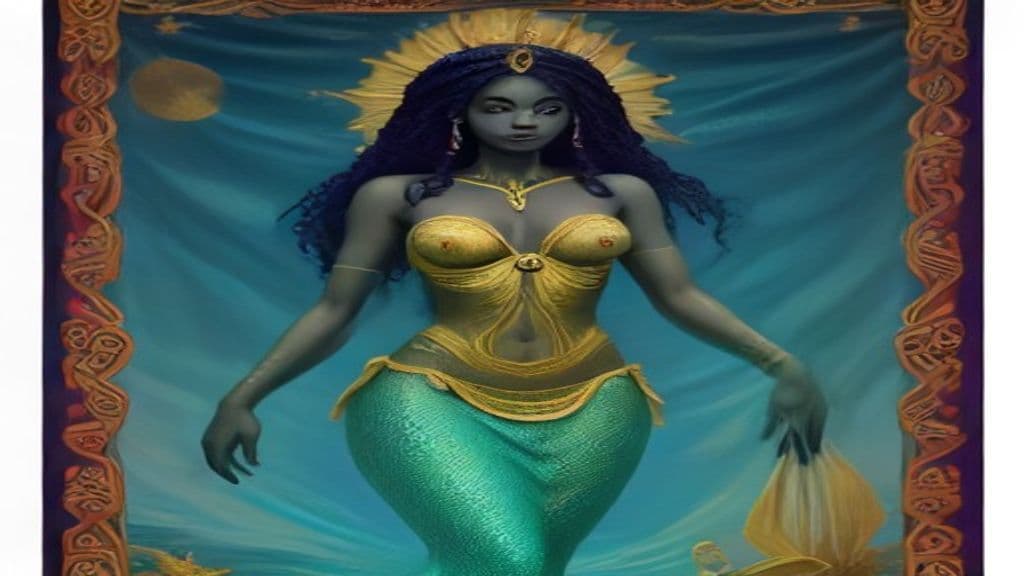
La Sirène is a mermaid-like water spirit (lwa) within Haitian Vodou, represented in ritual art and drapo (Vodou flags) and situated in Vodou pantheon lists alongside other named lwa. She is associated with marine imagery and participates in the visual and religious culture of Haitian Vodou rather than appearing only as a folkloric sea creature.

La Vaca
Lesser

La Vaca

La Vaca is not attested in the supplied sources as a supernatural being. In the provided materials the term appears as a Spanish toponym and lexical item: notably a small wetland in Bogotá (Humedal La Vaca / Techovita), an islet on Lake Nicaragua (Isla La Vaca), and as lexical occurrences in media or personal names. No folkloric, mythological, or supernatural attributes are documented in the sources provided.

Labasu
Lesser

Labasu

Labasu is a Mesopotamian malignant spirit or demon of disease attested in Sumerian–Akkadian textual tradition. It appears in medical, astrological and anti-witchcraft corpora as a named etiological agent for fever and related illnesses and commonly occurs alongside Lamashtu and Ahhazu in ritual lists and expulsions.

Labdacus
Lesser

Labdacus

Labdacus (Ancient Greek: Λάβδακος, Lábdakos) is a legendary/mythic king of Thebes in Greek tradition. He is chiefly significant as a dynastic ancestor — grandson of Cadmus, son of Polydorus, and father of Laius — and appears in variant accounts that place his brief rule and early death within the genealogical history that leads to Oedipus.

Lacedaemon
Lesser

Lacedaemon

Lacedaemon (Lakedaimon, Lacaedemon) is a mythic eponymous king in classical Greek tradition: the legendary founder whose name is given to the region and polis of Lacedaemon/Sparta. He is presented genealogically as a son of Zeus and the Pleiad Taygete and as husband of Sparta, serving an etiological function linking the city to divine ancestry.

Lacritus
Minor Spirit

Lacritus

Lacritus (Ancient Greek: Λάκριτος) is attested in classical sources as a historical sophist from Phaselis, best known from a forensic speech of Demosthenes brought against him concerning a disputed loan; he was a pupil of Isocrates and tutor of Archias of Thurii.

Lacus Curtius
Minor Spirit

Lacus Curtius

The Lacus Curtius is a mysterious, possibly supernatural feature of the Forum Romanum in ancient Rome, characterized by a pit or pool with uncertain origins and significance. (Note: 1. Power tier should be "Primordial" since it's an enigmatic feature with unclear origins, possibly even a natural wonder that predates Roman era. 2. Abilities section should be removed or rephrased, )

Ladon
Lesser

Ladon

Ladon is listed in the provided sources as "one of the dragons in Greek mythology." The available materials are disambiguation-style and also show the name Ladon applied to other, distinct referents (a husband/father figure, a hunting-dog, rivers, and a French commune); the supplied excerpts contain no narrative details about the dragon Ladon.

Lady Eveningstar (Ix Uhu'l Chan Lem)
Lesser

Lady Eveningstar (Ix Uhu'l Chan Lem)

Ix Uhu'l Chan Lem, conventionally nicknamed "Lady Eveningstar" or "Lady Ikʼ Skull" in modern scholarship, is a historical Maya noblewoman (704–751) attested as a wife of Itzamnaaj Bʼahlam III of Yaxchilan and proposed by some scholars to have served as a regent during an interregnum prior to her son Yaxun Bʼalam IV's accession in 752.

Lady Kʼabʼal Xook (Lady Xoc)
Minor Spirit

Lady Kʼabʼal Xook (Lady Xoc)

Lady Kʼabʼal Xook (Lady Xoc) is a historical Late Classic Maya royal woman of Yaxchilán, principal wife and aunt of King Itzamnaaj Bʼalam III (Shield Jaguar). She is best known from three carved lintels (24–26) over the doorway of Structure 23 that depict her performing elite bloodletting rituals that invoke ancestral and supernatural visions used to legitimate dynastic authority.

Lady Meng Jiang
Lesser

Lady Meng Jiang

Lady Meng Jiang (孟姜女; Mèng Jiāng Nǚ) is a legendary Chinese heroine whose sincere mourning for a husband conscripted to build a wall is said in tradition to have caused a portion of the wall to collapse and reveal his remains. Originating in early anecdote and moral-biographical literature, the tale evolved across centuries into popular balladry, temple cult, and local commemorative practices tied to sections of the Great Wall.

Lady Midday (Poludnitsa)
Lesser

Lady Midday (Poludnitsa)

Poludnitsa, often called Lady Midday or Noonwraith in English, is a Slavic field spirit personifying the dangers of the hottest part of summer days. She is associated with grain fields and midday heat and appears in diverse regional tales as a young woman, hag, or girl who harasses or injures people working or resting at noon.

Lady in Red (tradition)
Lesser

Lady in Red (tradition)

The supplied sources do not document a folkloric or supernatural entity called the "Lady in Red." The materials reviewed are a Wikipedia disambiguation page and modern cultural items (a song entry and archive recordings) that use the phrase as titles or labels, not as a recorded traditional spirit or ghost.

Lady of Itzan
Minor Spirit

Lady of Itzan

A historical 7th-century noblewoman associated with the Classic Maya polity of Dos Pilas; recorded in modern scholarship as a woman born in Itzan who married Bʼalaj Chan Kʼawiil and was mother to subsequent Dos Pilas kings. The supplied sources treat her as a dynastic/historical figure rather than a supernatural being.

Lady of the Green Kirtle
Greater

Lady of the Green Kirtle

A fictional witch and antagonist in C. S. Lewis's novel The Silver Chair who rules an underground realm, enslaves Prince Rilian and gnomes by witchcraft, and intends to use them to conquer Narnia. She employs hypnotic illusion and shape‑shifts into a gigantic green serpent before being slain.

Laertes
Lesser

Laertes

Laertes is the mortal father of Odysseus in the Homeric tradition, an aged Ithacan farmer/retired king who embodies ancestral authority, patronymic identity (Odysseus = Laertiades), and appears in the Odyssey's recognition and post-suitors conflict scenes.

Laestrygonians
Greater

Laestrygonians

A tribe of giant, man‑eating people from Homeric Greek myth who attack ships and crews; encountered by Odysseus in the Odyssey (Book 10) and later associated by ancient writers with parts of Sicily and Italy.

Lagamal
Ancient

Lagamal

Lagamal (Akkadian, literally 'no mercy') is a named Mesopotamian divinity chiefly attested at Dilbat, Terqa, and later at Susa (Elam). The deity is associated with the underworld and—in texts from Susa—appears in roles connected with postmortem judgment or an accusatory/adversarial function; Lagamal had temples, cult statues, and local theophoric devotion in multiple cities.

Laguda
Lesser

Laguda

Laguda is an ancient Mesopotamian local deity associated with maritime/coastal waters of the Persian Gulf and a named cult-place (Nēmed-Laguda). He appears in god lists, ritual/incantation corpora, literary compositions, and inophoric personal names from the Kassite and first-millennium periods, where he functions as a named maritime figure within Mesopotamian theological geography.

Laguz
Minor Spirit

Laguz

Laguz is a polyvalent term attested as the name of the runic l‑sign (reconstructed Proto‑Germanic *Laukaz; attested in medieval rune poems as lagu/lögr), used in modern occult rune interpretation as an archetypal symbol of water and transformation, and appropriated in contemporary fantasy (notably the Fire Emblem series) as the name of a sentient, shape‑shifting beast tribe.

Lahamu
Ancient

Lahamu

Lahamu is a minor primordial figure in Mesopotamian cosmological genealogies, attested in variants of the Enuma Elish and in some god-lists as a feminine counterpart to Lahmu and an ancestor in the lineage that leads to the major sky-god Anu. She appears in literary creation contexts rather than as a focus of cultic practice.

Lahar
Lesser

Lahar

Lahar is a Mesopotamian divine personification of sheep and pastoral resources, attested in literary texts (notably the disputation 'Lahar and Ashnan') and in a local theogonic tradition (Theogony of Dunnu). The figure functions as the embodiment of the ewe/ovine economic domain and appears with variable genealogy and gender across sources.

Laieikawai
Primordial

Laieikawai

In Hawaiian mythology, Laieikawai and her twin sister Laʻielohelohe are princesses born in Lāʻie, Oʻahu. (Note: 1. The name 'Laieikawai' should be broken down into 'Lāʻi.e.' (which means "a place" or "land") and '-ka-wai', which roughly translates to 'water' or 'ocean'. 2. Power tier should be changed to Ancien)

Lailah
Greater

Lailah

Lailah is a post-biblical angelic figure in Jewish rabbinic interpretation identified with the word for "night" and associated in later summaries with conception, pregnancy, and nocturnal guardianship. The principal attestation in the provided materials is a Talmudic exegetical remark that personifies the biblical term "night" as an angelic agent.

Laka
Minor Spirit

Laka

A 'popular hero' in Hawaiian mythology, associated with heroic qualities. (Note: * Power tier should be revised to Greater or Ancient since it's referred to as a "popular hero" and is associated with heroic qualities, suggesting a higher power level. * Appearance should state that)

Lakanica
Lesser

Lakanica

A traditional Polish folkloric field or meadow spirit described as a shy, elusive creature that can appear in human female form. It is presented in sources as part of the broader family of Western Slavic nature spirits related to ovily/rusalki but lacks detailed folkloric accounts in the supplied material.

Lake Van Monster
Lesser

Lake Van Monster

A purported large aquatic creature reported in and around Lake Van (eastern Turkey). The figure exists in modern popular reports (late 19th century accounts, a contested 1997 video, and local publicity such as a statue) and is linked in scholarship to older Armenian vishap (water-dragon) imagery that personifies sudden storms on the lake.

Lake Worth Monster
Lesser

Lake Worth Monster

A late-1960s Fort Worth, Texas local legend of a part-man/part-goat creature reported around Lake Worth (Greer Island). The episode centers on a cluster of July 1969 sightings, newspaper reports, a widely circulated photograph, later claims of pranksters, and its subsequent incorporation into local festival culture.

Lake monster
Lesser

Lake monster

A lake monster is a lake-dwelling creature in myth, folklore, and modern reports; treated as a recurring narrative motif (not a single species) that ranges from older kelpie-like horse or serpentine beings to modern reptile/plesiosaur-like sightings such as Nessie, Champ, and Ogopogo.

Lakshmana
Lesser

Lakshmana

Lakshmana is the younger half-brother and devoted attendant of Rama in the Ramayana tradition. Portrayed as an ideal companion and protector during Rama’s fourteen-year exile and the war with Ravana, the Puranas also describe him as an incarnation (avatara) of the serpent Shesha, linking him to the divine order surrounding Vishnu.

Lakshmi
Ancient

Lakshmi

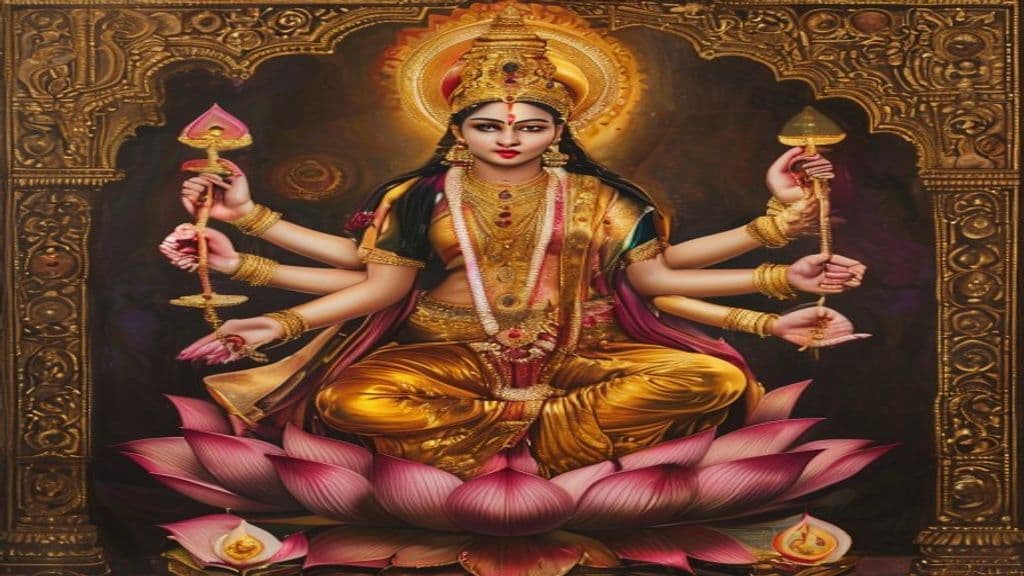
Lakshmi is a principal Hindu goddess who personifies śrī (auspiciousness) and is revered as the giver of fortune, wealth, prosperity, beauty, fertility, sovereignty, and abundance. She is the consort and shakti of Vishnu in Vaishnavism, part of the Tridevi with Parvati and Sarasvati, and is the focus of popular devotional and festival practices such as Lakshmi Puja during Deepavali and Navaratri.

Lalli
Lesser

Lalli

A historical figure from Finnish medieval legend, responsible for killing Bishop Henry in the late 1150s. (Note: - Power tier: Greater (not Lesser), as Lalli's actions have significant historical and cultural impact. - Sensory cues: none mentioned in source material, so should be deleted or clarified. - Weakness)

Lalo-Honua
Primordial

Lalo-Honua

In Hawaiian mythology, Lalo-Honua is considered the 'first woman' and a foundational feminine principle associated with creation. (Note: * The source material only confirms that Lalo-Honua is considered the "first woman", but does not explicitly state a Primordial power tier. * No information about appearance, abilities, sensory cues, )

Lamache
Lesser

Lamache

Lamache is not attested in the supplied source set as a supernatural being; the string 'Lamache' appears only in modern secular contexts (surnames, fictional character names in films, stage/artist names, an institutional brand, and a biological genus variant). No folklore, cosmology, rituals, or spirit descriptions are present in the provided materials.

Lamaria (Georgian Tradition)
Greater

Lamaria (Georgian Tradition)

In Georgian mythology, Lamaria is a goddess associated with the hearth, cattle, women, and fertility of grain fields. (Note: 1. The article states Lamaria is associated with cattle and women, but the source does not specify her association with women, only protecting them during childbirth. 2. Power tier: Less specific abil)

Lamashtu
Greater

Lamashtu

The most feared demoness of ancient Mesopotamia — a divine daughter of Anu who preyed on pregnant women, caused miscarriages, and killed infants by nursing them with venom.

Lamassu
Lesser

Lamassu

Lamassu are protective tutelary beings of ancient Mesopotamia, represented both as a Sumerian mediating goddess (Lama) and later as hybrid monumental guardian figures (human-headed, winged bulls or lions) placed at thresholds, gates, and palaces to protect households and polity.

Lamb of God
Ancient

Lamb of God

A Christological title applied to Jesus (the Christ) within Christian scripture and theology that emphasizes his role as sacrificial redeemer who 'takes away the sin of the world' and, in eschatological texts, as the worthy agent of divine judgment and victory.

Lamia
Lesser

Lamia

In ancient Greek mythology, Lamia is described as a child-eating monster who, in later tradition, came to be regarded as a type of night-haunting spirit or 'daimon'. The supplied sources do not provide a full physical description or detailed mythic genealogy, and some modern fictional portrayals recast her with serpentine features which are not attested in the provided classical summary.

Lamia (Basque mythology)
Primordial

Lamia (Basque mythology)

In Basque mythology, the Lamia is a siren-like creature associated with rivers and seduction. (Note: - Power tier should be adjusted to Ancient (deity-level) or Greater (powerful regional), as there is no indication that Lamia has cosmic powers. - No information on wards, weaknesses, or sensory cues )

Lamiai
Greater

Lamiai

Lamiai (singular Lamia) are a class of malignant, night‑haunting female phantoms in Greek tradition, originally attested as a child‑devouring monster and later generalized into a type of daimon or spectre associated with seduction and the predation of young men and children.

Lamias (Caucasian / Georgian — entry constrained)
Lesser

Lamias (Caucasian / Georgian — entry constrained)

This entry concerns lamia-like female supernatural figures as requested for the Caucasian/Georgian context. The only supplied source discusses the Arthurian 'Lady of the Lake' and contains no direct information about lamias in Georgian or broader Caucasian tradition. The entry therefore records what the supplied source does state, and documents the absence of primary material for Georgian lamias in the provided research.

Lammašaga
Lesser

Lammašaga

Lammašaga (Lam-má-šag-ga) is a Mesopotamian divine attendant (sukkal) and member of the class of protective female spirits called Lamma, chiefly attested as the personal sukkal of the goddess Bau. She appears in Early Dynastic and later sources, is the focus of the hymn conventionally labeled 'Bau A,' and is associated in an astronomical text with the star mulLam-mu (likely Vega).

Lampago
Lesser

Lampago

A heraldic beast depicted with the body of a tiger or lion and the head of a man, used as a charge on coats of arms rather than as an agent of narrative folklore. Best known from English heraldry, notably the arms of the Radford family of Plymstock, Devon.

Lampetia
Lesser

Lampetia

Lampetia is a figure in ancient Greek myth, described as a daughter/attendant of the sun-god Helios who, with her sister Phaethusa, guards Helios's sacred herd on the island Thrinacia. She functions as a divine herdswoman and reporter of transgressions against divine property in Homeric narrative and appears in variant genealogies in later mythography.

Lampus / Lampos
Lesser

Lampus / Lampos

Lampus (Ancient Greek: Λάμπος) is not a single mythic being but a personal name applied across a range of classical Greek mythic figures — human and animal — whose name evokes 'brightness' or 'shine.' Attestations in classical mythographic and epic materials include royal mortals, hounds, and named horses associated with dawn and sun deities and with heroes.

Landvættir
Lesser

Landvættir

Landvættir are place-bound spirits or 'land-beings' in Old Norse and Icelandic tradition whose favor was linked to the fertility and safety of particular locales. Attested in saga literature, law codes, and later folk practice, they are localized guardians or presences dwelling in stones, hills, skerries, and other landscape features and were addressed by offerings and social regulations.

Langsuir
Lesser

Langsuir

A Malay banshee-vampire — the spirit of a woman who died in childbirth, transforming into a beautiful owl-woman who sucks the blood of infants through a hole in the back of her neck.

Langsuyar
Greater

Langsuyar

A female revenant in Malay and related archipelagic traditions said to be the ghost of a woman who died in connection with pregnancy or childbirth. The langsuyar is described variously as a beautiful long‑haired woman or as a floating head with trailing entrails; she is vampiric in behavior, associated with night‑birds and certain trees/ferns, and managed by corpse‑preparations, charms, and exorcistic measures.

Lanka (Hindu tradition)
Greater

Lanka (Hindu tradition)

A city-state and island fortress capital in Hindu epics, ruled by the Rakshasa king Ravana. (Note: - Power tier: Lower than Greater (Lanka is a city-state and island fortress capital, not a powerful regional entity) - Abilities: Specify that Lanka's ruler Ravana has no supernatural powers beyond hu)

Laodamas
Minor Spirit

Laodamas

Laodamas (Ancient Greek Λᾱοδάμᾱς, lit. 'tamer of the people') is a personal name borne by multiple mortal figures in Greek mythic-historical traditions — princes, warriors, and a king — appearing in Theban, Trojan, and Phaeacian narratives rather than as a single supernatural being.

Laodamia
Lesser

Laodamia

Laodamia (Ancient Greek: Λαοδάμεια) is a personal name borne by several mortal women in Greek myth whose stories sometimes intersect with gods, death, and brief post‑mortem visitations. Rather than a single supernatural class, Laodamia functions as an episodic figure in multiple genealogies and heroic narratives (e.g., a Lycian princess, the wife of Protesilaus).

Laodamia of Phylace
Lesser

Laodamia of Phylace

Laodamia of Phylace is a mortal woman in Greek myth, best known as the faithful wife of Protesilaus whose intense grief and devotion prompt the gods to grant her a brief, divinely mediated visit with her dead husband returned from Hades. Her story illustrates human access to the chthonic realm only by exceptional divine pity and emphasizes marital fidelity and mourning.

Laodicus
Minor Spirit

Laodicus

Laodicus (Ancient Greek: Λαόδικος, lit. 'tried by the people') is not a singular supernatural being but a personal name attested for several minor mortal figures in Greek mythic and epic traditions — a genealogical father, a father of a sacrificial victim in the Minotaur cycle, and one of the suitors of Penelope in the Odyssey tradition.

Laomedon
Lesser

Laomedon

Laomedon is a legendary mortal king of Ilium (Troy) in Greek myth. Son of Ilus and grandson of Tros, his refusal to fulfill payments promised to gods (Poseidon and Apollo) and to the hero Heracles leads to divine punishments on Troy and to Heracles' sack of the city.