Entity Index

A record of the unseen, drawn from world folklore.

7724 entities · page 89 of 129

Leviathan
Primordial

Leviathan

A giant sea serpent in Jewish mythology, embodying chaos and serving as a metaphor for a powerful enemy. (Note: - Power tier should be Ancient (Leviathan's abilities are often described as deity-level, such as threatening the damned after their lives are over and being annihilated) - Appearance is not mentioned)

Leyak
Greater

Leyak

A flying head with entrails, targeting pregnant women and newborn children in Balinese folklore. (Note: - Power tier: Primordial (given the cosmic-level abilities of targeting pregnant women and newborn children) - Abilities: The draft only mentions sucking blood, but source material mentions abducting )

Leđan (Slavic tradition)
Ancient

Leđan (Slavic tradition)

An ancient and magical city from Croatian mythology and folklore. (Note: 1. Power tier: downgrade to Greater (since Leđan is described as an "ancient" city, but its magical nature and lack of explicit abilities suggest it may be less powerful than Ancient). 2. Appearance: )

Lha
Greater

Lha

Lha is a Tibetan term used in Buddhist and related Himalayan contexts to denote local or regional deities and divine presences that have been incorporated into the ritual and popular religion of Tibet and neighbouring areas. The category overlaps with indigenous spirits and classical Buddhist beings (devas, yakshas) and functions within ritual life as objects of veneration, territorial sacralization, and protective or beneficent cult practice.

Li Hong (李弘)
Minor Spirit

Li Hong (李弘)

Li Hong (652–675) was a historical Tang dynasty prince and crown prince under Emperor Gaozong. The supplied sources treat him as a historical political figure noted for studiousness, charity, and his early death; they do not document any role for him as a supernatural or eschatological figure in Taoist tradition.

Libat
Lesser

Libat

Libat is the Mandaic name for the planet Venus and one of the Seven (šuba) planetary beings who form part of Ruha's entourage in the Mandaean World of Darkness. Treated both as the astronomical Venus and as an agentive supernatural being, Libat is associated with love and reproduction yet is often framed negatively as a demonic power (daiuia) and sometimes identified with Ruha or her epithets such as Amamit and ʿstira/Estira.

Libya (daughter of Epaphus)
Lesser

Libya (daughter of Epaphus)

A mythic eponymous ancestress in Greek and Roman genealogical tradition: a daughter of Epaphus whose name personifies the land/ethnonym Libya. In some variant sources she is said to be beloved of Poseidon and, in those accounts, mother of progenitors such as Agenor and Belus. Surviving testimonia treat her primarily as an etiological genealogical figure rather than an active cultic or supernatural agent.

Lichas (Spartan)
Greater

Lichas (Spartan)

A mortal human figure in Greek tradition, associated with ancient Sparta. He demonstrated leadership and diplomatic skills during the Peloponnesian War. (Note: 1. Power tier should be Primordial, as Lichas is described as a mortal human figure in Greek tradition with significant impact on historical events. 2. Abilities description can be expanded to include)

Lieaibolmmai
Greater

Lieaibolmmai

Lieaibolmmai (also Leibolmai, Liejbbeålmáj, Leib-Olmai) is a Sami forest deity who rules wild animals and is petitioned by hunters for good fortune. He is associated specifically with alder trees and appears to humans in the form of a bear.

Lietuvēns
Lesser

Lietuvēns

Lietuvēns is a harmful nocturnal spirit from Latvian folk belief: the restless soul of someone who died violently or an unbaptized child, said to ride and strangle sleeping people and domestic animals and to enter houses through small openings.

Life Replacement Narratives (Korean Tradition)
Ancient

Life Replacement Narratives (Korean Tradition)

Shamanic narratives or mythological stories conveying cultural and spiritual significance in Korean regional traditions. (Note: - Power tier should be Primordial (as they convey cultural and spiritual significance at a cosmic level) rather than Ancient. - Abilities should mention that they do not have transformative effects on)

Ligeia
Minor Spirit

Ligeia

Ligeia is the central female figure of Edgar Allan Poe's 1838 short story "Ligeia." Within the story she is portrayed as an extraordinary, raven‑haired intellectual whose intense will and metaphysical learning are suggested as enabling a possible postmortem return; the narrative, however, leaves open psychological explanations (opium‑induced vision, unreliable narrator) and does not present her as a codified folkloric being.

Likho
Lesser

Likho

An anthropomorphized embodiment of bad luck and evil fate in Slavic folktales. Likho appears in narratives as a detachable, transferable force of misfortune—often depicted as a one‑eyed old woman or as an evil male forest goblin—and features in proverbs and cautionary tales that teach avoidance, cunning, or the perils of greed.

Likhoradka
Lesser

Likhoradka

A female spirit in Slavic (particularly Russian) popular belief who personifies fever and sickness. Traditionally portrayed as an agentive being that can possess people or bring disease by touch or kiss; the term likhoradka later lexicalized in modern Russian to mean 'fever'.

Lilaea
Lesser

Lilaea

Lilaea (Ancient Greek: Λίλαια / Lilaia) is attested in classical and modern reference sources as (1) a Naiad — a freshwater nymph of a named spring in Phocis, daughter of the river-god Cephissus — and (2) separately, as the name of a Maenad recorded on a vase painting. The name is also preserved in toponyms (the ancient polis and modern village Lilaea/Lilaia) and in later namesakes (asteroid 213 Lilaea).

Lilin
Lesser

Lilin

Lilin are a class of nocturnal spirit-beings in Jewish and Near Eastern magic and mythic literature, linked etymologically and functionally to Mesopotamian lilû/lilītu traditions and associated with Lilith. They appear in ritual texts and incantation bowls as hostile night spirits that sexually interact with humans, cause terror or affliction, and are subject to binding, sealing, or legal-style annulment rites.

Lilith
Greater

Lilith

Lilith is a feminine night‑spirit in Jewish mythic, magical, and folkloric traditions associated with harmful nocturnal activity, especially threats to sleeping people and infants. The figure appears both as a class of night‑spirits (lilit/lilītu) in Near Eastern demonologies and as an individualized dangerous woman in later medieval Jewish narratives and amulets.

Lilitu / Lilith
Lesser

Lilitu / Lilith

Lilitu (Mesopotamian) and later Lilith (Hebrew/Jewish folklore) are feminine night-associated supernatural figures whose identity shifts between goddess, underworld queen, and demoness across sources. In Mesopotamian iconography (e.g., the Burney Relief) the figure combines divine regalia with nocturnal and avian features; in medieval Jewish folklore a fuller character, Lilith, develops from the Hebrew term lilit attested in Isaiah 34:14.

Lillu (Akkadian)
Minor Spirit

Lillu (Akkadian)

A name attested in modern indices as a Mesopotamian supernatural figure but not supported by direct attestations in the supplied source set; may be related in scholarship and popular literature to the Lilitu/Lilith family of Mesopotamian night- and wind-spirits, though the provided materials do not document the form lillu in primary Akkadian texts.

Lilu (lilû) / Lilītu / Ardat-lilî
Lesser

Lilu (lilû) / Lilītu / Ardat-lilî

A class of Mesopotamian nocturnal spirits or demons (lilû, lilītu, ardat-lilî) thought to arise from the unfulfilled spirits of those who died before marriage or conceiving children; attested in Akkadian magical-medical texts and in Sumerian-Akkadian literature (e.g., the ki-sikil-lil-la-ke of the Gilgamesh cycle).

Lime Tree (Germanic Tradition)
Greater

Lime Tree (Germanic Tradition)

The lime tree is a sacred and symbolic plant in Germanic tradition, associated with protection, peace, and healing. (Note: - Power tier: Primordial (Given its association with protection from harm, evil spirits, or negative energies, which suggests a more cosmic level) - Abilities: Remove "good dreams" as it is not suppor)

Liminal deity (category)
Greater

Liminal deity (category)

A scholarly category of gods and divine figures whose proper sphere is thresholds, borders, and transitions — places and moments where one state gives way to another. The term aggregates culturally specific deities (e.g., Janus, Hecate, Charon, Cheng'huang, Menshen, Jangseung, Bes) that function as guardians, psychopomps, or mediators at crossings of space, time, or condition.

Limnades
Lesser

Limnades

Limnades (Ancient Greek: Λιμνάδες) are classically attested nymphs associated with lakes in ancient Greek literature. They function as the lake-dwelling subgroup within the broader taxonomy of nymphs and are referenced as resident or offspring-attendants of named lake deities such as Bolbe.

Limnaee
Lesser

Limnaee

Limnaee (also rendered Limnaíē or Limnaee) is a type of naiad — a freshwater nymph in Greek tradition — conceived as a female nature-spirit presiding over localized bodies of fresh water such as springs, wells, brooks and fountains. She is presented in sources as a place-bound guardian-personification of a water-site, distinct from river-gods who embody whole rivers.

Limokon
Lesser

Limokon

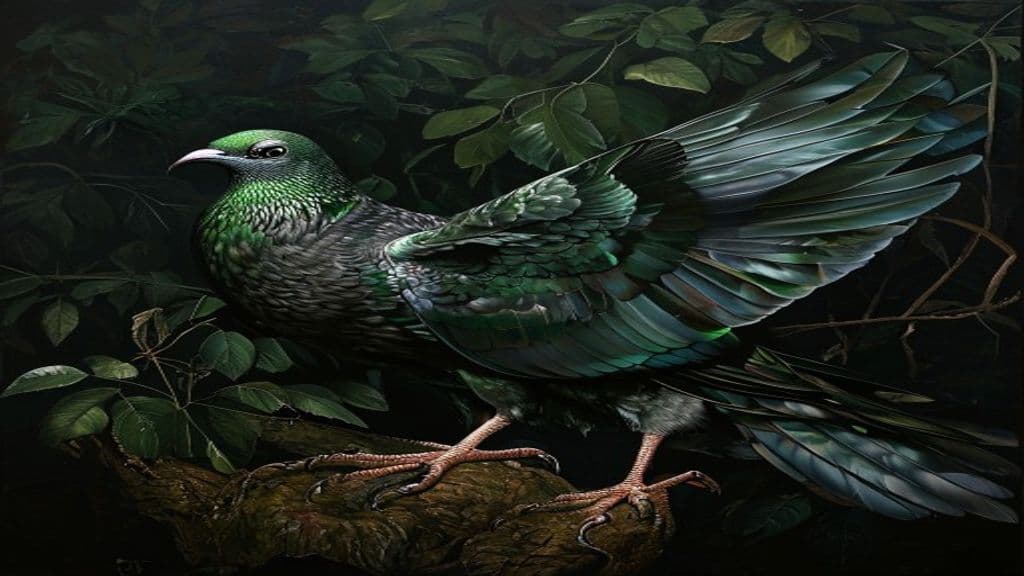
A culturally specific omen bird in Mindanao Philippine traditions (notably Mandaya, Bagobo, and Manobo). Its vocalizations are interpreted as messages from the unseen or spirit world and are used to guide immediate practical decisions; in some Mandaya origin tales it also appears as a primordial, speaking dove involved in creation.

Linda
Minor Spirit

Linda

Linda is attested in the supplied sources only as a female given name and as various modern cultural uses (magazine, sculpture, place names) in Estonia. The provided material contains no description of a mythological or supernatural entity named Linda, nor any folklore traits, powers, or rituals associated with such an entity.

Lindworm
Greater

Lindworm

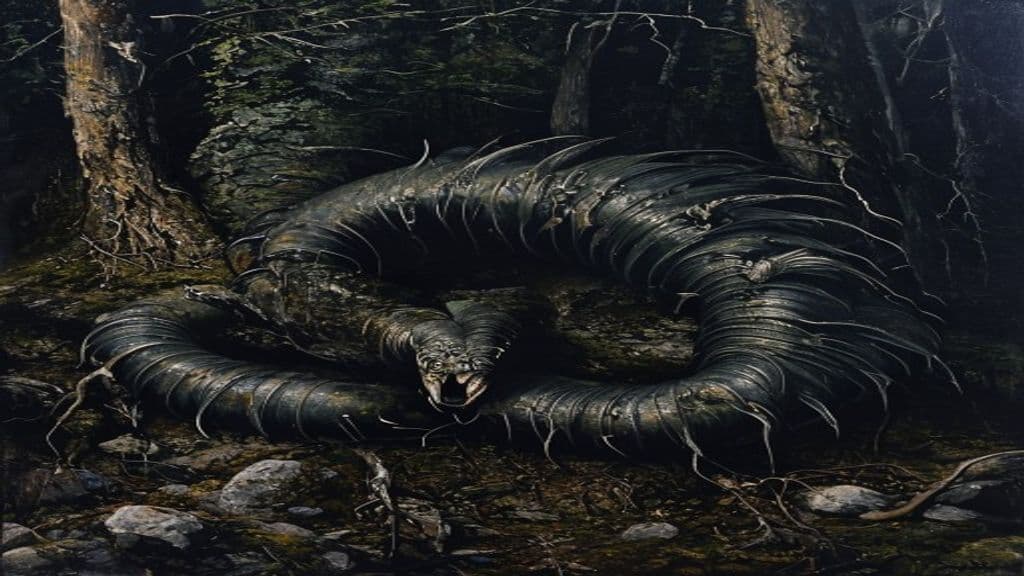
The lindworm is a European serpent/dragon‑like monster attested across Northern, Western and Central Europe. Varieties range from limbless giant forest serpents in Scandinavian lore to two‑limbed or winged dragonic forms in Central European art and legend; it appears in both treasure‑guardian and cursed‑bridegroom narrative cycles.

Lineage of Mahabali
Greater

Lineage of Mahabali

A significant ancestral line within Hindu mythology tracing the descent of the Daitya clan from sage Kashyapa through Raja Bali. (Note: 1. Power tier should be Primordial, as the lineage is tracing back to a sage and a cosmic ancestral line. 2. Add a physical description: None is provided in the sources but typically, Daitya clan memb)

Lingji (灵吉)
Lesser

Lingji (灵吉)

Lingji (灵吉; Língjí) is a fictional Bodhisattva figure invented by Wu Cheng'en in the 16th‑century novel Journey to the West. In the novel he resides on Little Sumeru Mountain and is called upon to subdue wind‑based demons; he provides two named magical items, the Flying Dragon Staff (飞龙杖) and the Wind‑Calming Pill (定风丹), which are used to capture or protect against powerful winds.

Linh Hồn của núi
Minor Spirit

Linh Hồn của núi

Linh Hồn của núi (literally, "spirit/soul of the mountain") is a descriptive label for a mountain spirit in Vietnamese language; the supplied sources contain no specific folkloric descriptions, rituals, or origin stories for an entity explicitly named "Linh Hồn của núi." The phrase participates in a broader Vietnamese cultural field where spirits and memory are topics of artistic and historical reflection, but concrete traditions for this exact name are not present in the provided materials.

Linh hồn (sông) — research notes
Minor Spirit

Linh hồn (sông) — research notes

Notes on the concept of 'linh hồn' as found in three Hồng Hoang (xianxia) excerpts; sources discuss disembodied, transmigrating souls and cosmic mechanisms but do not provide material specifically about Vietnamese river spirits ('linh hồn sông' or 'thủy quỷ').

Linton Worm
Lesser

Linton Worm

A serpent-like monstrous "worm" from Scottish Borders folklore associated with a hollow on Linton Hill; traditionally described as a large wyrm that ravaged people, livestock and crops and was overcome in a heroic confrontation. The legend is presented in sources as medieval in origin and comparable to other British worm/dragon tales such as the Lambton Worm.

Linus of Thrace
Minor Spirit

Linus of Thrace

Linus of Thrace (Λῖνος) is a mythic Greek culture-bringer associated with the origin and exemplification of the linos (a dirge/threnody) and with early lyric song, music-teaching, and the transmission of letters and instruments. He is variously described as son of a Muse and a god and is the focal figure of annual commemorative lament and local tomb-claims in multiple Greek locales.

Lion of Cithaeron
Lesser

Lion of Cithaeron

A place-linked man-eating lion of classical Greek myth associated with Mount Cithaeron and nearby lowlands whose depredations against cattle and people provoke heroic hunts (variously by Heracles or by the local hero Alcathous) and, in some local traditions, political rewards and temple-building as commemoration.

Lion of Judah
Minor Spirit

Lion of Judah

A symbolic and emblematic figure originating in biblical and related traditions that names the tribe/line of Judah, royal legitimacy (notably Ethiopian Solomonic claims), and a messianic title in Christian scripture; later adopted as an emblem of Haile Selassie I and of Rastafari identity. It functions as a cultural-religious emblem rather than a literal supernatural creature in the provided sources.

Lir
Ancient

Lir

Lir (also Ler) is an Old Irish sea-personification and mythic ancestor figure whose name literally means 'sea'. In medieval Irish material he appears as a named figure — notably father of Manannán mac Lir and as a king in the tale The Children of Lir — and functions more as an elemental progenitor linked to the maritime domain than as a consistently individuated deity in surviving excerpts.

Liriope
Minor Spirit

Liriope

Liriope is primarily attested in the supplied sources as (a) a minor mythological figure — a nymph named in Ovid’s Metamorphoses as the mother of Narcissus by the river-god Cephissus — and (b) as a modern scientific name reused for genera in botany and zoology (and for an asteroid). The provided material does not document Liriope as an active, continuing supernatural agent with associated rituals or powers.

Lisin
Greater

Lisin

Lisin is a Mesopotamian deity attested across hymn, lament, incantation, lexical, and astronomical texts. Initially addressed as a mother-goddess in early hymnic material, Lisin later appears in incantation corpora and is reinterpreted in esoteric texts with associations to fire; in the first millennium BCE the name is used for the star Antares.

Little Crown Prince Zhang
Greater

Little Crown Prince Zhang

Little Crown Prince Zhang (小张太子, Xiǎozhāng Tàizǐ) is a literary character from the 16th-century novel Journey to the West who, in regional popular religion of the lower Yangtze, was later syncretized with a local flood-protecting tutelary figure worshipped as the 'Sizhou Zhang Great Sage' (泗州张大圣). He appears in narratives as a martial Buddhist disciple and in ritual contexts as a protector invoked in rites addressing water calamities.

Little giant Roger the firefighter
Minor Spirit

Little giant Roger the firefighter

No coherent folkloric or mythic entity called 'Little giant Roger the firefighter' is documented in the supplied sources. The materials contain scattered, unrelated references (a Wikidata fragment 'Little giant from Barcelona', news about firefighters, and various fiction and biography items) but nothing that establishes a supernatural being by this name.

Little people
Lesser

Little people

A cross-cultural folkloric category of diminutive supernatural or semi-supernatural beings found worldwide. They occupy liminal places near humans (woods, mounds, anthills, mines, shorelines) and range from helpful household spirits to mischievous tricksters or dangerous guardians of places and resources.

Liu Kang
Greater

Liu Kang

Liu Kang (劉康) is a fictional human martial-artist character created as the primary protagonist of the Mortal Kombat video game franchise. Within the series' internal fiction he is most commonly Earthrealm's chosen champion; across different game timelines he is portrayed variously as a living Shaolin-inspired champion, a reanimated corpse, an undead ruler of the Netherrealm in a rebooted continuity, and in Mortal Kombat 11 as a deified fire god.

Living creatures (Bible)
Ancient

Living creatures (Bible)

A class of heavenly beings in Judaeo‑Christian scripture portrayed in prophetic throne‑visions; they appear in Ezekiel's chariot (merkavah) vision and in Revelation's throne scenes, where they function as attendant beings associated with divine presence and worship. In the supplied sources they are described in visionary language and in some treatments portrayed with mixed human and animal imagery.

Lixus
Minor Spirit

Lixus

Lixus (Ancient Greek: Λίξος) is a named figure in Greek mythic genealogies, recorded as an Egyptian prince, one of the sons of King Aegyptus by the naiad Caliadne. He appears in literary name-lists alongside multiple brothers and is otherwise unattested in surviving narrative, cultic, or ritual material in the supplied sources.

Llao
Ancient

Llao

Llao is the underworld spirit in Klamath mythology associated with Mount Mazama and the origin story of Crater Lake. In Klamath narratives he lives beneath the mountain, opposes the sky spirit Skell, and participates in mythic battles that explain geological catastrophe and sacred landscape features.

Lludd Llaw Ereint
Ancient

Lludd Llaw Ereint

Lludd Llaw Ereint ('Lludd of the Silver Hand') is a legendary figure from medieval Welsh tradition presented in the Mabinogion as the ruler of Britain who identifies and remedies three plagues upon the island. Philological and comparative material in the sources connects him to an earlier form Nudd Llaw Ereint and to cognate figures such as Irish Nuada Airgetlám and the Romano‑British Nodens, so he occupies a liminal position between hero‑king and reflex of a pre‑Roman deity.

Loathly Lady
None

Loathly Lady

In Germanic folklore, the Loathly Lady is a narrative device used in medieval literature to convey transformation and redemption. She appears unattractive but becomes desirable upon being approached by a man. (Note: - Power tier: Greater (deity-level abilities not specified, but transformative power implies regional or greater scope) - Appearance: Clarify that physical description is implied to be ugly/unpleasant)

Loch Ness Monster
Lesser

Loch Ness Monster

A persistent anomalous large animal-like presence said to inhabit Loch Ness in the Scottish Highlands, popularly nicknamed 'Nessie'. It occupies a space between older Celtic water-beast motifs and a modern media-amplified cryptid and tourist symbol, with episodic sightings, disputed photographs, and sonar claims since the early 20th century.

Locrus
Lesser

Locrus

Locrus (Ancient Greek: Λοκρός) is not a single consistent supernatural being but a name attached to several mytho-historical figures in Greek tradition who serve as eponymous ancestors/founders of the Locrians or localities; in one tradition a Locrus, after death, appears as a ghost and commands the foundation of a city. Accounts are fragmentary and vary by source.

Lohiʻau
Minor Spirit

Lohiʻau

Lohiʻau (also spelled Lohiau) is a mortal beloved figure in Hawaiian myth whose relationship with the goddesses Pele and Hiʻiaka drives episodes of the Pele–Hiʻiaka cycle. He functions as the human object of desire and the narrative catalyst for Hiʻiaka's quest to bring him to Kīlauea.

Loki
Ancient

Loki

A complex figure in Old Norse myth: son of a jötunn and the female figure Laufey, resident among the Æsir, a shape‑changing trickster whose cunning alternately aids and undermines the gods and who is bound for his role in Baldr's death before breaking free to fight at Ragnarök.

Long Horse (Trevor Henderson)
Lesser

Long Horse (Trevor Henderson)

A fictional creature created by Canadian horror artist Trevor Henderson, depicted as a horse-skull-headed entity with an apparently infinite, highly flexible neck. Unlike many horror creations, it is commonly portrayed in fandom sources as benevolent and protective toward humans.

Longma (龍馬)
Ancient

Longma (龍馬)

The longma is a mythological Chinese dragon-horse: a horse-bodied, dragon-scaled creature (sometimes winged) that appears as a portent, most famously bearing the Hetu (Yellow River chart) from the river to culture-heroes and sage-rulers. It functions as a liminal, quasi-divine sign linking rivers, Heaven, and legitimate rulership in classical Chinese sources.

Longnü (Buddhist Tradition)
Greater

Longnü (Buddhist Tradition)

Companion and acolyte of the bodhisattva Guanyin, associated with salvific aspects. (Note: 1. Power tier should be Ancient, as she is an acolyte and companion of a bodhisattva, implying significant spiritual authority. 2. Add sensory cues (e.g., sound of gentle waves or soft chanting) that )

Lono
Ancient

Lono

Lono is a major Hawaiian akua (deity) associated with fertility, agriculture, rainfall, music, and a season of ritualized peace. He is counted among four principal pre-creation gods in Hawaiian cosmology and is central to the Makahiki festival and seasonal ritual life.

Lord Drinian
Lesser

Lord Drinian

Lord Drinian is a human nobleman and sea-captain in C. S. Lewis's Narnia. He serves as captain of the Dawn Treader under King Caspian X, later becoming a trusted advisor and attendant in the king's later years.

Lorelei
Lesser

Lorelei

Lorelei is both a steep slate rock on the right bank of the River Rhine at Sankt Goarshausen and a literary-derived legendary woman associated with that place; the name (from German lureln + ley) evokes the rock's murmuring/echoing, and 19th‑century poems and songs personified that place as an enchanting woman who distracts boatmen and became a widespread cultural motif.

Lorsch Bee Blessing
Lesser

Lorsch Bee Blessing

A Christian prayer invoking a benevolent entity to bring good health to honey bees and their hives, reflecting Germanic folklore's appreciation for nature and balance. (Note: 1. Power tier should be reassessed, as the entity's influence on bee health and guidance may indicate a Greater power level. 2. The source material does not support the claim that the Lorsch Bee Bless)

Lost Comet
Minor Spirit

Lost Comet

A technical astronomical designation for a previously observed periodic comet that was not detected at its most recently predicted perihelion return. The status reflects observational, dynamical, or physical causes that prevented recovery rather than supernatural agency.

Lotis
Minor Spirit

Lotis

Lotis is a named nymph in Greek mythology attested in modern reference works and represented in visual art, most notably in scenes pairing her with the fertility god Priapus. Surviving references in the supplied sources identify her as a mythic female nature-being but provide no extended ancient narrative, ritual tradition, or etymology.