Entity Index

A record of the unseen, drawn from world folklore.

7724 entities · page 91 of 129

Madurai Veeran
Lesser

Madurai Veeran

Madurai Veeran is presented in the supplied material as a local heroic figure situated within the broader milieu of Tamil/Dravidian village‑deity practice. In the context of Dravidian folk religion he is best understood as a place‑linked guardian figure whose cult participates in the kaaval deivam (village guardian) ecosystem, though the provided sources do not supply detailed primary narratives or ritual texts specific to him.

Mae Nak Phra Khanong
Lesser

Mae Nak Phra Khanong

Mae Nak Phra Khanong is a well-known Thai folktale spirit of a woman named Nak who died in childbirth and remained attached to the living world out of devotion to her husband Mak. The legend places her at Phra Khanong (along Khlong Phra Khanong) and presents her both as a terrifying haunting figure and as an object of local devotion at the Wat Mahabut shrine.

Maelstrom (ride)
None

Maelstrom (ride)

A fictional theme park attraction inspired by Norse mythological concept of maelstroms, located in the Norway Pavilion at Epcot's World Showcase. (Note: 1. Add Power tier: Greater (the ride has immersive abilities that create an environment for visitors, but its scope is limited to a specific location in Epcot) 2. Include sensory cues from source mate)

Maenad
Greater

Maenad

In ancient Greek religion and myth, maenads (Ancient Greek: μαινάδες, mainádes) are the female followers and ritual participants of Dionysus who enter ecstatic frenzy to commune with the god. They function both as organized cult members in Dionysian worship (the thiasus) and as mythic agents through whom Dionysus' power—sometimes restorative, sometimes destructive—is manifest.

Maeon
Lesser

Maeon

Maeon is a recurring personal name in Greek and Roman epic and tragic tradition applied to several distinct mortal figures (Theban, Trojan, Rutulian and other local variants). The name does not denote a single supernatural species but appears across multiple genealogies and episodic narratives where each Maeon’s parentage, role, and fate vary by source.

Mafuiʻe
Ancient

Mafuiʻe

Mafuiʻe is a Samoan subterranean being who dwells in volcanic regions below the earth, keeper of fire and governor of earthquakes; in origin myths a culture-hero (Tiʻitiʻi / Tietie-i-Talaga or Maui-variant) wrests fire from him, and he is left with only one arm.
Magic Carpet (Persian Tradition)
Lesser

Magic Carpet (Persian Tradition)

A legendary carpet in Persian tradition that serves as a form of transportation, carrying its user(s) quickly or instantaneously to their destination. (Note: - Power tier should be Greater, given the ability to defy physical laws and traverse vast distances at will. - Appearance should state "no specific description provided" instead of making an unsubstan)

Magical creatures (The Chronicles of Narnia)
Greater

Magical creatures (The Chronicles of Narnia)

A collective classification for the many non-human sentient and semi-sentient beings that populate C. S. Lewis's fictional world of Narnia. The group includes enlarged talking animals and figures drawn from Greco‑Roman and northern mythic traditions (fauns, centaurs, dryads, etc.) and functions within the books as courtiers, warriors, prophets, and companions to human protagonists.

Magilum Boat
Primordial

Magilum Boat

Supernatural vessel in Mesopotamian tradition associated with the god Ninurta, representing a transitional space between life and death. (Note: * Power tier should be Lesser, as the boat's abilities don't match those of a Primordial entity. * Sensory cues: The sinking of the boat is an implicit cue indicating death has occurred; add this to t)

Magnes
Lesser

Magnes

Magnes (Ancient Greek: Μάγνης, Magnēs, literally 'the magnet') is a personal name applied to several mythic men in the Greek tradition. The name functions chiefly as an eponymic and genealogical marker (not as a recurring supernatural class), most notably for a Thessalian prince who became the eponymous first king of Magnesia; other attestations include a son of Argos and a possibly mythological 'shepherd' later linked to the discovery of magnetism.

Magnes the shepherd
Minor Spirit

Magnes the shepherd

Magnes the shepherd is a legendary etiological figure credited in classical and medieval sources with the discovery of magnetic ore when the iron parts of his shoes and staff adhered to a rock. He functions as an eponymous origin-figure linking a person or place-name to the term for magnet and the recognition of magnetism.

Mago (mother goddess / earth spirit) — entry notes
Lesser

Mago (mother goddess / earth spirit) — entry notes

The provided source is a general discussion of the concept of a 'goddess' and does not supply Korea-specific information about any figure named Mago. This entry records only what the source says about female divine figures in general and explicitly indicates where information about a Korean Mago is absent or uncertain.

Mahalath
Minor Spirit

Mahalath

Mahalath is a named woman in the Hebrew Bible, identified in Genesis as a daughter of Ishmael and a wife of Esau; her significance in the supplied sources is genealogical and social rather than supernatural. Biblical passages and scholarly summaries note variant naming schemes for Esau's wives across Genesis, and some scholars attempt (with dispute) to equate Mahalath with other names appearing in different chapters.

Mahangaatuamatua
Greater

Mahangaatuamatua

A sacred canoe in Māori tradition, associated with spiritual significance and ceremonial importance. (Note: * Power tier: Not specified as Greater; instead, it's implied to be Primordial due to its association with creation/mythological events (first canoe to land in New Zealand). * Appearance: Remove state)

Mahapreta
Greater

Mahapreta

The 'great ghost' — in Bihar and UP folk classification, a Mahapreta is a preta of exceptional power, born from a death involving multiple injustices simultaneously: wrongful killing, incomplete rites, and unresolved family debt combined. It commands lesser spirits and can cause harm across an entire lineage.

Mahasona
Greater

Mahasona

Mahasona (also Maha Sohona, Mahā Sōnā) is a major cemetery-associated spirit in Sinhalese/Sri Lankan folklore described in sources as "the greatest demon" or "god or demon of the cemetery." He is feared as an agent of sudden death and disease and figures prominently in Sinhalese exorcism ceremonies and in ritual mask traditions.

Mahavidya (the Ten Great Wisdoms)
Ancient

Mahavidya (the Ten Great Wisdoms)

The Mahavidya (Sanskrit: Mahāvidyā, "Great Wisdoms") are a canonical group of ten distinct goddesses or facets of the Divine Mother in post‑Puranic Shakta/Tantric traditions. They function as salvific, often paradoxical modes of Adi Parashakti (variously Mahākālī or Tripura Sundarī) and are central to Tantric sādhanā, yogini worship, and cross‑currents with Shaiva, Vaiṣṇava and Vajrayāna Buddhist practices.

Mahd al-Aadiyya
Ancient

Mahd al-Aadiyya

A chronicle character in Arabian tradition, serving as a vessel for conveying divine warning through poetry. (Note: 1. The power tier should be Primordial (as she serves as a vessel for conveying divine warnings from Allah, which would imply a connection to cosmic forces rather than regional or local). 2. Appearanc)

Mahdi
Greater

Mahdi

The Mahdi (Arabic: al‑Mahdī) is an eschatological, messianic figure in Islamic belief expected to appear before the End Times to restore justice and defeat tyranny, often envisaged as acting alongside ʿĪsā (Jesus). In Twelver Shīʿism the Mahdi is identified with the twelfth Imam (Muhammad al‑Mahdī) who entered occultation; in many Sunni accounts he is a future descendant of Muḥammad who will emerge as a reforming leader.

Maheshvara
Ancient

Maheshvara

Maheshvara is a Sanskrit-derived divine name meaning "Great Lord" used in Hindu/Shaiva theology as an epithet of Shiva and, in certain Buddhist commentarial texts, as the name of a powerful deva who presides over the Maheshvara Heaven (the "Great Heaven of Ease"). The figure's theological status differs by tradition: in Shaivism Maheshvara functions as a principal divine identity of Shiva, while in Buddhist cosmologies he is represented as a great sovereign deity within a multi-tiered pantheon.

Maheshvari
Ancient

Maheshvari

Maheshvari is one of the Matrikas (mother-goddesses) in classical Hindu imagination and is identified as the śakti (feminine power-aspect) of the god Śiva (Maheshvara). She appears as a member of the Saptamatrika/Ashtamatrika grouping and is attested in both temple cult contexts and tantric/mantric fragments in the sources provided.

Maheśvara (Sabbalokādhipatī Devā)
Ancient

Maheśvara (Sabbalokādhipatī Devā)

Buddhist deva and teacher of spiritual knowledge, associated with the god Shiva in Hinduism. (Note: 1. Power tier should be Primordial, not Ancient (Maheśvara's association with Shiva and his role as a deva suggest a higher level of power). 2. No information about origin story, appearance, sensory c)

Mahishasura
Greater

Mahishasura

Mahishasura (Sanskrit: महिषासुर, IAST: Mahiṣāsura) is a bovine asura in Hindu tradition, commonly described as a shape‑shifting buffalo‑demon who wages war against the devas and is ultimately slain by a manifested goddess (Durga/Mahishasuramardini). The episode is narrated in the Devi Mahatmya (part of the Markandeya Purana) and is commemorated in festival cycles such as Navaratri and Durga Puja.

Mahsuri
Lesser

Mahsuri

Mahsuri binti Pandak Mayah is a historical‑legendary woman from Pulau Langkawi, Kedah, Malaysia, traditionally said to have been wrongfully executed in the late 18th century; with her dying breath she is said to have cursed Langkawi with seven generations of bad luck. Her tomb, Makam Mahsuri, remains a local memorial and tourist site.

Mahuika
Greater

Mahuika

Mahuika is a Māori fire deity and personified source/keeper of fire in myth, chiefly known for providing the secret of making fire to the culture-hero Māui. She is linked by kinship to other supernatural beings (consort Auahitūroa; children Ngā Mānawa) and appears in etiological narratives including accounts of island formation.

Mahādevī
Primordial

Mahādevī

Mahādevī (Sanskrit: महादेवी, IAST: Mahādevī) is the supreme feminine divinity in Hindu Shakta theological tradition, presented in the cited sources as the primordial feminine principle (Adi Parashakti, Mulaprakrti) who is both the unmanifest absolute (nirguna Brahman) and the manifest goddess (saguna) from whom the universe and other deities proceed.

Mahāgaurī
Greater

Mahāgaurī

Mahāgaurī is the eighth form of the Navadurga in Hindu tradition, a radiant white aspect of the Great Goddess (Mahadevi) associated with purity, serenity, ritual purification and renewal. She is ritually venerated on the eighth day (Ashtami) of Navaratri and appears in mythic narratives as the fair form of Parvati after bathing in the Ganges.

Mahāgaṇapati
Ancient

Mahāgaṇapati

Mahāgaṇapati is a grand, tantric and sectarian form of the Hindu god Gaṇeśa venerated in Ganapatya traditions as a supreme manifestation (Mahā‑Gaṇapati) and incorporated into tantric ritual corpora that include mantra, yantra, kavaca, a stotra and a thousand‑name litany. Tantric texts associate this form with six abhichāra rites used for coercive ends, and Ganapatya doctrine regards him as a pre‑creational and post‑dissolution supreme being who brings forth Brahmā.

Mahākālī
Ancient

Mahākālī

Mahākālī is a powerful goddess-figure in South Asian religious traditions, most prominently in Hindu Shaktism where she embodies great Time/Death and the destructive-transformative power of Shakti. She also appears in some Jain contexts as a protective sasana-devi or yakṣiṇī and appears in tantric, Purānic, and performance literature.

Mahāmāyūrī
Greater

Mahāmāyūrī

Mahāmāyūrī is a bodhisattva and female Wisdom-figure in Mahāyāna and Vajrayāna Buddhism, venerated chiefly as a protective deity whose sutra and mantras are employed in ritual to avert harm and remove afflictions. She is associated with peacock symbolism and appears in temple art and liturgical practice across South and East Asian Buddhist contexts.

Mahāsammata
Greater

Mahāsammata

In Buddhist tradition, Mahāsammata is a ruler elected by farmers according to the principles of Dhamma. (Note: 1. Power tier should be Primordial since the sources describe him as the founder of eleven world monarchs and a figure connected to the origins of Buddhist tradition. 2. Add sensory cues: Since he is )

Mahāsthāmaprāpta
Greater

Mahāsthāmaprāpta

Mahāsthāmaprāpta is a Mahāyāna bodhisattva associated with the Pure Land devotional tradition, commonly represented alongside Amitābha and Avalokiteśvara. His name is glossed in sources as 'arrival of the great strength' or 'one who has attained great power' and he is understood as embodying or representing the power of wisdom.

Mahāvīra
Ancient

Mahāvīra

Mahāvīra (birth name Vardhamāna) is the twenty-fourth and final Tīrthaṅkara of Jainism in the present time cycle, a historical-religious reformer and supreme preacher who revitalized and systematized Jain doctrine and practice. He is venerated as the exemplary Jina (victor) whose life and teachings underpin major Jain rituals, textual traditions, and festivals such as Mahavira Janma Kalyanaka.

Maia
Lesser

Maia

Maia is a figure of ancient Greek myth: the eldest of the seven Pleiades, a mountain-nymph (oread) daughter of Atlas and Pleione traditionally associated with Mount Cyllene in Arcadia, and the mother of the god Hermes. She functions in myths as a maternal and nurturing foster-figure and as an aetiological link between terrestrial narratives and the Pleiades star-cluster.

Maikubi
Lesser

Maikubi

Maikubi is a localized yokai from Manazuru in Kanagawa Prefecture associated in modern sources with maritime misfortune; summaries portray it as a three‑headed sea creature whose presence coincides with shipwrecks and other sea disasters.

Maina
Lesser

Maina

The Maina (also spelled Meena) are an indigenous human group traditionally living along the north bank of the Marañón River in the upper Amazon. Historically they spoke varieties of the Omurano language (many now speak Urarina) and were among the first tribes in the upper Amazon to be evangelized by the Catholic Church, lending their name to colonial jurisdictions such as the province of Mainas.

Maine mac Darthacht
Primordial

Maine mac Darthacht

Primordial entity associated with darkness and light, connected to Celtic mythology's Tuatha Dé Danann pantheon. (Note: 1. "Primordial entity associated with darkness and light" - source material only mentions association with night/darkness, but not explicitly light. 2. Power tier should be reviewed as Maine mac Darth)

Mairu (Basque water spirits)
Greater

Mairu (Basque water spirits)

In Basque mythology, Mairu are a type of water spirit associated with the natural environment and regional folklore. (Note: * Power tier should be Lesser (as they are regional spirits associated with specific areas) * Appearance and Abilities sections need to be filled in based on more detailed source material * Weaknesses)

Maitreya
Ancient

Maitreya

Maitreya (Pali: Metteyya) is the bodhisattva prophesied in Buddhist traditions to be the next fully awakened Buddha who currently resides in Tushita heaven and will be reborn on earth to re-establish the Dharma. In modern esoteric/Theosophical literature he is also depicted as an advanced spiritual teacher in a hidden hierarchy, a distinct framing from the classical Buddhist accounts.

Makara
Lesser

Makara

A legendary aquatic hybrid creature in South Asian (primarily Hindu) tradition, the makara functions as the vehicle (vahana) of water deities, an emblem of Kamadeva, and a pervasive guardian motif in Hindu and Buddhist temple architecture.

Makaradhwaja
Lesser

Makaradhwaja

Makaradhwaja is a figure in regional South Asian Ramayana-derived folk traditions described as an offspring produced when a drop of Hanuman's sweat entered a Makara; he is raised in Patala by the underworld-king Ahiravana and serves as a gatekeeper who confronts Hanuman during a rescue episode. The name is also used independently in Ayurvedic/rasashastra literature for a Kupipakwa herbo‑mineral preparation.

Makedon
Lesser

Makedon

Makedon (Μακεδών; also Makednos, transcribed Macedon) is the eponymous ancestor and founding progenitor of the Makedones (ancient Macedonians) in fragmentary ancient Greek genealogical narratives. He functions as a legendary first man in etiological accounts that explain the origin of the Macedonian ethnonym and identity.

Makuragaeshi
Lesser

Makuragaeshi

A Japanese folkloric phenomenon literally meaning "pillow flip" (枕返し or 反枕), described as a bedside yōkai or nocturnal spirit that comes during sleep to turn over a sleeper's pillow or change the orientation of head and feet. Accounts vary: some depict a small-child or bōzu-like figure (makura-kozō), others describe the effect as produced by the spirit of someone who died in the room, domestic tricksters (zashiki-warashi), animal/tree spirits, or temple-associated apparitions.

Mala'ika
Greater

Mala'ika

Mala'ika are angels — heavenly, created spiritual beings described in the supplied sources as created by God from a luminous origin and primarily known from Qur'anic and later Islamic literature; the provided materials do not supply Coptic-language forms or Coptic-specific folklore details.

Malebranche (Divine Comedy)
Lesser

Malebranche (Divine Comedy)

In Dante Alighieri’s Inferno the Malebranche are a squad of clawed, quarrelsome demons charged with policing Bolgia Five of the Eighth Circle (Malebolge). They act as vulgar, treacherous warders who seize sinners from the boiling pitch, prevent escape, quarrel among themselves, and interact deceptively with Dante and Virgil under the leadership of Malacoda.

Maleficent
Greater

Maleficent

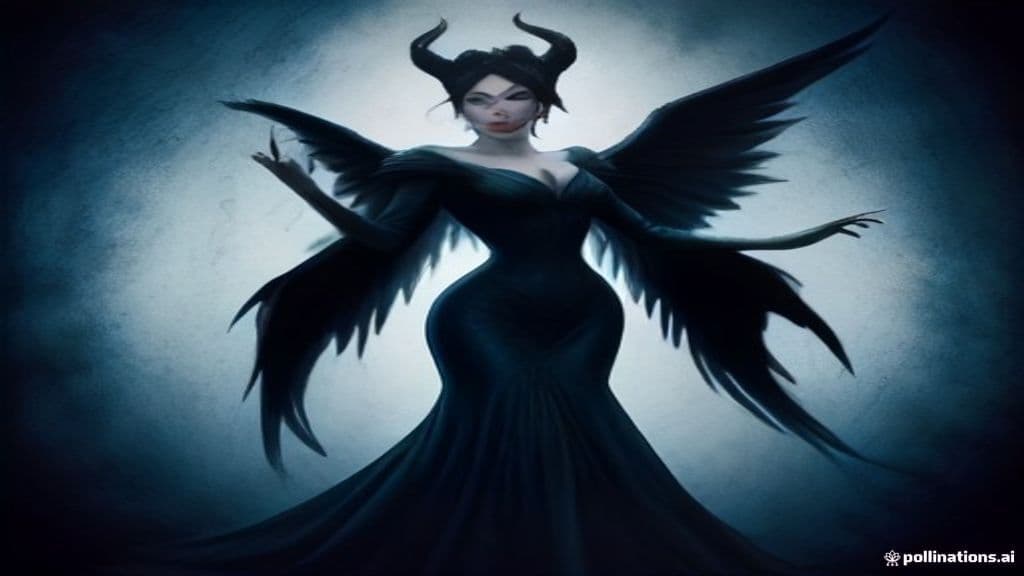
A fictional, high-powered supernatural female figure from modern popular-media retellings of the Sleeping Beauty tale (notably Disney’s 1959 animated film and the 2014 live-action film). She is portrayed as a powerful fairy who issues binding curses, commands animal familiars and forces, and whose motives range from unambiguous wickedness (1959) to a morally complex protector seeking revenge (2014).

Malin Kundang
No Tier

Malin Kundang

A figure from an Indonesian folktale, transformed into stone as a result of his disobedience and retribution. He represents the consequences of one's actions, emphasizing filial piety and obedience. (Note: 1. Power tier should be assigned based on the entity's abilities; since it doesn't have any mentioned abilities, this might not be applicable. 2. Appearance should be added to describe Malin Kundang's)

Maliu
Lesser

Maliu

Maliu is not documented in the provided sources as a supernatural being; rather the token 'Maliu' appears in Samoan-language news meaning 'death'/'to die', as a phrase in Hawaiian song titles and lyrics ('E Maliu Mai'), and as a personal name in Polynesian contexts. No mythological origin, appearance, powers, or rituals associated with a spirit named Maliu are attested in the supplied materials.

Maliyadeva
Ancient

Maliyadeva

Maliyadeva is a revered early Sri Lankan Buddhist monk and arahant preserved in Theravādin chronicle tradition. Credited in summaries of the Mahavamsa with arahantship and high psychic powers (abhiññā), he is associated in local tradition with specific meditation sites and modern commemorations in Sri Lanka.

Malkuth (מַלְכוּת)
Minor Spirit

Malkuth (מַלְכוּת)

Malkuth is the tenth sefirah on the Kabbalistic Tree of Life, the lowest sphere representing the manifest world or 'Kingdom'. It functions as the receiving endpoint of the divine emanations, the realm of material existence (the World of Assiah), and a symbolic locus for humility, embodied action, and the Shekhinah in Zoharic material.

Mallinātha
Lesser

Mallinātha

Two distinct historical/religious figures share the name Mallinātha in the supplied sources: (1) Mallinātha Sūri, a medieval South Indian Sanskrit commentator known for Sanjivani commentaries on the five mahākāvyas; and (2) Mallinātha (Mālliṇātha), the 19th tīrthaṅkara in Jain tradition, listed as a ford-maker born at Mithilā into the Ikshvaku lineage.

Mallku (mountain condor spirit)
Minor Spirit

Mallku (mountain condor spirit)

The provided source does not describe a supernatural Mallku; it records Mallku as an epithet or name used by a modern Bolivian political figure, Felipe Quispe Huanca. There is insufficient information in the source to characterize Mallku as an entity within Inca or Andean cosmology.

Malphas
Greater

Malphas

Malphas is a named infernal officer in early modern European grimoire tradition, described as a high-ranking Great President of Hell who commands forty legions and who appears to conjurers in ritual contexts, most commonly as a raven or, on request, as a hoarse-voiced man.

Malyavan
Lesser

Malyavan

Malyavan is a rākṣasa elder-counsellor in the Rāmāyaṇa tradition, portrayed as a learned adviser versed in polity who urges Rāvaṇa to return Sītā and avoid war with Rāma. He is presented as a member of a leadership family of rākṣasas and later serves as chief counsellor to Vibhīṣaṇa after Rāvaṇa's death in some accounts.

Mam
Ancient

Mam

Mam is a pan‑Maya kinship term used as a respectful appellation for aged ancestral powers and several local elder deities. It names a set of distinct local figures—mountain spirits, earth deities, a ritual straw effigy used during the Uayeb, and particular cult figures such as the Tzutujil Mam Maximón—each tied to specific places, seasons, or social domains.

Mama Huaco
Ancient

Mama Huaco

Mama Huaco is an ancestral female figure in Inca origin narratives who emerges from the cave of Paqariq Tampu/Pacaritambo among the founding siblings; sources describe her as strong and skillful and record an act in which she hurled two golden staffs northward, an action tied to territorial marking in the origin cycle.

Mama Ipacura
Minor Spirit

Mama Ipacura

A name that appears in some modern mentions as a feminine figure associated with Inca origin-cycle narratives; however, the supplied source set contains no primary descriptions or attestations of Mama Ipacura as a distinct, historically documented mythic personage. Most statements about her must therefore be treated as uncertain and extrapolated from the general category of Inca "Mama-" founding women.

Mama Killa (Mama Quilla)
Ancient

Mama Killa (Mama Quilla)

Mama Killa (Quechua: Mama Killa / Mama Quilla, 'Mother Moon') is the Inca lunar goddess and a high-ranking divine figure whose cycles regulated time, ritual order, and aspects of women's social life. She is depicted as a moon-personified woman, served by priestesses, and figured in myths explaining lunar spots and eclipses.

Mama Ocllo
Greater

Mama Ocllo

Deified mother and fertility goddess associated with the establishment of the city of Cusco and foundational power within Inca society. (Note: - Power tier: Primordial (due to her association with creation and foundational power) - Abilities: The text only mentions reproductive and maternal care powers, but it is likely that Mama Ocllo's abi)

Mama Ocllo Coya
Lesser

Mama Ocllo Coya

Mama Ocllo Coya (fl. 1493) is recorded in the supplied sources as a princess and queen consort (Coya) of the Inca Empire, wife of Sapa Inca Topa Inca Yupanqui and mother of Huayna Capac. Described in historical and legendary accounts as politically active and influential, she is credited with a stratagem in a Chimor episode and with decisive action to secure her son's succession.