Entity Index

A record of the unseen, drawn from world folklore.

7724 entities · page 92 of 129

Mama Pacha
Primordial

Mama Pacha

Mama Pacha (commonly Pachamama) is an Andean/Inca deity and cosmological principle representing space-time, a maternal force that sustains life, fertility, and nature. She is presented in sources as an omnipresent, generative principle within Andean worldview rather than a narrowly localized spirit.

Mama Qucha
Ancient

Mama Qucha

Mama Qucha (Mama Cocha) is an Inca water mother deity, personifying the sea and other bodies of water. She functions as guardian of sailors and fishermen, provider of fish and calm seas, and is counted among the principal female elemental mothers in Inca cosmology.

Mama Quilla
Ancient

Mama Quilla

Mama Quilla is the Inca goddess of the moon, described in sources as the ‘third power’ in Inca religion. She is presented as daughter of the creator Viracocha, sister and wife of the sun-god Inti, mother of the culture-heroes Manco Cápac and Mama Uqllu, and associated with marriage, the menstrual cycle, protection of women, and the Inca calendar.

Mama Raua
Lesser

Mama Raua

No attested information about an entity named 'Mama Raua' appears in the provided source set. The supplied materials include Inca mythological figures and Māori archival items, but none mention or describe Mama Raua.

Mama Uqllu
Ancient

Mama Uqllu

Mama Uqllu (Hispanicized Mama Ocllo, Mama Occllo, Mama Okllo) is an Inca mother-figure and culture-founder associated with fertility, marriage, the menstrual cycle, and the transmission of domestic and civilizing arts (weaving, house-building). She is paired with Manco Cápac in foundation myths and appears in variant genealogies as child of either Inti and Mama Killa or of Viracocha and Mama Qucha.

Mamdo Bhoot
Lesser

Mamdo Bhoot

The ghost of a Muslim person in Bengali Hindu folk belief — 'Mamdo' deriving from 'Mahmood.' The Mamdo Bhoot occupies a unique place in Bengal's supernatural taxonomy: a cross-religious ghost in a deeply syncretic tradition, with its own distinctive characteristics and ward practices that follow the ghost's religious tradition rather than the observer's.

Mami Wata
Greater

Mami Wata

Mami Wata is a class of water-associated female supernatural beings and deities found across parts of West, Central, East and Southern Africa and in the African Atlantic diaspora. Associated with wealth, fertility, healing, beauty and possession phenomena, Mami Wata figures combine mermaid-like and snake- or crocodile-linked imagery and have absorbed foreign visual forms through historical contact.

Mamitu
Lesser

Mamitu

Mamitu (variants Mammitum, Mammitu, Mammi) is a Mesopotamian goddess associated with the underworld, attested in god lists, theophoric names, and cultic contexts, most likely worshiped primarily in Kutha. Her importance in the broader Mesopotamian pantheon was minor and localized; she is recorded as consort to underworld gods such as Nergal, Erra, or Meslamtaea in different textual traditions.

Mamlambo
Greater

Mamlambo

Mamlambo is a southern African / Zulu river-deity or water spirit figure described in modern sources as a large, hybrid aquatic monster associated both with deadly attacks attributed by villagers and with themes of seductive wealth similar to Mami Wata. High-profile press reports from 1997 linked mamlambo to multiple deaths at the Mzintlava River near Mount Ayliff in the Eastern Cape.

Mamo (Hawaiʻi mamo / Black mamo)
Minor Spirit

Mamo (Hawaiʻi mamo / Black mamo)

Mamo in the provided sources refers not to a Tibetan spirit but to two extinct Hawaiian nectarivorous finches (Drepanis pacifica — Hawaiʻi mamo; Drepanis funerea — black mamo). The sources document their appearance, ecology, cultural use of feathers, endemic ranges, and last recorded sightings; they do not describe any supernatural or Tibetan entities called Mamo.

Mamu (sleep demon) — note on source absence
Minor Spirit

Mamu (sleep demon) — note on source absence

No supplied sources document an Aboriginal Australian entity called Mamu as a sleep demon. The name 'Mamu' appears in the provided materials in other, unrelated senses (a Mesopotamian dream deity; an Indigenous Australian people; a Queensland place name), but no ethnographic or folkloric account of an Aboriginal sleep demon named Mamu is present in the supplied sources.

Mana (Oceanic cultures)
Primordial

Mana (Oceanic cultures)

A universal, cosmic force in Oceanic cultures that can be intentionally cultivated or possessed, granting supernatural abilities and power. (Note: - Change Power tier from Primordial to Ancient (as Mana is described as a "supernatural force" that can be cultivated or possessed by individuals, suggesting it's deity-level but not cosmic in scope) )

Manaia (legendary chief)
Primordial

Manaia (legendary chief)

In Māori mythology, Manaia is a legendary chief and ancestor figure who led a great fleet to attack Ngātoro-i-rangi in New Zealand. (Note: 1. Power tier: Greater (not Primordial) - as Manaia is an ancestor figure with significant military prowess, but not a cosmic or deity-level being. 2. Abilities: While Manaia exhibited fierce rivalry )

Manananggal
Greater

Manananggal

A terrifying Philippine vampire who severs its own upper body from its lower half at night, sprouting bat wings to fly out and feast on sleeping pregnant women's fetuses.

Manasā
Lesser

Manasā

Manasā is a Hindu goddess associated primarily with snakes, widely worshipped across large parts of India as a protector against snakebite and as a source of fertility and prosperity. In mythic genealogies she is a daughter of the sage Kaśyapa, sister of the nāga king Vasuki, wife of the sage Jaratkaru, and mother of the sage Aṣṭaka/Astika.

Manaul
Greater

Manaul

Manaul is a birdlike mythic figure in multiple Philippine indigenous traditions, variously portrayed as an omen-bearing bird sent by Bathala or Amihan, a king who guides destinies and instigates cosmic conflict, and a rebellious/cosmogonic agent who creates islands.

Manco Cápac
Ancient

Manco Cápac

Manco Cápac is the foundational ancestral figure and culture‑founder of the Inca (Quechua) tradition: remembered as the first ruler (Sapa Inca) and progenitor who, according to origin legends, established Cusco after emerging with Mama Ocllo from Lake Titicaca. Sources treat him variably as mythic ancestor, legitimizing founder, and a possibly historical early ruler.

Mandanu
Lesser

Mandanu

Mandanu (also Madanu) is a Mesopotamian deity primarily attested after the Old Babylonian period who functions as a divine judge and court official in the entourage of the god Marduk. He is associated with judicial functions, temple-topography in Babylon (notably the temple E-rabriri), and appears in god lists and ritual/topographical texts.

Mandavi
Minor Spirit

Mandavi

Mandavi (Sanskrit: Māṇḍavī) is a princess of Videha (Mithila) in the Ramayana tradition, wife of Bharata, and is regarded in some retellings as an incarnation of the shankha (conch shell) of goddess Lakshmi. She functions as an exemplary pativrata (dutiful wife) noted for sacrifice and perseverance and figures in narratives that link Mithila and Ayodhya through dynastic marriage.

Mandodari
Lesser

Mandodari

Mandodari is the principal queen-consort of Rāvaṇa in the Rāmāyaṇa tradition: a beautiful, pious, and morally clear-sighted royal woman of mixed supernatural parentage who functions as a counselor, protector, and ritual exemplar (one of the Pancha-kanyā). Her story appears in multiple regional retellings with variant origin accounts.

Mandrake (plant/tradition)
Lesser

Mandrake (plant/tradition)

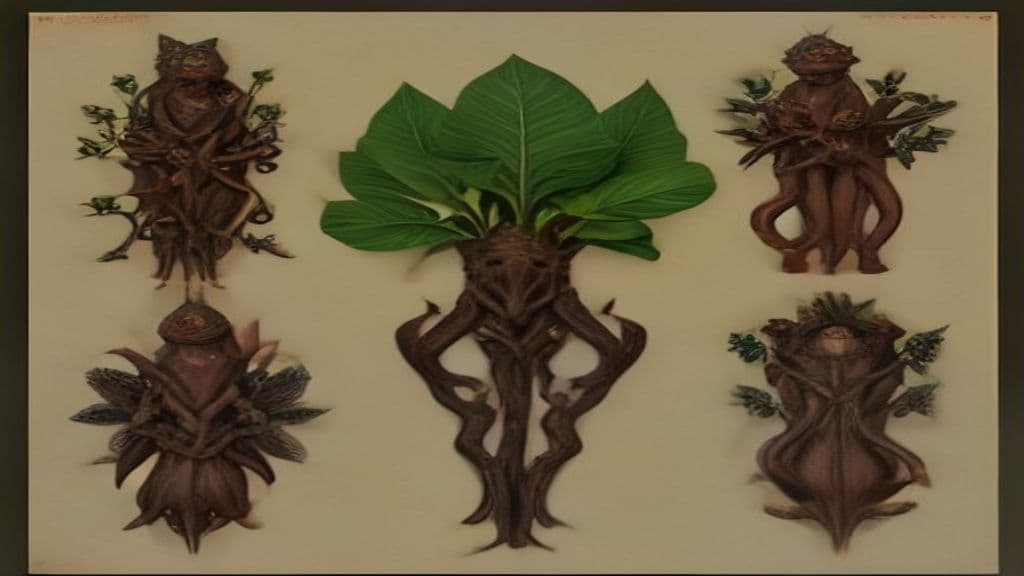
A human-shaped root (primarily Mandragora spp.) treated in classical and later European tradition as a toxic, psychoactive pharmakon whose anthropomorphic form and powerful alkaloids generated ritualized harvesting rules and medicinal prescriptions. It is a botanical substance invested with magical and medical significance rather than an independently volitional spirit in the provided sources.

Manes
Lesser

Manes

In ancient Roman religion the Manes (Latin: mānēs) are a collective class of chthonic divine dead — the subterranean spirits of deceased persons — who are propitiated in household, funerary, and civic rites (e.g., Parentalia, Feralia, and foundation rites involving the lapis manalis). They appear in inscriptions (D.M., Dis Manibus) and literary commentary as an institutionalized category of the dead rather than as a single named being.

Mangindusa
Ancient

Mangindusa

Mangindusa is a deity figure in Tagbanwa (Tagbanuwa) cosmology of Palawan. Sources variably present Mangindusa as a creator or as a high god within a layered indigenous cosmos, but ethnographic reports conflict about the exact status and functions of the figure.

Manibandh Shaktipeeth
Lesser Spirit

Manibandh Shaktipeeth

A sacred site in Hindu tradition associated with the mythological story of Goddess Sati's self-immolation, marking the spot where her wrists are believed to have fallen. (Note: 1. Power tier: Change "Lesser Spirit" to "Primordial" since Manibandh Shaktipeeth is a sacred site associated with the mythological story of Goddess Sati's self-immolation, implying a powerful and cos)

Manipogo
Lesser

Manipogo

Manipogo is a named lake‑monster figure in Manitoba folklore, described in local oral tradition and modern reports as a large serpentine creature inhabiting Lake Manitoba. The modern name was coined in 1960 by analogy with Ogopogo and the creature functions as a regional folkloric emblem referenced in sightings, local media, and community events such as the St. Laurent Manipogo Festival and Manipogo Provincial Park.

Manitou
Ancient

Manitou

Manitou is the pervasive spirit-power in Algonquian/Wabanaki cosmology, variously manifesting as a supreme creator spirit (Gitche Manitou) and as multiple lesser spirits that inhabit persons, animals, places, and natural phenomena. It functions as the animating force of the natural world and the recipient of prayers, songs, and teachings in Wabanaki traditions.

Mannus
Primordial

Mannus

Central figure in Germanic creation myths, entrusted with starting humanity; abilities and characteristics unknown. (Note: 1. Power tier should be Ancient (deity-level) as it's implied that Mannus has a significant role in the creation myth and is entrusted by the gods. 2. No information on appearance, sensory cues, wards)

Manohara
Minor Spirit

Manohara

In Indonesian tradition, Manohara is a kinnari heroine, a supernatural being with characteristics from both humans and birds. Her story appears in Southeast Asian countries and East Asia. (Note: 1. The power tier should be changed to Lesser (local spirit), as being mentioned in a Buddhist scripture and stone reliefs suggests a more significant level of influence or worship. 2. There is no inf)

Manseren Manggoendi
Primordial

Manseren Manggoendi

A mythical hero from the Numfor-Biak region of Papua, Indonesia, associated with world recreation and transformation. (Note: * Power tier: Should be Ancient (deity-level) instead of Primordial (cosmic), as there's no indication that Manseren Manggoendi has cosmic-level powers. * Abilities: Clarify or expand on what "signifi)

Manthara
Greater

Manthara

A Dayan witch of approximately 400 years — named for the scheming Manthara of the Ramayana, her power has shifted from seduction to manipulation, able to bend the fates of entire families through whispered influence.

Mantineus
Lesser

Mantineus

Mantineus (Greek: Μαντινεύς) is a mythic human figure of ancient Greek tradition: an Arcadian prince, one of the fifty sons of King Lycaon, and an eponymous founder-figure credited with the origin of the city Mantineia. He appears in the Lycaon cycle as a member of a household punished by Zeus for sacrilege and is also preserved in local foundation-memory and inscriptions linking the name to civic places.

Manto (daughter of Teiresias)
Lesser

Manto (daughter of Teiresias)

Manto is a named figure in classical mythological lists identified in the supplied sources as a daughter of the seer Teiresias. The provided materials record her genealogical identity but do not supply narratives, descriptions, or ritual material concerning her.

Manzat
Ancient

Manzat

Manzat is a Mesopotamian and Elamite goddess personifying the rainbow, attested in Mesopotamian god-lists and Elamite royal and temple inscriptions; she is associated with heavenly phenomena and the prosperity of cities and had cultic standing in Middle Elamite temple contexts.

Mara
Lesser

Mara

The nightmare spirit of Northern European tradition who rides sleeping people at night, causing suffocation, terror, and the sensation of an invisible weight on the chest.

Mara
Lesser

Mara

A nocturnal malevolent spirit in Germanic and Slavic folk belief that sits on or 'rides' sleepers' chests to produce nightmares and the sensations associated with sleep paralysis. Frequently depicted as female and possessing magical abilities such as shapeshifting, the mara functions as an agentive folk explanation for oppressive nocturnal experiences.

Mara (Iza)
Minor Spirit

Mara (Iza)

Mara (Iza) is a geographic feature — a left-bank tributary of the river Iza in northern Romania. The supplied sources document it as a physical river with measured length, basin area, and a noted tributary; no supernatural or folkloric being named "Mara (Iza)" is attested in the provided materials.

Mara (Tagin)
Lesser

Mara (Tagin)

Mara (also rendered Mra or Mura) is an ethnonym for a human subgroup of the Tagin (Na) peoples of Arunachal Pradesh, India. Attested sources describe the Mara as inhabitants of Limeking in Upper Subansiri (just south of Taksing), with cultural ties to the indigenous Donyi Polo religion and considerable Tibetan Buddhist influence; the supplied corpus contains no documentation of a supernatural being named Mara within Tagin belief.

Mara Jade
Greater

Mara Jade

Mara Jade is a fictional human character from the Star Wars Expanded Universe (Legends). Introduced in Timothy Zahn's Thrawn trilogy, she is introduced as the Emperor's Hand (an operative for Palpatine), later a smuggler and ultimately a Force-sensitive Jedi who becomes Luke Skywalker's wife and, after her death in later Legends continuity, appears as a Force spirit.
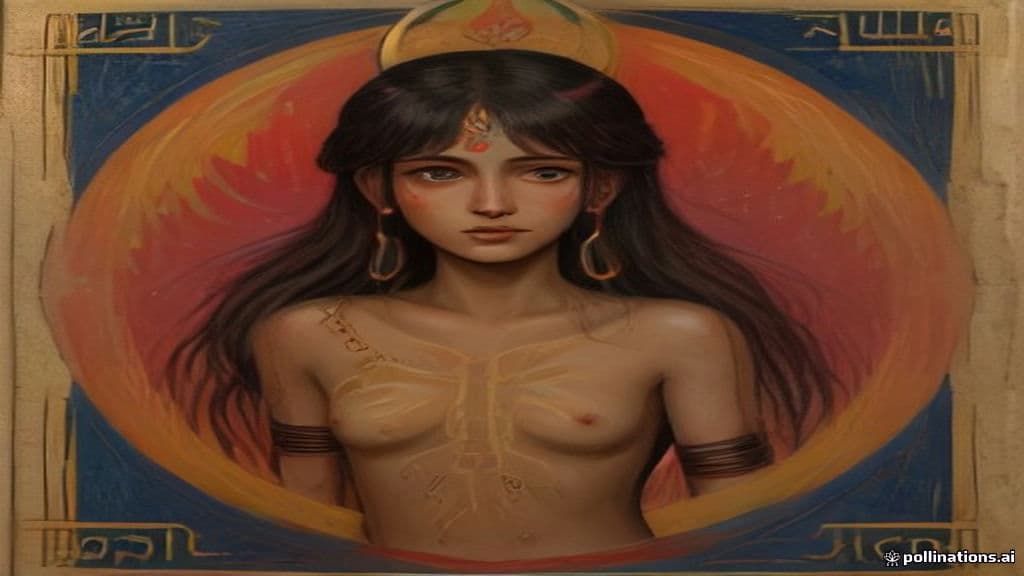
Marassa (Marassas, Marassa Jumeaux)
Ancient

Marassa (Marassas, Marassa Jumeaux)

In Haitian Vodou the Marassa (Marassas, Marassa Jumeaux) are described as divine twins: childlike yet presented as older than other loa and as personifications of core moral and cosmological principles. Sources characterize them as paradoxical 'children mysteries' who synthesize aspects of the loa and are linked to love, truth, justice, reason, and astronomic‑astrological learning.

Marbas
Lesser

Marbas

Marbas is a named entry in Western goetic grimoire lists (Ars Goetia and related demonological catalogues) and the name has been reused in various modern secular contexts (music, companies, fiction). The supplied sources do not provide primary folkloric narratives, physical descriptions, or detailed ritual material for Marbas.

Marchosias
Greater

Marchosias

Marchosias is a named marquis-level spirit from the Goetic grimoire tradition, depicted as a martial, lupine, fire-breathing being who commands legions and can be summoned and bound by ceremonial conjuration. Modern sources reinterpret Marchosias variously as a dangerous ally or narrative combatant in fiction and games.

Marduk
Ancient

Marduk

Marduk is the chief deity of Babylon in Mesopotamian religion who, in canonical texts such as the Enūma Eliš and hymns, is elevated to a supreme god-king associated with creation, justice, water, agriculture, magic and medicine. Historically his prominence grew alongside Babylonian political power from sparse early attestations to a leading position in the second millennium BCE and later astral association with Jupiter.

Mare (folklore)
Lesser

Mare (folklore)

A nocturnal malicious spirit from Germanic and neighboring Slavic popular belief that afflicts sleepers and animals by 'riding' or pressing on chests, producing nightmares, sleep‑suffocation, night‑sweats, and exhausted animals. The mare overlaps with related Germanic night‑beings (alp, Mahr, Trute/Drude) and appears in varied regional tale forms and household practices.

Mares of Diomedes
Greater

Mares of Diomedes

A herd of man-eating horses belonging to the Thracian chieftain Diomedes, famed as the eighth labour of Heracles. They are monstrous animals whose carnivorous habit and violence against guests make them a canonical threat in Greek heroic narrative.

Margot la fée
Greater

Margot la fée

A vernacular class-name in Breton and Mayenne folklore for a type of powerful, territorial earthly fairy associated with the land, subterranean riches, megalithic monuments, and ambivalent dealings with humans. The category is traditionally linked in local imagination to Morgana (Morgan le Fay) and, more distantly and tentatively, to an aspect of the Earth Mother.

Maria Cacao
Lesser

Maria Cacao

A localized Visayan diwata associated with Mount Lantoy (Argao, Cebu) and with nearby cacao cultivation; traditionally depicted as a female mountain/plant spirit who travels by a golden boat along the mountain's river and whose movements are invoked to explain floods and broken bridges. Contemporary variants add a soul‑harvesting/ punitive role in post‑disaster rumors.

Maria Sinukuan
Greater

Maria Sinukuan

Maria (Mariang) Sinukuan is a Kapampangan mountain diwata associated with Mount Arayat who, in oral tradition and later folklore, oversees the mountain's abundance, aids villagers in need, and punishes greed. The figure is also linked in local narratives to an earlier pre‑colonial deity known as Aring (Apúng) Sinukuan, a solar/war god; sources describe a Spanish‑era reshaping that introduced the Marian honorific and a feminized diwata form in later tradition.

Mariamman
Greater

Mariamman

Mariamman is a South Indian village mother-goddess venerated chiefly as a bringer of rain and as a protector against epidemic pustular fevers (historically smallpox, chicken pox, cholera). Rooted in Dravidian folk religion, she is often identified with pan-Indian Shakti figures (Parvati, Durga, Kali) and functions as a kaval deivam (village guardian deity).

Maricha
Greater

Maricha

Maricha (Sanskrit: मारीच, Mārīca) is a rakshasha in the Ramayana narrative who, with his family, terrorizes sages and sacrificial rites and later takes the form of a golden deer to help Ravana abduct Sita. He is variously depicted as a cursed forest-dweller, a shape‑changer, a sorcerer, and — after an encounter with Rama — briefly as an ascetic devotee.

Marid
Ancient

Marid

The most powerful class of jinn in Islamic tradition — beings of the sea, associated with the deep ocean, storms, and the granting of wishes at terrible cost. The classic genie of the Arabian Nights.
Marmennill
Lesser

Marmennill

A sea-associated humanoid figure in Icelandic and broader Scandinavian tradition, attested chiefly in saga contexts as an otherworldly being accidentally caught by fishermen and notable for revealing hidden knowledge and prophesying events. Primary medieval attestations emphasize its role as an informant and its laughter at human folly rather than a consistent anatomical description.

Marozi
Minor Spirit

Marozi

The marozi is a name given in early 20th‑century Kenyan naturalist reports to purportedly spotted adult lions—lion-like felids retaining rosette-like juvenile markings and occurring at unusually high elevations in the Aberdare Mountains and Kinangop Plateau. Sources treat the marozi as a taxonomic puzzle or regional morph rather than a supernatural being.

Marpessa
Lesser

Marpessa

Marpessa (Ancient Greek: Μάρπησσα, romanized Márpēssa) is a personal and place name in Greek myth and local memory applied to several distinct mortal figures — an Aetolian princess, an Amazon queen (Marpesia), a Theban woman linked to the Seven against Thebes, a Tegean woman who led city defense, and a toponym on Paros. Sources treat these as discrete legendary/historical-personal identities rather than as a single supernatural being.

Marraco (Gegants del Clot)
Lesser

Marraco (Gegants del Clot)

The Marraco is a dragon or frightening creature in Catalan myth associated with the city of Lleida, described in sources as possessing a mouth wide enough to swallow a human whole and commonly invoked in tales told to frighten children.

Mars
Ancient

Mars

Mars is the ancient Roman god of war who also functions as an agricultural guardian; a chief civic deity of early Rome, he is described as the son of Jupiter and Juno and is commonly equated with the Greek Ares while retaining distinct Roman agrarian aspects.

Marsyas
Lesser

Marsyas

Marsyas is a satyr/silenus of Phrygian myth celebrated as an expert aulos-player who challenges Apollo and is ultimately punished (flayed) for that contest. He is associated with springs and rivers around Celaenae/Kelainai and with older chthonic/Mother-Goddess cultic strands (Rhea/Cybele) in Greek tradition.

Marty Hopkirk
Lesser

Marty Hopkirk

Marty Hopkirk is a fictional deceased private detective who remains on the earthly plane in incorporeal form and continues to interact socially and professionally with the living. Introduced in the 1969–70 television series Randall and Hopkirk (Deceased) and revisited in a 2000 revival, Marty functions as a persistent ghostly partner who aids investigations while being constrained by the narrative's afterlife rules.

Marukos
Lesser

Marukos

Marukos is an Ilocano legendary place-bound spirit associated with river crossings and dried riverbed shrublands; tales portray it as a stern, often disembodied old-man voice that waylays large traveling groups, causing disorientation and eventual drowning by flash floods. Stories function as cautionary narratives about observing local norms and the hazards of crossing rivers.

Maruts
Ancient

Maruts

A troop of Vedic storm-deities portrayed as violent, young warrior-gods associated with thunder, lightning, cloud-splitting and rain; they act as a martial retinue attendant to higher gods (notably Indra) and are variably described as offspring of Rudra and Prisni or, in later tradition, born from Diti.

Marzanna
Ancient

Marzanna

Marzanna (Polish form of Morana/Morė/Mara) is a pre-Christian Slavic seasonal goddess/personification representing winter, decay, and the death-aspect of the vegetation cycle. Her ritual 'death'—commonly enacted by destroying a humanlike effigy—marks the communal transition from winter to spring and is paired in tradition with separate spring figures (e.g., Vesna, Lada, Kostroma).