Entity Index

A record of the unseen, drawn from world folklore.

7724 entities · page 94 of 129

Melantheia (Melanthea)
Lesser

Melantheia (Melanthea)

Melantheia (also Melanthea or Melanthia) is a personal name borne by multiple mythological women in ancient Greek tradition. The attestations record her as daughter of either Deucalion or the river-god Alpheus and as mother, in differing accounts, of figures such as Melainis and Eirene; her significance in the sources is genealogical and etiological, linking lineages and place-names.

Melantho
Lesser

Melantho

Melantho (Ancient Greek: Μελανθώ) is a personal name borne by multiple women in Greek mythic tradition: a Phthian princess variously linked to Deucalion and Pyrrha and to the birth of Delphus, an Argive queen married to Criasus, and a disloyal maid in the household of Penelope. The name is also reused in modern contexts (a role in Fauré’s Pénélope and as the species epithet Solenocera melantho).

Melchizedek
Lesser

Melchizedek

A brief biblical royal‑priest figure described in Genesis as 'king of Salem' and 'priest of El Elyon' (the Most High). He blesses Abraham, brings out bread and wine, and is later invoked in Jewish and Christian traditions as a typological precedent for legitimate priesthood and tithing.

Melchom
Lesser

Melchom

Melchom (also attested as Milcom, Moloch, Melech) is named in Judeo-Christian prophetic literature as the Ammonite idolic 'king' associated with possession of the Israelite tract of Gad; later Christian demonological tradition (via works such as Collin de Plancy's Dictionnaire Infernal as summarized in modern reference sources) recasts Melchom as a lesser infernal spirit with a bureaucratic office in Hell.

Meleager
Lesser

Meleager

Meleager is a named mortal hero of ancient Greek myth, a prince of Calydon famed as the leader and host of the Calydonian boar hunt. His life is bound to a prophesied household token (a charred piece of wood), his actions precipitate family conflict and metamorphosis, and he is remembered in local cult at Calydon and in epic and Hellenistic literary traditions.

Meleagrids
Lesser

Meleagrids

In classical Greek myth the Meleagrids are the sisters (or daughters) of the hero Meleager who, mourning his death, were transformed by Artemis into guineafowl and transferred to the island of Leros, where the birds were kept in a shrine and treated as sacral, not to be eaten.

Melete
Greater

Melete

Melete (Ancient Greek: Μελέτη) is one of the original triad of Boeotian Muses—Aoide (song), Melete (practice/contemplation), and Mneme (memory)—personified in ancient Greek cultic contexts as the principle of practice, meditation, or rehearsal necessary for poetic and musical performance.

Melia
Lesser

Melia

Melia is a mythic nymph figure in ancient Greek tradition, presented in some sources as an Oceanid or local naiad consort of the river-god Inachus and as a cultic/genealogical mother linked to Argive and Theban origin myths.

Meliae
Lesser

Meliae

The Meliae (Μελίαι / Μελιάδες) are a class of Greek tree-nymphs associated specifically with ash trees. In Hesiod they are described as earth-born beings produced from the drops of Uranus's blood on Gaia and are linked in myth to the origins of a Bronze Age generation and to caregiving roles in early divine history.

Meliboea
Lesser

Meliboea

Meliboea (Ancient Greek: Μελίβοια) is a personal name borne by multiple mythic women in classical Greek tradition: chiefly two Oceanid nymphs (an Arcadian/Okeanid of Mount Kyllene and a Syrian Oceanid loved by the river-god Orontes), a Niobid who survives the slaughter and becomes known as Chloris, and several mortal/eponymous heroines associated with places such as Ephesus and the Thessalian town Meliboea. The name functions across local genealogies and foundation stories rather than indicating a single coherent supernatural entity.

Meliboea of Ephesus
Lesser

Meliboea of Ephesus

Meliboea of Ephesus is a mortal maiden in Greek myth whose love-story with a youth named Alexis is presented as an aetiology explaining the Ephesian cult epithets of Aphrodite Automate and Epidaetia. The surviving account (recorded in later commentarial literature, cited via Servius) recounts her failed suicide, flight to a boat that sailed by divine will, and the subsequent foundation of a temple in thanksgiving.

Melinoë
Lesser

Melinoë

Melinoë is an Orphic/Hellenistic chthonic female divinity invoked in Orphic hymnody and late antique magical practice. She is associated with the underworld (born at the mouth of the Cocytus), nocturnal apparitions, and disturbance of the living mind, and appears in ritual petitions and on at least one inscribed bronze magical tablet.

Melion
Lesser

Melion

Melion is the named protagonist of a late twelfth–early thirteenth‑century Breton lai who is a knight in King Arthur's service and who, by means of a magical ring, is transformed into a wolf, lives among wolves and at Arthur's court in lupine form, and is ultimately restored to human shape.

Melite
Lesser

Melite

Melite is a water-associated female figure in Greek myth recorded in multiple, variable traditions: a Nereid (daughter of Nereus and Doris) often glossed as 'the Nereid of the calm seas', a local naiad associated in some accounts with Mount Melite/Phaeacia, and an eponymous heroine of the Athenian deme Melite (daughter of Apollo or Myrmex). She functions mainly as a named sea-nymph/personification and local eponym rather than a figure with an extensive individual mythology.

Mellified Man
Primordial

Mellified Man

A medicinal substance created by steeping a human cadaver in honey. (Note: * Power tier should be Lesser (given it's a medicinal substance created by humans) rather than Primordial. * Abilities should reflect that Mellified Man has no supernatural or paranormal abilities, bu)

Melpomene
Ancient

Melpomene

Melpomene is one of the Nine Muses of ancient Greek tradition, the personified patron of tragic song and dramatic poetry. Daughter of Zeus and Mnemosyne, she is invoked in literary contexts for tragic composition and is commonly represented with tragic mask and buskins.

Melqart
Ancient

Melqart

Melqart is the principal tutelary deity of the Phoenician city of Tyre, venerated as the city's divine patron, protector of its colonies, and a central figure in Phoenician/Punic civic religion. He is associated in the sources with an annual 'awakening' festival often interpreted as a dying-and‑rising motif, and his name was invoked to sanction oaths and protect settlements.

Meme (Memesaga)
Lesser

Meme (Memesaga)

Meme, also called Memesaga in modern summaries, is a named Mesopotamian goddess attested in secondary literature as a local caregiver/healing figure who was later assimilated with the major medicine goddess Gula. She is counted among a network of Mesopotamian medicine goddesses alongside Gula, Ninisina, Ninkarrak, Nintinugga and Bau.

Memnon
Greater

Memnon

Memnon is a semi-divine heroic king of Aethiopia in Greek epic tradition, son of Tithonus and the dawn-goddess Eos, who comes to Troy with vast forces, kills Antilochus, wounds Achilles, and is slain by Achilles; later traditions vary about divine honors after his death and metamorphoses of his followers.

Memphis (wife of Epaphus)
Minor Spirit

Memphis (wife of Epaphus)

Memphis is a mythological woman in Greek tradition, described as a daughter of the river-god Nilus, the wife of Epaphus, and the mother of Libya. She functions primarily as an eponymous ancestress: through marriage and maternity she is tied to the foundation and naming of the Egyptian city Memphis in Greek-origin narratives.

Mendeis
Minor Spirit

Mendeis

Mendeis (Ancient Greek: Μενδέις) is a Thracian nymph in Greek mythic genealogies, presented as consort to the local king Sithon and mother of the princess Pallene. She functions primarily as a place-linked maternal figure anchoring lineage and toponymy in regional legend.

Menehune
Lesser

Menehune

Menehune are a Hawaiian tradition of very small, secretive forest- and valley‑dwelling people credited in folklore with exceptional night‑time craftsmanship (fishponds, heiau, roads, etc.). Scholarly sources debate whether they reflect an earlier population, a social category (Tahitian manahune), or a post‑contact myth fused with European small‑folk motifs.

Menelaus
Minor Spirit

Menelaus

Menelaus is a mytho-historical king of Sparta in the Greek epic tradition, husband of Helen and a leader in the Trojan War cycle. He appears in Homeric epic (Iliad, Odyssey) and many later literary retellings and traditions; he is portrayed as a mortal royal figure whose fortunes are affected by divine intervention.

Menelik I
Ancient

Menelik I

Legendary first Emperor of Ethiopia and ancestral founder of the Solomonic dynasty who, in Ethiopian tradition, links Ethiopian monarchy to the biblical House of David through descent from King Solomon and the Queen of Sheba. Central to his narrative is the transfer or removal of the Ark of the Covenant to Ethiopia and the establishment of a sacred custodial tradition around it.

Menemachus
Minor Spirit

Menemachus

Menemachus is not a mythological being in the supplied sources but a personal name with two distinct attestations: (1) a historical Greek physician (Greek: Μενέμαχος) of the Methodic school, active in the 2nd century CE and cited by later medical authors; and (2) a taxonomic usage recorded on Wikidata as a genus of insects. Neither source treats Menemachus as supernatural.

Menes
Ancient

Menes

Historical figure and pharaoh of ancient Egypt, credited with unifying Upper and Lower Egypt. (Note: * Power tier: Should be Primordial, not Ancient (Historical figure and pharaoh, not a deity-level entity) * Abilities: The text does not support the claim that Menes' unification had a "profound impac)

Menestheus
Lesser

Menestheus

Menestheus (Ancient Greek: Μενεσθεύς) is a legendary Athenian king of the heroic age, recorded in Greek epic and mythographic tradition as the ruler of Athens during the Trojan War who led ships to Troy and later settled at Melos.

Meng Po (Lady of Forgetfulness)
Lesser

Meng Po (Lady of Forgetfulness)

Meng Po (孟婆; Mèng Pó, literally 'Old Lady Meng') is a deity-like underworld official in Chinese folk religion who administers a brew—the Five Flavored Soup (迷魂汤; míhúntāng, 'waters of oblivion')—to newly dead souls on the Bridge of Oblivion so they forget prior lives before reincarnation.

Menglöð
Lesser

Menglöð

Menglöð is an Old Norse supernatural female figure attested in the poem-cycle Svipdagsmál as the guarded maiden whom the hero Svipdagr seeks to woo and wed. She resides in an enchanted hall protected by a giant sentinel, dogs, a clay wall and a wall of fire; surviving sources present her mainly in this narrative-ritual context rather than as a fully articulated cultic deity.

Mengues / Mengue
Lesser

Mengues / Mengue

The term 'Mengues' (also attested as 'Mengue') is documented in the provided sources only as an onomastic item — a surname, a village toponym in Cameroon, and as a name/title used in Spanish-language and contemporary artistic works. The sources contain no evidence that 'Mengues' denotes a supernatural or folkloric entity.

Menhit
Ancient

Menhit

Menhit (also Menhyt, Menchit) is a Nubian-origin lioness war goddess incorporated into Egyptian religion as a martial tutelary and solar-associated deity. She is commonly depicted as a lioness bearing a solar disk and the uraeus and is linked in myth to the Eye of Ra tradition and to royal protective iconography.

Menippe
Lesser

Menippe

Menippe (Ancient Greek: Μενίππη) is a name borne by multiple female figures in Greek mythic genealogies: attested as an Oceanid, as a Nereid, as a Thessalian Naiad of the river Peneios, and as one of the Coronidian maidens (a daughter of Orion paired with Metioche). The attestations are catalogic and local rather than a single unified biography.

Menka
Lesser

Menka

A Dayan witch who has survived approximately 200 years — the first named threshold, when her glamour is at its most potent and her seductive powers allow her to pass freely among the living.

Menninkäinen
Greater

Menninkäinen

A mischievous, goblin-like spirit in Finnish mythology that guards treasures and enjoys riddles and games of dominance. (Note: 1. Power tier: Lower to Primordial or Ancient, given the description of guarding treasures and enjoying games of dominance. 2. Origin story: Remove "originally described as spirits that lived in isola)

Menoeceus
Minor Spirit

Menoeceus

Menoeceus is an Ancient Greek personal name borne by two principal figures in classical literature: a Theban noble connected with the Seven against Thebes cycle whose voluntary death is recounted as obedience to an oracle, and the addressee of Epicurus's didactic "Letter to Menoeceus." The name functions in mythic-civic and philosophical registers rather than as a supernatural being.

Menoetius
Ancient

Menoetius

Menoetius (Greek: Μενοίτιος / Μενοίτης) is a name applied to multiple figures in ancient Greek narrative traditions: a second‑generation Titan associated with hubristic violent force and punished in the Titanomachy; a chthonic herdsman (Menoetes) who guards Hades’ cattle and wrestles Heracles during the twelfth labor; and a mortal of Opus counted among the Argonauts and father of Patroclus. The shared name carries an etymological sense of 'doomed might.'

Menreiki
Lesser

Menreiki

Menreiki (面霊気) is a mask-associated yōkai recorded in the Edo-period compendium Gazu Hyakki Tsurezure Bukuro (1781). Classical sources describe it as a monster composed of Gigaku masks; modern popular culture has expanded the motif into characters and narratives that emphasize masks as repositories of emotion or as instruments of coercion.

Menshen (門神)
Lesser

Menshen (門神)

Menshen, or "door gods," are paired guardian deities in Chinese popular religion and related practices placed at thresholds to repel harmful influences and encourage beneficial ones. They appear as images, tablets, or statues affixed to doors and gates and are commonly replaced each Chinese New Year as part of household renewal.

Mentor
Minor Spirit

Mentor

Mentor is a secular social role: a person who provides guidance, teaching, influence or patronage to a less experienced person (a mentee). In the provided sources it is treated as an interpersonal and professional relationship rather than a mythic or supernatural being.

Mephistopheles
Greater

Mephistopheles

Mephistopheles is the named infernal agent of the Faust tradition who functions as Hell's messenger, tempter, and negotiator of pacts for human souls. Originating in early modern literary treatments of the Faust legend, he appears across chapbooks, Marlowe's drama and Goethe's Faust as a mutable, often ironic devil-figure rather than as a pre-existing element of ritual demonology.

Mercury (mythology)
Greater

Mercury (mythology)

In the provided sources, "Mercury" appears primarily as a polyvalent modern label; the only mythological sense explicitly listed is as a Roman deity on a disambiguation page. The supplied materials do not contain descriptive, ritual, or ethnographic information about Mercury as a mythic being.

Mergen
Ancient

Mergen

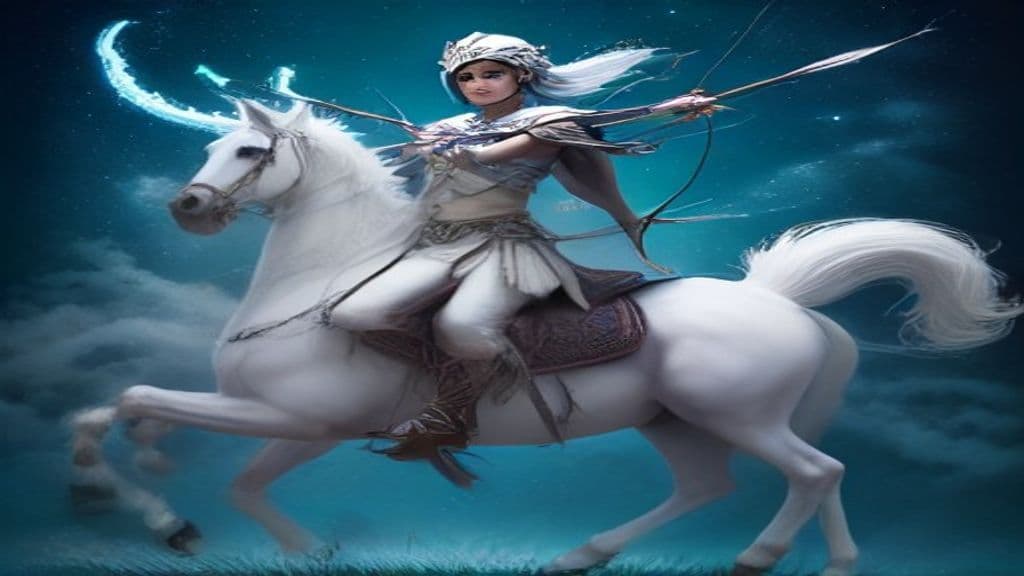
Mergen is a Turkic sky deity associated with wisdom, intelligence, abundance, and skilled marksmanship. He is presented in Turkic cosmology as a son of Kayra, brother of Ulgan, and as dwelling on the seventh level of the sky; iconographically he is linked to a white horse, the color white, and the image of a young helmeted archer.

Meriones
Lesser

Meriones

Meriones is a mortal Cretan hero of the Trojan War cycle in Greek epic tradition, known as a skilled warrior, charioteer and companion of Idomeneus. He appears in Homeric rosters and narratives (notably the Iliad) and was traditionally associated with a hero-tomb and local cult at Knossos (Cnosus).

Mermaid
Greater

Mermaid

An aquatic folkloric being with the head and upper body of a female human and the tail of a fish, appearing across many cultures as both omen of maritime danger and occasional benefactor or romantic partner to humans.

Merman
Lesser

Merman

A male sea‑humanoid figure, typically described as human above the waist and fish‑like below, attested across Greek, Norse/Icelandic, Mesopotamian‑influenced, and early modern sources as mythic sea‑beings, transformed humans, or catalogued maritime curiosities.

Mermerus
Lesser

Mermerus

Mermerus is a mortal figure in Greek mythic genealogies, most commonly named as one of the two sons of Jason and Medea (paired with Pheres) whose fate figures in the Medea domestic tragedy. The name also appears independently in other epic contexts (notably as a minor Trojan warrior killed in battle) and in fragmentary/local genealogical notes linking a Mermerus into royal lines.

Mermerus and Pheres
Lesser

Mermerus and Pheres

Mermerus and Pheres are the named sons of Jason and Medea in Greek myth. Sources present them as mortal children whose deaths are variably attributed either to Medea herself, to hostile Corinthians, or (in one variant) to an accident (Mermerus killed by a lioness), with these variants serving differing narrative and local-topographical purposes.

Meropes (Greek)
Greater

Meropes (Greek)

Mythological beings mentioned in the Ancient Greek epic poem Meropis, fighting alongside Heracles against Asteron. (Note: * Power tier should be Lesser or Minor Spirit (no clear indication of regional power), but more likely Minor Spirit given their role alongside Heracles. * Abilities statement is too vague; consider re)

Merops
Lesser

Merops

Merops is a personal name borne by multiple mortal figures in Greek myth—kings, fathers, and local rulers—appearing across genealogical, foundation, and metamorphosis-related traditions rather than as a single consistent supernatural species.

Merrow
Lesser

Merrow

A sea-being of Irish/Celtic folklore, the Merrow (Hiberno-English) denotes a class of half-human marine supernatural persons — often female 'sea-maidens' and uglier male counterparts — capable of interaction and occasional intermarriage with humans. Medieval Irish terms connect the figure to older siren- and sea-nymph motifs, while 19th-century collectors shaped much of the modern folk image.

Merseburg Charms Entities
Primordial

Merseburg Charms Entities

Two malevolent entities from Germanic tradition, protected against through incantations and spells. (Note: 1. Power tier: Based on the source material, there's no indication that these entities are Primordial; this should be reevaluated. 2. Origin story: Missing entirely from the draft and the source mater)

Mese
Lesser

Mese

Mese is attested in a modern reference work as one of a triad called 'the three Muses of the lyre' associated with worship at Delphi. The available documentation for this entry consists of a single-line modern listing; no primary ancient texts, iconography, or detailed cultic descriptions were provided in the consulted sources.

Meskilak
Greater

Meskilak

Meskilak is the principal local goddess of the Dilmun polity attested in both local and Mesopotamian sources. She is regularly paired with the Dilmun god Inzak, named as cultic patron in a temple called the Ekarra, appears in Mesopotamian myths and ritual lists, and functions in texts as a protector or provider rather than a malign force.

Mesopotamian deity
Ancient

Mesopotamian deity

In ancient Mesopotamian traditions, deities are anthropomorphic supernatural persons who possess extraordinary powers and are central to cosmology, creation, and social order. They are frequently represented in material culture (idols, stelae, cylinder seals) and are associated with a numinous quality called melam that produces intense bodily and emotional reactions in humans.

Mesopotamian god
Ancient

Mesopotamian god

A class of anthropomorphic divine beings from ancient Sumerian, Akkadian, Babylonian, and Assyrian religious traditions who personify cosmic forces, city-patronage, and specialized roles within a hierarchical pantheon. They appear in mythic narratives (e.g., Enûma Eliš), cultic practice, and civic ideology and may be syncretized or reinterpreted across periods.

Messapus
Lesser

Messapus

Messapus is a literary figure in Virgil's Aeneid: an Etrurian king and captain, described as a son of Neptune and a famed tamer of horses who fights for Turnus against Aeneas. In the epic he is notable for martial prowess, cavalry command, a gleaming helmet that affects plot events, and a poetic attribute that 'no one can fell [him] by fire or steel.'

Messiah
Ancient

Messiah

A religiously defined human office or figure in Abrahamic religions, understood as an anointed leader designated to bring restoration, justice, or final consummation. Jewish, Christian, and Islamic traditions share the concept but differ on the figure's ontological status and the specific tasks he will perform.

Messiah ben Joseph
Lesser

Messiah ben Joseph

A named Jewish eschatological figure (Mashiach ben Yosef / Mashiach ben Ephraim) portrayed as a divinely-ordained human scion of Joseph/Ephraim who functions as a precursor and complementary agent in end-time events — a craftsman who helps rebuild the Temple, a warrior who may die in battle, and a participant in a multi-figure messianic schema that culminates in the reign of Messiah ben David.

Mestor
Lesser

Mestor

Mestor (Ancient Greek: Μήστωρ, 'adviser, counsellor') is primarily an Ancient Greek personal name borne by several mortal figures in mythic genealogies (sons of Perseus, Pterelaus, Priam, Ajax and one of Poseidon's ten Atlantean princes in Plato). In modern popular culture the name was reused for a human antagonist in the Doctor Who serial 'The Twin Dilemma'.

Mestra
Lesser

Mestra

Mestra (Μήστρα) is a mortal woman in ancient Greek myth who, according to surviving sources, was granted the ability to change her shape by the god Poseidon. Her metamorphic gift is used to escape slavery and to provide for her father Erysichthon; in other traditions Poseidon carries her to Cos where she bears a son, Eurypylus.