Entity Index

A record of the unseen, drawn from world folklore.

7724 entities · page 95 of 129

Metanira
Lesser

Metanira

Metanira is the mortal queen of Eleusis in Greek myth, wife of King Celeus, who figures in the episode where Demeter, disguised as a nurse, attempts a secret rite to make a royal child immortal. Metanira’s discovery and frightened cry interrupt the goddess’s ritual and thereby alter the outcome, after which Demeter gives the household the gift of agricultural knowledge instead.
Metatron
Ancient

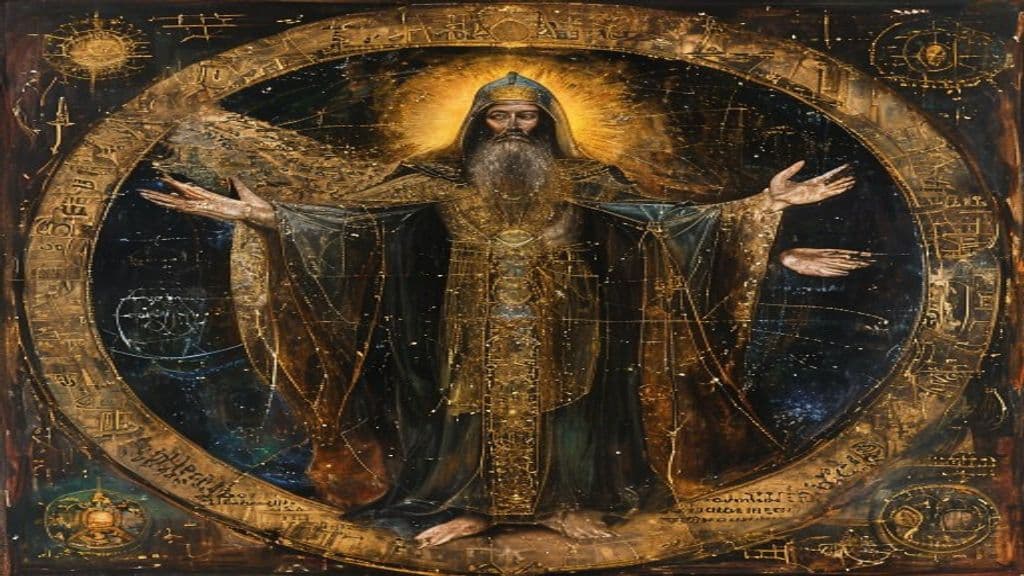
Metatron

An exalted heavenly figure in postbiblical Jewish literature, often identified with the transformed patriarch Enoch in later mystical texts and portrayed as a celestial scribe and high court official in merkabah and Kabbalistic writings.

Metheringham Lass
Lesser

Metheringham Lass

A place‑bound apparition reported at RAF Metheringham in Lincolnshire, presented in local wartime and post‑war lore as a young woman who approaches passing motorists asking for help for an injured boyfriend and then vanishes. The story is linked to the airfield's WWII history and persists in regional storytelling and contemporary paranormal media.

Methone
Minor Spirit

Methone

Methone (Greek: Μεθώνη) is a multi‑use Greek name attested as place‑names in ancient Greece, the name of several minor figures in Greek mythology, a modern toponym, a monotypic genus of metalmark butterflies, and a small moon of Saturn. The supplied sources do not present Methone as a single, coherent supernatural entity within a folkloric cosmology.

Metis (name / label; disambiguation of uses)
Minor Spirit

Metis (name / label; disambiguation of uses)

The string 'Metis' (variants Métis, Metiş) appears across many domains — as an Indigenous ethnonym (Métis), place names (Metis Shoal, Metiş village, Metis Island), astronomical and biological names (9 Metis asteroid, Metis moon, genus names), a brief Wikipedia mention of a mythological Metis (Oceanid and wife of Zeus), and multiple modern institutional and cultural uses. The supplied sources do not document a single, coherent supernatural entity named 'Metis' with folkloric appearance, powers, or rituals.

Metope
Lesser

Metope

Metope (Μετώπη) is attested in Greek myth as a local Naiad — a freshwater nymph tied to the spring and stream called Metope near the town of Stymphalos in Arcadia. The lexical form 'metope' also denotes an architectural element in the Doric frieze, but this entry treats the mythological personage; the architectural sense is non-supernatural and separate.

Metsänhaltija (Metsänväki)
Lesser

Metsänhaltija (Metsänväki)

A metsänhaltija is a place‑bound haltija of the Finnish tradition — an invisible, solitary guardian spirit of a specific forest locality (the collective term metsänväki refers to the forest's inhabitants or powers). Metsänhaltijat protect their home, care for species associated with that place, and may reveal themselves to humans.

Metsänpeitto
Minor Spirit

Metsänpeitto

A lesser spirit in Finnish folklore that conceals people and animals within the forest, making them invisible to those searching for them. (Note: - Change Power tier: Minor Spirit -> Lesser (According to the provided power tier classification, Lesser corresponds with a local spirit, which seems more fitting given Metsänpeitto's role in conceali)

Metsänväki
Lesser

Metsänväki

A Finnish term attested in fragmentary sources referring either to the animate power of the forest or to forest-dwelling spirits/creatures; sources supplied are brief and inconsistent about whether it denotes an impersonal force or a class of beings.

Mettekoe
Lesser

Mettekoe

Mettekoe is a contemporary processional giant created in Petit-Enghien, Belgium in 2022 that functions as a civic mascot for a charitable association concerned with orangutan conservation and as a participant in gatherings of giants and contemporary art events.

Metztli
Greater

Metztli

Metztli (Nahuatl: Mētztli) is the Nahuatl term for the Moon and in the supplied sources is described as a god or goddess associated with the moon, the night, and farmers in Aztec/Nahuatl cultural context. The available material treats Metztli both as the celestial Moon and as a lunar deity, but supplies no detailed myths, iconography, or ritual corpus.

Mezzetino
Lesser

Mezzetino

Mezzetino is a commedia dell'arte stock character from 16th‑century Italian popular theatre, a member of the Zanni servant class known as a scheming, often musically inclined servant and flirt. The role circulated into French and English stages and appears in visual arts (notably Watteau) and decorative arts.

Miasma (Ancient Greek)
Ancient

Miasma (Ancient Greek)

In ancient Greek religion, a miasma is a malevolent force arising from human wrongdoing that can cause catastrophe and has an independent life. (Note: - The draft states that a miasma causes catastrophe, disease, famine, or war, which is not supported by the source material. - Power tier: Primordial (not Ancient), since it's described as having an ")

Michael
Lesser

Michael

Michael is presented in the supplied sources as a masculine given name and disambiguation headword applied to people, historical rulers, cultural works, places, and other uses; the provided material treats it as an onomastic item rather than as a single supernatural being.

Michigan Dogman
Lesser

Michigan Dogman

A regional cryptid and folkloric beast from Michigan popularized in late 20th-century media and oral reports, described as a bipedal, canine-headed figure reported in rural and wooded areas. The figure functions in local legend and contemporary folklore rather than in documented scientific or premodern ethnographic sources.

Mictlāntēcutli
Ancient

Mictlāntēcutli

Mictlāntēcutli (Mictlantecuhtli) is the Aztec lord and ruler of Mictlan, the lowest northern region of the dead. He functions as a principal underworld authority who receives the deceased, figures in myths about the bones of former humans, and appears widely in Aztec calendrical and ritual iconography.
Mictēcacihuātl
Ancient

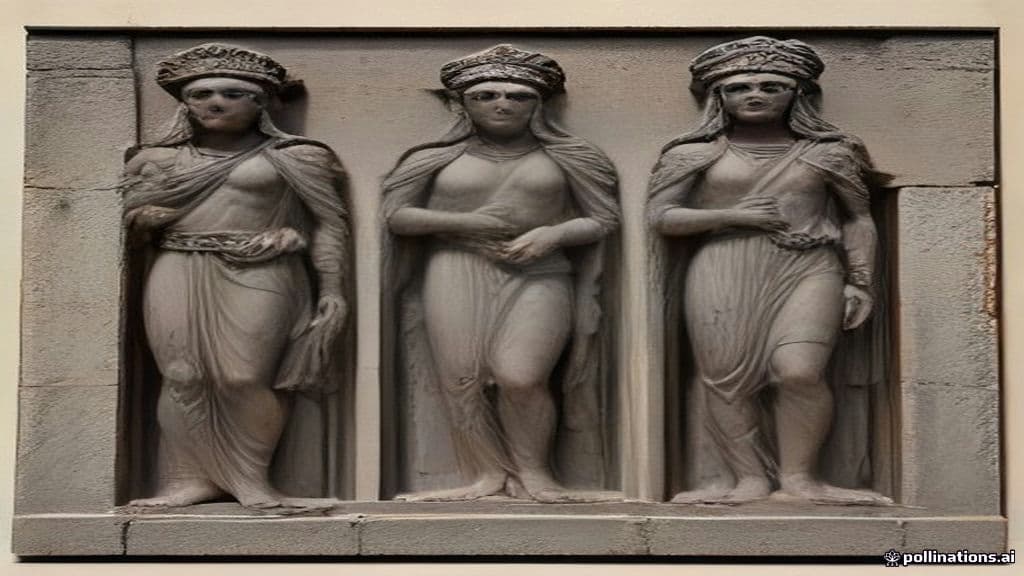
Mictēcacihuātl

Mictēcacihuātl is an Aztec death deity, consort of Mictlāntēcutli, who is described in the sources as watching over the bones of the dead and presiding over the ancient festivals of the dead; modern accounts link her figure to the evolution of those festivals into the contemporary Day of the Dead.

Mideia (Midea)
Lesser

Mideia (Midea)

Mideia (Ancient Greek Μιδεία / Μιδέα) is a name appearing in ancient Greek tradition applied to several mytho-geographic and genealogical figures: notably a nymph described as mother of Aspledon by Poseidon and multiple eponymous or mortal women whose names are attached to towns or genealogies. The name also denotes ancient place-names in Boeotia and Argolis preserved in Homeric and later geographical accounts.

Midnight Beauty
Minor Spirit

Midnight Beauty

Attested in the supplied corpus only as a terse label — a single-line Wikidata entry calling 'Midnight Beauty' a "temptress ghost of Brazil." No supporting folkloric narratives, rituals, or detailed descriptions are present in the provided materials.

Mielikki
Lesser

Mielikki

Mielikki is a Finnish forest-personification variously described as the Mistress of the Forest (Metsän emäntä) and a metsänhaltija whose favour is sought by hunters and shepherds. She is portrayed in runic songs and the Kalevala as a giver of game, a healer of animals, and a localized spirit who inhabits particular trees such as spruces.

Mikelats
Lesser

Mikelats

Mikelats (also spelled Mikelatz / Mikelat) is a figure in Basque mythic narratives, typically presented as one of two brothers born to the goddess Mari in some tellings and taught by a cave‑dwelling teacher named Etsai; in modern retellings he is characterized as the 'profane' counterpart to the 'sacred' Atarrabi and his name is used locally as that of a festival giant (erraldoi) in Mendillorri.

Mikula Selyaninovich
Lesser

Mikula Selyaninovich

Bogatyr and plowman from the Novgorod Republic bylina cycle, associated with strength and courage. (Note: - Power tier: Ancient (due to being a bogatyr and having deity-level abilities associated with courage) - Origin story: should be included - Appearance: should be described based on source material - )

Mileena
Greater

Mileena

Mileena is a fictional humanoid antagonist from the Mortal Kombat video-game franchise: an engineered or otherwise altered counterpart to the Edenian princess Kitana who functions as a rival, spy, and claimant to rulership within Outworld/Edenian political narratives. She is portrayed across multiple game continuities with recurring visual motifs (Kitana-like costume, pronounced Tarkatan teeth) and signature fighting mechanics (sais, teleport-kick, ground roll, graphic Fatalities).

Mimas (Aeneid)
Lesser

Mimas (Aeneid)

Mimas is a named Trojan warrior in Virgil's Aeneid (Book X). Presented as a noble mortal—son of Amycus and Theano and a birth-mate/friend of Paris—he fights with Aeneas in Italy and is slain during the war narrative.

Mimi (Mimi spirits)
Minor Spirit

Mimi (Mimi spirits)

Mimi are noted in the supplied source material only as a 'fairy-like' being appearing in a single-line entry for Northern Australian Aboriginal folklore. No further descriptive or functional information about Mimi is present in the provided dataset.

Mimi spirits
Lesser

Mimi spirits

Mimi (Mimih) are extremely thin, elongated ancestral spirit-beings of Arnhem Land whose presence is embedded in regional rock‑art and Dreaming traditions. They are associated with rock crevices and rock‑shelters and are treated in some sources as spirit-figures tied to ancestral custodianship of painted sites.

Min
Ancient

Min

Min (Egyptian mnw) is an ancient Egyptian deity of male fertility, sexual potency, and agricultural renewal whose cult began in the predynastic period and was centered at Upper Egyptian cities such as Coptos (Koptos/Qift) and Akhmim (Panopolis). His worship involved public festivals (a "coming forth" and harvest-season rites), votive phallic offerings, and royal associations through syncretism with Horus and Amun and kamutef (self-fathering) imagery.

Min Farshaw (Elmindreda Farshaw)
Lesser

Min Farshaw (Elmindreda Farshaw)

Elmindreda "Min" Farshaw is a named fictional human character in Robert Jordan's high-fantasy series The Wheel of Time. The provided sources identify her as a character appearing at least in the first novel, The Eye of the World, and an archive item title references her in connection with "visions."

Min-Kamutef
Ancient

Min-Kamutef

A theonym used in ancient Egyptian religion designating an epithetial form linking the fertility god Min with the title Kamutef ('Bull of his Mother'), attested in temple reliefs and indexes of Egyptian cult practice, especially in a Ramesside doorjamb depicting royal offerings.

Minepa
Minor Spirit

Minepa

Minepa is a name attested both as a Tanzanian place-name and, in a small number of modern compilations and database entries, as a spirit label associated with the Makua (Makuwa). Documentary evidence treating Minepa as a supernatural being is sparse and consists largely of secondary lists and a machine-readable database tag rather than ethnographic description.

Minhocão
Greater

Minhocão

Minhocão is a legendary monstrous animal in Brazilian folklore described variously as an enormous earthworm, fish-like, or serpentine creature. Folkloric accounts portray it as subterranean or amphibious and associate its passage with large-scale alterations to the landscape (e.g., sinkholes, terrain changes).

Minkah (Lakota)
Minor Spirit

Minkah (Lakota)

No documented Lakota supernatural being named 'Minkah' is present in the supplied source set. The name appears in the provided materials only as the given name of a contemporary individual (Minkah Fitzpatrick); there are no ethnographic, linguistic, or folkloric sources in the corpus that describe a Lakota entity called Minkah.

Minnie Quay
Lesser

Minnie Quay

A place‑bound apparition from Forester (present-day Forester Township), Michigan: Mary Jane "Minnie" Quay is a local ghost legend of a teenage girl who drowned in 1876 and whose spirit is said to haunt the pier, beaches, and cemetery. The tale survives in local oral tradition, regional ghost literature, and popular retellings; a customary practice of leaving offerings at her gravesite is associated with the legend.

Minoan Genius
Lesser

Minoan Genius

A recurrent composite supernatural attendant in Bronze Age Minoan iconography, typically depicted as a libation-bearer and cultic supporter in sacrificial, processional, and ritual scenes. The label "Minoan Genius" is a modern scholarly convention; the figure appears widely on seals, sarcophagi and other ritual art in Minoan Crete and later in Mycenaean contexts.

Minos
Ancient

Minos

Minos is a legendary Cretan king in ancient Greek myth, remembered as a lawgiver and founder of Cretan naval power in life and as one of the three judges of the dead in Hades after death. Classical sources present him as a semi-divine, politically powerful mortal (son of Zeus and Europa) whose authority is both terrestrial and judicial in the afterlife.

Minotaur
Lesser

Minotaur

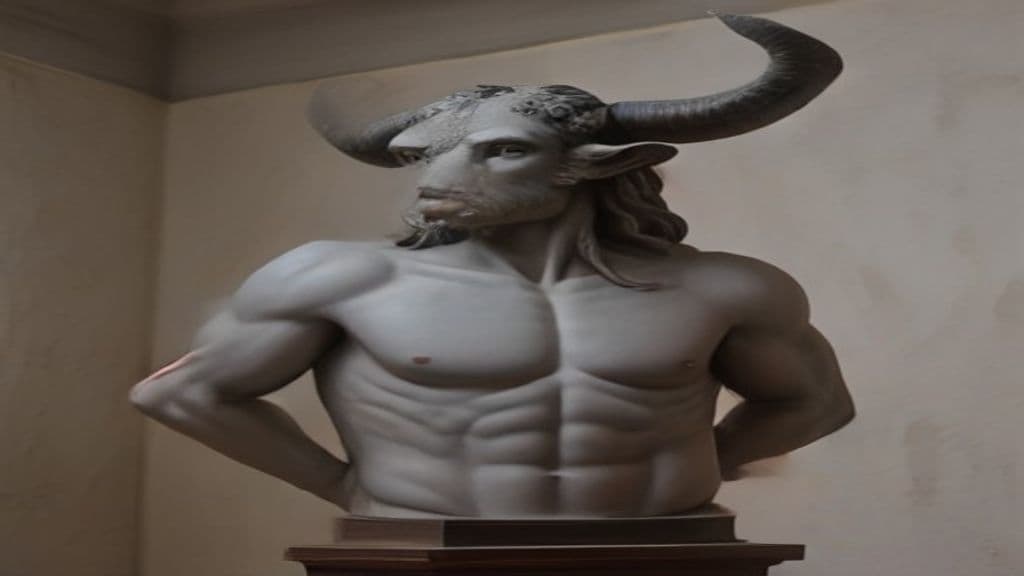
A singular monstrous offspring in classical Greek myth, born of a union between a human woman and a bull, confined at the center of Daedalus's Labyrinth at Knossos and fed on human tribute until slain by the hero Theseus with Ariadne's aid.

Minyans
Lesser

Minyans

A named people and ancestral lineage in Greek literary tradition, associated especially with Orchomenus in Boeotia and the eponymous founder Minyas; in modern scholarship the term is also applied (controversially) to a Middle Helladic pottery horizon called 'Gray Minyan ware.'

Minyas
Minor Spirit

Minyas

Minyas is a legendary founder-king and eponymous ancestor of the Minyans, traditionally credited as founder of Orchomenus in Boeotia. He functions in Greek myth as a genealogical and dynastic progenitor rather than as a supernatural being.

Miraz
Lesser

Miraz

Miraz is a human monarch and the principal antagonist of C. S. Lewis's Prince Caspian. A Telmarine king and usurper, he rules Narnia through oppression and seeks to suppress the older, enchanted history and sanctity of the land.

Misenus
Lesser

Misenus

Misenus is a figure from Greek and Roman mythic narrative traditions, chiefly known from Virgil's Aeneid as Aeneas's trumpeter whose death and required burial become a ritual hinge for the hero's descent to the Underworld. The name also appears elsewhere in Greek tradition as a friend of Odysseus.

Mishing Bura
Minor Spirit

Mishing Bura

The ancestor-spirit of the Mishing (Mising) people of Assam — a riverine tribal community whose spiritual world is centred on the Brahmaputra. The Mishing Bura are the elder-spirits who guard the river routes, bless the boats, and must be propitiated before any significant water journey.

Mishipeshu (Underwater Panther)
Greater

Mishipeshu (Underwater Panther)

Mishipeshu, often rendered in English as the Underwater Panther or Great Water Lynx, is a major mythic water-being of the Northeastern Woodlands and Great Lakes region, especially in Anishinaabeg/Ojibwe-related traditions. Described as a hybrid feline–aquatic monster, it personifies powerful and potentially dangerous forces associated with deep lakes and is repeatedly cited in modern summaries as one of the most important regional water spirits.

Misizla
Primordial

Misizla

Slavic mythological figure described as a 'godlike hero' and warrior-musician, associated with restoring Slavic pagan faith. (Note: * Power tier: Greater (Misizla is described as "godlike" but not with cosmic powers) * Origin story: missing * Abilities: no specific details, but some mention of interactions with humans or his role )

Miss Brunner
Greater

Miss Brunner

A fictional engineered/engineer-seeking figure in Michael Moorcock's The Final Programme (novel and 1973 film), Miss Brunner is a scientist/leader who assimilates lovers and seeks to run the technoscientific "Final Programme" to create a new hermaphroditic human.

Misshepeshu (Mishipeshu, Underwater Panther)
Greater

Misshepeshu (Mishipeshu, Underwater Panther)

Misshepeshu, commonly rendered Mishipeshu and translated into English as the "Underwater Panther," is a named figure in Anishinaabe/Algonquin cultural materials and appears as a powerful water-associated being in broader literature and reference works. The supplied sources identify the term as part of Native American cultural discourse and note its presence in literary contexts, but they do not provide primary ethnographic detail within the provided extracts.

Mistress of the Copper Mountain
Greater

Mistress of the Copper Mountain

A sacral Ural mountain spirit who is the proprietor and guardian of malachite, copper, and other underground riches; she rewards skilled, honest workers and punishes transgressors. Prominent in Ural folk belief and in Pavel Bazhov's skaz cycle, she is closely associated with the Gumyoshevsky 'Copper Mountain' at Polevskoy.

Mitakuye Oyasin
Greater

Mitakuye Oyasin

Lakota concept reflecting the interconnectedness of all living beings, used in prayers and ceremonies. (Note: - Power tier should be Primordial (as it's a cosmic concept, not deity-level or regional). - No information about appearance, sensory cues, weaknesses, and wards can be found in the source material. -)

Mitama
Minor Spirit

Mitama

Mitama (mi + tama) is a Japanese term for an honored spirit that can denote either the spirit of a kami (divine being) or the soul of a dead person. In Shinto practice a kami's mitama may be housed in a physical object (shintai or mitamashiro).

Mithra
Ancient

Mithra

Mithra (Avestan Miθra) is an ancient Indo‑Iranian deity preserved in Iranian and Zoroastrian scriptures as a high Ahuric figure who guarantees covenants, truth, and the ordered life of society. Described in the Avesta as an ever‑watchful guarantor of contracts, protector of pastures, cattle and waters, and a diurnal heavenly presence, Mithra is liturgically venerated in hymns such as the Mihr Yasht and invoked in Khorda Avesta litanies. Modern scholarship notes similarities but significant differences between the Avestan Mithra and the Roman Mithras cult.

Miyatanzipa
Lesser

Miyatanzipa

Miyatanzipa is a named deity attested in the Hittite religious corpus (Anatolia, c. 1600–1180 BCE). The deity appears in divine-name lists and in mythic fragments as one of the gods who sat under a hawthorn (ippiyas/Thippiyas) tree awaiting the return of Telipinu and is invoked in short ritual formulae.

Mneme
Lesser

Mneme

Mneme (Ancient Greek: Μνήμη, literally 'Memory') is recorded by Pausanias as one of a local triad of Muses at Mount Helicon (with Aoede and Melete) in Boeotian tradition; the name personifies memory within the Muse category and was later superseded in wider tradition by the canonical nine Muses.

Mnemosyne
Ancient

Mnemosyne

In ancient Greek myth and cult Mnemosyne (Μνημοσύνη) is a Titaness-personification of memory who functions as the ancestral source of the nine Muses and as a presiding power in poetic invocation and certain initiatory/oracular rites. In Hesiodic and classical practice she underwrites poetic authority; in Orphic and oracle contexts she is associated with waters of memory that contrast with Lethe.

Mnesimache
Lesser

Mnesimache

Mnesimache (Ancient Greek: Μνησιμάχη) is a minor mortal figure in Greek mythic genealogies—an Olenian princess, daughter of King Dexamenus—noted chiefly as a victim of a forced betrothal/near-abduction by the centaur Eurytion and as a genealogical link (mother of Diores in one tradition; possibly named as mother of Menestheus in another variant). Her rescue by Heracles places her within Heraclean narrative cycles.

Mnestheus
Lesser

Mnestheus

Mnestheus is a legendary Trojan captain and lieutenant of Aeneas in Virgil's Aeneid, presented as the ancestral hero of the Roman gens Memmia and linked to the house of Assaracus. He appears in the epic's funeral-games (Book V) as a naval competitor and in military leadership scenes in Book IX, where he assumes command in Aeneas's absence.

Mnevis
Ancient

Mnevis

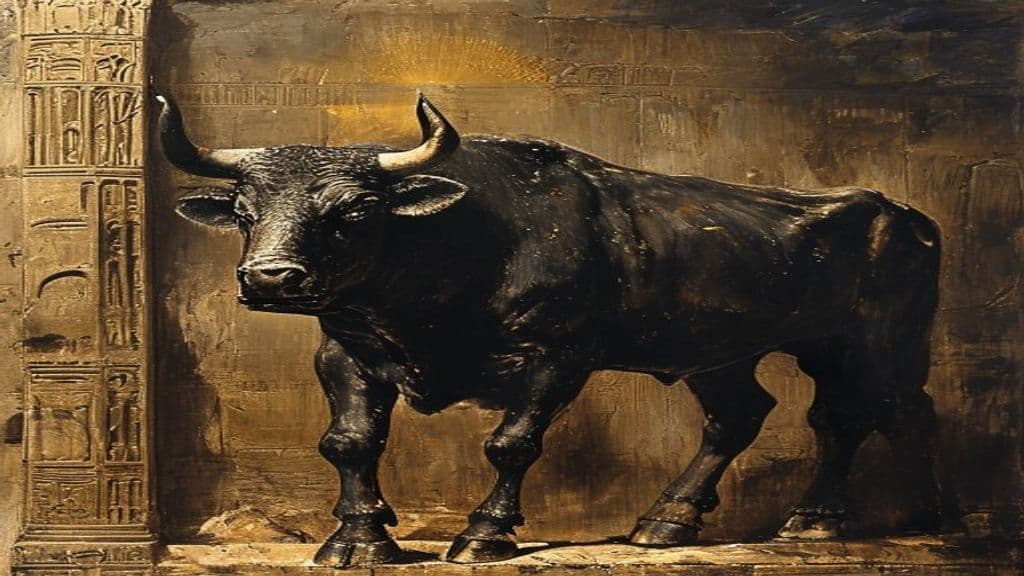
Mnevis is the ancient Egyptian sacred bull cult of Heliopolis (On), regarded as the living manifestation or ba of the solar god Ra and later assimilated with Atum‑Ra. A single living bull served as an oracular and cultic presence, entitled to ritual attendants and embalmed and buried with honours in a dedicated necropolis; the cult persisted into the late Pharaonic and classical periods and was one of the few cults tolerated during Akhenaten's reign.

Moddey Dhoo
Lesser

Moddey Dhoo

A place‑bound phantom black dog from Manx tradition, chiefly associated with Peel Castle (St Patrick’s Isle). Recorded in an 18th‑century account by George Waldron and later collected and expanded by folklorists, the Moddey Dhoo appears at dusk in the castle guardroom and returns to a secret passage at dawn; later local reports extend the motif across the Isle of Man with variant descriptions.

Modheshwari
Greater

Modheshwari

Modheshwari (Gujarati: મોઢેશ્વરી) is a localized tutelary form of the Great Goddess worshipped as the clan deity (kuldevi) of the Modh communities of Gujarat. Described in source materials as a martial incarnation of the Goddess (linked variably to Parvati/Adi Parashakti and to the devi Matangi), she is credited in tradition with slaying a local demon and promising protection to her devotees.

Modthryth
Minor Spirit

Modthryth

Modthryth is a literary royal figure attested in the Old English poem Beowulf, presented as a princess who initially behaves violently toward men beneath her rank but is later depicted as a reformed and celebrated queen. The figure functions in the poem as a foil to other aristocratic women and as a commentary on ideals of queenship (freoðuwebbe) in Anglo-Saxon literary culture. The manuscript reading of her name and the precise sense of the compound are subjects of scholarly dispute.

Moehau
Lesser

Moehau

A creature of New Zealand folklore associated with Mount Moehau on the Coromandel Peninsula. In source materials the moehau is presented variably as a local wild/uncanny being linked by some to the Māori maero(maeroero), and by others treated as a modern folkloric label applied to alleged sightings, jokes, or misidentified objects and animals.

Moekākara
None

Moekākara

Legendary canoe in Māori tradition, used for migration to settle New Zealand. (Note: - Power tier should be "Primordial" since it's a legendary canoe used for migration to settle an entire country. - Summary: Add that Moekākara was captained by Tāhuhunui-o-te-rangi, an ancestor of Ngā)