Entity Index

A record of the unseen, drawn from world folklore.

7724 entities · page 97 of 129

Muspilli
Ancient

Muspilli

An Old High German alliterative verse poem from a ninth-century Bavarian manuscript, describing the fate of souls in Norse cosmology. (Note: - Power tier should be Primordial (cosmic level) due to its description of Norse cosmology. - Origin story should clarify that the etymology is unclear and that many aspects of interpretation are disp)

Mustukene
Minor Spirit

Mustukene

Mustukene is attested in a literary source as the proper name of a dog listed among 'the dogs of the sons of Kalev.' The cited passage glosses the name as meaning 'Blackie' and notes a disputed alternative translation ('Throttler'). No supernatural status, actions, or rituals are provided in the source.

Mut
Ancient

Mut

Mut is an ancient Egyptian mother goddess associated with the primordial waters (Nu), the Theban Triad, and the Eye of Ra corpus. She functions as a cosmic maternal principle, a local patroness of Thebes with temples and priesthood, and a shifting consort/maternal figure within Amun-centered theology.

Mušḫuššu
Lesser

Mušḫuššu

The Mušḫuššu (Sumerian MUŠ.ḪUŠ; Akkadian mušḫuššu) is a named Mesopotamian hybrid creature — a composite serpentine monster — attested in Sumerian and later Babylonian art and myth. It functions primarily as a sacred emblem and mythic adversary-turned-attendant of major gods (notably Marduk) and appears in cultic, monumental, and astral contexts (e.g., the Ishtar Gate and the Bašmu/Hydra constellation).

Mycene
Lesser

Mycene

Mycene (Greek Mykēnē) is an eponymous female figure in Greek myth identified as a daughter of the river-god Inachus and the wife of Arestor. She is presented in the tradition as the naiad or local woman who gives her name to the city of Mycenae and functions as a place-bound genealogical figure rather than a universal deity.

Mydon
Lesser

Mydon

Mydon is a mortal warrior-figure named in the corpus of ancient Greek epic, attested as a defender of Troy in the Iliad. He appears only briefly in the surviving summaries and reference entries as a named casualty, and may represent one or more minor Homeric combatants who share the name.

Myling
Minor Spirit

Myling

The ghost of an unbaptized or abandoned infant in Scandinavian tradition, doomed to haunt the place of its death until it receives a proper Christian burial.

Mynes
Lesser

Mynes

Mynes is a name applied to at least two mortal figures in Greek myth: a king of Lyrnessus slain by Achilles in the Trojan-cycle tradition (husband of Briseis), and a Lacedamonian genealogical figure recorded as father/ancestor in early Athenian genealogies (father of Pedias). He is a human/mythical mortal rather than a supernatural being.

Myrina
Minor Spirit

Myrina

Myrina is a name attested in Greek-language sources that functions as a toponym (several ancient towns and a modern town on Lemnos) and as the name of several female characters in Greek mythology; it is also used in modern taxonomy for a genus of butterflies. The supplied sources do not present a single, consistent supernatural entity called Myrina, and material about ritual, appearance, or powers for a unified mythic figure is absent from the provided corpus.

Myrine (Myrina, Myrinna)
Lesser

Myrine (Myrina, Myrinna)

Myrine (variants Myrina, Myrinne, Myrinna) is a personal name attested in ancient Greek mythic tradition applied to several distinct women — including an Amazon queen, a possible eponym for the city of Myrina on Lemnos, a woman buried in the Troad mentioned in the Iliad, and a priestess of Aphrodite who was said to become a myrtle tree. The string also appears in modern contexts (fictional characters, corporate names, and a taxonomic genus) but these are non-mythic usages of the name.

Myrmidon (hero)
Lesser

Myrmidon (hero)

An eponymous ancestor-hero in Greek myth, described in the sources as a son of Zeus and Eurymedusa and the progenitor of the people called the Myrmidons. The personal name became an ethnonym for that mythic nation and was later reused in literature and modern media as a label for warriors or unquestioning followers.

Myrtilus
Minor Spirit

Myrtilus

Myrtilus is a heroic figure in Greek myth, known as the charioteer of King Oenomaus of Pisa and commonly described as a son of Hermes. He sabotaged Oenomaus's chariot, causing the king's death; Pelops then threw Myrtilus into the sea, and the dying charioteer pronounced a curse that, in tradition, haunted Pelops' descendants. His body was said to have been recovered and honored at a sanctuary of Hermes, and local topography and stellar identifications (Myrtoan Sea, a taraxippus at Olympia, and a later association with the constellation Auriga) are recorded as variants.

Myrto
Lesser

Myrto

Myrto (Ancient Greek: Μυρτώ, 'myrtle') is primarily an Ancient Greek feminine personal name attested across mythic and historical registers — borne by several minor mythological figures (including a possible eponym of the Myrtoan Sea, a named Maenad, and in some genealogical variants as mother of Myrtilus) and by later biographical/historical women (notably a contested Athenian figure tied to Aristides and Socratic tradition). The sources do not present a single, unified supernatural entity named Myrto.

Mythologia Fennica
Primordial

Mythologia Fennica

A collection of Finnish myths and legends that includes various gods and goddesses, forming the foundation of Finnish mythology. (Note: - Power tier should be Ancient (deity-level) since it's a collection of gods and goddesses. - Summary needs to be more specific and accurate, e.g., "A collection of Finnish myths and legends compiled )

Máttaráhkká
Lesser

Máttaráhkká

Máttaráhkká is a Sámi mother figure associated with fertility, childbirth, and the giving of the physical body to a child. She is a domestic, chthonic presence said to dwell in the ground beneath the goahti and was traditionally petitioned by women during pregnancy; after Christianization she was often syncretized with the Virgin Mary.

Mélusine
Greater

Mélusine

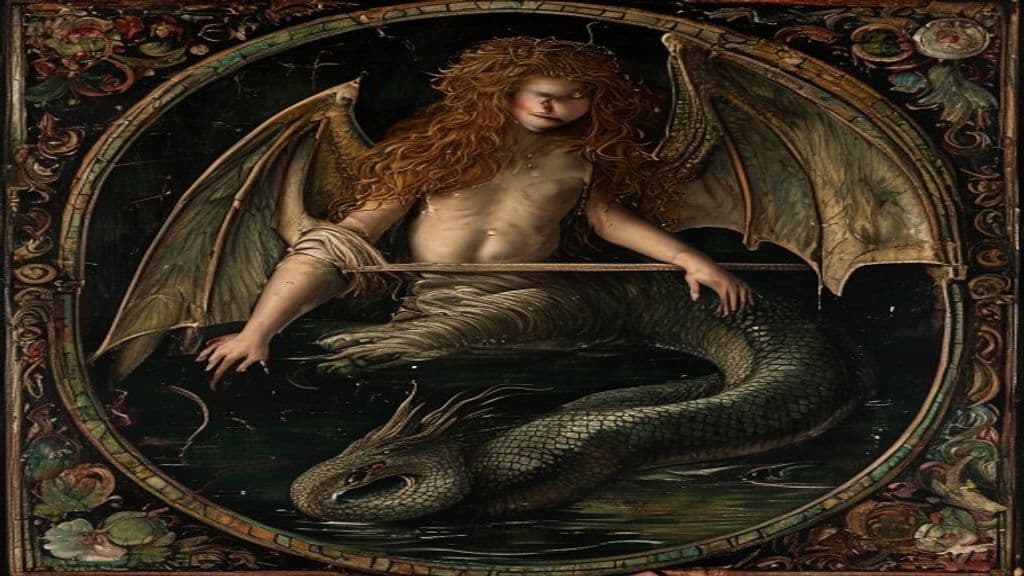
Mélusine is a European folkloric female freshwater spirit and locus guardian often depicted human above the waist and serpentine or fish‑tailed below. In medieval French romance she marries a human lord under a conditional taboo (commonly Saturday) and is associated with wealth, castle‑building, and as an ancestral figure for certain noble houses.

Mór Muman
Ancient

Mór Muman

Mór Muman is an early Irish sovereignty and mother-figure personifying the province of Munster. In medieval tales she appears alternately as an enchanted, wandering 'loathly' woman and as a restored queen whose union with the rightful king legitimizes rulership over Munster.

Mökkurkálfi
Greater

Mökkurkálfi

A sparsely attested name associated in modern reference works with a giant (jötunn) figure of Norse myth. Surviving modern summaries link the name to a being described as made of earthy material and associate it with the mythic motif of a giant who fights the thunder‑god Thor, but the primary evidence is minimal and internally inconsistent.

Māhaki
Lesser

Māhaki

Māhaki was a historical Māori rangatira (chieftain) of the East Cape / Gisborne region of Aotearoa New Zealand, ancestor of the iwi Te Aitanga-a-Māhaki. He appears in whakapapa, local histories and commemorative material as a founding chief who fought in regional battles, negotiated land and peace, established settlements, and whose memory is preserved in carvings and named marae buildings.

Māhuhu-ki-te-rangi
Primordial

Māhuhu-ki-te-rangi

A great ocean-going canoe used in the migrations that settled New Zealand according to Māori tradition. (Note: 1. Power tier should be Ancient instead of Primordial, as it is a deity-level entity. 2. The abilities description could be expanded to better reflect its role in facilitating settlement, but this doe)

Mākutu
Primordial

Mākutu

A malevolent occult power possessed by certain individuals in Māori tradition, associated with witchcraft and sorcery. (Note: - Power tier should be Ancient, not Primordial (Primordial is cosmic-level, Ancient is deity-level) - Appearance section needs to be filled - Abilities description lacks specificity and detail; source)

Māmari (vessel)
Greater

Māmari (vessel)

In Māori tradition, Māmari is a revered ocean-going canoe and symbol of importance in the early migrations that settled New Zealand. (Note: - Power tier: Primordial (as a revered and significant cultural artifact, Māmari's importance is on a cosmic level) - Abilities: Remove "means of transportation" as it does not accurately describe an )

Mānasaputras (Hindu)
Primordial

Mānasaputras (Hindu)

In Hinduism, Mānasaputras are considered the 'mind-children' or 'mind-born' sons of Brahma, associated with creation and cosmology. (Note: 1. Power tier should be Ancient (deity-level), as they are associated with creation and cosmology but not necessarily with cosmic or universal forces. 2. Appearance: state that no specific description)

Mānuka (Canoe)
Greater

Mānuka (Canoe)

Legendary Māori canoe used for migrations to settle the South Island of Aotearoa. (Note: 1. Power tier: Reduce from Greater to Lesser, as the Mānuka is described as one of the great ocean-going canoes, but not explicitly as a powerful regional entity. 2. Weaknesses: Add sensory cue - "Fai)

Māori Migration Canoes (Waka Hourua)
Greater

Māori Migration Canoes (Waka Hourua)

Large ocean-going canoes that played a central role in the Māori migration to New Zealand, symbolizing their ancestral connection and advanced navigational skills. (Note: * Power tier: Minor Spirit is more accurate as they are not depicted as having supernatural abilities. * Abilities: No mention of navigating the stars, winds, or currents in the source material; inste)

Māori Mythological Entities
Primordial

Māori Mythological Entities

Supernatural beings in Māori mythology associated with the origins of the world and connected to the whakapapa. (Note: 1. Power tier: should be "Primordial" is correct, but consider rephrasing for clarity. 2. Origin story: should be more specific about what these entities are, rather than just stating they're part of )

Māori Primordial Beings
Primordial

Māori Primordial Beings

In the Māori creation story, as depicted in Peter Gossage's book 'In the Beginning', the struggle between Ranginui and Papatūānuku implies the presence of other beings or forces. (Note: 1. Summary is partially accurate, but more specific information should be included. 2. Power tier: Primordial seems plausible given the Māori creation story's focus on primordial parents, but it could)

Māra
Ancient

Māra

Māra is the highest-ranking goddess in Latvian mythology associated with domestic economy, fertility, livestock and the land; she is the female cosmological counterpart to Dievs and was honoured in an annual festival on August 15, a date reflecting later Christian syncretism.

Māra
Greater

Māra

Māra is a malignant, oppositional figure in Buddhist tradition who personifies and enacts forces that obstruct awakening; he is described both as an actual being of the sensual realm (kāma‑loka) and as the personification of inner defilements (kleśas), death, and conditioned existence.

Māra Pāpīyān
Ancient

Māra Pāpīyān

Māra Pāpīyān (Māra) is a Buddhist concept and figure representing the obstructive forces that hinder liberation from Saṃsāra; sources present Māra both as a functional principle of temptation and as a classificatory ruler within Buddhist cosmology (notably the sixth heaven of the Kāmadhātu).

Mātaatua
Primordial

Mātaatua

A legendary voyaging canoe in Māori tradition, sent from Hawaiki to bring supplies of kūmara (sweet potato) to Māori settlements in New Zealand. (Note: - Power tier: Reduce to Greater (powerful regional) as there is no indication that it's on a cosmic or deity-level in the source material. - Sensory cues: Specify what is meant by "strong sense of anc)

Māui
Greater

Māui

Māui is a Polynesian culture hero and trickster figure, presented in many island traditions as a demi-divine ancestral transformer whose exploits (for example, acquiring fire and lengthening the day) explain key natural and cultural features. He is rarely the object of sustained worship and appears with varying parentage, status, and episode details across regional traditions.

Māui
Primordial

Māui

Mythological culture hero and demigod from Māori tradition, credited with slowing down the sun. (Note: - Power tier should be Lesser (not Primordial), given Māui's described abilities are consistent with a local spirit or powerful regional entity, rather than cosmic. - No physical description exists in)

Māui-tikitiki-a-Taranga
Greater

Māui-tikitiki-a-Taranga

Māui-tikitiki-a-Taranga is a Māori culture hero, demigod, and trickster renowned in Māori and wider Polynesian tradition for his cleverness and extraordinary deeds. His name links him genealogically to his mother Taranga (tikitiki = 'topknot') and he is also called Māui-pōtiki (the youngest). Sources describe him as possessing superhuman strength and the ability to shapeshift into animals such as birds and worms.

Māyā Sītā (Chāyā Sītā)
Lesser

Māyā Sītā (Chāyā Sītā)

Māyā Sītā or Chāyā Sītā is an illusory substitute for the goddess-heroine Sītā found in later Purāṇic and bhakti retellings of the Rāmāyaṇa. Created within the epic world by divine agency (often Agni or Rama), she functions as an ontological replica who endures the abduction and captivity in Sītā’s stead in order to preserve the real Sītā’s purity and to reconcile devotional concerns about Rama’s and Sītā’s reputations.

Mīšaru
Lesser

Mīšaru

Mīšaru is the Mesopotamian divine hypostasis of justice and rectitude. Named from the Akkadian root ešēru, he functions both as the abstract concept of correct rulings and as an active cultic deity invoked in temple worship, divination, and state ritual lists across Mesopotamia.

Mōryō
Lesser

Mōryō

Mōryō (魍魎, also written 罔両 or 美豆波/mizuha in some sources) is a collective term found in East Asian textual and folkloric traditions for spirits tied to natural features and liminal places; literary Chinese sources depict them as corpse‑afflicting beings while Japanese usage can treat the label more broadly for various uncanny yōkai associated with mountains, rivers, trees, rocks, and graves.

Mṛtyu
Primordial

Mṛtyu

Personification of death in Hindu tradition, often associated with Mara and Yama. (Note: - Power tier: Primordial may be an overestimation; although Mṛtyu is associated with deities like Mara and Yama, its specific role as personification of death implies a more local or regional power le)

Mẫu Thượng Ngàn
Primordial

Mẫu Thượng Ngàn

Ruler of the Forest Palace among the spirits of the Four Palaces in Vietnamese indigenous religion. (Note: - Power tier should be Greater (powerful regional), not Primordial (cosmic). - Appearance is missing from the source material. - Abilities could be more specific and detailed based on her role as rule)

Mụ bà (Mười hai Bà mụ)
Lesser

Mụ bà (Mười hai Bà mụ)

A collective of twelve female tutelary figures in Vietnamese folk religion who act as midwives and household guardians of newborns, responsible for teaching infants early life skills and auspicious traits. They are ritually acknowledged in some regions at a special ceremony when a baby is one month old.

Na Tuk Kong (Datuk/Datuk Gong)
Lesser

Na Tuk Kong (Datuk/Datuk Gong)

Na Tuk Kong, commonly called Datuk or Datuk Gong, are place-bound guardian spirits venerated in parts of the Malay Peninsula and nearby areas. Practised mainly among overseas Chinese communities in Malaysia and Singapore, the cult blends Malay animistic/keramat practices with Chinese folk-religious forms and honours individual local guardian presences tied to particular features of landscape or neighbourhood.

Naaga
Minor Spirit

Naaga

Naaga is not attested in the provided sources as a folkloric or supernatural being; the name appears only as a modern proper noun used for a 2003 Telugu film, an organizational acronym (NAAGA) in a media segment, a film-certificate entry, and as a music track title.

Naale Baa
Lesser

Naale Baa

Naale Baa (Kannada: ನಾಳೆ ಬಾ, Nāḷe Bā, lit. 'Come Tomorrow') is a vernacular Karnataka urban and rural legend about a night-roaming malevolent spirit or witch that approaches houses, often calling at doors in the voices of kin to lure occupants outside. The principal popular preventive measure is to write the phrase "Naale Baa" on doors and walls so the being will allegedly read it and defer its visit.

Naamah
Lesser

Naamah

Naamah is a name attested in the Hebrew Bible for several mortal women and later reworked in Jewish mystical and folkloric literature as a feminine supernatural figure associated in Zoharic material with the archangel Samael and with erotic/nocturnal motifs; in some later traditions she is linked with unions to angelic or fallen figures that produce classes of spirits (shedim/sedim).

Naayééʼ Neizghání (Yéʼiitsoh / Big Monster)
Greater

Naayééʼ Neizghání (Yéʼiitsoh / Big Monster)

Naayééʼ Neizghání (often anglicized Nayenezgani) is a mythic hero in Navajo tradition who, with his brother Tóbájízhchíní, is described as having rid the world of the Naayééʼ (monstrous beings). Some sources state he is considered by some to be a Navajo god of war, though the cited material notes evidence for that claim is limited.

Nabataean Religion
Lesser

Nabataean Religion

Ancient Arabian polytheistic tradition with aniconic worship practices, centered around multiple local gods and deities. (Note: 1. Power tier should be "Ancient" as the sources describe multiple local deities and deities from other cultures (Baalshamin, Isis, Tyche, Dionysus), indicating deity-level powers. 2. Add sensory cues)

Naberius
Greater

Naberius

Naberius is a marquis-ranked spirit in the Western grimoral/Goetic tradition (Lesser Key of Solomon) described as commanding legions and teaching arts—especially rhetoric—and associated with restoring or (in one source) removing honors. He appears in canine and corvine forms and is catalogued among early modern demonological lists.

Nabu
Ancient

Nabu

Nabu is the Mesopotamian deity of writing, scribes, wisdom, and the rational arts; a divine scribe and announcer who records destinies, serves as an oracle, and is identified with the planet Mercury in Babylonian astrological tradition.

Nacht-Alb
Lesser

Nacht-Alb

A German-language folkloric night-being invoked in older parlance to explain sudden nocturnal terror in children; described in archival material as a fabled visitor that frightens sleeping children and is associated with what modern medicine calls pavor nocturnus.

Nachzehrer
Lesser

Nachzehrer

A German revenant who gnaws its own shroud in the grave while draining the life-force of surviving family members, causing them to waste away one by one.

Naga
Ancient

Naga

Divine serpent beings of Hindu, Buddhist, and Jain cosmology — powerful guardians of water, earth, and underground treasures. Revered as deities in South and Southeast Asia.

Naga (serpent)
Ancient

Naga (serpent)

A mythic multiheaded water-serpent figure in South and Southeast Asian (Khmer) art and origin myth, serving as a semi-divine protector, ancestor-emblem, and symbol of water, fertility, and royal legitimacy. The lexical form 'naga' is also reused in modern fiction as a personal epithet (e.g., Slayers' 'Naga the Serpent'), but that use is distinct from the Khmer mythic being.

Naga (water deity) — Buddhist tradition
Lesser

Naga (water deity) — Buddhist tradition

The provided source treats Nagas as members of the general category "water deities": mythological beings associated with bodies of water such as seas, great rivers, springs, and wells. The excerpt does not supply tradition-specific origins, physical descriptions, or detailed functions for Nagas in Buddhist texts.

Naga People (Lanka)
Ancient

Naga People (Lanka)

A class of super-humans inhabiting a subterranean world in Sri Lankan tradition, often depicted as serpents. (Note: 1. Power tier should be Primordial instead of Ancient, given their association with serpent symbolism and cosmic significance in Sri Lankan and Indian mythology. 2. Add sensory cues based on source ma)

Naga fireball (Bang Fai Phaya Nak)
Lesser

Naga fireball (Bang Fai Phaya Nak)

A seasonal luminous phenomenon observed along the Mekong River, locally attributed to phaya nak (giant river serpents, Nāga) and described as glowing reddish balls that rise from the water and disappear after ascent. Scientific and skeptical commentators characterize it as an atmospheric/visual phenomenon and advance alternative explanations such as tracer rounds, flare guns, marsh gases, or plasma-like effects.

Nagam / Naagam (lexical attestation)
Lesser

Nagam / Naagam (lexical attestation)

The string 'Nagam' or 'Naagam' appears in the provided sources as a toponym, personal name, and media title; the supplied materials do not document a serpent deity, supernatural being, or folk-belief content for 'Nagam' in South Indian tradition.

Nagin
Lesser

Nagin

Nagin refers in the supplied sources to the female form of the South Asian serpent-being (Nāginī / Nagini) and to popular-media uses of that figure (film and television). Sources identify Nāginī as the feminine form of Nāga, note a locally worshipped form (Nagini or Naiṇī Devī) in the Central Himalaya, and link the term to folkloric shape‑shifters called Ichchadhari Nāgas as well as to multiple cinematic and television adaptations.

Nagini (Nāginī / Nāgnī / Naiṇī Devī)
Lesser

Nagini (Nāginī / Nāgnī / Naiṇī Devī)

Nāginī denotes a female member of the Naga, a class of semi-divine serpent beings in Indian religion and mythology. The form Nāgnī or Naiṇī Devī is recorded as the name of a serpent goddess worshipped in the valley of the Pindar river in the Indian Himalaya. The lexical form also appears in unrelated modern usages listed on the same disambiguation page.

Nagual (Maya tradition)
Ancient

Nagual (Maya tradition)

A human shapeshifter in Maya tradition who transforms into their tonal animal counterpart. (Note: - Power tier: Greater (not Ancient, as it's regional rather than deity-level) - Sensory cues: unknown (according to source material, not explicitly stated) - Weaknesses: no information provided - Ward)

Nahhunte
Ancient

Nahhunte

Nahhunte is the Elamite sun god attested in Elamite and Mesopotamian texts; sources report that his name could function as a metonym for the sun in curse formulas and that the logogram dUTU is sometimes read as Nahhunte in multilingual contexts, creating uncertainty about some occurrences. He appears in royal theophoric names and in inscriptions and dedications from western Elam (near Susa) from the 3rd/2nd millennium BCE through the Neo-Elamite period.