
Primordial
Laon
Laon is presented in the supplied sources as an ancient supreme creator figure in Visayan mythic cosmology, identified in some accounts with the name Makaako and said to dwell in the uppermost level of a seven-layered universe.
A record of the unseen, drawn from world folklore.
7724 entities · page 88 of 129
Laon is presented in the supplied sources as an ancient supreme creator figure in Visayan mythic cosmology, identified in some accounts with the name Makaako and said to dwell in the uppermost level of a seven-layered universe.

Laonome (Ancient Greek: Λαονόμη) appears in classical Greek sources as a mortal woman who functions within multiple heroic-age genealogies and as an eponym in one fragmentary account. Separately, Laonome is also the modern zoological genus name for a group of sabellid polychaete worms; ecological literature treats Laonome species as marine/estuarine organisms with invasive potential.

Laophonte (Ancient Greek: Λαοφόντη) is attested in Greek mythographic genealogies as a mortal woman — daughter of Pleuron and Xanthippe and sister of Agenor, Sterope, and Stratonice. Some traditions name her as wife of Thestius and mother of Iphiclus, Leda, and Althaea; other authors (e.g., Alcman) offer conflicting parentage for Leda. The name is also reused in zoological taxonomy as a genus of copepods (family Laophontidae).

Laothoe is a personal name attested for several distinct mortal women in ancient Greek mythic genealogies and, separately, a taxonomic genus name used in entomology; the sources provided treat these as distinct referents rather than a single supernatural entity.

Eponymous ancestral founder of the Lapiths in Greek mythology; a legendary figure whose name gives rise to the human people of Thessaly and who is described as brother to Centaurus, thereby accounting for the kinship and rivalry between Lapiths and centaurs.

The Lapiths (Greek: Λαπίθαι, Lapithai) are a legendary Thessalian human people in Greek myth, best known for their role in the Centauromachy at the wedding of King Pirithous. Portrayed as skilled horsemen and warriors, they function in myth and art as exemplars of civilized restraint against the bestial behavior of the centaurs.

Lares (singular Lar) are household guardian and tutelary deities in ancient Roman religion, conceived as protective spirits intimately identified with a particular home or domestic sphere and honoured through daily cult and annual festivals.
Lares are numerous tutelary guardian divinities in Roman religion, each tied to a bounded place or social domain (household, crossroads, roads, fields, sea, city). They are invoked and maintained through domestic and local cult to observe and protect what occurs within their jurisdiction.

Lares Familiares are the household Lares of ancient Roman religion: protective domestic spirits tied to a specific house or household locus, attended by daily cult and offerings and involved in the welfare and prosperity of all household members.

Larus is a figure attested in Latin literary sources as an exceptionally large and formidable Cantabrian warrior described in Silius Italicus' epic Punica and summarized in modern reference entries. Surviving accounts present him as a human martial exemplar rather than a supernatural being.
In the supplied sources, 'larva' is presented in the modern biological sense as the distinct juvenile form that many animals undergo before metamorphosis. The materials do not provide Roman-era folkloric, supernatural, or ritual information about a class of spirits called Larvae.

Lasaraleen is a fictional character created by C. S. Lewis, introduced in The Horse and His Boy as a Calormene Tarkheena and friend of Aravis who appears in scenes set in Tashbaan's palace; she is portrayed as a courtly young woman whose comportment contrasts with Aravis and who helps arrange an escape route via a palace garden water-door.

The Last Judgment (Day of Judgment, Final Judgment; Arabic: Yawm al-Qiyamah) is an eschatological event in Abrahamic traditions in which God publicly adjudicates the eternal fate of all humans, accompanying a general resurrection and the final vindication of divine justice.

Lastikman is a Filipino popular‑culture superhero created by Mars Ravelo with artist Mar T. Santana, introduced in Aliwan Komiks #56 (December 7, 1964). Across multiple comics, films and a television series he is depicted as a human or human‑derived figure whose defining ability is extreme elasticity and shapeshifting, used to fight crime and protect people in urban Philippine settings.

Lasya is a divine dance form innovated and performed by the goddess Parvati in Hindu mythology, embodying feminine, creative, and nurturing qualities. (Note: - Power tier should be Primordial (supported) but clarify that it's more about its divine and mythical origins rather than literal cosmic power. - Origin story and Abilities are accurate based on sour)

Latarak (Lātarāk) is a Mesopotamian apotropaic deity chiefly invoked as a guardian of doorways and thresholds, a subduer of hostile powers, and a protector against disease and witchcraft. He appears in ritual corpora (Maqlû, Bīt mēseri, Šēp lemutti) and in cult contexts across Mesopotamian cities, frequently paired or equated with Lulal and allied apotropaic figures.

Latis is a theonym attested in two Roman-period votive inscriptions from Roman Britain (Cumbria). The name appears in one dedication as Dea Latis (found at Birdoswald) and in a separate, single inscription as Deus Latis (found at Aballava/Burgh-by-Sands). Each form is attested only once in the surviving epigraphic record.

Latreus is a named Thessalian centaur warrior who appears in accounts of the Centauromachy; he kills the Emathian Halesus, fights the Lapith Caeneus, and is slain in the wedding-battle recounted in Ovid's Metamorphoses and related retellings.
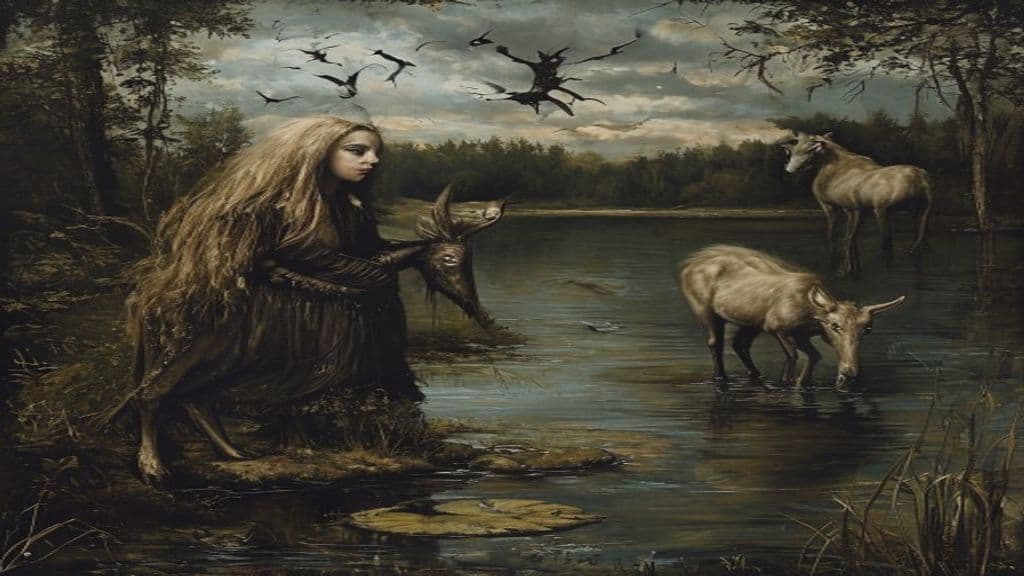
Lauma (Lithuanian laumė; Latvian Lauma) is an Eastern Baltic female supernatural figure classed variously as an ancient sky-born goddess and as a fairy-like guardian spirit. She and her kin (laumės, plural) are associated with childbirth, mothers, children, women's crafts (weaving/spinning), liminal landscapes and atmospheric phenomena such as rain, hail and rainbows.

Lava is the younger of the twin sons born to Rama and Sita in the Ramayana tradition. Raised at the hermitage of the sage Valmiki alongside his brother Kusha, he is taught the epic, recites it publicly, takes part in the ashvamedha yajna episode, and in later traditions is credited with rulership or city-founding in northern Kosala/Lavapuri.

Lavanasura (Sanskrit: लवणासुर, Lavaṇa-asura) is an asura figure in the Ramayana cycle who terrorizes sages and kings from his seat at Madhupuri. Armed with a trident inherited from his father Madhu, he is ultimately slain by Shatrughna by means of a special arrow given through Rama, after which Shatrughna is installed as king of Madhupuri.

Lavinia is a figure from Roman literary and legendary tradition, presented primarily as the daughter of King Latinus and the wife of Aeneas whose marriage and omen-centered story link Trojan and Latin lineages and give the eponym for the town Lavinium. The name also survives as a female given name and as the title/protagonist in later literary works.

Supernatural principle governing behavior and fate in Greek mythology, particularly regarding interactions with the underworld realm of Hades. (Note: - Power tier should be Ancient (a Primordial would have a more fundamental role in shaping reality) - The ability to dictate someone's fate through consumption of food/drink while in Hades suggests i)

Laḫmu (Laḫamu for the feminine counterpart) is an apotropaic Mesopotamian supernatural being attested both as a class of protective attendants in ritual contexts and as an individual primordial figure in some theogonies (notably variants of the Enūma Eliš). Generally regarded as protective household and temple guardians, Laḫmu are also incorporated in certain mythic genealogies.

Laṣ is a Mesopotamian goddess attested as the spouse and intercessory consort of the god Nergal, worshiped in cult centers such as Kutha (E‑Meslam) and Tarbiṣu. She appears in god lists, offering and administrative documents, and is invoked among underworld deities and as a guarantor in treaties.

Leak (also spelled Leyak or Leák) is a malignant witch-figure in Indonesian — especially Balinese — popular belief and horror storytelling, portrayed as a feared supernatural sorcerer who preys upon pregnant women and newborn infants. It appears in modern media and folklore summaries but ethnographic documentation in the supplied materials is fragmentary.

Lebadus (also Lebadeus/Lebados) is a mythic eponymous founder associated with the Boeotian city Lebadeia. Recorded chiefly in Pausanias, he functions as a legendary ancestor whose name explains the place-name and who is said to have come from Athens and led inhabitants down into the plain where the town took his name.

Leda is a mortal Aetolian princess who becomes queen consort of Sparta by marriage to King Tyndareus. In Greek myth she is best known for the episode in which Zeus, in the form of a swan, approaches and couples with her; that union is etiologically important for producing children (notably Helen and the Dioscuri) whose identities and fates shape later mythic cycles.

A 10th-century stone sculpture reassembled into a cross, holding cultural significance as an artifact of Norse tradition. (Note: - Power tier should be Lesser (since it's described as a regional artifact and the abilities are more local/ cultural significance). - Appearance description is unnecessary since there is no original )
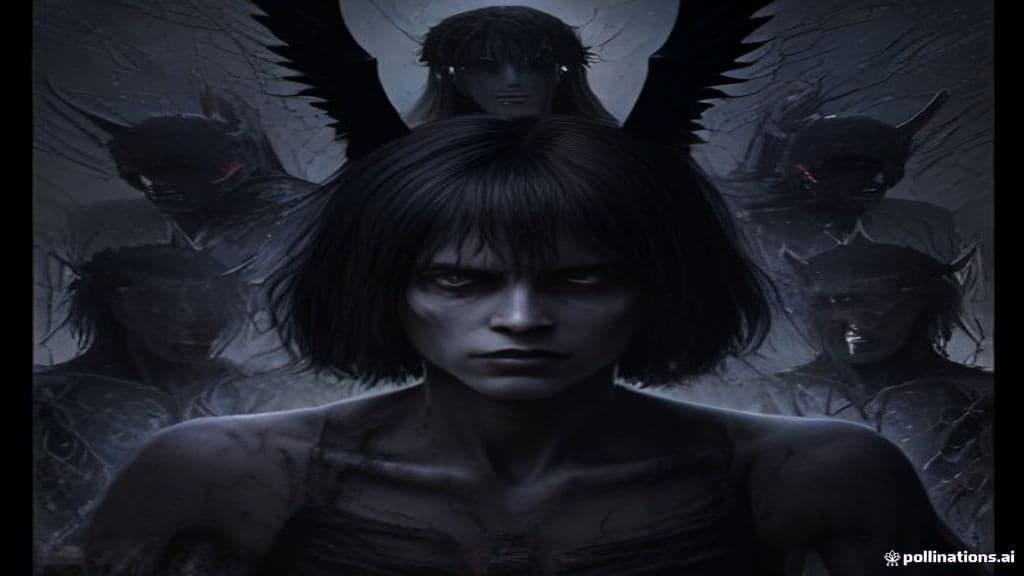
In the provided sources, 'Legion' is the collective name applied to multiple demons identified in the New Testament gospel account of the Gerasene demoniac. The usage denotes a plurality of spirit-beings speaking through or attached to a single afflicted person in that gospel narrative; the supplied material does not develop further theology, appearance, or ritual prescriptions.
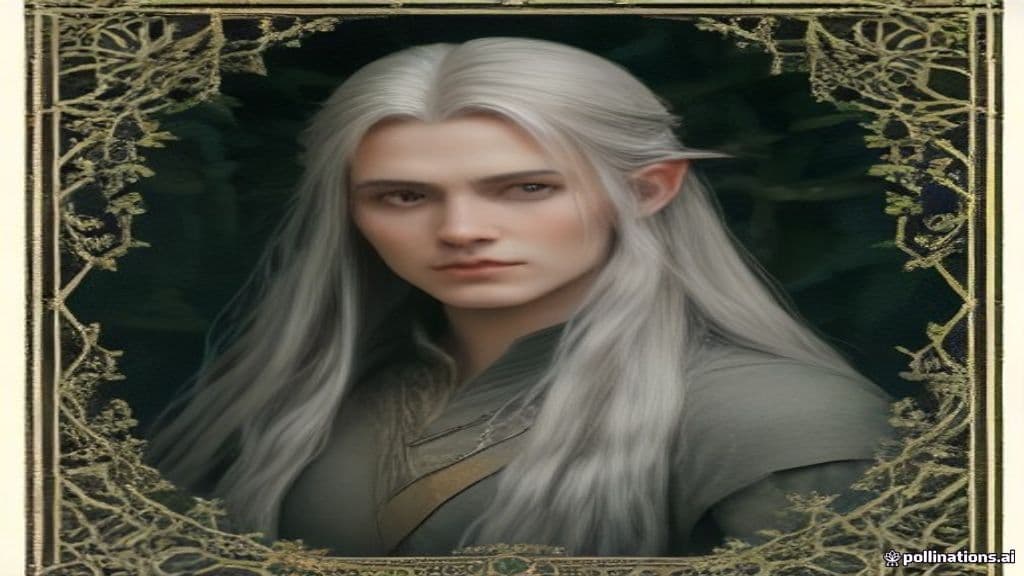
Legolas is a Sindar Elf of the Woodland Realm in J. R. R. Tolkien's legendarium: son of King Thranduil, a member of the Fellowship of the Ring, an exceptional archer and scout, and a narrative embodiment of Elvish perception, longevity, and sea-longing.
Leipephilene (Ancient Greek: Λειπεφιλήνη) is a figure in Greek mythographic genealogies recorded as the daughter of Iolaus and Megara, famed for her beauty and known chiefly as the wife of Phylas and mother of Hippotes and Thero. The transmitted form of her name is corrupt in the manuscripts and has been variously emended by editors; no cult, supernatural role, or ritual practice is attested in the cited sources.

Annual proclamation or prediction made by babalawos (Yoruba priests) to advise and foretell events for the coming year. (Note: - Power tier: Leitra do ano/Letra del año is not a supernatural entity, so it should be removed from the power tier altogether (it's not a Minor Spirit). - Appearance: Add that there is no physical de)

Leitus is a human heroic figure of the Greek epic tradition: a Boeotian leader, admiral of twelve ships at Troy, an Argonaut, and one of Helen's suitors. He is attested in Homeric catalogues and later genealogical traditions and is remembered for martial deeds and a tomb at Plataeae.

Leleges are an autochthonous, pre-Hellenic people named in ancient Greek literature and historiography as former inhabitants of parts of the Aegean and western Anatolia. Classical authors use the category to account for older place‑names, cults, ruins, and social remnants encountered by later Greeks rather than ascribing to them supernatural status.
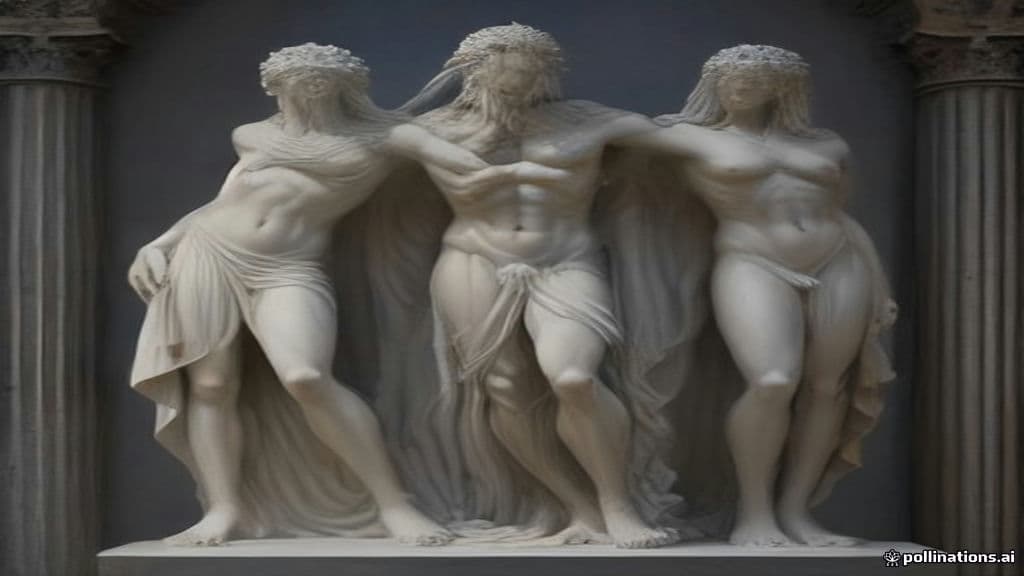
Lelex (Greek: Λέλεξ) is a personal name borne by multiple legendary/mortal figures in Greek mythic-historical genealogies, notably a first king of Sparta, a king of Megara, and an aged hunter from Narycus who took part in the Calydonian hunt. The name functions within foundation myths and heroic-age narratives rather than as a distinct supernatural spirit.

Lelex is a legendary ancestral king in Greek mythic genealogies, described as king of Megara and eponymous progenitor of the Leleges. Sources place him among early pre-Hellenic rulers with variant traditions about his origin (Egyptian immigrant or autochthon) and his descendants' roles in regional foundations.

A young and good-looking hero in Finnish mythology, embodying the ideals and values of his culture. (Note: - Power tier should be changed to "Greater" since Lemminkäinen's abilities are not deity-level but rather that of a powerful regional hero. - Abilities section should be rewritten or removed, as it st)

In Finnish folklore, Lempo is a malevolent supernatural being associated with love and fire. (Note: 1. Power tier should be "Greater" is plausible given the described abilities, but it's worth noting that Greater entities typically exert deity-level influence. 2. No information on sensory cues or wa)

In Roman religious language, a lemur (plural lemures) is a restless or malevolent dead — a nocturnal specter or spirit of the dead whose presence disturbed the living and was ritually placated or exorcised during the Lemuria festival.
The malevolent restless dead of Roman religion — spirits of those who died without proper burial or with unresolved grievances, haunting their former homes until appeased.

Leonteus is a personal name borne by several human figures in Greek mythic tradition, most prominently a Thessalian/Lapith commander who led contingents to Troy in the Iliadic cycle. He functions as a mortal heroic leader and occasional genealogical ancestor in variant traditions rather than as an independent supernatural being.

A diminutive, solitary supernatural being from Irish folklore, commonly depicted as a shoemaker who delights in mischief and is associated with hidden or buried treasure. Prominent in later folkloric collections and the 19th‑century literary revival rather than central early mythic cycles.

Leraie (also spelled Leraje, Leraye, Leriac, Loray, Oray, Zoray) is a named high-ranking spirit in the Western Goetic/grimoire tradition, described as a 'Great Marquis' who appears as a green-clad archer and is held responsible for causing battles, putrefying arrow-wounds, influencing lovers, and commanding numerous legions of subordinate spirits.

Leraje (also spelled Leraie, Loray, Oray, Leriac) is a named spirit in the Goetic/grimoire tradition, described as a 'mighty Great Marquis' who commands thirty-three legions of lesser demons. In the grimoire corpus he is depicted as a green-clad archer and is credited with causing battles, producing arrow-wounds that fester or gangrene, and influencing lovers to come or to go.

A multi-headed serpentine chthonic water-monster of Greek myth associated with the marshes and spring of Lerna; famed as the adversary slain by Heracles in his second Labour, notable for poisonous breath and blood and for regenerative heads (accounts vary).

Three supernatural entities in Celtic tradition associated with death and mortality. (Note: - Power tier: Minor Spirit (not Greater) as their abilities seem limited in scope. - Origin story: Mention "possibly" is not necessary; the text directly states a connection to the triple goddess, but)

A literary and cinematic trope that fuses traditional vampire motifs with eroticized female same‑sex desire. Originating in 19th‑century Gothic fiction and developed through 20th‑century cinema, the figure functions narratively to explore, sensationalize, or critique sapphic desire and female sexual transgression.

A tutelary forest being in Slavic folklore; an embodied, territorial power of the woods that can protect, mislead, or punish humans depending on their behaviour toward the forest. Highly variable in form and described across many regional variants and names.

Lete is not attested in the provided sources as a supernatural being. The attested uses of the form 'Lete' are lexical and onomastic: a Basque toponym and surname, an ancient city (Lete in Mygdonia), a modern village in Nepal, an entry-word in the constructed language Toki Pona meaning 'cold' (with an associated glyph), an esoteric programming language (esolang) called Lete, an ICAO airport code (LETE for Morante Airfield), and a proper name applied to an exoplanet. No sources in the consulted corpus describe Lete as a spirit, demon, deity, or monster.

In ancient Greek cosmology Lethe is a river of the underworld whose waters cause forgetfulness; it functions both as an underworld geographical feature and as the personified abstraction of oblivion. Its waters are implicated in processes of post-mortem memory erasure tied to reincarnation and appear in literary, philosophical, and cultic contexts alongside an opposing memory-pool, Mnemosyne.

Lethus is not attested as a single traditional supernatural being in the supplied sources; the lexical form appears in multiple unrelated contexts: as a Greek mythic personal name (father of Pylaeus), as a taxonomic label in entomology, as modern personal/user names, and as a single modern fan-made fictional monster (the "Lethus Dragon" on a D&D wiki). No coherent folkloric ontology, rituals, or traditional powers are documented for an entity called Lethus.

Leto (Ancient Greek: Λητώ / Λατώ; Latin: Latona) is an ancient Greek goddess best known as the mother of the Olympian twins Apollo and Artemis. She functions in myth and cult as a kourotrophic (mother‑or nurse‑goddess) figure with important sanctuaries at Delos and the Letoon in Lycia, and appears in narratives that emphasize both mildness and the capacity to call down retribution when insulted.

Leuce is an ancient Greek proper name applied to a mythic nymph (daughter of Oceanus) and to multiple place-names (notably an island of the Black Sea, historically called Leuce or 'Snake Island', and other toponyms such as Leuce Come and a titular see in Thrace). In the supplied sources Leuce functions primarily as a name tied to natural features — especially the white poplar — and as a geographic designation rather than as a richly described active supernatural agent.

Leucippe (Ancient Greek Λευκίππη) is a personal name borne by multiple distinct women in Greek myth and later literature — including an Oceanid (water-nymph), a Minyad, several queens and mothers in epic genealogies, a priestess of Apollo, and literary heroines. The name functions as an anthroponym reused across mythic roles rather than denoting a single supernatural being.

Leucon (Ancient Greek: Λεύκων, Leúkōn) is a personal name attested across classical Greek myth and later usages rather than a singular supernatural entity. In the ancient sources it appears as multiple distinct referents: a mythic/genealogical male figure (son of Themisto), one of Actaeon's dogs, and a named hero in an Athenian oracle-account; the same lexical form is also used historically (Leucon I, Bosporan ruler) and in modern scientific and fictional contexts (e.g., the sponge anatomical term leuconoid and various fictional character names).

Leucopeus (Ancient Greek: Λευκωπεύς, Leukōpeús) is attested in Greek mythic genealogies as a mortal prince of Calydon, son of King Porthaon and Euryte and brother of Oeneus and others. He appears only in genealogical listings (e.g., Pseudo-Apollodorus as summarized in modern references) and no independent myths, cults, or deeds are recorded for him in the provided sources.

Leucophrye is a mythological human figure in Greek narrative tradition, attested as the daughter of Mandrolytus who, during a siege, fell in love with an attacking commander (named Leucippus in at least one account) and betrayed her city. She functions as a literary archetype exemplifying the motif of a daughter who betrays kin or polis for an amorous enemy; sources treat her as a narrative exemplar rather than a supernatural being.

Leucosia is a name applied in the source corpus to multiple distinct referents: a possible name for one of the Sirens of Greek mythology (a sea-associated, singing female figure), a modern taxonomic genus of small 'pebble' crabs (family Leucosiidae), and several modern/pop-cultural uses. The supplied sources do not preserve a standalone ancient narrative or ritual corpus specifically attached to a Siren named Leucosia.

No supplied sources attestate a supernatural being named Levan in Georgian tradition. The name Levan appears in the provided materials only as a Georgian masculine given name and in various toponyms and archival name references; there is no folkloric description, origin story, or ritual material relating to a forest spirit by this name in the supplied sources.