Entity Index

A record of the unseen, drawn from world folklore.

7724 entities · page 79 of 129

Isihlahla
Minor Spirit

Isihlahla

Isihlahla is the Nguni common noun for "tree." The supplied sources do not document a distinct, named tree-spirit tradition called Isihlahla; one archive text titled or containing the phrase "Isihlahla Semali" uses a tree as a narrative locus in a modern/fictional account, but this does not constitute ethnographic evidence of a canonical spirit-being.

Isimud
Lesser

Isimud

Isimud (Akkadian Usmû; Hurrian Izzummi) is a minor Mesopotamian deity who functions as the sukkal (personal attendant, messenger, and doorkeeper) of the god Enki (Ea). Attested in mythic and ritual texts from the Early Dynastic through the Late Assyrian periods and adopted into Hurrian and Hittite contexts, he is best known for his distinctive two-faced iconography and his role conveying messages and performing household duties for Enki.

Isis
Ancient

Isis

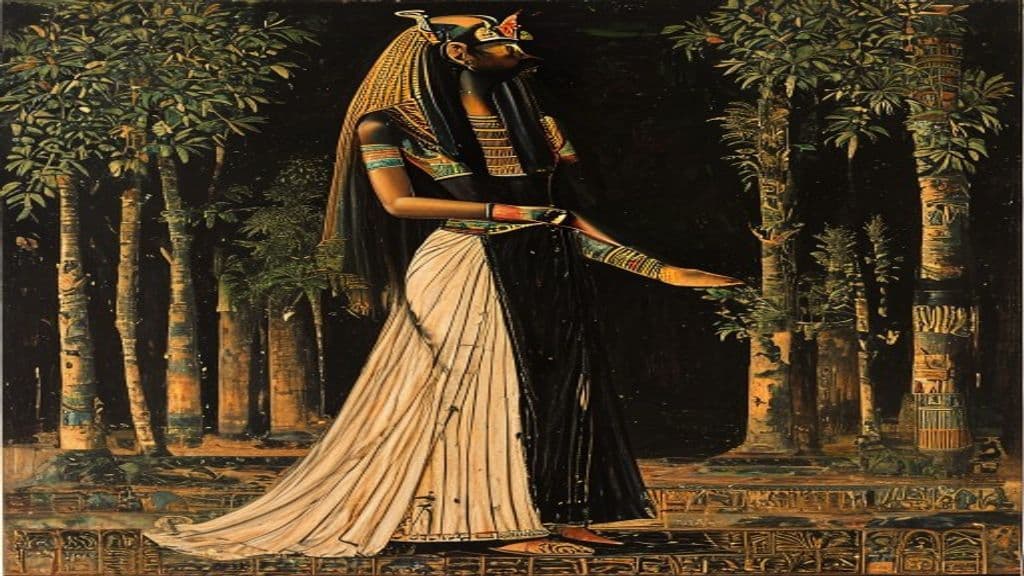
Isis is a major goddess of ancient Egyptian religion, a member of the Heliopolitan Ennead who functions as sister and consort of Osiris, mother and protector of Horus, a funerary and royal protector, and a locus of potent magic whose cult spread through the Hellenistic and Roman Mediterranean.

Ismene (Asopid)
Minor Spirit

Ismene (Asopid)

Ismene is a mortal Theban princess in the Oedipus/Seven Against Thebes cycle of Greek myth and tragedy, usually presented as a daughter (and half‑sister) of Oedipus and sister of Antigone, Eteocles, and Polynices. In classical tragedy she functions as a ritual participant and a cautionary, law‑respecting foil to Antigone; earlier poetic and iconographic traditions record divergent, often violent fates.

Ismenis
Lesser

Ismenis

Ismenis (Ancient Greek Ἰσμηνίς) is a naiad — a freshwater nymph — associated with the Boeotian river Ismenus. In the surviving literary tradition (notably Statius' Thebaid as summarized in modern reference works) she is named as the mother, by Pan, of Crenaeus and is described searching for and lamenting his body after he is slain in the war of the Seven against Thebes.

Ismenus
Lesser

Ismenus

Ismenus is the personified river (potamos) of the Boeotian stream Ismenus/Ismenos, both a geographical river of Thebes and a mythic river-god whose genealogy and episodic agency appear in Greek epic and mythographic traditions (notably Statius' Thebaid and later summaries).

Isonade
Greater

Isonade

A large, shark-like sea monster from Japanese regional folklore (notably Matsuura and other parts of western Japan). Its body is said to remain hidden beneath the waves, with only a huge, barbed tail fin visible; it approaches boats stealthily, can snare sailors with its hooked tail, capsize vessels, strike beaches, and is associated with fierce winds when it appears.

Israfil (ʾIsrāfīl)
Ancient

Israfil (ʾIsrāfīl)

Israfil is an elevated angel in Islamic tradition who, according to later hadith and exegetical accounts, is appointed to blow the trumpet (ṣūr) that signals Qiyamah (Day of Judgment). He is described in traditional sources as nearest the Divine Throne, awaiting God's command, and occasionally portrayed as a celestial scribe and the Muʾadhdhin (caller) for those in Heaven.

Issitoq
Lesser

Issitoq

Issitoq is an Inuit supernatural being described in the cited sources as a deity that punishes those who break taboos. The same sources state that he usually takes the form of a giant flying eye.

Issun-bōshi
Lesser

Issun-bōshi

Issun-bōshi (一寸法師, "One-sun Boy") is the protagonist of a Japanese folktale: a human child born the size of one sun (about 3 cm) who travels to the capital, serves in a noble household, defeats an oni by bravery and craft, and— in some variants—acquires a magic mallet that enlarges him. The figure is principally a miraculous or abnormal human hero in premodern tale cycles, later sometimes mentioned in Edo-period popular culture as a label for very small people or as a yōkai-type motif.

Istrus
Lesser

Istrus

Istrus is not attested in the provided sources as a mythological being; the only direct occurrence in the corpus is a 1932 auction catalogue phrase referring to "Istrus Münzen" (a find of Istrus coins), suggesting a toponymic or numismatic usage rather than a spirit or creature. Possible connections to classical place-names (e.g., Histria/Ister) are explicitly uncertain given the available material.

Istämi
Lesser

Istämi

Istämi was a 6th-century Turkic ruler who governed the western portion of the Göktürk realm as a yabghu and is retrospectively referred to as a khagan. He exercised de facto sovereignty in the west, dominated Sogdian subjects there, defeated the Hephthalites, and engaged in high-level diplomacy with Sassanid Persia and Byzantium (including sanctioning a Sogdian embassy to Constantinople in 568).

It! The Living Colossus
Greater

It! The Living Colossus

It! The Living Colossus is a fictional 100-foot stone humanoid statue from Marvel Comics (originally Atlas) that becomes animate when inhabited or controlled by transferred minds (a stranded alien Kigor or human Bob O'Bryan). Functioning as a monumental constructed object rather than an indigenous supernatural being, it has been used alternately as a rampaging weapon and as a vehicle of human agency across multiple comic-storyline revivals.

Itonus
Lesser

Itonus

Itonus is an eponymous figure in Greek myth, appearing in two distinct genealogical traditions as a king and ancestor tied to the settlement Iton in Phthiotis and to a local sanctuary of Athena. The name is glossed in modern summaries as Ἴτωνος (romanized Itonos / Itonus) and has been interpreted as having willow associations in some scholarly reconstructions, but classical sources present him primarily as a mortal founder/ancestor rather than an independent supernatural spirit.

Ittan-momen
Lesser

Ittan-momen

Ittan-momen (一反木綿, "one bolt of cotton") are Japanese yōkai traditionally described in Kagoshima folklore as a white, flying strip of cloth (reported roughly 10.6 m by 30 cm) that appears at dusk and night, wrapping around faces and necks to suffocate or carry victims away. The motif functions chiefly as a local cautionary tale and has been reimagined in modern popular culture.

Itzam Kʼan Ahk II
Ancient

Itzam Kʼan Ahk II

Itzam Kʼan Ahk II (born 18 Nov 701 – died 26 Nov 757) was an ajaw (king) of the Late Classic Maya polity Piedras Negras. He is attested in multiple stelae and panel inscriptions as a political and ritual actor who celebrated calendrical rites, engaged in regional diplomacy and warfare, and was buried at a sacred mountain (identified with Pyramid O-13) whose tomb and associated monuments were venerated by successors.

Itzamná
Ancient

Itzamná

Itzamná is a principal upper-world creator deity in Maya religious thought, associated with the sky, priestly arts (including writing), calendrical authority, agriculture (maize), and rulership. He appears across Classic iconography and Postclassic codices in multiple transformative aspects (aged tonsured maize form, a Principal Bird Deity, and within a two‑headed caiman earth image) and is invoked in specific ritual months in early‑colonial reports.

Itūr‑Mēr
Ancient

Itūr‑Mēr

Itūr‑Mēr is an Old Babylonian-era tutelary deity of the city of Mari (Tell Hariri), closely associated with the royal house of Zimri‑Lim. He functions in civic religion as a guardian of oaths, a protector of the city and dynasty, an agent in forensic revelation, and—in limited attestations—a healer.

Iunit
Lesser

Iunit

Iunit is a minor ancient Egyptian goddess whose name is translated as "She of Armant" and who is attested as the consort (wife) of the war-god Montu (also spelled Mentu). Surviving references are brief and localizing; no substantial myths, iconography, or cultic rites for Iunit are recorded in the supplied sources.

Iusaaset
Primordial

Iusaaset

Iusaaset is a primordial female deity from the Heliopolitan creation tradition of Ancient Egypt, presented as a feminine counterpart or aspect of the creator Atum and associated with the emergent, growth-related side of creation and abundance.

Iwin (Yoruba forest spirits/ogres)
Minor Spirit

Iwin (Yoruba forest spirits/ogres)

No evidence for a Yoruba supernatural entity named 'Iwin' was found in the supplied sources. The available materials that contain the string 'Iwin' refer to unrelated modern place names and commercial game sites, not to Yoruba cosmology or spirits.

Ixchel
Ancient

Ixchel

Ixchel is a major Maya goddess attested in Post‑Classic and colonial accounts and identified by scholars with the Classic codical figure ‘Goddess O’ (often rendered Chak Chel). She functions primarily as an aged female divine patron of childbirth, midwifery, and medicine, and is also associated in codices with rain/water imagery and occasionally fearsome jaguar/warrior aspects.

Ixtab
Lesser

Ixtab

Ixtab (Ix Tab) is an indigenous Yucatec Maya female supernatural figure reported in colonial sources as the being who receives or escorts those who died by hanging to a special heaven. The figure's identification as a pre‑Spanish 'goddess of suicide' is contested in modern scholarship and popular accounts.

Iya
Primordial

Iya

A malevolent storm-monster from Lakota mythology, consuming villages and living beings. (Note: 1. Power tier: Downgrade to Ancient (deity-level) - Iya's abilities are not primordial or cosmic in scale. 2. Origin story: Remove "born from the same cosmic energies as his brother Iktomi" - there is)

Iya Nla
Primordial

Iya Nla

The primordial spirit of all creation in Yoruba cosmology, considered the source of all existence. (Note: - Power tier: Primordial -> This seems accurate given that Iya Nla is considered the source of all existence. - Appearance: Not mentioned in the source material, so remove or clarify. - Origin story: )

Izanagi (Izanagi-no-Mikoto)
Primordial

Izanagi (Izanagi-no-Mikoto)

Izanagi is a principal creator deity in early Japanese cosmogony who, together with his sister-spouse Izanami, shapes the chaotic primordial world, begets the islands and many kami (including Amaterasu, Tsukuyomi, and Susanoo), descends to Yomi to retrieve Izanami, and establishes purification and boundary practices by his actions on return.

Izanami (Izanami-no-Mikoto)
Primordial

Izanami (Izanami-no-Mikoto)

Izanami is a primordial female creator deity in ancient Japanese cosmogony and Shinto worldview, portrayed as co-creator of the Japanese islands and many kami and as the originator of death after dying in childbirth and taking residence in the land of the dead (Yomi).

Izhma (forest spirit)
Minor Spirit

Izhma (forest spirit)

Izhma is a putative name sometimes discussed in secondary sources in relation to the Izhma River and the Izhma Komi people, but the provided materials contain no primary folkloric attestations describing an entity named Izhma as a forest spirit. References to spirits and landscape beings exist in the regional cultural context, but an Izhma spirit is not documented in the supplied sources.

Iðunn
Greater

Iðunn

Iðunn is an Old Norse goddess of the Aesir who keeps ash-wood box(es) of apples that restore the gods' youth. She is attested as wife of the skald-god Bragi and central to a myth in which her abduction by the jötunn Þjazi causes the gods to age until she is returned.

Iškur / Adad / Hadad
Ancient

Iškur / Adad / Hadad

Iškur (Sumerian), Adad (Akkadian/Mesopotamian) and Hadad/Hadda (Canaanite/Eblaite) are the cognate ancient Near Eastern storm- and rain-deities attested from the Early Bronze Age onward; they are cultic figures invoked in hymns and worshipped at temple centers such as Karkar and Ebla.

Ištaran
Lesser

Ištaran

Ištaran is the tutelary deity and divine judge of the Mesopotamian city of Der. He is attested from the Early Dynastic period through the Middle Babylonian period, associated with serpents (especially the snake god Nirah), and was politically important in legitimizing local rulers; his cult statue was at times seized by Assyrians to secure the city's loyalty.

Išḫara
Greater

Išḫara

Išḫara is a polyvalent ancient Near Eastern goddess first attested at Ebla in the third millennium BCE, later incorporated into Mesopotamian, Hurrian, Hittite and other regional religious traditions. She functioned as a tutelary royal deity, an authority over love and the institution of marriage, an oath- and divination-linked divine figure, and was associated symbolically with reptiles and, in some Mesopotamian contexts, scorpions.

JATO Rocket Car
Lesser

JATO Rocket Car

A modern Anglophone urban legend and meme about a Chevrolet Impala fitted with a JATO unit that achieves extreme speeds and crashes spectacularly; circulated widely on Usenet, email lists, hacker zines, and popular media and subsequently debunked by authorities and experimenters.

Jabiru
Minor Spirit

Jabiru

Jabiru primarily denotes a large Neotropical stork species (Jabiru mycteria). The word, from Tupi–Guaraní meaning "swollen neck," is also used as a place-name (Jabiru, Northern Territory) and as a modern commercial/technical name (e.g., Jabiru Aircraft, rocket/vehicle names, and a bacteriophage). The provided sources do not document any supernatural or mythic entity named Jabiru.

Jabru
Ancient

Jabru

Jabru is a rarely attested theonym recorded in Mesopotamian sources as an Elamite high god-name. Mesopotamian god-lists and ritual commentaries equate Jabru (or the variant Yabnu/dia-ab-na) with major Mesopotamian sky-deities (Anu or, in one list, Enlil), and he also appears in an Assyrian underworld/vision text as a guardian of a royal corpse.

Jacawitz
Ancient

Jacawitz

Jacawitz is a Postclassic Kʼicheʼ Maya mountain-and-fire deity, patron of the Ahaw Kʼicheʼ lineage and member of a triad with Tohil and Awilix. Associated with a temple-pyramid at Qʼumarkaj and with foundation myths locating the gods at Tollan, Jacawitz indexes mountain, fire, and lineage symbolism and likely received demanding offerings in ritual practice.

Jack Pumpkinhead
Lesser

Jack Pumpkinhead

A constructed, magically animated humanoid from L. Frank Baum's Land of Oz, created by the application of the Powder of Life to a body of wood and a carved pumpkin head. Treated as a social resident of Oz, he gardens pumpkins for replacement heads and appears across Baum's sequels and later continuations and adaptations.

Jack o' the Bowl
Lesser

Jack o' the Bowl

A Swiss household spirit (described in sources as a brownie or kobold) who, in exchange for a nightly bowl of sweet cream or milk, guides cows to safe grazing — even on otherwise dangerous mountainsides — and is maintained by a routine domestic offering.

Jack the Giant Killer
Lesser

Jack the Giant Killer

A cycle of Cornish/British folktales about a clever young man named Jack who, during the reign of King Arthur, outwits, ambushes, and kills a number of man- and livestock-eating giants, freeing captives and appropriating wealth. The tales place Jack in an Arthurian, magical landscape populated by giants, sorcerers, enchanted persons, and magical objects.

Jack-o'-lantern
Lesser

Jack-o'-lantern

A jack-o'-lantern refers both to a carved, hollowed vegetable lantern (commonly a pumpkin in North America; historically turnips, mangelwurzels or rutabagas in Britain and Ireland) used at seasonal festivals such as Halloween, and to an older English dialect name for wandering peat-bog lights (ignis fatuus / will-o'-the-wisp). The carved object and the atmospheric phenomenon are related in folk imagination: the older name for ghost-lights helped supply the name and some meanings of the carved lantern used at liminal festivals.

Jackal (folklore)
Lesser

Jackal (folklore)

A liminal canid figure in multiple cultural traditions, the jackal functions as a symbol and occasional ritual embodiment connected to desolation, funerary contexts, cunning wisdom, and in some tantric contexts a manifestation of the goddess Kali. Sources treat it primarily as an animal with layered symbolic and mythic uses rather than a consistently personified independent supernatural agent.

Jacob
Lesser

Jacob

Jacob (Hebrew: יעקב, Yaʿaqōv) is a central human figure in the Book of Genesis, portrayed as the third Hebrew patriarch and the progenitor of the Twelve Tribes of Israel. The supplied sources treat him as a legendary/historical ancestor within the Abrahamic family line rather than as a supernatural being.

Jaddua
Lesser

Jaddua

Jaddua is presented in post‑exilic Jewish sources as a human high priest (kohen gadol) of Jerusalem who exercised top priestly authority, adjudicated priestly discipline, and—according to later historiographical traditions—received a divine dream that shaped a communal ritual response at the approach of Alexander the Great.

Jade
Lesser

Jade

Jade is a material and cultural concept referring to two distinct groups of ornamental rocks—nephrite and jadeite—valued across many societies (not a supernatural being). It has deep historical, ritual, and symbolic significance especially in East Asia and Mesoamerica, and carries folk associations with health and social status.

Jadis (the White Witch)
Greater

Jadis (the White Witch)

Jadis, commonly called the White Witch, is a fictional antagonist created by C. S. Lewis who rules Narnia as a sorceress-queen and whose magic enforces the prolonged 'Hundred Years Winter.' She is the principal opposing force in The Lion, the Witch and the Wardrobe (1950) and is a central figure in The Magician's Nephew (1955).

Jagaddhātrī
Greater

Jagaddhātrī

Jagaddhātrī is a name used in Bengali cultural production and, in one classificatory source, identified as an aspect of the Hindu goddess Durga. In the supplied materials the term appears in bibliographic records of Bengali-language books and as the title of a contemporary Bengali television series; the sources do not provide ritual, iconographic, or narrative detail about the figure.

Jah (Yah)
Ancient

Jah (Yah)

Jah or Yah (Hebrew: יָהּ, Yāh) is the short form of the Tetragrammaton (יהוה, YHWH), the personal name of the God of Israel (commonly vocalized as Yahweh). It functions as an abbreviated theonym appearing in Hebrew scripture and liturgical formulas (notably hallelujah) and is used in prayer, praise, and religious study rather than as an independent folkloric being.

Jahangirnama (Qasim Madih Harawi)
Minor Spirit

Jahangirnama (Qasim Madih Harawi)

Epic poem written in Persian, detailing the story of Jahangir son of Rostam, composed in Herat and published in Mumbai. (Note: - Power tier: Primordial (given its cosmic scope and ancient origin) - Origin story: The source material provides the information on its origin, stating it was composed in Herat. - Appearance: Not app)

Jakar
Ancient

Jakar

The supplied sources do not document a discernible Assamese land/forest spirit or protector-deity named Jakar. The name appears in the materials as (a) a Bhutanese place-name whose foundation myth involves a roosting white bird, (b) a French-language fictional character fragment, and (c) as part of modern personal-name usage in an Indian gazette; none of these sources provide ethnographic evidence for an Assamese supernatural being called Jakar.

Jakhin
Minor Spirit

Jakhin

No information about a South Asian folk entity named Jakhin is present in the provided source. The archival document supplied is a corrupted or unrelated bibliographic/technical fragment and contains no references to Jakhin, its attributes, rituals, or cultural context.

Jambavan
Ancient

Jambavan

Jambavan is a long-lived rājā of the bears in Hindu epic tradition who acts as warrior, strategist, and wise elder; he aids avatars of Vishnu (notably Rama and Krishna), appears across multiple yugas, and is associated with narrative episodes such as the Kishkindha counsel to Hanuman and the Syamantaka gem combat with Krishna.

James Bartley (whale story)
Minor Spirit

James Bartley (whale story)

A late-19th-century maritime wonder tale circulated in newspapers claiming a whaler named James Bartley was swallowed whole by a sperm whale and later found alive in its stomach; later investigation and archival evidence cast significant doubt on the historicity of the incident. The story functions culturally as a 'modern Jonah' sea yarn rather than as an account of a supernatural being.

Jamshid
Ancient

Jamshid

Jamshid (Persian Jamshēd; Middle/New Persian Jam) is a mythic early king of the Pishdadian dynasty in Iranian tradition, identified with Avestan Yima (Yima xšaēta, 'radiant Yima'). In Zoroastrian scripture (notably the Vendidad) he is a divinely appointed shepherd‑turned‑king who receives instruments and a mandate from Ahura Mazda to rule, nourish the earth, and manage human prosperity and boundaries.

Jan Turpin
Minor Spirit

Jan Turpin

No folkloric supernatural entity named Jan Turpin is attested in the provided sources. The corpus contains two human-name references (Jordan Turpin; Benny Turpin) and a single terse Wikidata label linking a phrase 'giant of Nieuwpoort, Belgium' to an item associated with the label; these materials do not establish a coherent folkloric figure.

Janaka
Ancient

Janaka

Janaka is a legendary and dynastic king of Videha (capital Mithila) who functions in Indic sources as an exemplar of ideal kingship and spiritual realization—a ruler who combines political authority, patronage of Vedic learning, and non-attachment. The name is used both as a regnal title for Videha's kings and as the personal/regnal name of the famous monarch who is the adoptive father of Sītā in the Rāmāyaṇa.

Jangsanbeom (Jangsan tiger / Jangsan spirit)
Lesser

Jangsanbeom (Jangsan tiger / Jangsan spirit)

The name Jangsanbeom (often rendered in English as 'Jangsan tiger' or 'Jangsan spirit') appears in a contemporary South Korean cultural product (the 2017 film The Mimic). The single provided source references only the film and does not supply traditional folkloric details about the entity; further research into primary folkloric materials is required to determine whether Jangsanbeom is an established traditional being or a modern invention for the film.

Jangseung (Korean tradition)
Greater

Jangseung (Korean tradition)

A physical object serving as a guardian or tutelary deity for Korean villages, typically made of wood and placed at village edges. (Note: * Power tier: Minor Spirit (a Greater entity would have more significant abilities) * Abilities: The jangseung is not believed to ward off evil spirits/demons, but rather serves as a deterrent and a r)

Janjanbi
Lesser

Janjanbi

Janjanbi (じゃんじゃん火) is a Japanese local tradition of onibi — animate ghost‑lights tied to human deaths and unsettled spirits. Documented variants from Nara Prefecture present janjanbi as balls of fire or hitodama that appear at specific sites, make a characteristic "jan‑jan" sound, and are woven into local rites and avoidance customs.

Jann
Minor Spirit

Jann

The weakest class of djinn in Islamic tradition, associated with desert winds and taking the form of snakes or whirlwinds, dwelling in empty wilderness and posing little threat to those who know the proper invocations.

Janus
Ancient

Janus

Janus (Latin: Iānus) is the ancient Roman god who presides over beginnings, passages, thresholds, and temporal transitions. He is a liminal deity invoked at the start of rituals and is symbolically associated with gates, doorways, duality, and the ordering of time.