Christian Supernatural Beings

398 documented Christian supernatural beings from the Evil Eye grimoire, including 166 lesser and 78 ancient in power tier.

page 7 of 7

Qarinah (Qareena)
Lesser

Qarinah (Qareena)

A nocturnal female spirit-figure presented in comparative materials as a harmful attendant or 'demonic double' that afflicts sleepers; attested in fragmentary sources linking Arabic/Coptic folk notions of qarīn/qarīnah (Aqran) with talismanic protections in Upper Egyptian popular practice.

Queen of Sheba
Lesser

Queen of Sheba

A legendary royalwoman who appears across Hebrew, Christian, Jewish, Islamic, and Ethiopian Christian traditions as a powerful sovereign from 'Sheba' who visits King Solomon to test his wisdom and exchanges gifts and riddles. She is presented in primary accounts as a human monarch whose visit functions as a literary and theological focal point rather than as a supernatural being.

Rahovart
Greater

Rahovart

Rahovart is an infernal being named in Collin de Plancy’s Dictionnaire Infernal (1818), which cites an earlier Renaissance moralité attributed to Durzel. In those sources Rahovart is described as a companion of Satan tasked with tormenting certain moral types, associated with avalanches and ghostly torment, and said to collect souls of elderly victims into a basket until the day of judgment.

Raphael (Archangel)
Ancient

Raphael (Archangel)

Raphael is an archangel in Jewish and Christian traditions whose name means "God has healed." He appears in the Book of Tobit as a divine agent who guides Tobias and effects healing, and is commemorated in Christian liturgy as a principal angel invoked for healing, guidance, and protection of travelers.

Rhodopis and Euthynicus
Lesser

Rhodopis and Euthynicus

A pair of mortal young hunters attested in late antique and Byzantine literary sources as companions (or prospective companions) of Artemis whose enforced chastity is undone by Aphrodite’s agency; Rhodopis is transformed into a spring that later functions as a narrative test of female sexual purity.

Rigobert
Minor Spirit

Rigobert

Rigobert (d. c. 750) was a Benedictine monk, abbot of the Abbey Saint-Pierre of Orbais, and bishop of Reims (succeeding Saint Rieul in 698) who is venerated as a saint in the Catholic Church. He is remembered for his monastic leadership, episcopal ministry (including the baptism of Charles Martel), his forced removal from the see, penitential retirement, and a medieval cult centred on the translation and enshrinement of his relics. His feast day is observed on 4 January.

Ruach
Ancient

Ruach

Ruach (רוּחַ) is a Hebrew term used in Jewish and related theological discourse to denote spirit, breath, or wind; it functions as the life‑giving principle that animates living beings and as a mode or influence of God's presence (e.g., Ruach Ha‑Kodesh, the Holy Spirit). The term is primarily conceptual and metaphorical rather than an individualized anthropomorphic spirit in the supplied sources.

Sachiel
Greater

Sachiel

Sachiel is a named angelic intelligence attested in Jewish and later Western occult sources, functioning as a planetary correspondent for Jupiter and associated with wealth, abundance, charity, and Thursday. The name is a product of textual transmission and conflation in medieval occult books and appears in talismanic and grimoire contexts rather than as a narrative visionary figure.

Saint Aventinus
Lesser

Saint Aventinus

Aventinus is a personal name borne by multiple historical and legendary figures recorded in late-antique, medieval, and later European sources. The name appears as an eponymous figure in Roman/Latinate legend (cited by Augustine), as medieval Christian holy men (a disciple of St. Loup ca. 537; a hermit of Tours associated with St. Thomas Becket, d. 1180), and later as a secular surname (e.g., the historian Johannes Aventinus). The provided sources do not present a single unified supernatural persona, cultic ritual corpus, or consistent iconography for a singular "Saint Aventinus."

Saint George
Greater

Saint George

An early Christian martyr and soldier-saint traditionally said to have died in 303 CE, venerated across many Christian traditions and later portrayed in popular legend as the dragon‑slayer and protector of communities.

Saint Peter
Ancient

Saint Peter

Saint Peter (Simon bar Jonah; Cephas/Petros) is an early Christian apostle and leading disciple of Jesus who, in later Catholic and Orthodox tradition, is venerated as the foundational bishop of the church in Rome and a major saint. Tradition attributes to him a leadership role in the primitive Christian community, a renaming by Jesus signifying a "rock/foundation" role, and martyrdom in Rome under Nero. Relics and institutions (notably the Chair of Saint Peter) continue to anchor his symbolic authority.

Saint Pimenius
Lesser

Saint Pimenius

Saint Pimenius (variants: Pigmenius, Pigmentius, Pigmène, Pimenio) is presented in the supplied materials as a Christian holy man and martyr venerated in the Catholic tradition. He is remembered as a tutor to the future Emperor Julian and as a martyr reportedly drowned in the Tiber in 362 AD, with later local cultic remembrance at a monastery in Aquis (Talavera de la Reina).

Samael
Ancient

Samael

An angelic figure in Jewish textual traditions whose roles include accuser/adapter (Satanic function), tempter, destroyer/angel of death, and, in later mystical texts, leader of demonic or qlippothic forces. Samael is presented variously across Second Temple literature, midrashim, and Kabbalah; his destructive functions are often framed as serving divine purposes rather than as an independent absolute evil.

San La Muerte
Lesser

San La Muerte

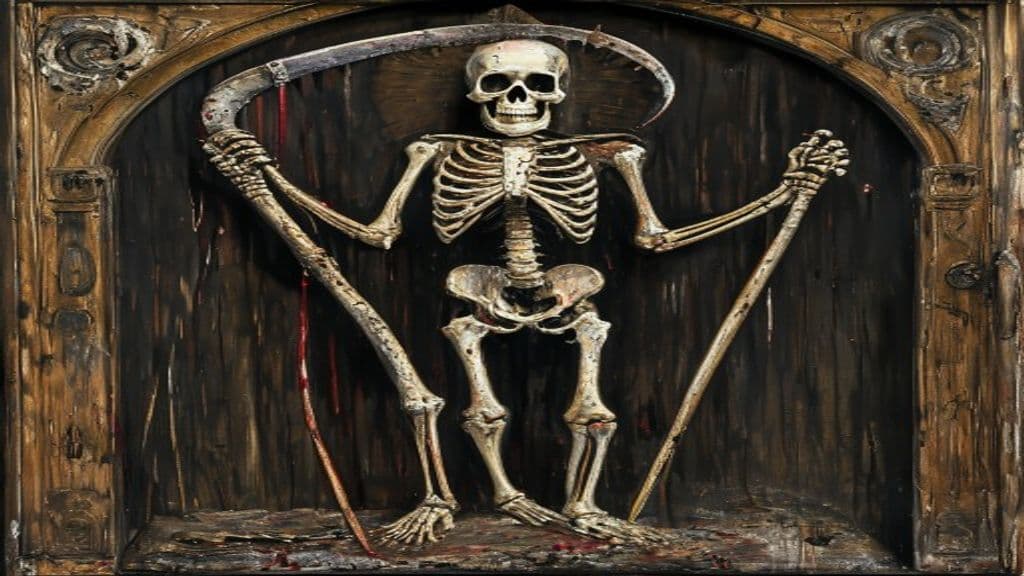
San La Muerte is a skeletal folk saint venerated in Paraguay, northeastern Argentina and southern Brazil. Represented by small standing statuettes ('santitos'), the devotion functions as a transactional, saint-like patron who grants protections, favors (including aid in love, health, luck, and criminal matters) in exchange for offerings and ongoing reciprocal care.

Sandalphon
Ancient

Sandalphon

Sandalphon is a highly elevated angelic figure in later Jewish and Christian mystical literature (rabbinic, midrashic, and Kabbalistic), often ranked among the chief angels. He functions as an intermediary who gathers human prayers and transmits them to God, is associated with heavenly song, and is placed in Kabbalah as representing the sephirah Malkuth and as chief of the Seventh Heaven.

Sariel
Ancient

Sariel

Sariel (Heb. Śārīʾēl) is a named angel attested in Jewish apocryphal literature and in late‑antique apotropaic contexts. He is listed among a small group of prominent angels charged with oversight functions (e.g., set over spirits who sin) and appears as an invoked protective name in ritual artefacts and sectarian practice.

Satan
Ancient

Satan

A central oppositional figure in Abrahamic traditions who functions variously as an accuser, tempter, tester, and rebel. In earliest Hebrew Bible contexts the term functions as a role within the divine council; in later Jewish, Christian, and Islamic developments the figure becomes a more fully personified adversary who incites humans to sin and leads hostile spirits.

Sceafa
Minor Spirit

Sceafa

Sceafa is an Old English legendary ancestral figure: a mysteriously arriving child found asleep in a small boat with a handful of grain, later accepted and made a progenitor of royal lines (notably in Lombard and some Anglo-Saxon pedigrees). He functions as an etiological founder whose miraculous origin legitimizes dynastic descent.

Se'irim
Lesser

Se'irim

Se'irim (Hebrew: שעיריּם, singular sa'ir) are a class of non-human, supernatural beings in Jewish textual tradition associated with wild, liminal, and desolate places. Texts and commentaries describe them as demonic or spirit-like creatures linked to ruins, the nether regions, and imagery of he-goats or hairy satyr-like figures; they are also used metaphorically in prophetic literature to signify desolation and divine judgment.

Selaphiel
Greater

Selaphiel

Selaphiel is an archangel venerated in Eastern Orthodox devotional and liturgical imagination as a heavenly intercessor associated with prayer and worship. He is named in Hebrew tradition (Šəʾaltīʾēl, "I have asked God") and appears in iconography as a humble, prayerful figure sometimes holding a thurible.

Seraph (seraphim)
Ancient

Seraph (seraphim)

A seraph (Hebrew: saraph; plural seraphim) is a class of heavenly, non‑human beings in ancient Jewish scripture and later Jewish, Christian, and Islamic angelologies, associated with proximity to the divine throne, perpetual liturgical praise, and a burning or purifying quality tied to the root meaning of their name.

Serpents in Jewish Tradition (Biblical Context)
Primordial

Serpents in Jewish Tradition (Biblical Context)

Symbolic representation of evil and positive aspects, reflecting the complex nature of their symbolism. (Note: - Power tier: Downgrade to Greater (they are described as representing "evil power" but also have positive aspects) - Appearance: Add note that there is no physical description provided in source mate)

Seth
Ancient

Seth

Two distinct traditional personae share the name 'Seth' in the supplied corpus: (1) the Abrahamic Seth, the third son of Adam and Eve and an antediluvian patriarch associated in later traditions with righteous lineage and transmission of knowledge; and (2) the Egyptian god Set/Seth, a powerful deity ritually opposed in the cult of Osiris, for whom a temple rite titled 'The book of the victory over Seth' prescribes the making of a red-wax figure to effect his downfall.

Seven Deadly Sins
Lesser

Seven Deadly Sins

A classificatory schema in Christian theological and monastic tradition that groups seven principal vices—capital or 'head' sins—understood as formative dispositions that incline persons to further wrongdoing and threaten their relationship with God.

Shtriga
Greater

Shtriga

In Albanian folklore a shtriga (Albanian indefinite shtrigë; definite shtriga) is a malevolent, witch-like woman who nocturnally sucks the life or blood of infants and children, often leaving victims comatose or dead; she is said to transform into a flying insect after feeding and, in many accounts, only the shtriga herself can reverse the harm she causes.

Sihuanaba
Lesser

Sihuanaba

A Central American shapeshifting female spirit from regional oral tradition that lures solitary travelers—often portrayed as beautiful and long‑haired—into isolated or hazardous places before revealing a grotesque true form; the motif functions as a cautionary legend enforcing social norms.

Tartaruchi
Greater

Tartaruchi

Tartaruchi (singular tartaruchus) are a class of custodial agents in early Christian apocryphal visionary literature who are set over Tartarus (the place of torment) and charged with receiving, restraining, escorting, and torturing condemned souls. A named figure among them, Temeluchus, appears in the Apocalypse/Vision of Paul and related apocryphal texts.

Taweret
Lesser

Taweret

Taweret is an ancient Egyptian household protectress associated primarily with childbirth, fertility, and domestic protection. Depicted in composite hippopotamus-derived form, she appears on amulets, birth wands, and funerary objects and is invoked as a pacificatory maternal figure aiding both living birth and symbolic rebirth.

Titivillus
Lesser

Titivillus

Titivillus is a medieval Christian demon associated with the collection of omitted, syncopated, or mispronounced syllables and fragments from liturgy and the errors of scribes and printers; he is depicted chiefly as an infernal agent who gathers these fragments in sacks to be counted against offenders.

Tree of Life (Biblical)
Primordial

Tree of Life (Biblical)

A sacred entity in Jewish tradition associated with eternal life, located within the Garden of Eden. (Note: 1. Power tier: Primordial seems too high; while it's a significant entity, its power is more accurately described as deity-level (Ancient) in the biblical context. 2. Appearance: The draft should clar)

Tree of the Knowledge of Good and Evil
Primordial

Tree of the Knowledge of Good and Evil

In Jewish tradition, a tree with special significance located in the Garden of Eden, serving as a catalyst for moral awareness and discernment between good and evil. (Note: 1. The Power tier should be revised to "Primordial" with a note explaining that its exact nature and classification are unclear, as stated in the source material. 2. The description of sensory cues sh)

Tribe of Dan
Lesser

Tribe of Dan

The Tribe of Dan (Hebrew: דָּן, 'Judge') is one of the twelve Israelite tribes in the Hebrew Bible/Torah. In the biblical narrative it is a kin- and territorial-group with an ancestral eponym (Dan), an allotted territory that shifted, notable figures (most famously Samson), and a range of later historical and interpretive traditions about migration and identity.

Uriel
Greater

Uriel

Uriel is an archangel figure in Jewish and Christian apocryphal, liturgical, and popular traditions, variously described as an interpreter of prophecy, guardian of cosmological thresholds (Gate of Eden, Tartarus/pit), regent of light or the sun, and a guide or agent in salvation narratives. His prominence and specific functions vary by tradition (Second Book of Esdras, Ethiopian homily, apocryphal gospels, patristic and later angelologies).

Virgin Mary (Marian devotion and apparitional tradition)
Lesser

Virgin Mary (Marian devotion and apparitional tradition)

A central historical and devotional figure — Mary of Nazareth — whose veneration across Christian communions and other religions has produced a widespread corpus of devotional practices, shrine cults, and reported apparitional phenomena. The sources treat her primarily as the first‑century Jewish mother of Jesus and as an object of liturgical and popular devotion rather than as a hostile supernatural monster.

Watcher
Greater

Watcher

Watcher is a polyvalent label applied across religious, literary, and technical domains to beings or systems defined primarily by observation, surveillance, or guarding. In the supplied sources it names an apocryphal class of angels (the Grigori), a localized monstrous guardian in Tolkien's fiction (the Watcher in the Water), a race of cosmic observers in Marvel Comics, and various monitoring programs in computing.

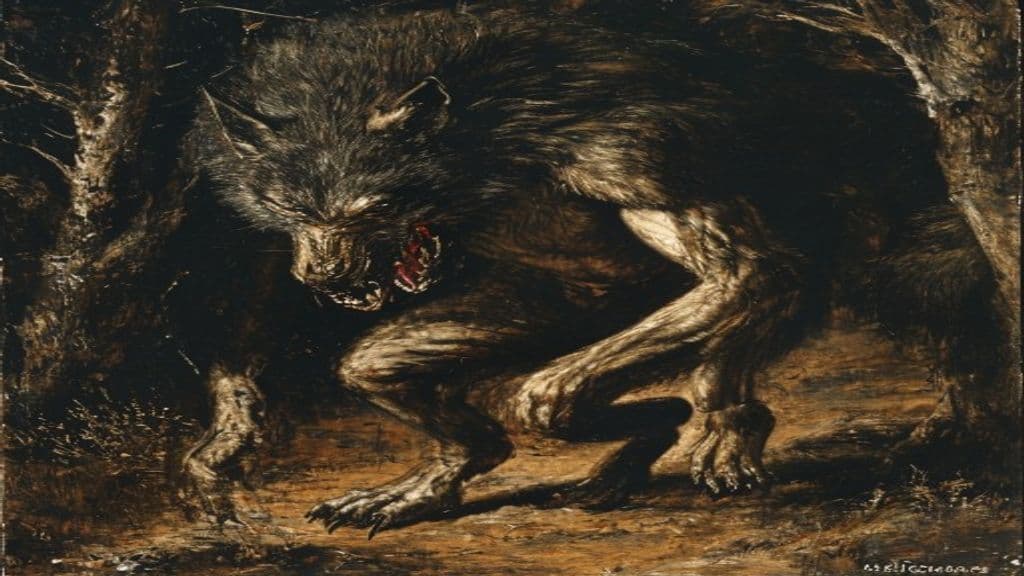
Werewolf
Lesser

Werewolf

A figure of European folklore of a human who can change into a wolf or wolf–human hybrid, variously portrayed as voluntary shapeshifter, cursed afflicted person, or clinical delusion (lycanthropy). Belief in werewolves was entwined with medieval and early modern witchcraft accusations and persisted into Gothic and popular fiction.

Zadkiel
Ancient

Zadkiel

Zadkiel (Hebrew: צִדְקִיאֵל, Ṣīḏqīʾēl, 'God is my Righteousness'), also called Hasdiel in some sources, is an archangel in Jewish and Christian angelology associated primarily with kindness, benevolence, mercy, and forgiveness. In mystical systems Zadkiel is linked to the sephirah Chesed (the fourth sephirah) and the planet Jupiter; some texts identify him with the unnamed 'Angel of the Lord' who restrains Abraham in the Binding of Isaac, though this identification is disputed.

Zerachiel
Ancient

Zerachiel

Zerachiel (also Zachariel, Zakhariel, Saraqael) is an archangel named in the Book of Enoch and later angelic lists, described in the available sources as one of the "seven holy angels who watch" and as "the angel who is set over the spirits who sin in the spirit," said to lead souls to judgment.