Christian Supernatural Beings

398 documented Christian supernatural beings from the Evil Eye grimoire, including 166 lesser and 78 ancient in power tier.

page 5 of 7

Gabuthelon
Lesser

Gabuthelon

Gabuthelon is a non‑canonical named heavenly being attested in the Greek Apocalypse of Ezra (Revelation of Esdras). The figure appears in a roster of nine angels whose names were "revealed to Esdras" and who are said to "govern at the end of the world." No independent biography, iconography, or ritual material for Gabuthelon is preserved in the cited sources.

Galahad
Minor Spirit

Galahad

Galahad is a human knight of the Arthurian Round Table introduced in the 13th‑century Lancelot–Grail (Vulgate) cycle, portrayed as the divinely chosen achiever of the Holy Grail and an exemplar of spiritual perfection and chastity who ascends to heaven after completing the Grail Quest.

Gawish / Guwish
Lesser

Gawish / Guwish

No attested information on a supernatural household spirit named Gawish or Guwish appears in the provided source set. The name appears in the sources only as a modern personal name (e.g., Shahinaz Gawish) and not as a documented Coptic household spirit.

Gegantona Laia
Lesser

Gegantona Laia

Gegantona Laia is a large female festival figure (a gegantona) used in Barcelona's civic street celebrations, especially the Festes de Santa Eulàlia. She functions as a municipal parade effigy and emblem of communal identity, exhibited on the Ajuntament de Barcelona patio and paraded in Plaça de Sant Jaume during the festival.

Gegants (Mataró)
Minor Spirit

Gegants (Mataró)

Gegants in Mataró are large festival effigies used in the city’s principal civic celebration, Les Santes (25–29 July). They function as performative, processional figures that arrive in public squares such as plaça Santa Maria and participate in the programmed festivities alongside music, comedy, fireworks and correfocs.

Gegants de Manacor
Minor Spirit

Gegants de Manacor

The Gegants de Manacor are large processional figures — 'giants' — used as parade effigies in public festivals in Manacor (Majorca, Balearic Islands). They function as ceremonial, performative embodiments within the town's festival dramaturgy, appearing alongside other ritual performers such as the Cossiers, demons, and the Drac de na Coca.

Gegants de Sants
Minor Spirit

Gegants de Sants

Gegants de Sants refers to the tradition of large parade effigies (gegants) appearing in Catalan neighbourhood festival culture, especially in Barcelona's festa major context such as the Sants neighbourhood; they are civic, performative figures rather than supernatural beings.

Gegants de Sitges
Minor Spirit

Gegants de Sitges

Gegants de Sitges are large processional figures employed in Sitges' civic festival life, notably within the town's Festa Major; they function as symbolic, ceremonial effigies rather than supernatural beings and participate in public processions, choreography, and spectacles.

Gegants de la Ciutat
Lesser

Gegants de la Ciutat

Gegants de la Ciutat refers to the gegants i gegantes (giants and giantesses) appearing as large ceremonial parade figures in La Patum de Berga, a Corpus Christi festival with documentary roots cited to the 14th century. The term in the provided sources designates festival effigies or costumed figures that take part in public performances and processions in the streets and small squares of Berga.

Gegants de la Plaça Nova
Lesser

Gegants de la Plaça Nova

Gegants de la Plaça Nova refers to the tradition of civic festival giants (gegants) associated with Catalan popular celebrations; the provided source places related festival practices within the broader context of Catalonia's observances such as Saint George's Day but does not give specific details about these particular giants.

Geist
Lesser

Geist

A German-language term with overlapping senses: a ghostly or haunting presence, an immaterial religious spirit (e.g., the Holy Spirit), and an intellectual or cultural animating principle (mind, Weltgeist, Zeitgeist). Its precise meaning depends on context and historical usage.

Gello
Lesser

Gello

A child-strangling demoness of Greek and Byzantine tradition, the spirit of a young woman who died before marriage, now preying on pregnant women and newborns.

Genevieve of Brabant
Lesser

Genevieve of Brabant

Genevieve of Brabant (Genoveva, Genoveffa) is a legendary/hagiographic medieval European heroine: a chaste wife falsely accused of adultery who survives execution, lives in exile with her child nourished by a roe deer, and is later vindicated and restored to honour. The tale functions as a moral exemplum and became popular in early modern drama, opera and puppet theatre.

Geraint
Minor Spirit

Geraint

Geraint is a personal name borne by overlapping human figures in Welsh and Brittonic tradition: a valiant warrior celebrated in early medieval poetry, the protagonist of the Arthurian romance Geraint and Enid, and a king of Dumnonia attested in a saints' vita. The name links heroic, courtly, and hagiographic registers rather than a supernatural taxonomy.

Geryon
Greater

Geryon

Geryon is a monstrous, martial figure from Greek heroic-age mythology who dwells on the far-western island Erytheia and guards a valuable herd of red cattle; he is best known as the opponent slain by Heracles in the Tenth Labour. Classical sources present multiple, conflicting physical descriptions; later reception (notably Dante) recasts the name as an allegorical composite monster.

Giant
Greater

Giant

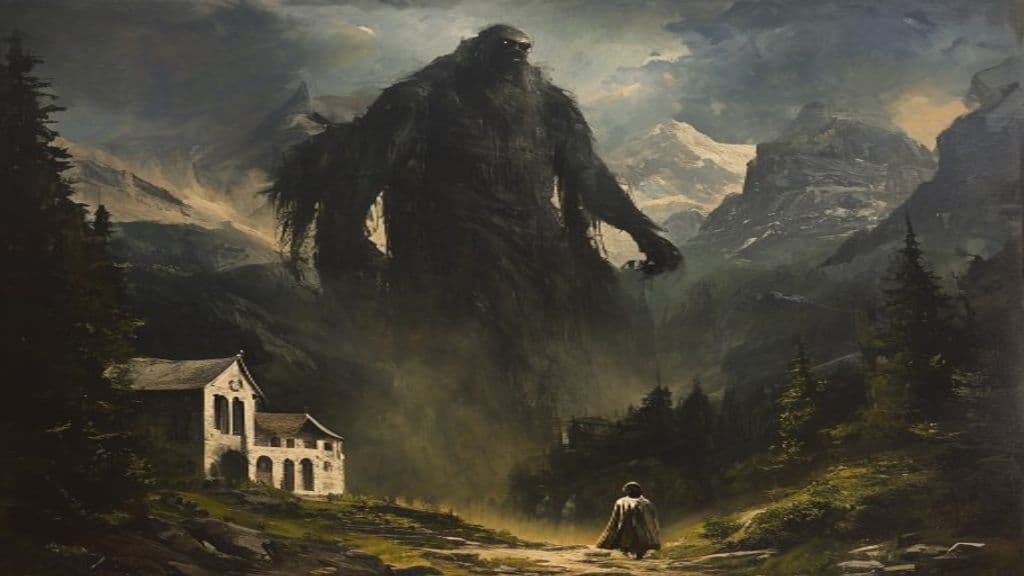
A recurring figure-type in myth, legend, and folktale characterized chiefly by humanoid form combined with prodigious size and strength. Giants function variably as monsters, culture-heroes, ancestral figures, or etiological agents that explain landscape features and large ancient remains.

Gingerbread Man
Minor Spirit

Gingerbread Man

A cultural motif that exists both as a human‑shaped gingerbread biscuit and as an anthropomorphic figure in European fairy‑tale and modern media: in tales a baked gingerbread cookie 'comes to life', speaks, runs from pursuers, and in the canonical story is ultimately eaten by a fox. The figure functions as a seasonal culinary object and as a narrative character rather than a systematic spirit-type in traditional cosmologies.

Gnadenstuhl
Lesser

Gnadenstuhl

An iconographic motif in Christian art, the Gnadenstuhl (German: 'seat of mercy') depicts the Trinity with the Father supporting or presenting the crucified Christ and the Holy Spirit as a dove, functioning as a visual theology of divine mercy and the cross as an event of the Triune God.

God (Christianity)
Ancient

God (Christianity)

In the Christian tradition represented in the sources, God is the eternal, supreme being who created and preserves all things, is both transcendent and immanent, and is understood in mainstream theology as one God in three Persons (Father, Son, Holy Spirit). Christian doctrine emphasizes God's action in history (covenant with Abraham, revelation in scripture, the Incarnation of the Son, and the sending of the Spirit).

God the Father
Primordial

God the Father

In Christian doctrine, 'God the Father' names the First Person of the Trinity who is described as creator, origin, and paternal principle in relation to the Son and the Holy Spirit. Trinitarian formulations present the Father as consubstantial, co‑equal and co‑eternal with the Son and Spirit, while non‑Trinitarian traditions interpret the Father differently (e.g., as supreme, as a distinct being, or as title‑variants). Scriptural material frames the Father as the heavenly addressee of prayer and the source of life, authority and moral order.

God the Son
Ancient

God the Son

In the Christian theological tradition represented by the provided sources, 'God the Son' designates the second Person of the Trinity—identified with the pre-existent Logos and historically incarnate as Jesus of Nazareth—who participates in creation, revelation, and the purifying work for sins and is exalted to the heavenly right hand.

Gog and Magog
Ancient

Gog and Magog

A paired set of names (Gog and Magog / Yajuj and Majuj) that function across Jewish, Christian, and Islamic texts and later legend as hostile nations, tribes, or leaders associated with end-times conflict. Their identity varies by source—Ezekiel presents Gog as a prince of the land of Magog; Revelation uses the pair for hostile nations; the Qurʾān (and later Islamic legend) depicts Yajuj and Majuj as peoples sealed behind a barrier until the last days.

Gorai (place-name and surname)
Minor Spirit

Gorai (place-name and surname)

Gorai is attested in the supplied sources as a place-name — a village on Salsette island in the Mumbai Suburban district — and as a family name/surname in archival records. The provided materials contain no documentation of a supernatural 'Gorai' or a forest-spirit tradition.

Grant
Lesser

Grant

The Grant (also attested as Gyant) is a creature attested in Gervase of Tilbury's Otia Imperialia (medieval Latin) described as a kind of demon resembling a yearling colt that runs through towns as a warning of fire. Later commentators have debated its identification, comparing it to horse-like bogies or suggesting it may reflect a hare omen, but the sole medieval description is equid-like and portentous.

Great Duke
Lesser

Great Duke

A classificatory title used in Christian demonological systems to denote a high-ranking demon, analogous to earthly and angelic offices. The term functions as a rank within hierarchical taxonomies of infernal beings rather than a single, individuated monster in the provided sources.

Griffin
Greater

Griffin

The griffin (also griffon, gryphon) is a composite legendary creature combining the body, tail, and hind legs of a lion with the head, wings, and often taloned forelegs of an eagle. In classical and medieval Eurasian traditions it functions chiefly as a majestic guardian figure associated with rulership and the protection of treasure, and appears widely across artistic vocabularies rather than as a single codified religious being.

Guardian angel
Greater

Guardian angel

A guardian angel is a class of heavenly ministering spirit assigned to a particular person, group, or nation to watch over, guide, intercede for, and protect that charge. Found across Judaic, Christian, Zoroastrian, and later esoteric sources, the guardian angel functions as an intermediary carrying out divine behests and as a personal tutelary presence.

Gudula (Saint Gudula of Brabant)
Lesser

Gudula (Saint Gudula of Brabant)

Gudula is a Merovingian-era Christian saint venerated in the Low Countries and parts of Germany, remembered as a pious noblewoman noted for charity, devotion, and a localized relic cult centered on Moorsel and Brussels. In iconography she is often shown bearing a lantern or candle in a hagiographic motif where a demon attempts to extinguish her light.

Gütel
Lesser

Gütel

A variable household and folk spirit from German regional belief-forms that appears as a domestic sprite, hay-loft manikin, little earth-being, or the soul of an unbaptized child; its character ranges from helpful household attendant to mischievous or harmful tormenter depending on locality.

Hadad the Edomite
Lesser

Hadad the Edomite

Hadad the Edomite is a human political figure in the Hebrew Bible described as a surviving member of the Edomite royal house who fled to Egypt, was elevated at Pharaoh's court, and later returned to oppose King Solomon; the narrative frames him as one of the adversaries the LORD "raised up" against Solomon after Solomon's apostasy.

Hadraniel
Greater

Hadraniel

Hadraniel is an angelic gatekeeper in Jewish mystical and rabbinic traditions, assigned to the second gate of heaven and depicted as an awe‑inspiring, gigantic being who mediates access to divine revelation. He appears in narratives such as Moses’ heavenly ascent and Zoharic material concerning the Book of Raziel, and is sometimes placed differently in other mystical lists (e.g., as subordinate to Jehuel in some Gnostic listings).

Hagar
Minor Spirit

Hagar

Hagar (Hebrew: Hāgār; Arabic: Hājar) is presented in the Book of Genesis as an Egyptian female servant (שִׁפְחָה) in Sarai's household who bears Abram a son, Ishmael; later Jewish and Islamic traditions expand and reinterpret her status and story, including rabbinic identifications (e.g., Pharaoh’s daughter, potential identification with Keturah) and Islamic accounts linking her to the origins of Mecca and the Zamzam well.

Haneunim / Hananim
Ancient

Haneunim / Hananim

Haneunim (하느님) or Hananim (하나님) is the sky god in Korean mythology presented as the supreme heavenly deity. The figure functions as the Lord of Sky in older Korean cosmology, appears in the Dangun foundation myth (via the closely related Hwanin/Hwanung genealogy), and is identified in syncretic religious contexts with high deities such as Indra (Śakra), the Jade Emperor (Okhwang Sangje), and is named in modern Korean religions including Cheondoism and Jeungsanism; the terms have also been used as Korean translations for the Christian concept of God.

Haniel
Greater

Haniel

Haniel is an angelic figure in Jewish and later Western angelology, traditionally counted among the seven archangels. The figure is associated with the planet Venus and is described as the governing archangel of the Kabbalistic sephirah Netzach, embodying qualities of grace, charm, and joy and appearing in later Renaissance esoteric apparatus such as John Dee's Sigillum Dei Aemeth.

Haymon
Lesser

Haymon

A giant from Germanic folklore associated with the founding of Stift Wilten, a premonstratensian abbey. (Note: 1. The power tier should be Primordial, as it is described as a "giant" from Germanic folklore and associated with founding an abbey, implying a significant level of cosmic influence. 2. Add origin st)

Headless Priest
Lesser

Headless Priest

A restless apparition in Central American and Philippine popular belief: the decapitated Catholic cleric who returns as a night-haunting spirit tied to specific local histories, churches, roads, or buried goods. Stories function as moral warnings about sacrilege, clerical guilt, and improper handling of sacred matters.

Heavenly host
Greater

Heavenly host

A collective category in Abrahamic and Near Eastern texts naming an ordered assembly associated with the divine realm. The term can refer to the stars and other celestial bodies, to organized spiritual beings (angels) serving God, and is often described with military vocabulary (hosts, armies, commanders) that places the group within divine governance and occasional cosmic or earthly conflicts.

Hegai
Lesser

Hegai

Hegai is a human court official attested in the Book of Esther (Hebrew Bible), described as the eunuch chamberlain charged with the 'house of the women' (the king's harem) in Shushan. He supervised the preparation and custody of young women presented to King Ahasuerus/Xerxes and is credited with favoring and provisioning Esther prior to her audience with the king.

Heimchen
Lesser

Heimchen

Heimchen is a German folk-term applied to a range of related domestic and liminal beings: the house cricket (insect), tiny household or earth-spirits dwelling in mouse-holes/hearths, a Vogtland mountain folk living in a gem-lit cavern, and in Thuringian lore a retinue of wailing souls of unbaptized children who accompany Perchta.

Herodias (tradition)
Greater

Herodias (tradition)

A medieval European folkloric persona derived from the historical Herodian princess Herodias; in later popular summaries her name was repurposed as that of a leader or exemplar of nocturnal spirit-assemblies and night-rides. Sources link the name in medieval belief to figures who preside over witch-processions, while a modern secondary retelling describes her as a spirit condemned to wander the sky and 'permitted only to rest in treetops.'

Hobgoblin
Lesser

Hobgoblin

A household spirit from English folklore that traditionally performs domestic chores for a family in return for simple food but is also prone to practical jokes and mischief; accounts vary regionally and over time, and Christian influence is reported to have shifted popular descriptions toward greater mischief.

Holy Guardian Angel
Greater

Holy Guardian Angel

In Christian theological and devotional contexts, the Holy Guardian Angel is an individually assigned angelic being appointed to protect and guide a particular person, group, or nation. The idea is embedded in the Christian angelic worldview and is commemorated liturgically (Memorial of the Holy Guardian Angels, 2 October).

Holy Living Creatures
Greater

Holy Living Creatures

A class of heavenly attendants appearing in Jewish and Christian throne-vision literature (notably Ezekiel and Revelation) who perpetually worship and stand before the divine presence; later traditions (merkabah, Zohar, patristic exegesis) adapt and symbolically associate them with four archetypal forms.

Holy Spirit (Christianity)
Primordial

Holy Spirit (Christianity)

In mainstream Trinitarian Christianity the Holy Spirit (Holy Ghost) is the third Person of the Trinity, the distinct divine Person who is the Lord and Giver of Life, present at creation, active in prophecy and inspiration, and pouring out divine presence on the Church (e.g., Pentecost). Broader Abrahamic language (Hebrew ruach, Greek pneuma) underlies Christian pneumatology and informs liturgical invocation (baptismal formula, prayer, benediction).

Holy Wisdom (Hagia Sophia / Sancta Sapientia)
Ancient

Holy Wisdom (Hagia Sophia / Sancta Sapientia)

Holy Wisdom (Greek Ἁγία Σοφία, Latin Sancta Sapientia) is a theological personification of divine Wisdom in Jewish and Christian scripture and later patristic and liturgical tradition. Treated as an active, quasi-personal attribute of God, Wisdom is invoked in liturgy, celebrated in church dedications, and identified variously with the Logos (dominant patristic view), the Holy Spirit (minor patristic view), or — in later Russian Sophiology — a feminine principle associated with the Theotokos.

Hypsistos (Theos Hypsistos)
Ancient

Hypsistos (Theos Hypsistos)

Hypsistos (Θεός Ὑψιστος) is an ancient divine epithet and cultic designation meaning "God Most High" attested in inscriptions, votive altars, and occasional temple dedications in Asia Minor, the Black Sea region, and the eastern Mediterranean from the Hellenistic period into late antiquity. It functions as a titulary focus of worship — sometimes attached to established gods (e.g., Zeus Hypsistos) and sometimes invoked more abstractly by groups later called Hypsistarians in fourth‑century Christian writings.

Hödekin
Lesser

Hödekin

A medieval German household/castle spirit described in Latin and vernacular sources as a kobold-like sprite notable for wearing a small felt cap; accounts record it speaking familiarly with people, aiding or warning its household, and violently avenging insults before eventually being expelled by episcopal exorcism.

Indonesian Mythology
Primordial

Indonesian Mythology

The mythology of Indonesia is a diverse and complex collection of myths, legends, and supernatural beings from various cultural traditions. It reflects the syncretization of Hindu, Islamic, and Christian biblical influences, resulting in a unique and dynamic worldview. (Note: 1. Power tier should be Primordial, but it's too vague for entities that embody cosmic forces. Consider rephrasing to "Cosmic Deity" or more specifically, the role of Iswara and Durga in Indonesian my)

Indrik (Indrik-zver')
Greater

Indrik (Indrik-zver')

A singular marvelous beast in Russian folklore, the Indrik (Indrik-zver') is described in medieval compilations such as the Dove Book as the "king of all animals" who dwells on a sacral "Holy Mountain"; the creature is gigantic and horned and is said to make the earth tremble when it stirs.

Interpretatio Slavica
Primordial

Interpretatio Slavica

A cultural practice among Slavic peoples to identify and equate their deities with those of neighboring cultures and Christian saints. (Note: - Power tier should be Ancient (deity-level), as it's a cultural practice rather than a supernatural being. - Sensory cues, weaknesses, and wards are not applicable to this entity, as it's an abstract)

Ishmael
Minor Spirit

Ishmael

Ishmael (Heb. Yishmaʿeʾl) is a human patriarch in the Hebrew Bible, described as Abraham's firstborn son by Hagar; in later reception (notably Islamic tradition) he is also regarded as a prophetic ancestor of certain Arab lineages. The biblical narrative situates him as the progenitor of twelve sons who become tribal chiefs and as a figure who lives and survives in the wilderness.
Jackal (folklore)
Lesser

Jackal (folklore)

A liminal canid figure in multiple cultural traditions, the jackal functions as a symbol and occasional ritual embodiment connected to desolation, funerary contexts, cunning wisdom, and in some tantric contexts a manifestation of the goddess Kali. Sources treat it primarily as an animal with layered symbolic and mythic uses rather than a consistently personified independent supernatural agent.

Jacob
Lesser

Jacob

Jacob (Hebrew: יעקב, Yaʿaqōv) is a central human figure in the Book of Genesis, portrayed as the third Hebrew patriarch and the progenitor of the Twelve Tribes of Israel. The supplied sources treat him as a legendary/historical ancestor within the Abrahamic family line rather than as a supernatural being.

Jah (Yah)
Ancient

Jah (Yah)

Jah or Yah (Hebrew: יָהּ, Yāh) is the short form of the Tetragrammaton (יהוה, YHWH), the personal name of the God of Israel (commonly vocalized as Yahweh). It functions as an abbreviated theonym appearing in Hebrew scripture and liturgical formulas (notably hallelujah) and is used in prayer, praise, and religious study rather than as an independent folkloric being.

Japhetites
Primordial

Japhetites

In the Jewish tradition, Japhetites refer to the descendants of Japheth, one of the three sons of Noah in the Book of Genesis. (Note: - Power tier: Primordial is not supported by the source material; a more accurate power tier would be Greater (powerful regional). - Abilities: The abilities section should be removed or rephrased to )

Jegudiel
Ancient

Jegudiel

Jegudiel (Hebrew: יַחְדִּיאֵל Yaḥdīʾēl) is presented in Eastern Christian tradition as one of the seven Archangels. He is associated with praise of God, bears iconographic attributes of a crown and a three‑thonged whip (or rod/staff), and functions as a patron and advisor for those who labor and for leaders such as kings and judges.

Jehoiada
Lesser

Jehoiada

Jehoiada (Hebrew: יְהוֹיָדָע, Yəhōyāḏā‘, "Yahweh knows") is presented in the Hebrew Bible and later commentaries as a prominent priest in the kingdom of Judah who protected the Davidic heir Joash, led a coup that overthrew Athaliah, and enacted temple reforms to restore exclusive worship of Yahweh.

Jehoshaphat
Lesser

Jehoshaphat

Jehoshaphat (Hebrew: יְהוֹשָׁפָט, Yəhōšāpāṭ, "Yahweh has judged") is presented in the biblical tradition as a historical king of Judah—son of Asa—known for judicial and religious reforms, organizing priests and Levites, and appearing in genealogical lists. Some textual traditions also preserve the name in priestly genealogies, producing scholarly disputes about whether a High Priest by this name appears in some lists.

Jehovah
Ancient

Jehovah

Jehovah is the Latinized/Anglicized form of the Tetragrammaton (יהוה, YHWH), the personal name of the God of Israel in the Hebrew Bible / Old Testament. The form 'Jehovah' arose when the consonants YHWH were combined with the vowel points of the substitute word Adonai in medieval/early modern transliteration; scholarly consensus favors 'Yahweh' as the likely historical vocalization.

Jerahmeel (archangel)
Lesser

Jerahmeel (archangel)

Jerahmeel (Hebrew Yəraḥməʾēl) is a theophoric Hebrew personal name meaning roughly 'May God have mercy' that, in later apocryphal/deuterocanonical and devotional materials, appears also as the name of a heavenly being rendered Jeremiel/Eremiel/Remiel and sometimes listed among named archangels in varying traditions.