Christian Supernatural Beings

398 documented Christian supernatural beings from the Evil Eye grimoire, including 166 lesser and 78 ancient in power tier.

page 6 of 7

Jewish Mythological Entities
Primordial

Jewish Mythological Entities

A collection of mythological beings from Jewish mythology, including angels, demons, and divine entities. (Note: 1. Power tier is not supported by source material (no description of entities with cosmic powers). 2. No mention of "primordial" or specific power levels. 3. Sensory cues, wards, and weaknesses are al)

Jibito
Minor Spirit

Jibito

The Jibito are an indigenous people of Peru. Historical references note first contact with Franciscan missionaries in 1676 near the Huallaga River and later settlement in villages on the river's western bank after conversion to Catholicism.

Jibril
Ancient

Jibril

Jibril (Arabic جبريل) is the Arabic form of the angel Gabriel as referenced in Abrahamic scriptures. In the provided sources Jibril/Gabriel is described primarily as an archangel whose function is to announce God's will to humankind and is mentioned in the Hebrew Bible, the New Testament, and the Quran. The token Jibril also exists widely as an Arabic male given name borne by many modern persons and cultural items in the supplied material.

Joash (Yoash / Jehoash)
Lesser

Joash (Yoash / Jehoash)

Joash (Hebrew Yəhōʾāš; Yoas, Jehoash) is a biblical/historical figure attested in Israelite tradition primarily as a king of Judah (often called Jehoash) who was hidden and raised in the Temple and as a name attested in priestly lists as a possible High Priest. Sources present him as a human royal and/or priestly officeholder active in the monarchic period and closely associated with the Temple and the priest Jehoiada.

Johann Georg Faust
Lesser

Johann Georg Faust

Johann Georg Faust is a historically attested itinerant early modern practitioner — variously an alchemist, astrologer, physician, teacher and performer — whose life and unusual death were rapidly mythologized in chapbooks and later literature (notably Marlowe and Goethe). Documentary records show a learned background and contested reputation; later pamphlet tradition transformed him into the legendary 'Faust' figure associated with diabolism.

John the Evangelist
Lesser

John the Evangelist

A central figure in Christian tradition identified as the authorial persona behind the Gospel of John and as an authoritative apostolic witness to Jesus. Traditions variously equate him with John the Apostle, John of Patmos, or John the Presbyter; modern scholarship disputes a single authorship for all Johannine writings. He is venerated as a saint, commemorated liturgically, and appears widely in Christian art and hagiography.

Jophiel
Ancient

Jophiel

An archangel in Jewish and Christian angelology, Jophiel is depicted in mystical, liturgical, and occult sources as a high-ranking celestial guardian associated with wisdom, Torah-reading, beauty, and certain Kabbalistic/ceremonial correspondences. Sources place Jophiel among the highest heavens and in roles supervising scripture, teaching languages, and serving in angelic command.

Judah (Yehuda)
Lesser

Judah (Yehuda)

Judah (Hebrew: Yehuda) is a biblical patriarch—the son of Jacob—whose name became the eponym of the Tribe of Judah and of multiple historical and geographic entities (Kingdom of Judah, Judea/Yehud, later provincial and modern toponyms). The supplied sources treat Judah as a human ancestor and an ethnic/political designation rather than a supernatural being.

Jure Grando (štrigon of Kringa)
Lesser

Jure Grando (štrigon of Kringa)

A historical-legendary figure from 17th-century Istria who, according to local accounts recorded by Johann Weikhard von Valvasor and summarized in modern sources, rose from his grave and tormented his village for sixteen years after his death; he is labeled locally as a štrigon and is often discussed as an early vampiric case in European print culture.

Kichwa-Lamista tradition
Minor Spirit

Kichwa-Lamista tradition

The Kichwa-Lamista tradition refers to the cultural, linguistic, ritual, and spiritual lifeways of the Kichwa-speaking people of Lamas (San Martín Region, Peru). Their worldview combines Catholic practice with indigenous shamanic practices, is deeply embedded in forest-based subsistence (healing, farming, fishing, hunting), and preserves specialist esoteric registers and ritual knowledge within community life.

Kimaris
Greater

Kimaris

Kimaris (also Cimeries, Cimeies, Cimejes and related forms) is a named spirit appearing in Renaissance and early modern grimoire catalogs (notably the Ars Goetia and Johann Weyer's Pseudomonarchia Daemonum) described as a martial, serviceable spirit who can be invoked by ritual magicians to teach, form warriors, and locate hidden treasures. Variant manuscript traditions (e.g., a Coptic attestation) sometimes present the name in a non-hostile, godlike helper role.

King Arthur
Greater

King Arthur

King Arthur is a central figure of the medieval Matter of Britain: a legendary king and folk‑hero presented variously as a post‑Roman military leader of the Britons, a chivalric monarch of great courtly fame, and a figure entwined with later otherworldly motifs (Avalon, Excalibur, Merlin). Sources range from early Welsh annals and poetry to Geoffrey of Monmouth, continental romances, and later English retellings.

Kneph
Primordial

Kneph

Egyptian god and motif of divinity, representing creation, fertility, and spiritual growth. (Note: - Power tier: Reduce to Greater, as there's no indication of cosmic or deity-level power. - Abilities: Remove mention of specific abilities and behaviors, as source does not support this claim. - Weak)

Kokabiel
Lesser

Kokabiel

Kokabiel is a named Watcher in the Enochic tradition, whose name means roughly "star of God" and who is associated with astral knowledge. In the Book of Enoch he is listed among the two hundred angels who descended on Mount Hermon and bound themselves by oath, an act that led to the transmission of forbidden knowledge and human corruption.

Krampus
Lesser

Krampus

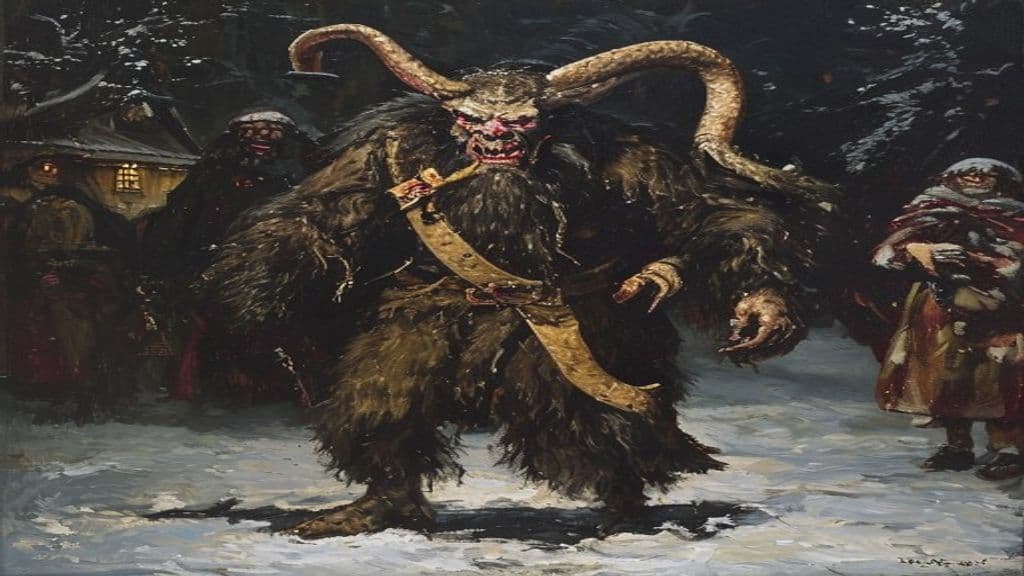
Krampus is a horned, hairy, anthropomorphic figure from Central and Eastern Alpine folk practice who serves as the punitive companion to Saint Nicholas during the winter festival cycle; he appears on Krampusnacht (5 December) and in public Krampuslauf/Perchtenlauf processions to threaten or punish badly behaved children.

Kushiel
Greater

Kushiel

Kushiel is an angel in Judeo-Christian folkloric and Hebrew‑writing contexts described as a punitive agent of divine justice. He is named among a group of seven angels associated with punishment and is variously described as operating from a heavenly layer and as linked to infernal punishment.

Kyöpelinvuori
Primordial

Kyöpelinvuori

A mythological location in Finnish culture where dead virgins gather after their death, marking the start of their afterlife. (Note: - Power tier: Lower to Greater (not Primordial), as it is a mythological location associated with the afterlife, but not a cosmic entity. - Abilities: Clarify that the article implies Kyöpelinvuori is)

Lalli
Lesser

Lalli

A historical figure from Finnish medieval legend, responsible for killing Bishop Henry in the late 1150s. (Note: - Power tier: Greater (not Lesser), as Lalli's actions have significant historical and cultural impact. - Sensory cues: none mentioned in source material, so should be deleted or clarified. - Weakness)

Lamb of God
Ancient

Lamb of God

A Christological title applied to Jesus (the Christ) within Christian scripture and theology that emphasizes his role as sacrificial redeemer who 'takes away the sin of the world' and, in eschatological texts, as the worthy agent of divine judgment and victory.

Lamiai
Greater

Lamiai

Lamiai (singular Lamia) are a class of malignant, night‑haunting female phantoms in Greek tradition, originally attested as a child‑devouring monster and later generalized into a type of daimon or spectre associated with seduction and the predation of young men and children.

Last Judgment
Primordial

Last Judgment

The Last Judgment (Day of Judgment, Final Judgment; Arabic: Yawm al-Qiyamah) is an eschatological event in Abrahamic traditions in which God publicly adjudicates the eternal fate of all humans, accompanying a general resurrection and the final vindication of divine justice.

Leeds Cross
Greater

Leeds Cross

A 10th-century stone sculpture reassembled into a cross, holding cultural significance as an artifact of Norse tradition. (Note: - Power tier should be Lesser (since it's described as a regional artifact and the abilities are more local/ cultural significance). - Appearance description is unnecessary since there is no original )

Legion (demons)
Lesser

Legion (demons)

In the provided sources, 'Legion' is the collective name applied to multiple demons identified in the New Testament gospel account of the Gerasene demoniac. The usage denotes a plurality of spirit-beings speaking through or attached to a single afflicted person in that gospel narrative; the supplied material does not develop further theology, appearance, or ritual prescriptions.

Leuce
Lesser

Leuce

Leuce is an ancient Greek proper name applied to a mythic nymph (daughter of Oceanus) and to multiple place-names (notably an island of the Black Sea, historically called Leuce or 'Snake Island', and other toponyms such as Leuce Come and a titular see in Thrace). In the supplied sources Leuce functions primarily as a name tied to natural features — especially the white poplar — and as a geographic designation rather than as a richly described active supernatural agent.

Lion of Judah
Minor Spirit

Lion of Judah

A symbolic and emblematic figure originating in biblical and related traditions that names the tribe/line of Judah, royal legitimacy (notably Ethiopian Solomonic claims), and a messianic title in Christian scripture; later adopted as an emblem of Haile Selassie I and of Rastafari identity. It functions as a cultural-religious emblem rather than a literal supernatural creature in the provided sources.

Living creatures (Bible)
Ancient

Living creatures (Bible)

A class of heavenly beings in Judaeo‑Christian scripture portrayed in prophetic throne‑visions; they appear in Ezekiel's chariot (merkavah) vision and in Revelation's throne scenes, where they function as attendant beings associated with divine presence and worship. In the supplied sources they are described in visionary language and in some treatments portrayed with mixed human and animal imagery.

Lorsch Bee Blessing
Lesser

Lorsch Bee Blessing

A Christian prayer invoking a benevolent entity to bring good health to honey bees and their hives, reflecting Germanic folklore's appreciation for nature and balance. (Note: 1. Power tier should be reassessed, as the entity's influence on bee health and guidance may indicate a Greater power level. 2. The source material does not support the claim that the Lorsch Bee Bless)

Lucifer
Ancient

Lucifer

A multilayered figure whose core identity in the cited sources is the planet Venus as the brilliant morning star (Latin lucifer, 'light-bringer' / Hebrew hêlêl, 'shining one'). In later Jewish and especially Christian exegesis the Isaiah image Helel ben Shachar is reinterpreted as a mythic fall motif and becomes associated with a rebellious heavenly being identified with the adversary; this development overlays the earlier astronomical and poetic personification.

Lucy Pevensie
Lesser

Lucy Pevensie

Lucy Pevensie is a fictional human child and one of the four Pevensie siblings in C. S. Lewis's Chronicles of Narnia. Within Lewis's narrative cosmology she is a mortal human who travels between England and Narnia, noted for her faith, compassion, and special receptivity to Aslan; she is crowned Queen Lucy the Valiant and later enters Aslan's Country after death.

Mahalath
Minor Spirit

Mahalath

Mahalath is a named woman in the Hebrew Bible, identified in Genesis as a daughter of Ishmael and a wife of Esau; her significance in the supplied sources is genealogical and social rather than supernatural. Biblical passages and scholarly summaries note variant naming schemes for Esau's wives across Genesis, and some scholars attempt (with dispute) to equate Mahalath with other names appearing in different chapters.

Maina
Lesser

Maina

The Maina (also spelled Meena) are an indigenous human group traditionally living along the north bank of the Marañón River in the upper Amazon. Historically they spoke varieties of the Omurano language (many now speak Urarina) and were among the first tribes in the upper Amazon to be evangelized by the Catholic Church, lending their name to colonial jurisdictions such as the province of Mainas.

Malebranche (Divine Comedy)
Lesser

Malebranche (Divine Comedy)

In Dante Alighieri’s Inferno the Malebranche are a squad of clawed, quarrelsome demons charged with policing Bolgia Five of the Eighth Circle (Malebolge). They act as vulgar, treacherous warders who seize sinners from the boiling pitch, prevent escape, quarrel among themselves, and interact deceptively with Dante and Virgil under the leadership of Malacoda.

Marchosias
Greater

Marchosias

Marchosias is a named marquis-level spirit from the Goetic grimoire tradition, depicted as a martial, lupine, fire-breathing being who commands legions and can be summoned and bound by ceremonial conjuration. Modern sources reinterpret Marchosias variously as a dangerous ally or narrative combatant in fiction and games.

María Lionza
Greater

María Lionza

María Lionza is the central sacred figure of a Venezuelan syncretic popular religion centered on Sorte mountain; venerated as a queen/goddess of nature, love, and healing, she functions as a focal point for mediumship, spirit courts, and pilgrimage.

Melchizedek
Lesser

Melchizedek

A brief biblical royal‑priest figure described in Genesis as 'king of Salem' and 'priest of El Elyon' (the Most High). He blesses Abraham, brings out bread and wine, and is later invoked in Jewish and Christian traditions as a typological precedent for legitimate priesthood and tithing.

Melchom
Lesser

Melchom

Melchom (also attested as Milcom, Moloch, Melech) is named in Judeo-Christian prophetic literature as the Ammonite idolic 'king' associated with possession of the Israelite tract of Gad; later Christian demonological tradition (via works such as Collin de Plancy's Dictionnaire Infernal as summarized in modern reference sources) recasts Melchom as a lesser infernal spirit with a bureaucratic office in Hell.

Merseburg Charms Entities
Primordial

Merseburg Charms Entities

Two malevolent entities from Germanic tradition, protected against through incantations and spells. (Note: 1. Power tier: Based on the source material, there's no indication that these entities are Primordial; this should be reevaluated. 2. Origin story: Missing entirely from the draft and the source mater)

Messiah
Ancient

Messiah

A religiously defined human office or figure in Abrahamic religions, understood as an anointed leader designated to bring restoration, justice, or final consummation. Jewish, Christian, and Islamic traditions share the concept but differ on the figure's ontological status and the specific tasks he will perform.

Modthryth
Minor Spirit

Modthryth

Modthryth is a literary royal figure attested in the Old English poem Beowulf, presented as a princess who initially behaves violently toward men beneath her rank but is later depicted as a reformed and celebrated queen. The figure functions in the poem as a foil to other aristocratic women and as a commentary on ideals of queenship (freoðuwebbe) in Anglo-Saxon literary culture. The manuscript reading of her name and the precise sense of the compound are subjects of scholarly dispute.

Monopod
Lesser

Monopod

A class of mythological humanoid peoples described in classical, medieval, Chinese, and Norse sources as having a single central leg with a very large foot. Treated in literature and maps as a wondrous race inhabiting the margins of the known world rather than as a lone monster.

Monotheism in pre-Islamic Arabia
Greater

Monotheism in pre-Islamic Arabia

Followers of Abrahamic faiths, such as Christianity and Judaism, who believed in a single all-powerful God in pre-Islamic Arabia. (Note: * Power tier: Lesser (not Greater) - monotheistic beliefs were not limited to powerful regional deities but had a relatively local presence in pre-Islamic Arabia. * Origin story: The exact timing is u)

Morphe (μορφή)
Lesser

Morphe (μορφή)

Morphe (Greek: μορφή) is a lexical term meaning "form," "shape," or "outward appearance" attested in ancient Greek and discussed in New Testament exegesis. The provided sources show no coherent folkloric or mythic entity named "Morphe"; modern uses of the sequence "Morphe" in brand and project names are likewise non-mythic appropriations of the word or signifier.

Muspilli
Ancient

Muspilli

An Old High German alliterative verse poem from a ninth-century Bavarian manuscript, describing the fate of souls in Norse cosmology. (Note: - Power tier should be Primordial (cosmic level) due to its description of Norse cosmology. - Origin story should clarify that the etymology is unclear and that many aspects of interpretation are disp)

Nephilim
Ancient

Nephilim

Enigmatic figures from the Hebrew Bible and later Jewish and Christian writings, the Nephilim are described in brief, ambiguous passages as ancient, exceptional beings associated with the antediluvian world and with later memory of formidable inhabitants; traditions variously render them as 'giants,' 'fallen ones,' or legendary elite warriors.

Nilus
Greater

Nilus

Nilus (Greek: Νεῖλος, Latin: Nilus) is the Greek personification of the Nile River attested in classical genealogies as a son of Oceanus and Tethys and historically referenced as a river-deity who received cultic honors in Egypt, notably at Niopolis. The name also functions separately as a Christian personal name borne by several saints and clerics; those human bearers are distinct from the river-personification.

Nisroch
Lesser

Nisroch

Nisroch is a theonym attested in the Hebrew Bible as a god of Assyria whose temple is the scene of King Sennacherib's assassination (2 Kings 19:37; Isaiah 37:38). Modern scholarship finds no Mesopotamian deity securely attested under this name and generally treats the biblical reading as likely corrupt; post-biblical traditions recast Nisroch variously as a wooden idol (Talmudic legend), a named demon in early-modern demonologies, and a Victorian-era label misapplied to excavated eagle-headed protective figures.

Noah
Lesser

Noah

Noah is the tenth antediluvian patriarch in Abrahamic traditions who, at God's command, builds an ark to preserve his family and representatives of land animals from a divinely sent Flood. After the waters recede he offers burnt offerings, receives a covenant from God (with the rainbow as its pledge), and becomes the progenitor of post‑diluvian humanity.

Odigitria (Panagia Odigitria / Hodegetria)
Lesser

Odigitria (Panagia Odigitria / Hodegetria)

Odigitria is primarily an iconographic epithet and toponym found in Byzantine and modern contexts: a Marian title (Panagia Odigitria / Hodegetria) denoting a specific type of Virgin Mary image regarded as a guide or pointer to Christ, and a place-name applied to churches, monasteries, settlements, and an archaeological Minoan cemetery in southern Crete.

Ogyges
Ancient

Ogyges

Ogyges is a primeval mythic ruler in Greek tradition, conventionally linked to Boeotia/Thebes (with an alternative tradition making him first king of Attica) and eponymous for the prehistoric age and the so‑called Ogygian deluge. His name (Ogygian) functions adjectivally to mark the very earliest, primordial times in Greek chronology and myth.

Ophanim
Ancient

Ophanim

Ophanim are a class of heavenly, wheel-like beings described in Ezekiel's merkabah vision and later Jewish apocalyptic literature. They are depicted as many-eyed wheels that move with and attend the divine throne, serving as perceptive, praise-offering throne-guardians rather than hostile spirits.

Panagia Agiosoritissa (Maria Advocata)
Minor Spirit

Panagia Agiosoritissa (Maria Advocata)

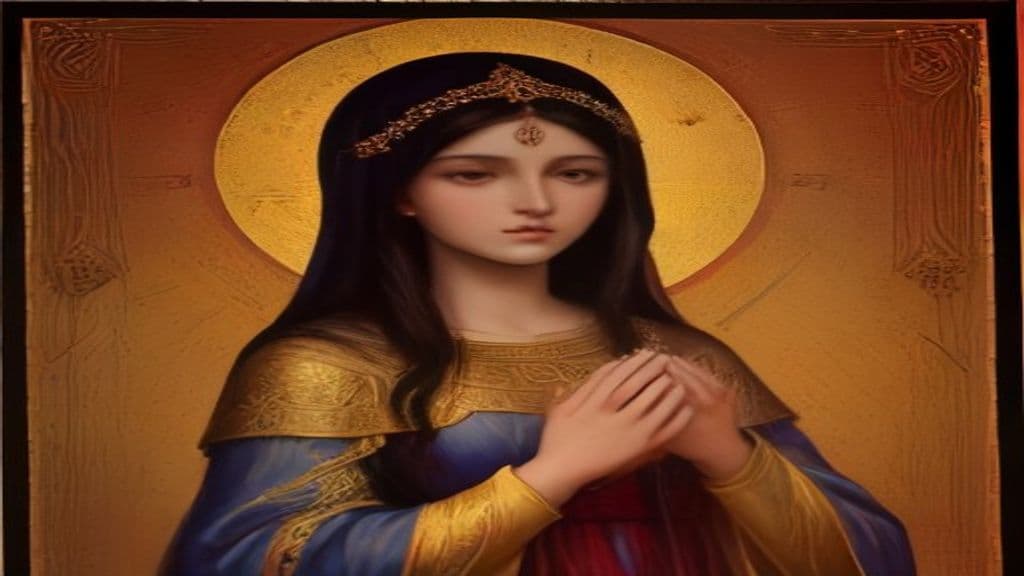
The Panagia Agiosoritissa, known in Latin as Maria Advocata, is an iconographic type of the Virgin Mary in Byzantine and related Christian devotional art. It depicts the Theotokos alone, shown slightly in three-quarter view with both hands raised in a gesture of prayer or intercession, and functions as an image of Mary the intercessor rather than as an autonomous supernatural being.

Paraskeva Friday
Greater

Paraskeva Friday

A personified figure in East Slavic folk Christianity who represents the day Friday and associated saintly cults (notably saints named Paraskeva). She functions as a localized sacred presence linked to prohibitions around women's domestic work, protective healing roles, and punitive interventions when taboos are violated.

Pearlin Jean
Lesser

Pearlin Jean

Pearlin Jean is a named house-haunting tied to Allanbank (the dower house of Blackadder House) in Allanton, Berwickshire, Scotland. Traditionally described as a woman covered in 'pearlin' lace—later recast in some accounts as a skeleton in lace—she is said to have caused domestic disturbances (slamming doors, opening windows, pacing chambers) from the late 17th century into the 19th century.

Peret (Nile-drought spirits — Coptic)
Lesser

Peret (Nile-drought spirits — Coptic)

No evidence for a Coptic spirit named 'Peret' or for spirits specifically associated with the Nile's droughts appears in the supplied source corpus. The available materials that mention the string 'Peret' refer to an unrelated modern Catalan musician and a Wikidata label; no mythological descriptions, rituals, or etymologies for a Coptic supernatural 'Peret' are present.

Phosphorus (Morning Star)
Lesser

Phosphorus (Morning Star)

The personified appearance of the planet Venus as it appears before dawn in ancient Greek usage, named Phōsphoros or Eosphoros — literally 'light-bringer' or 'dawn-bringer' — conceived as the herald of morning and later reinterpreted in medieval Christian reception.

Poemenius
Lesser

Poemenius

Poemenius (Ancient Greek: Ποιμένιος, Poimenios) is a personal name of Greek origin borne by multiple historical and literary figures in Late Antiquity and later periods. In the supplied sources it functions as a proper name for distinct human persons — most prominently a mid-4th-century Roman officer who seized Trier, several Christian clerics/bishops attested in patristic correspondence, and an attested name-entry as a leader of satyrs in a mythological name-list — rather than a single supernatural being.

Portunes
Lesser

Portunes

Portunes are a group of small, nocturnal household beings attested in Gervase of Tilbury's Otia Imperialia (medieval Latin). Gervase lists them among uncanny creatures—calling them 'demons' while also allowing they 'might instead be a mysterious ghost'—and describes them as performing heavy domestic work for peasants, warming themselves at hearths, roasting small frogs from their pockets, and sometimes playing malicious pranks on travellers.

Printer's devil
Lesser

Printer's devil

An occupational term and folkloric scapegoat arising in printshop culture: literally a printing apprentice whose ink-stained hands earned the jocular epithet, and folklorically a mischievous devil (often conflated with Titivillus) blamed for typographical errors and textual corruption.

Processional giant
Minor Spirit

Processional giant

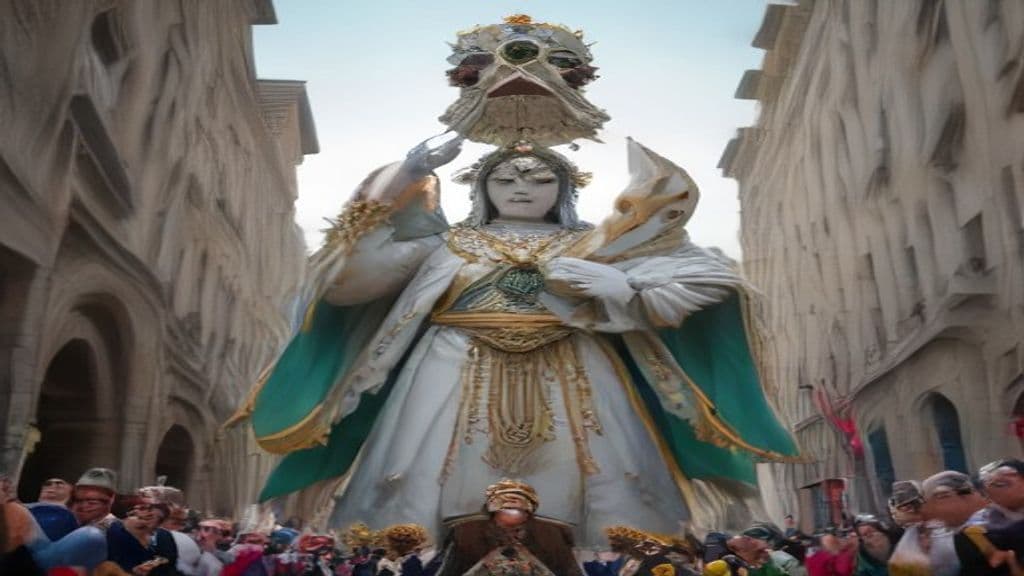
Large hollow costumed figures carried and animated by people in civic and liturgical processions across parts of Europe (notably Belgium, France, Spain, Portugal, Italy and England). Rooted in medieval rites, they function as performative embodiments of town archetypes, biblical and legendary characters and are part of festival pageantry rather than autonomous supernatural beings.

Puzzle the Donkey
Minor Spirit

Puzzle the Donkey

Puzzle is a fictional donkey character in C. S. Lewis's The Chronicles of Narnia, prominently appearing in The Last Battle. In the novel he is a simple, credulous beast manipulated by the ape Shift and presented to others as the deity Aslan as part of a deception plot.