Greek Supernatural Beings

1796 documented Greek supernatural beings from the Evil Eye grimoire, including 1106 lesser and 335 minor spirit in power tier.

page 18 of 30

Faunus
Ancient

Faunus

Faunus is an ancient Roman rustic deity and tutelary nature god of forests, plains, and fields, protector of agriculture and cattle. He functions as an oracular and fertility power, head of a plurality of lesser fauni (place-spirits), and was celebrated in festivals such as the Faunalia and associated with the Lupercalia rites.

Fire-breathing monster
Greater

Fire-breathing monster

A cross-cultural mythic category of monster defined by the ability to expel flame (or fire-like phenomenon) from the mouth or nostrils. Appears in multiple traditions (e.g., Greco-Roman, Hebrew/Biblical, Anglo‑Saxon, Japanese, Philippine, Native American, West African, Mapuche) and in modern fantasy as a recurring trope.

Folklore, legends and myths in Dombey and Son
Minor Spirit

Folklore, legends and myths in Dombey and Son

Literary influences from Greek folklore and mythology on the novel 'Dombey and Son' by Charles Dickens. (Note: 1. Summary: "Literary influences" is too vague; rephrase to specifically mention "Greek folklore and mythology". 2. Power tier: This entity doesn't exist in the source material; there's no indication )

Forest Bull
Lesser

Forest Bull

A marvelous bovine attested in ancient natural-history and medieval bestiary traditions, the Forest Bull (Aethiopian or Ethiopian Forest Bull) is described by classical authors as an extraordinary, dangerous breed of cattle reported from Ethiopia and depicted with hyperbolic size, strength, and near-invulnerability.

Frankish Paganism
Minor Spirit

Frankish Paganism

A polytheistic tradition that evolved among the Franks until the 7th century, influenced by Germanic and Greco-Roman components. (Note: - Remove "Minor Spirit" power tier (inconsistent with polytheistic tradition and influence from Greco-Roman components) - Summary should include Frankish paganism's decline and eventual replacement by)

Furies (Erinyes / Eumenides)
Ancient

Furies (Erinyes / Eumenides)

Chthonic goddesses of vengeance in classical Greek religion and myth who personify retributive justice, especially punishing false oaths and certain moral-legal transgressions; later identified with Roman Furiae/Dirae.

Gaia
Primordial

Gaia

Gaia is the ancient Greek personification of the Earth and a protogenos who arises after Chaos. She functions as the maternal foundation of the cosmos, producing principal elements (mountains, sea), primordial beings (Uranus, Titans, Cyclopes, Hecatoncheires), and acting as advisor and agent in key theogonic events.

Galaxaura
Minor Spirit

Galaxaura

Galaxaura is a minor named attendant of Persephone recorded in modern mythographic summaries of Greek myth. She is listed among the companions or maidens present at the abduction of Persephone but has no independent myths, cult, or attributes in the provided sources.

Galli
Lesser

Galli

The galli are ritual specialists associated with the Phrygian goddess Cybele (Magna Mater) and her consort Attis who, in Hellenistic and Roman contexts, performed ecstatic mourning rites, adopted feminine presentation, and in some accounts underwent castration. They functioned as liminal performers of sacred ecstasy and mediators of the goddess’s power within an officially recognized foreign cult in Rome from the early 3rd century BCE onward.

Ganymede
Lesser

Ganymede

Ganymede is a figure in Greek myth — a Trojan prince and exceptionally beautiful youth who is taken into the service of the gods, traditionally as cupbearer to Zeus/Jupiter. Classical sources portray him as a mortal son of Tros who is elevated into the divine household and sometimes granted immortal status.

Garamas
Lesser

Garamas

Garamas (Ancient Greek Γαράμας) is a mythic eponymous ancestor named in Greek-language accounts to explain the ethnonym Garamantes and the city Garama in Libya. Presented in Hellenic mythographic tradition as a founder or first-born figure, he appears in genealogical and poetic fragments rather than as a described supernatural agent.

Gelanor
Lesser

Gelanor

Gelanor is a name attested in two distinct contexts in the supplied sources: (1) as an alternate personal name for Pelasgus, an Inachid king of Argos in Greek mytho-historical tradition; and (2) as the Latinized scientific name of a genus of arachnids. Neither source presents Gelanor as a supernatural being.

Gello
Lesser

Gello

A child-strangling demoness of Greek and Byzantine tradition, the spirit of a young woman who died before marriage, now preying on pregnant women and newborns.

Gelonians (Geloni)
Ancient

Gelonians (Geloni)

The Gelonians (Geloni) are described in Herodotus and later summaries as a settled, urbanized people of the forest‑steppe north of the Black Sea who inhabited the city of Gelonus. In Herodotus' ethnographic account they are distinguished from neighbouring nomads by agriculture, crafts, wooden temples, and a triennial Bacchic/Dionysian festival; archaeological verification of some claims (e.g., sanctuaries) is noted as lacking in the supplied sources.

Geraestus the Cyclops
Lesser

Geraestus the Cyclops

Geraestus (Geraistos) is a named member of the Cyclopes in Greek tradition whose tomb near Athens is cited in mythic histories. He is chiefly attested as the occupant/identifier of a grave that functions as the location for an extreme ritual (the sacrificial slaying of the daughters of Hyacinth) ordered by an oracle during a famine and pestilence in the generation of Aegeus and the Minos conflict. The name also appears as a toponym in Homeric itineraries.

Geryon
Greater

Geryon

Geryon is a monstrous, martial figure from Greek heroic-age mythology who dwells on the far-western island Erytheia and guards a valuable herd of red cattle; he is best known as the opponent slain by Heracles in the Tenth Labour. Classical sources present multiple, conflicting physical descriptions; later reception (notably Dante) recasts the name as an allegorical composite monster.

Giant
Greater

Giant

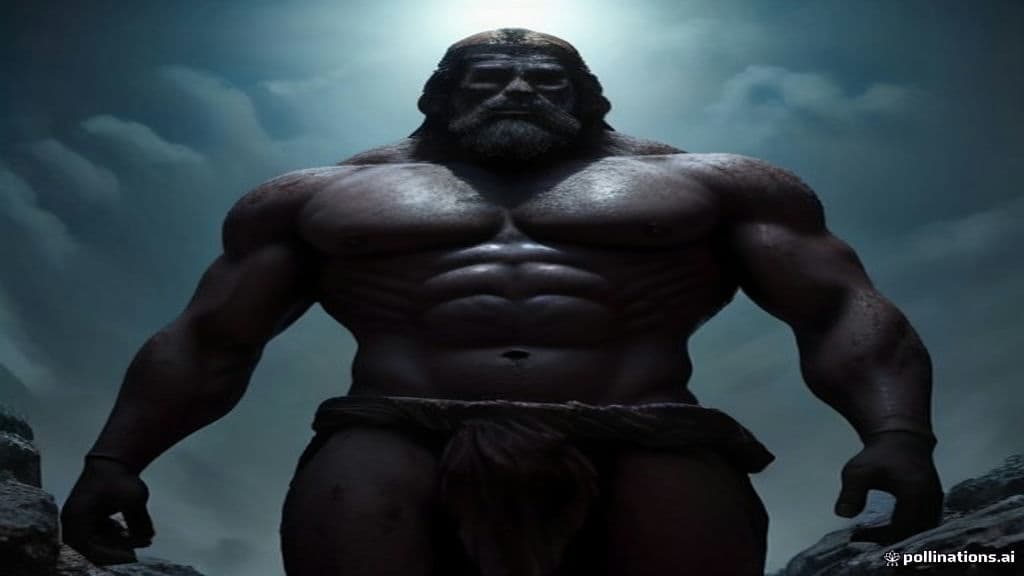
A recurring figure-type in myth, legend, and folktale characterized chiefly by humanoid form combined with prodigious size and strength. Giants function variably as monsters, culture-heroes, ancestral figures, or etiological agents that explain landscape features and large ancient remains.

Giasone
Lesser

Giasone

Giasone is the Italian form of the mythic Greek hero Jason, presented in a 17th-century Italian opera (Cavalli's Giasone) and in retellings of the Jason and Medea cycle. He is a mortal leader of the Argonauts whose success in the quest for the Golden Fleece depends on martial courage and the active intervention of supernatural agents—most notably Medea's sorcery and chthonic powers.

Gigantes
Ancient

Gigantes

In Greek myth the Gigantes (Gigantes) are a race associated with great strength and aggression who wage war against the Olympian gods in the Gigantomachy. Classical summaries (via Hesiod as reported in standard reference summaries) present them as offspring of Gaia born from the blood of Uranus after his castration by Cronus and as cosmological antagonists whose defeat helps establish Olympian order.

Glauce
Lesser

Glauce

Glauce (Ancient Greek Γλαύκη, Latin Glauca) is a recurring female proper name in Greek myth applied to several distinct figures — sea-nymph (including a Nereid), Arcadian nurse of Zeus, and various mortal princesses (notably the Corinthian bride in the Medea cycle). The name evokes a blue‑green gleam and in some traditions personifies a sea‑color; the figures bearing it function chiefly as attendants, dynastic daughters, or tragic victims rather than as individually powerful supernatural agents.

Glaucia
Lesser

Glaucia

In Greek myth, Glaucia (Ancient Greek: Γλαυκία) is a daughter of the Trojan river-god Scamander who, after events connected with Heracles' campaign at Troy, was taken to Boeotia where her son gave his and her names to local streams; she functions in the sources as an eponymous genealogical figure linking Trojan divine parentage to Boeotian local cults (not described as an independent supernatural agent).

Glaucus
Lesser

Glaucus

In classical Greek myth, Glaucus is a former mortal fisherman who became a sea-associated divine figure after contact with a magical herb. He is portrayed as a prophetic sea-being who dwells among the Nereids, is consulted by sailors and voyagers for prophecy, and appears in episodic myths (Argonauts, Menelaus, the Scylla/Circe cycle).

Glaucus of Corinth
Lesser

Glaucus of Corinth

Glaucus of Corinth (Greek: Γλαῦκος), often surnamed Potnieus, is a mortal royal figure in Greek mythic genealogies. Described as a son of Sisyphus and a king (variously of Potniae in Boeotia or of Corinth/Ephyra), his principal mythic note is a violent death caused by horsemanship; he functions mainly as a genealogical ancestor in local heroic tradition.

Glenus
Lesser

Glenus

Glenus is a minor figure in Greek mythic genealogy attested as one of the named sons of Heracles (a member of the Heraclidae). He appears in lists of Heracles' offspring and in a local founding context (nursed by Abia) rather than as an independently attested hero with distinct exploits.

Gorge
Lesser

Gorge

The term 'Gorge' appears in the sources primarily as (1) a geomorphological feature — a deep ravine or canyon formed by river erosion — and (2) as a personal name (Ancient Greek: Γόργη) in Greek myth, notably listed among genealogical figures such as one of the Danaïdes. The available materials do not support a coherent single supernatural entity named 'Gorge.'

Gorgo
Lesser

Gorgo

Gorgo is a polyvalent Greek mythic name applied to several related usages: a member of the gorgon/gorgoneion monstrous vocabulary (frightful phantom/monster), a goatish monster variant called Gorgo Aix associated with Titanomachy narrative, and a personal name borne by various mortal figures (e.g., a woman of Aegyptus, a Spartan queen). The term circulates between monstrous imagery, apotropaic iconography, and onomastic use, and was later reused in modern popular culture for monsters and namesakes.

Gorgo, Queen of Sparta
Minor Spirit

Gorgo, Queen of Sparta

Gorgo was a historical Spartan princess and queen, daughter of King Cleomenes I and wife of King Leonidas I, known from classical historiography and later cultural reception as an emblematic figure of the Spartan woman and for her participation in Spartan political life.

Gorgons
Greater

Gorgons

In classical Greek myth a trio of monstrous sisters—Stheno, Euryale, and Medusa—daughters of Phorcys and Ceto, famed for a petrifying gaze; Medusa is mortal and slain by Perseus while her sisters are described as immortal. The name has been widely reused in modern culture for characters, bands, and projects.

Gorgophone (Perseid / Danaid)
Minor Spirit

Gorgophone (Perseid / Danaid)

Gorgophone (Ancient Greek: Γοργοφόνη, 'Gorgon‑slayer') is a personal name borne by at least two mythological women in ancient Greek tradition: a daughter of Perseus (a Perseid) associated with royal genealogies of Messenia and Sparta, and a Libyan princess counted among the fifty Danaïdes who married and murdered Proteus. The name functions genealogically and onomastically within heroic family cycles rather than as a distinct supernatural being.

Gorgophonus
Minor Spirit

Gorgophonus

Gorgophonus (Ancient Greek: Γοργοφόνον, 'Gorgon-killing') is a mortal Mycenaean prince in the Perseid genealogical cycle. He is recorded as one of the sons of King Electryon and Anaxo and is named among those killed by the sons of Pterelaus in the dynastic conflict that precedes Amphitryon's exile and the circumstances of Heracles' birth.

Gorgyra
Lesser

Gorgyra

Gorgyra is a name attested in modern reference summaries for a nymph associated with the Greek underworld (Hades). In these materials she is presented as an underworld resident who, in some accounts summarized by modern sources, is identified with or treated as an alternate name for Orphne and Styx and is said to have consorted with the river-god Acheron and to be mother of Ascalaphus. The name has also been reused in modern taxonomy and cultural works (butterfly genus, music projects, videogame personae).

Gorgythion
Lesser

Gorgythion

Gorgythion is a minor Trojan prince in Homer’s Iliad, a son of King Priam by Castianeira of Aisyme, remembered chiefly for a poetically rendered death-simile (the poppy image) in Book VIII. The personal name was later reused in modern biological taxonomy for a genus of Pyrginae skippers.

Gration
Lesser

Gration

Gration (Greek: Γρατίων) is attested in modern reference databases as a named member of the Giants (Gigantes) of Greek mythology. The supplied sources give only a brief indexical identification and no ancient narrative, description, or ritual material for this figure.

Greek City-State Patron Gods
Primordial

Greek City-State Patron Gods

Patron deities of ancient Greek city-states, associated with the foundation myths and governance of their respective cities. (Note: 1. Power tier should be Ancient, not Primordial, as city-state patron gods are associated with deities-level abilities. 2. Add sensory cues: The presence of a patron deity is often signified by the lo)

Greek Gods
Greater

Greek Gods

A pantheon of all-powerful, immortal beings with human-like personalities and flaws that inhabit Mount Olympus, the highest peak in Greece. (Note: * Power tier: Primordial (not Greater), as they are considered to be born from Chaos, which is at the root of the universe. * Origin story: The source material doesn't mention the birth of the gods fr)

Greek Hero Cult
Greater

Greek Hero Cult

In ancient Greek religion, a hero (heros) is a being that occupies an intermediate plane between mortals and gods. They are venerated for their fame during life or unusual manner of death. (Note: 1. Power tier should be Primordial, as they are "more than human" and occupy an intermediate plane between mortals and gods. 2. Appearance is stated as abstract presence, not a physical description; t)

Greek Heroic Age
Ancient

Greek Heroic Age

A mythological era in ancient Greece, characterized by superhuman heroes and exceptional individuals who embody the values of their time. (Note: - Power tier: The text states they are "superhuman but not divine", implying a level below Ancient (deity-level). Therefore, it should be revised to Primordial=cosmic is out of scope for this entity, )

Greek Mythology
Ancient

Greek Mythology

A collective body of myths and stories that convey the cultural and religious beliefs of ancient Greeks. (Note: - Power tier: Incorrect (Ancient refers to a deity-level power tier, but the article mentions gods, goddesses, and heroes which have varying levels of powers) - Appearance: Not present in source mater)

Greek Mythology Retellings
Primordial

Greek Mythology Retellings

A genre of storytelling that reimagines and reinterprets Greek mythology in contemporary or futuristic settings, often incorporating feminist themes. (Note: - Power tier should be Lesser (local spirit) as it is a narrative construct and not a being that can influence cosmic events. - Appearance: add "They may take on the form of written works, such as nov)

Greek Primordial Deities
Primordial

Greek Primordial Deities

The Greek primordial deities are the first generation of divine, often non-anthropomorphic personifications of fundamental forces, places, and structural elements of the cosmos (e.g., Chaos, Gaia, Tartarus, Eros, Nyx, Erebus). Presented most fully in Hesiod's Theogony and later summaries, they serve as ontological principles that generate later gods, monsters, and the order of the world and were generally not the objects of active cult in the provided sources.

Greek and Roman Mythological Figures
Primordial (cosmic)

Greek and Roman Mythological Figures

A collection of gods, goddesses, and mythological figures from ancient Greek and Roman mythology. (Note: - Power tier: Incorrectly classified as Primordial (cosmic). Greek gods are typically considered deities-level (Ancient). - Abilities: While they do possess supernatural abilities, the specific claims)

Greek water deities
Ancient

Greek water deities

A class of divine and semi‑divine beings in ancient Greek religion and mythology associated with seas, rivers, springs, and liminal watery places. The category ranges from primordial water powers through an Olympian sea‑god to localized nymphs, heroized mortals, trickster elder sea‑figures, and monstrous progeny, reflecting how the Greeks sacralized maritime and freshwater spaces.

Griffin
Greater

Griffin

The griffin (also griffon, gryphon) is a composite legendary creature combining the body, tail, and hind legs of a lion with the head, wings, and often taloned forelegs of an eagle. In classical and medieval Eurasian traditions it functions chiefly as a majestic guardian figure associated with rulership and the protection of treasure, and appears widely across artistic vocabularies rather than as a single codified religious being.

Gryneus
Lesser

Gryneus

Gryneus is a polysemous name attested in modern biological taxonomy (Callophrys gryneus, the juniper/olive hairstreak), as an epithet of the classical god Apollo in data records, as the name of a centaur slain in the Lapith–centaur fight in a mythic source, and as the Latinized surname of an early modern theologian (Ioannes/ Johann Iacobus Grynaeus). The supplied sources do not present Gryneus as a single supernatural entity within a living folk cosmology.

Guneus
Lesser

Guneus

Guneus (Ancient Greek Γουνεὺς) is a mortal heroic-age chieftain and eponymous ancestor attested in Homeric epic and later Greek genealogical tradition. In the Iliad Catalogue of Ships he leads contingents (the Enienes and Perrhaebi) to Troy; other sources record variant parentage and a postwar settlement in Libya.

Gyges (of Lydia; Ring of Gyges tradition)
Lesser

Gyges (of Lydia; Ring of Gyges tradition)

Gyges is a named human figure from Greek classical tradition: a founder/early king of Lydia (Gyges of Lydia) and the protagonist of the 'Ring of Gyges' moral thought-experiment. He is treated in historiography (notably Herodotus) as a political actor whose story is later used in philosophical discussion about invisibility, secrecy, and justice.

Hades
Ancient

Hades

In ancient Greek religion and mythology, Hades is the god who rules the subterranean realm of the dead and presides over all things beneath the earth, including subterranean riches. He is a son of Cronus and Rhea and one of the generation of Olympian gods, allotted the underworld after the Titanomachy.

Haemon
Lesser

Haemon

Haemon (Ancient Greek: Αἵμων, Haímōn) is a mortal Theban prince in the dynastic cycle of Thebes and a principal human character in Sophocles' Antigone; he is Creon's son and Antigone's fiancé whose choices and fate exemplify conflicts between filial duty and civic authority. He is a human tragic figure, not a supernatural being.

Halaesus
Lesser

Halaesus

Halaesus (also Halesus; Latin Alesi) is a named figure in Greek and Roman mytho-historical tradition, portrayed as a mortal hero/warrior. He appears in two main strands: as an Emathian Lapith killed at the wedding of Pirithous and Hippodamia, and as a companion (sometimes called an illegitimate son) of Agamemnon who, after escaping the slaughter at Mycenae, travels to Italy and is credited with founding Falerii; in Roman epic tradition he fights against Aeneas and is slain by Pallas.

Halitherses
Minor Spirit

Halitherses

Halitherses (Ancient Greek: Ἁλιθέρσης) is an Ithacan seer and elder in the Homeric Odyssey cycle, named as the son of Mastor. He interprets signs from Zeus, pronounces their meaning publicly, and counsels restraint and deference to the gods; his warnings are often disregarded by the suitors and portions of the community.

Halius
Lesser

Halius

Halius is not a single supernatural being but an Ancient Greek personal name borne by several distinct mortal characters in epic tradition. The name (Ancient Greek Ἅλιόν / Ἅλιός, 'of the sea') appears for different individuals in Homeric and Virgilian narrative cycles — warriors, princes, suitors, and companions — each treated as a human actor within heroic-era stories.

Hamadryad
Lesser

Hamadryad

In Greek myth a hamadryad is a tree-associated nymph whose life is bound to a single tree; if that tree dies, the hamadryad dies. They function as localized rural deities enforcing reciprocal human conduct toward trees and may be propitiated by sacrifice when offended.

Hamadryas
Lesser

Hamadryas

In Greek mythological taxonomy, Hamadryas is presented as a nymph described as the mother of the hamadryads (tree-nymphs). The name has also been reused in scientific nomenclature for several taxa, including a butterfly genus, a plant genus, and the species epithet of the hamadryas baboon.

Harmodius and Aristogeiton
Minor Spirit

Harmodius and Aristogeiton

Harmodius and Aristogeiton were two historical Athenians, celebrated as the Tyrannicides after they assassinated Hipparchus in 514 BC. Remembered and commemorated by later Athenian democrats, they function in civic memory as exemplars of resistance to tyranny rather than supernatural beings.

Harmonia
Ancient

Harmonia

Harmonia is the ancient Greek goddess who personifies harmony, concord, and the principle of fitting or joining that underwrites civic and cosmic order. She appears in myth chiefly as the wife of Cadmus, mother of important Theban figures, and as the legendary source or eponym of a famed cursed heirloom (the Necklace or peplos) whose misfortunes affect later generations.

Harpalion
Minor Spirit

Harpalion

Harpalion is a personal name borne by several mortal men in Greek mythic tradition. Attestations identify individuals called Harpalion as ordinary human actors — a Lemnian wine-grower and two warriors who fought and died in the Trojan War — without any supernatural attributes in the cited sources.

Harpalyce (daughter of Clymenus)
Lesser

Harpalyce (daughter of Clymenus)

Harpalyce, identified in the supplied sources as 'Harpalyce (mythology),' is one of several women in Greek myth who bear the name Harpalyce. In the materials provided she is attested only as a named figure in reference works and disambiguation lists and is not described with any narrative, cultic role, or supernatural attributes.

Harpies
Lesser

Harpies

Harpies are winged, half-human/half-bird beings from Greek (and later Roman-identified) myth, commonly portrayed as swift personifications of storm winds and as agents of theft or vengeance in epic and heroic narratives.

Harpina
Lesser

Harpina

Harpina is a local Naiad-nymph of the Eleian/Pisatis tradition tied to a spring or stream near Pisa in Elis. In genealogical myth she is daughter of the river-god Asopus (and Metope) and mother, by Ares, of King Oenomaus; her name is given to a nearby town (Harpina/Harpinna) and the stream Harpinates. She is attested in literary topography and as a figure in a Phliasians' sculptural dedication at Olympia.

Harpocrates (Horus the Child)
Lesser

Harpocrates (Horus the Child)

Harpocrates is the Hellenistic form of the Egyptian Har-pa-khered (Heru-pa-khered), the infant aspect of Horus representing the newborn sun; in Ptolemaic Alexandria he was adapted into a minor god associated with silence, secrets, confidentiality, and the protection of reputations.