Hindu Supernatural Beings

465 documented Hindu supernatural beings from the Evil Eye grimoire, including 153 ancient and 130 greater in power tier.

page 4 of 8

Durvasa
Ancient

Durvasa

Durvasa is a legendary rishi in Hindu scriptural tradition, famed for an irascible temper and the real effects of his blessings and curses. He functions as a moral tester of hospitality and ritual propriety, appearing in hermitages, royal courts, and divine assemblies; narratives record that his words can alter fortunes of humans and gods alike.

Dushana
Lesser

Dushana

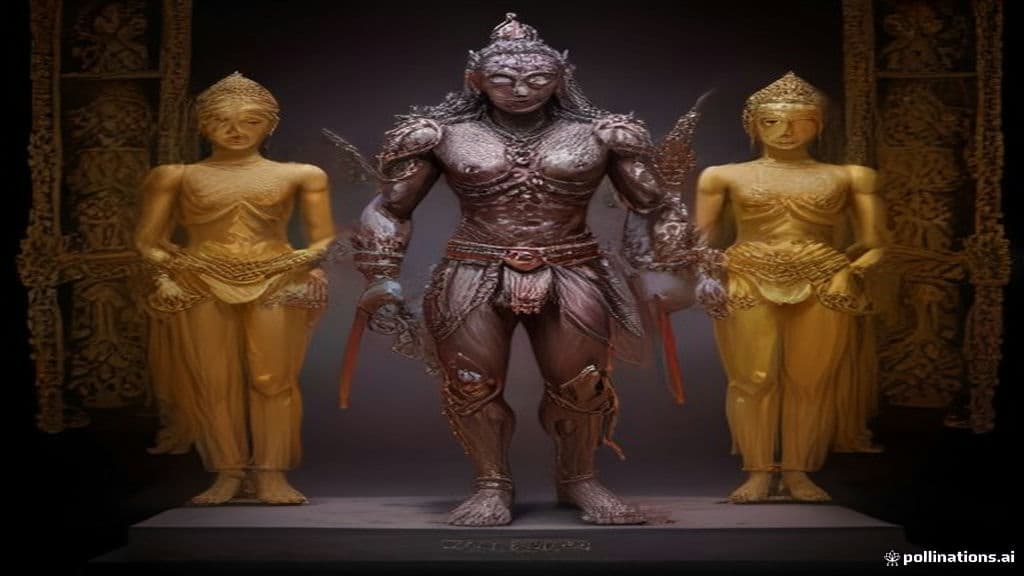
Dushana is a named rakshasa (demon) attested in Ramayana-cycle materials as one of the forest chiefs allied to Khara and counted among Ravana's kin; he is reported slain in encounters with Rama's party during the exile (Aranya/Panchavati episodes).

Dvarapala
Lesser

Dvarapala

A dvarapala (Sanskrit Dvārapāla, "door guard") is an institutionalized door- or gate-guardian figure embodied in sculpture and architectural practice across Hindu, Buddhist, and Jain contexts and their cultural spheres. Placed at thresholds of temples, shrines, and palaces, dvarapalas function as protective tutelary presences—often rendered as warrior or fearsome figures—and have local stylistic variants across South and Southeast Asia.

Dvipa (Hindu)
Primordial

Dvipa (Hindu)

In Hindu tradition, a Dvipa is one of seven islands or continents surrounding an ocean within the multicontinental model of the universe. (Note: 1. Power tier should be "Ancient" as Dvipas are described as part of a multicontinental model and regions of the cosmos, suggesting they have deity-level power. 2. Origin story is accurate but could b)

Dyaus
Ancient

Dyaus

Dyaus (Dyáus; Dyauspitr/Dyauṣpitṛ́) is the Rigvedic daylight‑sky deity and archetypal 'Sky Father' whose union with the earth goddess Prithvi forms the prime parental pair in Vedic cosmology. He functions as a progenitor and sovereignty figure in hymns of the Rigveda and is cognate with the Proto‑Indo‑European daylight‑sky father (cf. Zeus, Jupiter).

Epic-Puranic Royal Genealogies (Hindu tradition)
Minor Spirit

Epic-Puranic Royal Genealogies (Hindu tradition)

Historical accounts of ancient Indian dynasties as recorded in the Epic-Puranic narratives. (Note: - Power tier: Should be Primordial=cosmic (given the historical and genealogical significance), not Minor Spirit. - Summary: Should mention that these are considered historical events by Indian tradit)

Four Kumaras
Primordial

Four Kumaras

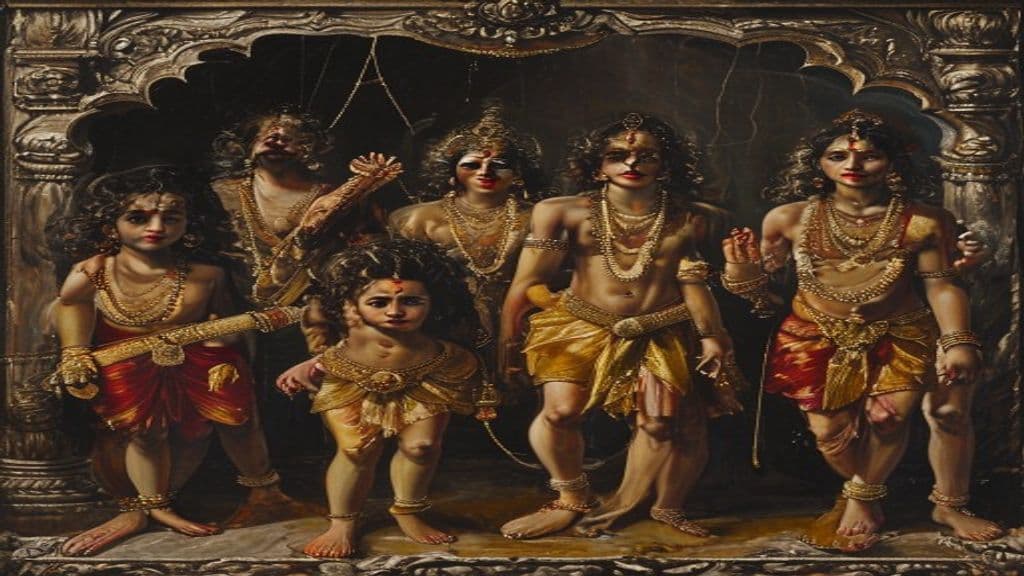
A quartet of eternally youthful, mind-born sages created by Brahma who roam the cosmos as celibate rishis and exemplars of renunciation and devotion. Named Sanaka, Sanandana, Sanatana and Sanatkumara, they function as primordial teachers and mahajanas in Purāṇic and Bhagavata traditions.

Gaja (Hindu tradition)
Greater

Gaja (Hindu tradition)

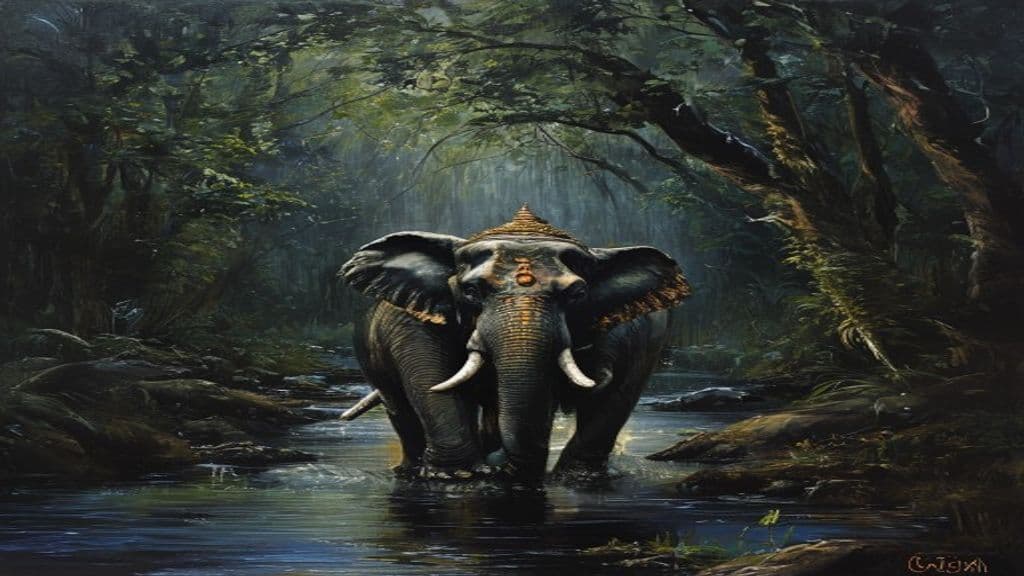
In Hinduism, the Gaja is an elephant with cultural and symbolic significance, appearing in various scriptures. (Note: - Power tier should be Primordial (as it's an animal referenced in multiple scriptures and holds cultural significance) - No specific physical description is mentioned, so Appearance section should be)

Gana
Lesser

Gana

In Hindu religious-literary sources, the gaṇa (Sanskrit: गण, gaṇa) denotes a constituted company or troop of supernatural beings who function as the attendants/retinue of the god Śiva and are said to reside on Mount Kailash. The term also functions as a general lexical category in Sanskrit and Pali for a flock, troop, tribe, or assembly and appears across Vedic, epic, Purāṇic, Tamil, and Buddhist texts.

Gandharva
Lesser

Gandharva

A class of non-human celestial or semi-celestial beings in Indic religions associated principally with music, song, dance, fertility, and an escort/guardian role for liminal arrivals (such as Soma or beings). In Hinduism they are minor deities and musicians of the devas; in Buddhist cosmology they are a low rank of devas and the term (gandhabba in Pāli/commentary) is also used doctrinally for a sentient intermediate state between death and rebirth.

Ganesha
Ancient

Ganesha

Ganesha (Gaṇeśa), also called Ganapati or Vinayaka, is a widely revered Hindu deity identified by an elephant head who functions as remover of obstacles, patron of arts and learning, and god of beginnings; he is son of Shiva and Parvati and head of the gaṇas in many traditional accounts.

Garuda
Ancient

Garuda

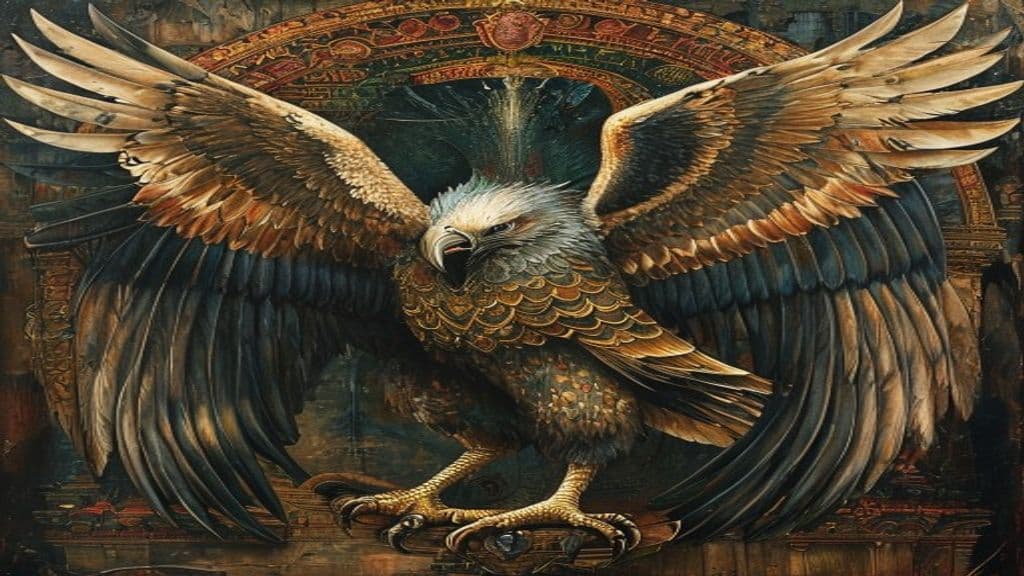
Garuda is a divine, eagle-like being in South Asian traditions best known as the vahana (mount) of the god Vishnu. In Vedic, Purānic and later texts he appears as a powerful, solar-associated bird-personage who is both an individual mythic personality (son of the sage Kaśyapa and Vinatā) and an archetype invoked in temple iconography and theological metaphor.

Gautama Buddha (Siddhartha Gautama)
Ancient

Gautama Buddha (Siddhartha Gautama)

Siddhartha Gautama, most commonly called the Buddha, is presented in the supplied sources as a historical awakened teacher who founded Buddhism by attaining nirvana and teaching a monastic path. His life narrative—birth in Lumbini, renunciation, enlightenment at Bodh Gaya, teaching across the Indo‑Gangetic Plain, and parinirvana at Kushinagar—serves as the canonical model and institutional origin for Buddhist doctrine and the sangha.

Gautama Maharishi
Ancient

Gautama Maharishi

Gautama (Maharṣi Gautama) is a canonical Vedic rishi presented in Hindu, and to some extent Jain and Buddhist, sources as an authoritative seer, teacher, and ritual expert. He is traditionally credited with the authorship/attribution of the Nyāya Sūtras in later philosophical reception and appears as a household sage in narrative cycles (notably the Ahalyā episode).

Gaṅgā (Ganges)
Minor Spirit

Gaṅgā (Ganges)

Gaṅgā is the major sacred river of northern India and Bangladesh, treated in the supplied sources primarily as a geographic and cultural entity — one of the mahānadī (great rivers) of the Indic textual tradition and a central feature of South Asian ecology and religion. The provided materials document its course, hydrology, longstanding textual presence (including limited Rigvedic mentions), and modern cultural significance, but do not present detailed mythic personification, ritual prescriptions, or spirit-warding practices.

Ghatotkacha
Greater

Ghatotkacha

Ghatotkacha (Sanskrit: घटोत्कच, IAST: Ghaṭotkaca) is a singular mytho-heroic figure in the Indian epic Mahabharata, born to the Pandava Bhima and the rakshasi Hidimbi. He is portrayed as a powerful rakshasa-warrior allied to the Pandavas, famed for night-effective magic, illusions, great size, and a climactic death that cost the Kaurava side a large-scale loss.

Ghoshayatra Parva
Primordial

Ghoshayatra Parva

Episode from the Hindu epic Mahabharata where Kauravas are captured by gandharvas and released by the Pandavas. (Note: - Power tier: Ancient (deity-level abilities would fit better with the described events in the source material) - Appearance: Should be added as per source material does not describe but one can infer)

Grahana

Grahana

In Hindu tradition, a Grahana refers to an eclipse, a celestial event of significant importance in Hindu cosmology. (Note: 1. Summary: While accurate, it could be more concise and clear. 2. Power tier: Primordial (as a celestial phenomenon with significant importance in Hindu cosmology) 3. Abilities: Note the absence of s)

Gramadevata
Lesser

Gramadevata

A gramadevata (Sanskrit: grāmadevatā) is the tutelary or guardian deity of a specific locality—most commonly a village—in South Asian Hindu practice. Gramadevatas function as territorial, communal divinities responsible for the wellbeing, boundaries and fortune of the settlement; they are propitiated in local shrines and festivals and may be benevolent when honored or feared as causes of calamity if neglected.

Guardians of the Directions (Dikpāla / Lokapāla)
Greater

Guardians of the Directions (Dikpāla / Lokapāla)

A class of deities or divine offices that guard and sacralize spatial directions in South Asian and some Southeast Asian religious cosmologies. Appearing in Hinduism, Jainism and Vajrayāna Buddhism (and in regional systems such as Meitei and Javanese/Balinese traditions), they are represented in temple architecture and invoked as protectors of sacred space and the dharma.

Guruvayurappan
Greater

Guruvayurappan

Guruvayurappan is the local form of the Hindu god Vishnu worshipped at the Guruvayur Temple in Kerala, identified specifically with Krishna in his child form (Guruvayur Unnikkannan). The murti is the temple's living presiding deity in local tradition and is portrayed in devotional narratives as responsive to devotees and capable of intervening in their lives.

Gusainji Maharaj
Primordial

Gusainji Maharaj

A revered figure in Hindu tradition, venerated by both Hindus and Muslims. (Note: 1. Power tier should be Lowered from Primordial to Ancient, as no cosmic or deity-level abilities are mentioned. 2. No specific weaknesses, wards, or sensory cues can be determined from the source mat)

Gādhi
Ancient

Gādhi

A sage in Hinduism, father of Vishvamitra and associated with ancient knowledge. (Note: 1. Power tier: Primordial (not Ancient) - as there are no supernatural abilities attributed to Gādhi. 2. Appearance: add information about Gādhi's physical appearance or description in Hindu texts. 3.)

Gāyatrī
Ancient

Gāyatrī

Gāyatrī is the personified form of the Gāyatrī Mantra in Vedic–Puranic Hindu tradition: simultaneously a 24‑syllable Vedic metre, the hymn composed in that metre, and a goddess—often titled Vedamātā, the mother of the Vedas—who embodies sacred Vedic speech and knowledge.

Hakini
Greater

Hakini

Tantric goddess of the Ajna chakra — the third eye between the brows. White-complexioned and six-faced, Hakini governs the boundary between individual perception and divine vision. Her favour opens the third eye; her displeasure collapses the distinction between dream and reality.

Halahala
Greater

Halahala

A powerful poison in Hindu mythology, created during the churning of the Ocean of Milk. (Note: 1. Power tier should be Primordial, not Greater, as it can kill gods. 2. Add sensory cue: "A presence that threatens all life". 3. Add weakness: "None mentioned, but Amrita is a countermeasure" 4. Sum)

Hanuman
Greater

Hanuman

Hanuman is a divine vanara (monkey‑like being) in Hindu literature, foremost companion and devoted servant (Rama-dūta) of Lord Rama in the Ramayana. Revered in later Bhakti traditions, he is worshipped as a protector and exemplar of devotion, strength, and service.

Hanuman langur
Minor Spirit

Hanuman langur

A biological primate species (Semnopithecus entellus) widely distributed across India and parts of Pakistan, commonly called the Hanuman langur or sacred langur and culturally associated with the Hindu deity Hanuman. Sources treat it as an animal of ecological, ethological, and cultural interest rather than a supernatural being.

Harana (Elopement)
Primordial

Harana (Elopement)

In Hindu tradition, a 'Harana' is an act of elopement or abduction, often against the will of the person being taken. (Note: - Power tier: Primordial (this seems too high given the description; consider Lesser or Minor Spirit) - Abilities: Consider adding that Harana's "powers" are more related to social and cultural influe)

Haridra Ganapati
Greater

Haridra Ganapati

Haridra Ganapati (Sanskrit: हरिद्रा-गणपति, Haridrā-gaṇapati, "turmeric Ganesha") is an iconographic and sectarian form of the Hindu deity Ganesha. Attested in classical iconographic treatises and in Ganapatya sectarian literature, this turmeric‑coloured form functions as a focus of Tantric sadhana, devotional worship for worldly welfare and protection, and — in the claims of the Haridra Ganapatya sect — as a supreme tutelary figure whose worship grants both worldly boons and moksha.

Harihara
Ancient

Harihara

Harihara is a syncretic divine form combining the Hindu deities Vishnu (Hari) and Shiva (Hara), used as an iconographic and philosophical expression of their essential unity (Brahman). It appears primarily in textual references (Puranas, Harivamsha) and in temple sculpture from early medieval South and Southeast Asia.

Hayagrīva
Ancient

Hayagrīva

Hayagrīva (Sanskrit: हयग्रीव, IAST hayagrīva, lit. 'horse-necked one') is an avatāra of the Hindu preserver deity Viṣṇu, depicted with a human body and a horse head. In Vaishnava traditions he is chiefly venerated as the divine patron and restorer of sacred knowledge (the Vedas) and as a bestower of learning and intelligence; in some epic passages he also appears in a martial, cosmic form to vanquish demonic forces.

Haṃsa (Hamsa)
Greater

Haṃsa (Hamsa)

The haṃsa is a paradigmatic aquatic migratory bird in South Asian religious and philosophical literature, functioning both as an observed Anatidae-like bird (variously rendered as swan, goose, or flamingo) and as a metaphysical symbol of the soul, discriminative awareness, and liberation (moksha). It appears across Vedic hymns, Buddhist Jataka tales, Puranic and later Hindu iconography as a sacred, white bird and as the vahana (vehicle) of several deities.

Heramba
Ancient

Heramba

Heramba is a named iconographic form of the Hindu god Ganesha, venerated especially within Tantric streams as a protector of the weak who bestows fearlessness and victory. He is classically depicted with five elephant heads and multiple arms, often riding a lion and sometimes accompanied by Ganesha's rat vahana.

Herambasuta
Lesser

Herambasuta

Herambasuta (Devanagari: हेरम्बसुत, IAST: Heraṃbasuta) is attested in medieval Indian sources as a human Tantric yogi and leader associated with a vamachara (left‑hand) Ganapatya current who headed a cult of Ucchiṣṭa Gaṇapati. He is described in the tenth‑century Śaṅkaravijaya (attributed to Ānandagiri) as expounding an unorthodox, transgressive form of Ganapati worship later characterized by some scholars as Kaula‑like.

Hidimba
Greater

Hidimba

Hiḍimba is a powerful demon king in the Indic epic Mahābhārata who dwells in the forest, preys on humans (including cannibalistic behavior), and is slain in single combat by the Pandava Bhīma. In regional tradition the cultic attention shifts to his sister Hiḍimbī (Hiḍimbā Devī) and their son Ghaṭotkaccha, whose shrines and festival roles are prominent in Himachal Pradesh.

Hidimbi (Hiḍimbī / Haḍimbā)
Greater

Hidimbi (Hiḍimbī / Haḍimbā)

Hiḍimbī (Hiḍimbā) is a rākṣasī (female rakshasa) figure in the Mahābhārata who encounters Bhīma, changes form to a beautiful maiden, marries him and bears Ghaṭotkaca. In Himalayan (Himachal Pradesh) regional religion the figure is worshipped as the local goddess Haḍimbā, patron of a temple in Manali; scholarship treats the cult as older than or independent of its epic identification.

Hindu Mythological Wars
Lesser

Hindu Mythological Wars

Ancient Indian conflicts involving both mortal warriors and supernatural beings, often with divine or magical weapons. (Note: 1. Power tier should be Ancient, not Lesser (as they involve deities and supernatural beings). 2. Appearance description is missing from the source material. 3. Sensory cues, weaknesses, and wards are)

Hindu Mythology
Primordial

Hindu Mythology

A collection of myths and legends in Hindu tradition, encompassing a wide range of supernatural entities, gods, goddesses, and beings. (Note: - Power tier: Downgrade to Ancient (deity-level) based on the source material describing the collection of myths associated with gods and goddesses. - Appearance: Add "often anthropomorphic" is a broa)

Hindu deities (Deva/Devi)
Ancient

Hindu deities

Hindu deities (Deva/Devi) are the diverse gods and goddesses recognized across Hindu traditions, ranging from Vedic forces of nature to later personalized major gods and goddesses. They function as patrons of rites, embodiments of moral and cosmic principles, and focal points for temple cults, festivals, and devotional traditions while often also being interpreted as aspects of a single Ultimate Reality (Brahman).

Hindu god
Ancient

Hindu god

Hindu gods (Deva/Devi/Ishvara/Bhagavān and related terms) are the diverse gods and goddesses venerated within Hinduism; they occupy flexible roles within a broad cosmology and are approached in multiple theological models (polytheistic, monotheistic, monistic, pantheistic, etc.). Specific deities in the sources include Mitra (an Aditya invoked in the Rigveda and Mitanni inscription) and Ganesha (the elephant-headed patron of beginnings and intellectuals) (Sources 1, 6, 8).

Hiraṇyagarbha
Primordial

Hiraṇyagarbha

Hiraṇyagarbha (Sanskrit: हिरण्यगर्भ, 'golden womb') is a Vedic and later Hindu cosmological concept: a primordial golden seed or 'cosmic egg/womb' from which the manifested universe is said to originate. It is presented variously as an impersonal formative principle, the 'Soul of the Universe' in Upanishadic language, and in Purāṇic and exegetical contexts as the first-born or creator (identified with Prajāpati or Brahmā).

Ilavida
Ancient

Ilavida

In Hindu mythology, Ilavida is the first wife of the sage Vishrava and mother of Kubera. (Note: * The power tier should be Lesser, as there's no mention of her having deity-level powers. * The summary needs to reflect that Ilavida is not mentioned in Hindu mythology outside of the Ramayana, maki)

Indonesian Mythology
Primordial

Indonesian Mythology

The mythology of Indonesia is a diverse and complex collection of myths, legends, and supernatural beings from various cultural traditions. It reflects the syncretization of Hindu, Islamic, and Christian biblical influences, resulting in a unique and dynamic worldview. (Note: 1. Power tier should be Primordial, but it's too vague for entities that embody cosmic forces. Consider rephrasing to "Cosmic Deity" or more specifically, the role of Iswara and Durga in Indonesian my)

Indra
Ancient

Indra

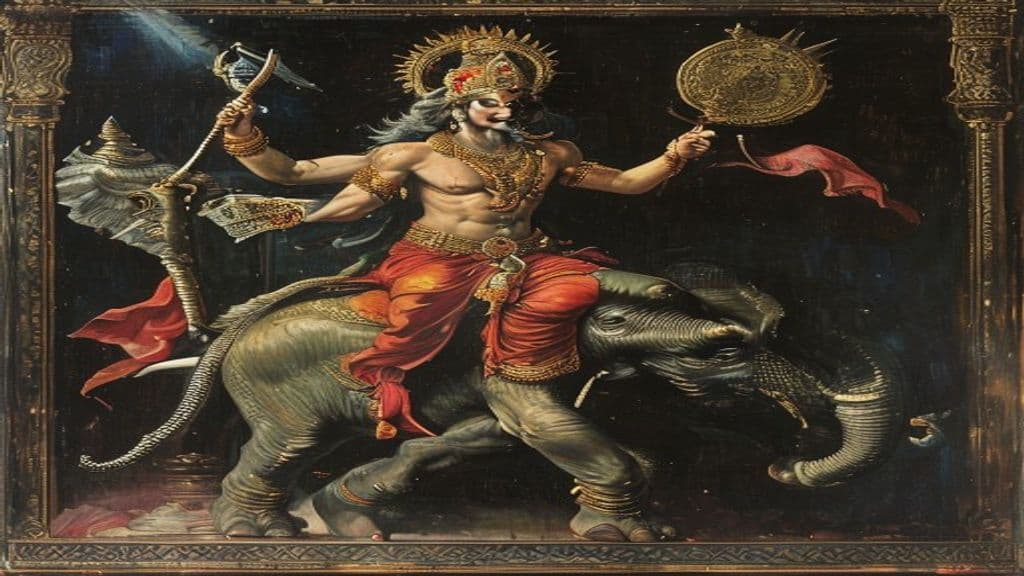
Indra is a major Vedic deity, king of the devas and lord of Svarga (heaven), associated primarily with the sky, storms, lightning, rain, rivers and martial heroism; he is central in the Rigveda and later appears across Hindu, Buddhist and Jain cosmologies with varying status.

Indrajit (Meghanāda)
Greater

Indrajit (Meghanāda)

Indrajit, also called Meghanāda, is the eldest son of Rāvaṇa in the Indic epic tradition (the Rāmāyaṇa). A mortal royal and mighty warrior, he is famed for mastery of celestial weapons (astras), sorcery/tantra, and aerial/illusion warfare, and for briefly capturing the god Indra.

Indrani
Lesser

Indrani

Indrani (Sanskrit: Indrāṇī), also called Śacī / Shachi and Poulomī, is the queen and consort of the Vedic and Puranic god Indra. Presented in Vedic hymns and later epic and Purānic narratives, she functions as Indra's wife, a personification of aspects of his power in some hymns, and an agentic figure in courtly celestial stories such as the Nahusha episode.

Iravan (Aravan / Kuttantavar)
Lesser

Iravan (Aravan / Kuttantavar)

Iravan (Sanskrit: Irāvān; Tamil: Aravāṇ) is a minor Mahabharata hero—son of Arjuna and the Naga princess Ulupi—who in South Indian (Tamil) religion is transformed into a village/guardian deity (often called Aravan or Kuttantavar) and is principally worshipped in the form of his severed head. In Tamil cults he functions as a propitiatory figure for fertility, healing, and village protection and as a central patron figure in ritual practices of transgender communities.

Iravati
Primordial

Iravati

Hindu goddess associated with the sacred river Ravi, connected to cosmological narratives. (Note: 1. Power tier should be Primordial (agreed) but the draft article does not provide a compelling argument to justify it; provide source material supporting Iravati's cosmic-level abilities. 2. The desc)

Ishana (Īśāna)
Ancient

Ishana (Īśāna)

Ishana is a Pañchabrahma aspect of the god Śiva and the dikpāla (directional guardian) of the northeast in Hindu tradition. Presented across Vedic, Āraṇyaka, and Purāṇic materials, Ishana is an auspicious, immanent and presiding form associated with speech, knowledge, and ritual sanctification rather than an independent or malign spirit.

Ishvara (Īśvara)
Ancient

Ishvara (Īśvara)

Īśvara is a polyvalent Sanskrit concept in Indian (principally Hindu) textual and devotional traditions designating a ruling, personal, or supreme principle. Depending on school and era it functions as a personal God (identified with deities such as Shiva or Vishnu), the manifested personal aspect of Brahman (Saguna Brahman), a special Self or devotional object in Yoga, or a non‑theistic authoritative term in legal/textual contexts.

Jambavan
Ancient

Jambavan

Jambavan is a long-lived rājā of the bears in Hindu epic tradition who acts as warrior, strategist, and wise elder; he aids avatars of Vishnu (notably Rama and Krishna), appears across multiple yugas, and is associated with narrative episodes such as the Kishkindha counsel to Hanuman and the Syamantaka gem combat with Krishna.

Janaka
Ancient

Janaka

Janaka is a legendary and dynastic king of Videha (capital Mithila) who functions in Indic sources as an exemplar of ideal kingship and spiritual realization—a ruler who combines political authority, patronage of Vedic learning, and non-attachment. The name is used both as a regnal title for Videha's kings and as the personal/regnal name of the famous monarch who is the adoptive father of Sītā in the Rāmāyaṇa.

Jatasura
Greater

Jatasura

Jatasura (Sanskrit: जटासुर, Jaṭāsura) is a rakshasa who appears in the Mahabharata as an antagonist who disguises himself as a Brahmin, seizes weapons and abducts several of the Pandavas and Draupadi, and is ultimately slain by Bhima.

Jaṭāyu
Lesser

Jaṭāyu

Jaṭāyu is a demigod in the Hindu epic the Rāmāyaṇa who takes the form of a vulture. He is presented as the younger son of Aruṇa and Shyeni, brother of Sampati, and fought Rāvaṇa in an attempt to rescue Sītā before dying of wounds; Rāma performs his final funeral rites.

Jnana Palam

Jnana Palam

A divine fruit in Hindu mythology that embodies the elixir of wisdom, granting its possessor knowledge and insight. (Note: 1. Power tier: Not specified in source material; should be listed as "Primordial" since it grants divine-level abilities. 2. Sensory cues: None mentioned; add note stating that no information availabl)

Jokhini
Lesser

Jokhini

A female supernatural predator of Assamese folklore — the Jokhini appears as a beautiful woman to lure men, but also as a hideous crone to devour them. She is associated with the dense forests of the Brahmaputra valley and is one of the most feared night entities in Assamese village belief.

Kaal Bhairav
Ancient

Kaal Bhairav

Kaal Bhairav (Kāla Bhairava, Kalabhairava) is a fierce Shaivite manifestation of Shiva associated with Time (kāla), death, guardianship, and punitive justice. Worshipped in Hindu and some Vajrayāna Buddhist tantric contexts, he functions as a guardian, enforcer and protector who is propitiated by devotees through mantras, puja and yantra practice.

Kabandha
Greater

Kabandha

Kabandha is a cursed, headless-torso supernatural being from classical Hindu epic literature (notably Valmiki's Ramayana and the Mahabharata). Once a gandharva (named Vishvavasu or Danu in some tellings), he was transformed into a monstrous, forest‑dwelling figure whose death—by severing of his arms and subsequent cremation—releases him to resume his celestial form and provide guidance to Rama.

Kachcha Kalwa
Minor Spirit

Kachcha Kalwa

North Indian spirit of those who died 'raw' — violently, accidentally, or before their destined time. Unable to rest, the Kachcha Kalwa attaches to survivors and causes a trail of accidents, illness, and misfortune until properly appeased through rites at the site of death.