Hindu Supernatural Beings

465 documented Hindu supernatural beings from the Evil Eye grimoire, including 153 ancient and 130 greater in power tier.

page 3 of 8

Brahmā's Ghostly Attendants
Lesser

Brahmā's Ghostly Attendants

A provisional, reconstructed class of attendant supernatural beings inferred from scattered North Indian literary and comparative sources; conceived as a retinue accompanying the creator figure Brahmā and described cautiously as occupying a liminal, spectral register in the available texts. The characterization is tentative and based on fragmentary references rather than direct ethnographic attestations of a named folk class.

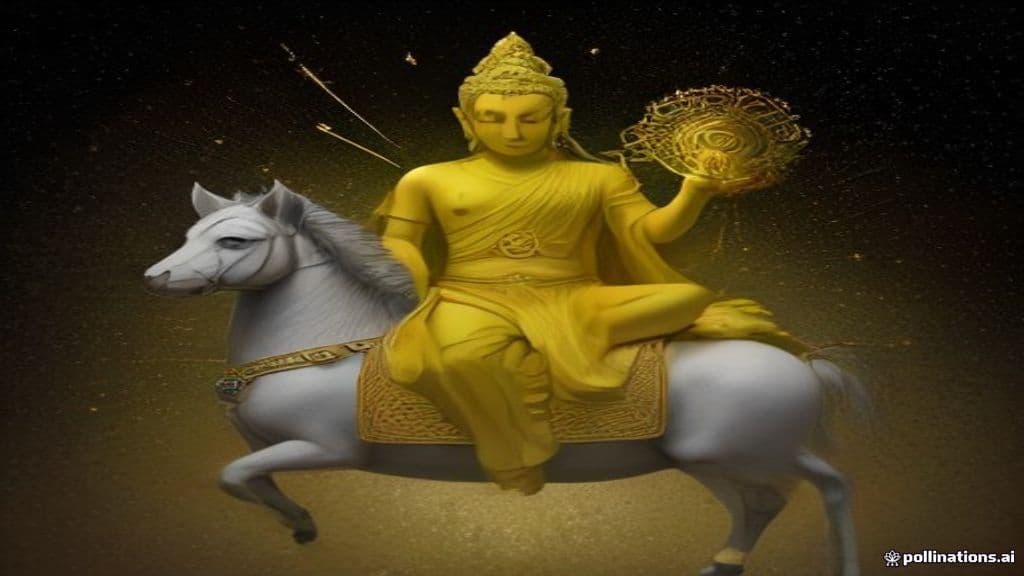
Buddha (Siddhartha Gautama)
Minor Spirit

Buddha (Siddhartha Gautama)

Siddhartha Gautama, most commonly called the Buddha, is presented in the provided sources as a historical wandering ascetic and religious teacher of the 6th–5th century BCE who attained nirvana, taught Dharma, and founded the monastic community (sangha) that became Buddhism.

Budha
Lesser

Budha

Budha (Sanskrit: बुध) is the personification of the planet Mercury in Indian astronomical and astrological tradition. He functions both as the observed planetary body whose motions are recorded in classical Sanskrit astronomical texts and as a navagraha deity associated with intelligence, memory, and the weekday Budhavara (Wednesday).

Bāṇasura
Greater

Bāṇasura

Bāṇasura (Bana, Bāṇāsura) is an asura-king of Śoṇitapura in Hindu Purāṇic narratives: a mighty ruler and ardent devotee of Śiva whose penances and boons grant him great protection and power. He is best known from the Bhagavata Purāṇa cycle concerning Uṣā and Aniruddha, which culminates in a divine confrontation between Śiva (protecting Bāṇa) and Kṛṣṇa (rescuing Aniruddha) and ends with Bāṇa's defeat, maiming, repentance, and reconciliation.

Caturvyūha
Ancient

Caturvyūha

A theological/doctrinal model in early Vaiṣnava tradition describing four earthly emanations (vyūhas) of the Supreme deity—originally Nārāyaṇa and later Viṣṇu—named Vāsudeva (central), Saṃkarṣaṇa (Balarāma), Pradyumna and Aniruddha. The concept maps localized Vrishni hero cults onto a system of divine manifestation reflected in early Mathura/Kushan sculpture and later Vaishnava liturgical categories.

Chaitra
Minor Spirit

Chaitra

Chaitra (Sanskrit: चैत्र, Caitra) is the name of the first month of the Hindu lunar calendar and the Indian national calendar; it functions as a calendrical period that structures seasonal cognition (spring/Vasanta), new-year reckonings, and a cluster of religious festivals and commemorations across South Asian traditions.

Chakravarti
Primordial

Chakravarti

An ideal universal ruler in Indian historiography and religion, holding supreme power over various geographical regions. (Note: - Power tier: Should be "Primordial" -> Incorrect; a Primordial entity would have cosmic powers. Revisit and assign a more fitting power tier based on abilities (e.g., Greater or Ancient). - Origin )

Chamunda
Ancient

Chamunda

Chamunda (also Chamundeshwari, Chamundi) is described in the provided sources as a fearsome form of Chandi, a manifestation of the Hindu mother goddess (Mahadevi), and is counted among the seven Matrikas.

Chanda and Munda
Lesser

Chanda and Munda

Chanda and Munda are two named asura warriors in the Devi Mahatmya narrative who are sent by the demon-kings Shumbha and Nishumbha to confront the Goddess; their slaying by the goddess's terrifying war-aspect (Kali/Chamunda) gives rise to the epithet Chamunda.

Chandalika
Primordial

Chandalika

A Dayan witch who has reached approximately 1600 years of age — the final threshold, beyond which she has become more force than person, capable of destroying entire lineages and withstanding divine invocations.

Chandi
Ancient

Chandi

Chandi (Caṇḍī / Caṇḍikā) is a fierce aspect of the Hindu Divine Feminine (Devi) prominent in Śākta traditions, celebrated in the Devi Māhātmya (Durga Saptashati) as a warrior‑protector and purifier. She is invoked in homa/chanting rites (Chandipath/Chandi Homam) to remove obstacles, cure evils, and bestow auspiciousness, and appears both in pan‑Indian scripture and varied local village forms especially in eastern India and Gujarat.

Chandra
Ancient

Chandra

Chandra is the Hindu divine personification of the Moon, appearing in Vedic, epic and Purāṇic literature. He functions as the lunar luminary, a member of the Navagraha (planetary regents), and is closely associated with plants/vegetation and the Vedic Soma tradition. Myths about Chandra include his marriages to the 27 Nakshatra personifications and the Tara–Brihaspati episode, in which his liaison produces the deity Budha and provokes cosmic dispute resolved by Brahma.

Chandraghanta
Greater

Chandraghanta

Chandraghanta is the third of the nine forms of the Hindu goddess Durga (the Navadurga). Depicted as a golden-complexioned, ten-armed goddess with a crescent-moon shaped like a bell on her forehead and mounted on a lion (sometimes a tiger), she is invoked in protective liturgy and worshipped on the third day of Navaratri to remove afflictions, instill courage, and frighten away malevolent beings.

Chaturbhuja
Greater

Chaturbhuja

Hindu iconographic concept of a deity with four arms, symbolizing power and divinity in Hindu art and literature. (Note: - Power tier should be "Ancient" or even "Primordial", given that it represents a concept associated with deities and symbols of cosmic power. - Abilities claim is partially accurate but could be clea)

Chhaya
Lesser

Chhaya

Chhaya (Sanskrit: छाया, Chāyā) is the personified goddess of shadow in Hindu tradition, presented in myth as a shadow-image or substitute-consort of the sun god Surya. She functions within the solar household as a standing-in wife and mother of notable offspring (notably Shani, Tapti, and Savarni Manu) and figures in narratives that explain aspects of cosmic order and lineage.

Chhinnamastā (Chhinnamasta)
Ancient

Chhinnamastā (Chhinnamasta)

Chhinnamastā is a fierce Hindu mother-goddess of the Tantric Mahavidya group, commonly depicted self-decapitated and associated with transformative, death-and-life symbolism within Shakta/Tantric sadhana. She is worshiped in esoteric ritual contexts and has an established cult presence (notably a Shakti Peetha temple in eastern Nepal).

Chidambara Rahasiyam
Primordial

Chidambara Rahasiyam

A symbolic representation of a secret message or truth in Hindu tradition, embodying Lord Shiva at the Chidambaram Temple. (Note: * Power tier should be Ancient (as it's an abstract representation and not cosmic, but still at a deity-level) * Origin story is missing * Abilities description needs to be supported by source materi)

Chir Batti
Minor Spirit

Chir Batti

Chir Batti (also chhir batti or cheer batti) is reported locally as a 'ghost light' seen in the Banni grasslands of the Rann of Kutch in Gujarat, India. The term literally combines the Kutchi–Sindhi words chir (ghost) and batti (light), locating the phenomenon as an uncanny luminous presence tied to that landscape.

Chitralekha
Lesser

Chitralekha

Chitralekha is a named female companion of the princess Uṣā in the Uṣā–Aniruddha narrative corpus. Described in modern retellings and reference entries as an accomplished artist and a practitioner of yoga-siddhi, she creates portraits for Uṣā and, in several accounts, uses a shrinking/transporting siddhi (often called Anima) to bring the Yādava prince Aniruddha to Uṣā.

Churel (Chudail)
Greater

Churel (Chudail)

A South Asian female revenant or vengeful ghost associated with women who die cruelly or unpurified; often said to target male relatives and sometimes described as latching onto trees, producing a tree‑attached tree‑spirit variant in local tales.

Chyavana
Greater

Chyavana

Chyavana (Sanskrit च्यवन / Cyavana) is a Vedic/Puranic rishi of the Bhrigu lineage famed for great ascetic (tapas) and mantra potency, for being miraculously rejuvenated by the twin physicians the Āśvins (with treatments later named chyavanaprasham/Kayakalpa), and for episodes in which his ascetic power affects gods, sacrificial entitlement, and human communities.

Cintāmaṇi
Primordial

Cintāmaṇi

A wish-fulfilling jewel in Hindu and Mahayana Buddhist traditions, described as a pearl-like object. (Note: 1. Power tier: "Primordial" may be too strong; the source describes it as a "wish-fulfilling jewel", which suggests deity-level power (Ancient) rather than cosmic. 2. Origin story: None provided, shou)

Consorts of Ganesha
Lesser

Consorts of Ganesha

A set of personified feminine figures—most commonly Buddhi (intellect), Siddhi (attainment/success), Riddhi (prosperity), and the Aṣṭa‑siddhi (eight supernatural attainments)—that appear in Hindu iconography and Purāṇic and tantric texts as attendant shaktis or emanations of the deity Ganesha. They function primarily as symbolic embodiments of faculties, powers, and attainments rather than as ordinary human spouses, and their presence and identity vary by regional, sectarian, and textual context.

Cosmic Man
Primordial

Cosmic Man

An archetypal primordial anthropomorphic figure appearing across many world mythologies and religious cosmologies whose body, actions, or nature are implicated in the generation or ordering of the world; in Jungian interpretation the figure also symbolizes the Self and collective unity.

Cynocephalics
Greater

Cynocephalics

In Egyptian tradition, cynocephalics are human beings with dog's heads. (Note: 1. The power tier should be Primordial, given the fact that cynocephalics are described as a widely attested mythical phenomenon existing in many different forms and contexts. 2. Add an origin story b)

Daayan (Dayan, Ḍāin / Ḍāini)
Greater

Daayan (Dayan, Ḍāin / Ḍāini)

A malevolent female spirit or ghost in Indian folklore, often identified as the restless spirit of a woman who died traumatically or with unresolved circumstances. The vernacular term is frequently rendered in English as 'witch,' but sources emphasize it denotes a post‑mortem vengeful spirit rather than a living practitioner; etymological links are drawn to the Sanskrit dakini, a class of fiendish female spirits in medieval texts.

Dadhīci (Dadhichi)
Greater

Dadhīci (Dadhichi)

Dadhīci is a Vedic and Puranic rṣi (sage) celebrated for his mastery of Vedic mantras, custodianship of divine weapons, and exemplary self‑sacrifice whose bones are used to fashion Indra's vajra. He functions as a teacher, ritual custodian, and pivotal participant in myths about the restoration of cosmic order.

Daitya
Ancient

Daitya

Daitya (Sanskrit: दैत्याः) denotes a hereditary race or clan of powerful asura-type beings in Hindu purāṇic and epic tradition, described as the descendants of the sage Kaśyapa by his wife Diti. They appear in genealogies and narratives as collective kin-groups whose notable members (e.g., Hiranyaksha, Hiranyakashipu, Mahabali) confront the devas and provoke divine (Viṣṇu) avatāras.

Dakinī
Greater

Dakinī

A dakini is a feminine spiritual figure attested in Hindu and Buddhist literature and in Himalayan Vajrayāna cultural contexts; sources in this set characterize the dakini as a type or class of goddess and as a figure embedded in tantric and Himalayan religious landscapes. Specific iconography, powers, and ritual formulas are not documented in the supplied sources.

Dakkhin Rai
Greater

Dakkhin Rai

Dakkhin Rai is a locally venerated territorial sovereign of the Sundarbans (mangrove forests of West Bengal, India and Bangladesh), regarded as ruler of beasts and dangerous spirits and commonly associated with the tiger. Forest users propitiate him before entering the mangroves; he features in contested narratives alongside Bonbibi, Shah Jangali and Bara Khan Ghazi.

Daksha
Ancient

Daksha

Daksha (Sanskrit: दक्ष) is a mythic Prajapati and creator-agent in Hindu textual tradition, remembered as a progenitor who presides over yajna and begets lineages. He appears in Vedic, Itihasa, and Puranic sources as a ritual expert and patriarch whose actions in the Daksha yajna narrative produce major mythic consequences (Sati's self-immolation, Shiva's wrath, origin of Shakti Peethas).

Daksha yajna
Primordial

Daksha yajna

A significant mythological event in Hindu tradition, the Daksha yajna is a ritual-sacrifice organized by Daksha that has far-reaching spiritual and mythological implications. (Note: - Power tier should be Ancient (deity-level) instead of Primordial, as the Daksha yajna is a significant mythological event caused by the wrath of a deity (Shiva), rather than a cosmic power. - Appear)

Damyanti
Ancient

Damyanti

A Dayan witch of approximately 800 years — named for Damayanti of the Mahabharata, her power has grown to command weather, disease, and the spirits of the dead across an entire district.

Danava
Greater

Danava

In Hindu tradition the danavas are a legendary race of asuras, descended from the sage Kashyapa and his wife Danu. Presented variously across Vedic, epic, and Puranic sources, they are frequently cast as kinsmen and antagonists of the devas, with portrayals ranging from ambivalent actors in early Vedic material to oppositional forces in later literature.

Darika
Greater

Darika

Darika is a legendary asura-like antagonist in the Bhadrakali/Bhagavathi narrative cycle of Kerala whose exceptional boon made him invulnerable to death by any man; his subsequent tyranny and defeat by the goddess Bhadrakali are ritually reenacted in the temple theatre Mudiyettu.

Daruka
Ancient

Daruka

Supernatural charioteer in the Hindu tradition, associated with Arjuna in the Mahabharat. (Note: * Summary: Replace "Supernatural charioteer" with "Charioteer" since there's no evidence of supernatural abilities. * Power tier: Lower to Greater, as Daruka's abilities are not on the same level as d)

Dasharatha
Lesser

Dasharatha

Dasharatha is the king of Kosala and ruler of Ayodhya in the Ramayana tradition, father of Rama, Bharata, Lakshmana, and Shatrughna. His life in the epic ties royal duty, Vedic ritual (notably the Puthrakamesti yagnam), oath-keeping, and karmic consequence together, culminating in Rama's exile and Dasharatha's death from grief.

Dashavatara
Ancient

Dashavatara

Dashavatara (Sanskrit: daśāvatāra) names a canonical set of ten principal incarnations of the Hindu god Vishnu, each a full descent (avatara) taken to restore cosmic order (dharma) at moments of great disorder. The list and order of the ten vary by Purānic and sectarian traditions; the concept functions across mythology, temple cult, and devotional practice.

Dattatreya
Ancient

Dattatreya

Dattatreya is a Hindu divine figure venerated as a paradigmatic sannyasi (renunciant), a lord of yoga, and a composite incarnation of the Trimurti (Brahma, Vishnu, Shiva). He functions both as an object of devotion and as an archetypal guru whose life and attributed texts inform monastic and yogic lineages, especially in regional traditions across the Deccan and the Himalaya.

Dayan (Daayan, Ḍāin, Ḍāini)
Greater

Dayan (Daayan, Ḍāin, Ḍāini)

A North and East Indian folkloric figure: a malevolent female revenant or vengeful spirit commonly associated with women who died in traumatic or unresolved circumstances. Dayans are described in popular sources as powerful life-draining entities with distinctive physical markers and as a label that also functions in social witch‑hunt practices.

Deva (Buddhism)
Ancient

Deva (Buddhism)

In Buddhist cosmology a deva is a class of celestial being or heavenly rebirth occupying higher planes than humans; devas are longer‑lived, more powerful, and generally happier than humans but remain impermanent and subject to karma. The category spans formless meditative beings through subtle form devas to sensual gods, and maps onto the three dhātus (Ārūpyadhātu, Rūpadhātu, Kāmadhātu).

Devala
Ancient

Devala

Devala is a Vedic/Hindu rṣi and ancestral founder-figure in Devanga community tradition and also appears in Pāli/Buddhist literature as an ascetic seer (Asita Devala). In Hindu Devanga Purāṇa accounts he is the mythic originator and teacher of weaving and the eponymous ancestor of the Devanga weaver community; in Buddhist suttas he functions as an interlocutor and seer in doctrinal exempla.

Devaraja
Ancient

Devaraja

Devaraja (Sanskrit: deva-rāja) is a religious-political concept of sacred kingship in ancient and medieval India and Southeast Asia in which a living monarch is ritually invested as a divine or deified ruler and thereby linked institutionally to a temple cult and specific deities (notably Shiva or Vishnu). It functions as an office and state ideology that sacralizes royal authority and integrates the kingdom with a cosmic order.

Devata
Lesser

Devata

Devata denotes a class of divine or godlike beings in South and Southeast Asian Hindu and Buddhist traditions. The term covers specialized, often localized presences (village, household, forest, directional guardians) and in some contexts overlaps with the broader category deva; devatas are integrated into lived ritual practice across India, Sri Lanka, Bali, and neighboring regions.

Devi
Ancient

Devi

Devi (Sanskrit: Devī) is the general term for goddess in Indian religious thought, signifying the divine feminine or Shakti; in different texts and traditions she appears as individual goddesses (e.g., Parvati, Lakshmi, Saraswati) or as the supreme reality (notably in Shaktism and certain Upanishads). Sources treat Devi both as a class/category of female divinities and as a philosophical identification with ultimate reality.

Dewi Danu
Ancient

Dewi Danu

Dewi Danu is the Balinese Hindu water goddess central to the island's Agama Tirta / Agama Tirtha ritual system. She is particularly associated with the crater lake near the peak of Mount Batur and the Ulun Danu Batur temple, where seasonal offerings are made to secure and give thanks for irrigation water that sustains terraced rice agriculture.

Dewi Ratih
Greater

Dewi Ratih

Dewi Ratih is a Hindu-derived lunar goddess worshipped in Java and Bali, revered for her beauty and associated with the Moon and the explanation of lunar eclipses. She is honored in recurring Balinese full-moon (purnama) ceremonies that celebrate the Moon's beauty alongside the lunar god Chandra.

Dhanvantari
Ancient

Dhanvantari

Dhanvantari is the divine physician in Hindu tradition, identified as an avatar of Viṣṇu who emerges from the Samudra Manthana bearing the pot of amṛta and is credited in Purāṇic and later accounts with promulgating and systematizing Āyurveda. He appears both as a cosmic being born from the churning of the Ocean of Milk and in later Purāṇic narratives as a terrestrial king/teacher who transmits medical knowledge.

Dhanyamalini
Lesser

Dhanyamalini

Dhanyamalini (also Dhanyamala, Dhanyamali, Dhanyamālinī) is named in Ramayana tradition as one of Rāvaṇa's wives — frequently listed among his many junior wives — and is cited in some recensions as the mother of notable sons such as Atikāya and, in other versions, Narantaka, Devantaka, and Trishira. The extant sources provided record her relational and genealogical role within Rāvaṇa's household but do not attribute independent deeds or supernatural functions to her.

Dharmathakur
Lesser

Dharmathakur

Dharmathakur (also Dharmaraj or Dharma) is a locally venerated village deity of the Rarh region of West Bengal associated in local practice with death, justice, and fertility. His cult centers on communal worship (notably the Dharmer gajan), non‑figurative stone images and terracotta horse votives, and shows layered syncretism between popular agrarian forms and later Brahminical textualization.

Dhūmāvatī
Ancient

Dhūmāvatī

Dhūmāvatī (Dhumavati) is one of the ten Mahavidyas in Tantric Shakta traditions, a fearsome aspect of the Great Goddess associated with widowhood, inauspiciousness, cremation grounds, and desolation. She is represented as an old crone figure and figures in Tantric iconographic and devotional material as the embodiment of loss and marginality.

Dirghatamas
Ancient

Dirghatamas

Dirghatamas (Sanskrit Dīrghatamas) is an ancient Vedic rishi (seer/poet) credited with hymns in the Rigveda (Suktas 140–164, first Maṇdala). He functions in the tradition as a sacerdotal poet, priestly authority (purohita), and legendary progenitor figure whose narrative appears in later epic and brāhmaṇa materials.

Diti
Ancient

Diti

Diti (Sanskrit: दिति) is a Puranic mythological woman of divine lineage: a daughter of the Prajapati Daksha, wife of the sage Kaśyapa, and the ancestress of the daityas. In Puranic narratives she functions as a progenitor whose pregnancies and ascetic acts produce powerful adversaries of the devas and so figure in origin-stories of cosmic conflict.

Doyen
Lesser

Doyen

The Bengali witch — closely related to the North Indian Dayan but with Bengali-specific characteristics including the ability to steal livers, which the witch must periodically consume to maintain her powers. Doyen accusations continue to drive violence against women in rural Bengal and tribal districts of Jharkhand.

Draupadi
Greater

Draupadi

Draupadi is a central figure of the Indian epic Mahabharata: princess of Panchala born from a royal yajna, the common wife of the five Pandava brothers, and in many accounts a partial incarnation of the goddess Shri and close friend (sakhi) of Krishna. Her narrative role includes the public humiliation in the Kuru court, exile, participation in the events leading to the Kurukshetra War, later queenship of Indraprastha, and final ascent toward heaven in which she falls first.

Durga
Greater

Durga

Durga is a major Hindu goddess, central to the Shakta tradition as an aspect of the Divine Feminine (Mahadevi). She is venerated as a protective, martial mother-goddess who combats demonic forces (notably Mahishasura) to uphold dharma, and is celebrated in major festival cycles such as Navaratri and Durga Puja.

Durgamasur
Greater

Durgamasur

Durgamasur is a hostile asura/demon in Purana-derived Hindu narratives whose seizure of the four Vedas and warfare against a form of the Goddess (Durga/Shakambhari/Parvati/Kalaratri in different tellings) causes ritual and social disorder; his defeat by the goddess restores Vedic knowledge and ritual order and is commemorated in temple and festival traditions.

Durgamasura
Primordial

Durgamasura

An asura king in Hindu mythology, often depicted as powerful and malevolent, who engages in struggles against the gods. (Note: - Summary: accurate - Power tier: Greater (as a powerful regional being, lower than Primordial) - Abilities: too vague; needs more specific details on what abilities are associated with Durgamasura in)

Durgasur
Greater

Durgasur

Durgasur (also Durgama or Durgamasura) is an asura king in Hindu mythic narratives whose threat to cosmic order is answered by the mother‑goddess Durga (and in some variants other forms such as Shakambhari or Kalaratri). His defeat is invoked in multiple sources to explain aspects of the goddess’s name and cultic authority.

Durukti
Primordial

Durukti

In Hindu mythology, Durukti is the sister and wife of the asura Kali, associated with the complexities of human society. (Note: * The power tier is likely incorrect, considering Durukti's association with an asura (a type of demonic being) but not explicitly described as cosmic or deity-level. * Appearance and abilities are mi)