Indonesian Supernatural Beings

51 documented Indonesian supernatural beings from the Evil Eye grimoire, including 18 lesser and 15 greater in power tier.

Acintya
Ancient

Acintya

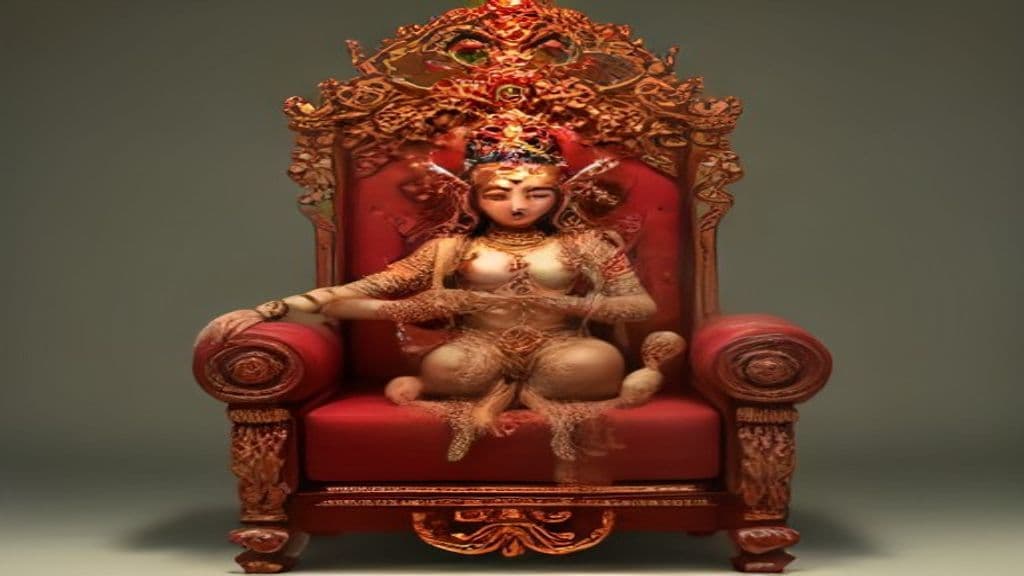
Acintya is an Indonesian Hindu theological-symbolic representation of the ineffable supreme divine principle. In Balinese and Javanese practice it functions as a way to make ultimate reality present in ritual and art—often aniconically as an empty throne (padmasana) or anthropomorphically as a naked, flame-surrounded figure—rather than as a narrative, intervening deity.

Aji Saka
Greater

Aji Saka

Aji Saka is a legendary Javanese culture-hero and foundational figure credited in tradition with pacifying Java, founding a kingdom at Medang Kamulan, instituting the Saka calendrical era in Java, and composing the hanacaraka mnemonic poem tied to the origin of the Javanese script.

Antaboga
Primordial

Antaboga

Antaboga is a primordial serpent deity in Javanese and Sundanese traditional beliefs, later incorporated into Balinese Hinduism. Portrayed as an original creative being, Antaboga meditates and brings forth the world turtle Bedawang and other divine figures; its image appears widely in Javanese and Balinese ritual ornament and iconography.

Babi Ngepet
Primordial

Babi Ngepet

In Indonesian mythology, the Babi Ngepet is a boar demon associated with malevolent intentions towards humans. (Note: * Power tier: Downgrade to Ancient (deity-level) as there's no indication of Primordial powers. * Abilities: Specify what malevolent intentions towards humans implies, e.g., ability to curse or cause )

Barong
Ancient

Barong

In Balinese mythology, the Barong is a panther-like creature and leader of good spirits. (Note: - Power tier: Greater (based on the description as a powerful regional entity, leader of hosts of good spirits) - Abilities: Specify that the Barong opposes Rangda's evil energies, implying a defensiv)

Batara Guru
Ancient

Batara Guru

Batara Guru is a supreme divine figure in multiple Indonesian mythological traditions (Indonesian Hinduism, Batak, Bugis, Javanese). He functions variously as a guru-aspect of Shiva, a creator or world-recoverer in Batak narrative fragments, an ancestor and progenitor in Bugis and Batak genealogies, and a high deity of the kahyangan in Javanese cosmology.

Batara Kala
Ancient

Batara Kala

Batara Kala is a Javanese and Balinese underworld deity associated with death, time, and destruction; feared as an ogre-like devourer of the unlucky, he is also ritually propitiated to avert misfortune, especially for at-risk children.

Batara Sambu
Ancient

Batara Sambu

Batara Sambu is a deity in Javanese Hinduized mythology described as the god or patron of teachers, the first-born son of the high god Batara Guru and queen Batari Uma. In wayang (Javanese shadow-play) tradition he is depicted as a ruler of clouds, ancestor of rakshasa (giants), and resident of the southern heavenly realm Kahyangan Swelagringging; his pasaran (Javanese calendar day) is Pa(h)ing and his palace is said to be made of copper.

Bawang Merah dan Bawang Putih
Lesser

Bawang Merah dan Bawang Putih

A widely told Malay/Indonesian folktale about two eponymous human stepsisters — Bawang Putih (the humble, patient sister) and Bawang Merah (the vain, cruel sister). The story uses small supernatural motifs (magic pumpkins, a talking fish, a gift-bearing old woman) set in rural liminal spaces to reward virtue and punish vice; it functions as a didactic children's tale rather than an account of a discrete spirit being.

Busang
Lesser

Busang

Busang is not attested as a supernatural being in the supplied sources; rather it is a polyvalent proper name found as a toponym (places in Borneo), a lect name (Busang Kayan), a mining prospect label (Busang deposit in the Bre‑X scandal), and as a personal name. No mythological origin, appearance, powers, or ritual practices directed at a supernatural Busang are recorded in the provided material.

Calon Arang
Greater

Calon Arang

Calon Arang is a witch figure in Javanese and Balinese folklore, traditionally portrayed as a master of black magic whose cemetery ceremony—including the sacrifice of a young girl to the goddess Durga—brings flood and an incurable plague to the village of Girah. In the tale a royal ritual specialist (Mpu Bharadah) and his disciple (Mpu Bahula) neutralize her by recovering her magic scroll and confronting her in ritual contest.

Chen Fu Zhen Ren
Lesser

Chen Fu Zhen Ren

Chen Fu Zhen Ren (陳府真人; Hokkien: Tan Hu Cin Jin) is a deified ancestral/tutelary figure venerated in East Java, Bali, and Lombok. Centered on a historical/legendary migrant craftsman who became a local immortal, his cult is maintained in Chinese temples and by indigenous Kejawen practitioners and functions as a protective, communal ancestor patron.

Damarwulan
Lesser

Damarwulan

Damarwulan is a Javanese legendary human hero central to a cycle of courtly-epic narratives and stage traditions (wayang klitik, Langendriyan, ketoprak). The figure—whose name is glossed as "radiance of the moon"—is portrayed as a princely warrior who defeats the Blambangan king Menak Jingga, suffers apparent death and is restored by a hermit, and is ultimately crowned in the Majapahit court. The story is especially associated with East Java and the Serat Damar Wulan manuscript tradition.

Dayang Bandir and Sandean Raja
Greater

Dayang Bandir and Sandean Raja

Siblings in Simalungun folklore from Sumatera Utara, involved in family dynamics, ambition, power struggles, and loyalty within a kingdom. (Note: 1. Power tier: Based on the source material, Dayang Bandir and Sandean Raja's abilities are more deity-level (Ancient) as they exhibit human-like abilities but have significant influence over kingdoms)

Dewi Lanjar
Greater

Dewi Lanjar

Dewi Lanjar is a Javanese/Indonesian female sea spirit often called the Queen of the Northern Sea and closely associated with the coast of Pekalongan (Pantai Utara). In local legend she is a transformed princess who commands jinn, has a recognized palace on the Pekalongan shore, and is paired cosmologically with Nyai Roro Kidul, the Queen of the Southern Sea.

Dewi Ratih
Greater

Dewi Ratih

Dewi Ratih is a Hindu-derived lunar goddess worshipped in Java and Bali, revered for her beauty and associated with the Moon and the explanation of lunar eclipses. She is honored in recurring Balinese full-moon (purnama) ceremonies that celebrate the Moon's beauty alongside the lunar god Chandra.

Dewi Sri
Ancient

Dewi Sri

Dewi Sri (also Shridevi, Nyai Pohaci Sanghyang Asri in Sundanese contexts) is the indigenous rice-and-fertility goddess of parts of the Indonesian archipelago (Java, Bali, Lombok and surrounding islands). She is a living cultic presence in village ritual life believed to preside over rice, household and communal prosperity, and the prevention of famine; in Hindu-influenced contexts she is often equated or syncretized with the Sanskritic goddess Sri/Lakshmi.

Ebu Gogo
Lesser

Ebu Gogo

A set of small humanlike beings in the oral tradition of the Nage people of central Flores, Indonesia, remembered in village tales as short, hairy, gluttonous dwellers of caves and forests who interacted with humans in ancestral times. Some researchers have hypothesized a link between these tales and the fossil hominin Homo floresiensis, but that connection is debated.

Genderuwo
Greater

Genderuwo

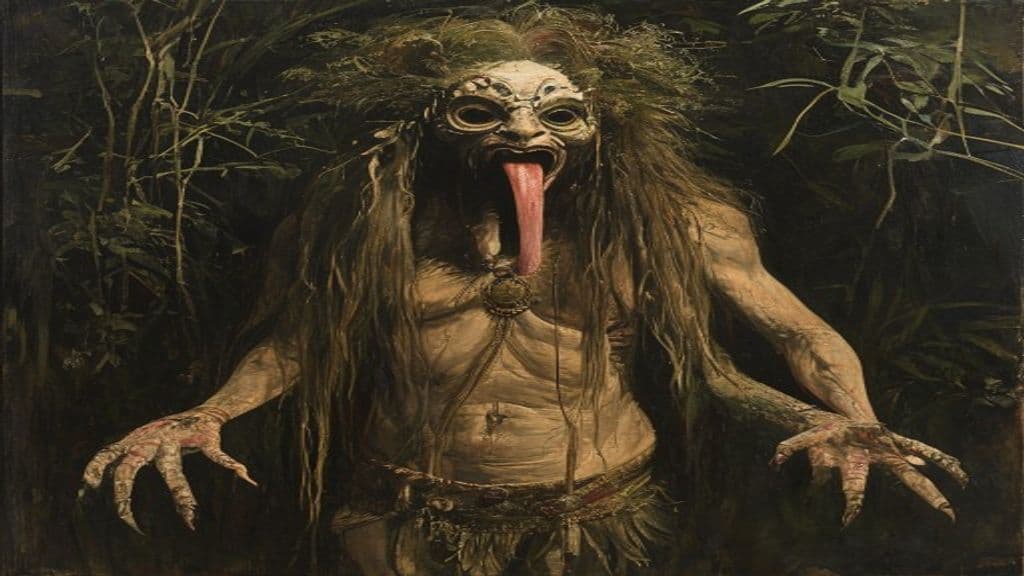
Genderuwo is a Javanese/Indonesian supernatural humanoid spirit, commonly depicted in modern sources as a large, hairy, muscular creature with reddish or black skin and bulging eyes; it is described as able to appear, disappear, and assume human form. It is treated in regional folklore and popular culture as one member among many named hantu (supernatural beings) in the Malay–Indonesian mythic landscape.

Ghost Child (toyol, urn)
Lesser

Ghost Child (toyol, urn)

A named supernatural figure appearing in the 2013 Singaporean horror film Ghost Child (Chinese: 鬼仔), identified in the film as a toyol kept within an urn that brings malicious domestic disturbances to a household. The film is the only supplied source that presents this discrete spirit as an agent in a folk-derived domestic narrative.

Hang Tuah
Lesser

Hang Tuah

Hang Tuah is a legendary Malay warrior-admiral and court retainer remembered in the Hikayat Hang Tuah and the Sejarah Melayu; he functions as an idealized silat master, diplomat, and exemplar of loyalty associated with 15th‑century Malacca. The figure appears in narrative cycles that mix court historiography and wonder-tale elements (notably an enchanted kris), while his actual historicity remains debated in scholarship.

Hantu
Lesser

Hantu

Hantu is a Malay and Indonesian lexical and conceptual category for spirits and invisible beings that includes ancestral souls, animistic nature spirits, and, in modern usage, ghosts or demons. The term covers many named subtypes (e.g., Hantu Raya, Hantu Tinggi) whose forms and roles vary across local traditions.

Hantu Air
Primordial

Hantu Air

A water spirit in Indonesian animist tradition, associated with maintaining the balance of watery places and influencing weather. (Note: - Power tier: Greater (Hantu Air's abilities are more powerful than a local spirit but not cosmic in scope) - Abilities: While it can influence weather, the source material does not explicitly mention)

Hantu Bongkok
Greater

Hantu Bongkok

A bloodthirsty ghost or evil spirit from pre-colonial-era Indonesian folklore in Palembang, South Sumatra. (Note: * Summary: Accuracy confirmed, but it's worth noting that a brief mention of its bloodthirsty nature could be added. * Power tier: Should be "Ancient" since Hantu Bongkok is described as an evil spiri)

Hantu Pocong
Lesser

Hantu Pocong

A Southeast Asian folkloric ghost understood as a dead body wrapped in an Islamic burial shroud (kain kafan), commonly associated with improper funerary procedure or unresolved death-related matters. Representations range from a hopping wrapped corpse in popular media to esoteric readings that interpret the phenomenon as residual energetic or liminal-layer disturbance.

Hyang
Greater

Hyang

Hyang is an indigenous spiritual concept from Java and Bali denoting a venerated unseen presence that ranges from deified ancestors and place-spirits to formulations of a supreme divine principle. Hyang inhabit a realm called Kahyangan and are engaged through ritual practices such as sembahyang and Sanghyang trance dances.

Iravan (Aravan / Kuttantavar)
Lesser

Iravan (Aravan / Kuttantavar)

Iravan (Sanskrit: Irāvān; Tamil: Aravāṇ) is a minor Mahabharata hero—son of Arjuna and the Naga princess Ulupi—who in South Indian (Tamil) religion is transformed into a village/guardian deity (often called Aravan or Kuttantavar) and is principally worshipped in the form of his severed head. In Tamil cults he functions as a propitiatory figure for fertility, healing, and village protection and as a central patron figure in ritual practices of transgender communities.

Jenglot
Primordial

Jenglot

A supernatural entity from Indonesian tradition, created as a deformed humanoid doll imbued with magical properties through black magic. (Note: 1. Power tier: Lower the power tier from Primordial to Ancient, as the jenglot's abilities are described as "provide protection", "take revenge", and "serve as a good luck charm", which suggests deity)

Kala Rau (unattested in supplied sources)
Minor Spirit

Kala Rau (unattested in supplied sources)

The name 'Kala Rau' does not appear in the supplied source set. Materials provided instead document the Javanese/Balinese lunar goddess Dewi Ratih and general features of Balinese mythology; any association of the name Kala Rau with these traditions is not supported by the supplied texts and therefore remains unverified.

Keong Emas
Ancient

Keong Emas

A princess magically transformed and contained within a golden snail shell, associated with the Panji cycle of Javanese folklore. (Note: - Power tier: Primordial (not Ancient), as it's described as a princess trapped in a magical object rather than having deity-level powers. - Abilities: Lack of information about abilities or behaviors)

Komodo dragon (tradition)
Minor Spirit

Komodo dragon (tradition)

The Komodo dragon (Varanus komodoensis) is a real, living species of large monitor lizard endemic to several Indonesian islands. In ethnolinguistic material recorded from the Komodo language the animal is called sebae ('twins'), a name that encodes a local belief tying island people and dragons through a shared spiritual motherhood; beyond this naming note the supplied sources treat the animal primarily in biological, conservation, and museum terms rather than as a spirit or supernatural agent.

Kuntilanak (Pontianak)
Greater

Kuntilanak (Pontianak)

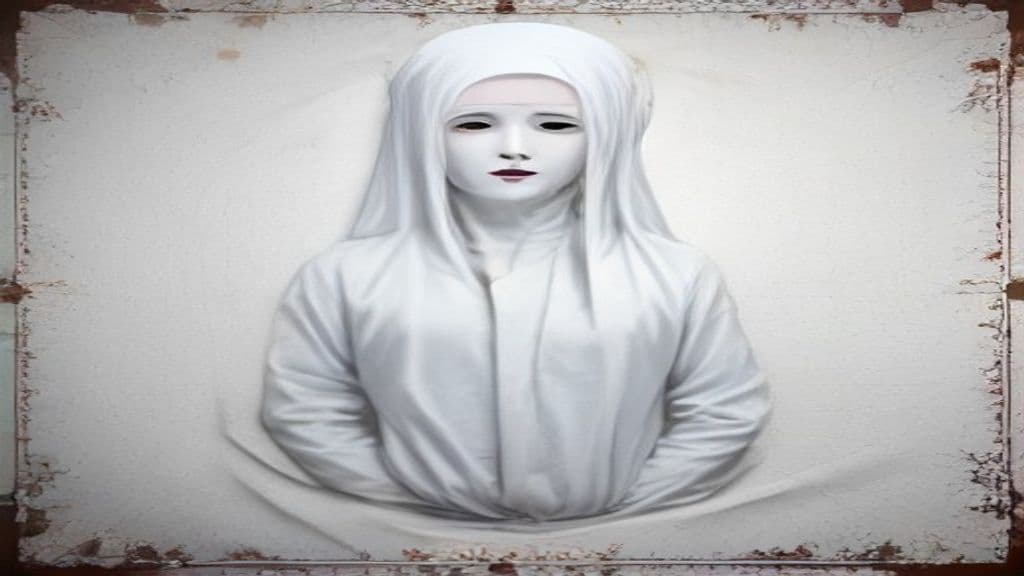
A Malay‑world female revenant or vengeful spirit associated with women who died in childbirth or stillbirth; depicted as a pale, long‑haired woman in a blood‑stained white dress who preys on the living (men, pregnant women, women in childbirth, and in some variants virgins/young women). The figure appears across Indonesia, Malaysia, Singapore and neighboring areas and features in oral tradition and popular media.

Kuyang
Lesser

Kuyang

A Southeast Asian nocturnal female spirit motif, described as a floating disembodied woman's head with internal organs trailing beneath the neck; attested in English-language summaries and contemporary creative and tourism writings that reference the broader Krasue motif.

La Galigo
Primordial

La Galigo

Supernatural being central to the Bugis creation myth, holding significant importance in their cosmology. (Note: - Summary is vague; more specific information about La Galigo's role in the creation myth would improve accuracy. - Power tier: Since there is no mention of "Primordial" abilities, it's unclear what t)

Langsuyar
Greater

Langsuyar

A female revenant in Malay and related archipelagic traditions said to be the ghost of a woman who died in connection with pregnancy or childbirth. The langsuyar is described variously as a beautiful long‑haired woman or as a floating head with trailing entrails; she is vampiric in behavior, associated with night‑birds and certain trees/ferns, and managed by corpse‑preparations, charms, and exorcistic measures.

Leak (Leyak)
Lesser

Leak (Leyak)

Leak (also spelled Leyak or Leák) is a malignant witch-figure in Indonesian — especially Balinese — popular belief and horror storytelling, portrayed as a feared supernatural sorcerer who preys upon pregnant women and newborn infants. It appears in modern media and folklore summaries but ethnographic documentation in the supplied materials is fragmentary.

Leyak
Greater

Leyak

A flying head with entrails, targeting pregnant women and newborn children in Balinese folklore. (Note: - Power tier: Primordial (given the cosmic-level abilities of targeting pregnant women and newborn children) - Abilities: The draft only mentions sucking blood, but source material mentions abducting )

Malin Kundang
No Tier

Malin Kundang

A figure from an Indonesian folktale, transformed into stone as a result of his disobedience and retribution. He represents the consequences of one's actions, emphasizing filial piety and obedience. (Note: 1. Power tier should be assigned based on the entity's abilities; since it doesn't have any mentioned abilities, this might not be applicable. 2. Appearance should be added to describe Malin Kundang's)

Manseren Manggoendi
Primordial

Manseren Manggoendi

A mythical hero from the Numfor-Biak region of Papua, Indonesia, associated with world recreation and transformation. (Note: * Power tier: Should be Ancient (deity-level) instead of Primordial (cosmic), as there's no indication that Manseren Manggoendi has cosmic-level powers. * Abilities: Clarify or expand on what "signifi)

Nala (Ramayana)
Greater

Nala (Ramayana)

Nala is a named vanara (monkey-like being) in the Ramayana tradition chiefly credited as the architect-engineer who designed and supervised the construction of the Rama Setu (the bridge from Rameswaram to Lanka). He also participates as a warrior in the Lanka campaign; traditions vary over whether certain miraculous properties (stones floating) belong to Nala alone, to his brother Nila, or to both.

Nyi Roro Kidul (Queen of the Southern Sea)
Ancient

Nyi Roro Kidul (Queen of the Southern Sea)

Nyi Roro Kidul is a supernatural female figure in Sundanese and Javanese tradition identified as the Queen of the Southern Sea off the coast of Java. She functions as a regionally significant sea sovereign connected in local narratives and place‑based traditions (for example Pelabuhan Ratu) and appears in contemporary poetic and popular media.

Orang Pendek
Lesser

Orang Pendek

Orang Pendek is a figure from Sumatran tradition and modern cryptozoology described either as a short, ground-dwelling bipedal primate inhabiting remote forests of Sumatra or, in some indigenous accounts, as a supernatural 'short ghost' (Hantu Pendek) used in oral lore and cautionary tales.

Panakawan
Primordial

Panakawan

A class of supernatural entities serving as clown servants to heroes in Javanese wayang, personifying qualities of humility and loyalty. (Note: - Power tier should be Ancient (deity-level) not Primordial (cosmic) - Summary could be more specific about the entity's role in Javanese wayang, e.g., "serve as clown servants to heroes" - Sensory cu)

Pocong
Lesser

Pocong

A revenant in Indonesian and Malay popular belief: the corpse wrapped in an Islamic burial shroud (kain kafan) that is said to animate when the burial knots remain tied. Pocong are described as unpredictable: some request prayers, others frighten or attack, and several local variants with distinct behaviors are attested in contemporary sources.

Pontianak (Kuntilanak)
Greater

Pontianak (Kuntilanak)

A Southeast Asian female vengeful spirit common in Malay‑language traditions, often portrayed as the restless ghost of a woman who died in traumatic circumstances; she commonly appears as a beautiful woman who may reveal a monstrous form and is associated with banana and banyan trees.

Rangda
Greater

Rangda

Rangda is the demon-queen figure in Balinese traditional mythology who leads the Leyaks and embodies malevolent forces opposed to the village protector Barong; she appears in legends (notably the Calon Arang material) and in ritual performance (the Barong dance) as a personified source of witchcraft, disease, and social disorder.

Suanggi
Greater

Suanggi

A malevolent spirit from Indonesian folklore, known for its harmful intentions towards humans. (Note: * Power tier should be Lesser, as it's only described as a "malevolent spirit" without any indication of regional or deity-level power. * Sensory cues, weaknesses, and wards are not mentioned in the s)

Sundel Bolong
Lesser

Sundel Bolong

A Javanese-rooted Indonesian folkloric apparition: the vengeful ghost of a woman who died in circumstances tied to sexual stigma (pregnancy out of wedlock or death in childbirth), depicted as a white‑gowned woman with long black hair and a large hole in her back. The figure functions in folklore and modern media as a punitive revenant addressing sexual violence, social shame, and the loss of motherhood.

Tenaga
Lesser

Tenaga

Attested in the supplied sources as (1) a zoological genus of moths in the family Tineidae and (2) an Indonesian/Malay common noun meaning force/energy/labor/personnel; the provided materials contain no evidence of a folkloric or supernatural being named Tenaga.

Tukik
Lesser

Tukik

Tukik is primarily the Indonesian/Malay common noun for a sea turtle hatchling and is used in contemporary Indonesian conservation, tourism, and creative-media contexts to refer to baby sea turtles; other isolated uses of the string appear in personal names, creative credits, and a fragmentary Arctic-source quote but do not establish a single coherent supernatural being.

Wewe Gombel
Lesser

Wewe Gombel

Wewe Gombel is a female spirit or vengeful ghost in Javanese/Sundanese Indonesian folklore associated with the abduction and protective custody of children who are mistreated or left out at night; she is used pedagogically to warn children to stay home and to signal parental responsibility.