Slavic Supernatural Beings

156 documented Slavic supernatural beings from the Evil Eye grimoire, including 74 lesser and 40 greater in power tier.

page 2 of 3

Drioma
Primordial

Drioma

A Slavic spirit associated with the evening and night hours, known for interacting with children and adults. (Note: 1. Power tier should be Ancient, not Primordial, as Drioma's abilities are described as entering houses through cracks and fissures, but no cosmic or universal-level powers mentioned. 2. Add sensory c)
Drude
Lesser

Drude

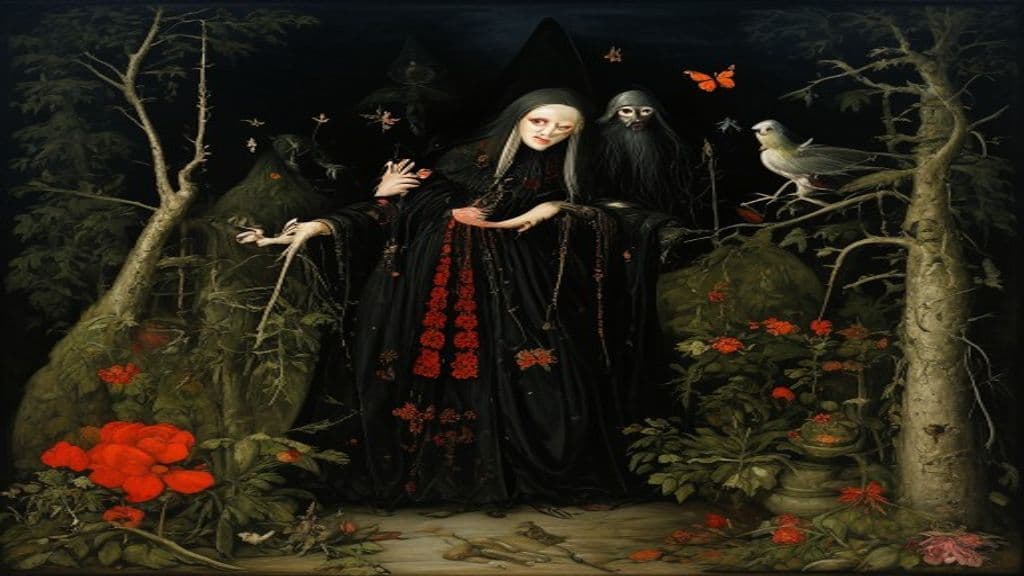
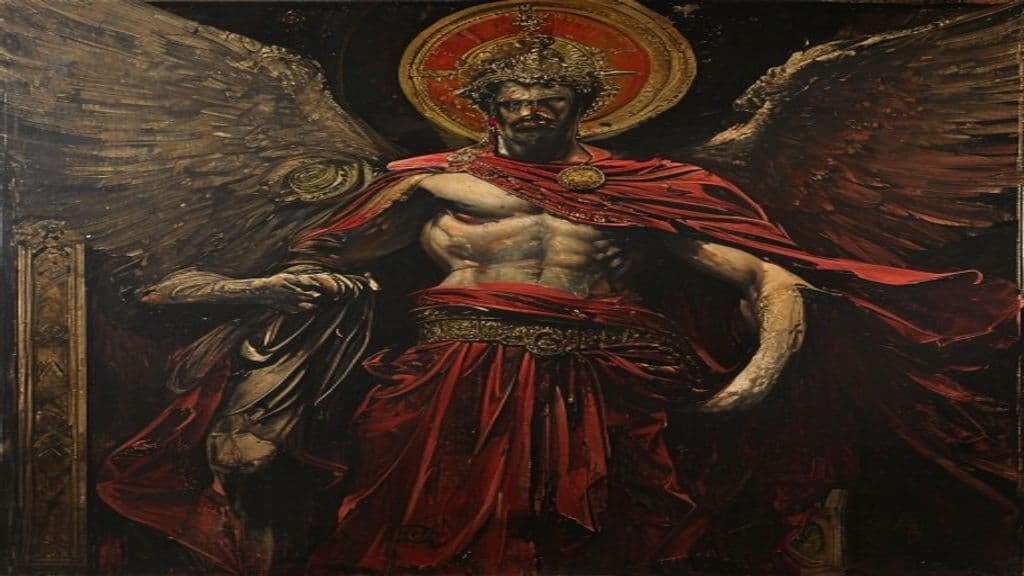
A female nocturnal spirit in German folklore associated with causing nightmares and the sensation of being pressed in sleep (Alpdruck). Treated as a kind of alp or witch-hag in southern German and alpine traditions, with household apotropaics and local counter-practices recorded.

Dukljan
Primordial

Dukljan

Adversary of God in Slavic mythology, embodying qualities and actions of Roman emperor Diocletian. (Note: 1. Power tier should be Lower (consistent with his role as an adversary, not a cosmic being). 2. Summary needs to include that Dukljan is in Serbian mythology, not Slavic. 3. Appearance, Abilities, Se)

Dvorovoi
Lesser

Dvorovoi

A Slavic household yard spirit associated with the farmstead courtyard, stables, and pastures. Traditionally depicted in summaries as ambivalent: a guardian of animals and outer domestic space when treated with offerings, but potentially mischievous or dangerous—especially to livestock—if neglected.

Dvorovoy
Lesser

Dvorovoy

A Slavic place spirit of the courtyard, farmstead grounds, cattle shed, and stable. It is treated as the yard- or stable-counterpart to the indoor domovoi and is generally described as less benevolent and potentially dangerous to livestock, especially white animals.

Dzedka
Minor Spirit

Dzedka

Dzedka is a benevolent figure of Belarusian folklore associated with wealth and fortune. Described as an old man who walks roads and fields by day, he is said to cause a passerby to sleep and later find money, and to appear in dreams to advise wealthy but unhappy people.

Dzidzileyla
Minor Spirit

Dzidzileyla

Dzidzileyla (variants Dzidzilela, Dzidzilelya, Didis Lela) is an alleged pre-Christian Polish goddess first recorded by the medieval chronicler Jan Długosz as a local equivalent of the Roman goddess Venus (goddess of marriage). Modern scholarship largely rejects her authenticity and interprets the theonym as likely arising from a misreading of fragments of folk songs rather than an attested cultic deity.

Dziwożona
Greater

Dziwożona

A malevolent supernatural entity associated with swamps in Slavic mythology. (Note: - The power tier should be Primordial because the Dziwożona is a powerful, malevolent entity associated with swamps and death. - The origin story summary should note that it's specifically female in S)

Esterka
Lesser

Esterka

Esterka is a legendary medieval Jewish woman in Polish tradition, famed as the beloved, mistress, or in some accounts wife of King Casimir III (Kazimierz) the Great (reigned 1333–1370). In chronicles and later literature she functions as a bridge between royal/political history and Jewish communal memory in Poland, credited with influencing royal policy toward Jews and memorialized in place‑names and artistic works.

Fext
Greater

Fext

A Fext is an undead revenant figure recorded in modern summaries of Central European/Slavic popular tradition associated with the Thirty Years' War; it is chiefly noted for practical invulnerability to ordinary weapons, with a single folkloric vulnerability to bullets made of glass.

Fiery Serpent (Slavic)
Primordial

Fiery Serpent (Slavic)

A supernatural entity from Slavic folklore, described as a manifestation of fire in the sky or air. (Note: 1. Power tier should be adjusted from Primordial to Ancient, as it appears to be a deity-level entity rather than a cosmic one. 2. Add sensory cues for sounds associated with the entity (e.g., roaring)

Firebird (Slavic folklore)
Greater

Firebird (Slavic folklore)

A marvelous luminous bird from Slavic folktales, the Firebird (zhar-ptitsa) is a glowing, often fire‑colored bird whose appearance initiates quests and whose possession brings both wonder and misfortune. It functions as a coveted wonder and a dangerous omen within tale cycles.

Firedrake
Lesser

Firedrake

A term in English tradition for dragon-shaped manifestations of fire observed in the sky; used both as an Old English poetic word for dragon (fyrdraca) and, from the Renaissance onward, to describe luminous aerial phenomena such as meteors or ignis fatuus. Sources treat firedrakes variously as mythic dragons, atmospheric luminous vapors, or morally charged apparitions (e.g., the Devil in dragon form).

First Humans in Slavic Mythology
Primordial

First Humans in Slavic Mythology

Central concept in the narrative of human creation, reflecting a worldview that values ancestry and tradition. (Note: 1. Power tier should be changed to Lesser or Minor Spirit (there's no indication that they have primordial power). 2. Summary is accurate but could be more specific about what makes them central to th)

Frau Holle
Greater

Frau Holle

Frau Holle (also Hulda, Holda, Holla, Perchta/Berchta and regional variants) is a persistent Germanic folkloric female figure associated with household arts (spinning and linen-making), nocturnal spirit-processions of women, and a winter/snow motif (the Grimm tale of shaking featherbeds). She appears across medieval canonical texts and later folklore, where she functions as a domestic protector/teacher, a leader of nocturnal female companies, and an agent of moral reward and punishment.

Gagana
Greater

Gagana

Gagana is a miraculous bird of Russian folklore said to live on the mythic island Buyan. Described as guardian of the Alatyr alongside the snake Garafena, she performs miracles and can aid petitioners if properly invoked.

Gamayun
Greater

Gamayun

Gamayun (Russian: Гамаю́н) is a prophetic, wisdom-bearing bird of Russian folklore, normally depicted as a large bird with a woman's head that "spreads divine messages and prophecies" and "knows everything of all creation, gods, heroes, and man." She is placed in the mythic geography on an island in the east near paradise and is presented as a symbol of wisdom rather than a hostile creature.

Geira

Geira

In Slavic tradition, Geira was a Wendish princess attested by Old Norse sagas who ruled over territory near the border of Germania and married a young Óláfr Tryggvasonr. (Note: * Power tier: Not provided in source material, but can be inferred as Primordial given the lack of detailed information and Geira's significance in Old Norse sagas. * Summary: Inaccurate; correct summ)

German
Lesser

German

German is a South Slavic male vegetation and weather spirit recorded in eastern Serbia and northern Bulgaria. Known primarily through ritual effigies and rites performed by girls and young women, he is associated in folk belief with bringing rain and hail and with a symbolic death-and-revival cycle tied to agricultural fertility.

Ghost of Kyiv
Lesser

Ghost of Kyiv

A modern wartime legend and morale symbol that emerged in the first 30 hours of the Russian invasion of Ukraine (24 February 2022). Presented as a mythical MiG-29 ace credited in social media with multiple shoot-downs, the persona was later acknowledged by Ukrainian officials as a constructed 'superhero-legend' embodying collective pilot spirit rather than a verified individual or literal supernatural being.

Gold Duck (Złota Kaczka)
Lesser

Gold Duck (Złota Kaczka)

A Warsaw folktale figure — an enchanted human (often a princess in versions) trapped in the form of a duck in the lake beneath Ostrogski Castle. In recorded versions she can be restored to human form only if a person meets a specific economic test involving spending a large sum over consecutive days without sharing it.

Goldhorn (Zlatorog)
Lesser

Goldhorn (Zlatorog)

A legendary white chamois buck or Alpine ibex from Slovene (Carinthian) mountain folklore, identified by golden horns and associated with hidden mountain treasure and magical alpine flowers. Best known from a late‑Romantic written version first published by Karl Deschmann (Karel Dežman) in 1868 and later popularized in verse, opera and film.

Household deity
Lesser

Household deity

A household deity is a deity or spirit that protects the home and its members, cared for inside domestic spaces and integrated into everyday household ritual. The category spans distinct cultural instantiations — hearth goddesses, ancestral family kami, and animistic house-spirits — and is characterized by reciprocal relations of offering and protection rather than cosmic sovereignty.

Indrik (Indrik-zver')
Greater

Indrik (Indrik-zver')

A singular marvelous beast in Russian folklore, the Indrik (Indrik-zver') is described in medieval compilations such as the Dove Book as the "king of all animals" who dwells on a sacral "Holy Mountain"; the creature is gigantic and horned and is said to make the earth tremble when it stirs.

Interpretatio Slavica
Primordial

Interpretatio Slavica

A cultural practice among Slavic peoples to identify and equate their deities with those of neighboring cultures and Christian saints. (Note: - Power tier should be Ancient (deity-level), as it's a cultural practice rather than a supernatural being. - Sensory cues, weaknesses, and wards are not applicable to this entity, as it's an abstract)

Kallikantzaros
Lesser

Kallikantzaros

A malevolent goblin-like creature in Greek and related Balkan and Anatolian traditions that dwells underground sawing at the world‑supporting tree for most of the year and emerges during the Twelve Days of Christmas (25 December–6 January) to harass households and people.

Kikimora
Lesser

Kikimora

A female house spirit in Slavic folklore that functions as a domestic agent: helpful in well-kept homes and disruptive or dangerous where household morals or order fail. Variants include a domestic (house) kikimora paired with the domovoy and a swamp (bolotnaya) kikimora associated with marshland spirits.

Koschei the Deathless
Greater

Koschei the Deathless

Koschei (also Koshchei, Kashchei), commonly called "the Deathless" or "the Immortal," is an archetypal male antagonist in Russian and wider Slavic folklore. He functions in folk narratives as a legendary villain whose name and legend persist into modern cultural works and references.

Kyi, Shchek and Khoryv

Kyi, Shchek and Khoryv

Semi-legendary brothers who allegedly founded the city of Kiev in Kievan Rus', their historical significance overshadowing any potential mythological importance. (Note: 1. The power tier should be Primordial, as they are considered the founders of the city of Kiev, a major cultural and historical hub. 2. Add "Their names likely represent real individuals or ancestral)

Lady Midday (Poludnitsa)
Lesser

Lady Midday (Poludnitsa)

Poludnitsa, often called Lady Midday or Noonwraith in English, is a Slavic field spirit personifying the dangers of the hottest part of summer days. She is associated with grain fields and midday heat and appears in diverse regional tales as a young woman, hag, or girl who harasses or injures people working or resting at noon.

Lakanica
Lesser

Lakanica

A traditional Polish folkloric field or meadow spirit described as a shy, elusive creature that can appear in human female form. It is presented in sources as part of the broader family of Western Slavic nature spirits related to ovily/rusalki but lacks detailed folkloric accounts in the supplied material.

Leshy
Greater

Leshy

A tutelary forest being in Slavic folklore; an embodied, territorial power of the woods that can protect, mislead, or punish humans depending on their behaviour toward the forest. Highly variable in form and described across many regional variants and names.

Leđan (Slavic tradition)
Ancient

Leđan (Slavic tradition)

An ancient and magical city from Croatian mythology and folklore. (Note: 1. Power tier: downgrade to Greater (since Leđan is described as an "ancient" city, but its magical nature and lack of explicit abilities suggest it may be less powerful than Ancient). 2. Appearance: )

Likho
Lesser

Likho

An anthropomorphized embodiment of bad luck and evil fate in Slavic folktales. Likho appears in narratives as a detachable, transferable force of misfortune—often depicted as a one‑eyed old woman or as an evil male forest goblin—and features in proverbs and cautionary tales that teach avoidance, cunning, or the perils of greed.

Likhoradka
Lesser

Likhoradka

A female spirit in Slavic (particularly Russian) popular belief who personifies fever and sickness. Traditionally portrayed as an agentive being that can possess people or bring disease by touch or kiss; the term likhoradka later lexicalized in modern Russian to mean 'fever'.

Mara
Lesser

Mara

The nightmare spirit of Northern European tradition who rides sleeping people at night, causing suffocation, terror, and the sensation of an invisible weight on the chest.

Mara
Lesser

Mara

A nocturnal malevolent spirit in Germanic and Slavic folk belief that sits on or 'rides' sleepers' chests to produce nightmares and the sensations associated with sleep paralysis. Frequently depicted as female and possessing magical abilities such as shapeshifting, the mara functions as an agentive folk explanation for oppressive nocturnal experiences.

Marzanna
Ancient

Marzanna

Marzanna (Polish form of Morana/Morė/Mara) is a pre-Christian Slavic seasonal goddess/personification representing winter, decay, and the death-aspect of the vegetation cycle. Her ritual 'death'—commonly enacted by destroying a humanlike effigy—marks the communal transition from winter to spring and is paired in tradition with separate spring figures (e.g., Vesna, Lada, Kostroma).

Mavka (Nyavka)
Lesser

Mavka (Nyavka)

A female forest spirit in Ukrainian folklore, the mavka (also nyavka) represents the soul of a girl who died prematurely or unnaturally. Mavkas are ambivalent: various accounts portray them as alluring, dangerous seductresses who may lure men to death, while other local beliefs credit them with tending cattle and protecting flocks.

Meduza
Lesser

Meduza

Meduza (also Meluza, Meluzina) is a hybrid sea monster attested in Russian popular print culture (a 17th–18th‑century lubok) described as half-woman and half‑serpentine/sea creature, located in remote oceanic waters and explicitly labeled in one source as a 'deity of deception.'

Mikula Selyaninovich
Lesser

Mikula Selyaninovich

Bogatyr and plowman from the Novgorod Republic bylina cycle, associated with strength and courage. (Note: - Power tier: Ancient (due to being a bogatyr and having deity-level abilities associated with courage) - Origin story: should be included - Appearance: should be described based on source material - )

Misizla
Primordial

Misizla

Slavic mythological figure described as a 'godlike hero' and warrior-musician, associated with restoring Slavic pagan faith. (Note: * Power tier: Greater (Misizla is described as "godlike" but not with cosmic powers) * Origin story: missing * Abilities: no specific details, but some mention of interactions with humans or his role )

Mistress of the Copper Mountain
Greater

Mistress of the Copper Mountain

A sacral Ural mountain spirit who is the proprietor and guardian of malachite, copper, and other underground riches; she rewards skilled, honest workers and punishes transgressors. Prominent in Ural folk belief and in Pavel Bazhov's skaz cycle, she is closely associated with the Gumyoshevsky 'Copper Mountain' at Polevskoy.

Mokosh
Ancient

Mokosh

Mokosh is a reconstructed Old East Slavic female theonym, etymologically tied to wetness and marshy places and commonly represented in scholarship as a goddess associated with waters, fertility, and the earth. She is known from brief medieval mentions and later folkloric echoes rather than any surviving mythic narratives; many detailed attributes are scholarly reconstructions and contested.

Morana (seasonal goddess)
Ancient

Morana (seasonal goddess)

A pan-Slavic female figure personifying the death of winter whose ritual demise at winter's end is linked to the rebirth of spring goddesses such as Kostroma, Lada, or Vesna. Sources treat her as an ancient goddess associated with seasonal rites and with dreams.

Moryana
Ancient

Moryana

In Slavic folklore, Moryana is a complex sea spirit who rules the winds and poses a threat to ships. (Note: - The power tier is incorrectly assigned (Ancient) given that it only rules the winds and poses a threat to ships, which would be more consistent with a Greater power tier. - Sensory cues: coastal reg)

Nav (Slavic folklore)
Primordial

Nav (Slavic folklore)

In Slavic mythology, Nav represents the souls of the dead and an underworld associated with Veles. (Note: 1. Remove "Primordial" power tier; source doesn't mention Nav having cosmic-level powers. 2. Add that specific abilities are not mentioned in the source material to the Abilities section. 3. Add senso)

Nocnitsa
Lesser

Nocnitsa

A Slavic night spirit or 'night hag' that torments sleepers—especially children—by visiting at night, producing nightmares or sensations of pressure on the chest, and in some accounts drawing life energy from victims.

Olganos
Lesser

Olganos

Olganos (Ancient Greek: Ὄλγανος) is a local river-god attested in Macedonian context. Presented as the eponymous divine personification of a river, he is recorded as a son of Beres and brother of Mieza and Beroia and is known from local cult material including an inscribed bust found at Kopanos/Emathia, dated to circa the 2nd century CE.

Paraskeva Friday
Greater

Paraskeva Friday

A personified figure in East Slavic folk Christianity who represents the day Friday and associated saintly cults (notably saints named Paraskeva). She functions as a localized sacred presence linked to prohibitions around women's domestic work, protective healing roles, and punitive interventions when taboos are violated.

Perkwunos
Ancient

Perkwunos

Perkwunos (reconstructed Proto-Indo-European *Perkʷūnos) is a scholarly reconstruction of a Proto-Indo-European thunder- and weather-deity hypothesized to preside over thunder, storms, lightning and fructifying rain. In comparative myth the reconstructed figure appears in a recurring Indo‑European pattern as a sky/thunder hero who combats a multi-headed water-serpent to free life-giving waters; direct PIE cultic texts or iconography are not attested and the reconstruction is inferred from descendant traditions (e.g., Slavic Perun, Baltic Perkūnas, Indic Indra, Norse parallels).

Perun
Ancient

Perun

The highest god in the Slavic pantheon, associated with law, war, thunderstorms, and fertility. (Note: - Power tier should be Ancient -> Primordial (as he is described as the "highest god" and his attributes are cosmic in scale) - Abilities should include control over mountains, as mentioned in the sou)

Polevik
Lesser

Polevik

A Slavic field spirit associated with cultivated fields and agricultural labour. Traditional accounts depict Polevik as a field-dwelling being encountered by peasants and travellers (especially at noon or sunset) that can mislead, punish, or occasionally be negotiated with by offerings.

Polkan
Lesser

Polkan

Polkan (Полкан, Палкан) is a legendary East Slavic folktale hybrid—variously half-human/half-horse or half-human/half-dog—known from the Bova Korolevich (Buovo) narrative cycle as an exceptionally powerful warrior who first opposes and then becomes the sworn companion and protector of the hero.

Poludnitsa (Lady Midday / Noonwraith)
Lesser

Poludnitsa (Lady Midday / Noonwraith)

A Slavic folkloric personification of the dangers of the midday hour, depicted as a young woman who appears in agricultural fields at noon and is held responsible for heat-related collapse, neck pains, and occasional madness.

Poroniec
Greater

Poroniec

A hostile supernatural being in Slavic folklore believed to arise from stillborn fetuses or improperly buried infant remains; considered especially dangerous because of the unrealized potential of the life lost and connected to taboos and household burial practices.

Povitrulya
Lesser

Povitrulya

Povitrulya (Ukrainian: Повітруля) is a female wind-associated figure from Ukrainian lower mythology, described as an airy, winged maiden from the Carpathians who aids lovers and appears in folk tale motifs where her wings can be taken or burned to bind her to the human world.

Prince Marko
Primordial

Prince Marko

Historical figure and major character in South Slavic oral tradition, de jure Serbian king from 1371 to 1395. (Note: - Power tier: Primordial is too high; Ancient (deity-level) is more plausible given the context. - Abilities: The draft implies supernatural abilities, but the source material only describes Prince Ma)

Płanetnik (Slavic Tradition)
Greater

Płanetnik (Slavic Tradition)

A demonic creature embodying atmospheric phenomena, with potential control over or manipulation of weather patterns. (Note: - The power tier should be Primordial, as it has control over atmospheric phenomena. - There's no information about wards in the source material, so that section should be removed. - Weaknesses should)

Raróg
Lesser

Raróg

A Slavic fire-associated avian supernatural being variously described in Czech, Polish, Ukrainian, and Russian summary sources as a fiery falcon or dragon and, in some Polish accounts, as a tiny pocketable bird that brings happiness. It is connected to domestic fire and treated in popular reference as part of the broader fire-bird motif in Eurasian myth.