
Greater
Rusalka
Water spirits in Slavic folklore — the spirits of young women who died by drowning or suicide, bound to rivers and lakes. Beautiful and dangerous, they can bewitch men to their deaths.
156 documented Slavic supernatural beings from the Evil Eye grimoire, including 74 lesser and 40 greater in power tier.
page 3 of 3
Water spirits in Slavic folklore — the spirits of young women who died by drowning or suicide, bound to rivers and lakes. Beautiful and dangerous, they can bewitch men to their deaths.

Rübezahl is a folkloric mountain spirit of the Giant Mountains (Riesengebirge/Krkonoše/Karkonosze). He appears in German, Czech and Polish traditions as a capricious mountain lord, weather-controller, treasure-guardian and tester of human behaviour, alternately depicted as giant, gnome, woodwose or disguised wanderer.

In Slavic folk‑Orthodox belief, Saint Nedelya is the personification of Sunday/the Week as a female sacred presence who embodies the day's sanctity and enforces prohibitions against working on Sunday. The figure appears in ethnographic and folkloric sources across several Slavic regions and is syncretically related to named saints such as Anastasia/Kyriakia and to apocryphal texts that sacralize the day.

A South- and West-Slavic (especially South Slavic/Balkan) female nature spirit and personification of wild places. Samodivas are ambivalent supernatural women associated with mountains, springs, trees, songs and dances; they can grant healing knowledge or punish humans who offend the landscape.

A titled supernatural sovereign of the sea realms in East Slavic narrative tradition, the Sea Tsar appears in bylinas and fairy tales (notably Sadko and variants of The Sea Tsar and Vasilisa the Wise) as a ruler who influences underwater fortunes and events encountered by human protagonists.

Shatans (Belarusian: Шатаны) are folkloric creatures in Belarusian tradition portrayed as odd-looking, aimless wanderers who embody idleness and laziness; they influence others by example rather than acting as active agents of harm or help.

Sheka (Cyrillic: Шекә) is a small, liminal spirit attested in short summaries of Turkic/Tatar and Slavic popular traditions. In Turkic/Tatar material it is described as a dwarf‑like being inhabiting forests or derelict houses and appearing in comical episodes; in Slavic pagan description it functions as a field spirit that misleads, harms, or troubles peasants and children in crops.

Shishiga (Russian: шиши́га), also called leshenka in one account, is a female swamp or forest spirit in Russian and Komi traditional belief. Presented as a place-bound nature-being, she is associated with marshes, riverbanks and wooded margins and is said to harass people (particularly intoxicated persons) and, in Komi tradition, to be an omen or cause of drowning and death for those who see her.

Shubin (Ukrainian: Шубін) is a localized subterranean spirit from the Donbas mining region of Ukraine, described in regional folklore as a spirit 'of the mines' whose temperament is ambivalent — usually good but sometimes wicked. The figure is tied to miners' experience of the underground and to explanations of mine hazards and tragedies.

Female tutelary beings associated with bodies of water in Slavic paganism, often dual-natured as benevolent or malevolent. (Note: - Power tier is unclear based on the source material; no indication that they are limited to a "Lesser" power tier. - Appearance is not described in the source material, so this section should be remo)

A class of serpent‑like supernatural beings in Slavic oral tradition and epic literature, often associated with snakes, water, weather, and liminal places. Regional vernaculars (e.g., Russian zmei, Polish smok/żmij, Romanian zmeu) describe variants that range from multi‑headed, regenerating monsters to humanoid or ambivalent figures who may help or court humans.
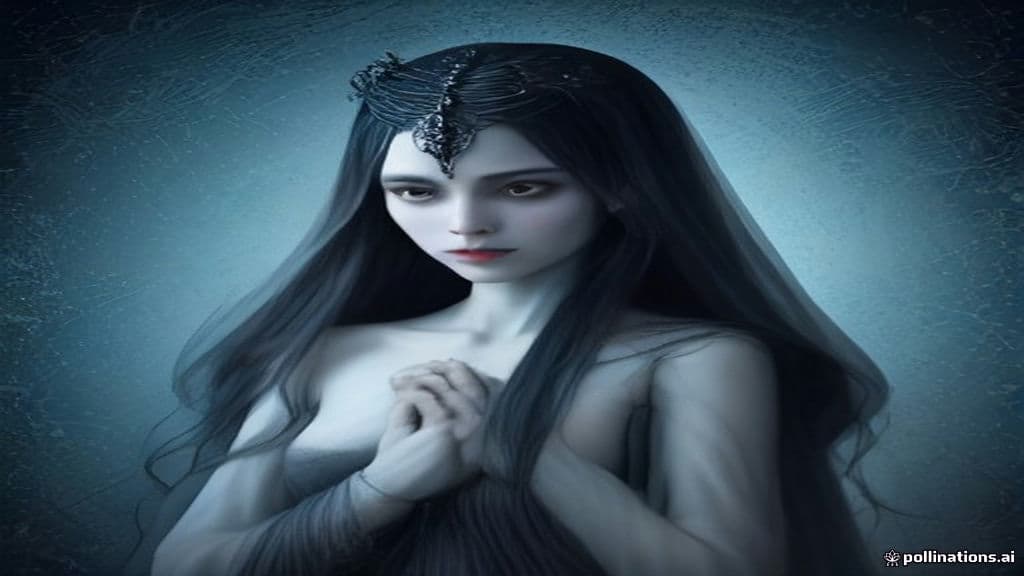
A class of localized female nature-spirits in Slavic pagan belief associated primarily with waters (and by extension categorized among nature spirits). They are described as analogous to Greek nymphs and may be morally ambivalent — either beneficent (white) or maleficent (black).

A sacred stone in Slavic and Finnic pagan practices, imbued with spiritual significance. (Note: - Power tier should be Primordial (due to their widespread presence and spiritual significance in Slavic and Finnic cultures). - Abilities description is incomplete and inaccurate (the text only menti)
The vampire of Romanian folklore — either a living witch (strigoi viu) or an undead blood-drinker (strigoi mort). The source tradition from which the literary vampire emerged.

A malefic night-being in Polish and Silesian folk belief associated with certain anomalous births and with revenant activity after death. Traditions portray the strzyga variously as a vampiric, blood-drinking revenant that flies at night (often imagined as an owl), or alternatively as an omen that heralds imminent death; communities employed a mix of popular and Christian measures to prevent or neutralize suspected strzygi.

In the Slavic tradition, supernatural beings are a part of the natural world, existing alongside humans and other entities. They have a unique relationship with nature, reflecting an interconnected worldview. (Note: 1. The power tier should be Primordial, as it is implied that these supernatural beings are a fundamental part of the natural world and not limited by human regional boundaries. 2. Remove "Their abili)
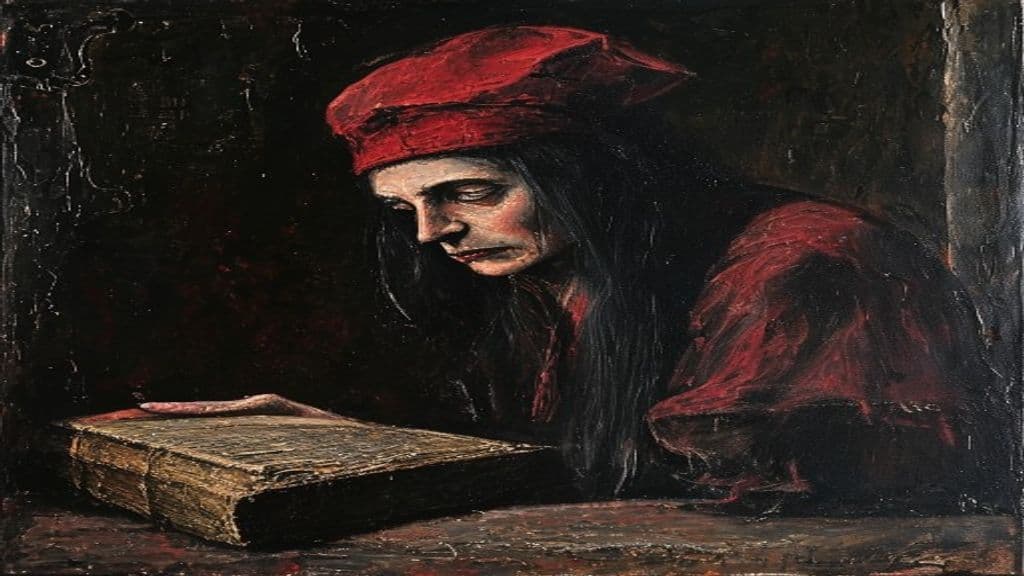
Malevolent entity believed to be the soul of an unbaptized child, said to 'stroll through houses at night' in Croatian folklore. (Note: - Power tier: Minor Spirit (description suggests it's a relatively weak entity) - Sensory cues: should include the fact that it "strolls through houses at night", not just the red cap - Weaknesses: no)

A giant bull from Bosnian-Slavic mythology with primordial powers. (Note: 1. Power tier should be Primordial (not Greater) due to its ability to hold the Earth on its back and contribute to maintaining cosmic order. 2. Appearance should mention imposing horns and strength a)

A collective term for malevolent entities from Slavic paganism, associated with evil or negative forces. (Note: 1. Power tier should be Ancient (deity-level) instead of Primordial (cosmic), as the Unclean Force is associated with malevolent mythological forces and creatures. 2. Appearance: Add that there is no )

A Slavic folkloric revenant: an 'unclean' dead soul that returns to or possesses a corpse and harms the living, often through blood-taking or nocturnal attacks. The concept is embedded in a cosmology that distinguishes soul and body and stresses the need for correct funerary rites to allow a soul to pass after an intermediate wandering period.

Upyr (variants upir, upiór, upierz, впир/onpyr) is a Slavic and Turkic folkloric revenant-category described in collected Slavic tales and modern summaries as a prototype of the vampire: a corpse-like harmful dead blamed for infant deaths, disease, and other misfortunes in pre-modern communities. The term and concept occupy a boundary category between ordinary dead and active harmful forces in Slavic folk belief and figure in 19th‑century tale-collections and later popularizations.
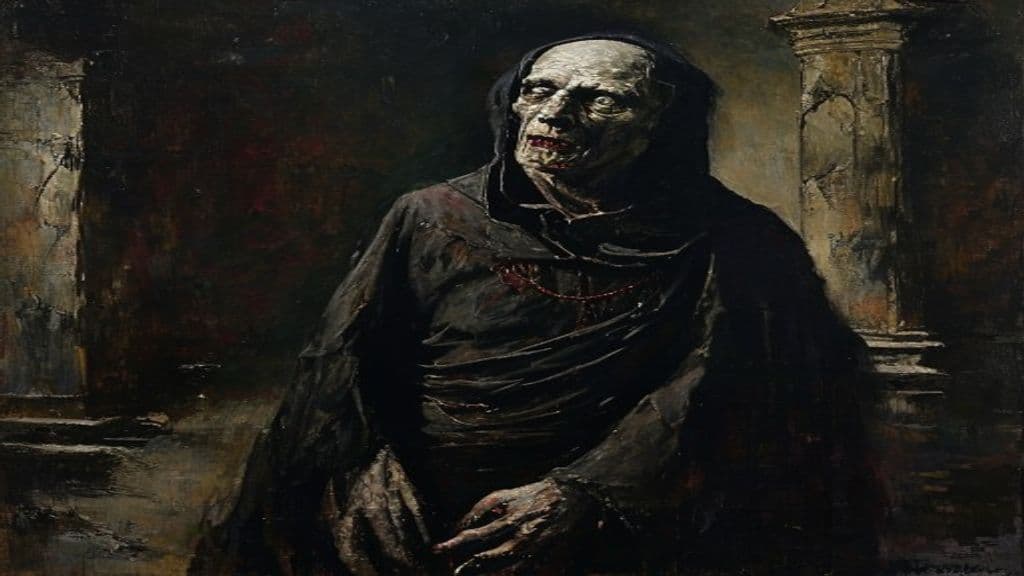
A class of revenant beings in southeastern and eastern European folk belief that subsist by feeding on the vital essence (generally blood) of the living. Recorded chiefly in early modern to modern oral traditions, these vampires are typically described as reanimated corpses whose presence explains unexplained illness, death, and post-mortem disturbances in their communities.

Veles is attested in modern references as a Slavic theonym and as a toponym (notably the city of Veles in North Macedonia and the mountain Velež in Herzegovina). The supplied sources provide place-name, encyclopedic, and modern-cultural information about the name but do not contain a sustained primary-source account of the deity’s appearance, powers, or ritual cult.
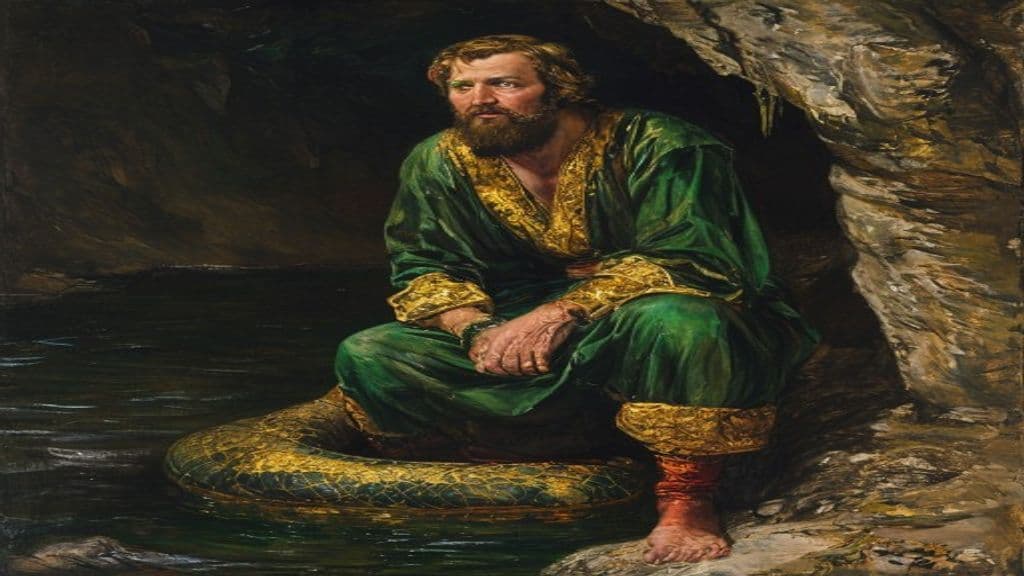
A powerful snake-ruler from Ural miners' folklore as rendered in Pavel Bazhov's skaz "The Great Snake." Poloz is depicted as the proprietor and guardian of underground gold who can reveal or withdraw veins and who reacts to human behavior around claims.

Velnias (also attested as Veles in Slavic sources and Velinas/Velinas in Baltic references) is a chthonic figure associated with the underworld, cattle and animals, the boundary between life and death, and domains of magic, knowledge, divination and poetry. In pre-Christian contexts he functions as a powerful underworld deity and guarantor of oaths; in later Christianized materials he is sometimes reinterpreted in demonological terms.

Female mythological character associated with youth, springtime, renewal, growth, and fertility in South Slavic mythology. (Note: 1. The power tier should be Primordial since Vesna is a mythological character associated with cosmic forces (springtime and fertility) rather than regional or local spirits. 2. Add sensory cues from )

In Slavic mythology, Vlastislav is a mythological prince from Czech tradition with connections to broader Slavic royalty. (Note: 1. Power tier should be Ancient (deity-level) rather than Primordial (cosmic). 2. Abilities statement is incomplete; source material only mentions his royal position and parentage. 3. No sensory cues,)

A Slavic water spirit associated with rivers, lakes, springs and other bodies of water; depicted in popular summaries as an amphibious, often male figure who both embodies and guards/menaces aquatic places. Sources range from neutral encyclopedic descriptions to sensational popular retellings and modern adaptations.

Vodyanoy is identified in the provided source as a Slavic water spirit. The entry notes regional name-forms such as Czech and Slovak vodník, German-language Wassermann (as a loan/translation), and Ukrainian водяник (vodyanyk).

Epic hero from medieval Russian folklore, a legendary warrior and bogatyr in Slavic mythology. (Note: * Power tier: Lower to "Greater" (deity-level powers are associated with Ancient entities, and bogatyrs are typically considered powerful regional beings) * Appearance: Remove statement about lack of )

Magical entities invoked through incantations in Eastern Slavic folklore, capable of controlling reality with the power of words. (Note: - Summary: Add that they are not directly "invoked" through incantations, but rather the power of words is leveraged for magical effects. - Power tier: Based on source material, it seems more accurate)

A limestone sculpture idol representing a pre-Christian Slavic belief system. (Note: - Power tier: Lowered to Ancient (deity-level), as it's a representation of a deity/concept rather than an actual cosmic being. - Abilities: Removed, as stated in the source material. - Sensory cues: )

A zhrets is a priest in the Slavic religion, responsible for mediating between humans and gods. (Note: 1. Power tier should be Primordial, as zhrets are described as possessing cosmological knowledge and playing a significant role in resisting Christianity, indicating a level of power that aligns with )

Zmei (masculine) / zmeya (feminine), commonly called Zmey Gorynych in Russian usage, is a legendary serpent/dragon figure in Russian folktales and epic poetry, variously depicted as a monstrous serpent/dragon or as a human-like character with dragon traits. It functions in narratives as a principal adversary confronted by culture-hero protagonists and persists as a cultural symbol in modern Russian discourse.

Martyr figure in Wendish mythology, possibly referencing historical king Stois or Stoigar. (Note: * Power tier should be Primordial, as it's described as a martyr figure with possible historical roots. * Appearance and Abilities sections are missing information. * Sensory cues, Weaknesses, and War)
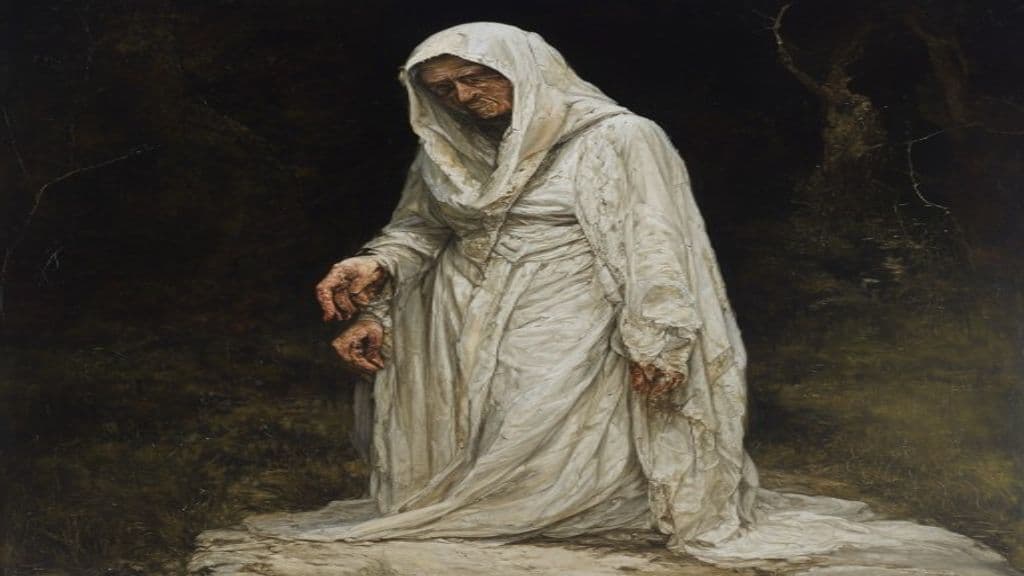
Čuma (also kuga) is the personification of plague in Serbian folk belief, imagined as a woman who travels from a far land to infect people and homes. She is feared and placated through household cleanliness, avoidance of her name, and small offerings.