Slavic Supernatural Beings

156 documented Slavic supernatural beings from the Evil Eye grimoire, including 74 lesser and 40 greater in power tier.

page 1 of 3

Adže / Adze
Lesser

Adže / Adze

No folkloric entity named 'Adže' is documented in the provided sources. The string appears in heterogeneous, non-folkloric contexts (a Bosnian village name, an English woodworking tool entry, a performer pen name, a CIA document fragment) and one modern podcast episode list that mentions 'the Adze' among other vampire-like beings; none of these supply an ethnographic description of a supernatural being called 'Adže'.
Ala
Lesser

Ala

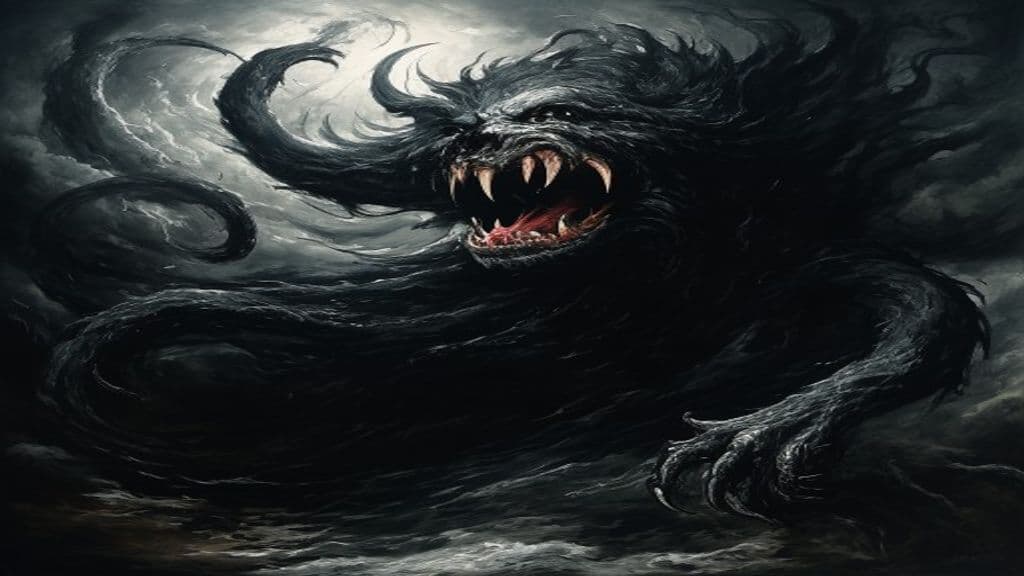
A female weather-being in South Slavic folk cosmology (Bulgaria, Serbia, North Macedonia) associated with hail, destructive storms, and voracious appetite; she is said to lead hail-producing clouds to destroy crops and is sometimes blamed for eclipses by attempting to devour the Sun or Moon.

Alatyr
Primordial

Alatyr

A sacred world-stone in East Slavic and wider Slavic folklore, described as the "father to all stones" and the "navel of the earth." Located at the world's center (often on Buyan island), it is associated with a miraculous spring, sacred letters, healing properties, and liminality between the human world and other realms.

Alkonost
Greater

Alkonost

The Alkonost is a legendary woman-headed bird of East Slavic folklore, depicted as an individual mythic avian figure who lives in the underworld alongside her counterpart Sirin. Her song enchants listeners into forgetfulness or bliss, she is said to bless fruit during the Apple Feast of the Saviour, and her reproductive actions are causally linked in lore to sudden storms at sea.

Alyosha Popovich
Lesser

Alyosha Popovich

Alyosha Popovich (Алёша Попович / Олешко Попович) is a named human hero (bogatyr) of the East Slavic byliny tradition, remembered as the youngest member of the canonical trio of Kievan Rus' warriors. He is chiefly characterized by slyness, mockery, and trickery, and defeats foes by craft often aided by pious petition rather than mere brute strength.

Andrew the Apostle
Ancient

Andrew the Apostle

Andrew the Apostle (Greek Ἀνδρέας, Latin Andreas) is one of the Twelve Apostles in the New Testament, a fisherman from Bethsaida, the brother of Simon Peter, described as the “first-called” who introduced others to Jesus. Post-biblical traditions depict him as an early missionary and founder of Christian communities (notably claims of missions to Thrace, Scythia, and founding the see of Byzantium) and as a martyr crucified at Patras.

Aq Bars
Lesser

Aq Bars

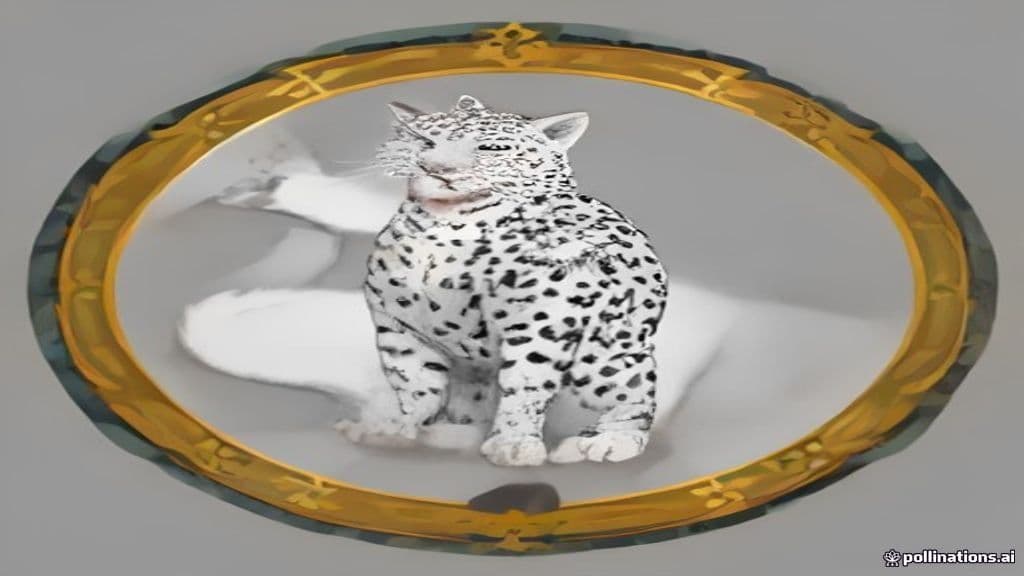
Aq Bars (Tatar: Ак Барс, 'White Leopard') is an ancient Bulgar tribal totem and heraldic emblem historically used in Volga Bulgaria and the Khanate of Kazan and adopted in the modern era as the official symbol of the Republic of Tatarstan (formally since 7 February 1992). It functions as a dynastic/tribal mark of identity (derived from the Barsil tribe) and as a political-state emblem rather than a personal supernatural being.

August curse
Minor Spirit

August curse

A modern cultural concept in Russia describing a perceived clustering of severe disasters, attacks, and adverse events during the month of August. Treated in sources as an explanatory frame combining statistical observation, seasonal and political factors, and occasional astrological or supernatural interpretation.

Azovka (Azov Girl)
Lesser

Azovka (Azov Girl)

Azovka, often called the Azov Girl in English summaries, is a female supernatural figure named in Pavel Bazhov’s Ural skaz tale "Beloved Name." The supplied sources identify her as a character from Ural-region folklore as represented in Bazhov’s miners’ tales but provide no detailed description or independent folkloric tradition beyond that tale reference.

Baba Marta
Lesser

Baba Marta

Baba Marta (Bulgarian: Баба Марта, 'Granny March') is a Bulgarian folkloric personification of the transition from winter to spring. Celebrated on March 1, she is pictured as a feisty grandmother whose mood is said to affect late-winter weather; communal customs (martenitsi) exchanged on her day symbolize health and good fortune.

Baba Yaga
Greater

Baba Yaga

Baba Yaga is an ambivalent female figure of East Slavic folktale tradition, depicted variously as a fearsome, child-eating crone or as a helpful, maternal donor. She is associated with the deep forest, a hut described as standing on chicken legs, and the motific accoutrements of a mortar and pestle.

Babay (Slavic folklore)
Lesser Spirit

Babay (Slavic folklore)

A Slavic night spirit that abducts misbehaving children who stay awake at night, embodying societal values of discipline and conformity. (Note: 1. Power tier: Given the ability to abduct and punish misbehaving children, Babay's power level should be at least Greater Spirit. 2. Appearance: Since no physical description is provided in the sourc)

Bald Mountain (Slavic)
Greater

Bald Mountain (Slavic)

A location in Slavic folklore associated with witchcraft and the Witches' Sabbath. (Note: 1. Power tier should be Primordial since it's associated with witchcraft and has connections to deities (witches are often seen as having deity-level powers). Greater is too low of a power level. 2. A)

Bannik
Lesser

Bannik

A place-bound spirit of the Slavic banya (bathhouse) that inhabits the steam room and related spaces; he mediates divination, presides over births within the banya, and must be appeased by offerings or he may harm or otherwise vex users and the building.

Basilisk
Greater

Basilisk

A legendary serpent from classical and medieval bestiary tradition, the basilisk is described as a paradigmatic "king" of serpents whose gaze, breath, or venom is fatal and whose presence scorches and corrupts the surrounding environment. Treated variously as a monstrous animal, materia for alchemy, and a locus of local legend, it features recurrent countermeasures (weasel, rooster, mirror) in the sources.

Bauk (Slavic mythology)
Greater

Bauk (Slavic mythology)

A mythical creature from Serbian mythology that inhabits dark places, waiting to grab and devour its victims. (Note: 1. Power tier should be Lesser (local spirit), as it's described as hiding in dark places, not possessing deity-level powers. 2. The appearance description matches the source material, but note that ")

Baš Čelik
Greater

Baš Čelik

Baš Čelik is the supernatural antagonist of a Serbian folktale recorded in Vuk Karadžić’s tradition. In the tale he is an imprisoned, other‑worldly being whose life is hidden outside his body; he is temporarily weakened by denying him water but can only be permanently defeated by locating and destroying his external life‑locus.

Belobog
Lesser

Belobog

Belobog is a name appearing in modern summaries of Slavic religion as a deity associated with light and the sun, typically presented as the opposing pole to Chernobog in a binary contrast of light/dark. Attestations in the provided sources are fragmentary and largely secondary or modern; primary medieval evidence for a named Belobog is not supplied in the excerpts.

Berehynia
Lesser

Berehynia

Berehynia is presented in modern treatments as a female figure counted among Slavic divine or semi-divine female figures; surviving references are fragmentary and reconstruction relies on limited documentary and folkloric evidence.

Bies
Greater

Bies

Bies (Slavic: Polish Bies; Russian бес [ˈbʲɛs]; Slovene/Montenegrin bes; Bosnian/Croatian bijes) is a term from Slavic linguistic and mythic contexts for an evil spirit that, especially after Christianization, was commonly equated with the Christian devil or demons. The lexical field of the word also survives in several South and West Slavic languages with the meaning 'rage' or 'fury', reflecting a conceptual overlap between malign spirit agency and overwhelming affective states.

Black Arab
Ancient

Black Arab

In Slavic mythology, the Black Arab is a malevolent chthonic demon that kidnaps women and girls. (Note: 1. Power tier should be Primordial, not Ancient (Ancient implies deity-level abilities, but the Black Arab's abilities are more limited). 2. Origin story is speculative and unsupported by source mater)

Black Volga
Lesser

Black Volga

A modern urban-legend motif embodied in a black Volga automobile (originally GAZ models) reported across parts of Europe and Eurasia from the 1960s–1970s onward. The vehicle is said in various tellings to abduct and sometimes kill people (often children in some summaries), with motives ranging from political abduction to blood- or organ‑theft; a single verbal formula is recorded in some variants as a way to make the car vanish.

Blud
Lesser

Blud

Blud is a Slavic concept that functions both as a supernatural agent said to cause physical disorientation—leading people to wander "aimlessly around and round"—and as a lexical term in church discourse denoting illicit sexual desire or moral deviation, which clerics attributed to the Devil.

Blue Stone (Russia)
Primordial

Blue Stone (Russia)

A type of sacred stone in Slavic tradition, held significant spiritual significance and venerated through simple rituals. (Note: - Power tier should be Lesser (since they don't have major hallows and are venerated in a simpler way). - Abilities: "Venerated through simple rituals" is vague; clarify that these rituals include pou)

Bogatyr
Greater

Bogatyr

A bogatyr is the stock heroic figure of East Slavic (primarily Russian and Ukrainian) epic-poetic tradition (bylinas): an elite, exceptional warrior associated with the princely court (notably the Kievan court of Vladimir in many tales) who defends the land and people. Bogatyrs are literary/folk-epic archetypes rather than a class of supernatural beings, though some individual figures are mythic or giant-like.

Boginka
Lesser

Boginka

A Slavic/Polish female nature-spirit category: personifications of wild natural forces (forests, fields, mountains, fresh and sea waters) that appear in folklore as ambivalent beings—often hostile toward humans, especially pregnant women and infants, but also recalled in some sources with neutral or protective aspects.

Boginki (boginka)
Lesser

Boginki (boginka)

Boginki (singular boginka) are female personifications of wild natural forces in Polish/Slavic popular belief, described in sources as minor goddesses or female spirits/demons associated with forests, fields, mountains, and waters (both inland and sea). They are ambivalent in disposition, sometimes neutral or beneficent and sometimes hostile to humans, and figure among other Slavic female nature-spirits such as rusalki and vily.

Bolotnik
Lesser

Bolotnik

A Slavic place‑spirit of swamps and bogs, regarded in popular tradition as the proprietor or guardian of marshy places who lures people and animals into the depths. Descriptions and names vary regionally; in Christianized accounts bolotniks are sometimes classed with fallen angels or demonic beings.

Borimir
Minor Spirit

Borimir

Borimir is a South Slavic masculine given name formed from Slavic elements meaning 'battle' (boj/bor-) and 'peace/world' (mir). The name appears in contemporary use in South Slavic regions and in online cultural contexts; there is no evidence in the provided sources that Borimir denotes any supernatural being.

Boruta
Lesser

Boruta

Boruta (called "Devil Boruta" in the cited source) is a folkloric character from Polish mythology, folklore, and literature associated with the town of Łęczyca. The available source frames Boruta as a local legendary figure but provides no extended ethnographic detail.

Božalość
Lesser

Božalość

Božalość is a Wendish (Lusatian Sorb) omen-figure described in ethnographic sources as a messenger or harbinger whose audible lamentation announces imminent death or other calamity for particular people, households, or communities. The name is commonly rendered in German sources as "Gottesklage" ("God's Lament").

Božić (Slavic mythology)
Lesser Spirit

Božić (Slavic mythology)

A symbolic figure associated with the themes of New Year, spring, and youth in Slavic paganism. (Note: 1. Power tier: Incorrectly classified as Lesser Spirit; based on its association with renewal and spring, it should be at least Ancient. 2. Origin story: The source material does not mention an origin)

Bukavac
Lesser

Bukavac

Bukavac is a demonic mythical creature from Slavic (Serbian) popular belief, attested chiefly in Syrmia. Described as an aquatic, nocturnal menace, it was said to emerge from lakes and pools to make loud noises and to jump onto people and animals, strangling them.

Błędnica
Lesser

Błędnica

A Slavic forest demoness who misleads travelers, abandoning them deep in the woods to die of exposure, starvation, or be taken by wild animals. She is typically depicted as a young, attractive woman and is countered in tradition by strong spells or by making sacrifices at home or during the hunt.

Chernava
Lesser

Chernava

Chernava is a water spirit in East Slavic (Russian) folklore portrayed as a mermaid and the personification of the river Chernava; in the Sadko bylina she is presented as one of the Sea Tsar's daughters (in some versions, his niece) who aids the hero by transforming into the river Chernava and returning him to the human world.

Chernobog and Belobog
Lesser

Chernobog and Belobog

A pair of opposing divine names recorded by medieval and early modern Christian chroniclers for West Slavic contexts: Chernobog ('Black God') associated with adverse fortune and harm, and Belobog ('White God') presented as a beneficent counterpart. Their historicity and status in pre-Christian Slavic religion are disputed; Chernobog is attested earliest (12th c.), while Belobog appears in much later sources and may be a later contraposition.

Chernoglav
Lesser

Chernoglav

Chernoglav (Old Icelandic Tjarnaglófi; Polish Chernogłów/Chernoglov) is a sparsely attested local war or victory deity reported in medieval Old Icelandic accounts of Rügen (Jasmund). The Knýtlinga saga describes him as a god of victory who 'went with them on military campaigns' and records that his cult resisted Christianization longer than some others before being taken years later.

Chervona Ruta
Minor Spirit

Chervona Ruta

Chervona Ruta (Ukrainian: Червона рута, lit. 'Red Rue') is a Ukrainian cultural motif that refers both to a plant of ambiguous identification (variously associated with the rue genus Ruta or with rhododendron) and to a hugely popular song written by Volodymyr Ivasiuk in 1968 which spawned recordings, covers, and a namesake music festival.

Chislobog
Greater

Chislobog

Chislobog (Числобог) is a figure of modern Slavic reconstructionist and Ynglist/Slavic‑Aryan writings presented as a deity of numbers, cyclic time and cosmic ordering; scholarly and reference sources mark the figure as a 20th‑century invention or drawn from contested/forged sources (Book of Veles, Prillwitz idols).

Chort
Lesser

Chort

A chort is an anthropomorphic malign spirit figure in Slavic folk tradition that occupies a liminal space between older Slavic demonology and Christian notions of the devil. Depending on region and narrative function it appears as numerous lesser malignant spirits, a trickster antagonist who tempts or is tricked by humans, or as a cover-term for 'unclean forces' credited with various negative creations in the world.

Christkind
Minor Spirit

Christkind

The Christkind is a Central European cultural personification of the Christ Child who functions as the traditional bringer of Christmas gifts in many domestic and civic seasonal practices. Originating in Reformation-era promotion of the infant Jesus as focus of Christmas giving, it persists in diverse regional forms (e.g., Ježíšek, Jézuska) and in civic pageantry such as the Nuremberg Christkindlesmarkt.

Chud
Ancient

Chud

The Chud (Russian: Чудь) are an ancient, mythic people in Russian and several Finno‑Ugric oral traditions. Presented as a pre‑modern population, they appear in legends as a displaced, assimilated, or subterranean society whose disappearance and former condition help explain features of landscape and cosmology in regional folklore.

Chuhaister
Greater

Chuhaister

Chuhaister (Ukrainian: Чугайстер) is a forest tutelary figure specific to the Ukrainian Carpathians. Portrayed both as an individual-like personage and as a limited-number type (accounts speak of one, or three, four, or seven Chuhaisters), he is an ambivalent forest man who hunts other wild spirits (notably mavkas), is associated with wind and storm phenomena, and interacts with humans—often as a solitary guardian of deep woods and high mountain wilds.

Chur (pseudo-deity)
Lesser

Chur (pseudo-deity)

Chur (Чур) is a term attested in Russian linguistic and folkloric usage that 19th‑century scholars reconstructed as a boundary patron or household protector. Its status as an actual worshipped god is disputed; surviving evidence is primarily formulaic speech, lexicographic entries, and a few literary citations rather than clear ritual or iconographic attestations.

Chut
Greater

Chut

Household spirit in Belarusian mythology associated with domestic spaces and activities, responsible for bringing prosperity and success through offerings, but capable of cruel revenge if neglected. (Note: 1. Power tier: Lowered to Lesser, as it seems more consistent with "regional" or local influence rather than deity-level abilities. 2. Appearance: A note should be added that no physical description i)

Cikavac
Lesser

Cikavac

Cikavac is a creature of Serbian folklore described as a winged bird kept by an owner through a specific acquisition ritual; in tradition it brings honey and milk taken from others to its owner, fulfills wishes, and enables understanding of animal speech.

Cooperating God and Devil (Slavic creation myth)
Primordial

Cooperating God and Devil (Slavic creation myth)

In Slavic creation myths, the God and Devil cooperate to create the world, exemplifying a dualistic motif where opposing forces work together for balance. (Note: 1. Power tier: Incorrect, the source material does not specify that the God and Devil have primordial power. 2. Origin story: Needs rewording to reflect that there are multiple versions of Slavic crea)

Cornflower Wraith
Lesser

Cornflower Wraith

A Slavic field spirit associated with midday who enforces proper conduct in cultivated grain. Described as a young woman in azure with cornflowers in her hair, she punishes workers who trample crops or use sharp tools at the wrong time, often by inducing sleep followed by pain or by causing broken limbs.

Cres
Lesser

Cres

The provided sources treat Cres as an Adriatic island (toponym) in the Kvarner Gulf of Croatia with deep historical layering; no supplied material describes a supernatural being named 'Cres' or provides folkloric accounts, rituals, or powers attached to such an entity.

Crone
Lesser

Crone

A folkloric character-type of an older woman whose age and gender define her social and symbolic role. The crone appears ambivalently across traditions as a malicious hag, a stern tester or guardian, or a venerated wise woman and keeper of remedies and lore.

Dazhbog
Ancient

Dazhbog

Dazhbog is a major figure in reconstructed pre-Christian Slavic religion most commonly identified in medieval East Slavic texts as a solar deity, described in one passage as "the Sun" and named as a son of the smith/sky god Svarog. Linguistic evidence of his name also supports a role as a dispenser of wealth or good fortune.

Ded Moroz (Grandfather Frost)
Greater

Ded Moroz (Grandfather Frost)

Benevolent gift-giving figure in Slavic mythology, similar to Father Christmas and Santa Claus. (Note: 1. Power tier: Should be Ancient (deity-level) given the description in Source 1 that Ded Moroz is a "legendary figure" with roots in Slavic mythology. 2. Summary: Inaccurate, as it compares Ded Moroz)

Demitri Maximoff
Greater

Demitri Maximoff

Demitri Maximoff is a fictional vampire-styled character from Capcom's Darkstalkers (Vampire) franchise, depicted in franchise materials as a Makai noble and a recurring playable combatant whose lore places him in a Romanian mountain castle called Zeltzereich that is said to appear at full moon.

Devana (Dziewanna)
Lesser

Devana (Dziewanna)

Devana (Polish Dziewanna; Latin Dzewana / Zevana / Zievonia) is a Western Slavic female sacred figure associated with wild nature, forests, hunting and, by medieval interpretatio, the Roman Diana. She appears in fragmentarily attested village seasonal rites—notably effigy processions and drowning on Laetare/White Sunday—and in later folkloric reports tying her to huntress imagery and the plant name for Verbascum (mullein).

Dhampir
Lesser

Dhampir

A figure from Balkan folk belief described as the offspring of a vampire and a human. Dhampirs occupy an intermediate social and ontological position — generally living among humans while inheriting certain capacities or markers associated with vampire-kind, and in many traditions are associated with the role of specialist vampire-hunters.

Dobrynya Nikitich
Lesser

Dobrynya Nikitich

A Slavic bogatyr (heroic warrior) based on a historical warlord, reflecting medieval ideals of chivalry and nobility. (Note: - Power tier: Primordial (no supernatural abilities are mentioned, but he is a bogatyr, which implies a higher power tier) - Sensory cues: not present in source material - Weaknesses: not present in s)

Dola
Lesser

Dola

A minimal-attested class of protective spirits referenced in a single English-language disambiguation entry as part of Polish mythology. No further descriptive, functional, or ritual detail is provided in the supplied sources.

Domovoi
Minor Spirit

Domovoi

The house spirit of Slavic tradition — a small, invisible guardian of the home bound to a specific dwelling and its family. Protective when respected; dangerous when insulted or forgotten.

Domovoy
Lesser

Domovoy

A Slavic household spirit bound to a particular kin/household, the Domovoy is an immanent domestic guardian and ancestral presence who protects the family's wellbeing, monitors moral conduct, and participates in domestic life; it is placated by regular offerings and specific household rites.

Drekavac
Lesser

Drekavac

A South Slavic night-haunting revenant-like creature whose name means "the screamer"; traditionally linked to the restless souls of improperly buried or unbaptised dead (including sinful adults and unbaptised children) and reported in many regional variants that foretell death or disease and frighten the living.