Entity Index

A record of the unseen, drawn from world folklore.

7631 entities · page 26 of 128

Badalona giants
Minor Spirit

Badalona giants

The Badalona giants (Catalan: gegants de Badalona) are eight large, anthropomorphic effigies used in the civic festival life of Badalona, Catalonia. Constructed of wood, plaster and carton, they represent locally prominent historical or mythological figures and are carried and made to 'dance' in processions during the city's spring festival (May), its principal festival around 15 August, and other municipal occasions.

Badang
Greater

Badang

Badang is a legendary Malay culture-hero and supernaturally empowered strongman who gains immense physical strength after capturing a water spirit. Told in Malay Annals–style tradition and later retellings, his tales link feats of strength to local place-myths (split rock, thrown palace stone, graves) and to values of service and loyalty in a pre‑modern court setting.

Badb
Greater

Badb

Badb is an Irish supernatural female figure associated with warfare, death, and prophecy. She commonly appears as a crow or raven and as a wailing omen, acts on battlefields to sow confusion and foretell slaughter, and is often treated as one member of the triadic Morrígna.

Badoon
Greater

Badoon

The Badoon are a fictional reptilian extraterrestrial species and interstellar polity in Marvel Comics, created by Stan Lee and John Buscema and first appearing in Silver Surfer #2 (October 1968). In the comics they function as a technologically advanced, spacefaring empire notable for strict gender-segregated societies (the Brotherhood and the Sisterhood) and recurring roles as conquerors and antagonists in Marvel's cosmic milieu.

Badrock
Greater

Badrock

Badrock (Thomas John McCall) is a fictional superhero from Image Comics who, as a transformed 16-year-old, possesses a body of organic rock and serves as a member of teams such as Youngblood. He appears across Image Comics titles and crossovers, participating in team-based national-security level missions and occasional metaphysical storylines.

Baduhenna
Lesser

Baduhenna

Baduhenna is a named female deity attested once in Tacitus (Annals) as having a sacred grove (lucus) in ancient Frisia; modern scholarship interprets her name as linking a battle element with the matronal name-element and therefore views her as a local matron-like goddess with associations to war and a cult-site.

Bael
Greater

Bael

Bael (also spelled Baal or Ba'al) is a named kingly spirit appearing in post‑medieval European demonological grimoires. He is listed as the opening or first spirit in some catalogs (notably the Pseudomonarchia Daemonum and The Lesser Key of Solomon) and is described in short summaries as a hoarsely voiced king; fuller ritual texts and attributes are not present in the supplied excerpts.

Baetyl
Greater

Baetyl

A Baetyl is a sacred stone believed to be the dwelling place of a god or deity in ancient Greek tradition, often housed in temples and venerated for its spiritual significance. (Note: 1. Power tier: Primordial (as it houses deities, indicating a higher power level) 2. Abilities: Remove claim that Baetyl's "potentially imbue them with supernatural powers and abilities" as this is no)

Bagalāmukhī
Ancient

Bagalāmukhī

Bagalāmukhī (also Bagalā, Pitambarā-devi) is a Tantric Hindu goddess counted among the ten Mahāvidyās. She is a manifestation of the Dēvī whose specialized power (stambhana) is invoked to immobilize, silence, or control enemies and hostile speech, and to grant certain siddhis to devotees.

Bagdana
Lesser

Bagdana

Bagdana is the name of a supernatural being attested in early medieval Mesopotamian Jewish magical texts. The name occurs on Aramaic incantation texts and on incantation bowls from Nippur, where it appears among named spirits addressed by ritual practitioners.

Bagh Bhoot
Minor Spirit

Bagh Bhoot

No folkloric information about an entity called 'Bagh Bhoot' is available in the provided source. The only occurrence in the source is the film title Bhooth Bangla (2026), which does not supply ethnographic, descriptive, or ritual data about a supernatural being by this name.

Bagha Qaghan
Ancient

Bagha Qaghan

Bagha Qaghan (reign c. 587–588) was the seventh khagan of the First Turkic (Göktürk) Khaganate, recorded in Chinese sources under transcriptions such as 莫何可汗 and the personal name 阿史那处罗侯 (Ashina Chuluohou). He is represented in the sources as a historical political ruler who continued alliance policies with the Sui dynasty, acted as a viceroy of the eastern wing, and led military actions against rivals such as Apa Qaghan and Western Göktürk leaders.

Bagha Shad
Minor Spirit

Bagha Shad

Bagha Shad (Old Turkic: 𐰉𐰍𐰀𐱁𐰑, baγa šad; Chinese 莫贺设/莫賀設, mòhè shè) was an early 7th-century Göktürk shad (dynastic prince/general), a close kinsman and subject of the Western Turkic khagan Tong Yabghu, attested in Chinese sources as sojourning in China in 618–626 and probably the father of Böri Shad.

Bahamut
Ancient

Bahamut

In medieval Islamic cosmographical and tafsir traditions Bahamut is a vast aquatic creature—described as a giant fish or whale—that lies deep beneath the earth and functions as a structural support in a layered model of the cosmos, bearing a bull which in turn bears a gemstone slab and angel that shoulder the earth.

Bahkauv
Lesser

Bahkauv

Aachen-area monstrous figure in Rhineland folklore depicted as an elongated or deformed calf with sharp fangs that lurks near wells, springs, sewers and fountains and traditionally ambushes intoxicated men at night, latching onto their shoulders before attacking. The creature is tied to urban water features in Aachen and appears in civic memory (notably a statue placed over an associated well in 1902 and replaced in 1967).

Bahram (Shahnameh)
Lesser

Bahram (Shahnameh)

Bahram is an Iranian heroic figure in Ferdowsi's Shahnameh, presented as a human warrior and counselor. He is named as a son of Goudarz and brother of Rohham, Giv, and Hojir, and appears in the episode of Siavash as one of Siavash's counselors alongside Zange-ye Shavaran.

Bahubali
Ancient

Bahubali

Bahubali is a prominent figure in Jain hagiography: a royal scion who renounces worldly rule, undertakes prolonged standing ascetic meditation (kayotsarga), attains omniscience (kevala jnana) and ultimately liberation (moksha) to become a siddha. He is widely commemorated in Jain art and by monumental monolithic statues (notably the Gommateshwara at Shravanabelagola).

Bahucarā Mātā
Greater

Bahucarā Mātā

Bahucarā Mātā is a regional Hindu goddess venerated principally at Becharaji in Gujarat, India. She is associated in the sources with chastity and fertility (in a maiden aspect), with granting favours especially of male children, with curing diseases, and with being patroness of the hijra community.

Bai Baianai
Greater

Bai Baianai

Bai Baianai is a Turkic‑Altaic protective spirit and sometimes goddess associated with forests, animals, hunters, fishing, fertility and material wealth. In the Yakut/Altai tradition she functions as a patron of hunters and a provider of abundance, yet in some accounts she can punish humans with drought, crop‑burning or livestock disease if offended.

Bai Longma (White Dragon Horse)
Greater

Bai Longma (White Dragon Horse)

A dragon-being from the 16th-century Chinese novel Journey to the West who serves as the monk Tang Sanzang's steed during the pilgrimage and is later ordained to the Buddhist office Babu Tianlong Guangli Bodhisattva. Presented in the narrative as a dragon in horse form or a dragon who takes on the role of a horse/servant.

Bai Suzhen (White Snake)
Greater

Bai Suzhen (White Snake)

Bai Suzhen (白素貞), commonly called the White Snake, is a cultivated snake spirit who attains human form and is the central figure of the Legend of the White Snake. Sources present her as a one‑thousand‑year‑old snake spirit who transforms into a beautiful woman, engages in a romantic marriage with a human (Xu Xian), is opposed by Buddhist exorcism in many variants, and in some local traditions is venerated as Madam White Snake (白蛇娘娘).

Bai Ze
Lesser

Bai Ze

Bai Ze (白澤, Báizé; Japanese Hakutaku) is a legendary sacred creature in Chinese tradition famed as an authoritative recorder of ghosts and gods whose illustrated compendium (Bái Zé Tú) was employed as a household prophylactic against spirit-world harm. The creature’s image and diagrams were used in China and later Japan to identify, ward off, and prescribe avoidance of spectral calamities.

Bai-Ülgen
Ancient

Bai-Ülgen

Bai-Ülgen (often shortened to Ülgen) is a high creator-deity in Turkic religious cosmology, presented in available sources as a magnificent and wealthy divine figure who occupies a top position in the pantheon and is sometimes identified with the overarching sky god Tengri. Some modern references also list him within Mongolian contexts.

Baiame
Ancient

Baiame

Baiame is a principal creator/ancestral Sky Father in the Dreaming traditions of several south‑eastern Australian Aboriginal peoples. He is credited with shaping landscape, instituting law and ceremony (notably the first bora initiation), and returning to the sky while remaining present in sacred sites and rock art.

Baian
Greater

Baian

A semi-divine water spirit or mermaid-like creature in Basque mythology, associated with fertility and aquatic phenomena. (Note: Power tier should be "Lesser" or possibly "Primordial", as the entity is described as semi-divine and associated with fertility and aquatic phenomena. Summary needs more detail, e.g., "Semi-divine wat)

Bajrang Bali
Ancient

Bajrang Bali

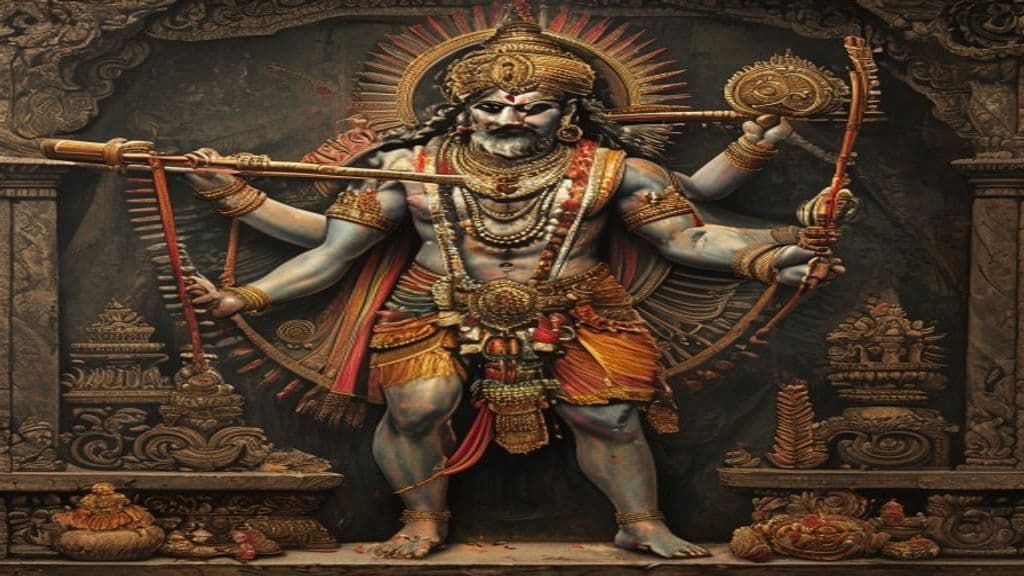
Bajrang Bali is a popular epithet of the Hindu deity Hanuman, a divine vanara revered for strength, devotion to Rama, and long life. Originating in epic literature and later elevated in medieval and modern devotional practice, the figure appears across scripture, performance, and contemporary media.

Bakasura (Hindu Tradition)
Greater

Bakasura (Hindu Tradition)

A malevolent rakshasa from Hindu mythology with supernatural strength and ferocity. (Note: - Power tier: Primordial (due to its cosmic and epic-scale impact in Hindu mythology) - Abilities: Remove "at will" as it's not present in the source material - Weaknesses: Not specified in the source)

Bake-danuki
Lesser

Bake-danuki

Bake-danuki (化け狸) are a class of yōkai in Japanese folklore: tanuki (Japanese raccoon dogs) that acquire supernatural powers, most notably shapeshifting and trickery. They appear throughout Japan with strong regional concentrations and some locally named, ritualized exemplars.

Bake-kujira
Greater

Bake-kujira

A skeletal whale yōkai from coastal western Japan, especially Shimane (Izumo) and the Oki region. Appearing offshore as a large white figure that is revealed to be a baleen whale's bare skeleton and attended by strange fish and birds, the bake-kujira is interpreted in sources as a vengeful or resentful whale-spirit that portends misfortune and prompted local placation practices.

Bakebi
Minor Spirit

Bakebi

No information about an entity named 'Bakebi' is present in the supplied Tshiluba Bible-heading sources. The name does not occur in the provided excerpts, so all attributes of a folkloric entity cannot be documented from these materials.

Bakeichōnosei
Lesser

Bakeichōnosei

No verifiable information about 'Bakeichōnosei' is present in the supplied source. The only available material is a biographical note on Shigeru Mizuki; there is no description, classification, or rituals associated with Bakeichōnosei in that source.

Bakeneko
Greater

Bakeneko

The bakeneko (ばけ猫, "changed cat") is a Japanese yōkai classed as a kaibyō (supernatural cat). Folklore presents it as a household cat that, through age, long residence, or other local conditions, acquires uncanny abilities such as shapeshifting, speech, and vengeance against cruel humans.

Bakeneko yūjo
Lesser

Bakeneko yūjo

A stock Edo‑period popular‑culture character: a courtesan (yūjo) who secretly transforms into a bakeneko (a shapeshifting cat). Emerging from rumors around Shinagawa and theatrical/print entertainment, the bakeneko yūjo functions as an uncanny motif linking cats, brothels, and urban anxieties rather than as a codified religious being.

Bakezōri
Lesser

Bakezōri

A Bakezōri is an animated zōri (straw sandal) from Japanese folklore, classified among tsukumogami — formerly inanimate household implements that become sentient after long use or neglect. They are typically mischievous, running through houses at night and chanting, and are generally described as harmless nuisances rather than truly dangerous beings.

Bakla
Minor Spirit

Bakla

Bakla is a Philippine social and gender category—commonly an assigned‑male‑at‑birth person who adopts a feminine gender expression and is often treated as a third gender. Historically some bakla served as indigenous ritual specialists (babaylan, katalonan), but the term itself denotes a social identity, not a supernatural being.

Bakotsu
Lesser

Bakotsu

Bakotsu (馬骨, literally "horse bone") is an Edo-period yōkai entry depicted in the Tosa Obake Zōshi as the skeletal, flaming spirit of a horse that perished in a fire. It is an iconographic example of transformed-animal remains in Edo visual folklore.

Baku
Lesser

Baku

A composite supernatural creature in East Asian (Chinese → Japanese) folklore best known in Japan as a benevolent dream‑devourer invoked to remove bad dreams and protect children at bedside. Its depiction and roles developed over time from an older Chinese chimera (mo) into a household protective being with a cautionary moral about overuse.

Bakunawa
Greater

Bakunawa

A dragon- or serpent-like mythic being from Philippine tradition associated with the moon and eclipses; its actions explain lunar eclipses and some natural phenomena and were integrated into ritual practice and calendrical knowledge.

Bal-Bal
Lesser

Bal-Bal

A Philippine folkloric undead/monster that steals corpses from funerals and graves and feeds on them, noted for keen scent for dead bodies, sharp claws and teeth, foul breath, and reportedly leaving a banana‑tree trunk in the coffin as a substitute for the stolen corpse.

Bala Ganapati
Greater

Bala Ganapati

Bala Ganapati (Sanskrit: bāla-gaṇapati) is a child-form aspect of the Hindu deity Ganesha (Ganapati), depicted and venerated as a youthful manifestation emphasizing childhood, growth, abundance and fertility. He is listed as the first of thirty-two canonical forms of Ganesha in the Sritattvanidhi and is represented in iconography and some regional shrines (notably South India, where the child form is sometimes called Pillaiyar).

Bala Tripurasundari
Greater

Bala Tripurasundari

Bala Tripurasundari (Sanskrit: बालत्रिपुरसुन्दरी; also called Balambika) is the youthful or child aspect of the goddess Tripura Sundari in the Tantric Śrī Vidyā tradition. She functions as a tutelary goddess invoked in sādhanā, appears in the Lalita Mahatmya episode of the Brahmāṇḍa Purāṇa as a martial divine agent, and is the object of kavach, mantra, and Pancharathnam devotional material.

Balaam
Ancient

Balaam

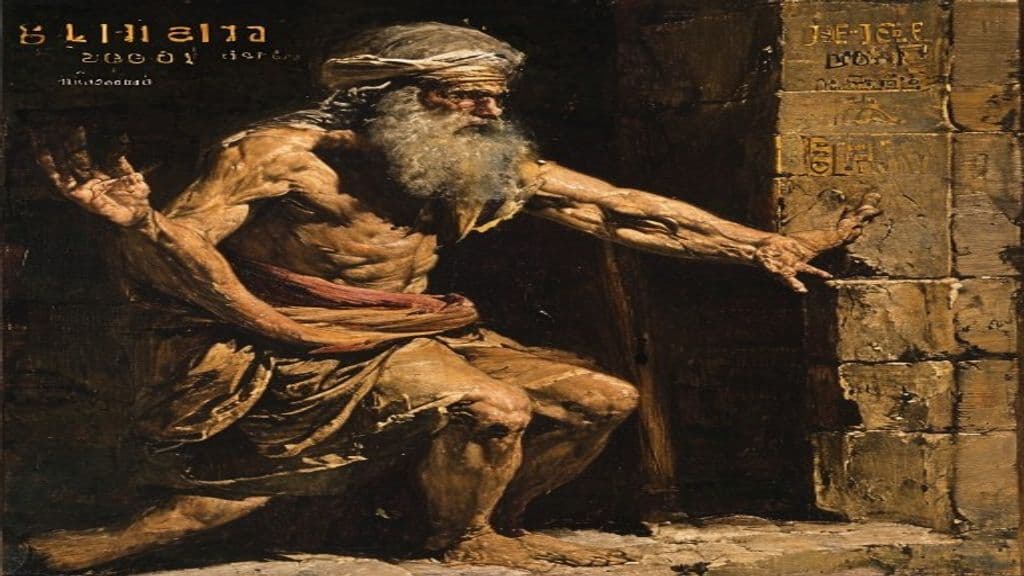
Balaam (Hebrew Bīlʿām) is a non‑Israelite seer/diviner attested in the Hebrew Bible and in an extra‑biblical West Semitic inscription (Deir Alla). He is portrayed as a liminal prophetic figure who receives divine visions and utters oracular poems but is morally contested in later traditions for his alleged role in leading Israel to transgression.

Balam
Lesser

Balam

Balam is a name that appears in modern secondary demonological compilations and in English-language reference listings as a demon-name; the supplied sources do not provide primary traditional descriptions, rites, or a sustained cosmology for a demon called Balam. The same lexical form (B'alam/Bahlam) is also a Maya-language word meaning 'jaguar' and occurs widely in Maya personal and place names, a distinct and unrelated usage.

Balarāma
Ancient

Balarāma

Balarāma (Sanskrit: बलराम) is a major deity in the Indian religious tradition closely associated with the Krishna cycle and the Vrishni hero-cult. He is described as Krishna's elder brother, an agricultural patron identified with the plough (halā) and club (gaḍā), and is later associated with the cosmic serpent Śeṣa/Saṅkarṣaṇa and incorporated into Viṣṇu avatāra lists; his cult is attested in early coinage and sculpture from c. 2nd century BCE onward and in living traditions such as the Jagannātha triad and village devotional practice.

Balaur
Greater

Balaur

In Romanian folklore the balaur is a monstrous serpentine or dragon‑like being, often many‑headed, that functions as predator/abductor, treasure‑guardian, and an agent of meteorological phenomena; in some regional variants it is said to be ridden or controlled by weather‑sorcerers (Solomonari).

Bald Mountain (Slavic)
Greater

Bald Mountain (Slavic)

A location in Slavic folklore associated with witchcraft and the Witches' Sabbath. (Note: 1. Power tier should be Primordial since it's associated with witchcraft and has connections to deities (witches are often seen as having deity-level powers). Greater is too low of a power level. 2. A)

Balder the Brave
Greater

Balder the Brave

Balder the Brave is the Marvel Comics adaptation of the Norse figure Baldr: an Asgardian prince-warrior who serves as a member of Asgard's ruling family, participates in councils of gods, and whose death or wounding has been used as a catalyst in some Marvel storylines (including Ragnarök-style events).

Baldr
Ancient

Baldr

Baldr (Old Norse Baldr; Old English Bældæġ; Old High German Balder/Palter) is a god in Germanic mythology. In the Norse branch he is named as a son of Odin and Frigg and as a member of the Aesir, attested alongside brothers such as Thor and Váli in the supplied sources.

Balih (of Kish)
Minor Spirit

Balih (of Kish)

Balih is a named ruler listed in the Sumerian King List as the fourteenth king of the First Dynasty of Kish, recorded as the son and successor of Etana. He appears as a dynastic/ancestral name within the early, largely non-historical portion of the SKL; no independent historical, biographical, or mythic deeds are attested in the provided sources.

Balin
Minor Spirit

Balin

Balin is identified in the provided sources as a fictional character created by J. R. R. Tolkien, listed as a dwarf in Tolkien's legendarium of Middle-earth. The available references are index-style entries and do not supply in-world narrative details, appearance, abilities, or rituals.

Balius and Xanthos
Greater

Balius and Xanthos

Balius and Xanthos are two named immortal horses in Greek epic associated with Achilles and his charioteer Automedon. Treated as semi-divine companions, they display autonomous behavior in battle and, in one Homeric reference, Xanthus is said to be granted the power of utterance to prophesy Achilles' death.

Balius and Xanthus
Greater

Balius and Xanthus

A paired set of exceptional, traditionally immortal horses from Greek myth, often given by gods to heroes and famed as the chariot steeds of Achilles. They are noted for divine parentage variants, great speed and endurance, emotional responsiveness, and — in one Homeric episode — a momentary prophetic speech granted by a goddess.

Balkan sworn virgins
Minor Spirit

Balkan sworn virgins

A culturally recognized gender role in parts of the western Balkans in which people assigned female at birth take an irrevocable vow of celibacy and are socially recognized to live as men, acquiring male privileges and responsibilities within patrilineal customary law.

Ball-tailed cat
Lesser

Ball-tailed cat

A North American "fearsome critter" from woodsmen's tall tales c. turn of the 20th century: a large catlike predator with an exceedingly long tail terminating in a solid, bulbous "ball" used as a club. The creature functions as occupational folklore—an entertaining hazard-story variant on known felids rather than part of a formal cosmology.

Baloma
Lesser

Baloma

In Trobriand Islanders' belief as reported by Bronisław Malinowski, baloma are the spirits of deceased lineage members who act to produce new members of a matrilineal line; they are credited with impregnating women (often described as occurring while bathing in the sea) and thereby sustaining matrilineal descent.

Balor
Greater

Balor

Balor is a leader of the Fomorians in the Irish Mythological Cycle, portrayed in medieval texts as a formidable war‑champion and in later folklore as a one‑eyed giant/tyrant whose baleful eye causes great destruction; he is killed by his grandson Lugh in the battle narratives and in folktale variants. Scholarly readings link his name to a Common Celtic root meaning 'the flashing one,' which has informed interpretations of him as a personified destructive natural force.

Balrog
Ancient

Balrog

In J. R. R. Tolkien's legendarium, a Balrog is a Maiar spirit corrupted into a warlike, fire-associated servant of the Vala Melkor (Morgoth). Balrogs appear as towering, shadowed figures wreathed in fire and wielding fiery whips and weapons; in Tolkien's later conception they are rare, exceptionally powerful beings whose defeat generally required opponents of comparable metaphysical order.

Balthazar (Magus)
Minor Spirit

Balthazar (Magus)

Balthazar is the traditional Western Christian name attributed to one of the three Magi—wise men or kings—who visited the infant Jesus in the Nativity narrative. The name appears in later Western tradition and liturgical/ artistic treatments of the Christmas story rather than in the Gospel text itself.

Baltic Mythology
Primordial

Baltic Mythology

A complex pantheon of gods, spirits, and supernatural beings in ancient Baltic cultures. (Note: 1. Power tier: Change to "Ancient" as Primordial implies a cosmic entity, which is not supported by the source material. 2. Origin story: Specify that the connection with nature and inspiration from t)

Balulu
Minor Spirit

Balulu

Balulu (Sumerian ba-lu-lu, 𒁀𒇻𒇻) is attested in the Sumerian King List as the final king of the First Dynasty of Ur, recorded as ruling 36 years; his reign is given as ending when Ur was defeated and the kingship carried off to Awan.