Entity Index

A record of the unseen, drawn from world folklore.

7631 entities · page 29 of 128

Beckumia
Minor Spirit

Beckumia

No evidence in the provided scientific and paleontological sources identifies Beckumia as a folkloric or supernatural entity. The supplied documents instead concern mammalian clades and paleontological taxa; therefore no folkloric attributes for Beckumia can be supported from these sources.

Bedivere
Primordial

Bedivere

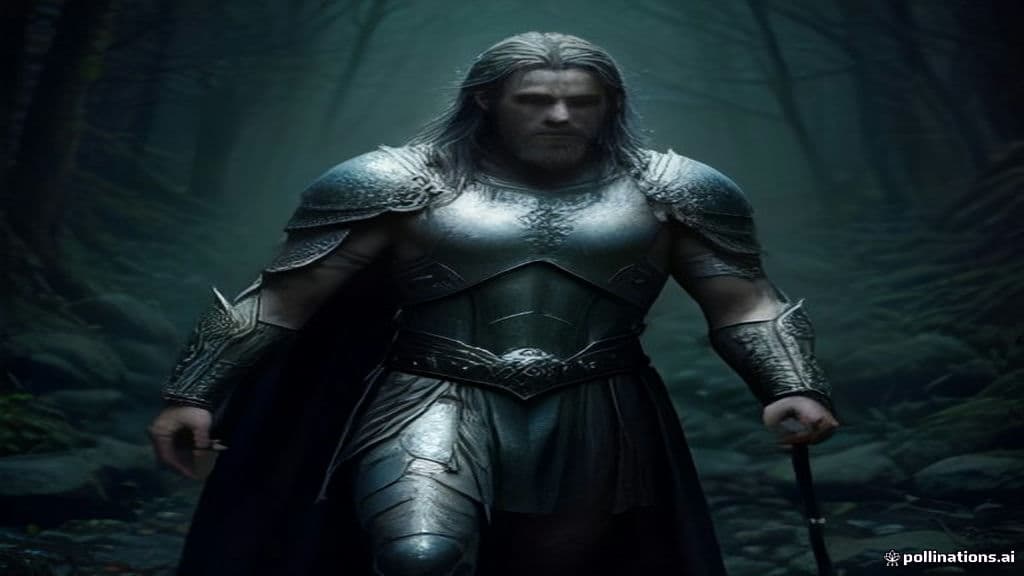
One-handed knight and marshal of King Arthur's Round Table, known for returning Excalibur to the Lady of the Lake. (Note: - Power tier should be Greater (powerful regional), as Bedivere is a human character with significant roles within the Arthurian court, but not necessarily on a cosmic or deity-level. - Appearance: Th)

Bedwyr (Bedivere)
Minor Spirit

Bedwyr (Bedivere)

Bedwyr (Welsh; Anglicized Bedivere) is a named heroic figure in early Welsh poetry and later medieval Arthurian romances. Presented in the sources as a human warrior and courtier — famed as the one‑handed great warrior Bedwyr Bedrydant in Welsh texts and later as a Knight of the Round Table and Arthur's marshal who, in English versions, returns Excalibur to the Lady of the Lake.

Bee
Minor Spirit

Bee

The bee (Anthophila) is a group of winged insects within the order Hymenoptera, best known as pollinators and, in some species, producers of honey; the provided sources treat bees as biological organisms and as subjects of human husbandry (apiculture/meliponiculture) rather than as supernatural beings.

Beelzebub
Ancient

Beelzebub

Originally the name of a Philistine city-deity of Ekron recorded in the Hebrew Bible (2 Kings), Baʿal-zəḇūḇ was later used in Jewish polemic as a derisive title and appears in Christian texts as a designation for a principal demonic figure (rendered Beelzebul/Beelzebub) often called the 'prince of demons.' Over subsequent centuries the name is incorporated into medieval and early modern demonological hierarchies and literary depictions of infernal powers.

Beeri
Lesser

Beeri

Beeri (Hebrew: בְּאֵרִי, Bə’êrî) is a personal name appearing in the Hebrew Bible for at least two distinct human figures: a Hittite father of Judith (Genesis 26:34) and the father of the prophet Hosea (Book of Hosea). Jewish tradition treats the latter as a minor prophetic figure whose brief utterances are traditionally linked to Isaiah 8:19–20.

Beerwolf
Lesser

Beerwolf

Beerwolf (also attested Bärwolf, Werwolf) is a German term equated with the werewolf in folkloric vocabulary and separately used as a political-theoretical metaphor in 16th‑century Protestant resistance discourse to designate a ruler who has placed himself outside the moral and legal order.

Befana
Lesser

Befana

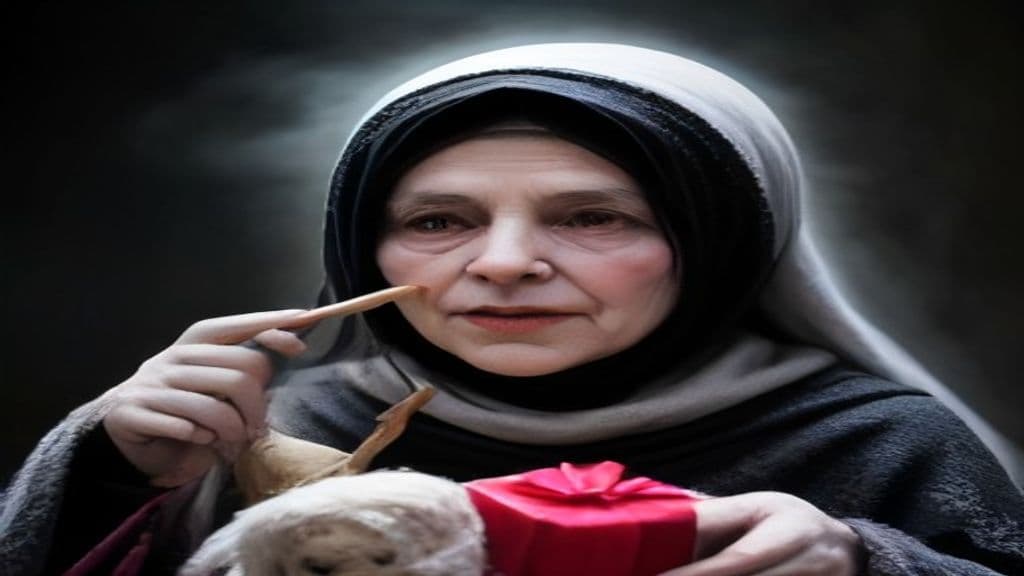
In Italian popular and folk culture, the Befana is a witch‑like old woman associated with the Feast of the Epiphany who, on Epiphany Eve (night of January 5), brings sweets to good children and coal to bad children. She is an ambivalent household/seasonal figure involved in domestic and communal Epiphany rituals such as mumming, effigy‑making and bonfires, and her origins are debated between liturgical personification and survivals of older household goddess offerings.

Begoe
Lesser

Begoe

Begoe is a scarcely attested named figure in Etruscan religious tradition, recorded in a 19th‑century retelling as able to slay an ox by whispering a sacred name. Modern references sometimes list Begoe as a variant spelling of the better‑attested Etruscan figure Vegoia/Vegoe, but evidence is fragmentary.

Behedety
Ancient

Behedety

Behedety is attested in the supplied sources only as an Egyptian deity label; the available materials do not provide mythological narratives, attributes, iconography, cult practice, or functions. One modern musical release uses the name as a title, but offers no traditional information.

Behemoth
Primordial (Note: This classification refers specifically to Behemoth's depiction in Job 40.)

Behemoth

Primordial creature from Jewish tradition, representing chaos-monster or embodiment of primordial forces. (Note: - Power tier should be revised as Primordial is not an official power tier classification; however, given Behemoth's abilities and origin story, it can be re-classified as Ancient (deity-level). - App)

Beira / Cailleach
Ancient

Beira / Cailleach

A Gaelic seasonal figure: an old-woman 'hag' who personifies winter, storms, and the shaping of landscape. Known across Ireland, Scotland, and the Isle of Man, she appears in contrast to younger spring/summer goddesses such as Brìgde.

Beithir
Greater

Beithir

In Scottish Gaelic tradition the beithir is a very large snakelike creature—often called a serpent or dragon—associated with mountains, corries and bodies of water. It is portrayed as venomous and deadly in local tales, linked in etymology and interpretation to lightning/thunderbolt imagery, and classed among water-associated monsters (fuath).

Bekka
Greater

Bekka

Bekka is a fictional New God from Jack Kirby’s Fourth World mythos and later DC Comics continuities. Portrayed as a nigh-immortal warrior and healer, she is notable for a subconscious power that manipulates and amplifies others' emotions and for wielding Fourth World technology such as a Mother Box and, in some stories, a yellow power ring.

Bel (Mesopotamian Tradition)
Primordial

Bel (Mesopotamian Tradition)

Title signifying 'lord' or 'master', applied to various high gods in Akkadian, Assyrian, and Babylonian traditions. (Note: * Power tier should be Ancient (deity-level) instead of Primordial (cosmic). * Origin story is accurate. * Appearance and Abilities sections are missing relevant information from source material, whic)

Belacqua
Minor Spirit

Belacqua

Belacqua is a literary soul appearing in Dante Alighieri's Purgatorio (Canto IV), encountered in Ante‑Purgatory as a saved soul whose delayed repentance requires him to wait before beginning active purgation. He personifies sloth/indolence, functions as a comic, humanized figure in Dante's moral topography, and was identified by early commentators with the Florentine instrument‑maker Duccio di Bonavia.

Belatucadros
Lesser

Belatucadros

Belatucadros is a native Brittonic/Celtic deity attested in northern Britain (modern Cumbria) whose cult continued into the Roman period; in Romano-British inscriptions he is commonly equated with the Roman god Mars (Mars Belatucadrus). Archaeological evidence shows roughly 28 inscriptions in the Hadrian's Wall region and small, simple altars, suggesting a local tribal protector and martial focus worshipped by Britons and lower-ranked Roman soldiers.

Beldgabred
Lesser

Beldgabred

Beldgabred is a legendary king of the Britons attested in Geoffrey of Monmouth's pseudo-historical king lists and repeated in later compilations and summaries. In Geoffrey's account (as summarized in modern sources) he is said to have surpassed other musicians on every instrument and is in some later remarks described as being 'claimed to be the god of minstrels.' His attestation is literary and genealogical rather than independently historical.

Belenus
Greater

Belenus

Belenus (Gaulish Belenos/Belinos; Latin Belenus/Belinus) is an ancient Celtic healing and protective deity whose cult was widespread across Celtic-speaking regions and whose worship continued into the Roman period, often equated with Apollo; he is especially associated with medicinal springs and civic protection (notably Aquileia).

Belet Nagar
Ancient

Belet Nagar

Belet Nagar is the tutelary goddess of the ancient Syrian city Nagar (Tell Brak). She functions as the city's divine patron in political and cultic contexts, connected to kingship, treaty-witnessing, and the ritual movement of her statue in civic festivals; many details of her character and identification with other goddesses remain uncertain in the sources.

Belet-Seri
Lesser

Belet-Seri

Belet-Seri is a Mesopotamian underworld divine official chiefly attested as the scribe or record-keeper in the court of the dead. She is invoked in literary texts and in incantation corpora to read or hold lists of the dead and to be petitioned in rituals that bind demons and prevent their egress from the netherworld.

Belet-ekalli (Ninegal)
Lesser

Belet-ekalli (Ninegal)

Belet-ekalli, also rendered Ninegal, is a Mesopotamian palace tutelary deity whose name means 'lady of the palace.' She appears in canonical god lists and in interstate treaty enumerations, indicating a recognized role in palace cult and state-level ritual contexts.

Belet-ili
Ancient

Belet-ili

Belet-ili is a Mesopotamian divine womb-mistress invoked in cosmogonic texts as the artisan who forms humanity at the gods' commission. She functions as a female creator-midwife within the council of gods, shaping the first humans and receiving contributions of attributes from other deities.

Belet-Šuḫnir and Belet-Terraban
Lesser

Belet-Šuḫnir and Belet-Terraban

A paired set of Mesopotamian goddesses attested chiefly in Ur III administrative and ritual archives. Treated as two distinct but habitually paired 'ladies' of toponyms (Šuḫnir and Terraban), they were incorporated into the royal cult of Shulgi and appear in god lists, offering lists, seals, and festival contexts whose tone has been described as lugubrious.

Beleth
Greater

Beleth

Beleth is a high-ranking infernal king attested in Renaissance and early-modern grimoire tradition, described as commanding eighty-five legions of demons and as a spirit that ritual conjurers may summon, test, or bind for specific ends.

Belfagor (Arcidiavolo)
Lesser

Belfagor (Arcidiavolo)

A literary arch-demon figure originating in Niccolò Machiavelli’s Renaissance novella and later adapted in theatrical and operatic works (notably Respighi’s 1923 opera). In these narratives Belfagor is a high-ranking infernal envoy sent to the human world on a defined investigatory mission, who uses disguise, wealth, and deception as part of his role.

Belfagor arcidiavolo
Greater

Belfagor arcidiavolo

The title character of Niccolò Machiavelli's Renaissance novella, presented as an archdevil (arcidiavolo) sent from Hell to Earth to investigate male complaints about marriage; a literary adaptation of an older folktale motif about a supernatural being assuming human guise and entering domestic life.

Belfaygor
Lesser

Belfaygor

Belfaygor is a fictional baron from Ruth Plumly Thompson's Jack Pumpkinhead of Oz (1929) and later Oz character lists. He is a sympathetic, comic nobleman afflicted by a magically accelerated beard growth that complicates his life and adventures in the Quadling Country.

Beli
Lesser

Beli

Beli is a jötunn (giant) in Old Norse myth known chiefly as an adversary slain by the god Freyr. Attestations are fragmentary: he appears in Eddic and skaldic references as the named foe of Freyr and as an element in kennings, and scholars treat the fuller myth as largely lost.

Beli Mawr
Ancient

Beli Mawr

Beli Mawr is a legendary ancestral king and eponymous progenitor in medieval Welsh genealogies and literature, presented as the father of several named mythic figures and as an origin-figure for royal houses. Modern scholarship sometimes hypothesizes a connection with the continental Celtic deity Belenus/Belenos, but medieval sources principally treat Beli as an ancestral/kingly figure rather than explicitly as a deity.

Beli's bane
Minor Spirit

Beli's bane

A kenning-style epithet from the Old Norse poetic corpus, rendered from Old Norse bani Belia (with an adjectival bjart = 'bright' in some transmissions). It functions as 'the slayer (bane) of Beli' within the prophetic catalogue of Ragnarök in Völuspá rather than as a fully independent named being with its own cult or origin story.

Belial
Ancient

Belial

In Hebrew Bible usage Belial is originally a pejorative term for worthlessness; in Second Temple (Dead Sea Scrolls) literature it is personified as the malign leader of the 'Sons of Darkness', an angelic/oppositional figure who commands hostile spirits and features in Qumran dualist eschatology.

Belili
Ancient

Belili

Belili is a Mesopotamian divine figure attested in Sumerian and Akkadian literature in two principal guises: a sister and mourner of the dying god Dumuzi, and a primeval/ancestral deity listed among the forebears of the sky-god Anu. She is associated with lamentation and with cultic seats and temple names but is not presented in the sources as a hostile supernatural menace.

Belinus
Lesser

Belinus

Belinus is a legendary king of the Britons as recounted in Geoffrey of Monmouth’s Historia regum Britanniae and later summaries: a warrior-king and lawgiver who fights his brother Brennius, unites Britain, campaigns in Gaul and Italy, founds or restores cities (notably Kaerusc/Caerleon), and is cremated atop a great tower at his death. His name is probably derived from the ancient god Belenus according to some modern summaries, but the sources treat him as a human legendary ruler rather than a deity.

Belisama
Ancient

Belisama

Belisama is a Gaulish goddess attested in Roman-period inscriptions and place-names. Epigraphic evidence records formal dedications (including a nemeton and a votive sacrum) and at least one inscription equates her with the Roman Minerva; scholars debate whether her name denotes brightness, strength, or a plant-name, and toponymic evidence also suggests riverine associations.

Bell Witch
Greater

Bell Witch

A largely invisible, communicative haunting centered on the Bell family in early 19th‑century Robertson County, Tennessee. In nineteenth‑century accounts the presence spoke, mimicked voices, produced poltergeist‑style disturbances, caused bodily harm (pinching, hair‑pulling, paralysis), and was blamed in legend for the death of John Bell Sr.

Belled Buzzard
Lesser

Belled Buzzard

A figure of American folk tradition, the belled buzzard is a turkey vulture described as bearing a bell and treated in popular reportage and storytelling as a singular, recurring omen that foretells disaster or death by the sound of its bell. The legend originated from actual instances of people fastening bells to buzzards in the mid-19th century and rose to prominence in the late 19th century, especially after association with the 1878 Brownsville, Tennessee yellow fever epidemic.

Bellerophon
Greater

Bellerophon

Bellerophon is a heroic figure of ancient Greek tradition, famed as a slayer of monsters and the tamer of Pegasus. Various accounts present him as of mixed divine and mortal lineage and as an exemplar of heroic achievement enabled by divine aid and constrained by social-ritual norms.

Bellōna
Ancient

Bellōna

Bellōna is an ancient Roman goddess personifying war, especially the destructive, bloody, and tumultuous aspects of armed conflict. She had an active civic cult in Rome (including a temple associated with a war column, the columna bellica) and appears frequently in Roman literature and art as an armed, helmeted female figure who accompanies or intensifies battle.

Belobog
Lesser

Belobog

Belobog is a name appearing in modern summaries of Slavic religion as a deity associated with light and the sun, typically presented as the opposing pole to Chernobog in a binary contrast of light/dark. Attestations in the provided sources are fragmentary and largely secondary or modern; primary medieval evidence for a named Belobog is not supplied in the excerpts.

Belphegor
Greater

Belphegor

Belphegor is a named infernal figure in Christian and later European literary and occult traditions, commonly identified in those traditions with the ancient Near Eastern figure Baal‑Peor. In demonological lists he is associated with particular vices (notably sloth, though some sources assign gluttony), and literary treatments depict him as a tempter who offers wealth, inventions, or incarnate visitation to lead humans into sin.

Belsnickel
Lesser

Belsnickel

Belsnickel is a traditional fur-clad Yuletide visitor from the Palatinate region of southwestern Germany who inspects children's behaviour, disperses sweets to the well-behaved, and threatens or administers punishment (often symbolically) to the naughty. The figure survives in Pennsylvania Dutch and other diaspora communities and appears both as a solitary domestic visitor and as part of boisterous communal processions called 'Belsnickling' or 'Klausentreiben'.

Beltrame
Minor Spirit

Beltrame

Beltrame is a traditional commedia dell'arte stock character associated with the city of Milan (and nearby Gaggiano), dating to the 16th–17th century or earlier. He functions as a crafty, pretentious villager/husband whose costume (notably the large tunic or gippa, purse, and dagger) and comic antics represent Milanese civic identity onstage.

Belus (Tyre)
Ancient

Belus (Tyre)

Belus is the Greco‑Latin umbrella rendering of Semitic lord‑titles (bēlu/baʿal) that in classical literature appears in multiple guises; in Latin epic and genealogical tradition he functions as a legendary king of Tyre, presented as the father of Dido and Pygmalion and as an ancestral founder figure rather than a defined supernatural being.

Ben Lockwood (Agent Liberty)
Minor Spirit

Ben Lockwood (Agent Liberty)

Ben Lockwood is a fictional human political antagonist in the Arrowverse (primarily Supergirl, Earth-38) who adopts the persona Agent Liberty to lead the anti-alien movement Children of Liberty. He is a former history professor and media host whose influence is rhetorical and organizational rather than supernatural.

Bendidia
Ancient

Bendidia

The festival or cult dedicated to the Thracian goddess Bendis, celebrated in ancient Athens on the 19th day of Thargelion in Piraeus. (Note: 1. Power tier should be Primordial (Bendis is described as a Thracian goddess, implying a cosmic-level deity) 2. Appearance and Abilities sections are missing; add them from source material (if availa)

Bendis
Lesser

Bendis

Bendis is a Thracian female cult deity associated with hunting, lunar aspects, and Thracian revelry. Her cult was officially introduced into Attica in the mid-5th century BC, where she retained distinct rites and a shrine (the Bendideion) while sometimes being identified with Artemis.

Bene Elohim
Ancient

Bene Elohim

Bene Elohim (בני־אֱלֹהִים) is a Hebrew phrase used in the Hebrew Bible and related literature to denote "sons of God" or "sons of the gods." It functions as a collective designation for divine or semi-divine beings associated with a heavenly council or, in some interpretive traditions, as a flexible category that can include angelic ranks or, alternatively, human groups (e.g., descendants of Seth or judges).

Bennu
Ancient

Bennu

Bennu is an ancient Egyptian divine bird associated with the sun, creation, and cyclical renewal. Presented as a self-originating creative force and as an emblem of rebirth, Bennu functions as an aspect (ba) of the solar creator gods (Ra and Atum) and appears in funerary iconography linked to Osiris.

Benthesikyme
Lesser

Benthesikyme

Benthesikyme (Βενθεσικύμη; Latinized Benthesicyme) is a female sea-nymph in Greek myth, named etymologically from benthos (depth, deep-swells) + kyma (wave). Classical mythographers identify her as a daughter of Poseidon and Amphitrite and as the foster-mother of the hero Eumolpus; some sources place the narrative involving her in Aithiopia (Ethiopia).

Benzaiten
Ancient

Benzaiten

Benzaiten (弁才天/弁財天), often shortened to Benten, is an East Asian Buddhist protective goddess derived from the Indian Sarasvatī. In Japan she was syncretized with Shinto kami and local serpent/dragon spirits, functioning as a patron of speech, music, learning, wealth, and a protective deity whose vows in the Golden Light Sutra promise protection to those who recite or copy it.

Beor
Lesser

Beor

Beor (Hebrew Bor) is a personal name attested in biblical and extrabiblical sources chiefly as the father of the non‑Israelite seer Balaam. He functions as a patronymic identifier that locates Balaam within ancient Near Eastern genealogical and onomastic networks; sources do not present Beor as an independent supernatural agent.

Beorn
Lesser

Beorn

A fictional individual in J. R. R. Tolkien's legendarium: a 'skin-changer' who is a man able to assume the form of a great black bear. He is a solitary chieftain who aids the company in The Hobbit and becomes the ancestor of the Beornings, a people retaining diminished bear-shaping power.

Beowa (Germanic Tradition)
Greater

Beowa (Germanic Tradition)

A figure associated with barley and agriculture, appearing in Anglo-Saxon royal genealogies. (Note: - Power tier should be Primordial or Ancient, as it's associated with agriculture and fertility on a cosmic or deity-level. - The appearance section is missing, but since there's no description in the)

Beowulf
Lesser

Beowulf

Beowulf is a legendary Geatish hero preserved in the Old English epic poem Beowulf. Presented as an exceptional human warrior and later king, he undertakes dangerous journeys to aid other polities (notably the Danes of Hrothgar) and to protect his own people, confronting monstrous threats such as Grendel and Grendel's mother.

Berbalang
Lesser

Berbalang

Berbalangs are a class of corpse‑eating, astral‑projecting beings described in a late‑19th‑century ethnographic account from the island of Cagayan Sulu (Mapun). The report portrays them as a village community whose members are said to dig up graves to eat corpses and, by entering trance, liberate an astral body to possess and feed on the living; protective measures recorded include lime and a coconut pearl talisman.

Berberoka
Lesser

Berberoka

A water-associated swamp spirit or creature from northern Luzon (Philippines) said to prey on people at ponds, lakes, rivers, and swamps by manipulating water—draining and reflooding sites to drown victims. Described in summaries as a 'swamp creature' or 'water ogre'; some modern adaptations portray it as a scaled ogre.

Berchta (Perchta)
Greater

Berchta (Perchta)

Berchta (also Perchta/Percht) is an Alpine and Upper Germanic female supernatural figure tied to midwinter/Christmastide customs. In surviving folkloric and folkloristic sources she appears as a polyvalent mother-earth/seasonal figure who rewards industrious household behavior and punishes neglect, and who is associated with wintertime movements and textile work (spinning/distaff).

Berchtold
Lesser

Berchtold

Berchtold is primarily a Germanic personal name; in one brief folkloric attestation from 16th‑century German sources the name Berchtold is recorded as the leader of the Wild Hunt, replacing the female figure Perchta. Beyond this isolated mention there is no sustained folkloric tradition, description, or ritual corpus for a supernatural Berchtold in the provided sources.

Bereet
Lesser

Bereet

Bereet is a fictional extraterrestrial character from Marvel Comics, a Krylorian techno-artist/filmmaker who produces techno-art films and who in stories documents or dramatizes adventures (notably of the Hulk). She first appeared in The Rampaging Hulk #1 (Jan. 1977) and made her Earth-616 debut in The Incredible Hulk vol. 2 #269 (March 1982); she also appears briefly in the Marvel Cinematic Universe film Guardians of the Galaxy (2014).