Entity Index

A record of the unseen, drawn from world folklore.

7631 entities · page 3 of 128

Achaeans (Homer)
Lesser

Achaeans (Homer)

In Homeric epic, 'the Achaeans' (Ancient Greek: Ἀχαιοί, Akhaioí) is a collective ethnonym used to refer to the Greek peoples as a single grouped human contingent—the army of Greeks in the Trojan War narratives such as the Iliad and the Odyssey. The term functions as a poetic designation for human actors within the moral, social, and military universe of Homeric poetry rather than as a supernatural class of beings.

Achaemenides
Lesser

Achaemenides

Achaemenides is a literary mortal figure introduced into Virgil's Aeneid as a marooned member of Odysseus' crew whom Aeneas rescues on Sicily. In Roman epic he functions as a chance survivor and eyewitness who helps link the Homeric tradition to the Trojan refugees and to illustrate Aeneas' magnanimity.

Achaeus
Minor Spirit

Achaeus

Achaeus (Ancient Greek: Ἀχαιός, Akhaiós) is an eponymous personal name borne by three mythological human figures in Greek tradition; best attested is Achaeus, son of Xuthus and Creusa, brother of Ion and grandson of Hellen, who is named as father of Archander and Architeles in Pausanias. The name is glossed as meaning "griever," from ἄχος (achos, "grief, pain, woe").
Achall
Lesser

Achall

Achall is an eponymous mortal woman in the Ulster Cycle of early Irish literature whose grief-induced death is given as the origin of the hill-name Achall (identified with the modern Hill of Skryne). She appears as a genealogical and etiological figure tied to Tara and later legendary events at the hill, rather than as a recurring supernatural agent.

Achamōth
Greater

Achamōth

Achamōth is a feminine emanational figure in certain Gnostic systems, attested as a daughter or subordinate aspect of the divine Wisdom, Sophia. She appears in ophitic/Naassene mythic genealogies where she is named as motherly/filial to lower, problematic figures such as Ilda‑Baoth; beyond this genealogical role the supplied sources record little concrete description or ritual material specific to her.

Achates
Minor Spirit

Achates

Achates is the faithful human companion and attendant of Aeneas in Virgil's Aeneid, conventionally known by the epithet 'fidus Achates' and used in Latin literature as the by-word for an intimate, loyal companion.

Acheilus
Lesser

Acheilus

Acheilus (also spelled Akheilos/Achilleus in some sources) is a minor figure of Greek myth described as a mortal son of Zeus who was transformed into a shark and thereafter called a 'shark-formed sea daimon.' Surviving summaries frame his story as a hubris metamorphosis: boasting about his beauty led a goddess to change him into a marine monster.

Achelois
Minor Spirit

Achelois

Achelois (Ancient Greek: Ἀχελωίς, 'she who drives away pain') is an attributive name or epithet used in ancient Greek mythic contexts rather than a single, consistently characterized being. The term appears applied to several different figures — a surname of the Sirens, a general name for certain water-nymphs (Acheloides), and as the name of a daughter of Pierus — and functions within Greek naming practice as a descriptive label rather than a fixed ontological office.

Achelous
Ancient

Achelous

Achelous is the personified river-divinity of the Achelous River in ancient Greek religion and mythology. Regarded among the potamoi (river-gods), he is portrayed as a shape-changing elemental deity associated with springs, naiads, and the production of abundance (the horn/cornucopia motif); he appears in myths chiefly as suitor to Deianeira and as Heracles' opponent.

Achelous and Heracles
Greater

Achelous and Heracles

Achelous is a Greco‑Roman river god who provides life‑giving irrigation yet can become destructive at floodtime; in later mythic retellings Heracles (Heracles/Hercules) wrestles the river‑god, snapping a horn that becomes the cornucopia and symbolically represents the taming of water for agriculture. The episode is attested in mythological compilations and was later reused in modern art to allegorize flood control and civic bounty.

Acheron
Ancient

Acheron

Acheron is a mythological river of the Ancient Greek Underworld, portrayed in classical literature as a boundary or entrance to Hades across which the dead are conveyed. It is also a real river in Epirus whose landscape and nearby cult sites (notably a Necromanteion) were mapped onto the literary river; later Western authors use Acheron metonymically for Hell or the infernal realm.

Achilles
Greater

Achilles

A legendary Greek heroic figure of epic poetry, son of the sea‑nymph Thetis and the mortal Peleus, celebrated as the greatest of the Greek warriors at Troy whose anger and fate shape events in the Trojan War cycle.

Achilles (son of Zeus)
Lesser

Achilles (son of Zeus)

A minor figure in Greek myth named Akhilleus (Ancient Greek: Ἀχιλλεύς), presented in some traditions as a son of Zeus and the Lamia who was famed for irresistible beauty, won a beauty contest judged by Pan, and was transformed into ugliness by Aphrodite. This Akhilleus is distinct from the Homeric hero of the Trojan War.

Achilles and Patroclus
Lesser

Achilles and Patroclus

A central heroic dyad in the Homeric Trojan War tradition: two mortal Greek warriors whose close bond—portrayed as deep companionship in the Iliad—drives key events of the epic when Patroclus' death provokes Achilles' rage, return to battle, and the slaying of Hector.

Achiroe
Minor Spirit

Achiroe

Achiroe (variants Anchirrhoë, Anchinoë/Ankhinoe) is a minor Greek mythological figure: a Naiad associated with the river Nile, daughter of the river-god Nilus, who becomes the wife of the Egyptian king Belus and mother of mythic progenitors such as Aegyptus and Danaus (with some accounts also naming Cepheus and Phineus). She functions primarily as a genealogical link between river-divinity and royal lineages rather than as an active agent in surviving myths.

Achish
Lesser

Achish

Achish (Hebrew: אָכִישׁ, translit. ʾāḵīš) is a personal name or royal designation used in the Hebrew Bible for Philistine rulers associated with the city of Gath and is attested in extrabiblical West-Semitic and Akkadian inscriptions (rendered as ʾākayūš / Ikausu). Sources treat Achish as a human king (or a dynastic title) who interacts with Israelite figures such as David and appears in narratives concerning asylum, military service, and inter-polity politics.

Achlys
Greater

Achlys

Achlys (Ancient Greek Ἀχλύς) is a literary personification and lexical term for 'mist' or 'dark vapour' in Greek poetry. She functions variously as the mist that clouds a dying mortal's eyes in Homer, a grotesque personified embodiment of sorrow and death on the Shield of Heracles, and (in later poetry) as a supplier of poisonous/enchanted pharmaka associated with Thessalian witchcraft; a Roman mythographic tradition equates her with Caligo in a cosmogonic role.

Achtland
Lesser

Achtland

Achtland is a figure from Irish tradition who, according to the surviving account, was a mortal woman famed for rejecting mortal suitors who married a member of the Tuatha Dé Danann and crossed into the síde to become immortal as his wife.

Achuar nonhuman persons (including kuntiniu nukuri)
Lesser

Achuar nonhuman persons (including kuntiniu nukuri)

In Achuar cosmology many animals, plants, and other nonhuman beings are persons with human-like souls who communicate and form long-term, kin-like relationships with people. A specifically named class are the game guardians called kuntiniu nukuri ('game mothers'), whose relations with hunters shape hunting success and ethical obligations.

Achuhucanac
Ancient

Achuhucanac

Achuhucanac is a rain-associated deity attested in brief sources on the pre‑contact religion of the Guanche people of Tenerife. The name is reported to derive from a Guanche compound meaning “that is in the rain,” and at least one source identifies Achuhucanac with the supreme Guanche god Achamán.

Achyuta
Ancient

Achyuta

Achyuta (Sanskrit: अच्युत, acyuta) is primarily an epithet/theonym in Vaishnava Hindu tradition applied to Vishnu and Krishna, signifying the divine quality of being 'not fallen' — immutable, infallible, and imperishable. It functions as a devotional name in scripture, liturgy, and Pancharatra lists of divine emanations rather than as an autonomous folkloric spirit.

Acintya
Ancient

Acintya

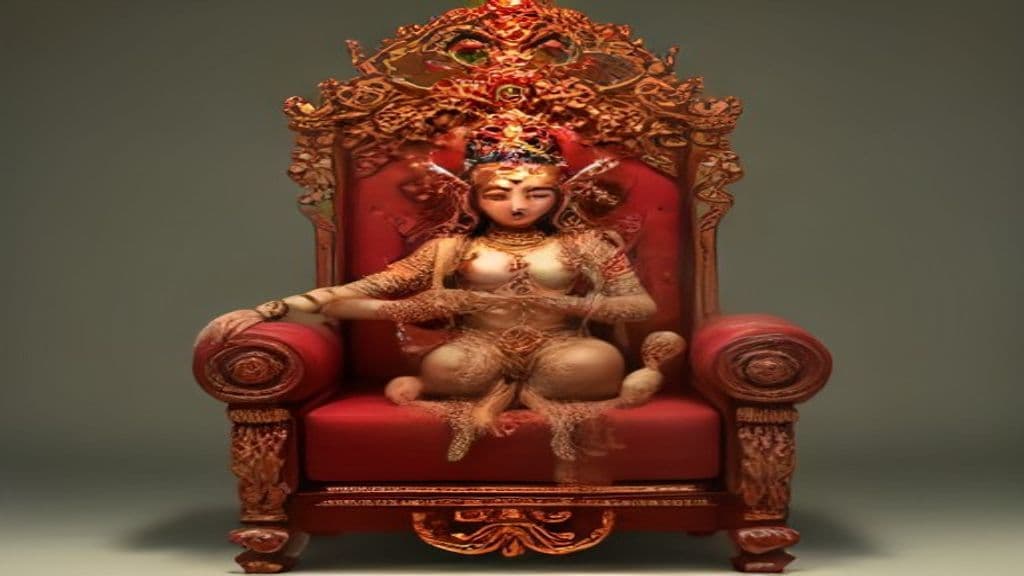
Acintya is an Indonesian Hindu theological-symbolic representation of the ineffable supreme divine principle. In Balinese and Javanese practice it functions as a way to make ultimate reality present in ritual and art—often aniconically as an empty throne (padmasana) or anthropomorphically as a naked, flame-surrounded figure—rather than as a narrative, intervening deity.

Acionna
Lesser

Acionna

Acionna is a local Gallo-Roman water goddess attested by a single votive inscription found at a spring in the Orléanais region. The inscription, discovered by Jollois in 1822 and datable by style to the 2nd century CE, dedicates a portico and ornaments "AUG(ustae) ACIONNAE" and was recovered from the Fontaine de l'Étuvée in Orléans; archaeological work in 2007 uncovered remains of a Gallo-Roman temple and a section of an aqueduct at the site.

Acis and Galatea
Minor Spirit

Acis and Galatea

A pair of lovers from ancient Greek myth: Galatea is a Nereid (sea-nymph) traditionally counted among the daughters of Nereus and Doris; Acis is a mortal youth in classical accounts who, in Ovid's poetic version, is killed by the Cyclops Polyphemus and transformed by Galatea into a river-spirit, explaining a Sicilian stream.

Acmon
Lesser

Acmon

Acmon (Ancient Greek: Ἄκμων, 'anvil') is a polyvalent personal name in Greek myth borne by several distinct minor figures — a Dactyl (artisan), a Phrygian eponymous king, a mischievous woodland creature, companions in epic cycles (one companion of Diomedes transformed into a bird; an Aenead), and in some brief traditions an alleged father of Uranus. The name therefore functions across artisanal, topographical, trickster, and metamorphosis motifs rather than denoting a single unified supernatural species.

Acoetes
Lesser

Acoetes

Acoetes is a proper name applied to multiple mortal figures in classical Greco‑Roman mythic narratives. Most famously, an Acoetes is a fisherman who recognizes and testifies to the divinity of Bacchus/Dionysus and recounts how blasphemous sailors were transformed into dolphins; other bearers of the name appear as a Trojan genealogical figure (father of Laocoön), an aged former squire of Evander, and a frightened soldier in Statius' Thebaid.

Acolnahuacatl
Lesser

Acolnahuacatl

Acolnahuacatl is a name attested in central Mexican sources both as a historical Tepanec ruler of Azcapotzalco and, in several modern compilations and trivia lists, as a minor chthonic or underworld-associated figure (often given the variant Acolmiztli). The evidence in the provided material is divided: the historical/genealogical reading is supported by standard reference entries, while the deity reading appears mainly in secondary online god-lists and quizzes and is not substantiated by detailed primary ritual or mythic texts in the supplied set.

Acontes
Minor Spirit

Acontes

Acontes (Ancient Greek: Ἀκόντην) is an Arcadian prince in Greek mythology, counted among the fifty sons of the impious King Lycaon. He appears in the Lycaon narrative as a participant in a sacrilegious meal prepared for Zeus (disguised as a peasant) and is destroyed by the god's lightning as punishment.

Aconteus
Minor Spirit

Aconteus

Aconteus (Ancient Greek: Ἀκόντιος, Akóntios, lit. 'javelin') is a personal name borne by several distinct mortal figures in Greek myth: an Ethiopian chief turned to stone by Medusa's head at Cepheus' court, an Arcadian warrior killed in the Seven against Thebes, and Acontius of Ceos who used a trick with an apple to secure marriage to Cydippe. The name functions as a human actor across heroic-age narratives rather than a single supernatural class.

Acrisius
Lesser

Acrisius

Acrisius (Ancient Greek: Ἀκρίσιος, Akrisios) is a mythic-historical king of Argos in Greek tradition whose narrative is defined by an oracular prophecy foretelling his death by his daughter's son. He is portrayed as a mortal ruler entangled with dynastic rivalry, oracular authority, and the eventual accidental fulfillment of fate.

Acron (King of the Caeninenses)
Greater

Acron (King of the Caeninenses)

Historical figure and leader of the Caeninenses, a neighboring tribe to the Romans. Rejected the proposal of intermarriage with Romulus. (Note: 1. Power tier: Acron is described as a king, but no source material indicates his abilities or powers are deity-level (Ancient) or cosmic (Primordial). Greater seems plausible. 2. Origin story: The dr)

Actaea
Lesser

Actaea

Actaea is a named sea‑nymph in Greek mythic lists, identified in the provided sources as the personification or eponym of the seashore. She appears primarily in onomastic and catalogue contexts (lists of nymphs/Nereids) and has no surviving independent narrative or cultic rites attested in the cited material.

Actaeon
Lesser

Actaeon

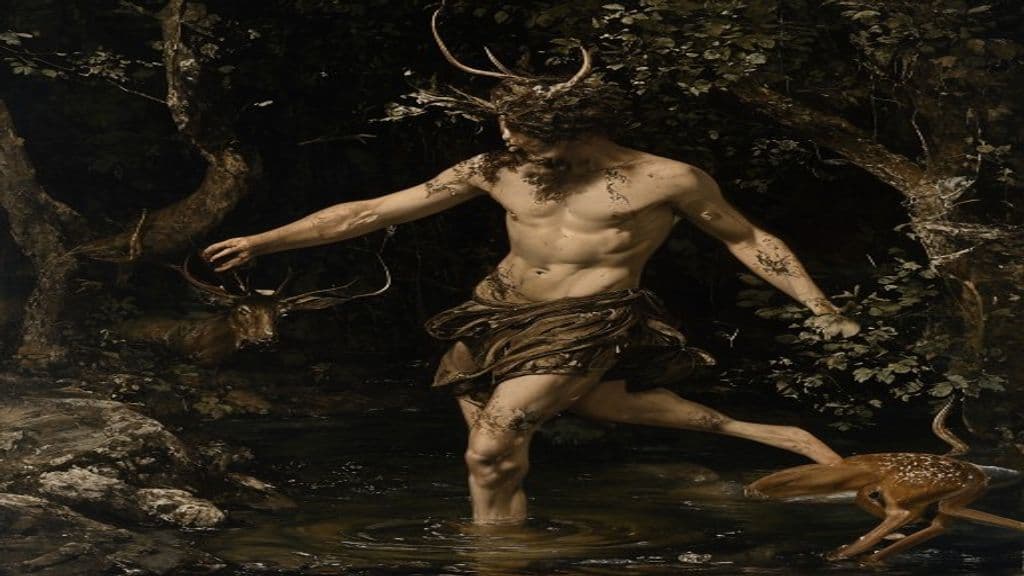
A mortal hunter of Greek myth who, in multiple traditions, is transformed into a stag and torn apart by his own hounds after transgressing the goddess Artemis. He functions as a mythic exemplar about proper deference to divine boundaries and, in some locales, became the focus of cultic rites and memorials.

Actaeus
Lesser

Actaeus

Actaeus (Ancient Greek: Ἀκταῖος, Aktaîos, literally 'coast-man') is a legendary early human king in Greek mythic‑historical tradition. He is presented as an eponymous, autochthonous ruler associated with the older place‑name(s) for Attica (Acte/Actaea/Actica) and appears in genealogies that connect him to later Athenian founders such as Cecrops.

Acte (Akte)
Lesser

Acte (Akte)

Acte (Ancient Greek Akte, sometimes rendered Acme) is a divine personification in Greek myth: one of the Horae who embodies a particular hour of the day — specifically the hour of eating and pleasure, a designated afternoon work-hour — and functions chiefly as a temporal marker rather than an active mythic agent.

Acteis
Lesser

Acteis

Acteis is a homonymous name attested in two separate domains in the supplied sources: (1) a minor genealogical figure in Greek myth, identified as the mother by Alector of the Boeotian leader Clonius; and (2) a genus-name recorded in zoological/taxonomic databases and as a synonym in ichthyological nomenclature. The two uses are distinct and unconnected in the provided material.

Actia
Lesser

Actia

Actia (Ancient Greek: Ἄκτια) is attested in the supplied sources not as a supernatural being but as (a) the ancient festival and epithet of Apollo Actius associated with Actium and Nicopolis, and (b) a modern taxonomic and commercial name (genus of flies; company and product names). No folkloric or mythic entity named Actia is documented in the provided materials.

Adad
Ancient

Adad

Adad (also Hadad, Haddad; Sumerian Iškur) is the storm- and rain-deity attested in ancient Mesopotamian and Canaanite religious contexts. Sources identify him as a principal weather god whose domain is storms and rainfall and whose name appears across multiple Near Eastern languages and sites, including Ebla (as Hadda, c. 2500 BCE).

Adam
Minor Spirit

Adam

In the Hebrew Bible (Genesis 1–5) Adam is the first human, both as an individual progenitor and as a term for humankind. Created by God from the dust of the ground and animated by God's breath, Adam is placed in the Garden of Eden, names the animals, receives divine command, disobeys with Eve, and fathers the first named human descendants (Cain, Abel, Seth).

Adam (ʾĀdam)
Primordial

Adam (ʾĀdam)

In Islamic theology Adam (Arabic: آدم, ʾĀdam) is presented as the first human being and the first prophet (nabī), created by God from earth/clay, granted life by God's spirit, placed in a paradisal Garden, taught knowledge (the "Names"), tested by divine command, tempted by Iblīs, and ultimately sent to live and die on Earth while remaining eligible for repentance and forgiveness.

Adam Kadmon
Primordial

Adam Kadmon

Adam Kadmon (Hebrew: אָדָם קַדְמוֹן) is the Kabbalistic Primordial Man: a supra‑human, archetypal pattern or persona projected at the first stage of creation after God's contraction (tzimtzum). It is a metaphysical template corresponding to the highest aspect of divine intention and the sefirotic structure rather than a historical, corporeal individual.

Adam Kasia
Primordial

Adam Kasia

In Mandaeism, Adam Kasia ('the hidden Adam') is the primordial, luminous human principle representing the soul of the first man and, by extension, the soul present in every human. He is an archetypal heavenly Adam, attested in Mandaean liturgical and priestly texts and associated in sources with the prototypical priestly figure Shishlam and a hidden/radiant Eve (Hawa Kasia).

Adam Pagria
Primordial

Adam Pagria

In Mandaean cosmology Adam Pagria (Classical Mandaic: ࡀࡃࡀࡌ ࡐࡀࡂࡓࡉࡀ) is the primeval bodily man — the archetypal physical human body from which all human bodies derive. He is paired with Adam Kasia, the primeval soul, and is presented as the created, planetary-influenced material substrate that receives a World of Light soul via salvific agents.

Adam X the X-Treme
Greater

Adam X the X-Treme

A fictional Shi'ar–human mutant hybrid from Marvel Comics, created in the 1990s X-Men milieu. Portrayed as a genetically engineered offspring tying the Summers mutant bloodline to Shi'ar royalty, he appears in Earth- and Shi'ar-centered storylines and exhibits both Shi'ar physiology and a mutant heat/blood ability.

Adam and Eve
Primordial

Adam and Eve

Adam and Eve are the primordial human pair in the Abrahamic creation narratives who function as the first man and woman, placed in the Garden of Eden to steward creation. Their eating of the forbidden fruit produces a changed human condition—knowledge of good and evil, shame, pain, labor, mortality—and their story underpins later doctrines such as the Christian doctrine of original sin while being read differently across Jewish and Islamic traditions.

Adamma
Ancient

Adamma

Adamma is an ancient north‑Syrian goddess attested in Eblaite palace records ca. 2400 BCE and later incorporated into Hurrian and Emar contexts. She functioned as a named cultic deity with an institutional priesthood, a month and festival bearing her name, and documented offerings from the royal palace.

Adapa
Lesser

Adapa

Adapa is a mythic figure from ancient Mesopotamian (Sumerian and Akkadian) literature: a mortal fisherman and temple sage of Ea at Eridu endowed with exceptional wisdom. He appears in a fragmentary tale in which he breaks the wings of the south wind and is summoned to the divine court; his name was later invoked in exorcistic and ritual contexts as an authoritative identity.

Adar Llwch Gwin
Greater

Adar Llwch Gwin

Legendary large, intelligent birds from Welsh tradition said to understand human speech and obey their master's commands; best known for tearing their master Drudwas ap Tryffin to pieces when bound by a literal order in an Arthurian battle narrative. The term later came to be applied to raptors and metaphorically to brave men in medieval Welsh poetry.

Adar Rhiannon
Greater

Adar Rhiannon

Adar Rhiannon ('birds of Rhiannon') are a set of three magical birds in medieval Welsh narrative (the Mabinogi) whose song can 'wake the dead and lull the living to sleep.' They appear as otherworldly song‑beings tied to the figure Rhiannon and function within tales as providers of enchanted music that sustains and consoles characters.

Adathan and Yadathan
Ancient

Adathan and Yadathan

Adathan and Yadathan are a paired pair of uthras (high celestial beings) in Mandaeism who stand at the Gate of Life in the World of Light and are frequently invoked together in Mandaean liturgy. They are described in the Ginza Rabba and Qulasta as worshippers of Hayyi Rabbi and as guardians associated with the 'first river' (yardna qadmayya).

Adbar
Lesser

Adbar

Adbar is an Ethiopian belief concerning spirit possession that is discussed in scholarship and contemporary art alongside the wider regional phenomenon known as zār. These spirits are held to possess individuals (reported mostly among women), causing discomfort or illness; ritual practice aims to reconcile the spirit and the person rather than to eliminate the spirit.

Adder Stone (Egyptian Tradition)
None

Adder Stone (Egyptian Tradition)

A type of stone with specific physical characteristics, typically glassy and containing a naturally occurring hole, primarily made of flint. Not considered supernatural in Egyptian tradition. (Note: - Remove "primarily made of flint" from Appearance section, as it is not a characteristic unique to Adder stones. - Power tier should be "None" based on the source material, but clarify that this refe)

Adekagagwaa
Greater

Adekagagwaa

Adekagagwaa is a Haudenosaunee sun deity associated with summer who is described as exercising authority over other weather spirits and participating in an annual cycle of departure and return tied to the seasons.

Aderyn y Corff
Lesser

Aderyn y Corff

Aderyn y Corff (literally 'bird of the corpse') is a bird-like death-porter in Welsh folklore said to call outside the door of a person about to die. Described as an avian portent that may lack feathers or wings and as existing on another plane when not manifesting, it is treated in Welsh ghost lore and sometimes naturalized as a screech owl in modern accounts.

Adgilis Deda
Primordial

Adgilis Deda

Protective spirit and deity of fertility in pre-Christian Georgian pantheon, revered by mountaineers of northeast Georgia. (Note: 1. Power tier should be Ancient (deity-level) instead of Primordial. 2. Add sensory_cues that reflect Adgilis Deda's association with fertility, such as blooming flowers or lush vegetation. 3. List Wa)

Adhene
Lesser

Adhene

A class of Manx fairies (Cloan ny moyrn) described in Isle of Man tradition as a social people of beings said to be "fallen angels cast from heaven but too good for hell," who interact with human livelihoods and families, sometimes benevolent but often mischievous.

Adi (asura)
Lesser

Adi (asura)

Adi is attested in modern reference works as the name of an Asura who 'appears in the Matsya Purāṇa.' Beyond this single-line citation in secondary sources, no descriptive material about the figure is provided in the supplied research notes.

Adi Shakti
Primordial

Adi Shakti

Adi Shakti (also Adi Parashakti, Mahadevi, Adya Shakti) is the primordial feminine power in Hindu/Shakta theology, regarded as the ultimate reality (Para Brahman) and the source from which all goddesses and gods manifest. She is both an impersonal cosmic principle (Mulaprakriti) and a focus of devotional invocation in temples, mantras, and pilgrimage sites such as Shakti Peethas.

Adi Vinayaka
Greater

Adi Vinayaka

Adi Vinayaka (Ādi Vināyaka; also called Nara Mukha Vinayaka) is a named iconographic and devotional form of the Hindu god Ganesha portraying the deity with a human head, described in sources as the form before the episode of decapitation by Shiva. It is rarely worshipped and appears in a small number of South Indian shrines and in devotional/musical repertoires.

Adiante
Lesser

Adiante

Adiante (Ancient Greek: Ἀδιάντη) is one of the fifty Danaïdes in Greek myth, daughter of Danaus and Herse, who on her wedding night killed her husband Daiphron at her father's command and, for this crime, is condemned in Tartarus to perform an endless, futile task.