Entity Index

A record of the unseen, drawn from world folklore.

7631 entities · page 4 of 128

Adikia
Lesser

Adikia

Adikia (Ancient Greek: Ἀδικία) is the personification and embodiment of injustice and wrongdoing in ancient Greek religious and visual culture, typically portrayed as the opposite and vanquished counterpart of the goddess Dike (Justice). She appears chiefly in archaic vase-paintings and emblematic visual programs where Justice punishes or restrains her.

Adils
Lesser

Adils

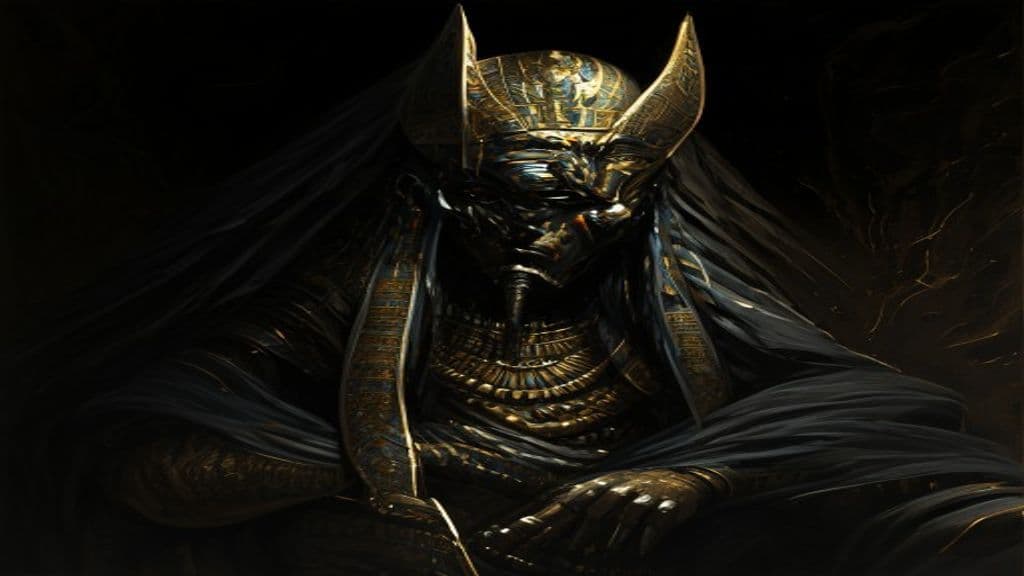
Adils (Old Norse Aðils; also Eadgils, Adillus, Athisl, Adhel) is a semi‑legendary sixth‑century Swedish king attested in Old Norse saga material and later medieval traditions. He appears in saga episodes as a storied royal figure involved in warfare, court acts, and marriage suits rather than as a supernatural being.

Adim (Egyptian Mythology)
Ancient

Adim (Egyptian Mythology)

In Egyptian mythology, Adim is a king and son of Budasheer who appears after the Great Flood. He has problem-solving skills and consults with his father's ghost for guidance. (Note: 1. The power tier should be Lesser (local spirit) as Adim is described as a king of Egypt, but not as having deity-level abilities. 2. Add sensory cues such as "consulting his father's ghost" and poss)

Adite
Lesser

Adite

Adite (Ancient Greek: Ἀδίτη, Aditē) is one of the fifty Danaïdes, daughters of Danaus, who—excepting Hypermnestra—killed their husbands on their wedding night. In classical-derived accounts she is punished in Tartarus, condemned to carry water in a leaky vessel to fill a bottomless tub for eternity.

Aditi
Ancient

Aditi

Aditi is a major Vedic goddess in Hindu tradition who personifies the boundless, infinite cosmic principle and functions as the maternal matrix from which many celestial deities (the Ādityas and other groups) are born. In the Vedic hymns she is invoked as a protective liberator who guards petitioners, provides wealth and safety, and frees devotees from hindrances such as sin and sickness.

Adjassou-Linguetor
Lesser

Adjassou-Linguetor

Adjassou-Linguetor is a loa in Haitian Vodou associated with spring water. The limited cited sources describe her as having protruding eyes and a bad temper; beyond these points, the available documentation (Wikipedia and Wikidata) is minimal.

Adlet
Lesser

Adlet

A category of non-human peoples in Inuit narrative tradition (also rendered Erqigdlet/Irqigdlit) that functions both as a mythic ancestor-race and as dog‑legged antagonists; the term can denote inland native American peoples or half‑canine humanoids depending on regional usage.

Admete (Admeta)
Lesser

Admete (Admeta)

Admete (Ancient Greek: Ἀδμήτη) is a mortal princess of the house of Eurystheus in the Heraclean cycle and, in alternate local tradition, a priestess of Hera associated with the transfer and purification of a cult image to Samos. She functions in surviving accounts as a named requester whose wish prompts one of Heracles' labors and as the human custodian of a sacred image in a Samian foundation story.

Admeto (Admetus)
Lesser

Admeto (Admetus)

Admeto is the legendary King of Thessaly from classical myth as transmitted into European opera (notably Handel's Admeto, HWV 22). Portrayed as a mortal tragic protagonist, his fate in the narrative is determined by divine oracular decree and by the actions of other mythic figures (Alceste, Apollo, Hercules) rather than by any innate supernatural power.
Admetus
Lesser

Admetus

Admetus is a mortal king of Pherae in Thessaly in the Greek tragic tradition (notably Euripides' Alcestis). His life becomes the subject of a divine bargain in which Apollo intervenes to delay his appointed death, a bargain that requires another to die in his stead — most famously his wife Alcestis.

Admetus of Pherae
Lesser

Admetus of Pherae

Admetus of Pherae is a mortal king of Thessaly in Greek myth whose household and fate intersect with Olympian gods (notably Apollo and Artemis), the Fates, the personification of Death (Thanatos), and the hero Heracles. He is celebrated for hospitality and justice and is best known from the tragic cycle surrounding his wife Alcestis, who dies in his stead and is later recovered.

Adna mac Uthidir
Minor Spirit

Adna mac Uthidir

Adna mac Uthidir (also spelled Adhna) is attested in early Irish tradition as a historical or legendary poet and sage who held the office of Chief Ollam of Ireland (and in some accounts Chief Poet of Ulster) and who is credited, with Forchern and Atharne, with collecting the axioms of Irish law into a single volume. He is placed by medieval tradition around the time of King Conchobar mac Nessa (traditionally c. 1st century AD), and fragments of laws attributed to him are reported in later manuscript collections.

Adnoartina
Ancient

Adnoartina

Adnoartina is a Dreamtime ancestral lizard-being in Dieri tradition associated with the creation of red ochre (yamparnu) and the formation/sanctification of landscape features such as Uluru. The being’s actions in ancestral time explain the origin of sacred pigment and sustain ritual practices and social journeys to ochre sources.

Adonai
Ancient

Adonai

Adonai (אֲדֹנָי) is one of the sacred Hebrew names used in Judaism to refer reverently to the singular God. It functions as a liturgical and devotional substitute or form for the divine Name and is treated with linguistic and ritual care in Jewish practice; it also appears in Christian liturgy (e.g., the Advent antiphon “O Adonai”).

Adonay
Ancient

Adonay

Adonay (אֲדֹנָי, often transcribed Adonai or Adonay) is a sacred Hebrew appellation meaning roughly "Lord" or "Master," used in Jewish liturgical and scriptural language as a reverent name for the divine. In the provided sources it functions as a theological title within Judaism rather than a personified folkloric being; discussions around it center on reverent usage and the communal care taken with divine names.

Adonia
Minor Spirit

Adonia

The Adonia festival is a ritual mourning celebration for Adonis, the consort of Aphrodite in ancient Greek mythology. (Note: 1. The draft claims that the article is about a "ritual mourning celebration", but the source only mentions the festival as a mourning celebration. 2. Power tier should be Primordial or Ancient since )

Adonijah
Lesser

Adonijah

Adonijah (Hebrew: אֲדֹנִיָּה, ’Ǎḏōnīyyā, "my lord is Yah") is presented in the Hebrew Bible as the fourth son of King David who made a bid for the throne during David's final illness, secured some elite support, took sanctuary at the altar, was pardoned conditionally, and later executed after petitioning Solomon to marry Abishag.

Adonis
Lesser

Adonis

Adonis is a mythic mortal youth in ancient Greek tradition, beloved by goddesses (notably Aphrodite and Persephone) whose death and seasonal return are the focus of the women’s midsummer festival Adonia. The cultic practices—planting short-lived 'gardens of Adonis' on rooftops, ritual lamentation, and casting an effigy and withered plants into the sea—symbolically link him to vegetation cycles and Near Eastern dying-and-regenerating god traditions.

Adrammelech
Lesser

Adrammelech

Adrammelech is attested in ancient Semitic textual tradition as a local god of 'Sepharvaim.' The name is commonly glossed as "Magnificent king." In modern times the name has been reused in diverse fictional, musical, and online contexts, but those are creative reworkings rather than continuations of the brief ancient attestation.

Adranus (Adranos)
Lesser

Adranus (Adranos)

Adranus (also spelled Adranos) is a fire deity worshipped by the Sicels of ancient Sicily, attested as having island‑wide cult recognition with a principal sanctuary at the town called for him near Mount Etna. Classical summaries report a notable cultic presence of many sacred dogs associated with his temple.

Adraste / Adrasteia
Lesser

Adraste / Adrasteia

Adraste (also Adrasta, Adrasteia) is a name applied across Greek and later European literary traditions to multiple minor figures: an Oceanid listed as a nurse of the infant Zeus, a Homeric attendant of Helen, and a named dramatic character (jailer/antagonist) in plays and operatic retellings. The sources show the name reused in different roles rather than a single, coherent supernatural ontology.

Adrasteia
Ancient

Adrasteia

Adrasteia is an ancient Anatolian/Greek goddess associated with mountain-mother cults and later identified with the Greek notion of inescapable fate and retributive necessity. She appears in Phrygian contexts as a mountain goddess connected to Cybele, in Cretan myth as a nurse of the infant Zeus, and by the fifth century BC is often equated or associated with Nemesis and other personifications of necessity.

Adrastus
Lesser

Adrastus

Adrastus (Ancient Greek: Ἄδραστος or Ἄδρηστος) is a legendary king of Argos in the Greek mythic-historical tradition, best known as the leader of the expedition of the Seven against Thebes and as a figure tied to oracular counsel, dynastic marriages, and local hero cults.

Adrastus of Argos
Lesser

Adrastus of Argos

Adrastus is a legendary mortal king in the Greek Theban cycle, traditionally king of Argos (with variant traditions placing him first at Sicyon). He is best known as the ruler who housed the exiled Polynices and organised the expedition known as the Seven against Thebes, acting as a dynastic and military patron whose choices precipitate tragic loss.

Adrestia (Adrasteia)
Ancient

Adrestia (Adrasteia)

Adrasteia (also Adrestia and multiple orthographic variants) is a figure in classical Greek tradition whose roles shift from a Phrygian mountain/mother-goddess probably associated with Cybele, to a Cretan nymph entrusted with nursing the infant Zeus, and by the fifth century BC identified with Nemesis as a deity/personification of divine retribution and balance.

Adriel the Meholathite
Minor Spirit

Adriel the Meholathite

A named human figure in the Hebrew Bible (2 Samuel), identified as Adriel son of Barzillai the Meholathite and cited in genealogical and narrative material connected to events in the reign of David. He appears as a social/lineage marker in the account concerning the Gibeonites and the execution and burial of members of Saul's house.

Adsullata
Ancient

Adsullata

Adsullata is attested as a Continental Celtic river goddess associated with the River Savus (modern Sava) in the Roman province of Noricum. Later traditions record her presence in Brittany as a goddess of hot springs and present her as an antecedent or origin-form of the Anglo‑Celtic sun goddess Sul.

Adur Burzen-Mihr
Ancient

Adur Burzen-Mihr

Adur Burzen-Mihr is a consecrated Atash Behram — one of the three Great Fires of late antique Sasanian Zoroastrianism — historically associated with the farmer social estate and with a cultic location in northeastern Iran. Medieval texts (e.g., the Bundahishn) and later summaries record it as a major pilgrimage fire with legendary associations of protection and miraculous efficacy; its documentary history after the early Islamic period is unclear.

Adur Farnbag
Greater

Adur Farnbag

Adur Farnbag is one of the three Great or Royal fires in the Zoroastrian ritual/topographical system of pre‑Islamic Iran. Presented in the sources as a continuously tended sacred fire housed in a temple, it is attested in secondary accounts as a focus of cultic activity, miracle stories, and association with elite ritual geography in the Parthian–Sasanian eras.

Adur Gushnasp
Greater

Adur Gushnasp

Adur Gushnasp (Middle Persian: Ādur ī Gušnasp; New Persian: Āzargušnasp) is a pre-Islamic Zoroastrian Great Fire — one of the three highest grade sacred temple fires (Atash Behram) of Sasanian-era Iran. Housed at the temple-site historically called Shiz (modern Takht-e Soleymān, Adurbadagan), it functioned as a continuously tended cultic fire, a pilgrimage destination, and a focal point of royal patronage and warrior-class identity.

Adze
Greater

Adze

A vampiric firefly of the Ewe people of West Africa — a spirit that takes the form of a firefly by night and a malicious possessing being by day, drinking the blood of sleeping children and spreading disease.

Adze (Folklore)
Lesser

Adze (Folklore)

Vampiric being in Ewe folklore, transforming into human shape upon capture. (Note: 1. Power tier should be Greater, as "deity-level" powers are implied by the ability to possess humans. 2. Add sensory cues (e.g., glowing lights) based on its firefly form. 3. Add weaknesses and wards)

Adže / Adze
Lesser

Adže / Adze

No folkloric entity named 'Adže' is documented in the provided sources. The string appears in heterogeneous, non-folkloric contexts (a Bosnian village name, an English woodworking tool entry, a performer pen name, a CIA document fragment) and one modern podcast episode list that mentions 'the Adze' among other vampire-like beings; none of these supply an ethnographic description of a supernatural being called 'Adže'.

Aea
Minor Spirit

Aea

No evidence in the provided sources supports Aea as a supernatural being. The corpus shows Aea/AEA used as modern acronyms, product names, file extensions, conference labels, and certifications rather than a folkloric or cosmological entity.

Aeacidae
Lesser

Aeacidae

The Aeacidae are a dynastic lineage in Greek myth and historiography descended from the hero Aeacus, son of Zeus and the nymph Aegina. The name functions as a patronymic designation for those 'of Aeacus' and is used to claim genealogical legitimacy and political prestige in regions such as Aegina and Molossian Epirus.

Aeacus
Ancient

Aeacus

Aeacus is a mythic king of the island of Aegina in Greek tradition, famed for his justice and piety. After death he is accorded a permanent office in Hades as one of the three judges of the dead alongside Minos and Rhadamanthus, and he is the eponymous ancestor of the Aeacidae.

Aeanes
Minor Spirit

Aeanes

Aeanes is attested in classical sources as an ancient personal name preserved in epic indices and as a local toponym (a sacred precinct, Aeaneium, and a spring, Aeanis) said to be named after a man slain by Patroclus. The name also appears in modern contexts as a taxonomic genus and in placename continuity, but the provided sources do not support a coherent supernatural identity for Aeanes.

Aed (Aodh)
Minor Spirit

Aed (Aodh)

Aed (Old Irish Aodh) is a named supernatural figure in Irish myth attested in variant genealogies: in some traditions he is one of the Children of Lir, while in others he appears as a son of the Dagda. His name derives from the Old Irish word for 'fire' and he appears in narratives that place him among the aristocratic households of the Tuatha Dé Danann/Daoine Sidhe.

Aedesia
Greater

Aedesia

Aedesia is a proper name attested in the supplied sources with three distinct referents: a fifth‑century Neoplatonic woman philosopher of Alexandria, a modern botanical genus (Aedesia O.Hoffm.) native to parts of West and Central Tropical Africa, and a reused toponym/moon name in a speculative fiction setting. None of the provided materials portray Aedesia as a supernatural being or attribute spiritlike powers to the name.

Aega
Lesser

Aega

Aega is attested in modern reference works as a mythological name from the Greek tradition; the string 'Aega' is used for more than one minor figure or entry in Greek mythic catalogs. Surviving provided sources give no coherent myth, iconography, or rituals tied to a single, identifiable deity or spirit named Aega.

Aegaeon
Primordial

Aegaeon

Aegaeon is a name used in ancient Greek myth for multiple figures, most notably a Hecatoncheir sometimes equated with Briareus and also borne by several localized personages (an Arcadian prince, a son of Lycaon, and occasional Giants). The name carries maritime and stormy connotations (etymologized as 'goatish', 'stormy', or 'Aegean') and in some traditions marks a primordial, multiform monstrous kin of the gods.

Aegaeus
Lesser

Aegaeus

Aegaeus (Ancient Greek: Αἰγαῖος) appears in Greek myth as (1) a local river-god associated with the island called Scheria (traditionally associated with Corfu) and father of the nymphs Aigaiides and of Melite (who in some sources bore Heracles a son, Hyllus), and (2) as a toponymic surname/epithet of the sea-god Poseidon derived from the town of Aegae in Euboea.

Aegeas (Aegeus)
Minor Spirit

Aegeas (Aegeus)

Aegeas (classical Aegeus) is the mytho-historical king of Athens from Greek myth, father of Theseus and traditional eponym of the Aegean Sea. The provided sources treat him as a mortal royal figure embedded in epic and local foundation narratives rather than a supernatural spirit or cultic being.

Aegesta
Lesser

Aegesta

Aegesta is an ancient place-name and eponym recorded in Greek and Roman sources as an alternate form of Segesta, an Elymian city in northwestern Sicily, and as a mythic personal name (Aegestus/Aegesta) tied to Trojan foundation legends rather than a supernatural being.

Aegeus
Lesser

Aegeus

Aegeus is a mytho-historical king of Athens in Greek tradition, an eponymous ancestor who links Athenian dynastic identity to wider heroic and divine narratives. He is best known as the father (in most traditions) of Theseus, a seeker of an heir who consults oracles, introduces at least one civic cult, and whose death provides an aetiology for the name of the Aegean Sea.

Aegiale
Lesser

Aegiale

Aegiale is a mortal woman in Greek mythic tradition, best known as the wife of the hero Diomedes. In post‑Trojan War nostos narratives she is depicted in several accounts as unfaithful and as plotting against her husband; some traditions attribute her conduct to the vengeance of the goddess Aphrodite.

Aegialeus
Lesser

Aegialeus

Aegialeus (Ancient Greek: Αἰγιαλεύς) is a name borne by several legendary figures in Greek mytho-historical tradition; chiefly remembered as (a) an eponymous early king associated with Sicyon and the littoral name Aegialea/Aegialeia, and (b) the elder son of Adrastus of Argos who fell among the Epigoni in the Theban cycle. He functions in sources as a mortal king/hero and etiological ancestor used to explain place-names and local chronologies.

Aegimius
Lesser

Aegimius

Aegimius (Ancient Greek: Αἰγίμιος) is a legendary ancestral king and lawgiver of the Dorians in Greek tradition. He appears in mythic-historical narratives as the eponymous progenitor of Dorian subgroups, a military leader who enlisted Heracles' aid, and the adoptive guardian of Hyllas, linking the Dorians to the Heracleidae.

Aegina
Lesser

Aegina

Aegina is an eponymous nymph of Greek mythology who personifies the island of Aegina in the Saronic Gulf. She is remembered primarily as the mother of the hero-king Aeacus and as the island’s mythical ancestress, anchoring local civic identity and cultic landscape.

Aegipan
Lesser

Aegipan

Aegipan (Αἰγίπαν / Αἰγίπανος) is an ancient Greek mythological figure associated with goat attributes and with the sea‑goat imagery of the constellation Capricornus. He appears in classical myth as a semi‑divine helper (notably in the Typhon episode) and, in later natural‑history and medieval bestiary reception, the name is applied to satyr‑like or ape‑like wild men in distant lands.

Aegisthus
Lesser

Aegisthus

Aegisthus (Greek Αἴγισθος, Aigisthos) is a mortal member of the House of Atreus in Greek myth who, born of incestuous circumstances and raised by shepherds and a goat, participates in dynastic murder and usurpation — notably the slaying of Atreus in some accounts and the conspiracy (with Clytemnestra) that results in Agamemnon's death — and is later killed by Orestes, an episode that figures in narratives about inherited guilt, vengeance, and the transition from private retribution to public justice.

Aegius
Lesser

Aegius

Aegius (Ancient Greek: Αἴγιος) is a named mortal figure in Greek mythic genealogies, one of the fifty sons of King Aegyptus who married the daughters of Danaus and was slain on his wedding night. He appears only as a genealogical/legendary royal personage within the Danaid cycle rather than as a supernatural being.

Aegle
Lesser

Aegle

Aegle (Ancient Greek: Αἴγλη, 'brightness' or 'dazzling light') is a name applied to several distinct female figures in Greek myth: a daughter of Asclepius associated with health, a Naiad mother of the Charites by Helios and Neaera, one of the Heliades transformed into a poplar after Phaeton's death, a named Hesperid, an alternate name for Coronis in some traditions, a daughter of Panopeus beloved by Theseus, and a nurse of Dionysus. The recurrence of the name links these figures by the themes of brightness, beauty, and filial or nymph-like status rather than by a single unified identity.

Aegolius
Minor Spirit

Aegolius

Aegolius (Ancient Greek Αἰγωλιός) is a Cretan man in Greek myth who, after attempting to steal sacred honey from the cave where the infant Zeus was reared, was transformed by Zeus into an owl as punishment. The episode is attested in summaries of ancient metamorphosis traditions (Antoninus Liberalis) and modern secondary summaries (Wikipedia).

Aegypius
Minor Spirit

Aegypius

Aegypius (Ancient Greek: Αἰγυπιός) is a Thessalian mortal in Greek myth who, after a tragic household deception and prayer, is transformed by the gods into a vulture. The story is etiological: the metamorphoses explain the avian forms and behaviors assigned to the characters.

Aegyptius
Lesser

Aegyptius

Aegyptius (Greek Αἰγύπτιος, Latinized Aegyptius) is a mortal elder of Ithaca attested in the Homeric tradition, identified as an old lord and loyal retainer of Odysseus who speaks among the assembly in Odyssey Book 2 and is father of Antiphus.

Aegyptus
Lesser

Aegyptus

Aegyptus is a legendary king in Greek mythic genealogy, presented as the eponymous founder of the land called Egypt and the father of fifty sons whose intended marriages to the fifty daughters of his twin brother Danaus end in mass murder and mythic consequences.

Aello
Lesser

Aello

Aello (Ancient Greek: Ἀελλώ) is a named figure in Greek myth primarily attested as one of the Harpies—winged female personifications of storm-wind who harry, snatch, and torment. The name also appears in variant lists as applied to an Actaeonian hunting dog, showing onomastic fluidity in the tradition.

Aeneads
Lesser

Aeneads

A collective term in Roman myth for the friends, family, and companions of the Trojan hero Aeneas who fled Troy and wandered before settling in Italy; treated as a retinue and ancestral cohort rather than independent supernatural beings.

Aeneas Silvius
Lesser

Aeneas Silvius

Aeneas Silvius is a legendary mytho-historical king of Alba Longa in Roman/Latin foundational tradition, counted third among the Silvian line. Ancient chroniclers credit him with a multi-decade reign, military success, the planting of Latin colonies (the Prisci Latini) and the founding of a group of early Latin towns, and with passing kingship to his son Latinus Silvius.