Entity Index

A record of the unseen, drawn from world folklore.

7631 entities · page 6 of 128

Agatha Harkness
Greater

Agatha Harkness

Agatha Harkness is a fictional Marvel Comics character portrayed as a long-lived, powerful witch who has acted as governess, tutor, and leader within witch communities in Marvel continuity; she is best known as a mentor to Wanda Maximoff (Scarlet Witch) and for ties to New Salem and the Salem's Seven.
Agathos Daimon (Agathodaemon)
Lesser

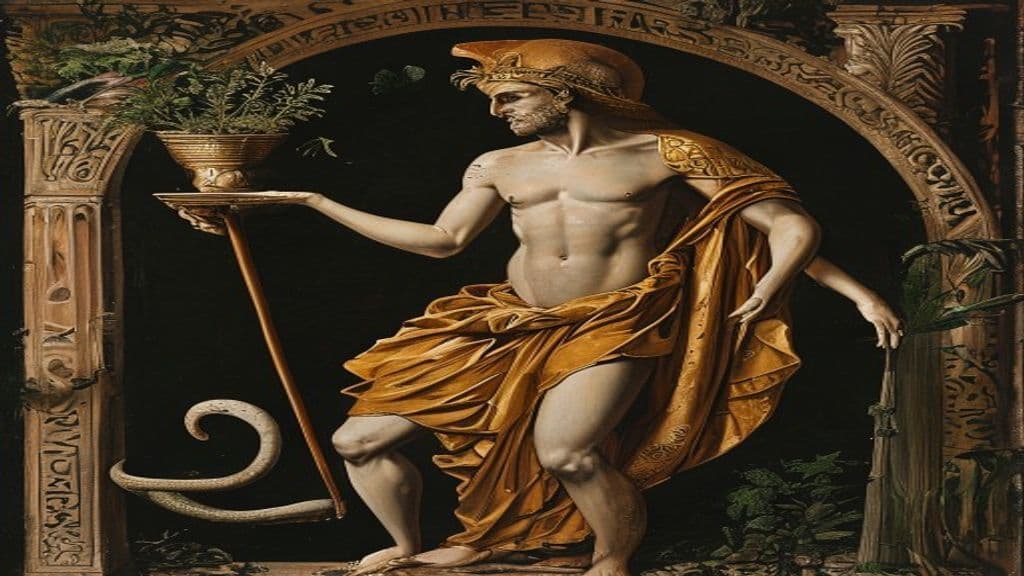
Agathos Daimon (Agathodaemon)

A beneficent household and civic daemon attested in classical Greek and Graeco‑Egyptian religion. In domestic Greece it is a household spirit honored with post‑meal libations; in Ptolemaic Alexandria it appears prominently in serpentine civic and household forms and is syncretised with various Egyptian protective and fate deities in late antiquity.

Agave
Lesser

Agave

Agave (Ancient Greek: Agaue/Agaúē) is a personal name borne by at least two distinct figures in Greek myth: a Nereid (one of the fifty sea-nymph daughters of Nereus) and a Theban princess, daughter of Cadmus, who appears in myths connected with Dionysus. The name is glossed in Greek sources as 'illustrious', 'noble', or 'high-born'.

Agbọghọ Mmụọ Masquerade
Lesser

Agbọghọ Mmụọ Masquerade

An Igbo masquerade category—literally 'Maiden Spirits'—in which masked (traditionally male) dancers embody the spirits of deceased unmarried girls, performing idealized adolescent feminine comportment and beauty in annual dry‑season civic ceremonies and at funerals and initiation rites in the Nri–Awka region.

Agdistis
Ancient

Agdistis

Agdistis is a Phrygian-origin deity incorporated into Greek and Roman mythic tradition, described in ancient sources as born with both male and female sexual organs and closely associated with the Great Mother goddess (Cybele) and the Attis cycle. The figure functions as an origin-mythic cause for features of the Cybele/Attis cult (notably the existence of eunuch priests) and is tied to specific sacred sites around Pessinus and a Mount Agdistis/Agdus rock.

Agelaus
Minor Spirit

Agelaus

Agelaus (Ancient Greek: Ἀγέλαος) is not a single supernatural being but a personal name borne by multiple mortal figures in Greek myth, epic, and local history. Bearers include a herdsman who raised the exposed infant Paris, several minor warriors in the Trojan cycle, mythic princes (e.g., sons of Oeneus, Stymphalus, Temenus, and in some lists a son of Heracles), a suitor of Penelope, and a historical official of Naupactus in the Aetolian League.

Ageleus / Agelaus
Lesser

Ageleus / Agelaus

Ageleus (also Agelaus, Agelaos, Ageleos) is not a single supernatural being but a recurring personal name borne by multiple mortal characters in Greek mythic genealogies and epic narratives. Bearers of the name appear as princes, warriors, herdsmen, and ancestors within the heroic-age cycles (Calydon, Troy, Arcadia, Dionysian campaigns).

Agemon
Lesser

Agemon

Agemon is attested in the supplied sources only as a proper name: a genealogical listing identifying him as a son of Eudaemus in a Wikidata fragment, and as a letter-string appearing (likely via OCR or typographic artifact) in a declassified CIA document. There is no evidence in the provided material that Agemon is a supernatural being or part of a folkloric tradition.

Agenor (son of Pleuron)
Lesser

Agenor (son of Pleuron)

Agenor, son of Pleuron, is a minor mortal figure attested in Greek mythographic genealogies as a prince of Aetolia. He is listed as a child of King Pleuron and Xanthippe and as brother to Stratonice, Sterope, and Laophonte; no independent myths, deeds, or iconography for this Agenor are recorded in the supplied sources.

Agenor of Argos
Lesser

Agenor of Argos

Agenor is a mythic royal figure in Greek heroic‑age genealogies who functions as a dynastic ancestor and narrative node. In different traditions he appears as an Argive king in the house of Phoroneus or as a son of Poseidon associated with Phoenicia and Libya; an Agenor also appears as a warrior in Homeric epic.

Agenor of Troy
Lesser

Agenor of Troy

Agenor (Ancient Greek: Ἀγήνώρ) is a mortal Trojan heroic figure in the Greek epic tradition notable for confronting Achilles during a rout in Iliad Book 21; Apollo carries Agenor away in a veil of mist and then impersonates him to distract Achilles, allowing the Trojans to reach safety. Later authors vary about his battlefield kills and his eventual death.

Agenoria
Minor Spirit

Agenoria

Agenoria is a minor Roman personification attested in modern summaries and late-antique citation as the faculty or divinity associated with activity, the capacity to respond and to act. She appears in at least one allegorical tableau (the wedding of Labor and Agenoria) and is reported in secondary sources to have had a sanctuary on Rome's Aventine Hill.

Agent Liberty
Lesser

Agent Liberty

Agent Liberty is a fictional human operative persona in DC Comics and its television adaptation (Arrowverse). The identity—most prominently used by Benjamin 'Benjy/Ben' Lockwood—functions as a costumed, paramilitary/enforcer role tied to political movements (Sons/Children of Liberty) or official security details, driven by ideological 'liberty' rhetoric rather than supernatural agency.

Agents of Atlas
Greater

Agents of Atlas

Agents of Atlas is a fictional superhero team published by Marvel Comics, retroactively presented as a 1950s era group of operatives and reconstituted in modern storylines; the roster mixes human, nonhuman, mythic and technological characters and has served as an operative body connected to the Atlas Foundation.

Ages of Man (Roman tradition)
Minor Spirit

Ages of Man (Roman tradition)

In the Roman tradition, the Ages of Man are a series of stages or periods in human existence, representing growth and development. (Note: * Power tier: Remove "Minor Spirit" as it implies a level of agency or power that doesn't align with the description in the draft article. * Abilities: Clarify or remove the phrase "in the classical s)

Agetor
Minor Spirit

Agetor

Agetor (Ancient Greek: Ἀγήτωρ; alt. Hegetor) is not an independent being but a theonymic epithet applied to multiple Greek gods—primarily Zeus in Lacedaemon, and also Apollo and Hermes—emphasizing a leading or ruling function of the deity in cult and literature.

Aggi and Ebbi (lexical occurrences)
Minor Spirit

Aggi and Ebbi (lexical occurrences)

Aggi and Ebbi are not attested as folkloric beings in the supplied sources; they appear only as isolated word-forms in an Italian poetic excerpt and as capitalized letter-strings in a puzzle/solution transcript. No mythic identity, powers, or rituals are documented for these tokens in the provided materials.

Aghasura
Greater

Aghasura

Aghasura is an asura from the Vaishnava/Hindu narrative tradition (notably the Srimad‑Bhāgavatam) who, at the command of Kamsa, assumed the form of a vast serpent to ambush Kṛṣṇa and the cowherd boys in Vṛndāvana. The episode demonstrates Kṛṣṇa’s protective, divine power as he enters and destroys the demon from within.

Aghrirat
Lesser

Aghrirat

Aghrirat is a named Turanian noble and peacemaker in the Shahnameh and Iranian mythic tradition, presented as a son of Pashang and brother of Afrasiab and Garsivaz. He is notable for his kind and gentle character and for attempting, largely unsuccessfully, to end the hostilities between Iran and Turan.

Agilaz (Egil)
Lesser

Agilaz (Egil)

Agilaz (reconstructed Proto-Germanic) — commonly recorded in medieval sources as Egil or Ægil — is a legendary archer attested in Germanic heroic tradition. He appears as the brother of Völund (Wayland/Weland) in the Old Norse poem Völundarkviða and in the Thidreks saga, and his name is also inscribed on early medieval objects (Franks Casket, Pforzen buckle). The attested material presents him as a named heroic human archer within saga and inscriptional contexts rather than as a recurrent supernatural species.

Agiya Baital
Lesser

Agiya Baital

The fire-form of the Vetala — a cremation ground spirit of UP and Bihar that manifests as a wandering flame rather than a corpse-inhabitor, leading night travellers off roads and into marshland or flames with a dancing fire that seems always just ahead.

Aglaia (Grace)
Lesser

Aglaia (Grace)

Aglaia (Ancient Greek: Ἀγλαΐα) is one of the Charites (the Graces) in classical Greek myth, the personification of splendor, brilliance and festive radiance. She appears in poetic narratives as an attendant of Aphrodite, a dancer of Orchomenus in Nonnus's Dionysiaca, and in some traditions as the wife of Hephaestus and mother of personified social virtues.

Aglais io (Peacock butterfly)
Minor Spirit

Aglais io (Peacock butterfly)

Aglais io is a biological butterfly species (the European peacock or peacock butterfly) documented in natural-history and cultural-archive sources. The entry records its appearance, life cycle, behaviour, habitat and cultural representation as described in the provided research materials; it is not presented as a supernatural being in those sources.

Aglaonoe
Greater

Aglaonoe

Aglaonoe is named in modern catalogs as one of the Sirens of Greek mythology, a group of female, song-bearing beings whose alluring voices threaten seafarers. The sources supplied identify her only as a named member of the Sirens and do not record attributes, rituals, or iconography unique to her.

Aglaope
Minor Spirit

Aglaope

Aglaope is one of the Sirens of Greek myth, a female sea-associated figure whose enchanting song lured sailors toward shipwreck. Her name etymologically emphasizes a bright or 'lambent' voice and she is variously attested as daughter of the river-god Achelous and either a Muse (Melpomene or Terpsichore) or Sterope.

Aglaurus (daughter of Cecrops)
Lesser

Aglaurus (daughter of Cecrops)

Aglaurus (Ἄγλαυρος / Agraulus) is an Attic mythic heroine and local cult figure tied to Athens’ foundational myths and Acropolis cults. She appears in variant traditions as a custodian of the infant Erichthonius who disobeys Athena, as a voluntary self-sacrificer who saves the city, and in Roman poetry (Ovid) as a jealous sister turned to stone. Her memory was preserved in a sanctuary and the festival Agraulia, and she functioned as a civic exemplar for young Athenians.

Aglibol
Ancient

Aglibol

Aglibol is the moon god of ancient Palmyra, attested in inscriptions and reliefs from the late Hellenistic through Roman Imperial periods. He appears in civic cult contexts, often paired with the solar deity Malakbel and included in Palmyrene triads and public sanctuary imagery such as the Sacred Garden.

Agloolik
Lesser

Agloolik

Agloolik (Inuktitut: ᐊᒡᓗᓕᒃ) is an Inuit spirit that dwells beneath Arctic sea ice and functions as a tutelary guardian of seals. Hunters and fishermen petition Agloolik for success; prayers before fishing are said to bring blessings of prey.

Aglovale
Lesser

Aglovale

Aglovale (also Agloval, Aglovan, Aglovaus, Acglavael) is a human knight of Arthurian romance, presented as the eldest legitimate son of King Pellinore and a Knight of the Round Table in the Vulgate/Post‑Vulgate cycles, Malory, and later adaptations. He brings his long‑lost brother Perceval to Camelot, takes part in military actions (including slaying Agrippa in one account), and his death is related in varying ways across traditions (accidental at Gawain's hand, deliberate murder by Orkney kin, or killed during Lancelot's rescue of Guinevere).

Agnarr Geirröðsson
Lesser

Agnarr Geirröðsson

Agnarr Geirröðsson is a mortal prince attested only in the Poetic Edda poem Grímnismál; he aids Odin (disguised as Grímnir) during Geirröðr's torture and, after Odin reveals himself and King Geirröðr dies, Agnarr succeeds as king.

Agne
Lesser

Agne

Agne (also attested Agni, Hogne, Agni Skjálfarbondi) is a semi-legendary king of Sweden in Old Norse saga tradition, preserved in the Ynglingatal corpus and prose expansions such as Snorri Sturluson's Ynglinga saga. He is portrayed as a mighty and famous warrior-king whose campaign in Finland, marriage to Skjalf, and death by hanging form a remembered episode connected to local place-names and a burial mound.

Agnen
Lesser

Agnen

Agnen is an evil spirit in Amazonian Tupinambá mythology known from a concise account in which he devours one of the Twins in the myth of the Twins before being beaten by the surviving twin.
Agnes van Bareldonk
Minor Spirit

Agnes van Bareldonk

Agnes van Bareldonk is attested in a single source as a "processional giant." The available material identifies it as a crafted effigy used in public processions and provides no further descriptive, contextual, or mythic information.

Agneya / Āgneyī
Ancient

Agneya / Āgneyī

Āgneyī (feminine) or Āgneya (masculine adjective) is a Vedic–Puranic divine figure and ritual principle tied to the fire-god Agni and the southeastern direction. In textual traditions she appears both as a personified daughter/shakti of Agni and as an adjectival/technical term applied to fire-consecrated things (direction, astra, etc.). She also occurs as the name Agneya (or Anala) among items revealed in a Shaiva-Agamic list associated with the Aghora face of Sadashiva.

Agni
Ancient

Agni

Agni is the Vedic personification of fire in Hindu tradition: a sacred, mediating principle that manifests as terrestrial fire, atmospheric lightning, and celestial sun, and that receives and conveys sacrificial offerings. Prominent in the Rigvedic corpus, Agni functions as sanctifier, witness of rites of passage, and a transformational inner principle in later Upanishadic literature.

Agniveśa
Greater

Agniveśa

Agniveśa is a legendary rṣi (sage) in the Ayurvedic textual tradition, traditionally credited as the pupil of Punarvasu Atreya and as the attributed author of the lost Agniveśa Saṃhitā / Agniveśatantra. Later Ayurvedic compilers, notably Charaka, are described in the sources as having compiled, edited, and modified material attributed to Agniveśa into texts such as the Charaka Saṃhitā.

Agolant
Lesser

Agolant

Agolant is a literary Saracen king who appears as a recurring antagonist in medieval and Renaissance epic cycles (Matter of France). He functions as a human royal opponent to Charlemagne and his peers, supplying martial episodes, genealogical connections, and the transfer of legendary arms and horses in chansons de geste and later Italian romances.

Agoraeus / Agoraea
Lesser

Agoraeus / Agoraea

Agoraeus (masculine) and Agoraea (feminine) are adjectival epithets used in ancient Greek religion to mark a deity's protective or patronal relation to the agora (public square/marketplace). The term is not an independent supernatural being but a role-name attached to different gods (notably Hermes, Zeus, Athena, Artemis) indicating their guardianship of assemblies and commercial/civic activity in particular poleis.

Agraeus
Minor Spirit

Agraeus

Agraeus (Greek: Ἀγραῖος) is primarily an epithet in ancient Greek religion meaning "the hunter," applied to deities (notably Apollo and in feminine form to Artemis) to mark their hunting aspect. The name also appears as a personal name in mythic genealogies and is secondarily attested in a Phoenician context in a late summary source.

Agrat bat Mahlat
Greater

Agrat bat Mahlat

Agrat bat Mahlat is a female night‑spirit attested in rabbinic, midrashic, and Kabbalistic literature, portrayed as “daughter of Mahlat” and counted among principal female powers associated with Samael. She leads or is accompanied by a retinue of destructive nocturnal spirits and appears in teachings warning against going out alone at certain nights.

Agravain
Minor Spirit

Agravain

Agravain is a literary knight of Arthurian romance cycles: one of the sons of King Lot of Orkney, a member of the Round Table, and a recurring figure in French and English medieval prose and verse. He is portrayed as a skilled but morally problematic courtly knight whose jealousy, malice, and intra-familial violence drive key narrative conflicts (notably the slaying of Lamorak and the exposure of Guinevere).

Agrestes
Lesser

Agrestes

Agrestes is a legendary pagan king of Camelot appearing in accounts of the 13th‑century Arthurian Vulgate Cycle. Presented as a human antagonist to the Christian mission associated with Joseph of Arimathea (or his son Josephus), his violent persecution of converts is followed by madness, self‑destruction, and the subsequent consolidation of Christianity in Camelot.

Agreus
Lesser

Agreus

Agreus (also spelled Argeus) is attested in modern compilations as one of the Pans — a class of rustic, pan-like rural deities in classical Greek mythology. In modern database records he is additionally listed as a son of Apollo; beyond classificatory notes, surviving citations provide no detailed cultic or narrative material for him.

Agriopas (werewolf account)
Lesser

Agriopas (werewolf account)

A classical account—attested via Agriopas as quoted by later compilers—relating that a Parrhasian named Demaenetus/Demnetus ate human viscera during the Arcadian sacrifice to Zeus (Jupiter) Lycaeus and was transformed into a wolf for a period (reported as ten years in some recensions) before reverting to human life.

Agrippa
Lesser

Agrippa

Agrippa is a polyvalent Latin personal name attested across Roman myth (a legendary king of Alba Longa), multiple historical figures (e.g., Marcus Vipsanius Agrippa, Agrippa Postumus, Herod Agrippa I & II), and a Renaissance occult author (Heinrich/Heinrich Cornelius Agrippa). The supplied sources treat Agrippa primarily as an onomastic label rather than a single, consistent supernatural entity.

Agrius
Lesser

Agrius

Agrius (Ancient Greek: Ἄγριος, 'wild') is an onomastic figure in Greek myth whose name is applied to multiple distinct personae—including a Giant, a centaur, a bear‑born twin, a princely son, a suitor of Penelope, and one of Actaeon's dogs—rather than a single unified supernatural being. Each attestation places an Agrius in different narrative registers (Gigantomachy, Heracles' labors, heroic genealogies, the Odyssean cycle, and the Actaeon hunt).

Agrius and Oreius
Lesser

Agrius and Oreius

Agrius (Ἄγριος) and Oreius/Orius (Ὄρειος) are twin sons of Polyphonte and a bear in a Greek mythic tale. Presented as 'twin savage bear-like children,' they committed acts of impiety and violence and were ultimately transformed by the gods into ominous birds (vulture and eagle-owl) as part of divine punishment and resolution.

Agrius of Calydon
Lesser

Agrius of Calydon

Agrius of Calydon is a mythological mortal attested in Greek genealogical lists as a son of the Calydonian king Porthaon and Euryte and brother to Oeneus and other siblings. He is presented in the sources as a member of the Calydonian royal household rather than a supernatural being.

Agron
Minor Spirit

Agron

Agron (Ancient Greek: Ἄγρων, 'wild' or 'rustic') is a human/mortal figure attested in the summary of Antoninus Liberalis' Metamorphoses (as presented on Wikipedia) who, because of impiety toward certain gods, is transformed by Hermes into a plover. The tale functions as an etiological metamorphosis and moral exemplum about observing cult obligations.

Agronā
Lesser

Agronā

Agronā is a scholarly, linguistically reconstructed Proto‑Celtic river-name/theonym proposed to underlie later hydronyms such as the River Ayr (Scotland) and Aeron (Wales). It is a hypothetical reconstruction coined in academic discussion (not attested in primary mythic or ritual sources) and has been interpreted by one scholar as denoting a violent or martial river-goddess.

Agropelter
Lesser

Agropelter

A North American "fearsome critter" of lumbercamp tall-tale tradition said to dwell in hollow conifer trees and hurl broken branches and splinters at unwary people; presented in folklore as an animal-like, mischievous or predatory woodland creature rather than a deity or spirit of formal cosmology.

Agrotera
Ancient

Agrotera

Agrotera (Ancient Greek: Ἀγροτέρα) is a cultic epithet of the goddess Artemis emphasizing her role as huntress and recipient of civic-military sacrifices. The title is closely associated with a temple at Agrae on the Ilissos near Athens and with an annual sacrifice (Agroteras Thusia) tied to a vow connected to the Battle of Marathon.

Aguano
Minor Spirit

Aguano

Aguano is an ethnonym for an indigenous people of Peru (also recorded as Awano, Ahuano, Hilaca, Uguano, Aguanu, Santacrucino, Tibilo). Sources identify them as inhabitants of riverine areas of the Huallaga, Samiria and Marañón and note demographic collapse after European contact; the provided materials do not document Aguano as a supernatural being.

Aguara
Greater

Aguara

Aguara is a mythological fox figure in Ava Guaraní and Chané oral traditions who functions primarily as a trickster and cultural agent; traditions describe him as both malignant and a cultural hero and associate him with the constellation Scorpius.

Aguingay
Minor Spirit

Aguingay

Aguingay (also Agingay) is a legendary woman from the Bulusan epic of Sorsogon, Philippines. Presented as a mortal of exceptional beauty and tragic fate, her life and death are etiologically linked to local landscape features (Mt. Bulusan and two lakes) and commemorated in an annual festival.

Agum II (Agum‑Kakrime)
Lesser

Agum II (Agum‑Kakrime)

Agum II (called Agum‑Kakrime in the inscriptionary tradition) is a Kassite-era Babylonian king known from the Agum‑Kakrime Inscription and later copies. He appears in Akkadian inscriptional and king-list traditions as a royal restorer who recovered and reinstalled the cult statue of Marduk and refurbished the É-sagila, presenting himself as a legitimate shepherd‑king and temple benefactor.

Agunua
Ancient

Agunua

Agunua is the chief cosmic-serpent deity of San Cristobal (Makira) in the Solomon Islands, worshiped as a creator and nourisher and associated with the sea. In some accounts the name Hatuibwari is treated as an alternate form emphasizing a dragon-like composite appearance.

Agur ben Jakeh
Lesser

Agur ben Jakeh

Agur ben Jakeh is presented in the Hebrew Bible (Proverbs 30) as a sage and compiler or speaker of a distinct collection of sayings. The figure functions in textual tradition as a named human sage, a possible pedagogical persona, and—in some readings—an oracular voice; there is no evidence in the supplied sources that Agur is a supernatural being.

Agwé
Greater

Agwé

Agwé is a high-ranking lwa in Haitian Vodou associated with the sea, navigation, fishing, and certain funerary conveyances. He is portrayed as a naval officer who lives in a palace beneath the sea, commands attendant spirits, and is propitiated with maritime offerings and ceremonies.

Ah Muzen Cab
Greater

Ah Muzen Cab

Ah Muzen Cab is a Yucatán Maya divine figure associated with bees and honey, attested in summary sources as protector of Melipona bees and as a participant in Chilam Balam creation and ritual chapters. He is also linked in secondary accounts to the upside-down 'Descending' or 'Diving God' image found in Maya iconography at sites such as Tulum.