Entity Index

A record of the unseen, drawn from world folklore.

7631 entities · page 35 of 128

Brian David Banner
Lesser

Brian David Banner

Brian David Banner is a fictional human character in Marvel Comics whose lifelong abuse, alcoholism, institutionalization, death, and posthumous spectral appearances function as recurring psychological antagonists in the life of his son, Bruce Banner (the Hulk). Created for The Incredible Hulk (vol. 2) #267 (1982), he appears as a violent, unstable man in flashbacks and later as a taunting apparition and a temporarily resurrected assailant in crossover storylines such as Chaos War.

Briareus
Primordial

Briareus

Briareus is one of the Hecatoncheires (Hundred‑Handers) in Greek mythology: a primordial giant, offspring of Uranus (Sky) and Gaia (Earth), traditionally described with fifty heads and one hundred arms and credited with helping Zeus and the Olympians overthrow the Titans in the Titanomachy.

Bricriu
Lesser

Bricriu

Bricriu (also Briccriu, Bricne) is a mortal briugu (hospitaller), poet, and habitual instigator in the Ulster Cycle of medieval Irish narrative. Through hosting feasts and provocative speech he foments rivalry among the Ulster heroes, most famously at the episode Fled Bricrenn (The Feast of Bricriu).

Bricta
Ancient

Bricta

Bricta (also spelled Brixta in inscriptions) is a Gaulish theonym attested in Gallo‑Roman inscriptions from Luxeuil‑les‑Bains (ancient Luxovium). She appears in votive formulae paired with the local water god Luxovios, and her name is linguistically associated with a Gaulish word for "magic."

Bride of Christ
Minor Spirit

Bride of Christ

A theological and biblical metaphor in Christianity describing the church or collective community of believers as the espoused partner of Jesus Christ, emphasizing covenantal intimacy, sanctification, and eschatological union rather than an independent supernatural being.

Bridge Worms
Lesser

Bridge Worms

Bridge Worms are a contemporary internet urban-legend creature described in online fandom as lairing beneath bridges and overpasses and using fake faces to lure human victims. They are presented as part of a modern artist-created mythos circulated on the web rather than a traditional folkloric being.

Brigantia
Ancient

Brigantia

Brigantia is attested in modern reference works as a goddess name within materials labeled 'Celtic mythology'. The same name or root is also recorded as a toponym for an ancient region associated with the Brigantes in northern Britain. The supplied sources are fragmentary and do not provide myths, rites, iconography, or linguistic etymology for the goddess.

Brighella
Minor Spirit

Brighella

Brighella is a masked comic stock character of the Italian commedia dell'arte tradition, originating as a Zanni (servant) type associated with Bergamo. He is a scheming, adaptable servant or tavern-owner figure known for cunning, cruelty to social inferiors, improvisatory skill, and characteristic costume and walk.

Brigid
Ancient

Brigid

Brigid (Brigit, Bríg, Bríd) is an Irish divine figure of the Tuatha Dé Danann associated with poetry/prophecy, healing, smithcraft and protection of livestock and households; medieval Christian tradition and later scholarship record significant syncretism between this goddess and Saint Brigid of Kildare.

Brigit (Brigid / Brigantia)
Ancient

Brigit (Brigid / Brigantia)

Brigit (Brigid, Bríg; Latin Brigantia) is a prominent Irish figure whose identity spans pre‑Christian myth as a member of the Tuatha Dé Danann and early medieval Christian hagiography as St. Brigit of Kildare. Sources show continuity of name, cultic markers (notably a sacred flame), and overlapping attributes across pagan and Christian contexts.

Brimir
Primordial

Brimir

In Old Norse mythic tradition the name Brimir appears in two closely related roles: as a name applied to a primordial jötunn (often equated with Ymir/Aurgelmir) whose body supplies the material of the world, and as the name of a beer‑hall or hall of plenty that Snorri interprets as an afterlife dwelling for virtuous survivors after Ragnarök.

Briseis
Lesser

Briseis

Briseis is a mortal woman in the Homeric epic tradition, captured at Lyrnessus and attached to Achilles as a war prize; her transfer between leaders (Achilles and Agamemnon) functions as a key social and moral symbol in the Iliad and later literary traditions.

Briseus
Lesser

Briseus

Briseus (Ancient Greek: Βρισεύς or Βρίσης) is a mortal figure in the Trojan War tradition, known primarily as the father of Briseis, a woman taken captive by the Greeks. He appears in Homeric tradition and later commentators, who variably place him in Pedasus or identify him as a priest of Lyrnessus; a later pseudo-historical source (Dictys Cretensis) reports that he hanged himself after losing his daughter.

British big cats
Lesser

British big cats

A modern folkloric and cryptozoological category in Britain referring to reported sightings of large non-native felines (panthers, pumas, lynx, 'black cats') across the United Kingdom; treated variously as escaped exotic animals, media-driven urban legend, and a continuation of older large-cat motifs in local tradition.

Britomartis
Lesser

Britomartis

Britomartis is a female divine figure associated in the supplied material with the island of Crete, functioning as a mountain and hunting deity with linked associations to nets and fishermen. She is variously described as a goddess or nymph and was later conflated in Greek tradition with deities such as Artemis, Athena, and Aphaea.

Brittia
Ancient

Brittia

In Germanic tradition, Brittia is a mythological concept and physical location associated with the afterlife, where souls of the dead are transported. It exists as both an island and an Isle of the Blessed. (Note: 1. Power tier should be Primordial since Brittia is associated with the afterlife and its description implies a cosmic or transcendent level. 2. Add sensory cues: Brittia's association with death and )

Brizo
Lesser

Brizo

Brizo (Greek: Βριζώ) is a minor, local goddess venerated on the island of Delos who functioned as a protector of mariners, sailors, and fishermen and as an oracular deity specialized in oneiromancy (dream-oracle). Her cult was chiefly associated with women of Delos who offered food in small boats and sought prophetic dreams concerning sea-voyages and the fates of seafarers.

Broichan
Primordial

Broichan

A 6th century Celtic wizard documented by Adomnán of Iona, with magical abilities and connections to spiritual or supernatural forces. (Note: 1. Power tier should be Ancient, as a wizard serving a king and having connections to a saint is more deity-level than primordial. 2. Add sensory cues based on the fact that Adomnán wrote about Broich)

Brokkr
Lesser

Brokkr

Brokkr is a dwarf and master smith's assistant in Norse mythic tradition, famed for operating the bellows while his brother (Eitri/Sindri) performed magical forging in the contest that produced Mjölnir, Draupnir, and Gullinbursti. He is best known from the Skáldskaparmál episode in which Loki, as a gadfly, tries to disrupt his bellows work and Brokkr later sews Loki's lips shut when Loki evades a wager.

Bromius
Ancient

Bromius

Bromius (Ancient Greek: Βρόμιος) is an epithet and identity-state of the god Dionysus/Bacchus in ancient Greek religion, signifying 'noisy', 'roaring', or 'boisterous'. In some modern readings of fragmentary Orphic material (notably summaries of the Derveni papyrus), Bromius is discussed by scholarship as a name applied to a divine figure placed early in an alternative cosmogony.

Bronze Tiger
Lesser

Bronze Tiger

Bronze Tiger (Benjamin 'Ben' Turner) is a fictional DC Comics character: an African-American, world-class martial artist, operative, and recurring figure who has served as assassin, mercenary, instructor, and member/second-in-command of Amanda Waller's Suicide Squad. Created in the Bronze Age of comics, his history includes training under O-Sensei, capture and brainwashing by the League of Assassins, and later rehabilitation and multimedia adaptations.

Brook horse
Minor Spirit

Brook horse

No attested folkloric entity called 'Brook horse' appears in the supplied sources. The corpus contains a general note on Germanic water-spirits (nixie family) and several toponymic references to brooks and places named with 'Horse' or 'Brook'; any linking of these materials into a distinct 'Brook horse' folk-entity is not documented in the provided research notes.

Broteas
Lesser

Broteas

Broteas (Ancient Greek: Βροτέας, lit. 'mortal' or 'man') is a mythic human figure in Greek tradition, presented as a son of Tantalus and member of that cursed house. He is credited in local tradition with carving the ancient rock relief of the Great Mother (Cybele) on Mount Sipylus near Magnesia ad Sipylum and is also variously narrated as a hunter punished by Artemis or listed among the Lapiths slain in the Lapith–centaur battle.

Brother Blood (Sebastian Blood mantle)
Greater

Brother Blood (Sebastian Blood mantle)

A recurring fictional cult-leader mantle in DC Comics borne by multiple individuals (notably men named Sebastian Blood and later incarnations) who lead the Church/Cult of Blood; the role combines political-theocratic leadership, ritual relics, and supernatural powers tied to lineage and artifacts.

Brother Jonathan
Lesser

Brother Jonathan

Brother Jonathan is a literary and pictorial personification and stock character representing New Englanders (and at times the United States) in 18th–19th century Anglo‑American print culture. He functions rhetorically in satire, political commentary, and self‑identification rather than as a supernatural being.

Brotherhood of Evil
Greater

Brotherhood of Evil

A recurring supervillain organization in DC Comics, introduced in Doom Patrol #86 (1964). Led by the Brain and frequently allied with Monsieur Mallah and other powered operatives, the Brotherhood functions as an enduring antagonist faction opposing the Doom Patrol, New Teen Titans, and occasionally the Justice League.

Brotherhood of Mutants
Lesser

Brotherhood of Mutants

A recurring organized team of superpowered mutants in Marvel Comics who oppose the X-Men and pursue mutant-centered political and militant goals. Formed in the 1960s and reconstituted in multiple incarnations, the Brotherhood ranges from a band of supervillains to a political/militant movement advocating mutant supremacy.

Brown Lady of Raynham Hall
Lesser

Brown Lady of Raynham Hall

A recurring house-ghost reported at Raynham Hall in Norfolk, England, traditionally identified with Dorothy Walpole and famed for a claimed 1936 photograph of a female apparition on the main staircase. Accounts range from 19th-century eyewitness reports to 20th-century photographic claims; the case has been subject to later re-examination and debate.

Brown Man of the Muirs
Lesser

Brown Man of the Muirs

A moorland guardian figure from Anglo-Scottish Border folklore. In a field account he appears as a solitary dwarf who reproves hunters and claims custodianship of upland animals; in later fairy-tale literature he appears as (or is related to) a tribe—the Brown Men of the Moors and Mountains—associated with stronger, more violent motifs and a compulsion-incantation.

Brown Mountain lights
Lesser

Brown Mountain lights

A long‑reported series of unexplained nocturnal lights observed near Brown Mountain in Burke County, North Carolina. Local storytelling treats them as mysterious 'ghost lights,' while early 20th‑century USGS investigations and later skeptical accounts correlated many sightings with ordinary light sources such as locomotive and automobile headlights and brush fires.

Brownie
Lesser

Brownie

A household spirit from Scottish and related British traditions that performs nocturnal domestic labour in return for small offerings left by the hearth. Brownies are protective, place-tied domestic beings who work while humans sleep and will depart or become mischievous if offended.

Broxa
Minor Spirit

Broxa

A nocturnal bird entity in Jewish folklore that sucks milk from goats and human blood at night. (Note: - Power tier: Greater (broxa's sucking of human blood suggests a higher power level than Minor Spirit) - Weaknesses: not specified in source material - Wards: not specified in source material)

Bruce Wayne (DC Extended Universe)
Lesser

Bruce Wayne (DC Extended Universe)

Bruce Wayne is a fictional human persona in American popular culture and the DC Extended Universe: a wealthy playboy, philanthropist, and industrialist who adopts a bat-inspired vigilante identity to combat crime in the fictional Gotham City. In the shared franchise he functions as an urban protector and connective figure among other major heroes and villains.

Bruenor Battlehammer
Lesser

Bruenor Battlehammer

Bruenor Battlehammer is a recurring fictional dwarf character in the Forgotten Realms setting, portrayed as a warrior-king, master smith, and member of the adventuring group the Companions of the Hall. He is chiefly associated with Mithral Hall and the Icewind Dale region and appears across novels, game products, and fan compilations.

Brunhild
Unknown/Not applicable

Brunhild

A female character in Germanic heroic legend, associated with royal or noble status. (Note: * Power tier: Unknown/Not applicable -> Minor Spirit (as there are no specific abilities mentioned) * Origin story: Add that Brunhild is associated with several sources, including historical figures s)

Bruno Mannheim
Lesser

Bruno Mannheim

Bruno Mannheim is a recurring fictional organized-crime boss in DC Comics and derivative media, leader of Intergang and a recurring antagonist of Superman and allied heroes. Across continuities he functions as a power broker who sometimes employs or is empowered by Apokoliptian/New God elements (notably Darkseid and agents such as Kanto).

Brunor
Lesser

Brunor

Brunor is a personal name applied to several human knights in medieval Arthurian romance, most notably a young knight nicknamed La Cote Mal Taillée (the 'badly cut coat') who arrives at King Arthur's court wearing his murdered father's bloodied surcoat and seeks to prove himself by deeds. The name functions as a narrative role within the Tristan/Arthurian cycles rather than as a supernatural being.

Brutus Greenshield
Minor Spirit

Brutus Greenshield

A legendary king of the Britons attested in Geoffrey of Monmouth's pseudo‑historical account and later reinterpreted in Elizabethan literature as a martial founder figure. In Geoffrey he is an otherwise unremarked dynastic successor; in sixteenth‑century sources he is magnified into a warrior who led an expedition to Hainaut.

Brutus of Troy
Lesser

Brutus of Troy

Brutus of Troy is a legendary ancestral founder-king in medieval British pseudo-history, presented as the eponymous progenitor of the Britons and first ruler/founder of Britain in narratives that link Britain to Trojan and, in some recensions, biblical genealogies. Best known from Geoffrey of Monmouth’s Historia Regum Britanniae and earlier mentions in the Historia Brittonum, the figure functions as a culture-ancestor and legitimizing founder rather than a supernatural being.

Brynhildr (Brunhild / Brunhilda)
Greater

Brynhildr (Brunhild / Brunhilda)

Brynhildr (Old Norse) — also known as Brunhild or Brunhilda in Germanic tradition — is a named valkyrie and tragic heroine of the Sigurd/Brunhild cycle in Old Norse-Icelandic heroic poetry. She appears in the Poetic Edda and related heroic lays as a fateful, martial woman associated with the valkyrie class and the narrative of Sigurðr (Sigurd) and Guðrún.

Brân the Blessed
Ancient

Brân the Blessed

Brân the Blessed (Welsh: Bendigeidfran / Brân Fendigaidd, 'Blessed Crow') is a giant-king in the Second Branch of the Mabinogi who functions as a mythic sovereign of Britain. He is depicted as a colossal royal figure associated with the sea and with poetry/bards; after being mortally wounded his severed head remains animate and is used as an apotropaic guardian of the island.

Bubota
Minor Spirit

Bubota

Bubota is attested in a small, heterogeneous set of Catalan-language and English-language sources as a feminine ghost or spectral figure invoked in contemporary artistic works and occasional popular references. Available materials classify it as a female-associated spirit and use the term both as a folkloric label and as a cultural/metaphorical signifier; however, primary folkloric narratives, standardized iconography, and ritual practice are not documented in the provided sources.

Bucca
Lesser

Bucca

A class of place‑bound supernatural beings attested in Cornish folklore, associated in surviving sources with coastal and mining landscapes and with local occupational culture; the surviving packet of sources is fragmentary and primarily cites an anthology excerpt (Mabel Quiller Couch).

Buchis
Greater

Buchis

The deification of the kꜣ (ka) of the war god Montu, incarnated as a sacred bull in Egyptian mythology. (Note: - Remove "Greater" power tier; no information in source material supports this level of power. - Add sensory cues (e.g., distinctive markings, specific sounds) related to sacred bulls' selection and w)

Buckriders
Lesser

Buckriders

A South-Eastern Dutch and North-Eastern Belgian tradition describing groups—treated variously as alleged witches and criminal bands—said to have entered pacts with an infernal master and to have 'ridden' bucks/goats by night to commit raids. The motif appears in 18th-century trials and in local folklore linking goat-riding and diabolic Sabbath imagery.

Bucky Barnes
Lesser

Bucky Barnes

James Buchanan "Bucky" Barnes is a fictional human character created for American comic books published by Marvel Comics (originally Timely Comics). Introduced in 1941 as the youthful sidekick of Captain America, he was later retconned and reinvented in modern comics as the brainwashed cyborg assassin the Winter Soldier before regaining memories and seeking redemption.

Bucolion
Lesser

Bucolion

Bucolion (Greek Βουκολίων, Boukolíon) is a personal name and toponym attested in multiple roles across Greek myth and local tradition — most notably as an illegitimate son of Laomedon who tended sheep and fathered twins by a naiad, as one of the fifty sons of Lycaon in Arcadian genealogies, as a minor Achaean combatant, and as an Arcadian place-name/king. The name does not denote a single persistent supernatural entity in the cited sources.

Buda
Greater

Buda

In Ethiopian and Eritrean popular religion, buda (Ge'ez: ቡዳ) is a socially-located hostile power associated with the evil eye and the ability of its bearer to change into a hyena. It is attributed to particular social groups (for example Beta Israel and metalworking castes) and is countered by amulets, debtera-made protections, and Christian exorcism.

Budai (Qieci)
Greater

Budai (Qieci)

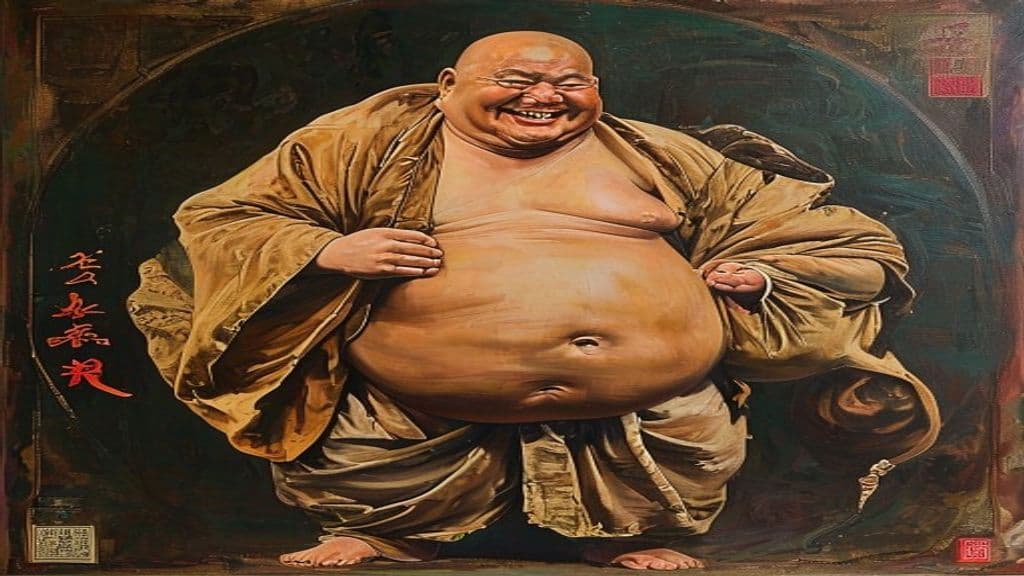
Budai is the nickname of the historical Chinese monk Qieci (契此), a jovial, sack-carrying mendicant whose persona was incorporated into Chan (Zen) Buddhist popular practice and often identified with the future Buddha Maitreya. He functions in tradition as a folkloric saint-monk and pedagogical symbol of abundance, contentment, and accessible awakening rather than as an abstract hostile spirit.

Buddha (Siddhartha Gautama)
Minor Spirit

Buddha (Siddhartha Gautama)

Siddhartha Gautama, most commonly called the Buddha, is presented in the provided sources as a historical wandering ascetic and religious teacher of the 6th–5th century BCE who attained nirvana, taught Dharma, and founded the monastic community (sangha) that became Buddhism.

Buddhas of the Ten Directions (Shífāng Fó)
Ancient

Buddhas of the Ten Directions (Shífāng Fó)

A doctrinal and devotional designation for the manifold buddhas present throughout the Buddhist cosmological field (the 'ten directions'), invoked as fully awakened presences and used as objects of contemplation and repentance in devotional practice.

Budeia
Lesser

Budeia

Budeia is a lexical/onomastic term attested in two distinct registers: (1) an ancient Greek mytho-genealogical figure and an epithet of Athena meaning 'oxen-yoker', and (2) a modern Norwegian occupational noun (budeia) denoting the woman who tends the summer farm dairy. The term consistently occupies an agricultural/labor semantic field in both traditions rather than functioning as a singular supernatural entity.

Budha
Lesser

Budha

Budha (Sanskrit: बुध) is the personification of the planet Mercury in Indian astronomical and astrological tradition. He functions both as the observed planetary body whose motions are recorded in classical Sanskrit astronomical texts and as a navagraha deity associated with intelligence, memory, and the weekday Budhavara (Wednesday).

Budini
Lesser

Budini

The Budini (Ancient Greek Βουδῖνοι) are recorded in Graeco-Roman ethnographic sources as a human tribal people of the forest‑steppe north of the Black Sea, associated with the Vorskla river valley and the multiethnic city of Gelonus in the first millennium BC. Classical accounts portray them as a hunting-dependent, linguistically distinct group noted for red hair and blue eyes; some archaeological interpretations tentatively link them to anomalous mortuary deposits.

Budli (Buðli)
Minor Spirit

Budli (Buðli)

Budli (Old Norse Buðli) is a legendary king attested in Norse saga and ballad material. He appears as a mortal royal figure, chiefly known as the father of Brynhild/Brynhildr in the Volsung-related tradition and in later Scandinavian ballads and name-lists.

Buer
Greater

Buer

Buer is a named spirit recorded in Renaissance grimoire tradition (notably the 16th-century Pseudomonarchia Daemonum) described there as a Great President of Hell who commands fifty legions of demons. Modern occult, gaming, and fan sources have elaborated visual and ritual details not attested in the supplied historical extracts.

Bug-Eyed Bandit
Lesser

Bug-Eyed Bandit

A nom-de-crime used by two DC Comics supervillains and later media adaptations for insect-themed criminal inventors who employ robotic or biologically inspired insect devices to commit theft, extortion, and assaults on technology-rich targets. The identity has appeared as Bertram Larvan (original comics), an unnamed son (later comics), and as a female reinterpretation Brie Larvan in Arrowverse television.

Bug-eyed monster (BEM)
Lesser

Bug-eyed monster (BEM)

A stock figure and visual trope of early- to mid-20th-century speculative fiction and related fan cultures, characterised by oversized, bulging or compound eyes and used as a conventionalised nonhuman antagonist signalling sexualized danger, abduction or general menace.

Buga
Ancient

Buga

Buga (BUGA) is identified in the consulted sources as an Evenki (Evenk) sky or heaven god, rendered in brief tertiary references as the Evenki 'god of the heaven' and labelled by one popular summary as the 'Evenki Supreme God.' Available documentation in the provided set is fragmentary and supplies no detailed myths, rituals, or iconography for Buga.

Bugbear
Minor Spirit

Bugbear

A folkloric scare-figure historically invoked to frighten disobedient children, classed among boogeyman-type beings. Medieval descriptions in English sources portray it as a creepy, bear-like lurker in woods; modern popular culture and gaming have reimagined it as a large goblinoid monster.