Entity Index

A record of the unseen, drawn from world folklore.

7631 entities · page 37 of 128

Błędnica
Lesser

Błędnica

A Slavic forest demoness who misleads travelers, abandoning them deep in the woods to die of exposure, starvation, or be taken by wild animals. She is typically depicted as a young, attractive woman and is countered in tradition by strong spells or by making sacrifices at home or during the hunt.

Bǫðvarr Bjarki
Greater

Bǫðvarr Bjarki

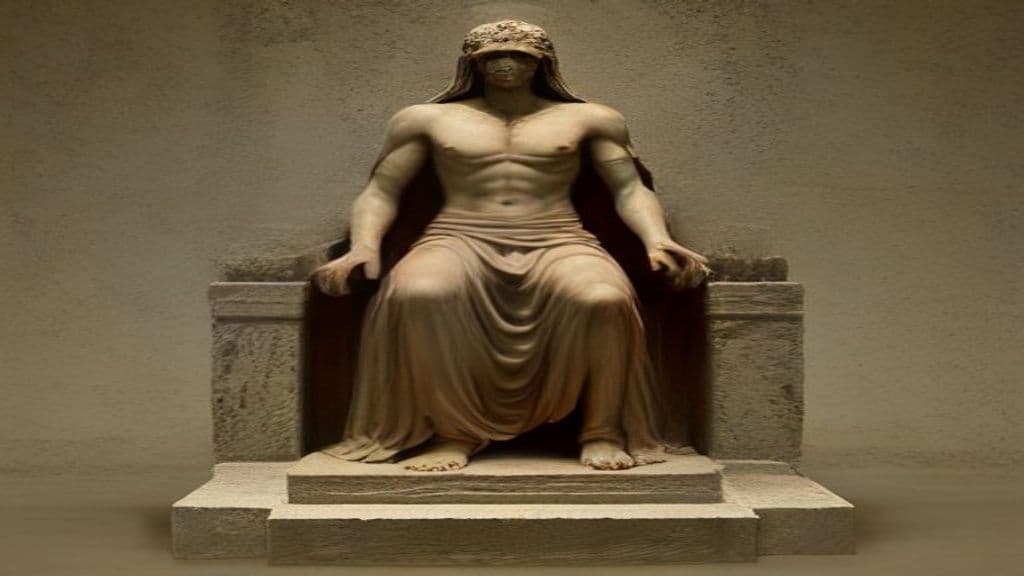
Bǫðvarr Bjarki is a legendary Scandinavian heroic figure associated with King Hrólf Kraki. A great warrior of human birth who bears or manifests an independent ursine spirit (hugr/hamr) that fights as a monstrous bear on his behalf, he appears in the Hrólfs saga kraka tradition and related medieval accounts.

Caanthus
Lesser

Caanthus

Caanthus (Ancient Greek: Κάανθος) is a figure of Greek myth and Theban local cultic tradition, described as a son of Oceanus and Tethys who was sent to recover his sister Melia from Apollo, burned Apollo's sanctuary when he failed, and was slain by Apollo. His tomb was pointed out near the Ismenion at Thebes and he functions in sources as both a genealogical offspring of the Titan/Oceanic generation and as a local heroic/cultic tomb-figure.

Caballucos del Diablu
Lesser

Caballucos del Diablu

In Cantabrian tradition the Caballucos del Diablu are supernatural horses—described as the damned souls of sinners—that are said to appear on the night of St John (June 23). They form part of a regional bestiary of fantastic beings and are linked to Christian notions of sin, punishment, and the annual bonfire rites.

Cabeiri
Ancient

Cabeiri

The Cabeiri (Ancient Greek: Κάβειροι) are a group of enigmatic chthonic divinities in ancient Greek religion, associated with subterranean/forge fire, smithing, and mystery-cult initiation. Their cults were locally rooted (notably at Lemnos, Samothrace, and Thebes), secretive, and variable in number, sex, and depiction across places and periods.

Cabeiro
Lesser

Cabeiro

Cabeiro (also spelled Kabeiro) is a figure in Greek mythology identified as a daughter of the shape‑shifting sea‑god Proteus and, by union with the forge‑god Hephaestus, the mother of the groups known as the Cabeiri and the Cabeirian nymphs. She appears in genealogical accounts linking marine and smithing divine lineages.

Caca
Lesser

Caca

Caca is an ancient Roman female deity associated with the sacred hearth, attested in late sources as possessing a sacellum (shrine) in Rome where sacrifices were made through the agency of the Vestal priesthood. Later tradition and modern summaries report that her cult was succeeded or replaced by Vesta, and some secondary accounts link her mythically to Cacus.

Cacciaguida degli Elisei
Minor Spirit

Cacciaguida degli Elisei

A historically attested medieval Florentine ancestor whom Dante depicts in the Paradiso (Cantos XV–XVII) as a beatified soul in the Heaven of Mars; he functions as a paternal interlocutor who confirms Dante's lineage and imparts moral counsel and prophetic admonitions.

Cacodemon
Lesser

Cacodemon

A term originating in Ancient Greek (κακοδαίμων, kakodaimōn) denoting an "evil spirit" — the morally malign subset of daimōn — later reused in literature, psychiatry (cacodemonia), occult fragments, and popular culture where it appears as a videogame monster. Sources present the cacodemon both as a moralized spirit-type in classical-language summaries and as various modern imaginative creatures rather than a single fixed biological species.

Cactus Cat
Lesser

Cactus Cat

A legendary 'fearsome critter' of American Southwestern frontier folklore: a bobcat-like feline covered in thorny spines, said to slash cacti to drink their fermented juices. It appears in tall-tale storytelling among miners, cowboys, and regional compendia rather than in documented ritual or indigenous cosmologies.

Cacus
Greater

Cacus

Cacus is a monstrous, fire‑breathing giant of Roman myth who lived in a cave on the site of the future Rome (Aventine Hill/Forum Boarium). He stole cattle, preyed on humans, and was slain by the hero Heracles/Hercules; his death is etiologically linked to the founding of a local altar (the Ara Maxima) and to annual rites to Hercules in that district.

Cadejo
Lesser

Cadejo

A dog‑shaped nocturnal spirit from Central American and adjacent Mexican popular belief, the cadejo appears on lonely roads as a protective or dangerous companion. Rooted in Mesoamerican ideas of animal companions and psychopomps, modern accounts present white (benevolent) and black (malevolent) variants with regionally variable features.

Cadmus
Greater

Cadmus

Cadmus is a legendary Phoenician prince and culture-hero in Greek myth, credited with founding Thebes, slaying a local dragon/guardian, marrying Harmonia, and—by some ancient sources—bringing a Phoenician script to Greece.

Cadoc
Ancient

Cadoc

Cadoc (Medieval Latin: Cadocus; Welsh: Cadog or Catwg) is represented in medieval Welsh sources as a late 5th–6th century Christian saint, monastic founder and teacher centered on Llancarfan. His Vita records portents at his birth, miraculous signs (a holy well, a vanishing boar) and numerous foundations and dedications across Wales, Cornwall, Brittany and Scotland; his life-functions in the sources are hagiographical: miracle-worker, educator and local patron invoked for cures in some Breton sites.

Cador
Lesser

Cador

Cador (Latin Cadorius; early forms Cado, Cadwy) is a legendary aristocratic figure of the Arthurian and early British pseudo‑historical tradition, portrayed in medieval sources as a duke/earl/king and a military commander allied with King Arthur. His historicity is uncertain and debated by scholars; details derive from Geoffrey of Monmouth, later medieval poets (Layamon, Mannyng) and later genealogical interpretations.

Caeculus
Lesser

Caeculus

Caeculus is a Roman legendary founder figure, venerated as the eponymous founder of Praeneste (modern Palestrina) and described in tradition as a son of Vulcan. His birth story links domestic fire and the hearth to civic origins; he is depicted as surviving exposure, founding a community, and exhibiting unusual relations to fire.

Caelia
Minor Spirit

Caelia

Caelia is a literary name used by early modern and later authors for two distinct female figures: a fairy-queen in Richard Johnson's romance Tom a Lincoln who rules an island of women, and an allegorical personification of a heavenly, maternal spirit in Edmund Spenser's The Faerie Queene who rules the House of Holiness and aids the Redcrosse Knight. The name also appears in early modern song broadsides as a beloved figure and exists independently as a Roman gens name.

Caelius Vibenna
Lesser

Caelius Vibenna

Caelius Vibenna (Etruscan Caile Vipina) is presented in the supplied tradition as an Etruscan noble and legendary leader associated with a circle of companions; he appears in Etruscan tomb painting (notably the François Tomb at Vulci) and in later Roman antiquarian tradition as an ancestral or eponymous figure tied to the Caelian Hill of Rome. The corpus treats him as a human aristocratic/heroic figure rather than a supernatural being.

Caelus
Primordial

Caelus

Caelus is the Roman personification and divine hypostasis of the sky (Latin caelum), treated in literature and art as a primordial heavenly principle whose generative ‘‘semina rerum’’ contribute to the ordering and origin of the world. He appears in Roman theological genealogies, Augustan and Imperial iconography, Etruscan-augural templum schema, and in syncretic contexts such as Mithraic dedications.

Caeneus
Greater

Caeneus

Caeneus is a heroic Lapith of Thessaly in Greek myth, originally born Caenis (female) and transformed by Poseidon into an invulnerable man. Celebrated among the generation of pre-classical heroes, Caeneus is famed for martial prowess and for his death during the Centauromachy, when Centaurs battered him into the earth.

Caerus (Kairos)
Minor Spirit

Caerus (Kairos)

In ancient Greek religion and thought, Caerus (Greek: Καιρός, Kairos) is the personified divinity of the opportune or fitting moment. Depicted as a youthful, swift figure who can be seized by the forelock, Caerus functions as a concrete embodiment and didactic reminder that timely action secures advantage while delay forfeits it.

Cagnazzo
Lesser

Cagnazzo

Cagnazzo is a named member of Dante Alighieri's Malebranche, the infernal squad of demons encountered in Cantos XXI–XXIII of the Inferno. His name (Italian for "nasty dog") and Dante's single verbal reference to a "muzzle" suggest canine implications in the poem, while modern media later reuse the name for various antagonists and guardians.

Caiaphas (Joseph ben Caiaphas)
Lesser

Caiaphas (Joseph ben Caiaphas)

Caiaphas (Joseph ben Caiaphas) is attested in New Testament and later Jewish sources as the Jewish High Priest in Jerusalem in the early first century CE. He functions in the Gospel narratives and Acts as a senior temple official and a leading member of the council of chief priests who weigh political and cultic interests and who are portrayed as instrumental in the arrest and trial of Jesus.

Caicus (Kaikos)
Lesser

Caicus (Kaikos)

Caicus (Kaikos, Kaïkos) is the ancient name of a river in western Anatolia (modern Bakırçay) and the river's personification as a local potamos (river‑god) in Greek mythic geography. Surviving references treat Caicus primarily as a geographic feature important to navigation, settlement, and local legend, and secondarily as the named divine identity attached to that river.

Caiera
Minor Spirit

Caiera

Caiera is identified in the provided sources as a fictional character from Marvel Comics, associated with the Planet Hulk storyline. The available materials do not provide folkloric attributes, rituals, or traditional beliefs about her.

Caieta
Minor Spirit

Caieta

Caieta is a named wet-nurse in Roman mytho-historical tradition who is commemorated as the eponym of Caietae Portus (modern Gaeta). She appears in the literary and commentarial tradition connected to the Aeneas cycle and is remembered primarily through a funerary epitaph and the toponym derived from her grave.

Cailleach
Ancient

Cailleach

A Gaelic 'veiled old woman' figure who personifies winter and its elemental forces; credited in tradition with shaping the landscape (mountains, hills, valleys) and with controlling storms and seasonal turnover. Treated both as a singular mythic sovereign (e.g., the Hag of Beara / Beira) and as a type (plural cailleachan or 'storm hags') in regional lore across Ireland, Scotland and the Isle of Man.

Caim
Greater

Caim

Caim is a named infernal intelligence attested in modern compilations of Western grimoire-derived materials. In secondary occult summaries he is listed among Goetic/solomonic demons, variably called Caim, Camio, or Caym, and is described as a ranked officer associated with imparting knowledge about animals and nature.

Cain (Jewish Tradition)
Human

Cain (Jewish Tradition)

Biblical figure and symbol of sin and violence, human being with no supernatural abilities. (Note: 1. Power tier: Change to "Human" is correct. 2. Abilities: Specify that the abilities mentioned are a result of Cain's actions and decisions, not supernatural powers. 3. Weaknesses: Mention God's curs)

Cain and Abel
Lesser

Cain and Abel

Cain and Abel are the first two sons of Adam and Eve in the Hebrew Bible / Old Testament. The Genesis narrative presents them as the initial exemplars of human occupation (farmer vs. shepherd), sacrificial practice, and the first recorded instance of fratricide, followed by divine judgment and protection placed upon Cain.

Caipora
Lesser

Caipora

A Tupi-derived forest-dwelling being in Brazilian folklore depicted as a guardian or controller of wild animals and game; regionally variable in form and temperament, it misleads or punishes hunters who transgress forest norms and may be placated with offerings such as tobacco or alcohol.

Cairbre Lifechair
Lesser

Cairbre Lifechair

Cairbre Lifechair ('lover of the Liffey') is a figure of medieval Irish legend and historical tradition presented as a High King of Ireland. He appears in saga and chronicle material (notably Cath Gabhra and accounts of the Expulsion of the Déisi) as a political and military actor who exacts tribute, leads a coalition army against the fianna, and dies in single combat during the Battle of Gabhra.

Cairbre Nia Fer
Lesser

Cairbre Nia Fer

A legendary Irish king of Tara associated with the Laigin (Leinster) kin‑group in medieval saga and pseudo‑historical texts. In Ulster Cycle narratives he fights Conchobar and is slain by the hero Cúchulainn at the Battle of Rosnaree (Cath Ruis na Ríg); medieval compilations place him variably in different synchronistic chronologies.

Calabash Monster
Lesser

Calabash Monster

The term "Calabash Monster" is not attested in the provided sources as a coherent traditional folkloric entity. The materials instead show modern uses of the word "Calabash" in commercial, place‑name, and creative contexts (e.g., Calabash, North Carolina seafood style, restaurant names, and a blog character named Calabash). No mythic origin, standardized description, powers, or ritual responses for a folkloric "Calabash Monster" are documented in the supplied sources.

Calafia
Lesser

Calafia

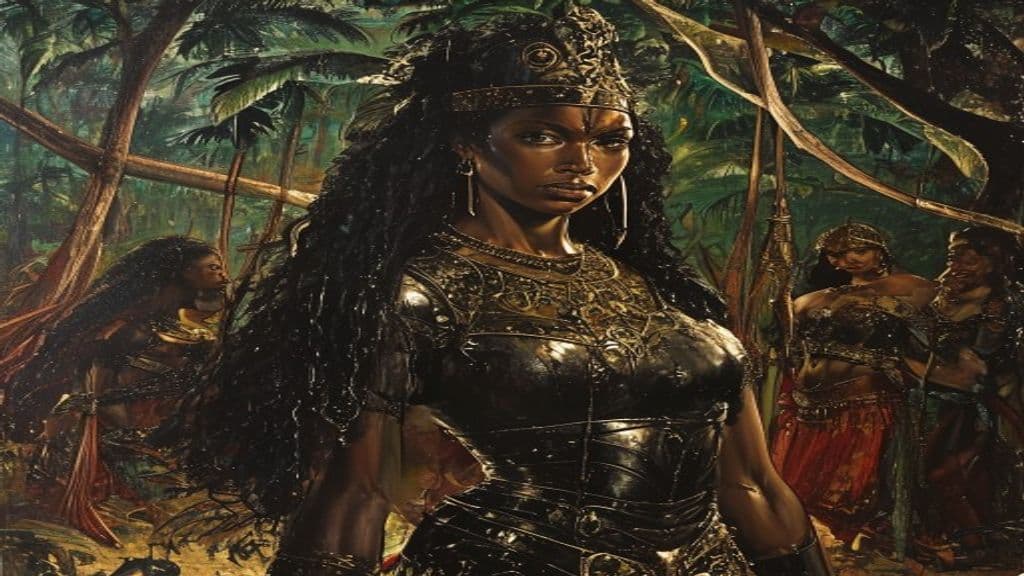
Calafia (also Califia) is a fictional queen introduced in Garci Rodríguez de Montalvo’s early 16th‑century chivalric romance Las sergas de Esplandián (c. 1510). In the narrative she is ruler of a mythical Island of California, portrayed as a regal Black woman who commands women warriors and griffins and is later captured, converted to Christianity, and integrated into the chivalric plot.

Calcabrina
Minor Spirit

Calcabrina

Calcabrina is one of the Malebranche — a named demon/jailer appearing in Dante Alighieri's Inferno who helps guard the fifth bolgia of the eighth circle of Hell. The name has been reused in modern fiction and games where adaptations portray Calcabrina as a guardian or combatant (gargoyle, construct, or voidsent), distinct from Dante's literary role.

Calchas
Lesser

Calchas

Calchas is a human Argive seer (mantis, oionopólos) of the Trojan War tradition, a member of a hereditary mantic family who interprets omens and entrails on behalf of Greek commanders and declares the will of Apollo to guide ritual and military decisions.

Calchus
Minor Spirit

Calchus

Calchus (Ancient Greek: Κάλχος, Kalkhos) is a mortal king of the Daunians in a later Greek mythic episode preserved by Parthenius of Nicaea. He persistently courted the sorceress-goddess Circe at her island Aeaea, was transformed into a pig by her enchantments, and later restored after his people intervened.

Calcu (Kalku)
Lesser

Calcu (Kalku)

In Mapuche tradition, the calcu (also spelled kalku) is a sorcerer or witch who works with black magic and negative powers, presented in sources as the oppositional counterpart to the culturally sanctioned, benevolent shaman (machi).

Calendar Man
Lesser

Calendar Man

Calendar Man (Julian Gregory Day) is a human, themed criminal persona in DC Comics who plans crimes and adopts costumes tied to dates, holidays, weekdays and seasons. A recurring antagonist in Batman stories, he has been portrayed across continuities as a Silver Age gimmick-villain, a darker Arkham inmate and a Hannibal Lecter–like informant in modern noir tales.

Calesius
Minor Spirit

Calesius

Calesius (Greek Καλήσιος) is a minor human figure in the Homeric epic: the attendant and charioteer of Axylus who is killed alongside his master on the Trojan battlefield in Book VI of the Iliad. He appears as a named mortal illustrative of loyalty and the human cost of war, with no supernatural attributes in the cited sources.

Caletor
Lesser

Caletor

Caletor (Ancient Greek: Καλήτωρ) is a personal name borne by at least two mortal figures in the Trojan War cycle: a Trojan defender, son of Clytius, who attempted to burn an Achaean ship and was slain by Ajax; and a separate Caletor attested as the father of the Achaean warrior Aphareus. He is treated in the sources as a human participant in epic narrative and genealogy.

Caliadne
Lesser

Caliadne

Caliadne (Ancient Greek: Καλιάδνη) is attested in Greek mythographic tradition as a naiad of the River Nile who is named as a wife of King Aegyptus and the mother of twelve of his sons who married (and were murdered by) the Danaids. She appears in genealogical lists rather than as an active cultic or narrative agent.

Caligo
Minor Spirit

Caligo

Caligo is a taxonomic genus of large Neotropical butterflies commonly called owl butterflies, noted for conspicuous eyespot markings. The name appears in modern artistic/media contexts (e.g., music tracks, video titles) but the supplied sources do not present Caligo as a supernatural being or part of any traditional mythological cosmology.

Callianassa
Lesser

Callianassa

Callianassa (Ancient Greek Καλλιάνασσα, Kallianassa, 'lovely/beautiful queen') is attested as one of the approximately fifty Nereids — sea‑nymph daughters of Nereus and Doris — in ancient Greek mythic catalogues. She is named in lists and reference works but has no independent myths or distinct cultic attributes recorded in the supplied sources.

Callianeira
Lesser

Callianeira

Callianeira (Ancient Greek: Καλλιάνειρα) is one of the fifty Nereids in Greek mythology, the sea‑nymph daughters of the sea‑god Nereus and the Oceanid Doris. She is named among the Nereids who appear to Thetis in epic tradition and otherwise functions as an individual member of the collective group of marine nymphs.

Callidice
Lesser

Callidice

Callidice (Ancient Greek: Καλλιδίκη, Kallidíkē, lit. 'beautiful justice') is a personal name attested in Ancient Greek literary and mythographic traditions for multiple mortal women — an Eleusinian princess, one of the Danaids in some lists, and a Thesprotian queen who, in Telegony-related accounts, becomes a wife of Odysseus and mother of Polypoetes. She functions as a genealogical and narrative figure within heroic-age stories rather than a supernatural being.

Calliope
Ancient

Calliope

Calliope (Greek Καλλιόπη) is one of the Muses in ancient Greek myth, traditionally presiding over eloquence and epic poetry. She is portrayed as an immortal divine inspirer and instructor of poetic composition, called 'Chief of all Muses' in classical sources and invoked by later poets for epic authority.

Calliphaea
Lesser

Calliphaea

Calliphaea (Ancient Greek Καλλιφάεια, Kalliphaeia) is a naiad of Greek tradition, one of the Ionides sisterhood associated with a healing spring on the River Cytherus (Kytheros) in Elis. Her spring waters were locally venerated for their curative properties for diseases and aches and pains.

Callirhoe
Minor Spirit

Callirhoe

Callirhoe (also Callirrhoe, Callirhoé) is a name attested across Greek myth, classical literature, toponymy, and botanical taxonomy. The provided sources do not present Callirhoe as a single supernatural spirit or consistent cosmological entity; instead the name refers to several mythological characters, an ancient Greek novel and its artistic adaptations, a place with baths near the Dead Sea, and a genus of mallow-family plants used in horticulture and traditional herbal practice.

Callirrhoe (Oceanid)
Lesser

Callirrhoe (Oceanid)

Callirrhoe (Καλλιρρόη, Kallirrhoê) is an Oceanid — a daughter of the Titans Oceanus and Tethys — whose name literally means "beautiful flow" or "beautiful stream." She functions in Greek myth as a water-nymph (naiad/Oceanid) and appears in genealogical contexts, notably as the mother of Chione by the river-god Nilus in some traditions.

Calliste (Kalliste / Callistis)
Lesser

Calliste (Kalliste / Callistis)

Calliste (Ancient Greek Kalliste/Callistis, 'the most beautiful') is a local Aegean sea-nymph figure tied to the island called Kalliste (modern Santorini). In surviving summaries she appears as a youthful woman who was given to the Argonaut Euphemos as a clod of earth which transformed into a woman; she is also attested as a surname/epithet (Calliste/Callistis) applied to other goddesses such as Artemis in cultic contexts.

Callisto
Lesser

Callisto

Callisto is a figure from Greek mythology described as an Arcadian mountain nymph (Oread) whose life is altered by the Olympian gods: she is seduced by Zeus, becomes mother of Arcas, is transformed into a bear (in many accounts by Hera's jealousy), and is ultimately placed among the stars as a constellation. She functions as a nature-spirit, an ancestral/etiological figure for Arcadia, and a mythic explanation for a bear-shaped constellation.

Callithyia
Minor Spirit

Callithyia

Callithyia (Ancient Greek: Καλλίθυια), also called Callithoe, Callithea, or Io, is an Argive princess in Greek mytho-historical tradition described as the first priestess of Hera at Argos. She functions as a foundational, legitimating figure for the local Hera-cult rather than as a supernatural being.

Calogrenant
Lesser

Calogrenant

Calogrenant is a human knight of the Round Table from medieval Arthurian romance. First attested in Chrétien de Troyes' Yvain as the teller of the episode of the magic spring in the forest of Brocéliande, he appears in various Old French, German, Welsh, and Middle English cycles with differing fates (defeat by Esclados in the fountain episode; death on the Grail Quest in Vulgate and Malory; a gender-transformation episode in Claris et Laris).

Calon Arang
Greater

Calon Arang

Calon Arang is a witch figure in Javanese and Balinese folklore, traditionally portrayed as a master of black magic whose cemetery ceremony—including the sacrifice of a young girl to the goddess Durga—brings flood and an incurable plague to the village of Girah. In the tale a royal ritual specialist (Mpu Bharadah) and his disciple (Mpu Bahula) neutralize her by recovering her magic scroll and confronting her in ritual contest.

Calu
Ancient

Calu

Calu is an Etruscan theonym/epithet denoting the chthonic, dark aspect of the fire-underworld god Śuri; the name was also used as a synonym for the underworld itself. Iconography and cultic language associate Calu with darkness and lupine (wolf) attributes and link the epithet to central-Italian wolf-ritual phenomena.

Calybe
Minor Spirit

Calybe

Calybe (Ancient Greek: Καλυβη, Kalybē) is a name applied to minor female personages in classical literature: a Trojan nymph named as a consort of King Laomedon and mother of Bucolion, a follower in Dionysus’ retinue in Nonnus’ Dionysiaca, and an attested occurrence as an "aged priestess of Juno" in a Vergilian index entry. The attestations are brief and nominative; no sustained myth or ritual tradition centred on Calybe survives in the provided sources.

Calyce
Lesser

Calyce

Calyce is a personal name borne by several minor women in Greek mythic genealogies and nymph-lists. Bearers of the name appear as a Nysiad who nursed the young Dionysus and as various mortal princesses or matrons (e.g., a daughter of Aeolus, a wife of Aethlius, and an occasional mother of Endymion or of Cycnus) across competing local traditions.

Calydon (son of Aetolus)
Lesser

Calydon (son of Aetolus)

Calydon (Ancient Greek: Καλυδών, Kalydōn) is an eponymous mythic figure recorded in Greek tradition as the son of Aetolus and the namesake of the city and plain called Calydon in Aetolia. Sources treat him as a genealogical/foundational ancestor within local royal genealogies rather than as a deity or active supernatural agent.