Entity Index

A record of the unseen, drawn from world folklore.

7631 entities · page 36 of 128

Buggane
Greater

Buggane

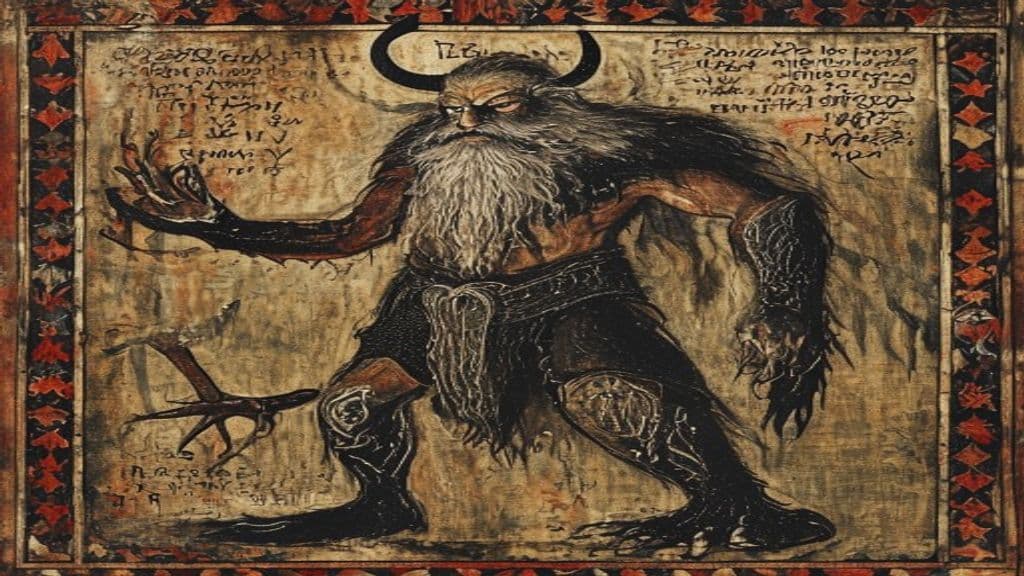
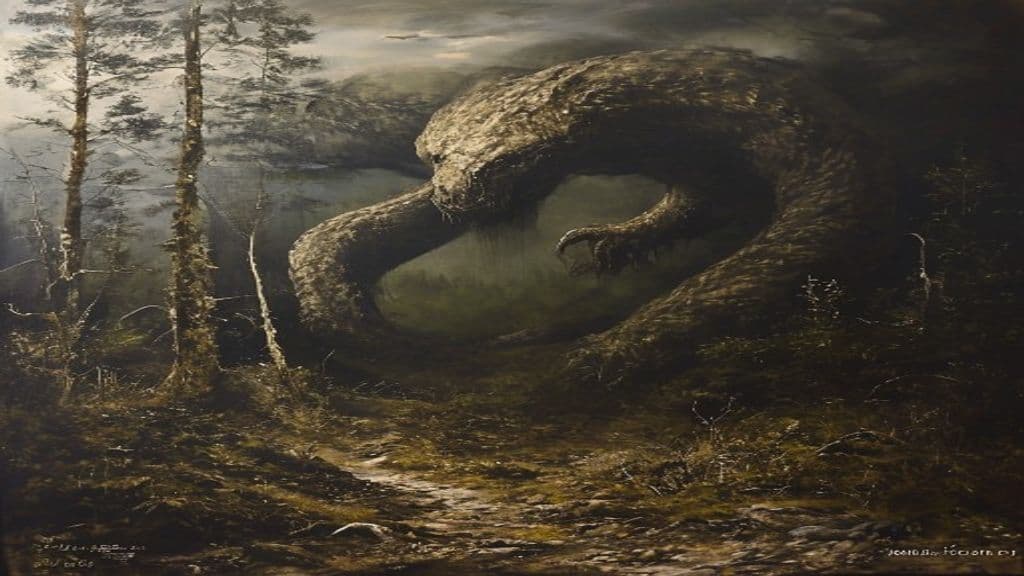
A large, malevolent supernatural being from Isle of Man folklore, described in tales as ogre- or giant-like and sometimes a shapeshifter. Buggane stories depict it damaging buildings and livestock, attacking people, and appearing in coastal and farm contexts; some tales limit it by sacred or liminal boundaries such as water and hallowed ground.
Bugul Noz
Lesser

Bugul Noz

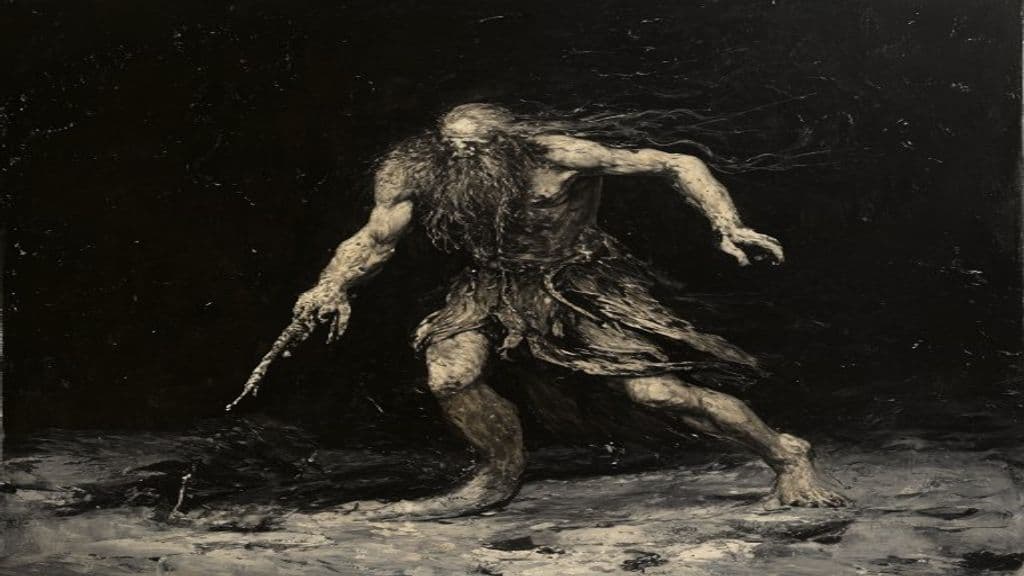
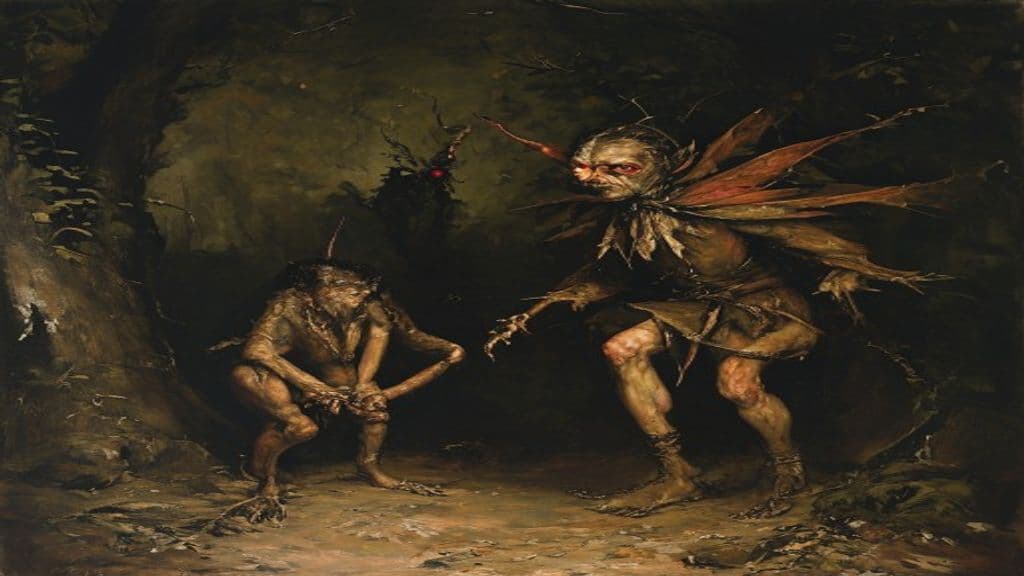
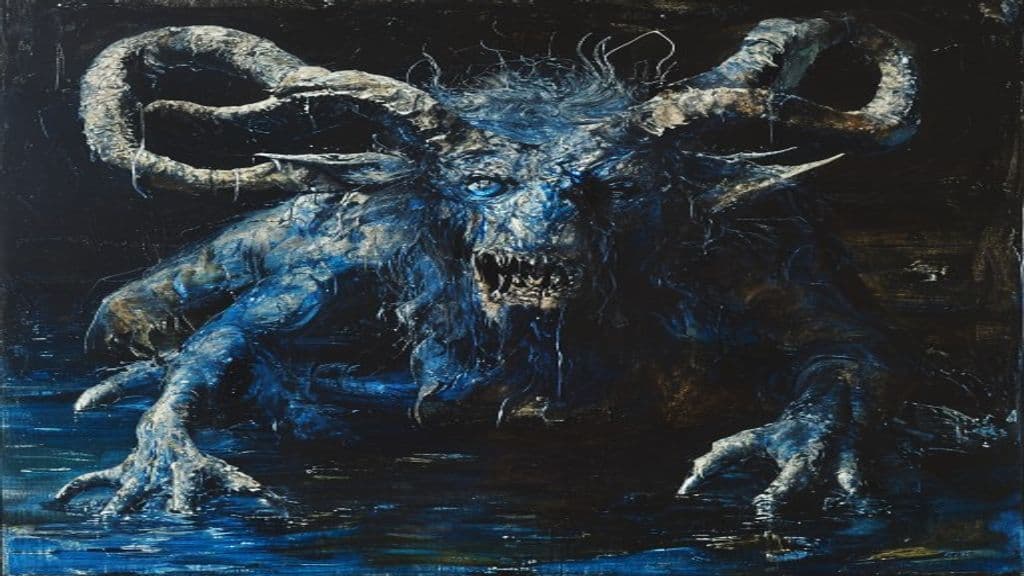
A nocturnal spirit of Breton folklore (particularly Morbihan) whose name is glossed as 'Night Shepherd' or 'child of the night.' Accounts vary: some present the Bugul Noz as a small goblin-like nocturnal being that menaces shepherds and people who linger outdoors after dark; other informants describe a tall, foreboding twilight figure. It functions in local culture as a cautionary night-being that enforces avoidance of unsafe nighttime activity.

Bukavac
Lesser

Bukavac

Bukavac is a demonic mythical creature from Slavic (Serbian) popular belief, attested chiefly in Syrmia. Described as an aquatic, nocturnal menace, it was said to emerge from lakes and pools to make loud noises and to jump onto people and animals, strangling them.

Bukki
Lesser

Bukki

Bukki (Hebrew: בֻּקִּי, Buqqī) is attested in biblical and related traditions as a personal name borne by at least two distinct human figures: a Danite prince named in Numbers 34:22 and a member of the Aaronid priestly genealogy recorded in 1 Chronicles (and echoed in Ezra-related lists). The name appears in variant forms across textual traditions (e.g., Boccas, Borith) and in modern secular usages unrelated to the ancient individuals.

Bulgae (Korean Fire Dog)
Primordial

Bulgae (Korean Fire Dog)

A mythical Korean fire dog said to cause eclipses by biting the Sun and Moon. (Note: * The power tier is incorrect; according to the source, Bulgae cause eclipses by biting both the Sun and Moon, but there's no indication that they're on a primordial level. It should be at least Ancie)

Bulgasari (iron-eating monster)
Lesser

Bulgasari (iron-eating monster)

Bulgasari (불가사리, also romanized Bulgasali) is a kaiju-style iron-eating monster originating in mid-20th-century Korean cinema. The creature is best known from the lost 1962 South Korean film Bulgasari, in which a martial artist (Nam Hyeong) is resurrected as the iron-eating monster to enact revenge on his murderers; a distinct later North Korean film titled Pulgasari (1985) is related in film-history discussions but is a separate production.

Bulis
Lesser

Bulis

No folkloric supernatural entity named 'Bulis' is attested in the provided sources. The string 'Bulis' appears in the materials as (a) the Latinized genus name for a jewel beetle species (Bulis bivittata) and (b) as a Hungarian adjectival form 'bulis' (from buli 'party') in an archive excerpt; there is no evidence in the supplied documents of a mythic being by this name.

Bull (mythology)
Greater

Bull (mythology)

A recurring sacred animal in multiple mythologies, the bull often functions as a divine sign, an emblem of kingship and fertility, and a bridge between celestial and terrestrial order. In the Cretan tradition a bull appears from the sea to Minos as a sign tied to his claim to rule and an obligation of sacrifice; in broader comparative accounts bulls are associated with major deities and celestial symbolism.

Bull Demon King
Greater

Bull Demon King

A powerful literary spirit-king from the 16th-century Chinese novel Journey to the West; a sentient bull-form ruler who commands a grotto-domain, maintains a household (including consorts and a son), and fights both mortal and celestial opponents within the novel’s cosmology.

Bull of Heaven
Greater

Bull of Heaven

A colossal mythic bull in ancient Mesopotamian literature, released by the goddess Inanna/Ishtar as an instrument of divine wrath and identified with the constellation Taurus. It appears in epic narratives (notably the Epic of Gilgamesh) as a world‑ravaging beast whose slaying carries grave divine consequences.

Bullaun
Minor Spirit

Bullaun

A natural feature in Celtic tradition, often imbued with spiritual significance. (Note: - Power tier should be Primordial=cosmic, given its association with natural features and spiritual significance. - Origin story missing entirely; add from source material (if available) or consult ex)

Bulleteer
Lesser

Bulleteer

Bulleteer is a fictional human-based superheroine from DC Comics (debut: Seven Soldiers: The Bulleteer #1, 2005). Alix (civilian name Alix Harrower; also appears as Rose Mendes in the Injustice continuity) is transformed when an experimental 'smartskin' bonds to her, rendering her tissues indestructibly hard and granting superhuman strength; she subsequently adopts the costumed identity Bulleteer and operates as a mid-tier hero within shared-universe team narratives.

Bulletman and Bulletgirl
Lesser

Bulletman and Bulletgirl

Golden Age American comic-book heroes created for Fawcett Comics: Jim Barr (Bulletman), a ballistics expert/inventor who developed a chemical "crime cure" and a bullet-shaped Gravity Regulator Helmet, and Susan Kent (Bulletgirl), who received a second helmet and the same enhancements. Human inventors/experimenters rather than supernatural beings, they act as engineered, helmet-enabled crimefighters in wartime-era and later shared-universe stories.

Bunbuku Chagama
Lesser

Bunbuku Chagama

A Japanese folktale figure—typically a tanuki (raccoon dog)—that uses shapeshifting to become an ordinary tea-kettle (chagama) or a hybrid half-animal/half-kettle; in the tale it performs acrobatics for a human owner and brings them good fortune. The story exists both as a mukashi-banashi fairy tale and as a local engi tied to Morin-ji temple in Gunma.

Bune
Greater

Bune

Bune is a ducal spirit in European grimoire tradition, listed in works such as the Lesser Key of Solomon, Pseudomonarchia Daemonum, Dictionnaire Infernal, and the Livre des Esperitz. Described as commanding many legions and able to move the dead, confer wealth, and grant eloquence and wisdom, Bune functions as a summonable operant office within early modern ceremonial magic.

Bunene
Lesser

Bunene

Bunene is an attendant deity (sukkal) of the Mesopotamian sun-god Šamaš (Utu), described as the charioteer who conveyed the sun from the eastern horizon to the western doorway of heaven and as a cultic intercessor included in offerings and temple inventories, especially at Sippar.

Bungisngis
Greater

Bungisngis

The Bungisngis is a one-eyed giant from Philippine folklore, described as humanoid, always laughing, and possessing great strength but easily outwitted. Tales place it in specific Philippine localities and often portray it as a comic yet dangerous antagonist defeated by clever protagonists.

Bunny Man
Lesser

Bunny Man

The Bunny Man is an American urban-legend figure that grew out of two late-1970 criminal incidents in Fairfax County, Virginia (October 19 and October 31, 1970). Reported as a man associated with a rabbit costume who threatened or attacked people with a hatchet/axe, the story expanded through newspapers, school rumor, folkloristic research, and the early internet into dozens of highly variant retellings, some supernaturalized.

Bunyip
Lesser

Bunyip

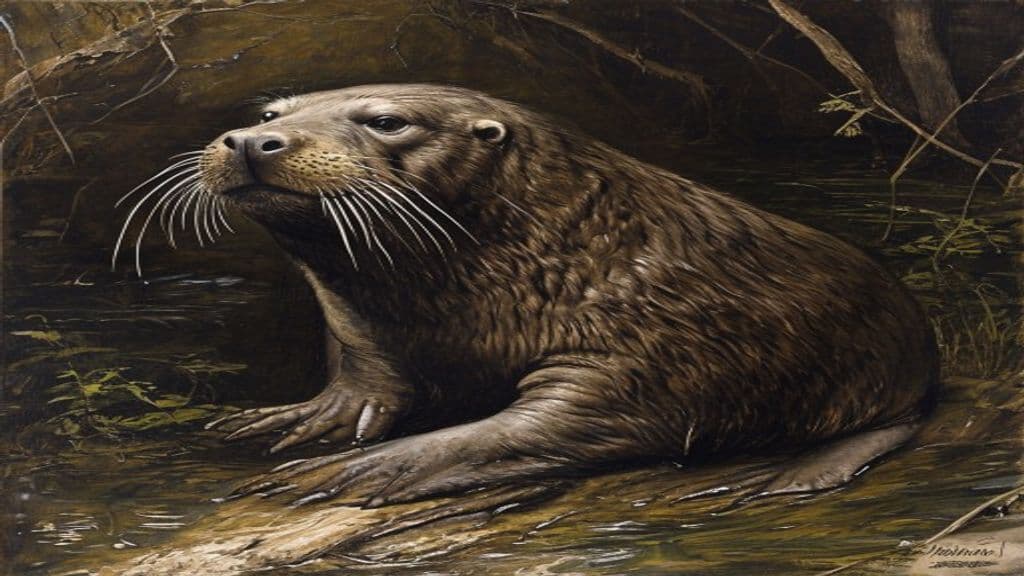
A class of Aboriginal Australian water-being from southeastern Australia associated with swamps, billabongs, creeks, riverbeds and waterholes. Bunyip stories warn people away from dangerous waters and in some traditions enforce resource-use norms and child safety.

Bura-bura
Minor Spirit

Bura-bura

A fragmentary modern-media term rather than a coherent traditional spirit in the supplied sources; the clearest folkloric-like depiction within the provided materials is the fictional burabura chochin — a benign 'wandering lantern' spirit from the video game Final Fantasy XIV. Other occurrences of 'bura'/'burabura' in the sources are mainly Japanese-language titles and modern media that use the lexical sense of 'wandering' rather than describing a single supernatural being.

Burabura Chochin
Minor Spirit

Burabura Chochin

Attested chiefly in Final Fantasy XIV game materials, the Burabura Chochin is presented as a benign 'lantern ghost' or wandering lantern spirit associated with Mount Rokkon; the label 'burabura' evokes wandering or dangling in contemporary Japanese usage. It functions in-game as a summonable minion/mount and as a narrative creature that befriends other wanderers rather than haunting them.

Burha dangoria
Minor Spirit

Burha dangoria

Burha dangoria is sparsely attested in available sources and is catalogued in Wikidata as a type of ghost or spirit associated with the Nagaon district region of Assam, India. Beyond a name and a tentative classification, no substantive descriptions, stories, or practices are provided in the supplied materials.

Burkan / Burkhan
Minor Spirit

Burkan / Burkhan

No folkloric information about a Mongolian mountain or forest spirit called 'Burkan' / 'Burkhan' is present in the supplied sources. The available materials only show unrelated modern or toponymic occurrences of the string 'Burkan' and do not provide ethnographic, mythological, or ritual details.

Burkut
Ancient

Burkut

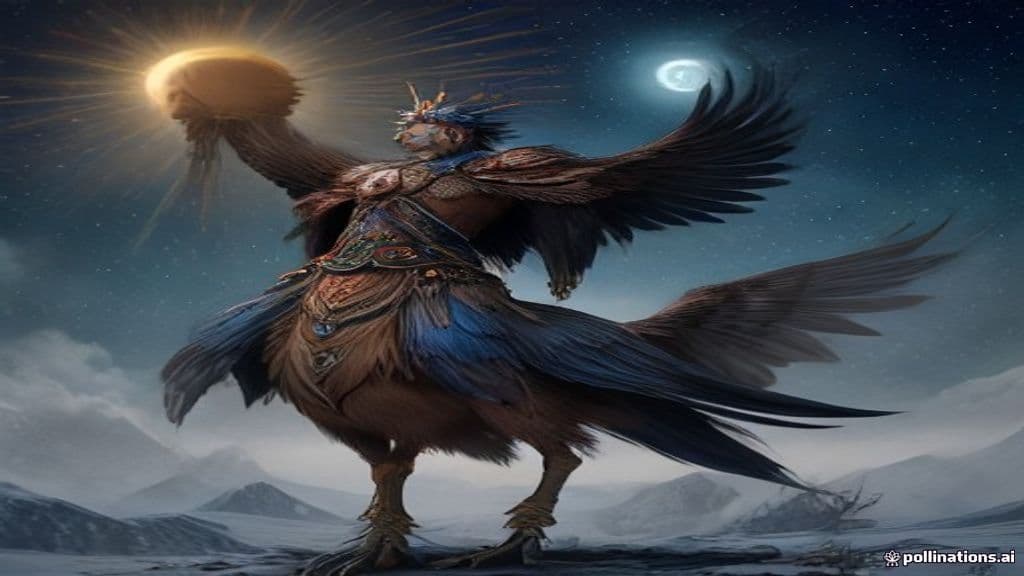
Burkut (also Bürküt, Merküt) is a sacred eagle figure in Turkic mythic cosmology associated with the sun, rulership, and protective authority. Treated as an emblematic or quasi-divine bird rather than a mundane animal, it appears in shamanic rites, world-tree iconography, folk performance, and modern heraldic motifs.

Burning Bush
Lesser

Burning Bush

A theophanic phenomenon in Judaeo‑Christian‑Islamic scriptural tradition in which a bramble (Hebrew seneh) appears aflame yet unconsumed and functions as the locus of divine speech that commissions Moses. Later devotional practice localizes and commemorates the site at Sinai/Horeb, especially at Saint Catherine's Monastery where a living bramble is venerated.

Burut
Minor Spirit

Burut

Burut (also attested as a clan name Burutia in some modern mentions) is documented in the supplied sources not as a supernatural being but as a social/lineage name attested in Central Asian ethnographic records (Kirghiz / Khakassian contexts). The provided corpus contains no evidence identifying Burut or 'Burutia' as an Assamese folk spirit, nor does it record myths, powers, or rituals for such an entity.

Busang
Lesser

Busang

Busang is not attested as a supernatural being in the supplied sources; rather it is a polyvalent proper name found as a toponym (places in Borneo), a lect name (Busang Kayan), a mining prospect label (Busang deposit in the Bre‑X scandal), and as a personal name. No mythological origin, appearance, powers, or ritual practices directed at a supernatural Busang are recorded in the provided material.

Busaw
Lesser

Busaw

A malign corpse‑stealing being that resembles humans by day, lives near burial grounds, and preys on freshly dead corpses—stealing them from coffins, transforming them into pigs, and consuming them. It also attempts to spread its condition by feeding stolen human flesh to neighbors.

Buschgroßmutter
Lesser

Buschgroßmutter

A female wood/forest spirit of German folklore, especially attested in Thuringia, Saxony, German Silesia and parts of Bohemia and Transylvanian Saxon tradition. She is an ancient, ambivalent grandmotherly figure of the underwood who may reward respectful helpers or punish mockery and transgression of forest norms.

Busiris
Lesser

Busiris

Busiris (Greek: Bousiris, Βούσιρις) is a name used in Greek-language myth and geography for several Egyptian towns and for at least two mythic personages: a legendary king of Egypt portrayed in Heracles cycle stories and a mortal son of Aegyptus in genealogical lists. In Greek tradition the king-figure is remembered chiefly for instituting the sacrifice of foreigners and for his confrontation with Heracles.

Buso
Greater

Buso

A capacious Bagobo category for malevolent non-human beings in Mindanao animistic belief; buso are implicated in disease, death, and consumption of flesh and are managed through offerings, avoidance, and local ritual practice. The term covers many named types (tigbanua, mantianak, karokung, etc.) rather than a single mythic personality.

Butes
Greater

Butes

Boutes (Ancient Greek: Βούτης, Boútēs, literally 'herdsman') is a personal name applied to several distinct figures in Greek mythology — mortal princes, Argonauts, warriors, and local cult-heroes — rather than a single supernatural species. Bearers of the name appear across multiple heroic cycles and locales, notably an Athenian priest-hero, an Argonaut rescued by Aphrodite, and a Thracian punished by Dionysus.

Button-Bright
Lesser

Button-Bright

Button-Bright is a fictional boy created by L. Frank Baum who appears as a recurring secondary protagonist in several Oz books. He is portrayed as an absent-minded, wandering child who participates in journeys around the Emerald City and its neighbouring lands rather than as a supernatural being.

Buttons (pantomime)
Lesser

Buttons (pantomime)

Buttons is a stock theatrical character in British and Australian Cinderella pantomimes, typically a male household servant who helps Cinderella, expresses affection for her, and provides comic and emotional engagement with the audience. The role is conventional to stage pantomime practice rather than a supernatural being.

Buxenus
Lesser

Buxenus

Buxenus is an epithet of the Gaulish Mars attested in Gallo-Roman religion from a single inscription found at Velleron in the Vaucluse. The evidence is extremely limited and presents Buxenus as a local/regional name or aspect of the indigenous deity equated with Roman Mars.

Buzi
Lesser

Buzi

Buzi (Hebrew: בּוּזִי, Būzī) is attested in Hebrew sources as the father of the prophet Ezekiel and identified as a priest of Jerusalem (Ezekiel 1:3). The name derives from the Hebrew Buz (בּוּז), which can mean 'despise' or indicate descent from Buz son of Nahor; later traditions sometimes read the name thematically rather than ascribing further biographical detail.

Buí (toponym element)
Minor Spirit

Buí (toponym element)

The supplied sources do not attest a supernatural entity named 'Buí'. The string appears in Irish place-name usage (notably in the toponym 'Bóthar Buí' cited on Wikipedia, referring to places such as Boherbue, County Cork; Draperstown, County Londonderry; and Enfield, County Meath). No folkloric descriptions, abilities, appearances, or rituals for a spirit called Buí are present in the provided material.

Byggvir
Minor Spirit

Byggvir

Byggvir is a minor named attendant of the Vanir god Freyr attested in the Old Norse poem Lokasenna (prose introduction and stanzas 55–56). Scholarly commentary commonly reads him as an agricultural personification linked to barley or to mill-refuse (chaff), though the primary texts give only sparse narrative detail.

Bysen
Lesser

Bysen

Bysen is a legendary gnome-like being from the island of Gotland, Sweden, associated with woods, boundaries, and mischief. Accounts portray Bysen both as a small forest guardian/agent and, in some variants, as a restless deceased person condemned for moving boundary markers.

Byssa
Lesser

Byssa

Byssa (Ancient Greek: Βύσσα, Bússa) is a woman of Meropis on the island of Kos in Greek myth who, according to surviving summaries of a myth preserved in metamorphosis compilations, refused to honor Artemis, Athena, and Hermes and was punished by being transformed into a bird.

Byōbunozoki
Minor Spirit

Byōbunozoki

A Japanese yōkai recorded in Toriyama Sekien's Konjaku Hyakki Shūi, described as a creature that peers at a person from the outside of a folding screen (byōbu), literally a 'folding-screen peeper.' The entry is primarily a literary/visual bestiary motif rather than a detailed folkloric tradition.

Bà Chúa Xứ (Lady of the Realm)
Greater

Bà Chúa Xứ (Lady of the Realm)

Bà Chúa Xứ, also called Chúa Xứ Thánh Mẫu, is a localized tutelary and prosperity goddess in Vietnamese folk religion centered at Vĩnh Tế village at the foot of Sam Mountain, An Giang province. She is worshipped as a protector of business, health, and the Vietnamese border and attracts pilgrimages and a major three-day festival beginning on the 23rd day of the fourth lunar month.

Bà mụ
Primordial

Bà mụ

In Vietnamese mythology, the Bà mụ are twelve deities revered for teaching infants important skills and traits. (Note: - Power tier should be Ancient, not Primordial (deity-level abilities described) - Abilities description supported by source material, but could be expanded upon - Sensory cues are missing; add that B)

Báigǔ Jīng
Greater

Báigǔ Jīng

The White Bone Demon of Journey to the West — a skeletal demoness who shapeshifts into innocent humans three times to attempt to capture and devour the monk Tripitaka.

Bánánach
Lesser

Bánánach

The bánánach are early Irish preternatural battlefield spectres attested in epic narrative. In the Táin Bó Cúalnge they appear among supernatural forces associated with battle-noise and are described as haunting battlefields and contributing to the atmosphere and fear of combat.

Bârmân (بارمان)
Lesser

Bârmân (بارمان)

Bârmân is a Turanian hero and commander in Ferdowsi’s Shahnameh who fights in the Great War of Iran and Turan during the reign of Nowzar. In the epic he kills the Iranian Qobád and is later slain by the Iranian warrior Qaran; he is represented in Safavid illustrated Shahnameh folios as a recognizable martial figure.

Bäckahäst
Lesser

Bäckahäst

A Scandinavian water-horse figure: a horse-shaped water spirit associated with streams, rivers, lochs and other watery edges. Presented in comparative folklore as a member of the wider water-spirit or ‘water-horse’ family that functions as a cautionary figure about the hazards of water and unknown horses at the water’s edge.

Bé Chuille
Greater

Bé Chuille

Bé Chuille is a female member of the Tuatha Dé Danann in Irish myth, attested as a daughter of Flidais and paired with her sister Dianann as a sorceress and a 'she-farmer'. She appears in Lebor Gabála Érenn, the Metrical Dindshenchas, and related medieval compilations, where she enchants natural features in warfare and is later said in the Book of Leinster to have been killed by 'gray demons of air.'

Bélchú
Lesser

Bélchú

Bélchú is a human warrior-lord of Breifne in the Ulster Cycle of early Irish narrative tradition. In the preserved tale he shelters the wounded Ulster hero Conall Cernach, plots his murder, is himself killed when Conall turns the trickery back on him, and as a result becomes part of a revenge episode that exemplifies hospitality, honour, and martial reciprocity in the saga corpus.

Béḃinn (Bé Binn / Béibhinn)
Lesser

Béḃinn (Bé Binn / Béibhinn)

Béḃinn (modern Béibhinn) is an early Irish personal name that also appears in medieval mythological material as a goddess-figure variously associated with childbirth and with the underworld; she is named as sister of the river-goddess Boann in some sources and is linked in others to the Irish Mag Mell or the Welsh Annwn.

Bêlit
Minor Spirit

Bêlit

Bêlit is a fictional Shemite pirate-queen from Robert E. Howard's Hyborian Age, captain of the ship Tigress and romantic partner of Conan in the short story "Queen of the Black Coast" (1934). Presented as a mortal warrior-leader whose life and death intersect with supernatural elements in the tale, she is remembered as an avaricious and charismatic sea-queen in later adaptations and comics.

Bölþorn
Lesser

Bölþorn

Bölþorn (also attested as Bölþor) is a named jötunn in Norse mythic genealogies, recorded as the father of Bestla and thus an ancestor of Odin, Vili, and Vé. He appears only briefly in the extant poetic and prose Eddaic material and functions primarily as a genealogical forebear rather than an active narrative figure.

Bönpo Lu (local mountain spirits)
Lesser

Bönpo Lu (local mountain spirits)

A research label for local mountain-associated spirits situated in Himalayan/Tibetan ritual worlds; the term as presented is not documented in detail in the supplied sources. The available materials place such landscape spirits within a broader Bön and Tibetan Buddhist milieu where mountains and local non-human agents are engaged through offerings and ritual specialists.

Böri Shad
Lesser

Böri Shad

Böri Shad (fl. c. 627) is a historical Turkic princely governor and military commander (shad/ishad) of the Western Turkic Khaganate who operated in the far western North Caucasus and led campaigns into the South Caucasus during the Perso-Turkic conflicts of 627–630. He combined kinship status (son of Bagha Shad; nephew of Tong Yabghu Khagan) with delegated frontier authority and military command, and fled to Central Asia after Tong Yabghu's murder in 630.

Böðvildr
Minor Spirit

Böðvildr

Böðvildr is a human princess of Germanic heroic legend, daughter of a king (Níðuðr / Niðhad / Niðung) whose fate is entwined with the smith Wayland (Völundr). In older poetic sources she is presented as a tragic figure—victim of the smith's revenge (murder of her kin and rape)—while later prose redactions (Þiðrekssaga) report that she bore Wayland a son (Viðga) and later married him.

Bøyg
Lesser

Bøyg

The Bøyg is a legendary Scandinavian (Norwegian) obstacle-being, most often portrayed in sources as a great, slimy serpent or troll-like presence that stands as an impediment to travellers; it is regionally associated with Telemark and Gudbrandsdalen and appears as a dramatic obstacle in Ibsen's Peer Gynt (and Grieg's incidental music).

Búri
Primordial

Búri

Búri is an Old Norse primordial divinity attested in the Prose Edda and a skaldic verse as an early ancestor of the Æsir. He is presented as a first-born godlike figure who is freed from salty rime by the primeval cow Auðumbla and is genealogically prior to later gods such as Borr and, by descent, the Æsir.

Büreah (Buri)
Lesser

Büreah (Buri)

Entry for Büreah (also rendered Buri). The supplied source documents do not contain any information about a Himalayan supernatural entity by this name; therefore no factual claims about the entity can be supported from the provided materials.

Býleistr
Lesser

Býleistr

Býleistr is an Old Norse mythic name attested as a brother of Loki. He appears only as a kin-term in skaldic and Eddic contexts and in Snorri Sturluson's prose lists; no independent deeds or narratives are preserved for him in the cited sources.

Bāṇasura
Greater

Bāṇasura

Bāṇasura (Bana, Bāṇāsura) is an asura-king of Śoṇitapura in Hindu Purāṇic narratives: a mighty ruler and ardent devotee of Śiva whose penances and boons grant him great protection and power. He is best known from the Bhagavata Purāṇa cycle concerning Uṣā and Aniruddha, which culminates in a divine confrontation between Śiva (protecting Bāṇa) and Kṛṣṇa (rescuing Aniruddha) and ends with Bāṇa's defeat, maiming, repentance, and reconciliation.