Entity Index

A record of the unseen, drawn from world folklore.

7636 entities · page 39 of 128

Casella (Divine Comedy)
Minor Spirit

Casella (Divine Comedy)

Casella is a historical musician and the friend of Dante who appears as a soul in the early cantos of Purgatorio in Dante Alighieri's Divine Comedy. In the poem he is encountered on the Mount of Purgatory and noted chiefly for singing, which underscores themes of friendship and the moral/aesthetic role of music in the afterlife.

Caspar (Magus)
Minor Spirit

Caspar (Magus)

Caspar is the traditional Western Christian personal name assigned to one of the Magi (the 'wise men' or 'Three Kings') who visit the infant Jesus in the Nativity/Epiphany narrative. The canonical Gospel (Matthew 2:1–9) does not name the visitors; the identification of one as 'Caspar' (with many orthographic variants) is a product of post-biblical Western tradition attested from the early medieval period onward.

Caspian IX
Minor Spirit

Caspian IX

Caspian IX is a fictional mortal king in C. S. Lewis's Chronicles of Narnia cycle, cited in secondary sources as the murdered father of Prince Caspian whose death enabled his brother Miraz to usurp the throne. He functions as a dynastic predecessor in Narnian narrative history rather than a supernatural figure.

Cassandra
Lesser

Cassandra

A mortal Trojan princess and priestess of Apollo who utters true prophetic visions but is divinely cursed so that her true predictions are not believed; appears in the corpus of Greek epic and tragedy associated with the Trojan War and its aftermath.

Cassandra Cain
Lesser

Cassandra Cain

Cassandra Cain is a fictional superheroine appearing in DC Comics, introduced in Batman #567 (1999). A human vigilante within the Batman Family, she has held the mantles Batgirl, Black Bat and Orphan and is portrayed across continuities as an exceptional, non-superpowered martial artist whose childhood conditioning shaped her identity and behavior.

Cassandra Metaphor
Primordial

Cassandra Metaphor

A person whose valid warnings or concerns are disbelieved by others, representing a prophetic figure with ignored predictions and warnings. (Note: * The power_tier is not supported by the source material, which only discusses Cassandra as a metaphor, not a Primordial entity with cosmic powers. * There is no information in the sources about appea)

Cassandra Nova
Greater

Cassandra Nova

Cassandra Nova is a Marvel Comics antagonist identified as a mummudrai: a bodiless, parasitic astral life-form that manifested in utero alongside Charles Xavier, copied his DNA to create a body, and wields vast psionic powers. She is portrayed as Xavier's ideological/psychic dark twin who has committed mass violence (notably the Genosha massacre) and been opposed by powerful telepaths and containment measures.

Cassie Cage
Lesser

Cassie Cage

Cassie Cage is a fictional human character in the Mortal Kombat video‑game franchise, introduced as the daughter of Johnny Cage and Sonya Blade. She debuts as a principal protagonist and next‑generation leader in Mortal Kombat X (2015) and returns with updated designs and moves in Mortal Kombat 11.

Cassiel
Ancient

Cassiel

Cassiel is a high angelic figure attested across extracanonical Jewish, Christian, and Islamic mystical and magical texts, most commonly associated with the planet Saturn. Sources portray Cassiel as a guardian of heavenly palaces, an aide to higher angels (notably Gabriel), a named planetary intelligence in ritual magic, and in some attestations an angel connected with aspects of death.

Cassiopeia (mother of Andromeda)
Lesser

Cassiopeia (mother of Andromeda)

Cassiopeia is a named mortal figure from Greek myth presented in the sources as the queen of Aethiopia and mother of Andromeda; her name is also applied to a northern constellation that represents that mythic queen. The provided materials also record other mythic women bearing the same name in varied genealogies and many modern cultural and scientific reuses of the name.

Cassivellaunus (tradition)
Lesser

Cassivellaunus (tradition)

Cassivellaunus is a historical mid-1st century BC British military leader attested in Julius Caesar's account of the 54 BC expedition, later adapted in medieval Latin and Welsh literature into a legendary king (Cassibelanus / Caswallawn). He functions in sources both as a documented anti‑Roman commander and as a mytho‑historical ruler used to articulate lineage, sovereignty, and resistance.

Cassotis
Lesser

Cassotis

Cassotis (Ancient Greek: Κασσοτίς) is an ancient Greek nymph who is the eponymous spirit of a spring at Delphi on Mount Parnassus. She is attested in classical sources as the named local nymph associated with the water source that was part of Apollo's sanctuary at the Oracle of Delphi.

Castalia
Greater

Castalia

Castalia (Ancient Greek Κασταλία, Kastalia) is a mythic naiad-nymph and the eponymous sacred spring of Delphi. In classical tradition she is a daughter of the river-god Achelous whose waters were consecrated to the Muses and were associated with poetic inspiration and ritual cleansing of the Delphic sanctuary.

Castor and Pollux (the Dioscuri)
Greater

Castor and Pollux (the Dioscuri)

A pair of mythic twin brothers of Greek and Roman tradition (the Dioscuri/Gemini) who occupy a liminal heroic/divine status. They function as patrons and protectors of sailors, travellers, horsemen and athletes, and are ultimately placed among the stars as the constellation Gemini.

Cat Grant
Minor Spirit

Cat Grant

Catherine Jane "Cat" Grant is a fictional human character from DC Comics and its screen adaptations, portrayed as a prominent media professional — gossip columnist, on-air personality, manager and executive — whose journalism and public presence affect superheroes' public reputations and the institutions that surround them.

Cat Sídhe
Lesser

Cat Sídhe

A large black fairy cat of Irish and Scottish tradition with a white spot on its chest, who could steal a corpse's soul before burial if allowed to leap over it.

Cat sìth
Lesser

Cat sìth

A feline supernatural being in Celtic folklore, especially Scottish tradition, described in some accounts as a large black cat with a white spot on its chest associated with the fairy/otherworld; alternative traditions identify it as a witch able to transform into a cat up to nine times.

Catalina Lercaro
Minor Spirit

Catalina Lercaro

Catalina Lercaro is the legendary specter associated with a 16th‑century member of the Genoese Lercaro family who allegedly died by suicide in the family mansion (Casa Lercaro) in San Cristóbal de La Laguna, Tenerife. Tradition holds her ghost walks through the rooms of the mansion (now the Museum of History and Anthropology of Tenerife) and she is widely regarded in local lore as the Canary Islands' most famous ghost.

Catbus (Nekobasu)
Minor Spirit

Catbus (Nekobasu)

Catbus (Japanese: ねこバス, Nekobasu) is a fictional character created by Hayao Miyazaki for the Studio Ghibli film My Neighbor Totoro. Within the film's imagined ecology it is a large, animate cat whose hollow body functions as a passenger bus and which interacts directly with the child protagonists alongside other invented forest spirits.

Catellus
Lesser

Catellus

Catellus (Welsh: Kadell map Geraint) is a legendary, pseudo‑historical king of the Britons attested in Geoffrey of Monmouth's Historia Regum Britanniae and in Welsh redactions (Brut y Brenhinedd). He functions as a dynastic/chronological figure used to order genealogies rather than as a supernatural being.

Catgirl (nekomimi / nekomusume)
Lesser

Catgirl (nekomimi / nekomusume)

A fictional character type in Japanese popular culture combining an otherwise human body with feline traits (most commonly cat ears and often a tail). Historically informed by Edo and Shōwa period shapeshifting cat-monster imagery, the modern catgirl functions as an aesthetic trope in manga, anime, theater, and Internet culture rather than a documented religious or folkloric spirit.

Cath Palug
Greater

Cath Palug

A monstrous, unusually large cat from Welsh myth later adapted into continental medieval romance (Anglo‑Norman/Old French) as Chapalu/Capalu. Associated with islands, lakes, bogs, and shoreline liminal zones, it functions as a localized animal horror that confronts named heroes (Welsh Cai/Kay; continental sources often transfer the opponent to King Arthur).

Cathbad
Lesser

Cathbad

Cathbad (Cathbhadh) is a principal druid and seer in the Ulster Cycle of early Irish narrative, famed for pronouncing auspicious timings, naming and raising the infant Conchobar, and prophesying the fates of major figures. In some narrative variants he also appears as leader of a band of fianna and exercises martial violence.

Catherine of Alexandria
Lesser

Catherine of Alexandria

A Christian virgin-martyr venerated in Eastern Orthodox, Roman Catholic, Anglican and other Western traditions. Presented in hagiography as a learned princess of Alexandria who debated pagan philosophers, suffered miraculous events during imprisonment and execution, and became the focus of a widespread cult centered on Saint Catherine's Monastery at Sinai and numerous liturgical commemorations and artistic depictions.

Cathubodua
Minor Spirit

Cathubodua

Cathubodua is a theonym known from a single Latin‑script votive altar from Roman‑period Gaul (found near Mieussy, Haute‑Savoie). Modern scholars reconstruct a Proto‑Celtic form *Katu‑bodwā and infer a martial or victory‑related function (comparisons made to the Irish Badb or the Greek Nike), but the inscription itself supplies no narrative or iconography.

Catigern
Lesser

Catigern

Catigern is a legendary/historical early medieval British warrior-prince remembered chiefly for dying fighting the Saxons at the Battle of Epsford/Aylesford. He appears in medieval chronicles and genealogies (notably the Historia Brittonum and various Welsh pedigrees) as a son or kinsman within ruling lineages and is used in later tradition for dynastic legitimation and local topographical memory.

Catillus
Lesser

Catillus

Catillus is a legendary Arcadian founder-figure in Roman tradition. An Arcadian named Catillus (son of Amphiaraus) and his sons — one also named Catillus, Coras, and Tiburtus — are said to have fled Thebes, settled the Aniene plateau, driven off prior inhabitants, and founded Tibur (Tivoli); the younger Catillus and Coras later appear in Virgil's Aeneid as allies of Turnus against Aeneas.

Catoblepas
Lesser

Catoblepas

A legendary Greco‑Roman monstrous beast reported from Ethiopia: a mid‑sized, sluggish quadruped with a heavy head habitually pointed toward the ground and described in sources as possessing lethal properties expressed either as a deadly gaze or poisonous breath.

Catreus
Lesser

Catreus

Catreus is a mortal figure in Greek myth, presented in mythographic sources as the eldest son of King Minos and Pasiphaë and a king of Crete whose life is shaped by an oracle predicting that one of his children would kill him; efforts to avoid that fate, and variants of the tale, link him etiologically to later heroic genealogies.

Catskin
Minor Spirit

Catskin

Catskin is the name/title of an English and related folk-tale heroine type (ATU 510B) who escapes an unwanted marriage by disguising herself in a catskin coat. The figure functions as a narrative motif: a noble-born girl reduced to servitude by wearing an animal-derived garment, secretly appearing at court in splendid dresses, and ultimately being recognized and restored.

Cattie-brie
Lesser

Cattie-brie

Cattie-brie (also spelled Catti-brie) is a fictional human character in R. A. Salvatore's Legend of Drizzt novels and a core member of the adventuring group the Companions of the Hall (Companions of Mithral Hall), associated with Icewind Dale and Mithral Hall. She first appears in The Crystal Shard (1988) and recurs throughout the series.

Cattle of Helios
Lesser

Cattle of Helios

A herd of sacred, immortal oxen belonging to the sun-god Helios in Greek myth. Pastured on the island Thrinacia, their slaughter by Odysseus' crew in the Odyssey precipitates supernatural signs and divine vengeance by Helios (and Zeus).

Caturvyūha
Ancient

Caturvyūha

A theological/doctrinal model in early Vaiṣnava tradition describing four earthly emanations (vyūhas) of the Supreme deity—originally Nārāyaṇa and later Viṣṇu—named Vāsudeva (central), Saṃkarṣaṇa (Balarāma), Pradyumna and Aniruddha. The concept maps localized Vrishni hero cults onto a system of divine manifestation reflected in early Mathura/Kushan sculpture and later Vaishnava liturgical categories.

Catwoman
Lesser

Catwoman

Catwoman is a fictional human character originating in American comic books, primarily the Batman series. Portrayed most often as Selina Kyle, she is a skilled burglar, antiheroine and recurring romantic interest/foil to Batman, whose persona is themed around feline imagery and behavior.

Caucas (Georgian)
Ancient

Caucas (Georgian)

An ancestral figure in medieval Georgian tradition, considered the ancestor of the Vainakh peoples. (Note: - Power tier: Primordial (not Ancient), as Caucas is considered an ancestor of the Vainakh peoples with no described powers or supernatural abilities. - Appearance: Add "No physical description mentio)

Caucon
Lesser

Caucon

Caucon (Ancient Greek Καύκων, Kaukōn) is a mythic Greek hero and eponymic founder attested in two principal traditions: an Arcadian prince counted among the sons of Lycaon and an Eleusinian/Messenian priestly figure credited with transmitting the rites of the Great Goddesses from Eleusis to Andania. He functions as a local ancestral hero invoked in cult and political aetiologies rather than as a consistently divine or demonic being.

Cauld Lad of Hylton
Lesser

Cauld Lad of Hylton

A localized North‑East English folk being tied to Hylton Castle, variously described as the ghost of a murdered stable boy or as a domestic brownie/elf/barghest; known for nighttime kitchen mischief, crying "I'm cauld," and being "laid" by the gift of clothing.

Cavalcante de' Cavalcanti
Minor Spirit

Cavalcante de' Cavalcanti

A historical Florentine nobleman depicted by Dante in Inferno Canto X as a damned soul among the heretics in the sixth circle of Hell; in the poem he briefly speaks to the pilgrim, expressing concern for his son Guido. His placement and condition are literary devices within Dante's moral-theological topography rather than folkloric hauntings.

Cavall (Cafall)
Lesser

Cavall (Cafall)

Cavall (Middle Welsh cauall; modern Cafall) is a named animal in medieval Welsh Arthurian tradition, best attested as King Arthur's favourite hunting hound who takes part in the great boar-hunts and whose pawprint is said to be impressed in a stone at Carn Cabal. The figure appears in narrative sources (notably Culhwch and Olwen) and in the Wonders of Britain section of Historia Brittonum.

Cavern deities of the underworld
Lesser

Cavern deities of the underworld

A class of ancient Egyptian minor, place-bound divine beings dwelling in the caverns of the Duat. They are recorded as punitive creatures that punish and devour wicked souls but are also shown in funerary contexts as beings who, if propitiated by offerings and spells, can be pacified and render aid to the deceased.

Cayster (Caystrus / Küçük Menderes)
Lesser

Cayster (Caystrus / Küçük Menderes)

Cayster is primarily attested as a geographic river in western Anatolia (modern Küçük Menderes) that flows westward to the Aegean near Pamucak beach by Selçuk. In one cataloging entry the name is also labeled as a “river god of Asia Minor,” indicating at least a classificatory or personifying tradition, but the available sources supply no mythic narratives, cultic details, or iconography for a deity figure.

Caystrus
Lesser

Caystrus

Caystrus is the ancient name of a river in western Asia Minor (modern Küçük Menderes) and the personified river-god associated with that watercourse in local ancient summaries. Attested in geographic and mythological reference summaries, Caystrus functions as a local river-deity tied to place and to civic genealogy (a son described as an autochthon is said to give the name of Ephesus).

Caïssa
Minor Spirit

Caïssa

Caïssa is a literary personification and poetic invention associated with the game of chess, originating in Renaissance and later European poetry. Presented as a dryad- or nymph-like figure (Vida's Schacchia; Jones's Caïssa), she functions in literature and modern chess commentary as an emblematic patron or metaphor for luck and inspiration in the game rather than a claimed folk spirit.

Cañari (ethnonym; associated mythic figures)
Minor Spirit

Cañari (ethnonym; associated mythic figures)

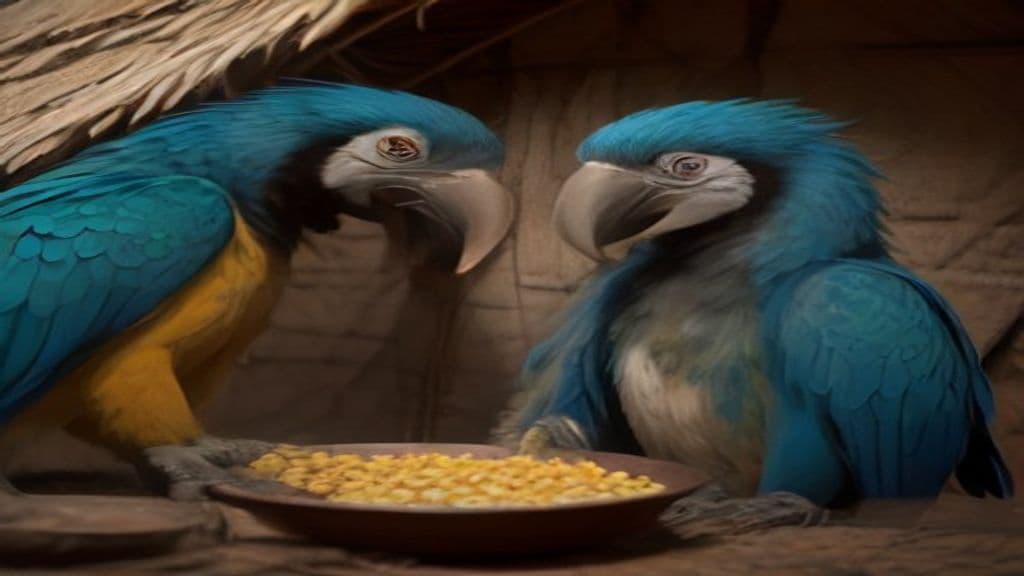
Cañari (Kichwa: Kañari) is primarily an indigenous ethnonym for a pre-Columbian people of southern Ecuador; surviving secondary sources document a Cañari flood myth that includes two macaw‑faced female beings who assist human survivors rather than describing a single supernatural entity named “Cañari.”

Ceasg
Lesser

Ceasg

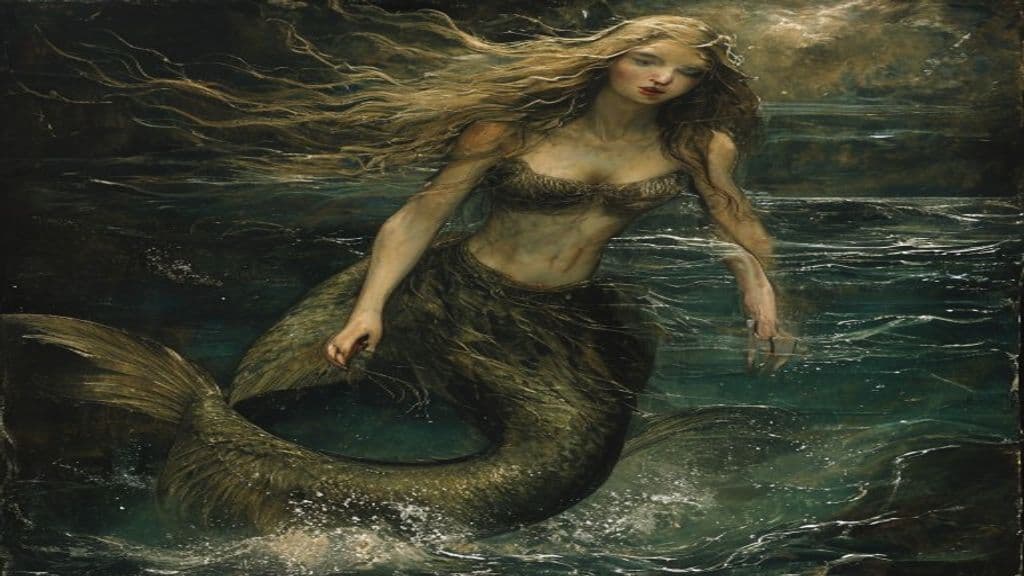
A Scottish Gaelic mermaid-like being described as a woman with the upper body of a human and the tail of a grilse (young salmon). In tradition she can form marriages with humans, grant boons to those who capture her, and in some tales appears large and dangerous, able to swallow people whose rescue requires finding and destroying a special life-egg.

Cebren
Lesser

Cebren

Cebren (Ancient Greek: Κέβρην) is a Greek river-god (potamos) of the Troad, a divine personification of the river Kebren near ancient Troy. He is named as a son of Oceanus and Tethys and as the father of naiads such as Asterope/Hesperia and Oenone; the nearby city Cebrene took its name from him.

Cecrops I
Ancient

Cecrops I

Cecrops I is a legendary autochthonous founder‑king of Attica and the first king of Athens, portrayed as a culture‑hero who instituted marriage, burial rites, civic divisions, and cult practices. He appears in Greek tradition as human above and serpentine or fish‑tailed below, and as the mortal witness/arbitrator in the mythic contest between Athena and Poseidon over patronage of the city.

Cecrops II
Minor Spirit

Cecrops II

Cecrops II (Ancient Greek: Κέκροψ) is a legendary or semi-legendary seventh king of Athens in Greek mytho-historical traditions. Presented as a human dynastic ruler rather than a supernatural being, he functions primarily as a node in king-lists and chronologies that organize Athenian mythic history.

Ceffyl Dŵr
Lesser

Ceffyl Dŵr

A Welsh water-spirit that habitually takes the shape of a horse; tales describe it as a shapeshifting, water‑bound creature that entices or carries travellers and is associated with pools, rivers, waterfalls and stormy shores.

Celadon
Lesser

Celadon

Celadon is a personal name appearing for multiple distinct characters in Greek mythic lists and as a lover-shepherd figure in French pastoral romance (not a class of spirit). The pastoral Celadon in Honoré d'Urfé's L'Astrée (1627) is best known for wearing pale green ribbons, a detail that later gave rise to the European colour-name and pottery term 'celadon'.

Celaeneus
Lesser

Celaeneus

Celaeneus (Ancient Greek Κελαινεύς, romanized Kelainéus) is a named Mycenaean princely figure of the Perseid genealogies: a son of King Electryon and Anaxo, brother of Alcmena and several princes, and one of the Electryon sons killed in the feud with the sons of Pterelaus. He functions in the tradition as a mortal genealogical figure whose death helps set the stage for the exile of Amphitryon and the circumstances of Heracles' birth.

Celaeno
Lesser

Celaeno

Celaeno (Ancient Greek: Κελαινώ, 'the dark one') is a personal name applied to multiple distinct figures in Greek myth — notably one of the Pleiades (a named star in Taurus), one of the Harpies encountered in Vergil's Aeneid, and several mortal women (a Danaid, a Phocian princess, an Amazon, and various mothers in genealogical traditions). The name appears across astronomical, epic, and genealogical traditions rather than designating a single unified being.

Celaenus (Kelainos)
Lesser

Celaenus (Kelainos)

Celaenus (Ancient Greek Kelainos / Κελαινός) is a personal name appearing for several minor genealogical figures in Greek myth. He is attested as a son of Poseidon and the Danaid Celaeno in one tradition, as son of the autochthon Phlyus in another, and as father or forebear of figures such as Caucon (Kaukon) and Tragasia in variant local genealogies. His significance in the sources is genealogical: he links divine or autochthonous origins to later cult-transmitters rather than acting as an active supernatural agent himself.

Celeborn
Ancient

Celeborn

Celeborn is a fictional Elven lord in J. R. R. Tolkien's Middle-earth legendarium, husband and co-ruler with Galadriel of Lothlórien. He functions as a regional ruler and counselor of the Galadhrim and appears in narratives concerning the Fellowship's stay in Lothlórien.

Celebrimbor
Lesser

Celebrimbor

Celebrimbor is a fictional Elven smith and prince in J. R. R. Tolkien's Middle‑earth, leader of a brotherhood of jewel‑smiths in Eregion during the Second Age. He is famed for forging the Rings of Power (including the three Elven Rings) under deception by Sauron in the guise of Annatar, and for his capture, torture, and death during Sauron's assault on Eregion.

Celestial Ferryman
Lesser

Celestial Ferryman

An ancient Egyptian funerary figure attested in Pyramid Texts, Coffin Texts, and the Book of the Dead who functions as a boatman/psychopomp, guard of Osiris, and one of the Assessors of Maat. Modern summaries render ancient names as Hraf-haf and Ma-haf and emphasize an iconography of a man seated in a boat with his head turned backward.

Celeus
Lesser

Celeus

Celeus (Greek Κελεός, Keleós) is a mythic king of Eleusis in Attica who, as a hospitable mortal, becomes an early recipient of Demeter's favors and teachings; his household events (the attempted immortalization of his son Demophon and the instruction of Triptolemus in agriculture) are foundational to the Eleusinian origin-myths.

Celtchar (son of Uthechar / Uthidir)
Greater

Celtchar (son of Uthechar / Uthidir)

Celtchar is a heroic champion of the Ulster Cycle in Irish mythology: a formidable warrior of Ulster associated with an infamous bloodthirsty spear (the Lúin Cheltchair) and famed for ridding Ulster of three extraordinary menaces before dying from the poisonous blood of his own dog.

Celtic Calendar
Not applicable

Celtic Calendar

A system used by ancient Celts to organize their timekeeping and festivals, tracking the cycles of nature and marking important events on the lunar and solar calendars. (Note: 1. Power tier: Should be Primordial (since it's an entire system and not directly tied to a specific entity with abilities). 2. Abilities: Add "Organization" or a similar ability that reflects its pra)

Celtic Mythological Beings
Greater

Celtic Mythological Beings

A pantheon of supernatural entities from ancient Celtic mythology, associated with various aspects of nature and the cosmos. (Note: - Power tier: Reduce to Lesser (some Greater entities are mentioned, but overall Celtic mythological beings are more regional or local spirits) - Weaknesses: Add "Disruption of natural cycles" as a we)