Celtic Supernatural Beings

365 documented Celtic supernatural beings from the Evil Eye grimoire, including 189 lesser and 71 greater in power tier.

page 1 of 7

Abandinus
Lesser

Abandinus

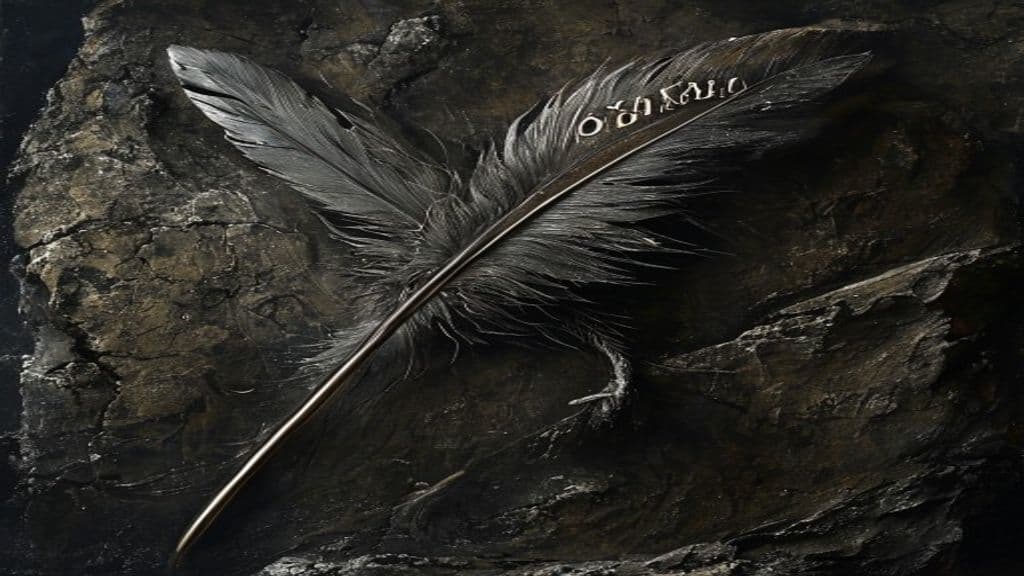
Abandinus is a locally attested Romano‑Celtic theonym known from a single inscribed bronze feather (votive object) dedicated at Godmanchester (the Roman fort Durovigutum) in Cambridgeshire. Scholars interpret him as a local god or male spirit tied to a specific place and possibly associated with a nearby spring or stream; this association is tentative and based on etymological readings of the name.
Abarta (Ábartach)
Lesser

Abarta (Ábartach)

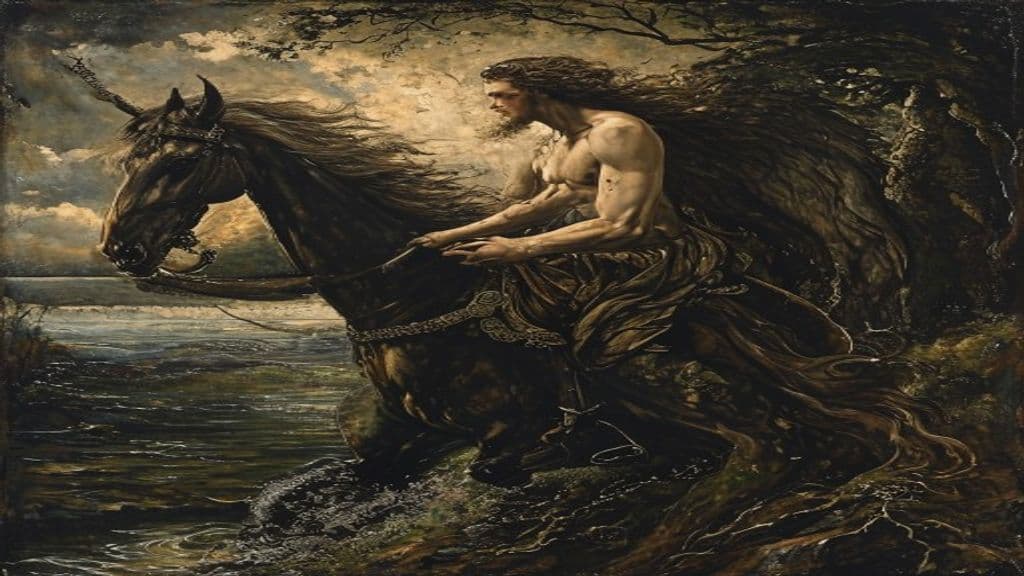
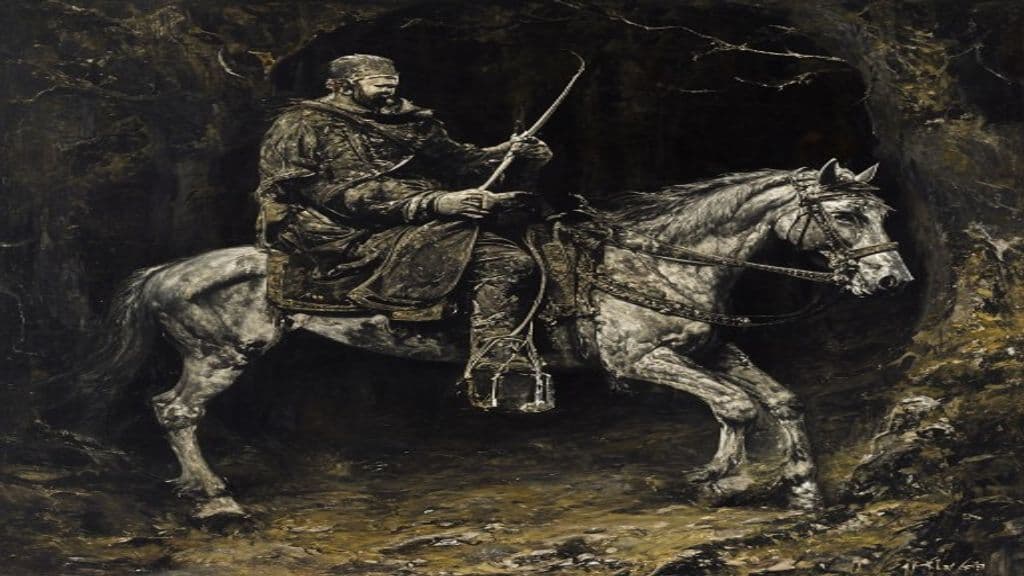
Abarta (also Ábartach) is a figure of Irish myth who, in surviving accounts, tricks Fionn mac Cumhaill's warriors by giving them a supernatural grey horse that bears them into the Otherworld. Sources variably identify him as a member of the Tuatha Dé Danann or as a Fomorian; after the incident he is compelled to release the captured warriors and is refused entry to the Fianna.

Abcán (Abhcán)
Lesser

Abcán (Abhcán)

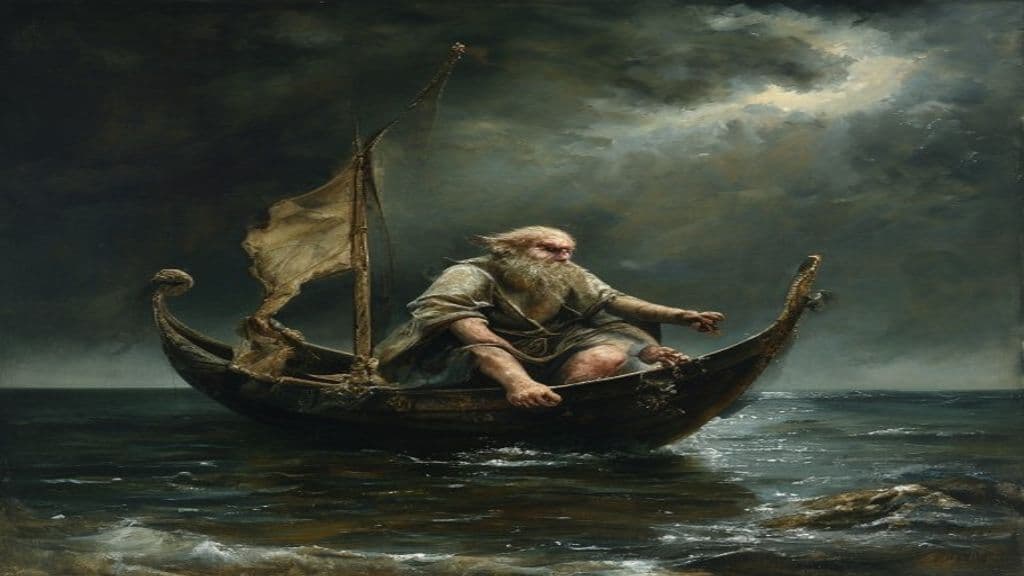
Abcán (modern spelling Abhcán) is a named dwarf poet and musician of the Tuatha Dé Danann in Irish myth. He appears in a small number of narratives as a musician whose art has soporific power and as the ferryman who brings the goddess Ruad from the Otherworld to the human world.

Abhean
Lesser

Abhean

Abhean is a named poet of the Tuatha Dé Danann in medieval Irish literature, described as a poet in particular of Lugh and recorded as having been killed by Óengus before Midir in a poem by Fland Mainistreach preserved in the Lebor Gabála Érenn.

Abnoba
Lesser

Abnoba

Abnoba is a Gaulish theonym and toponym attested in Roman-era sources and inscriptions: a localized deity associated with woods, springs and the sources of rivers (notably the Danube) and simultaneously the name applied to a mountain or mountain range in the Black Forest/Baar/Odenwald region. Roman altars equate her with Diana, reflecting syncretic cult practice in frontier provinces.

Accolon
Lesser

Accolon

Accolon is a mortal knight of the Arthurian court, presented in the Post-Vulgate Merlin tradition and Malory's Le Morte d'Arthur as Morgan le Fay's paramour and instrument in a plot to supplant King Arthur; his tale centers on enchanted weapons (Excalibur and its scabbard), love-manipulation, and a tragic duel with Arthur.

Achall
Lesser

Achall

Achall is an eponymous mortal woman in the Ulster Cycle of early Irish literature whose grief-induced death is given as the origin of the hill-name Achall (identified with the modern Hill of Skryne). She appears as a genealogical and etiological figure tied to Tara and later legendary events at the hill, rather than as a recurring supernatural agent.

Achtland
Lesser

Achtland

Achtland is a figure from Irish tradition who, according to the surviving account, was a mortal woman famed for rejecting mortal suitors who married a member of the Tuatha Dé Danann and crossed into the síde to become immortal as his wife.

Adar Llwch Gwin
Greater

Adar Llwch Gwin

Legendary large, intelligent birds from Welsh tradition said to understand human speech and obey their master's commands; best known for tearing their master Drudwas ap Tryffin to pieces when bound by a literal order in an Arthurian battle narrative. The term later came to be applied to raptors and metaphorically to brave men in medieval Welsh poetry.

Adar Rhiannon
Greater

Adar Rhiannon

Adar Rhiannon ('birds of Rhiannon') are a set of three magical birds in medieval Welsh narrative (the Mabinogi) whose song can 'wake the dead and lull the living to sleep.' They appear as otherworldly song‑beings tied to the figure Rhiannon and function within tales as providers of enchanted music that sustains and consoles characters.

Aderyn y Corff
Lesser

Aderyn y Corff

Aderyn y Corff (literally 'bird of the corpse') is a bird-like death-porter in Welsh folklore said to call outside the door of a person about to die. Described as an avian portent that may lack feathers or wings and as existing on another plane when not manifesting, it is treated in Welsh ghost lore and sometimes naturalized as a screech owl in modern accounts.

Adhene
Lesser

Adhene

A class of Manx fairies (Cloan ny moyrn) described in Isle of Man tradition as a social people of beings said to be "fallen angels cast from heaven but too good for hell," who interact with human livelihoods and families, sometimes benevolent but often mischievous.

Adna mac Uthidir
Minor Spirit

Adna mac Uthidir

Adna mac Uthidir (also spelled Adhna) is attested in early Irish tradition as a historical or legendary poet and sage who held the office of Chief Ollam of Ireland (and in some accounts Chief Poet of Ulster) and who is credited, with Forchern and Atharne, with collecting the axioms of Irish law into a single volume. He is placed by medieval tradition around the time of King Conchobar mac Nessa (traditionally c. 1st century AD), and fragments of laws attributed to him are reported in later manuscript collections.

Adsullata
Ancient

Adsullata

Adsullata is attested as a Continental Celtic river goddess associated with the River Savus (modern Sava) in the Roman province of Noricum. Later traditions record her presence in Brittany as a goddess of hot springs and present her as an antecedent or origin-form of the Anglo‑Celtic sun goddess Sul.

Aed (Aodh)
Minor Spirit

Aed (Aodh)

Aed (Old Irish Aodh) is a named supernatural figure in Irish myth attested in variant genealogies: in some traditions he is one of the Children of Lir, while in others he appears as a son of the Dagda. His name derives from the Old Irish word for 'fire' and he appears in narratives that place him among the aristocratic households of the Tuatha Dé Danann/Daoine Sidhe.

Aengus
Greater

Aengus

Aengus (Óengus, Aonghus) is a member of the Tuatha Dé Danann in Irish myth, portrayed as a youthful, attractive figure associated with love, youth, poetic inspiration and seasonal/solar symbolism; he is linked to Brú na Bóinne (Newgrange) and appears as fosterer, protector, enchanter and avenger in multiple tales.

Aernus
Ancient

Aernus

Aernus is a theonym attested in a small number of Roman-period inscriptions from the vicinity of Bragança (north-eastern Portugal). Scholarly discussion treats Aernus as a local or regional deity within the Lusitanian and Gallaecian pantheons, probably serving as a protector of a specific tribal group (the Zoelae) in a limited territorial horizon.

Afagddu
Lesser

Afagddu

Afagddu (also Avagddu, Y Fagddu) is a figure in Welsh tradition noted for extreme ugliness and associated darkness. He appears in the Taliesin/Ceridwen narrative as the intended recipient of Ceridwen's cauldron of inspiration, and functions as a narrative catalyst within bardic origin material and Welsh triadic/name-list contexts.

Afallach
Greater

Afallach

Afallach is a male personal name attested in medieval Welsh genealogies and narrative sources. He is presented as the father of the goddess Modron and is linked in some texts to an Otherworld island (Ynys Afallach/Avalon); in one tale his daughter calls him 'the King of Annwn,' a formulation that has led scholars to suggest he may reflect an Otherworld ruler-type.

Afanc
Lesser

Afanc

A named monstrous lake-being from Welsh tradition, the afanc is associated with specific lakes and functions as a dangerous localized supernatural hazard that appears in medieval narrative cycles and later antiquarian and local legends.

Afaon fab Taliesin
Lesser

Afaon fab Taliesin

Afaon fab Taliesin is a medieval Welsh warrior-counsellor, named as a son of the bard Taliesin and recorded among Arthur’s retinue in Welsh tradition. He appears in the Welsh Triads and in the tale Breuddwyd Rhonabwy (The Dream of Rhonabwy) as a notable martial figure and proverb-speaker rather than as a supernatural being.

Agronā
Lesser

Agronā

Agronā is a scholarly, linguistically reconstructed Proto‑Celtic river-name/theonym proposed to underlie later hydronyms such as the River Ayr (Scotland) and Aeron (Wales). It is a hypothetical reconstruction coined in academic discussion (not attested in primary mythic or ritual sources) and has been interpreted by one scholar as denoting a violent or martial river-goddess.

Aibell
Greater

Aibell

Aibell (Aoibheall, Aoibheal; anglicised Aeval, Eevill) is a powerful female Otherworld figure in Irish tradition, variously described as a pre‑Christian regional goddess and, after Christianisation, as a Fairy Queen and guardian spirit associated with north Munster. She is linked to a specific entrance to the Otherworld at Craig Liath, acts as a patron/guardian of certain kin‑groups, functions as an oracular/prophetic presence, and is famed for a harp whose music is a death‑omen.

Aigosages
Lesser

Aigosages

Aigosages (Greek Αἰγοσάγες, Latin-alphabet Aegosages) were a Gallic/Galatian tribal group recorded in Hellenistic sources as a recruited mercenary body active c. 218–216 BC. Recruited in Thrace by Attalus I of Pergamon, they were transported across the Hellespont, settled on its shores, conducted raids in the Troad, besieged Ilium, and were annihilated by Prusias I of Bithynia.

Ailill
Minor Spirit

Ailill

Ailill (variants Ailell, Oilioll) is an Old Irish male personal name prominent in Irish legendary and early medieval sources. It was borne by numerous kings, druidic figures, and clerics across mytho-historical and historical traditions and is said in the cited material to mean something like "beauty."

Ailill Angubae
Minor Spirit

Ailill Angubae

Ailill Angubae is a human figure in the Irish tale The Wooing of Étaín, presented as the brother of High King Eochaid Feidlech who falls desperately in love with his brother's wife, Étaín. His unrequited passion leads to a wasting illness and a failed rendezvous when the Tuatha Dé Danann figure Midir casts him into an enchanted sleep.

Ailill Finn
Lesser

Ailill Finn

Ailill Finn is a legendary medieval Irish king attested in saga and pseudo‑historical sources. He appears in Lebor Gabála Érenn, annalistic chronologies, and Ulster‑cycle contexts (notably the Táin and The Driving of the Cattle of Flidais) as a human ruler — a king of Connacht/Clare and in some accounts a High King of Ireland — who rules for a short period and is slain in dynastic conflict.

Ailill mac Máta
Lesser

Ailill mac Máta

Ailill mac Máta is a human king in the Ulster Cycle of early Irish narrative tradition, ruler of the Connachta from Cruachan and husband of Queen Medb. He is a principal actor in the Táin Bó Cúailnge (the Cattle Raid of Cooley) and figures in episodes of kingship, martial leadership and domestic-political tension that culminate in his death at Lá Bealtaine.

Aimend
Lesser

Aimend

Aimend is a figure in early Irish tradition presented in genealogical tracts as the daughter of Óengus Bolg of the Dáirine/Corcu Loígde who marries Conall Corc and becomes ancestress of the inner‑circle Eóganachta septs that established the kingship of Cashel. Scholars note she may represent an earlier goddess preserved in genealogical form.

Airmed
Greater

Airmed

Airmed (Airmid) is a healer and keeper of herbal knowledge among the Tuatha Dé Danann in Irish myth. Daughter of Díán Cécht and sister of Miach, she preserves the lore of healing plants, gathers herbs at Miach's grave, and is named among enchanters who sang over the well of Sláine to restore the wounded.

Alaunus / Alauna
Minor Spirit

Alaunus / Alauna

Alaunus (masculine) and Alauna (feminine) are Gaulish theonyms attested in Roman‑period inscriptions and preserved in river- and place‑names across western and central Europe. The surviving evidence is epigraphic and toponymic; modern scholars often interpret the deity as associated with healing and prophecy and note at least one dedication equating him with Mercurius (Mercurius Alaunus).

Albiorix
Lesser

Albiorix

Albiorix is a Celtic theonym attested in modern reference works as a Gaulish divine name that, in available summaries, is presented as an epithet or local identification of the Roman god Mars. The surviving remarks in the supplied sources are limited to name listings and disambiguation entries rather than narrative myth or cult detail.

Aldroen
Lesser

Aldroen

Aldroen is a legendary early medieval king of the Bretons of Armorica appearing in Geoffrey of Monmouth and later medieval chroniclers. Presented as a dynastic and martial founder-figure (son of Salomon) in pseudo-historical accounts, he is credited in tradition with military action in 5th-century Brittany and involvement in British-Breton affairs rather than any supernatural role.

Alisanos
Lesser

Alisanos

Alisanos is a theonym attested in two Gallo‑Roman votive inscriptions from the Côte-d'Or (near Dijon) and interpreted by Celticists as a localized landscape divinity (possibly 'of the rock' or of certain trees). Separately, the name has been repurposed in modern fantasy literature as a sentient, predatory deepwood; the two usages are distinct in origin and evidence.

Alp-luachra
Lesser

Alp-luachra

Alp-luachra is an Irish folkloric fairy described as an invisible being that consumes half of a person's nourishment by taking the unseen 'pith' or 'quintessence' of food; accounts say it appears in the form of a newt and crawls down a sleeping person's mouth at water margins.

Am Fear Liath Mòr
Lesser

Am Fear Liath Mòr

A place-bound uncanny presence associated with the summit and passes of Ben Macdui in the Cairngorms, traditionally reported as a mist-cloaked figure or overwhelming oppressive presence that causes intense fear and the sensation of large footsteps following climbers.

Amaethon
Lesser

Amaethon

Amaethon is a figure from medieval Welsh mythology, son of Dôn and a member of the Children of Dôn, identified as a mythic ploughman whose actions (notably a theft from Arawn) figure in the Cad Goddeu ('Battle of Trees'). He is primarily attested in medieval prose and later poetic tradition as an agricultural specialist and participant in otherworld conflict.

Ambrosius Aurelianus
Minor Spirit

Ambrosius Aurelianus

Ambrosius Aurelianus is presented in British late‑antique and medieval literary sources as a Romano‑British leader who rallied survivors against Anglo‑Saxon incursions in the 5th century. He is attested earliest in Gildas's De Excidio (6th century) as a Christian aristocratic war leader and is later expanded into prophetic and dynastic roles in the Historia Brittonum (9th century) and Geoffrey of Monmouth (12th century).

Amergin Glúingel
Greater

Amergin Glúingel

Amergin Glúingel is a human bard and judge of the Milesian leaders in the Irish Mythological Cycle. Presented as a son of Míl Espáine and later Chief Ollam of Ireland, he is attributed with a powerful invocation known as the Song of Amergin that clears a storm to permit the Milesian landing and with acting as an impartial arbiter in the Milesian–Tuatha Dé Danann encounter.

Amergin mac Eccit
Greater

Amergin mac Eccit

Amergin mac Eccit is a semi-legendary human poet-warrior of the Ulster Cycle who serves as chief poet (bard) of the Ulaid in the court of Conchobar mac Nessa. Noted for a sudden prophetic/poetic utterance at age fourteen, he becomes Athirne's foster-son and later performs heroic deeds including slaying the three-headed Ellén Trechend and stalling the Connachta by hurling enormous stones during the Táin Bó Cúailnge.

Ancamna
Lesser

Ancamna

Ancamna is a Gallo‑Roman local goddess attested in the Moselle valley and commemorated as the consort of regional forms of Mars (notably Lenus Mars and Mars Smertulitanus). She appears in civic cult contexts at Trier, Ripsdorf and Möhn where altars and votive offerings link her to tribal protection and to the genii of Treveri pagi; some scholars suggest a possible association with a spring rather than a martial character.

Ancasta
Lesser

Ancasta

Ancasta is a locally attested Celtic goddess known from a single Roman-period votive inscription from Clausentum (modern Bitterne, near Southampton). She appears as a named deity venerated in the context of a fulfilled vow; little else about her cult, appearance, or powers is recorded in the surviving sources.

Andarta
Greater

Andarta

Andarta is a local Celtic goddess attested by votive inscriptions in and around the town of Die (modern Drôme) in the territory of the Vocontii during the Roman imperial period. She is recorded in seven dedications as Dea Augusta Andarta (c. 150–200 AD) and appears to have functioned as a tutelary deity associated with civic welfare, victory, and Romanized cultic practice.

Anextiomarus
Lesser

Anextiomarus

Anextiomarus (Gaulish Anextlomāros; feminine Anextlomara) is an ancient Celtic theonym or epithet attested in Romano-British and Gallo-Roman inscriptions. In the sources it functions as an epithet of a solar deity syncretized with the Roman god Apollo and is glossed in one source as meaning roughly "Great Protection," indicating a protective, beneficent cult function in votive contexts.

Anextlomarus
Greater

Anextlomarus

Anextlomarus (also Anextiomarus; feminine Anextlomara) is a Romano-Celtic theonym attested in inscriptions from Roman Britain and Gaul. The name, interpreted as 'Great Protector', appears in dedicatory contexts and in one instance is equated with the Roman god Apollo, indicating a locally venerated protective deity integrated into Roman civic-religious practice.

Angerona
Ancient

Angerona

Angerona (also Angeronia; local form Ancharia at Faesulae) is a polyvalent goddess in ancient Roman religion associated with relief from pain and sorrow, protection of Rome (including custody of the city's "sacred name"), and a calendrical role at the year's turning (Angeronalia/Divalia near the winter solstice). She is attested in state cult practice (pontiff-offered sacrifice) and in local altars, and is discussed by modern scholars as a tutelary, healing, and liminal deity.

Angharad Golden-Hand
Lesser

Angharad Golden-Hand

A literary heroine of medieval Welsh romance, Angharad Golden-Hand (Welsh: Angharad Law Eurawc) appears as a lady of King Arthur's court in the tale of Peredur son of Efrawg. She functions in the narrative as Peredur's beloved whose spoken declaration of love for the Mute Knight permits Peredur to break his vow of silence. The name is later reused in Renaissance and modern literature with different meanings.

Anguish of Ireland
Ancient

Anguish of Ireland

A mythological character in King Arthur's stories, described as a king and enemy of Arthur. (Note: - Power tier should be Greater (Anguish is a regional power in the context of King Arthur's stories, not a deity-level Ancient being) - Abilities description is partially accurate; Anguish does acknow)

Ankou
Greater

Ankou

The Breton personification of death — the last person to die in a parish each year who drives a creaking cart collecting the dead, whose appearance or sound presages death.

Annea Clivana
Lesser

Annea Clivana

Annea Clivana was a goddess or female spirit worshipped in Canale in Veneto within the territory of the Cenomani Celts in Italy. Roman observers or later compilers identified her with the Roman goddess Juno, and she is attested as being portrayed in the company of a genius loci, indicating a localized, place‑centered cult.

Anu
Primordial

Anu

Anu (also Ana, Anann, Anand) is a mother-figure in early Irish tradition associated with nourishment, territorial fertility and prosperity—especially in Munster—and is variably conflated with other maternal or war-related goddesses in later sources.

Anvallus
Lesser

Anvallus

Anvallus is a locally attested Gaulish deity known from two Roman‑period Latin votive altars and a Gaulish limestone cartouche found at Augustodunum (modern Autun). Evidence shows public votive practice (dedications 'in requital of vows'), priestly involvement (gutuatres), and material offerings including a Greek‑style bronze helmet; linguistic scholarship reconstructs the name as an-ualos, roughly 'without a sovereign' or 'inferior to none.'

Aoi Mac Ollamain
Greater

Aoi Mac Ollamain

Aoi Mac Ollamain (also Ai Mac Ollamain; recorded as Mac Ollamo and Mac Ollavain) is attested in early Irish material as a member of the Tuatha Dé Danann and is identified specifically as a god of poetry. Surviving references are brief and provide little detail beyond name, group affiliation, and a narrative detail about his birth and survival.

Aonghus mac Úmhór
Lesser

Aonghus mac Úmhór

Aonghus mac Úmhór (older orthography Aengus mac Umor) is a legendary Irish king portrayed in early tradition as ruler of the Fir Bolg of Connacht and eponymous founder associated with settlements on the western coast and the Aran Islands, notably the fortress Dún Aonghasa on Inishmore.

Aos Sí
Ancient

Aos Sí

Aos Sí are a broad class of supernatural beings in Gaelic (Irish and Scottish) folklore associated with the mounds and liminal places of the landscape. They are variously described as descendants or later forms of the Tuatha Dé Danann, ancestral or nature spirits, or otherworldly folk who coexist with humans and can be helpful or dangerous when offended.

Arawn
Ancient

Arawn

Arawn is the ruler (king) of Annwn, the Otherworld in medieval Welsh narrative. He appears most prominently in the First Branch of the Mabinogi, where he exchanges places with the mortal Pwyll for a year and a day and is associated in folklore with the Cŵn Annwn (Hounds of Annwn) and other supernatural animals.

Arianrhod
Lesser

Arianrhod

Arianrhod is a mythic figure in medieval Welsh tradition, best known from the Fourth Branch of the Mabinogi. Daughter of Dôn in the Mabinogi (with an alternate genealogy in a Welsh Triad), she appears at the court of Math ap Mathonwy as the occupant of Caer Arianrhod and exercises binding pronouncements (tynged) that shape the destinies of her offspring, notably Dylan ail Don and the shapeless birth who becomes Lleu Llaw Gyffes.

Arkan Sonney
Lesser

Arkan Sonney

A Manx folkloric 'fairy animal' whose name is also the everyday Manx word for hedgehog; in tradition it appears as a white pig that brings good fortune to those who see or catch it but causes misfortune if held too long.

Arnemetia
Minor Spirit

Arnemetia

Arnemetia is a local Romano-British goddess attested by a shrine name at Aquae Arnemetiae (modern Buxton, Derbyshire). Her name links her to a sacred grove (nemeton) and to water, suggesting a place-centered divinity associated with spring(s) and grove cults.

Art mac Cuinn
Lesser

Art mac Cuinn

Art mac Cuinn (also called Art Óenfer) is a legendary High King of Ireland from medieval Irish saga and pseudo-historical tradition. Presented as a mortal ruler and son of Conn, his story appears across variants that connect kingship, otherworldly women, geasa, and prophetic/druidic pronouncements; later compilers attempt to synchronise his reign with known historical chronologies.