Celtic Supernatural Beings

365 documented Celtic supernatural beings from the Evil Eye grimoire, including 189 lesser and 71 greater in power tier.

page 3 of 7

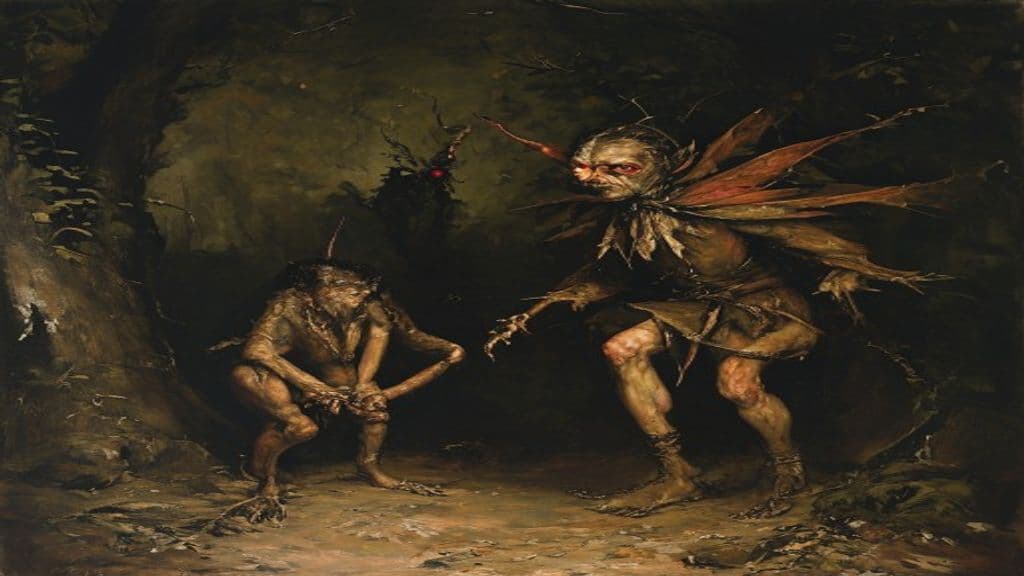
Bugul Noz
Lesser

Bugul Noz

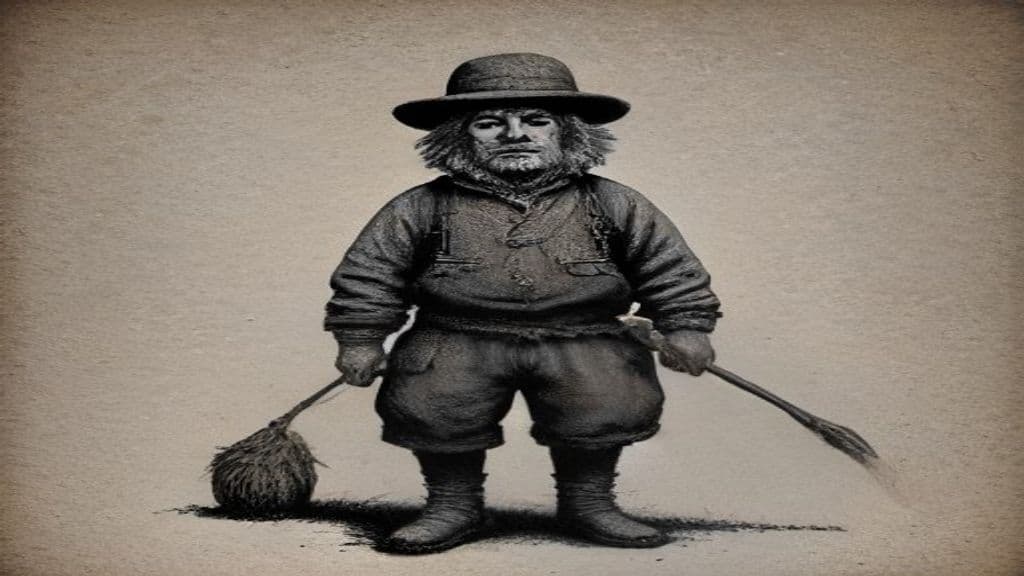
A nocturnal spirit of Breton folklore (particularly Morbihan) whose name is glossed as 'Night Shepherd' or 'child of the night.' Accounts vary: some present the Bugul Noz as a small goblin-like nocturnal being that menaces shepherds and people who linger outdoors after dark; other informants describe a tall, foreboding twilight figure. It functions in local culture as a cautionary night-being that enforces avoidance of unsafe nighttime activity.

Bullaun
Minor Spirit

Bullaun

A natural feature in Celtic tradition, often imbued with spiritual significance. (Note: - Power tier should be Primordial=cosmic, given its association with natural features and spiritual significance. - Origin story missing entirely; add from source material (if available) or consult ex)

Buí (toponym element)
Minor Spirit

Buí (toponym element)

The supplied sources do not attest a supernatural entity named 'Buí'. The string appears in Irish place-name usage (notably in the toponym 'Bóthar Buí' cited on Wikipedia, referring to places such as Boherbue, County Cork; Draperstown, County Londonderry; and Enfield, County Meath). No folkloric descriptions, abilities, appearances, or rituals for a spirit called Buí are present in the provided material.

Bánánach
Lesser

Bánánach

The bánánach are early Irish preternatural battlefield spectres attested in epic narrative. In the Táin Bó Cúalnge they appear among supernatural forces associated with battle-noise and are described as haunting battlefields and contributing to the atmosphere and fear of combat.

Bé Chuille
Greater

Bé Chuille

Bé Chuille is a female member of the Tuatha Dé Danann in Irish myth, attested as a daughter of Flidais and paired with her sister Dianann as a sorceress and a 'she-farmer'. She appears in Lebor Gabála Érenn, the Metrical Dindshenchas, and related medieval compilations, where she enchants natural features in warfare and is later said in the Book of Leinster to have been killed by 'gray demons of air.'

Bélchú
Lesser

Bélchú

Bélchú is a human warrior-lord of Breifne in the Ulster Cycle of early Irish narrative tradition. In the preserved tale he shelters the wounded Ulster hero Conall Cernach, plots his murder, is himself killed when Conall turns the trickery back on him, and as a result becomes part of a revenge episode that exemplifies hospitality, honour, and martial reciprocity in the saga corpus.

Béḃinn (Bé Binn / Béibhinn)
Lesser

Béḃinn (Bé Binn / Béibhinn)

Béḃinn (modern Béibhinn) is an early Irish personal name that also appears in medieval mythological material as a goddess-figure variously associated with childbirth and with the underworld; she is named as sister of the river-goddess Boann in some sources and is linked in others to the Irish Mag Mell or the Welsh Annwn.

Cadoc
Ancient

Cadoc

Cadoc (Medieval Latin: Cadocus; Welsh: Cadog or Catwg) is represented in medieval Welsh sources as a late 5th–6th century Christian saint, monastic founder and teacher centered on Llancarfan. His Vita records portents at his birth, miraculous signs (a holy well, a vanishing boar) and numerous foundations and dedications across Wales, Cornwall, Brittany and Scotland; his life-functions in the sources are hagiographical: miracle-worker, educator and local patron invoked for cures in some Breton sites.

Cador
Lesser

Cador

Cador (Latin Cadorius; early forms Cado, Cadwy) is a legendary aristocratic figure of the Arthurian and early British pseudo‑historical tradition, portrayed in medieval sources as a duke/earl/king and a military commander allied with King Arthur. His historicity is uncertain and debated by scholars; details derive from Geoffrey of Monmouth, later medieval poets (Layamon, Mannyng) and later genealogical interpretations.

Cafall
Lesser

Cafall

Cafall (also spelled Cavall) is named in Welsh Arthurian tradition as King Arthur's hunting dog, associated particularly with the hunt for the great boar Twrch Trwyth. The figure appears both in brief traditional notices and in modern literary reuse (notably Susan Cooper's The Grey King).

Cailleach
Ancient

Cailleach

A Gaelic 'veiled old woman' figure who personifies winter and its elemental forces; credited in tradition with shaping the landscape (mountains, hills, valleys) and with controlling storms and seasonal turnover. Treated both as a singular mythic sovereign (e.g., the Hag of Beara / Beira) and as a type (plural cailleachan or 'storm hags') in regional lore across Ireland, Scotland and the Isle of Man.

Cairbre Lifechair
Lesser

Cairbre Lifechair

Cairbre Lifechair ('lover of the Liffey') is a figure of medieval Irish legend and historical tradition presented as a High King of Ireland. He appears in saga and chronicle material (notably Cath Gabhra and accounts of the Expulsion of the Déisi) as a political and military actor who exacts tribute, leads a coalition army against the fianna, and dies in single combat during the Battle of Gabhra.

Cairbre Nia Fer
Lesser

Cairbre Nia Fer

A legendary Irish king of Tara associated with the Laigin (Leinster) kin‑group in medieval saga and pseudo‑historical texts. In Ulster Cycle narratives he fights Conchobar and is slain by the hero Cúchulainn at the Battle of Rosnaree (Cath Ruis na Ríg); medieval compilations place him variably in different synchronistic chronologies.

Camulus
Lesser

Camulus

Camulus (Gaulish Camulos) is a named divine figure of the Roman-period Celtic world, attested primarily in Latin votive inscriptions across northern Gaul, parts of the German provinces, Britain and occasional farther finds. In the epigraphic record he is regularly equated with the Roman god Mars (Mars Camulus) and appears to have functioned as a local or tribal protector, especially associated with the Remi of Durocortorum (Reims).

Caoineag
Minor Spirit

Caoineag

The 'Weeper' of Scottish Highland tradition — an invisible spirit heard wailing near waterfalls before a disaster befalls a clan, a Highland variant of the Irish Banshee.

Caradoc
Lesser

Caradoc

Caradoc is a semi-legendary heroic/ancestral figure from Welsh and Arthurian tradition, remembered in medieval genealogies and romances as a ruler of Gwent and as a Knight of the Round Table. He is treated in the sources as a human hero whose life is affected by wondrous events (enchantment, serpent-affliction, knightly tests) rather than as an independently supernatural being.

Caradocus (Karadawc)
Lesser

Caradocus (Karadawc)

Caradocus (Middle Welsh: Karadawc) is a legendary Cornish ruler attested in medieval pseudo‑histories, principally Geoffrey of Monmouth's Historia regum Britanniae, where he functions as a noble counselor, envoy, and peacemaker in the narrative linking Britain and Magnus Maximus. He is presented as a historical/legendary human figure rather than a supernatural being.

Caradog ap Bran
Lesser

Caradog ap Bran

Caradog ap Bran is a legendary Welsh prince, son of Bendigeidfran (Bran the Blessed), known from the Second Branch of the Mabinogi (Branwen ferch Llŷr) and medieval triadic lists. He is presented as a senior chieftain left to defend Britain whose men are slain during Caswallawn's treachery, and who dies of grief at their deaths.

Carmán (Carman)
Greater

Carmán (Carman)

Carmán is a foreign female warrior-sorceress in Irish myth who came from Athens with three sons and used magic to destroy the fruit of Ireland; she is defeated and commemorated by the Tuatha Dé Danann and by a named festival and place‑name in Leinster.

Cassivellaunus (tradition)
Lesser

Cassivellaunus (tradition)

Cassivellaunus is a historical mid-1st century BC British military leader attested in Julius Caesar's account of the 54 BC expedition, later adapted in medieval Latin and Welsh literature into a legendary king (Cassibelanus / Caswallawn). He functions in sources both as a documented anti‑Roman commander and as a mytho‑historical ruler used to articulate lineage, sovereignty, and resistance.

Cat Sídhe
Lesser

Cat Sídhe

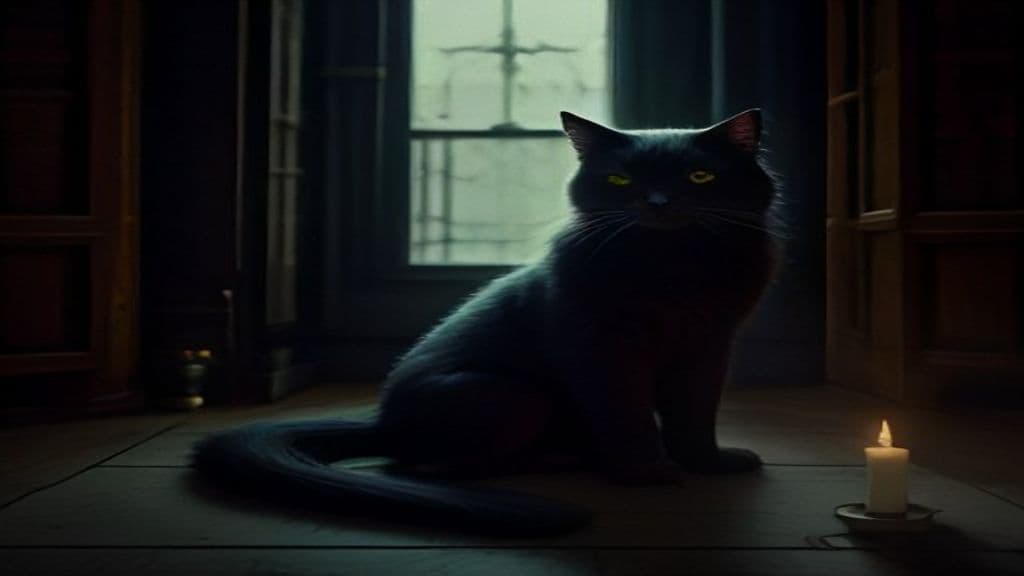
A large black fairy cat of Irish and Scottish tradition with a white spot on its chest, who could steal a corpse's soul before burial if allowed to leap over it.

Cat sìth
Lesser

Cat sìth

A feline supernatural being in Celtic folklore, especially Scottish tradition, described in some accounts as a large black cat with a white spot on its chest associated with the fairy/otherworld; alternative traditions identify it as a witch able to transform into a cat up to nine times.

Cath Palug
Greater

Cath Palug

A monstrous, unusually large cat from Welsh myth later adapted into continental medieval romance (Anglo‑Norman/Old French) as Chapalu/Capalu. Associated with islands, lakes, bogs, and shoreline liminal zones, it functions as a localized animal horror that confronts named heroes (Welsh Cai/Kay; continental sources often transfer the opponent to King Arthur).

Cathbad
Lesser

Cathbad

Cathbad (Cathbhadh) is a principal druid and seer in the Ulster Cycle of early Irish narrative, famed for pronouncing auspicious timings, naming and raising the infant Conchobar, and prophesying the fates of major figures. In some narrative variants he also appears as leader of a band of fianna and exercises martial violence.

Cathubodua
Minor Spirit

Cathubodua

Cathubodua is a theonym known from a single Latin‑script votive altar from Roman‑period Gaul (found near Mieussy, Haute‑Savoie). Modern scholars reconstruct a Proto‑Celtic form *Katu‑bodwā and infer a martial or victory‑related function (comparisons made to the Irish Badb or the Greek Nike), but the inscription itself supplies no narrative or iconography.

Catigern
Lesser

Catigern

Catigern is a legendary/historical early medieval British warrior-prince remembered chiefly for dying fighting the Saxons at the Battle of Epsford/Aylesford. He appears in medieval chronicles and genealogies (notably the Historia Brittonum and various Welsh pedigrees) as a son or kinsman within ruling lineages and is used in later tradition for dynastic legitimation and local topographical memory.
Catskin
Minor Spirit

Catskin

Catskin is the name/title of an English and related folk-tale heroine type (ATU 510B) who escapes an unwanted marriage by disguising herself in a catskin coat. The figure functions as a narrative motif: a noble-born girl reduced to servitude by wearing an animal-derived garment, secretly appearing at court in splendid dresses, and ultimately being recognized and restored.

Cavall (Cafall)
Lesser

Cavall (Cafall)

Cavall (Middle Welsh cauall; modern Cafall) is a named animal in medieval Welsh Arthurian tradition, best attested as King Arthur's favourite hunting hound who takes part in the great boar-hunts and whose pawprint is said to be impressed in a stone at Carn Cabal. The figure appears in narrative sources (notably Culhwch and Olwen) and in the Wonders of Britain section of Historia Brittonum.

Ceasg
Lesser

Ceasg

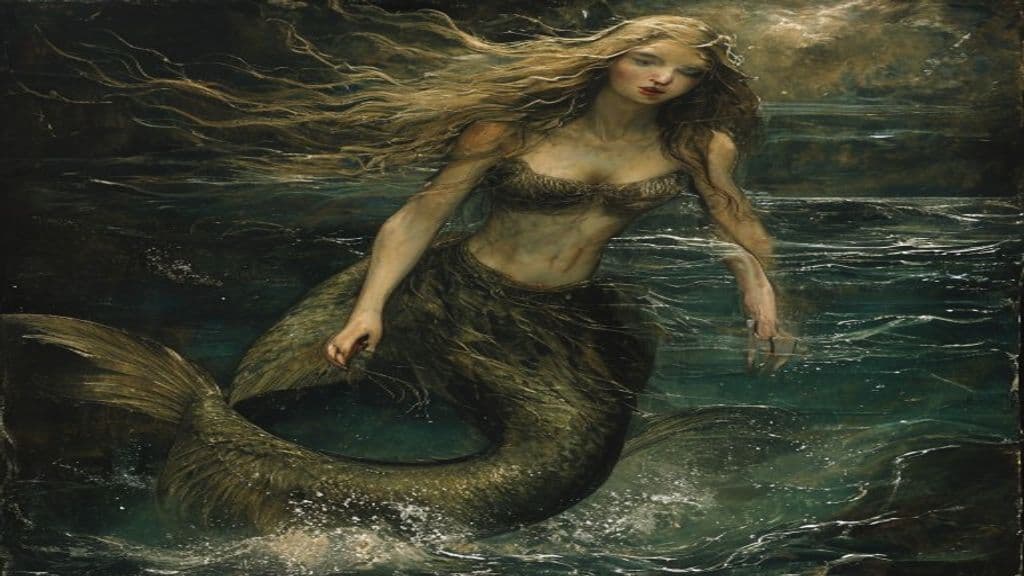
A Scottish Gaelic mermaid-like being described as a woman with the upper body of a human and the tail of a grilse (young salmon). In tradition she can form marriages with humans, grant boons to those who capture her, and in some tales appears large and dangerous, able to swallow people whose rescue requires finding and destroying a special life-egg.

Ceffyl Dŵr
Lesser

Ceffyl Dŵr

A Welsh water-spirit that habitually takes the shape of a horse; tales describe it as a shapeshifting, water‑bound creature that entices or carries travellers and is associated with pools, rivers, waterfalls and stormy shores.

Celtchar (son of Uthechar / Uthidir)
Greater

Celtchar (son of Uthechar / Uthidir)

Celtchar is a heroic champion of the Ulster Cycle in Irish mythology: a formidable warrior of Ulster associated with an infamous bloodthirsty spear (the Lúin Cheltchair) and famed for ridding Ulster of three extraordinary menaces before dying from the poisonous blood of his own dog.

Celtic Calendar
Not applicable

Celtic Calendar

A system used by ancient Celts to organize their timekeeping and festivals, tracking the cycles of nature and marking important events on the lunar and solar calendars. (Note: 1. Power tier: Should be Primordial (since it's an entire system and not directly tied to a specific entity with abilities). 2. Abilities: Add "Organization" or a similar ability that reflects its pra)

Celtic Mythological Beings
Greater

Celtic Mythological Beings

A pantheon of supernatural entities from ancient Celtic mythology, associated with various aspects of nature and the cosmos. (Note: - Power tier: Reduce to Lesser (some Greater entities are mentioned, but overall Celtic mythological beings are more regional or local spirits) - Weaknesses: Add "Disruption of natural cycles" as a we)

Celtic Sacred Trees
Greater

Celtic Sacred Trees

In Celtic tradition, sacred trees are imbued with spiritual significance and serve as symbols, conduits for medicinal properties, or abodes for nature spirits. (Note: 1. Power tier is uncertain; the source material does not explicitly describe the trees' power level. 2. Abilities should be more specific; instead of stating they "possess symbolic significance and se)

Ceridwen
Greater

Ceridwen

Ceridwen is an enchantress in medieval Welsh legend, keeper of a cauldron whose brew produces awen (poetic inspiration). In the Tale of Taliesin she brews a potion intended for her son; when her servant Gwion Bach gains the first drops the resulting pursuit, shapeshifting sequence, swallowing and rebirth produce the poet Taliesin. Later sources and modern writers sometimes recast her as a goddess of transformation and rebirth.

Cermait (Cearmaid)
Lesser

Cermait (Cearmaid)

Cermait (modern Irish Cearmaid), also known by the epithet Milbél ('honey-mouth'), is a member of the Tuatha Dé Danann in Irish myth, described as a son of the Dagda whose death at the hands of Lugh, subsequent revival by the Dagda, and the vengeance of his sons are narrated in medieval sources.

Cernunnos
Greater

Cernunnos

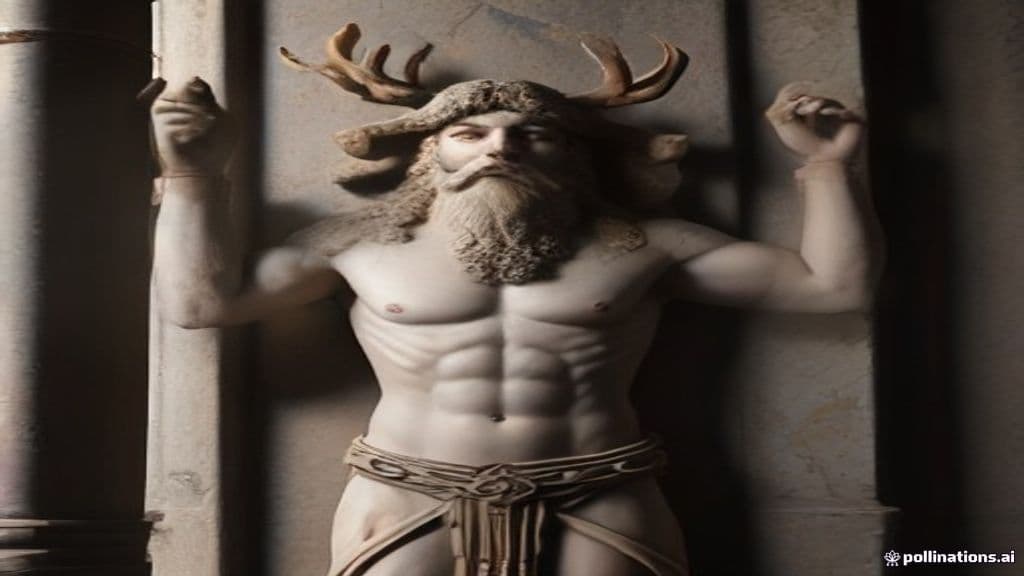
An antlered male divine figure attested in Iron Age and Roman‑period Celtic iconography, conventionally named from a damaged inscription on the 1st‑century CE Pillar of the Boatmen. Modern scholarship links the figure to themes of wild animals, fertility, torcs (social valuables), serpents, and liminality, but direct textual evidence of myths or rituals is lacking.

Cessair
Lesser

Cessair

Cessair (Modern Irish: Ceasair, glossed 'sorrow, affliction') is a mytho-historical founding figure in medieval Irish tradition, presented in the Lebor Gabála Érenn as the leader of the first company to settle Ireland prior to the Biblical Flood. Medieval compilers portray her as a human progenitor placed into a Christianized genealogy; later authors sometimes reinterpret her as a founding goddess archetype.

Cet mac Mágach
Lesser

Cet mac Mágach

Cet mac Mágach is a legendary mortal warrior of Connacht in the Ulster Cycle of early Irish narrative tradition. He appears as a boastful and violent heroic antagonist whose trophy-taking and raids precipitate revenge-tales culminating in his slaying by the Ulster hero Conall Cernach.

Cethern mac Fintain
Lesser

Cethern mac Fintain

Cethern mac Fintain is an Ulster warrior in the Táin Bó Cuailnge (Ulster Cycle) who arrives to aid Cúchulainn, fights naked from a chariot with a silver spike, undergoes radical medical treatment to return to battle for a brief final bout, and dies fighting.

Cethlenn
Lesser

Cethlenn

Cethlenn (Old Irish Cethlenn/Cethleann/Ceithlenn/Ceithlionn; modern Irish Ceithlinn/Caitlín in some treatments) is a named figure in medieval and early modern Irish narrative tradition associated with the Fomorians. She appears as a prophetess who foretells the downfall of the Fomorians, a martial actor who wounds the Dagda in the Second Battle of Mag Tuired, a mother linked to Ethniu (and thus to Lugh), and an eponymous figure tied to the place-name Enniskillen (Inis Cethlenn).

Changeling
Lesser

Changeling

A changeling is a human-like substitute left by nonhuman beings (fairies, trolls, demons, etc.) after they abduct a human—most often an infant. Found throughout much of European folklore, the changeling functions as an uncanny domestic replacement whose presence explains sickness, developmental difference, or sudden loss.

Children of Lir
Minor Spirit

Children of Lir

A group of four human children—Fionnuala and her three brothers Aodh, Fiacra (Fiachra) and Conn—of the Irish story Oidheadh chloinne Lir who are transformed into swans and condemned to live for centuries in enchanted form, retaining speech and singing plaintive songs. The tale is set at the close of the Tuatha Dé Danann's dominion and functions as a fate‑centred lament in medieval Irish literature.

Christ Child
Greater

Christ Child

The Christ Child (also Baby Jesus, Infant Jesus, Divine Child) is the figure of Jesus Christ in his infancy and childhood (up to about age 12). In Christian textual and devotional traditions he is not a separate being but the incarnate Jesus during early life, the focus of nativity narratives, apocryphal infancy stories, liturgical feasts, and widespread devotional images.

Church Grim
Lesser

Church Grim

A site-bound guardian spirit in English, Scottish and Nordic/Scandinavian folklore that watches over an individual Christian church and its churchyard, defending the consecrated ground from profanation and hostile spirits. Forms and origin accounts vary by region, including a large black dog in English tradition, the bound spirit of an animal (often a lamb) in Scandinavian accounts, and in some Scottish strands the spirit of the most recently buried person acting as a temporary watcher.

Cichol Gricenchos
Lesser

Cichol Gricenchos

Cichol Gricenchos is the earliest-mentioned leader of the Fomorians in the medieval Irish pseudo-historical tradition. He is portrayed as the leader of a pre-Partholón population in Ireland who subsisted by fishing and fowling and who was defeated by Partholón at the Battle of Mag Itha.

Cicolluis
Lesser

Cicolluis

Cicolluis (Latin Cicolluis, Cicollus; reconstructed Gaulish *Cicolluos) is the tutelary god of the Lingones in eastern Gaul attested in Roman‑period votive inscriptions, commonly identified with the Roman god Mars (inscriptional formula Mars Cicolluis). He is regularly paired with an earth goddess, Litavis, and is interpreted by scholars as a local territorial protector with possible fertility or chthonic associations when read alongside Litavis.

Cigfa
Lesser

Cigfa

Cigfa (Middle Welsh: Kigua) is a mortal woman in the medieval Welsh Mabinogi cycles, known as the wife of Pryderi of Dyfed. A minor narrative figure in the Third Branch (Manawydan fab Llyr), she remains with Manawydan during the enchantment of Dyfed and functions as a domestic and relational character whose presence highlights Manawydan's virtues.

Cingris
Primordial

Cingris

Semi-historical and mythological Pharaoh in Celtic tradition. (Note: - Power tier: Lesser (based on being described as a "mythological Pharaoh" and not having deity-level abilities) - Abilities: Inconsistencies in draft article - should mention that no explicit descrip)

Claudas
Lesser

Claudas

Claudas is a literary, mortal king in Arthurian romance who functions as a hostile royal antagonist: a conqueror of neighboring realms (the Terre Deserte in the Berry), captor of heirs, and later defeated ruler whose family is partially assimilated into the chivalric order.

Clootie Well
Ancient

Clootie Well

A Celtic tradition where individuals leave offerings of cloth or ribbons at holy wells, believed to possess healing properties. (Note: 1. Remove "Power tier: Ancient" as it contradicts the description of abilities (no classical powers) and origin story (not deity-level). 2. Add "Origin story: Based on ancient custom of leaving votive)

Clothru
Lesser

Clothru

Clothru is a figure from medieval Irish legendary history, presented in the sources as a royal woman who, by sexual relations with close kin, ensures dynastic succession. She is linked to the island Inis Cloithrinn (Inchcleraun) in County Longford and appears in cycles concerning the High Kings and the violent death of Medb.

Clurichaun
Lesser

Clurichaun

A solitary Irish fairy-like household and cellar spirit associated with drinking places (breweries, pubs, wine cellars). He is a heavy drinker and smoker, a mischievous trickster who can also act as a protective domestic spirit for a household that tolerates him; accounts are primarily from 19th-century collectors and later summaries.

Clíodhna
Greater

Clíodhna

Clíodhna is a female otherworld figure from Irish myth and Munster folk tradition, portrayed in medieval narrative as a member of the tuatha dé Danann and later as the queen of the sióga/banshees of South Munster (Desmond). She is associated with healing birds, enchanted gifts (notably three birds and an emerald cup in the Book of Lismore), place‑names in County Cork, and a range of narratives in which she aids, loves, and sometimes harms mortals.

Clṻd
Lesser

Clṻd

Clṻd (reconstructed Brittonic: Clṻd / Clọ:tā; Latin: Clōta) is a hypothesised, place-bound river-goddess inferred for the River Clyde basin. The figure is a scholarly reconstruction from hydronymy, regional archaeology (notably a 1967 tricephalic statue near the Clyde), and the widespread Celtic pattern of female water-deities; direct evidence of cult or rites is not preserved in the cited sources.

Coblyn (coblynau / coblynod)
Lesser

Coblyn (coblynau / coblynod)

A small, mine-associated Welsh spirit (plural coblynau or coblynod) that inhabits mines and quarries. Coblynau make peculiar knocking sounds used by miners to locate rich veins, imitate miners' work ineffectually while dressed in miner-like clothes, are generally considered helpful and lucky, but withdraw assistance if miners act greedily or are disrespectful.

Coblynau
Lesser

Coblynau

Coblynau (singular coblyn) are small gnome-like mine and quarry spirits from Welsh folklore. They are reported in folkloric summaries as haunting underground workings, making knocking sounds, and—according to some miners' tales—occasionally indicating locations of ore or riches.

Coel Hen
Ancient

Coel Hen

Coel Hen (Old Welsh: Coil, "Coel the Old") is a legendary ancestral-king and eponymous founder in medieval Welsh and Brittonic tradition, placed by genealogies in the Hen Ogledd (the Old North) in the late Roman / early post‑Roman period. He appears at the head of multiple royal pedigrees as progenitor of the Coeling and is later conflated in twelfth‑century pseudo‑histories with a Colchester/Helena strand linking him to Roman narratives.

Conaire Mór
Greater

Conaire Mór

Conaire Mór is a legendary prehistoric High King of Ireland in medieval Irish saga and historical tradition (not an otherworldly being). His accession, long reign, binding geasa (taboos) imposed by the otherworldly figure Nemglan, and catastrophic death at Dá Derga's Hostel are narrated in Togail Bruidne Dá Derga and related texts; he is remembered as the eponymous ancestor of the Síl Conairi.

Conall Cernach
Lesser

Conall Cernach

Conall Cernach is a legendary human warrior of the Ulster Cycle in Irish tradition, famed as an exceptional Ulster champion noted for prodigious martial feats, trophy-taking, striking appearance, and rivalry with other heroes such as Cú Chulainn and Cet mac Mágach.